Questões de Vestibular Sobre inglês
Foram encontradas 6.367 questões


T E X T
Han Kang Is Awarded Nobel Prize in Literature
Han Kang, the South Korean author best known for her surreal, subversive novel, “The Vegetarian,” was awarded the Nobel Prize in Literature [2024] — the first writer from her country to receive the award.
Mats Malm, the permanent secretary of the Swedish Academy, which organizes the prize, said at a news conference in Stockholm that Han was receiving the honor “for her intense poetic prose that confronts historical traumas and exposes the fragility of human life.”
“The Vegetarian,” published in Korea in 2007, won the 2016 International Booker Prize after it was translated into English. Porochista Khakpour, in a review of “The Vegetarian” for The New York Times, said that Han “has been rightfully celebrated as a visionary in South Korea.”
Han’s Nobel was a surprise. But the news was celebrated by authors and fans on social media, and greeted with fanfare in South Korea. “This is a great achievement for South Korean literature and an occasion for national celebration,” said President Yoon Suk Yeol in a statement, in which he noted Han’s ability to capture painful episodes from their country’s recent history. Members of the K-pop band BTS also celebrated, with one posting a crying-face emoji and a heart alongside a picture of Han. Han’s groundbreaking work has reshaped the literary landscape in South Korea, said Paige Aniyah Morris, co-translator of Han’s novel, “We Do Not Part,” which will be published by Hogarth in the United States in January.
“Han’s work has inspired a generation of Korean writers to be more truthful and more daring in their subject matter,” Morris said. “Time and time again, she has braved a culture of censorship and saving face, and she has come out of these attempts at silencing her with stronger, more unflinching work each time.”
Han, 53, was born in 1970 in Gwangju, South Korea. Her father was also a novelist, but much less successful. The family struggled financially and moved frequently. In a 2016 interview with The Times, Han said her transitory upbringing “was too much for a little child, but I was all right because I was surrounded by books.” When Han was 9, her family moved to Seoul just months before the Gwangju uprising, when government troops fired on crowds of pro-democracy protesters, killing hundreds. The event shaped her views on humanity’s capacity for violence, Han said in the 2016 interview, and its specter has haunted her writing. In her 2014 novel “Human Acts,” a writer observes a police raid on a group of activists.
She also recalled seeing images of people who lined up to donate their blood to those who were injured in the uprising. “It was like two unsolvable riddles imprinted on my mind: How can humans be so violent, and how can humans be so sublime?” she said. “When I write novels, I find myself always returning to the theme of what it means to be human.”
Han studied literature at Yonsei University in Korea, and her first published works were poems. Her debut novel, “Black Deer,” which came out in 1998, was a mystery about a missing woman. Following her debut, Han went on to write seven more novels, as well as several novellas and collections of essays and short stories. Among her other novels are “The White Book,” which was also nominated for the International Booker Prize, and “Greek Lessons,” published in English in 2023.
“Han Kang is a visionary — there’s no other word for it,” said Parisa Ebrahimi, executive editor at Hogarth, Han’s North American publisher, who noted that Han’s work reflects “remarkable insight into the inner lives of women.”
Han’s writing is now celebrated in South Korea, but that took some time. She had been publishing fiction and poetry for more than two decades before her work was issued in English, after Deborah Smith translated “The Vegetarian” and sold it to a British publisher based on the first 10 pages. “Her work, and the translation and success of her work, has led Korean literature in translation to be edgier and more experimental and daring,” said Anton Hur, a South Korean translator and author who is based in Seoul. “She changed the conversation about Korean literature.”
Ankhi Mukherjee, a literature professor at the University of Oxford, said that she had taught Han’s work “year in, year out” for almost two decades. “Her writing is relentlessly political — whether it’s the politics of the body, of gender, of people fighting against the state — but it never lets go of the literary imagination,” Mukherjee said, adding: “It’s never sanctimonious; it’s very playful, funny and surreal.
The Nobel Prize is literature’s pre-eminent award, and winning it is a capstone to a writer. Along with the prestige and a huge boost in sales, the new laureate receives 11 million Swedish krona, about $1 million. In recent years, the academy has tried to increase the diversity of authors considered for the literature prize, after facing criticism over the low number of laureates who were female or came from outside Europe and North America.
Han is the 18th woman to receive the Nobel in literature, which has been awarded to 120 writers since 1901. Some scholars and translators said it was fitting that the first Korean writer to win a Nobel is a woman. Much of the most groundbreaking and provocative contemporary Korean literature is being written by female novelists, including some who are challenging and exposing misogyny and the burdens that are placed on women in South Korea.
Adapted from: https://www.nytimes.com/2024/10/10/
T E X T
Han Kang Is Awarded Nobel Prize in Literature
Han Kang, the South Korean author best known for her surreal, subversive novel, “The Vegetarian,” was awarded the Nobel Prize in Literature [2024] — the first writer from her country to receive the award.
Mats Malm, the permanent secretary of the Swedish Academy, which organizes the prize, said at a news conference in Stockholm that Han was receiving the honor “for her intense poetic prose that confronts historical traumas and exposes the fragility of human life.”
“The Vegetarian,” published in Korea in 2007, won the 2016 International Booker Prize after it was translated into English. Porochista Khakpour, in a review of “The Vegetarian” for The New York Times, said that Han “has been rightfully celebrated as a visionary in South Korea.”
Han’s Nobel was a surprise. But the news was celebrated by authors and fans on social media, and greeted with fanfare in South Korea. “This is a great achievement for South Korean literature and an occasion for national celebration,” said President Yoon Suk Yeol in a statement, in which he noted Han’s ability to capture painful episodes from their country’s recent history. Members of the K-pop band BTS also celebrated, with one posting a crying-face emoji and a heart alongside a picture of Han. Han’s groundbreaking work has reshaped the literary landscape in South Korea, said Paige Aniyah Morris, co-translator of Han’s novel, “We Do Not Part,” which will be published by Hogarth in the United States in January.
“Han’s work has inspired a generation of Korean writers to be more truthful and more daring in their subject matter,” Morris said. “Time and time again, she has braved a culture of censorship and saving face, and she has come out of these attempts at silencing her with stronger, more unflinching work each time.”
Han, 53, was born in 1970 in Gwangju, South Korea. Her father was also a novelist, but much less successful. The family struggled financially and moved frequently. In a 2016 interview with The Times, Han said her transitory upbringing “was too much for a little child, but I was all right because I was surrounded by books.” When Han was 9, her family moved to Seoul just months before the Gwangju uprising, when government troops fired on crowds of pro-democracy protesters, killing hundreds. The event shaped her views on humanity’s capacity for violence, Han said in the 2016 interview, and its specter has haunted her writing. In her 2014 novel “Human Acts,” a writer observes a police raid on a group of activists.
She also recalled seeing images of people who lined up to donate their blood to those who were injured in the uprising. “It was like two unsolvable riddles imprinted on my mind: How can humans be so violent, and how can humans be so sublime?” she said. “When I write novels, I find myself always returning to the theme of what it means to be human.”
Han studied literature at Yonsei University in Korea, and her first published works were poems. Her debut novel, “Black Deer,” which came out in 1998, was a mystery about a missing woman. Following her debut, Han went on to write seven more novels, as well as several novellas and collections of essays and short stories. Among her other novels are “The White Book,” which was also nominated for the International Booker Prize, and “Greek Lessons,” published in English in 2023.
“Han Kang is a visionary — there’s no other word for it,” said Parisa Ebrahimi, executive editor at Hogarth, Han’s North American publisher, who noted that Han’s work reflects “remarkable insight into the inner lives of women.”
Han’s writing is now celebrated in South Korea, but that took some time. She had been publishing fiction and poetry for more than two decades before her work was issued in English, after Deborah Smith translated “The Vegetarian” and sold it to a British publisher based on the first 10 pages. “Her work, and the translation and success of her work, has led Korean literature in translation to be edgier and more experimental and daring,” said Anton Hur, a South Korean translator and author who is based in Seoul. “She changed the conversation about Korean literature.”
Ankhi Mukherjee, a literature professor at the University of Oxford, said that she had taught Han’s work “year in, year out” for almost two decades. “Her writing is relentlessly political — whether it’s the politics of the body, of gender, of people fighting against the state — but it never lets go of the literary imagination,” Mukherjee said, adding: “It’s never sanctimonious; it’s very playful, funny and surreal.
The Nobel Prize is literature’s pre-eminent award, and winning it is a capstone to a writer. Along with the prestige and a huge boost in sales, the new laureate receives 11 million Swedish krona, about $1 million. In recent years, the academy has tried to increase the diversity of authors considered for the literature prize, after facing criticism over the low number of laureates who were female or came from outside Europe and North America.
Han is the 18th woman to receive the Nobel in literature, which has been awarded to 120 writers since 1901. Some scholars and translators said it was fitting that the first Korean writer to win a Nobel is a woman. Much of the most groundbreaking and provocative contemporary Korean literature is being written by female novelists, including some who are challenging and exposing misogyny and the burdens that are placed on women in South Korea.
Adapted from: https://www.nytimes.com/2024/10/10/
T E X T
Han Kang Is Awarded Nobel Prize in Literature
Han Kang, the South Korean author best known for her surreal, subversive novel, “The Vegetarian,” was awarded the Nobel Prize in Literature [2024] — the first writer from her country to receive the award.
Mats Malm, the permanent secretary of the Swedish Academy, which organizes the prize, said at a news conference in Stockholm that Han was receiving the honor “for her intense poetic prose that confronts historical traumas and exposes the fragility of human life.”
“The Vegetarian,” published in Korea in 2007, won the 2016 International Booker Prize after it was translated into English. Porochista Khakpour, in a review of “The Vegetarian” for The New York Times, said that Han “has been rightfully celebrated as a visionary in South Korea.”
Han’s Nobel was a surprise. But the news was celebrated by authors and fans on social media, and greeted with fanfare in South Korea. “This is a great achievement for South Korean literature and an occasion for national celebration,” said President Yoon Suk Yeol in a statement, in which he noted Han’s ability to capture painful episodes from their country’s recent history. Members of the K-pop band BTS also celebrated, with one posting a crying-face emoji and a heart alongside a picture of Han. Han’s groundbreaking work has reshaped the literary landscape in South Korea, said Paige Aniyah Morris, co-translator of Han’s novel, “We Do Not Part,” which will be published by Hogarth in the United States in January.
“Han’s work has inspired a generation of Korean writers to be more truthful and more daring in their subject matter,” Morris said. “Time and time again, she has braved a culture of censorship and saving face, and she has come out of these attempts at silencing her with stronger, more unflinching work each time.”
Han, 53, was born in 1970 in Gwangju, South Korea. Her father was also a novelist, but much less successful. The family struggled financially and moved frequently. In a 2016 interview with The Times, Han said her transitory upbringing “was too much for a little child, but I was all right because I was surrounded by books.” When Han was 9, her family moved to Seoul just months before the Gwangju uprising, when government troops fired on crowds of pro-democracy protesters, killing hundreds. The event shaped her views on humanity’s capacity for violence, Han said in the 2016 interview, and its specter has haunted her writing. In her 2014 novel “Human Acts,” a writer observes a police raid on a group of activists.
She also recalled seeing images of people who lined up to donate their blood to those who were injured in the uprising. “It was like two unsolvable riddles imprinted on my mind: How can humans be so violent, and how can humans be so sublime?” she said. “When I write novels, I find myself always returning to the theme of what it means to be human.”
Han studied literature at Yonsei University in Korea, and her first published works were poems. Her debut novel, “Black Deer,” which came out in 1998, was a mystery about a missing woman. Following her debut, Han went on to write seven more novels, as well as several novellas and collections of essays and short stories. Among her other novels are “The White Book,” which was also nominated for the International Booker Prize, and “Greek Lessons,” published in English in 2023.
“Han Kang is a visionary — there’s no other word for it,” said Parisa Ebrahimi, executive editor at Hogarth, Han’s North American publisher, who noted that Han’s work reflects “remarkable insight into the inner lives of women.”
Han’s writing is now celebrated in South Korea, but that took some time. She had been publishing fiction and poetry for more than two decades before her work was issued in English, after Deborah Smith translated “The Vegetarian” and sold it to a British publisher based on the first 10 pages. “Her work, and the translation and success of her work, has led Korean literature in translation to be edgier and more experimental and daring,” said Anton Hur, a South Korean translator and author who is based in Seoul. “She changed the conversation about Korean literature.”
Ankhi Mukherjee, a literature professor at the University of Oxford, said that she had taught Han’s work “year in, year out” for almost two decades. “Her writing is relentlessly political — whether it’s the politics of the body, of gender, of people fighting against the state — but it never lets go of the literary imagination,” Mukherjee said, adding: “It’s never sanctimonious; it’s very playful, funny and surreal.
The Nobel Prize is literature’s pre-eminent award, and winning it is a capstone to a writer. Along with the prestige and a huge boost in sales, the new laureate receives 11 million Swedish krona, about $1 million. In recent years, the academy has tried to increase the diversity of authors considered for the literature prize, after facing criticism over the low number of laureates who were female or came from outside Europe and North America.
Han is the 18th woman to receive the Nobel in literature, which has been awarded to 120 writers since 1901. Some scholars and translators said it was fitting that the first Korean writer to win a Nobel is a woman. Much of the most groundbreaking and provocative contemporary Korean literature is being written by female novelists, including some who are challenging and exposing misogyny and the burdens that are placed on women in South Korea.
Adapted from: https://www.nytimes.com/2024/10/10/
T E X T
Han Kang Is Awarded Nobel Prize in Literature
Han Kang, the South Korean author best known for her surreal, subversive novel, “The Vegetarian,” was awarded the Nobel Prize in Literature [2024] — the first writer from her country to receive the award.
Mats Malm, the permanent secretary of the Swedish Academy, which organizes the prize, said at a news conference in Stockholm that Han was receiving the honor “for her intense poetic prose that confronts historical traumas and exposes the fragility of human life.”
“The Vegetarian,” published in Korea in 2007, won the 2016 International Booker Prize after it was translated into English. Porochista Khakpour, in a review of “The Vegetarian” for The New York Times, said that Han “has been rightfully celebrated as a visionary in South Korea.”
Han’s Nobel was a surprise. But the news was celebrated by authors and fans on social media, and greeted with fanfare in South Korea. “This is a great achievement for South Korean literature and an occasion for national celebration,” said President Yoon Suk Yeol in a statement, in which he noted Han’s ability to capture painful episodes from their country’s recent history. Members of the K-pop band BTS also celebrated, with one posting a crying-face emoji and a heart alongside a picture of Han. Han’s groundbreaking work has reshaped the literary landscape in South Korea, said Paige Aniyah Morris, co-translator of Han’s novel, “We Do Not Part,” which will be published by Hogarth in the United States in January.
“Han’s work has inspired a generation of Korean writers to be more truthful and more daring in their subject matter,” Morris said. “Time and time again, she has braved a culture of censorship and saving face, and she has come out of these attempts at silencing her with stronger, more unflinching work each time.”
Han, 53, was born in 1970 in Gwangju, South Korea. Her father was also a novelist, but much less successful. The family struggled financially and moved frequently. In a 2016 interview with The Times, Han said her transitory upbringing “was too much for a little child, but I was all right because I was surrounded by books.” When Han was 9, her family moved to Seoul just months before the Gwangju uprising, when government troops fired on crowds of pro-democracy protesters, killing hundreds. The event shaped her views on humanity’s capacity for violence, Han said in the 2016 interview, and its specter has haunted her writing. In her 2014 novel “Human Acts,” a writer observes a police raid on a group of activists.
She also recalled seeing images of people who lined up to donate their blood to those who were injured in the uprising. “It was like two unsolvable riddles imprinted on my mind: How can humans be so violent, and how can humans be so sublime?” she said. “When I write novels, I find myself always returning to the theme of what it means to be human.”
Han studied literature at Yonsei University in Korea, and her first published works were poems. Her debut novel, “Black Deer,” which came out in 1998, was a mystery about a missing woman. Following her debut, Han went on to write seven more novels, as well as several novellas and collections of essays and short stories. Among her other novels are “The White Book,” which was also nominated for the International Booker Prize, and “Greek Lessons,” published in English in 2023.
“Han Kang is a visionary — there’s no other word for it,” said Parisa Ebrahimi, executive editor at Hogarth, Han’s North American publisher, who noted that Han’s work reflects “remarkable insight into the inner lives of women.”
Han’s writing is now celebrated in South Korea, but that took some time. She had been publishing fiction and poetry for more than two decades before her work was issued in English, after Deborah Smith translated “The Vegetarian” and sold it to a British publisher based on the first 10 pages. “Her work, and the translation and success of her work, has led Korean literature in translation to be edgier and more experimental and daring,” said Anton Hur, a South Korean translator and author who is based in Seoul. “She changed the conversation about Korean literature.”
Ankhi Mukherjee, a literature professor at the University of Oxford, said that she had taught Han’s work “year in, year out” for almost two decades. “Her writing is relentlessly political — whether it’s the politics of the body, of gender, of people fighting against the state — but it never lets go of the literary imagination,” Mukherjee said, adding: “It’s never sanctimonious; it’s very playful, funny and surreal.
The Nobel Prize is literature’s pre-eminent award, and winning it is a capstone to a writer. Along with the prestige and a huge boost in sales, the new laureate receives 11 million Swedish krona, about $1 million. In recent years, the academy has tried to increase the diversity of authors considered for the literature prize, after facing criticism over the low number of laureates who were female or came from outside Europe and North America.
Han is the 18th woman to receive the Nobel in literature, which has been awarded to 120 writers since 1901. Some scholars and translators said it was fitting that the first Korean writer to win a Nobel is a woman. Much of the most groundbreaking and provocative contemporary Korean literature is being written by female novelists, including some who are challenging and exposing misogyny and the burdens that are placed on women in South Korea.
Adapted from: https://www.nytimes.com/2024/10/10/
T E X T
Han Kang Is Awarded Nobel Prize in Literature
Han Kang, the South Korean author best known for her surreal, subversive novel, “The Vegetarian,” was awarded the Nobel Prize in Literature [2024] — the first writer from her country to receive the award.
Mats Malm, the permanent secretary of the Swedish Academy, which organizes the prize, said at a news conference in Stockholm that Han was receiving the honor “for her intense poetic prose that confronts historical traumas and exposes the fragility of human life.”
“The Vegetarian,” published in Korea in 2007, won the 2016 International Booker Prize after it was translated into English. Porochista Khakpour, in a review of “The Vegetarian” for The New York Times, said that Han “has been rightfully celebrated as a visionary in South Korea.”
Han’s Nobel was a surprise. But the news was celebrated by authors and fans on social media, and greeted with fanfare in South Korea. “This is a great achievement for South Korean literature and an occasion for national celebration,” said President Yoon Suk Yeol in a statement, in which he noted Han’s ability to capture painful episodes from their country’s recent history. Members of the K-pop band BTS also celebrated, with one posting a crying-face emoji and a heart alongside a picture of Han. Han’s groundbreaking work has reshaped the literary landscape in South Korea, said Paige Aniyah Morris, co-translator of Han’s novel, “We Do Not Part,” which will be published by Hogarth in the United States in January.
“Han’s work has inspired a generation of Korean writers to be more truthful and more daring in their subject matter,” Morris said. “Time and time again, she has braved a culture of censorship and saving face, and she has come out of these attempts at silencing her with stronger, more unflinching work each time.”
Han, 53, was born in 1970 in Gwangju, South Korea. Her father was also a novelist, but much less successful. The family struggled financially and moved frequently. In a 2016 interview with The Times, Han said her transitory upbringing “was too much for a little child, but I was all right because I was surrounded by books.” When Han was 9, her family moved to Seoul just months before the Gwangju uprising, when government troops fired on crowds of pro-democracy protesters, killing hundreds. The event shaped her views on humanity’s capacity for violence, Han said in the 2016 interview, and its specter has haunted her writing. In her 2014 novel “Human Acts,” a writer observes a police raid on a group of activists.
She also recalled seeing images of people who lined up to donate their blood to those who were injured in the uprising. “It was like two unsolvable riddles imprinted on my mind: How can humans be so violent, and how can humans be so sublime?” she said. “When I write novels, I find myself always returning to the theme of what it means to be human.”
Han studied literature at Yonsei University in Korea, and her first published works were poems. Her debut novel, “Black Deer,” which came out in 1998, was a mystery about a missing woman. Following her debut, Han went on to write seven more novels, as well as several novellas and collections of essays and short stories. Among her other novels are “The White Book,” which was also nominated for the International Booker Prize, and “Greek Lessons,” published in English in 2023.
“Han Kang is a visionary — there’s no other word for it,” said Parisa Ebrahimi, executive editor at Hogarth, Han’s North American publisher, who noted that Han’s work reflects “remarkable insight into the inner lives of women.”
Han’s writing is now celebrated in South Korea, but that took some time. She had been publishing fiction and poetry for more than two decades before her work was issued in English, after Deborah Smith translated “The Vegetarian” and sold it to a British publisher based on the first 10 pages. “Her work, and the translation and success of her work, has led Korean literature in translation to be edgier and more experimental and daring,” said Anton Hur, a South Korean translator and author who is based in Seoul. “She changed the conversation about Korean literature.”
Ankhi Mukherjee, a literature professor at the University of Oxford, said that she had taught Han’s work “year in, year out” for almost two decades. “Her writing is relentlessly political — whether it’s the politics of the body, of gender, of people fighting against the state — but it never lets go of the literary imagination,” Mukherjee said, adding: “It’s never sanctimonious; it’s very playful, funny and surreal.
The Nobel Prize is literature’s pre-eminent award, and winning it is a capstone to a writer. Along with the prestige and a huge boost in sales, the new laureate receives 11 million Swedish krona, about $1 million. In recent years, the academy has tried to increase the diversity of authors considered for the literature prize, after facing criticism over the low number of laureates who were female or came from outside Europe and North America.
Han is the 18th woman to receive the Nobel in literature, which has been awarded to 120 writers since 1901. Some scholars and translators said it was fitting that the first Korean writer to win a Nobel is a woman. Much of the most groundbreaking and provocative contemporary Korean literature is being written by female novelists, including some who are challenging and exposing misogyny and the burdens that are placed on women in South Korea.
Adapted from: https://www.nytimes.com/2024/10/10/
T E X T
Han Kang Is Awarded Nobel Prize in Literature
Han Kang, the South Korean author best known for her surreal, subversive novel, “The Vegetarian,” was awarded the Nobel Prize in Literature [2024] — the first writer from her country to receive the award.
Mats Malm, the permanent secretary of the Swedish Academy, which organizes the prize, said at a news conference in Stockholm that Han was receiving the honor “for her intense poetic prose that confronts historical traumas and exposes the fragility of human life.”
“The Vegetarian,” published in Korea in 2007, won the 2016 International Booker Prize after it was translated into English. Porochista Khakpour, in a review of “The Vegetarian” for The New York Times, said that Han “has been rightfully celebrated as a visionary in South Korea.”
Han’s Nobel was a surprise. But the news was celebrated by authors and fans on social media, and greeted with fanfare in South Korea. “This is a great achievement for South Korean literature and an occasion for national celebration,” said President Yoon Suk Yeol in a statement, in which he noted Han’s ability to capture painful episodes from their country’s recent history. Members of the K-pop band BTS also celebrated, with one posting a crying-face emoji and a heart alongside a picture of Han. Han’s groundbreaking work has reshaped the literary landscape in South Korea, said Paige Aniyah Morris, co-translator of Han’s novel, “We Do Not Part,” which will be published by Hogarth in the United States in January.
“Han’s work has inspired a generation of Korean writers to be more truthful and more daring in their subject matter,” Morris said. “Time and time again, she has braved a culture of censorship and saving face, and she has come out of these attempts at silencing her with stronger, more unflinching work each time.”
Han, 53, was born in 1970 in Gwangju, South Korea. Her father was also a novelist, but much less successful. The family struggled financially and moved frequently. In a 2016 interview with The Times, Han said her transitory upbringing “was too much for a little child, but I was all right because I was surrounded by books.” When Han was 9, her family moved to Seoul just months before the Gwangju uprising, when government troops fired on crowds of pro-democracy protesters, killing hundreds. The event shaped her views on humanity’s capacity for violence, Han said in the 2016 interview, and its specter has haunted her writing. In her 2014 novel “Human Acts,” a writer observes a police raid on a group of activists.
She also recalled seeing images of people who lined up to donate their blood to those who were injured in the uprising. “It was like two unsolvable riddles imprinted on my mind: How can humans be so violent, and how can humans be so sublime?” she said. “When I write novels, I find myself always returning to the theme of what it means to be human.”
Han studied literature at Yonsei University in Korea, and her first published works were poems. Her debut novel, “Black Deer,” which came out in 1998, was a mystery about a missing woman. Following her debut, Han went on to write seven more novels, as well as several novellas and collections of essays and short stories. Among her other novels are “The White Book,” which was also nominated for the International Booker Prize, and “Greek Lessons,” published in English in 2023.
“Han Kang is a visionary — there’s no other word for it,” said Parisa Ebrahimi, executive editor at Hogarth, Han’s North American publisher, who noted that Han’s work reflects “remarkable insight into the inner lives of women.”
Han’s writing is now celebrated in South Korea, but that took some time. She had been publishing fiction and poetry for more than two decades before her work was issued in English, after Deborah Smith translated “The Vegetarian” and sold it to a British publisher based on the first 10 pages. “Her work, and the translation and success of her work, has led Korean literature in translation to be edgier and more experimental and daring,” said Anton Hur, a South Korean translator and author who is based in Seoul. “She changed the conversation about Korean literature.”
Ankhi Mukherjee, a literature professor at the University of Oxford, said that she had taught Han’s work “year in, year out” for almost two decades. “Her writing is relentlessly political — whether it’s the politics of the body, of gender, of people fighting against the state — but it never lets go of the literary imagination,” Mukherjee said, adding: “It’s never sanctimonious; it’s very playful, funny and surreal.
The Nobel Prize is literature’s pre-eminent award, and winning it is a capstone to a writer. Along with the prestige and a huge boost in sales, the new laureate receives 11 million Swedish krona, about $1 million. In recent years, the academy has tried to increase the diversity of authors considered for the literature prize, after facing criticism over the low number of laureates who were female or came from outside Europe and North America.
Han is the 18th woman to receive the Nobel in literature, which has been awarded to 120 writers since 1901. Some scholars and translators said it was fitting that the first Korean writer to win a Nobel is a woman. Much of the most groundbreaking and provocative contemporary Korean literature is being written by female novelists, including some who are challenging and exposing misogyny and the burdens that are placed on women in South Korea.
Adapted from: https://www.nytimes.com/2024/10/10/
T E X T
Han Kang Is Awarded Nobel Prize in Literature
Han Kang, the South Korean author best known for her surreal, subversive novel, “The Vegetarian,” was awarded the Nobel Prize in Literature [2024] — the first writer from her country to receive the award.
Mats Malm, the permanent secretary of the Swedish Academy, which organizes the prize, said at a news conference in Stockholm that Han was receiving the honor “for her intense poetic prose that confronts historical traumas and exposes the fragility of human life.”
“The Vegetarian,” published in Korea in 2007, won the 2016 International Booker Prize after it was translated into English. Porochista Khakpour, in a review of “The Vegetarian” for The New York Times, said that Han “has been rightfully celebrated as a visionary in South Korea.”
Han’s Nobel was a surprise. But the news was celebrated by authors and fans on social media, and greeted with fanfare in South Korea. “This is a great achievement for South Korean literature and an occasion for national celebration,” said President Yoon Suk Yeol in a statement, in which he noted Han’s ability to capture painful episodes from their country’s recent history. Members of the K-pop band BTS also celebrated, with one posting a crying-face emoji and a heart alongside a picture of Han. Han’s groundbreaking work has reshaped the literary landscape in South Korea, said Paige Aniyah Morris, co-translator of Han’s novel, “We Do Not Part,” which will be published by Hogarth in the United States in January.
“Han’s work has inspired a generation of Korean writers to be more truthful and more daring in their subject matter,” Morris said. “Time and time again, she has braved a culture of censorship and saving face, and she has come out of these attempts at silencing her with stronger, more unflinching work each time.”
Han, 53, was born in 1970 in Gwangju, South Korea. Her father was also a novelist, but much less successful. The family struggled financially and moved frequently. In a 2016 interview with The Times, Han said her transitory upbringing “was too much for a little child, but I was all right because I was surrounded by books.” When Han was 9, her family moved to Seoul just months before the Gwangju uprising, when government troops fired on crowds of pro-democracy protesters, killing hundreds. The event shaped her views on humanity’s capacity for violence, Han said in the 2016 interview, and its specter has haunted her writing. In her 2014 novel “Human Acts,” a writer observes a police raid on a group of activists.
She also recalled seeing images of people who lined up to donate their blood to those who were injured in the uprising. “It was like two unsolvable riddles imprinted on my mind: How can humans be so violent, and how can humans be so sublime?” she said. “When I write novels, I find myself always returning to the theme of what it means to be human.”
Han studied literature at Yonsei University in Korea, and her first published works were poems. Her debut novel, “Black Deer,” which came out in 1998, was a mystery about a missing woman. Following her debut, Han went on to write seven more novels, as well as several novellas and collections of essays and short stories. Among her other novels are “The White Book,” which was also nominated for the International Booker Prize, and “Greek Lessons,” published in English in 2023.
“Han Kang is a visionary — there’s no other word for it,” said Parisa Ebrahimi, executive editor at Hogarth, Han’s North American publisher, who noted that Han’s work reflects “remarkable insight into the inner lives of women.”
Han’s writing is now celebrated in South Korea, but that took some time. She had been publishing fiction and poetry for more than two decades before her work was issued in English, after Deborah Smith translated “The Vegetarian” and sold it to a British publisher based on the first 10 pages. “Her work, and the translation and success of her work, has led Korean literature in translation to be edgier and more experimental and daring,” said Anton Hur, a South Korean translator and author who is based in Seoul. “She changed the conversation about Korean literature.”
Ankhi Mukherjee, a literature professor at the University of Oxford, said that she had taught Han’s work “year in, year out” for almost two decades. “Her writing is relentlessly political — whether it’s the politics of the body, of gender, of people fighting against the state — but it never lets go of the literary imagination,” Mukherjee said, adding: “It’s never sanctimonious; it’s very playful, funny and surreal.
The Nobel Prize is literature’s pre-eminent award, and winning it is a capstone to a writer. Along with the prestige and a huge boost in sales, the new laureate receives 11 million Swedish krona, about $1 million. In recent years, the academy has tried to increase the diversity of authors considered for the literature prize, after facing criticism over the low number of laureates who were female or came from outside Europe and North America.
Han is the 18th woman to receive the Nobel in literature, which has been awarded to 120 writers since 1901. Some scholars and translators said it was fitting that the first Korean writer to win a Nobel is a woman. Much of the most groundbreaking and provocative contemporary Korean literature is being written by female novelists, including some who are challenging and exposing misogyny and the burdens that are placed on women in South Korea.
Adapted from: https://www.nytimes.com/2024/10/10/

In the previous comic strip, the scientist turned the machine off because
C what it said about the dangers of being the first to create AI made a lot of sense.
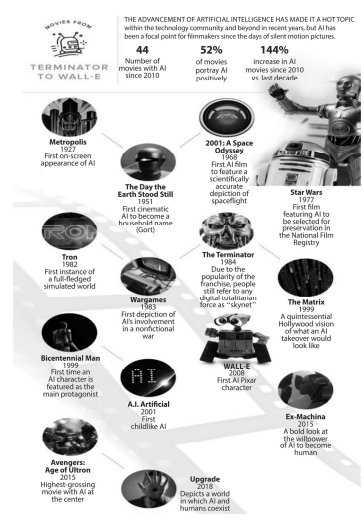
Enlightened Digital. A century of AI in the movies. Internet: < interestingengineering.com>.
D The Terminator.
From the information in the infographic, it is possible to infer that the movie industry might have influenced movie viewers to have a positive view on AI.
It can be said from the information in the infographic that, from all the movies presented, the most successful one in terms of profit was Star Wars.
The increase of 144% in AI movies shows that AI has recently become a topic of interest for filmmakers.
In the expression “hold fast” (last sentence of the fourth paragraph), “fast” conveys the idea of quickly or speedily.
In the third sentence of the first paragraph, the word “it” refers to ChatGPT.
It is possible to correctly conclude from the last paragraph of the text that its real author was ChatGPT-4.
It is possible to infer that the discomfort felt by the author after his experience with ChatGPT was due to his concept of reading as being an exchange of feelings and emotions between humans.
According to the second paragraph of the text, learning from data means not depending on human programming but on examples of behavior.
Because it does not depend on human programming, machine learning does not make mistakes.
It can be inferred from the text that deep learning depends on a variety of factors, the most important of which being the investment from big businesses.
With the sentence “AI can do amazing things, but they’re a mundane sort of amazing”, the author indicates that he does not believe in everything AI proponents are saying AI can do.

 Conheça nossos planos