Questões de Concurso Sobre vocabulário | vocabulary em inglês

Foram encontradas 3.111 questões

Q3524705 Inglês
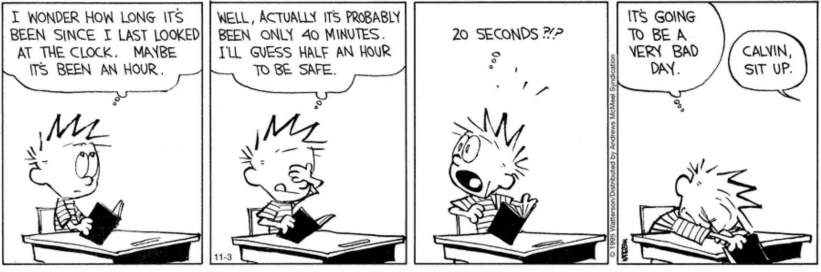
Segundo Brown (2006) e Harmer (1998), “registro”, na linguagem e na comunicação, refere-se ao grau de formalidade usado na fala ou escrita, conforme determinado pelo contexto social de uma interação. Um professor decide usar o quadrinho com seus alunos de língua estrangeira para trabalhar adequação de tipo de registro e prepara para isso uma atividade comunicativa. Tal atividade encontra-se em:
Alternativas
Q3524704 Inglês

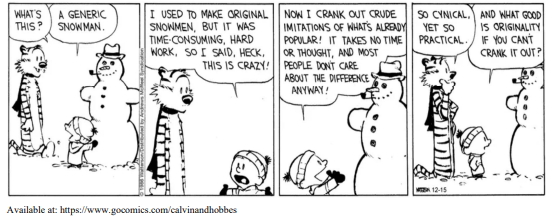
Read the comic strip to answer question.


Q36_37.png (345×449)


(https://www.gocomics.com/calvinandhobbes/1992/12/15)

Knowing that an expression is a meaningful word or phrase, and an idiom is a type of expression with a non-literal meaning, mark the alternative in which the phrase or sentence taken from the cartoon contains an idiom. 
Alternativas
Q3524661 Inglês
   Implied in any consideration of the role of styles and strategies in learning a second language are three linked concepts: autonomy, awareness, and action. These three “As” of learner development have taken on significance in recent years, especially with increasing pedagogical emphasis on learner-centered language teaching (Wenden,2002). A review of the history of language teaching will reveal some interesting “changing winds and shifting sands”. One way of looking at this history is to consider the extent to which methodological trends have emphasized the respective roles of the teacher and the learner. Until some of the “designer” methods appeared in the 1970s, most of language teaching methodology was teacher centered. Students entered a classroom, sat down dutifully in their desks, and waited for the teacher to tell them what to do. Those directives might have been to translate a passage, to memorize a rule, or to repeat a dialogue. Then, the profession seemed to discover the value of learner autonomy in the form of allowing learners to do things like initiate oral production, solve problems in small groups, practice language forms in pairs, and practice using the language outside of the classroom.

   The literature on the topic raises some caution flags, though. Schmenk (2005) appropriately described the nonuniversality of the concept of autonomy, and Pennycook (1994) warned us about the potential cultural imperialism involved in assuming every culture equally values and promotes autonomy, especially in educational institutions. For language teaching in sub-Saharan Africa, Sonaiya (2002, p. 106) questioned “the global validity of the so-called autonomous method of language learning ... which has obvious origins in European and North American traditions of individualism.” However, some recent studies are more encouraging, underscoring the need for teachers to be sensitive to the cultural background of students.


(HARMER, Jeremy. 1998. How to teach English. Adaptado)
In the excerpt “some recent studies are more encouraging, underscoring the need for teachers to be sensitive to the cultural background of students” the word in bold may be substituted, with no change in meaning, by
Alternativas
Q3524650 Inglês
   Technology has always been at the forefront of human education. From the days of carving figures on rock walls to today, when most students are equipped with several portable technological devices at any given time, technology continues to push educational capabilities to new levels. In looking at where educational methods and tools have come from to where they are going in the future, technology’s importance in the classroom is evident now more than ever.

   In the Colonial years, wooden paddles with printed lessons, called Horn-Books, were used to assist students in learning verses. Over 200 years later, in 1870, technology advanced to include the Magic Lantern, a primitive version of a slide projector that projected images printed on glass plates. By the time World War I ended, around 8000 lantern slides were circulating through the Chicago public school system. By the time the Chalkboard came around in 1890, followed by the pencil in 1900, it was clear that students were hungry for more advanced educational tools.

   Examples of these are: in the 1920s, radio sparked an entirely new wave of learning; on-air classes began popping up for any student within listening range. Next came the overhead projector in 1930, followed by the ballpoint pen in 1940 and headphones in 1950. Videotapes arrived on the scene in 1951, creating a new and exciting method of instruction.

   The pre-computer years were formative in the choices made for computers in the years following. Immediate response-type systems (video, calculator, Scantron) had become necessary, and quick production of teaching materials, using the photocopier, had become a standard. Teachers needed new methods of instruction and testing, and students were looking for new ways to communicate, study, and learn.

   Although the first computers were developed in the ‘30s, everyday use computers were introduced in the ‘80s. When IBM introduced its first personal computer in 1981, the educational world knew that it was on the verge of greatness. The foundation of immediate learning capabilities had been laid. Time magazine declared, “it is the end result of a technological revolution that has been in the making for four decades and is now, quite literally, hitting home.”


(https://education.purdue.edu/. Adaptado)
No fragmento do primeiro parágrafo “technology continues to push educational capabilities to new levels” a palavra em negrito é um falso cognato. É também um falso cognato a palavra em negrito na alternativa
Alternativas
Q3524640 Inglês
   The good news about formulating a strong lesson plan for a Content and Language Integrated Learning (CLIL) class is that it will contain many of the same features of a good lesson plan for any class. That is, it will include transitions from and to the previous class and the next one, it will warm students up to the day’s lesson in an engaging way, it will present new material and recycle familiar material, it will include some ways to assess progress during the class, and it will be flexible enough to account for classes that move slower or more quickly than you had anticipated.

   What’s important about CLIL lesson plans, though, is that you include both subject area content and language points so that you derive the full benefits of a CLIL approach. If you try to wing it, you might wind up concentrating on one area to the detriment of the other.

   The key elements of CLIL lesson plans are:

   Content – Most teachers find it easiest to start by considering the content. What knowledge – that is, what subject area material – do you want to transmit? How are you going to present it – through an article, a video, a demonstration, a discussion, or an experiment?

   It can be helpful when planning to finish sentences such as I want my students to be able to/At the end of the class, they should know… If you have a cooperating content area teacher at your institution, meet with that person in advance to go over your goals and see how they interact with theirs.

   Language – Once you have the content pinned down, you can pick out the necessary language and communication skills that students will need to engage with the material. For example, these could include: specialized vocabulary, functional phrases and collocations, pronunciation or intonation practice, grammatical structures, features of text organization.

   You’ll find these linguistic features in the texts that you present, but also in the language that students need to complete tasks. Imagine yourself as a student carrying out a task. What will you say? What will you write? Then, determine if you’ll need to teach any of this language to your class before presenting students with the task.

(https://bridge.edu/tefl/blog/clil-lesson-plans/. Adaptado)
Homophones are words that sound the same but differ in meaning or spelling. Identify the alternative containing homophones.
Alternativas
Q3524638 Inglês
   The good news about formulating a strong lesson plan for a Content and Language Integrated Learning (CLIL) class is that it will contain many of the same features of a good lesson plan for any class. That is, it will include transitions from and to the previous class and the next one, it will warm students up to the day’s lesson in an engaging way, it will present new material and recycle familiar material, it will include some ways to assess progress during the class, and it will be flexible enough to account for classes that move slower or more quickly than you had anticipated.

   What’s important about CLIL lesson plans, though, is that you include both subject area content and language points so that you derive the full benefits of a CLIL approach. If you try to wing it, you might wind up concentrating on one area to the detriment of the other.

   The key elements of CLIL lesson plans are:

   Content – Most teachers find it easiest to start by considering the content. What knowledge – that is, what subject area material – do you want to transmit? How are you going to present it – through an article, a video, a demonstration, a discussion, or an experiment?

   It can be helpful when planning to finish sentences such as I want my students to be able to/At the end of the class, they should know… If you have a cooperating content area teacher at your institution, meet with that person in advance to go over your goals and see how they interact with theirs.

   Language – Once you have the content pinned down, you can pick out the necessary language and communication skills that students will need to engage with the material. For example, these could include: specialized vocabulary, functional phrases and collocations, pronunciation or intonation practice, grammatical structures, features of text organization.

   You’ll find these linguistic features in the texts that you present, but also in the language that students need to complete tasks. Imagine yourself as a student carrying out a task. What will you say? What will you write? Then, determine if you’ll need to teach any of this language to your class before presenting students with the task.

(https://bridge.edu/tefl/blog/clil-lesson-plans/. Adaptado)
Collocations are mentioned in the text as one of the language aspects to be covered in CLIL. A well-known difficulty Brazilian students contend with is the decision between “make” and “do” in collocations. The alternative with the correct use of a collocation is:
Alternativas
Q3522166 Inglês
Consider the following sentence: "She couldn't bear the heavy workload, but she bore it with patience."
Which of the following explanations best describes the use of the word "bear" in both parts of the sentence?
Alternativas
Q3522165 Inglês
In English, certain words have similar or identical sounds but differ in meaning and usage depending on the context in which they are used. These words, known as homophones, can pose challenges for both native and non-native speakers, particularly in written and spoken communication. How do homophones influence communication, and what is the best strategy to avoid confusion when learning English?
Alternativas
Q3522159 Inglês
O texto seguinte servirá de base para responder à questão.

Does Gen Z Already Have a Retirement Problem?

By Elizabeth Gulino

Although they've only been in the professional sphere for less than a decade, Gen Z has already shaken up work as we know it. They're quiet quitting, overcoming imposter syndrome, taking adult gap years, and fully embracing being the personality hire. But they're also, apparently, not saving enough for retirement.

According to the Teachers Insurance and Annuity Association, a financial services company, only 20 percent of Gen Zers are currently saving for retirement. Surya Kolluri, head of the TIAA Institute, says there are a myriad of reasons as to why Gen Z may be behind on starting to save for this milestone: The cost of living is higher, financial pressures are abundant, student debt is climbing, and there's been more of a desire to achieve a healthy work-life balance and flexibility in careers instead of a six-figure salary. And of the 80 percent of respondents who haven't started saving, 35 percent of them admit they don't even know where to start.

A recent Bank of America study provided further confirmation: based on internal deposit account data, the banking institution found that Gen Z on average doesn't have enough saved to cover a month of expenses.

Kolluri says one of the biggest roadblocks in Gen Z's path to retirement is a lack of knowledge. Saving, investing, and the power of compounding aren't exactly taught in schools, and there are enough fin-fluencers and resources out there to make even the most dialed-in Gen Zers feel overwhelmed.

The most common — and easiest — path toward retirement is taking advantage of an employer's 401(k). Lauren, 24, does, but while her current company matches 4 percent of her contributions, she tells PS her former employer didn't match at all. "I didn't even realize that that was such a benefit I was missing," she says. "When I would tell people that they weren't matching it they were like, what? How are they getting away with that? And I had no idea." Now, of course, Lauren is taking full advantage of her employer's plan — but she would've been more ahead in her saving game if she knew what to look for before.

Of the 20 percent of the Gen Zers surveyed currently saving for retirement, 66 percent of them do so through their employer, according to the TIAA. But thanks to dwindling job security and the rise of the gig economy, a chunk of the workforce has been left behind on retirement planning.

Angelina, 27, comes from a family of restaurateurs and is currently partial owner of a restaurant. Currently, she has zero retirement savings. Her dad, however, opened his first restaurant at 36 and was able to retire at 60. "He was able to start something and retire in less than 25 years, which I think gave me a false perception of reality," she says. "I think I'm going to be able to achieve the same thing, but I haven't saved a dime.

"I pay into social security, but that's not necessarily enough to survive on, if that even exists by the time that I'm able to collect it," Angelina adds.

Jane, 25, is at the opposite end of the spectrum: She's currently planning to retire in her 30s — at least, in a way. For most of her working life, she's held two full-time jobs and currently owns a townhouse in downtown Toronto that she rents out to tenants. She lives with her parents to save money and tells PS that 50 percent of her income goes to investments, including retirement.

Right now, she's using Financial Independence, Retire Early (FIRE) as a guide, which follows a formula of saving, investing, and frugal living to reach "financial independence" in a short time frame.

"It's a more flexible variation of retirement," Jane explains. "Retirement doesn't just take one form. There are a lot of different types of it. It's not never working — it's being work-optional, being flexible, being able to take really long breaks."

The first milestone under FIRE is called "barista fire," which Jane is currently working toward obtaining. "It gives you flexibility to be work-optional and gives you flexibility to have enough [saved] that you can be a barista, for example, or work part-time for the rest of your life so you're not dependent on a full 9-to-5 corporate job," she says. "My first FIRE milestone is hopefully saving $700,000. That would enable me to find alternative sources of income as opposed to a full 9-to-5."

Jane's not exactly the norm, however. Kolluri says that employers like Lauren's play a vital role in enabling their workers to get on a strong financial plan, meaning that freelancers or those who are self-employed, like Angelina, need to work that much harder to get themselves started. If you fall into that bucket, he says that looking into individual retirement accounts (IRAs) are a good place to start.

Haley Sacks, a financial influencer known as Mrs. Dow Jones, agrees that endless opportunities to buy and consume don't help very much when it comes to saving. "I think it's really hard when you're constantly bombarded with so much to buy and so much FOMO," she says. "It's very easy for people to spend everything that they make."

Jane, Lauren, and Angelina all cite similar reasons for their age group's lack of retirement funds: the rising cost of living, a shortage of knowledge, and endless opportunities to spend money under capitalism. "We live in a time where our FYPs and our Instagram feeds are perfectly tailored to things we want to purchase and overconsumption is so normalized," Angelina says. "I would say [Gen Z not saving] is more because of overconsumption and the need to shop that's ingrained in us versus not having things like a 401(k), or whatever the hell it's called."

Kolluri says education and instilling confidence among young people when it comes to their money is a must. Saving for retirement is vital — not only for living expenses to be covered with age, but medical expenses, too. "The average couple spends over $300,000 on healthcare in retirement in cash," Sacks says. "The funds that you're saving are not just to live in Boca and play golf all day they're also to take care of yourself as your health deteriorates."

Kolluri says that what's different about Gen Z is they value one thing above all else: freedom. "People in this demographic express interest in wanting to maintain the freedom to pursue their interests and being able to financially manage their lives," he says. "That is a new combination we have not seen in other generations."

Retirement is a long way off for Gen Zers. Angelina, though, is already looking forward to the future. "2025 is my year to get my shit together," she says.

https://www.popsugar.com/money/gen-z-retirement-49425345
In the sentence "The most common — and easiest — path toward retirement is taking advantage of an employer's 401(k)," the word "path" refers to which of the following? 
Alternativas
Q3507955 Inglês
Texto 6

Fernanda Torres' Speech at Golden Globe Awards

"My God! I didn't prepare anything, because I was glad already and this is such an amazing year for female perfomances. So many actresses here that I admire so much. And, of course, I wanna thank you, Walter Salles, my partner, my friend. What a story, Walter! And, of course, I want to dedicate it to my mother.

You have no idea. She was here 25 years ago and this is like a proof that art can endure through life even in difficult moments, like this amazing Eunice Paiva, that I do, has passed. And the same thing that is happening now in the world, with so much fear and this is a film that helped us to think how to survive in tough times like these.

So, to my mother, to my family, to Andrucha (Waddington), to Selton (Mello), to my kids, to everybody. Thank you very much. Golden Globe. Michael Barker, Mara, so many people. Thank you very much. Thank you!" 


Disponível em: <https://www.englishexperts.com.br/forum/fernandatorres-speech-at-golden-globe-awards-t79137.html>. Acesso em: 23 jan.
2025. [Adaptado].
Considering the linguistic elements in the text,
Alternativas
Q3507940 Inglês
Texto 4


Fear of the unknown: AI anxiety in academia

Mickey Mann January 7, 2025


While experts recognize the possible misuses of AI in classrooms — including plagiarism — they agree that educating teachers and students on what the black box of AI is will be essential to its potential use for good.

When cavemen first saw the spark of a flame, they likely felt a mixture of awe, wonder and fear at the powerful new tool. When the printing press was invented it promised widespread access to writing, but it also threatened the jobs of scribes.

Writing itself was once feared as a disruptive technology. The philosopher Socrates famously opposed the written word, concerned it would replace meaningful conversation and intellectual engagement.

Today, artificial intelligence once again stirs fear of the unknown, particularly in the case of education. Skeptical universities across the country have banned AI software and Large Language Models (LLMs) like Chat GPT from their classrooms.

However, some educators in Bellingham are cautiously optimistic about AI’s potential to benefit students, especially English language learners (ESLs) and students with disabilities, by providing much-needed support. But is fear of the unknown holding back this technology from reaching its full potential?


Disponível em: <https://salish-current.org/2025/01/07/fear-of-the-unknownai-anxiety-in-academia/>. Acesso em: 20 jan. 2025. [Adaptado].
O termo “skeptical” no contexto do excerto “Skeptical universities across the country” foi usado para descrever as universidades que 
Alternativas
Q3506786 Inglês
The phrase "what a wonderful world" means:
Alternativas
Q3504753 Inglês

         Adolescence can be rife with anxieties and challenges, but today’s youth face unique threats on a scale encountered by no previous generation, according to an exhaustive new report on their health and wellbeing.


         More than one billion people aged 10 to 24 are at risk of poor health outcomes by 2030, which is at least half the global adolescent population, concluded the report published on Tuesday in the Lancet, a leading medical journal. Adolescents are experiencing rising rates of obesity and mental health struggles, while also grappling with the influence of digital technologies and a destabilized global climate.


         “Even I was shocked by what some of these numbers and future predictions look like,” says Sarah Baird, a professor of global health and economics at the George Washington University and co‑chair of the Lancet Commission that produced the report. “It’s clear we’re already in, and going to be increasingly in, a crisis of bad health among young people.”


         Lancet Commissions are independent research teams convened by the Lancet to examine specific health topics and recommend policy actions. This report was compiled by 44 experts, including ten Youth Commissioners, who reviewed some 550 peer‑reviewed studies since starting their work in 2021. It follows the first report on adolescent health and wellbeing published in 2016.


         “What life is like as an adolescent today is very different than ten years ago,” says Baird. “Given all these other competing demands for resources, attention, and focus, adolescents have once again fallen into the background. It’s time to really remind people of why they’re important, and that ignoring them in this time of rapid change is potentially disastrous.”


         Though there is some good news in the report’s f indings – declining rates of cigarette smoking and alcohol use and better access to education, particularly for girls – the report warns that the health of young people is at “a tipping point” in an uncertain and rapidly changing world.


Internet: <www.nationalgeographic.com> (adapted).

According to the text and its linguistic aspects, judge the following item.


The word “report” can be changed by journalist without changing the meaning.

Alternativas
Q3503704 Inglês
Question must be answered based on the following text.


The strategy of inferencing is defined as the process of using available information (linguistic or nonlinguistic) to guess the meanings of unfamiliar target language elements to predict outcomes or to fill in missing information. Inferencing is also commonly referred to as educated guessing. It regards guessing as a special way of processing new information for it decodes texts through the use of contextual clues and the reader's own background. It is believed that guessing is an essential skill for reading, as it enables the learner to cope with gaps in understanding. Systematic guessing helps learners accept the idea that it is not essential to understand every single word of the text to derive its overall meaning.


Adapted from: ABSY, Conceição A. The use of inference in EFL text comprehension. Available at: https://periodicos.sbu.unicamp.br/ojs/index.php/tla/article/view/8639246/6842.
When analyzing how English as a Foreign Language students process unfamiliar vocabulary in texts, identify below the most suitable pattern of textual engagement that reflects the cognitive strategy of inferencing: 
Alternativas
Q3503691 Inglês
Question must be answered based on the following passage.


As fashions in language teaching come and go, the teacher in the classroom needs reassurance that there is some bedrock beneath the shifting sands. Once solidly founded on the bedrock, like the sea anemone, the teacher can sway to the rhythms of any tides or currents, without the trauma of being swept away purposelessly.


Adapted from: Rivers, Wilga M. Communicating Naturally in a Second Language: Theory and Practice. Cambridge University Press, 1992. p. 373. 
Study the words in bold and select the correct option. 
Alternativas
Q3503687 Inglês
Question must be answered based on the following text.


Read the lines of Bon Jovi’s Misunderstood.


Should I… could I have said the wrong things right a thousand times?

If I could just rewind, I see it in my mind

If I could turn back time, you’d still be mine


You cried, I died

I should have shut my mouth, things headed south

As the words slipped off my tongue, they sounded dumb

If this old heart could talk, it’d say you’re the one

I’m wasting time

When I think about it


I should have drove all night

Would have run all the lights, I was misunderstood

I stumbled like my words

Did the best I could, damn

Misunderstood


Could I… should I apologize for sleeping on the couch that night?

Staying out too late with all my friends

You found me passed out in the yard again


You cried, I tried

To stretch the truth, but didn’t lie

It’s not so bad

You think about it


Available at: https://www.letras.mus.br/bon-jovi/64854/
Observe the following sentences: “I should have shut my mouth, things headed south” and “As the words slipped off my tongue, they sounded dumb.”. The expressions in bold have, in this context, the following meanings:
Alternativas
Q3503685 Inglês
Read the excerpt below and answer the question.

Cambridge Dictionary defines an idiom as a group of words in a fixed order that has a particular meaning that is different from the meaning of each word on its own.

From: CAMBRIDGE UNIVERSITY PRESS. Cambridge Dictionary. Available at: https://dictionary.cambridge.org/.

In the sentences: “I can’t go to school today. I’m feeling under the weather.”; “When healthy eating became popular, many people jumped on the bandwagon”; “I’m ready to paint the town red with my friends.” and “He spilled the beans about coming home for the holidays.” , the idiomatic expressions in bold have the following meanings:
Alternativas
Q3503684 Inglês
A collocation is a natural combination of words that frequently appear together in English. Choose the alternative where all of the collocations are correct. 
Alternativas
Q3502707 Inglês
In the sentence “She said she loved swimming, but actually, she is afraid of deep water”, the word false cognate is
Alternativas
Q3498926 Inglês
Assinale a alternativa que representa as conclusões corretas:

I. A frase “what are you up to?” poderia ser substituída por “what are you up for?”
II. Soccer e football são o mesmo esporte.
III. Soccer é muito usado no inglês britânico e football é muito usado no inglês americano.
IV. Football é muito usado no inglês britânico e soccer no americano.
Alternativas
Respostas
401: B
402: A
403: D
404: A
405: C
406: B
407: C
408: C
409: E
410: C
411: D
412: C
413: E
414: C
415: C
416: D
417: D
418: A
419: E
420: C