Questões de Concurso
Sobre vocabulário | vocabulary em inglês
Foram encontradas 3.121 questões


(__) "Library" means library, not bookstore.
(__) "Parents" refers to father and mother, not to relatives in general.
(__) "Pretend" means to intend or plan to do something.
(__) "Actually" means currently or at the present time.
Select the alternative that shows the correct sequence from top to bottom.
( ) The following words from the text support, expert and data mean in Portuguese, respectively: suportar, esperto and data.
( ) In the sentence Another key aspect of the criminal expert’s work is evidence preservation, the apostrophe s (’s), indicates that the work is related to the expert.
( ) In the sentence They also play a vital role in criminal investigations… the underlined word means to have a crucial function in something’s success.
( ) The indirect speech of the following sentence from the text This ensures that the conclusions presented in forensic reports are reliable and can be used in court. is This ensured that the conclusions presented in forensic reports were reliable and could be used in court.
( ) The words impartiality (second paragraph) and carefully (fourth paragraph) are examples of adverbs.
Choose the alternative which presents the correct sequence, from top to bottom.
Column 1 Words
1. duty
2. accurate
3. aim
4. reliable
5. avoid
Column 2 Meanings
( ) able to be trusted.
( ) intend.
( ) repudiate.
( ) a moral or legal obligation.
( ) correct in all details; exact.
Choose the alternative which presents the correct sequence, from top to bottom.
Choose the option that best explains the meaning of the word ubiquitous as used in this sentence.
Choose the option that best explains the meaning of the word conduct as used in this sentence.
Leia o texto a seguir para responder à questão:
So what languages do I know? I speak English, Spanish, Portuguese, a little French, and a little in a few others. But I would be a bit uncomfortable to say that I ‘know’ all of these languages. The reason for my discomfort is that language learning is such a slow, piece-by-piece process that it is hard to tell when someone has finally ‘arrived’.
In fact, this idea of ‘arriving’ in language is misguided. Language, you see, is more of a journey than a destination, and most learners never feel comfortable saying they have arrived when asked about how much they know. This is especially true because, as in all educational pursuits, the more you learn, the more you are aware of what you do not know.
To illustrate, many of my Asian English learning students studying here in Arizona, U.S., are quite proficient in English. However, when people ask them if they speak English, here are the answers I most often hear:
“I speak okay.”
“I’m not so good.”
“I don’t know.”
The truth is that even these excellent English speakers often feel the distance between them and native-like proficiency. They have accents, they do not know certain words, and they constantly second-guess their grammar. The question “Do you speak a language?” comes out sounding, in their ears, a lot like “Have you mastered the language?”
So how can my foreign students, who by all accounts are doing amazing things in the United States, still feel like they have not arrived? The truth is this: when we focus on mastering a language - perfect pronunciation, complete command of the vocabulary, ability to speak in any and every possible situation -, we are always going to feel insufficient, because by that measure, we all fall short. This way of learning a language is exhausting. A better question than “Do you know the language?” is this: “In the language you are learning, are you creating friendships and experiences?” What I am suggesting is that learners reframe their perspectives. If they are fueled by meeting others, trying new things, and making memories and friendships for themselves, they have a great shot.
I believe that language learning is, at its core, about relationships and experiences – about connecting and learning from those connections. It is my belief that every story (even those who fail) can teach us something about language learning.
(DIXON, S. The language learner guidebook: powerful tools to help you conquer any language. [S.l.]: Wayzgoose, 2018. Adaptado)
Leia o texto a seguir para responder à questão:
Brian Tomlinson and Hitomi Masuhara, The Complete Guide to the Theory and Practice of Materials Development for Language Learning
Whenever we look for resources on materials development, it is difficult to find books which bring together theory and practice in an organic manner. This book does precisely that; it provides the practicality of materials development guides and the academic rigour of reports and research studies published in the field.
Tomlinson and Masuhara’s book has three specific aims. First is to help teachers, researchers and students to know, understand and be constructively critical of what has been achieved to date; secondly to help them develop, adapt, use, review and research materials on their own. Finally, while talking most particularly to teachers, the authors highlight that they want the strong opinions and approaches presented in the book to inspire readers to think independently and to develop and apply innovative approaches on their own.
These three aims seem to be very ambitious and that is the feeling you get when you read through the chapters. The book includes everything related to the theory and practice in materials development to date, and advocates that theory must inform practice and vice versa. Each of the fifteen chapters ends with a section which includes recommendations for teachers followed by a ‘What do you think?’ section to encourage them to reflect on their own contexts and teaching experience in them.
Although at times the book seems overwhelming as it attempts to provide everything about materials in language learning, it successfully realizes its aim to address a wide audience from publishers, researchers to teachers.
(https://www.fortell.org. acessado em 02.10.2025. Adaptado)
Look at the poster below:

(Available on: https://x.com/CrypticArtifact/. Accessed on: October 2025.)
“Library Pictures” is a song by the British band Arctic Monkeys, included in their album Suck It and See. As to its contextualized meaning, the concept that fits the word library is:
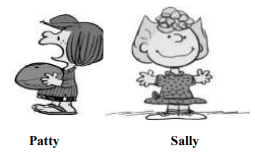
Peppermint Patty and Sally Brown are iconic characters from Charles Schulz's Peanuts comic strip, known for their distinct personalities: Patty is a tomboyish, athletic, freckled girl who is best friends with Marcie.
Sally is Charlie Brown's younger sister, known for her dramatic flair, love of Linus, and often-misguided schemes for money or attention.
Text 3

Disponível em: https://x.com/Snoopy/status/384756646099959808 Acesso em dez. 2025.
Text 4

Disponível em: https://x.com/Snoopy/status/1514614712540884993 Acesso em dez. 2025
No Text 4, último quadrinho, Sally está numa interlocução com sua professora.
Ela usa a expressão “What are the odds...”, que no contexto significa
Read the following text and answer the next five question.
The implications of a rapidly changing information ecosystem on how governments communicate
Public communication does not happen in a vacuum: the context in which it occurs is core to understanding the challenges and opportunities it faces. Indeed, the analysis of its role for policy and governance mechanisms is made urgent by shifts in the information ecosystem that have transformed the function over the past decade and raised important implications for democracy. The technological revolution that has connected the world through social media has given rise to online social movements and simplified the creation and sharing of content and data. Such changes have also facilitated, however, the spread of mis- and disinformation, contributed to undermining the role of traditional information gatekeepers, and have fundamentally changed how governments communicate. Whereas until the early 2000s a so-called “one-to-many” model of communication prevailed, this has shifted today to a “many-to-many” model. Anyone can be both a producer and a consumer of information, and anybody with an internet connection has the potential to engage with and influence public debates.
Traditionally, governments had largely relied on traditional media to amplify official messages to reach citizens. With the advent of digital channels, this approach has gradually lost its primacy to direct institution-to-individual communication via online platforms that bypass traditional media. This shift has also enabled a broader scope for governments to communicate about more diverse policy issues targeted to more specific audiences, as traditional media tend to concentrate on “newsworthy” subjects and political affairs, often under-reporting less mainstream issues. The unprecedented volumes of data that promise to make communication ever more precise, combined with the direct, unmediated access to vast and diverse publics, are some of the opportunities and challenges that have emerged.
At the same time, digital platforms have altered patterns in eople’s consumption of information and raised demands on their attention. The latter has become a resource that technology companies sell to advertisers. In turn, the design of online platforms and their algorithms, and the massive increase in the volume of information served to increase competition for what content people pay attention to, while making focus more superficial. As governments compete with all other information sources for the public’s attention, cognitive and psychological factors such as information overload can undermine the efficacy of even well-crafted content.
Online and social media have also heightened the pace at which information travels, accelerated the news cycle, and enabled a wider range of actors to drive discussions on policy issues. Taken together, digital technologies have produced a complex information ecosystem that has made it more challenging for official messages to “cut through the noise”. Cumulatively, these changes require considerable adjustments to practices, public officials’ skills, and even to how communication is organised, if governments are to make the most of the digital transformation and ensure it can promote better governance. […]
The ability for governments to use the communication function to promote constructive democratic spaces is critically threatened by widespread mis- and disinformation. When falsehoods spread extensively and rapidly on issues of public policy, official messages are drowned out, creating significant challenges for public communicators to get key information out to all groups in society. Whether in the context of elections, health crises, migration or climate change, mis- and disinformation cast evidence and facts into doubt, sow distrust, and work against policy goals.
Adapted from: https://www.oecd.org/content/dam/oecd/en/publications/ reports/2021/12/oecd-report-on-public-communication_b74311bc/22f8031c-en.pdf
The text ends by pointing out the need for governments to be:
Read the following text and answer the next five question.
The implications of a rapidly changing information ecosystem on how governments communicate
Public communication does not happen in a vacuum: the context in which it occurs is core to understanding the challenges and opportunities it faces. Indeed, the analysis of its role for policy and governance mechanisms is made urgent by shifts in the information ecosystem that have transformed the function over the past decade and raised important implications for democracy. The technological revolution that has connected the world through social media has given rise to online social movements and simplified the creation and sharing of content and data. Such changes have also facilitated, however, the spread of mis- and disinformation, contributed to undermining the role of traditional information gatekeepers, and have fundamentally changed how governments communicate. Whereas until the early 2000s a so-called “one-to-many” model of communication prevailed, this has shifted today to a “many-to-many” model. Anyone can be both a producer and a consumer of information, and anybody with an internet connection has the potential to engage with and influence public debates.
Traditionally, governments had largely relied on traditional media to amplify official messages to reach citizens. With the advent of digital channels, this approach has gradually lost its primacy to direct institution-to-individual communication via online platforms that bypass traditional media. This shift has also enabled a broader scope for governments to communicate about more diverse policy issues targeted to more specific audiences, as traditional media tend to concentrate on “newsworthy” subjects and political affairs, often under-reporting less mainstream issues. The unprecedented volumes of data that promise to make communication ever more precise, combined with the direct, unmediated access to vast and diverse publics, are some of the opportunities and challenges that have emerged.
At the same time, digital platforms have altered patterns in eople’s consumption of information and raised demands on their attention. The latter has become a resource that technology companies sell to advertisers. In turn, the design of online platforms and their algorithms, and the massive increase in the volume of information served to increase competition for what content people pay attention to, while making focus more superficial. As governments compete with all other information sources for the public’s attention, cognitive and psychological factors such as information overload can undermine the efficacy of even well-crafted content.
Online and social media have also heightened the pace at which information travels, accelerated the news cycle, and enabled a wider range of actors to drive discussions on policy issues. Taken together, digital technologies have produced a complex information ecosystem that has made it more challenging for official messages to “cut through the noise”. Cumulatively, these changes require considerable adjustments to practices, public officials’ skills, and even to how communication is organised, if governments are to make the most of the digital transformation and ensure it can promote better governance. […]
The ability for governments to use the communication function to promote constructive democratic spaces is critically threatened by widespread mis- and disinformation. When falsehoods spread extensively and rapidly on issues of public policy, official messages are drowned out, creating significant challenges for public communicators to get key information out to all groups in society. Whether in the context of elections, health crises, migration or climate change, mis- and disinformation cast evidence and facts into doubt, sow distrust, and work against policy goals.
Adapted from: https://www.oecd.org/content/dam/oecd/en/publications/ reports/2021/12/oecd-report-on-public-communication_b74311bc/22f8031c-en.pdf
The first word in “shifts in the information ecosystem” (1st paragraph) is close in meaning to:
PHRASAL VERBS 1. sort out 2. went out 3. looked out 4. carried out 5. crossed out 6. climbed out 7. checked out
SENTENCES ( ) We paid the hotel bill and ________. ( ) Andy opened the window and ________. ( ) Suddenly all the lights in the building _______. ( ) Some of the names on the list will be _______. ( ) There are a few problems we need to _______. ( ) An investigation into the accident will be ________. ( ) She swam up and down the pool, and then________.
The correct sequence of this association is:
WORDS 1. Asset 2. Output 3. Collateral 4. Liabilities 5. Mortgage
DEFINITIONS ( ) Something valuable that you promise to give as guarantee for a loan.
( ) Total amount of something a person, a machine or an industry produces.
( ) Anything of value owned by a business that can be used to produce goods, pay debts etc.
( ) Loan by which a bank or a similar financial institution lends somebody money to buy property.
( ) Money that a company will have to pay to someone else, for example: bills, taxes, debts, and interest.
The correct sequence of this association is:
Many people tend to be put ______ learning foreign languages as it also means taking ______ a lot ______ foreign grammar and vocabulary. Having attended two or three classes, they simply give ______ and put the whole thing ______ the backburner.
The sequence that correctly fills in the blanks is:
Mount Nyiragongo in the Democratic Republic of Congo is one of Africa’s most active volcanoes. In all, there are eight volcanoes along the borders of Rwanda, Congo and Uganda. Nyiragongo was last active in 1994, when a lava lake reappeared in its summit crater. The latest eruption is more serious. Lava from Nyiragongo can travel at 60 kilometers per hour and some of it might reach a nearby lake and do further damage. Bill Evans of the US Geological Survey said lava could react with gas in the lake, with catastrophic consequences. The gas is composed of carbon dioxide and methane and could suffocate local people living around the lake.
Associate the lexical category with its word highlighted in the text above.
WORDS 1. along 2. borders 3. latest 4. it 5. reach
LEXICAL CATEGORIES ( ) verb ( ) noun ( ) adverb ( ) adjective ( ) preposition
The correct sequence of this association is:

 Conheça nossos planos