Questões de Concurso
Sobre vocabulário | vocabulary em inglês
Foram encontradas 3.119 questões


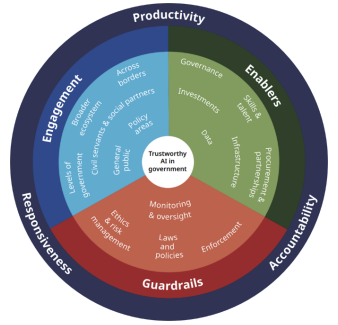
A expressão “risk aversion” pode ser corretamente compreendida como:¬
Analise as afirmativas abaixo sobre o tema Vocabulário e Comunicação em Língua Inglesa.
1. Campo Semântico é constituído por um conjunto de palavras relacionadas entre si. Exemplo: tema food (guava, toast, beans, juice).
2. A expressão How are you? é um exemplo de uso cotidiano em língua inglesa.
3. Ao trabalhar vocabulário no Ensino Fundamental, é pedagogicamente mais adequado priorizar a tradução literal de todos os termos.
4. Thanksgiving é um elemento sociocultural de países que tem a Língua Inglesa como segunda língua.
Assinale a alternativa que indica todas as afirmativas corretas.
Study the sentences below about “Vocabulary and Communication of English-speaking countries”, appropriate for Ensino Fundamental, and decide if they are true ( T ) or false ( F ).
( ) In many English-speaking countries, shaking hands is a common form of greeting.
( ) The words kitchen, closet, bedroom, and cellphone are part of the semantic field of parts of a house.
( ) In the United States and the United Kingdom, punctuality is generally considered important in social and professional contexts.
( ) Words like teacher, classroom, and homework are connected to the semantic field of school and education.
( ) Semantic fields are only useful for advanced learners and are not important in elementary English learning.
Choose the alternative which presents the correct sequence, from top to bottom.
Text 1
A Message Across Screens
Every morning, Emma checked her phone before getting out of bed. Messages, videos, and stories filled her screen, connecting her to people from different parts of the world. One day, she came across a short digital story shared by a student from another country. It talked about learning English through music, social media, and online friendships.
Curious, Emma replied to the post. Soon, they started exchanging messages and videos, sharing their daily routines, cultures, and challenges. Through these digital interactions, Emma realized that storytelling was no longer limited to books. It now lived on screens, combining images, sounds, and words to create meaning.
Over time, their stories helped them understand each other better. Digital storytelling became a bridge between cultures, showing that language learning is also about empathy, communication, and connection.
Analyze the following sentences according to vocabulary and grammar use, from text 1.
1. get out, come across (paragraph 1), and live on (paragraph 2), are examples of phrasal verbs.
2. The word better (paragraph 3), is the superlative form of the adjective bad.
3. The following pronouns: they (paragraph 2), their and them (paragraph 3) are, respectively: a personal pronoun, a possessive adjective and an object pronoun.
4. The underlined word in Soon, they started exchanging messages and videos, sharing their daily routines, cultures, and challenges., is an example of a discourse marker.
5. The underlined word in Through these digital interactions, Emma realized that storytelling was no longer limited to books.” can be replaced by carried out without changing its meaning.
Choose the alternative which contains the correct sentences about vocabulary and grammar use.
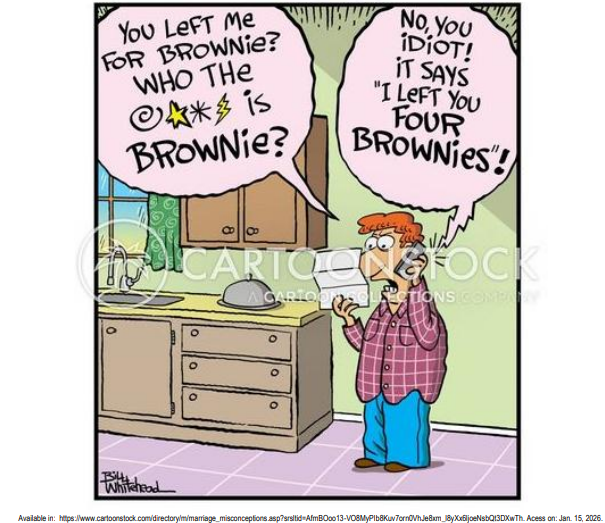
According to the cartoon,
(__) O uso de acrônimos como 'ASAP' e 'LOL' funciona como marcador de pertencimento ao grupo e economia de tempo.
(__) A 'Flaming' refere-se à prática de interação hostil e agressiva em fóruns ou seções de comentários.
(__) A linguagem digital elimina completamente as regras de polidez (netiquette) em favor da velocidade.
(__) O inglês usado em chats é considerado um híbrido que mescla características da fala e da escrita.
Após análise, assinale a alternativa que apresenta a sequência CORRETA dos itens acima, de cima para baixo:
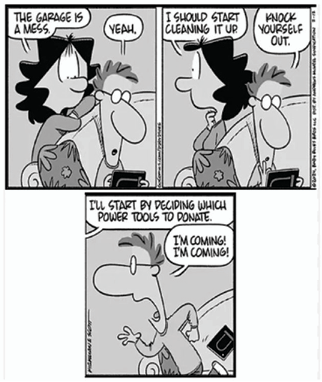
Source: KIRKMAN, Rick; SCOTT, Jerry. Baby Blues. GoComics, 12 fev. 2024. Disponível em: www.gocomics.com. Acesso em: 10 mar. 2026.
TEXT 1
The Decolonial Option in English Teaching: Can the Subaltern Act?
In this reflective article that straddles the personal and the professional, the author shares his critical thoughts on the impact of the steady stream of discourse on the native speaker/nonnative speaker (NS/NNS) inequity in the field of TESOL. His contention is that more than a quarter century of the discoursal output has not in any significant way altered the ground reality of NNS subordination. Therefore, he further contends, it is legitimate to ask what the discourse has achieved, where it has fallen short, why it has fallen short, and what needs to be done. Drawing insights from the works of Gramsci (1971) on hegemony and subalternity, and Mignolo (2010) on decoloniality, the author characterizes the NNS community as a subaltern community and argues that, if it wishes to effectively disrupt the hegemonic power structure, the only option open to it is a decolonial option which demands resultoriented action, not just “intellectual elaboration.” Accordingly, he presents the contours of a five-point plan of action for the consideration of the subaltern community. He claims that only a collective, concerted, and coordinated set of actions carries the potential to shake the foundation of the hegemonic power structure and move the subaltern community forward.
Excerpt extracted and adapted from: KUMARAVADIVELU, Bala. The decolonial option in English teaching: Can the subaltern act? TESOL Quarterly, [S.l.], v. 50, n. 1, p. 66–85, 2016. DOI: 10.1002/tesq.202. Available in: https://doi.org/10.1002/tesq.202.
TEXT 1
The Decolonial Option in English Teaching: Can the Subaltern Act?
In this reflective article that straddles the personal and the professional, the author shares his critical thoughts on the impact of the steady stream of discourse on the native speaker/nonnative speaker (NS/NNS) inequity in the field of TESOL. His contention is that more than a quarter century of the discoursal output has not in any significant way altered the ground reality of NNS subordination. Therefore, he further contends, it is legitimate to ask what the discourse has achieved, where it has fallen short, why it has fallen short, and what needs to be done. Drawing insights from the works of Gramsci (1971) on hegemony and subalternity, and Mignolo (2010) on decoloniality, the author characterizes the NNS community as a subaltern community and argues that, if it wishes to effectively disrupt the hegemonic power structure, the only option open to it is a decolonial option which demands resultoriented action, not just “intellectual elaboration.” Accordingly, he presents the contours of a five-point plan of action for the consideration of the subaltern community. He claims that only a collective, concerted, and coordinated set of actions carries the potential to shake the foundation of the hegemonic power structure and move the subaltern community forward.
Excerpt extracted and adapted from: KUMARAVADIVELU, Bala. The decolonial option in English teaching: Can the subaltern act? TESOL Quarterly, [S.l.], v. 50, n. 1, p. 66–85, 2016. DOI: 10.1002/tesq.202. Available in: https://doi.org/10.1002/tesq.202.
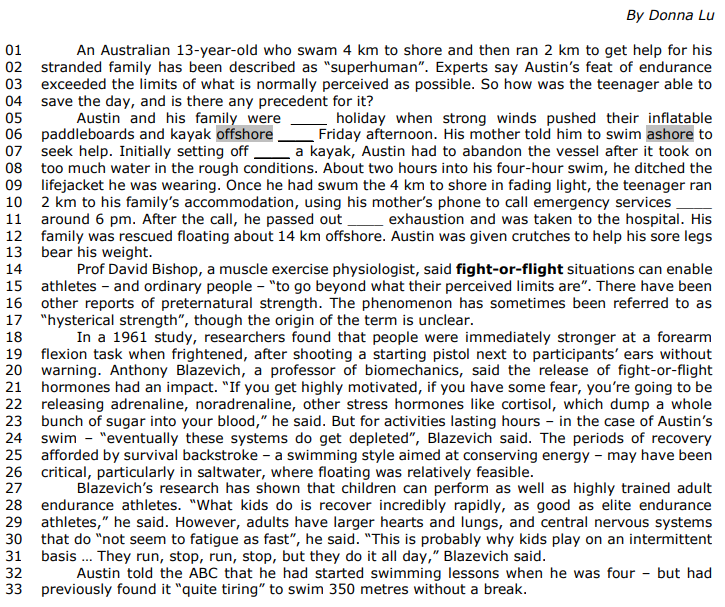

 Conheça nossos planos