Questões de Concurso
Sobre tradução | translation em inglês
Foram encontradas 656 questões


Consider the following assertives:
I.The word "oatmeal" could be translated as "aveia" (14º§).
II.The word "once" is a preposition (11º§).
III.The word "replenishing" could be replaced by "outshine" (11º§).
Which one(s) is(are) CORRECT?
"If the cough is still persistent, I suggest you make compresses with basil, cilantro and rosemary".
I.The word "cough" could be translated as "tosse".
II.The word "persistent" is an adjective.
III.The word "basil" could be replaced by "thyme".
Which one(s) is(are) correct?
O texto seguinte servirá de base para responder à questão.
(1º§) The Maya are probably the best-known of the classical civilizations of Mesoamerica. Originating in the Yucatán around 2600 B.C., they rose to prominence around A.D. 250 in present-day southern Mexico, Guatemala, northern Belize and western Honduras. Building on the inherited inventions and ideas of earlier civilizations such as the Olmec, the Maya developed astronomy, calendrical systems and hieroglyphic writing. The Maya were noted as well for elaborate and highly decorated ceremonial architecture, including temple-pyramids, palaces and observatories, all built without metal tools. They were also skilled farmers, clearing large sections of tropical rain forest and, where groundwater was scarce, building sizeable underground reservoirs for the storage of rainwater. The Maya were equally skilled as weavers and potters, and cleared routes through jungles and swamps to foster extensive trade networks with distant peoples.
(2º§) Around 300 B.C., the Maya adopted a hierarchical system of government with rule by nobles and kings. This civilization developed into highly structured kingdoms during the Classic period, A.D. 200-900. Their society consisted of many independent states, each with a rural farming community and large urban sites built around ceremonial centres. It started to decline around A.D. 900 when - for reasons which are still largely a mystery - the southern Maya abandoned their cities. When the northern Maya were integrated into the Toltec society by A.D. 1200, the Maya dynasty finally came to a close, although some peripheral centres continued to thrive until the Spanish Conquest in the early sixteenth century.
(3º§) Maya history can be characterized as cycles of rise and fall: city-states rose in prominence and fell into decline, only to be replaced by others. It could also be described as one of continuity and change, guided by a religion that remains the foundation of their culture. For those who follow the ancient Maya traditions, the belief in the influence of the cosmos on human lives and the necessity of paying homage to the gods through rituals continues to find expression in a modern hybrid Christian-Maya faith.
https://www.historymuseum.ca/cmc/exhibitions/civil/maya/mmc01eng.html
Consider the first paragraph of the text and the following assertives:
I."Inherited inventions" could be translated as "invenções criadas".
II.The word "rose" is an irregular verb.
III.The word "weavers" could be replaced by "joiners".
Which one(s) is(are) CORRECT?
O texto seguinte servirá de base para responder à questão.
(1º§)Clothing of Ancient Romans were generally simple but that doesn't mean it didn't change through time, although slowly. Roman clothing consisted of toga, tunic and stola.
(2º§)The most commonly used material for their clothing was wool but they also used and produced linen and hemp. The production of these fibers was very similar. After the harvest the fibers were immersed in water and then aired. After that, fibers were pressed mechanically with a mallet and smoothed with large combs. Fibers were then spun and woven on looms.
(3º§)While wool, hemp and hemp were produced on the Roman territory, silk and cotton were imported from China and India. Because they were very expensive, they were reserved for higher classes. From exotic materials, Romans also used wild silk that is collected from the wild after the insect had eaten its way out; and sea silk that comes from the endemic "noble pen shell" that lives only in Mediterranean. Although we think that all roman clothes were white (because of the statues), Romans dyed theirs clothes in purple, indigo, red, yellow and other colors. Leather was used for protection against poor weather (from leather were made heavy coats for Roman soldiers), but its primary use was in footwear and belts. Animal skins were also worn by soldiers. Legionaries wore bearskins while Praetorians preferred feline skins.
(4º§)Toga was probably the most significant item in the ancient Roman wardrobe. It was made of wool and was designed under the influence of the Etruscans and their clothes. Basically the toga was a large blanket, draped over the body, leaving one arm free. Reason why the free citizens were required to wear togas was to differ from slaves who wore tunics. Togas were forbidden for foreigners and fro exiled Romans.
(5º§)Tunic is adopted from the Greeks and was worn by everybody citizens, slaves and non-Romans and by both genres. Wearer's status in Roman society was shown with color and decorations of the tunic. It was worn as a shirt or a gown or as undergarments.
(6º§)Stola was traditional clothing of Roman women made of linen, cotton or wool. It was reserved for women since 2nd century BC when the toga started to be clothing reserved for men. It was a long, pleated dress, worn over a tunic. It generally had no sleeves but there were versions with shorter and longer sleeves. Sleeveless version was fastened by clasps at the shoulders. It also had belts or two that held stola.
(7º§)From the late Republic to the end of the Western empire, clothing of Ancient Rome slowly changed. After the Diocletian's reforms, clothing worn by soldiers and non-military members of government became very decorated. Their tunics and cloaks were decorated with woven or embellished strips and circular roundels. Silk was used more than ever. Bureaucrats started using pieces of clothing that were before reserved only for military. People started wearing even the trousers which was before that considered as a sign of cultural decay because only barbarians wore trousers at that time.
http://www.historyofclothing.com/
http://www.historyofclothing.com/
Consider the text and the following assertives:
I.The word "looms" (2º§) could be translated as "teares".
II.The word "also" (3º§) can be a noun.
III.The word "clasps" (6º§) could be replaced by "regards".
Which one(s) is(are) correct?
"But I set fire to the rain,
Watched it pour as I touched your face,
Well, it burned while I cried,
'Cause I heard it screaming out your name, your name."
A expressão título da música "I set fire to the rain" pode ser traduzida como:
I.The can came full of worms.
II.A drop of blood fell on the sheet.
Considering the context of each sentence, mark the alternative that presents the translation of the words in bold.
(5º§)"Details on the vulnerabilities are scarce in order to not give too much information away to crooks before users have updated."
The two words in bold can be correctly translated respectively as:
I.The word "reboot" (8º§) could be translated as "reiniciar".
II.The word "update" (6º§) can be an adverb.
III.The word "flaws" (3º§) could be replaced by "glee".
Which one(s) is(are) CORRECT?
O que significa a expressão “by the way”?
Leia o texto para responder às questões de números 43 a 46.
In 1972 a British linguist, D. A. Wilkins, proposed a functional or communicative definition of language that could serve as a basis for developing communicative syllabuses for language teaching. Wilkins’s contribution was an analysis of the communicative meanings that a language learner needs to understand and express. Rather than describe the core of language through traditional concepts of grammar and vocabulary, Wilkins attempted to demonstrate the systems of meanings that lay behind the communicative uses of language. He described two types of meanings: notional categories (concepts such as time, sequence, quantity, location) and categories of communicative function (requests, denials, offers, complaints).
Proponents of Communicative Language Teaching (CLT) see it as an approach that aims to (a) make communicative competence the goal of language teaching and (b) develop procedures for the teaching of language skills that acknowledge the interdependence of language and communication. Its comprehensiveness thus makes it different in scope and status from any of the earlier traditions in language teaching. There is no single text or authority on it, nor any single model that is universally accepted as authoritative. What is essential in all of them is that at least two parties are involved in an interaction of some kind where one party has an intention and the other party expands or reacts to the intention.
(RICHARDS, J.C. & RODGERS,T. Approaches and Methods in Language Teaching. Cambridge: CUP, 2001. Adaptado)
O objetivo do Ensino Comunicativo de Línguas expresso na afirmação “develop procedures for the teaching of the four language skills that acknowledge the interdependence of language and communication” traz a seguinte implicação:
Leia o texto a seguir e responda as questões de 30 a 40:
We crowded round, and over Miss Cathy's head I had a peep at a dirty, ragged, black-haired child; big enough both to walk and talk: indeed, its face looked older than Catherine's; yet when it was set on its feet, it only stared round, and repeated over and over again some gibberish that nobody could understand. I was frightened, and Mrs. Earnshaw was ready to fling it out of doors: she did fly up, asking how he could fashion to bring that gipsy brat into the house, when they had their own bairns to feed and fend for? What he meant to do with it, and whether he were mad? The master tried to explain the matter; but he was really half dead with fatigue, and all that I could make out, amongst her scolding, was a tale of his seeing it starving, and houseless, and as good as dumb, in the streets of Liverpool, where he picked it up and inquired for its owner. Not a soul knew to whom it belonged, he said; and his money and time being both limited, he thought it better to take it home with him at once, than run into vain expenses there: because he was determined he would not leave it as he found it. Well, the conclusion was, that my mistress grumbled herself calm; and Mr. Earnshaw told me to wash it, and give it clean things, and let it sleep with the children.
Hindley and Cathy contented themselves with looking and listening till peace was restored: then, both began searching their father's pockets for the presents he had promised them. The former was a boy of fourteen, but when he drew out what had been a fiddle, crushed to morsels in the great-coat, he blubbered aloud; and Cathy, when she learned the master had lost her whip in attending on the stranger, showed her humour by grinning and spitting at the stupid little thing; earning for her pains a sound blow from her father, to teach her cleaner manners. They entirely refused to have it in bed with them, or even in their room; and I had no more sense, so I put it on the landing of the stairs, hoping it might he gone on the morrow. By chance, or else attracted by hearing his voice, it crept to Mr. Earnshaw's door, and there he found it on quitting his chamber. Inquiries were made as to how it got there; I was obliged to confess, and in recompense for my cowardice and inhumanity was sent out of the house.
BRONTE, Emily. Wuthering Heights. London: Thomas Cautley Newby, 1847
“Not a soul knew to whom it belonged, he said”
Sobre o fragmento acima, assinale a alternativa correta:
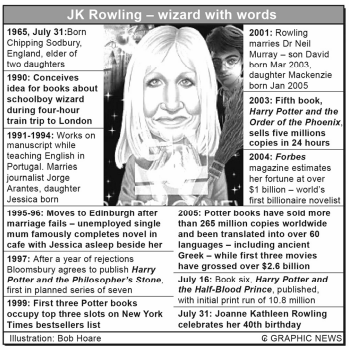
Based on the infographic above, judge the following item.
“Rejection”, “occupy” and “magazine” translate in
Portuguese as rejeição, ocupar e magazine, respectively.
• Hit / Heat • Bit / Beat • Knit / Neat • Chip / Cheap • Live / Leave
The set of minimal pairs was used for oral practice being its specific target to distinguish vowel pronounciation. Mark the criteria that accounts for the vowel distintion existing in all of the chosen minimal pairs.
Read the dialogue to answer.

(Available in: https://www.liveworksheets.com/se1991286ki.)
Indicate the language practice which might be proposed as
of the dialogue study.
Read the text to answer.
A: So, I’ve decided I’m going to go to the bank and ask for a car loan.
B: That sounds like a good idea.
C: Well, you need a car.
B: Right.
A: Anyway, I was wondering if either of you would teach me how to drive.
B: Look, I’m very busy during the week, I'm trying to catch up with my deadline.
C: I’m in the same boat, but there must be a way...
A: What about the weekend? Say, Saturday morning? You both could take turns.
B: Fine with me!
C: Count me in!
The words reproducing pause, hesitation, redundancy, etc
which might or might not be present in abbreviated form
in the dialogue are:
Teacher: Where did you go on the weekend? Student: I went to the park. Teacher: You went to the park? How nice! What did you do? Student: I played soccer. Teacher: You played soccer. Who played soccer with you? Student: My friends from school, my team. Teacher: Your friends from school, your team? Did you like it? Student: I loved it. Teacher: You loved it. Great!
Among the resources of classroom management, teacher’s speech is considered a key element. The repetition produced by the teacher in the above dialogue signals:
The handout sentences
1.A – Do you know Valen’s address? 1.B – Do you have permition to address President Biden? 2.A – Dishonesty is a common attribute of politicians. 2.B – That quote is attributed to Bob Dylan. 3.A – We aren’t happy with your conduct. 3.B – He was asked to conduct the philarmonic orchestra. 4.A – The content of your essay is fine, the structure is not. 4.B – She seemed very content while reading the message. 5.A – The army marched through the desert. 5.B – If you desert the army you will be in big trouble. 6.A – What is that object over there? 6.B – Would you object if I opened the window? 7.A – The project should be completed next month. 7.B – We could project the film on the wall.
Choose the item that justifies the use of the pairs of sentences for oral practice.

 Conheça nossos planos