Questões de Concurso Sobre tradução | translation em inglês

Foram encontradas 655 questões

Q3137313 Inglês
When translating English idiomatic expressions into Portuguese, it is often essential to convey the underlying meaning rather than translate word-for-word. Which of the following options shows a culturally adapted translation of an English idiom into Portuguese?
Alternativas
Q3137309 Inglês
When translating idiomatic expressions from English to Portuguese, it is often necessary to adapt the phrase to match cultural understanding rather than literal meaning. Which of the following best represents an appropriate idiomatic translation from English to Portuguese?
Alternativas
Q3137303 Inglês
O texto seguinte servirá de base para responder à questão.


Fossils show flying reptiles ate squid and fish

Prehistoric flying reptiles lived on a diet of small fish and squid, the latest scientific research has shown.

Researcher Dr Roy Smith said stomach contents discovered in fossils were the "smoking gun" evidence for the diets.

The findings were made by scientists from the University of Portsmouth and the Staatliches Museum fur Naturkunde Stuttgart in Germany and published in the Journal of Vertebrate Paleontology.

Pterosaurs lived 182 million years ago and had wingspans of up to 12m (39ft).

The team analysed the fossilised stomach contents of two pterosaur species, dorygnathus and campylognathoides.

They lived during the early Jurassic period, and were found in modern-day south-west Germany.

They found that dorygnathus ate small fish for its last meal while campylognathoides ate prehistoric squid.

Dr Smith, from Portsmouth University's School of Environment and Life Sciences, said: "It is incredibly rare to find 180 million-year-old pterosaurs preserved with their stomach contents, and provides 'smoking gun' evidence for pterosaur diets.

"The discovery offers a unique and fascinating glimpse into how these ancient creatures lived, what they ate, and the ecosystems they thrived in millions of years ago."  

Dr Samuel Cooper, also from the University of Portsmouth, said the stomach contents told scientists "how the animals interacted with each other".

He added: "For me, this evidence of squid remains in the stomach of campylognathoides is therefore particularly exciting.

"Until now, we tended to assume that it fed on fish, similar to dorygnathus, in which we found small fish bones as stomach contents.

"The fact that these two pterosaur species ate different prey shows that they were likely specialised for different diets.

"This allowed dorygnathus and campylognathoides to coexist in the same habitat without much competition for food between the two species."


https://www.bbc.com/news/articles/cx2ym7zedrno
In the sentence, "The discovery offers a unique and fascinating glimpse into how these ancient creatures lived, what they ate, and the ecosystems they thrived in millions of years ago," which of the following is the most accurate translation into Portuguese?
Alternativas
Q3128647 Inglês
A handout containing the pairs of sentences that follow was given 9th graders for translation, observation and comparison. Being the use of a specialized online dictionary, indicated by the teacher, allowed and encouraged, by means of the teacher’s orientations and guidance while it happens the sharing of students’ perceptions it should be possible to:

1.a) Bill had a golden opportunity this semester.
1.b) Bill had a golden chance this semester.

2.a) She is stubborn, and won’t change her mind.
2.b) She is stubborn, and won’t change her thought.

3.a) Unfortunately mom is a heavy smoker.
3.b) Unfortunately mom is a big smoker.

4.a) Are you fully aware of this medicine’s side effects?
4.b) Are you entirely aware of this medicine’s side effects?

5.a) The teacher gave us advice.
5.b) The teacher offered us advice.
Alternativas
Q3101569 Inglês

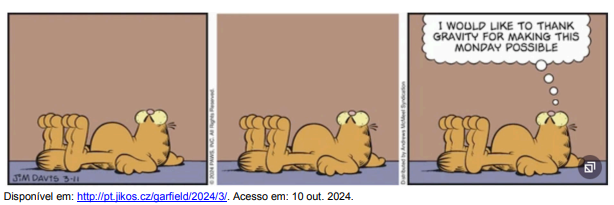
Read the comic strip below to answer question  


What is the best translation for the term “would like”?  

Alternativas
Q3101265 Inglês

Imagem associada para resolução da questão


What is the best translation for the term “would like”?

Alternativas
Q3073144 Inglês
Translating texts accurately requires a deep understanding of both the source and target languages, as well as the context in which the text is used. Consider the following sentence about education that needs to be translated into English:
"A educação é a chave para o desenvolvimento pessoal e a prosperidade social."
Analyze the alternatives and identify the best translation for this sentence:
Alternativas
Q3062008 Inglês

Atenção! Leia o texto a seguir para responder à próxima questão.


The Two Goats


    Two Goats, frisking gayly on the rocky steeps of a mountain valley, chanced to meet, one on each side of a deep chasm through which poured a mighty mountain torrent. The trunk of a fallen tree formed the only means of crossing the chasm, and on this not even two squirrels could have passed each other in safety. The narrow path would have made the bravest tremble. Not so our Goats. Their pride would not permit either to stand aside for the other.

    One set her foot on the log. The other did likewise. In the middle they met horn to horn. Neither would give way, and so they both fell, to be swept away by the roaring torrent below.


Library of Congress. The Aesop for children. Library of Congress, 2024. Disponível em: https://read.gov/aesop/013.html. Acesso em: 12 jul. 2024. 

Pelo contexto da fábula, pode-se inferir corretamente que o termo ‘chasm’, em português, corresponde a: 
Alternativas
Q3046321 Inglês
PAPER OF PINS


(Tradicional canção estadunidense)
I'll give to you this paper of pins
If that's the way our love begins
If you will marry me, me, me
If you will marry me


I'll not accept your paper of pins
If that's the way our love begins
And I'll not marry you, you, you
No, I'll not marry you


I'll give to you this dress of red
All stitched around with golden thread
If you will marry me, me, me
If you will marry me
I'll not accept your dress of red
All stitched around with golden thread
And I'll not marry you, you, you
No, I'll not marry you


I'll give to you this golden chest
So you may have money at your request
If you will marry me, me, me
If you will marry me


I'll not accept your golden chest
So I may have money at my request
And I won't marry you, you, you
No, I won't marry you


Well, I'll give to you my hand and my heart
So we may marry and never part
If you will marry me, me, me
If you will marry me


I will accept you hand and your heart
That we may marry and never part
And I will marry you, you, you
And you will marry me, me, me
Yes, I will marry you 
Qual seria a melhor tradução para “dress of red”?
Alternativas
Q3044815 Inglês

Read the text below: 


Ireland: geography and landscape


Ireland is an island nation on the westernmost edge of Europe. It is the continent's second largest island (after Great Britain). The Republic of Ireland occupies 80 percent of this landmass, while a large chunk of land in the north, called Northern Ireland, is part of the United Kingdom. All together, the island of Ireland is made up of 32 counties.


Ireland is known for its wide expanses of lush, green fields − so much so, that its nickname is the Emerald Isle. But there are also large areas of rugged, rocky landscape, too. About 15,000 years ago, Ireland was completely covered by thick glaciers. The movement of these giant sheets of ice stripped the soil, leaving huge tracts of flat, limestone ground. 


The midlands and west coast of Ireland are dotted with damp peat bogs, the soggy remains of dried-up ancient lakes left by the glaciers. Ireland's highlands rise mainly in the southwest, often ending at sheer cliffs that plunge thousands of feet into the Atlantic Ocean.


Ireland's wildlife and nature 


The Irish have a great affection for nature and rural life. The country's first coins even featured pictures of animals. Low levels of development and pollution in Ireland have left most of the nation's open spaces relatively undisturbed. 


Did you know that there are no wild snakes in Ireland? The sea has stopped many animals common on mainland Europe from reaching the island. There are also only two wild mouse species (the wood mouse and house mouse), one type of lizard (the common lizard) and just three kinds of amphibians (the natterjack toad, smooth newt and common frog). 


Irish wildlife is protected by government conservation programs. To preserve natural habitat, the governmenthas established six national parks and hundreds of national heritage areas throughout the country. Great news!


Irish history


Archaeologists think the first people to settle in Ireland arrived around 6000 B.C. By 3500 B.C., settlers were using stone tools to clear farmlands. Around 700 B.C., a diverse and technologically advanced culture from central Europe, called the Celts, began to settle on the island. They would thrive there for nearly 2,000 years.


n the ninth century A.D., Viking invaders began raids into Ireland. They eventually established settlements that later became some of the country's main cities, including the capital, Dublin. These aggressive arrivals fought with the Celts often for 200 years until a battle in 1014, known as the Battle of Clontarf, united the country. Peace broke down quickly though and Ireland was divided into many kingdoms. 


 In 1170, Norman Vikings who had taken control of England invaded Ireland and made it an English territory. In the early 1600s, England's official religion became Protestant, while most Irish remained Roman Catholic. This would create tensions that would eventually lead to revolution and Ireland's independence.?


 the 1820s, British laws unfair to Catholics had sparked a mass movement for Irish sovereignty. In 1829, many of those laws were overturned, but Ireland still wanted freedom. In 1922, after violent uprisings, the Irish Free State was created within the British Empire. 


In 1948, most of Ireland became an independent country, while six mainly Protestant counties in the northeast remained a British territory. 


Irish people and culture


Ireland is a nation of storytellers. The tradition dates back to Celtic bards, who would record and recite the country's history. Many famed writers come from Ireland, including four winners of the Nobel Prize for literature. The Irish also excel in sports, music and dancing! 


Irish government and economy


The government of Ireland consists of an elected parliament, which makes the laws, and a president, who is head of state. The head of the government is the Taoiseach (pronounced tee-shuck), which means "chief." The Taoiseach is the prime minister, and leader of the political party with the most parliament members.?


For most of its history, Ireland's economy has been based on farming and agriculture. But beginning in the late 1950s, government efforts to attract business turned the country from one of Europe's poorest nations to its second wealthiest. The amazing turnaround and economic boom in the mid 1990s and early 2000s earned Ireland the nickname the "Celtic Tiger."


During the global financial crisis of 2008, Ireland entered a recession and the country experienced serious financial problems. But in the past few years Ireland's economy has started to recover and is once again on the rise.


Judge the excerpts from the text.


Acesso em: https://tinyurl.com/3h5d9rcr


Judge the excerpt from the text


The translation of the sentence "For most of its history, Ireland's economy has been based on farming and agriculture" is as follows: "Durante a maior parte de sua história, a economia da Irlanda baseia-se na pecuária e na agricultura."

Alternativas
Q3044814 Inglês

Read the text below: 


Ireland: geography and landscape


Ireland is an island nation on the westernmost edge of Europe. It is the continent's second largest island (after Great Britain). The Republic of Ireland occupies 80 percent of this landmass, while a large chunk of land in the north, called Northern Ireland, is part of the United Kingdom. All together, the island of Ireland is made up of 32 counties.


Ireland is known for its wide expanses of lush, green fields − so much so, that its nickname is the Emerald Isle. But there are also large areas of rugged, rocky landscape, too. About 15,000 years ago, Ireland was completely covered by thick glaciers. The movement of these giant sheets of ice stripped the soil, leaving huge tracts of flat, limestone ground. 


The midlands and west coast of Ireland are dotted with damp peat bogs, the soggy remains of dried-up ancient lakes left by the glaciers. Ireland's highlands rise mainly in the southwest, often ending at sheer cliffs that plunge thousands of feet into the Atlantic Ocean.


Ireland's wildlife and nature 


The Irish have a great affection for nature and rural life. The country's first coins even featured pictures of animals. Low levels of development and pollution in Ireland have left most of the nation's open spaces relatively undisturbed. 


Did you know that there are no wild snakes in Ireland? The sea has stopped many animals common on mainland Europe from reaching the island. There are also only two wild mouse species (the wood mouse and house mouse), one type of lizard (the common lizard) and just three kinds of amphibians (the natterjack toad, smooth newt and common frog). 


Irish wildlife is protected by government conservation programs. To preserve natural habitat, the governmenthas established six national parks and hundreds of national heritage areas throughout the country. Great news!


Irish history


Archaeologists think the first people to settle in Ireland arrived around 6000 B.C. By 3500 B.C., settlers were using stone tools to clear farmlands. Around 700 B.C., a diverse and technologically advanced culture from central Europe, called the Celts, began to settle on the island. They would thrive there for nearly 2,000 years.


n the ninth century A.D., Viking invaders began raids into Ireland. They eventually established settlements that later became some of the country's main cities, including the capital, Dublin. These aggressive arrivals fought with the Celts often for 200 years until a battle in 1014, known as the Battle of Clontarf, united the country. Peace broke down quickly though and Ireland was divided into many kingdoms. 


 In 1170, Norman Vikings who had taken control of England invaded Ireland and made it an English territory. In the early 1600s, England's official religion became Protestant, while most Irish remained Roman Catholic. This would create tensions that would eventually lead to revolution and Ireland's independence.?


 the 1820s, British laws unfair to Catholics had sparked a mass movement for Irish sovereignty. In 1829, many of those laws were overturned, but Ireland still wanted freedom. In 1922, after violent uprisings, the Irish Free State was created within the British Empire. 


In 1948, most of Ireland became an independent country, while six mainly Protestant counties in the northeast remained a British territory. 


Irish people and culture


Ireland is a nation of storytellers. The tradition dates back to Celtic bards, who would record and recite the country's history. Many famed writers come from Ireland, including four winners of the Nobel Prize for literature. The Irish also excel in sports, music and dancing! 


Irish government and economy


The government of Ireland consists of an elected parliament, which makes the laws, and a president, who is head of state. The head of the government is the Taoiseach (pronounced tee-shuck), which means "chief." The Taoiseach is the prime minister, and leader of the political party with the most parliament members.?


For most of its history, Ireland's economy has been based on farming and agriculture. But beginning in the late 1950s, government efforts to attract business turned the country from one of Europe's poorest nations to its second wealthiest. The amazing turnaround and economic boom in the mid 1990s and early 2000s earned Ireland the nickname the "Celtic Tiger."


During the global financial crisis of 2008, Ireland entered a recession and the country experienced serious financial problems. But in the past few years Ireland's economy has started to recover and is once again on the rise.


Judge the excerpts from the text.


Acesso em: https://tinyurl.com/3h5d9rcr


Judge the excerpt from the text


Sentence: Ireland is known for its wide expanses of lush, green fields − so much so, that its nickname is the Emerald Isle. Translation: Irlanda é conhecida por suas vastas extensões de campos verdes e exuberantes − tanto que seu apelido é "Ilha de Esmeralda".

Alternativas
Q3044813 Inglês

Read the text below: 


Ireland: geography and landscape


Ireland is an island nation on the westernmost edge of Europe. It is the continent's second largest island (after Great Britain). The Republic of Ireland occupies 80 percent of this landmass, while a large chunk of land in the north, called Northern Ireland, is part of the United Kingdom. All together, the island of Ireland is made up of 32 counties.


Ireland is known for its wide expanses of lush, green fields − so much so, that its nickname is the Emerald Isle. But there are also large areas of rugged, rocky landscape, too. About 15,000 years ago, Ireland was completely covered by thick glaciers. The movement of these giant sheets of ice stripped the soil, leaving huge tracts of flat, limestone ground. 


The midlands and west coast of Ireland are dotted with damp peat bogs, the soggy remains of dried-up ancient lakes left by the glaciers. Ireland's highlands rise mainly in the southwest, often ending at sheer cliffs that plunge thousands of feet into the Atlantic Ocean.


Ireland's wildlife and nature 


The Irish have a great affection for nature and rural life. The country's first coins even featured pictures of animals. Low levels of development and pollution in Ireland have left most of the nation's open spaces relatively undisturbed. 


Did you know that there are no wild snakes in Ireland? The sea has stopped many animals common on mainland Europe from reaching the island. There are also only two wild mouse species (the wood mouse and house mouse), one type of lizard (the common lizard) and just three kinds of amphibians (the natterjack toad, smooth newt and common frog). 


Irish wildlife is protected by government conservation programs. To preserve natural habitat, the governmenthas established six national parks and hundreds of national heritage areas throughout the country. Great news!


Irish history


Archaeologists think the first people to settle in Ireland arrived around 6000 B.C. By 3500 B.C., settlers were using stone tools to clear farmlands. Around 700 B.C., a diverse and technologically advanced culture from central Europe, called the Celts, began to settle on the island. They would thrive there for nearly 2,000 years.


n the ninth century A.D., Viking invaders began raids into Ireland. They eventually established settlements that later became some of the country's main cities, including the capital, Dublin. These aggressive arrivals fought with the Celts often for 200 years until a battle in 1014, known as the Battle of Clontarf, united the country. Peace broke down quickly though and Ireland was divided into many kingdoms. 


 In 1170, Norman Vikings who had taken control of England invaded Ireland and made it an English territory. In the early 1600s, England's official religion became Protestant, while most Irish remained Roman Catholic. This would create tensions that would eventually lead to revolution and Ireland's independence.?


 the 1820s, British laws unfair to Catholics had sparked a mass movement for Irish sovereignty. In 1829, many of those laws were overturned, but Ireland still wanted freedom. In 1922, after violent uprisings, the Irish Free State was created within the British Empire. 


In 1948, most of Ireland became an independent country, while six mainly Protestant counties in the northeast remained a British territory. 


Irish people and culture


Ireland is a nation of storytellers. The tradition dates back to Celtic bards, who would record and recite the country's history. Many famed writers come from Ireland, including four winners of the Nobel Prize for literature. The Irish also excel in sports, music and dancing! 


Irish government and economy


The government of Ireland consists of an elected parliament, which makes the laws, and a president, who is head of state. The head of the government is the Taoiseach (pronounced tee-shuck), which means "chief." The Taoiseach is the prime minister, and leader of the political party with the most parliament members.?


For most of its history, Ireland's economy has been based on farming and agriculture. But beginning in the late 1950s, government efforts to attract business turned the country from one of Europe's poorest nations to its second wealthiest. The amazing turnaround and economic boom in the mid 1990s and early 2000s earned Ireland the nickname the "Celtic Tiger."


During the global financial crisis of 2008, Ireland entered a recession and the country experienced serious financial problems. But in the past few years Ireland's economy has started to recover and is once again on the rise.


Judge the excerpts from the text.


Acesso em: https://tinyurl.com/3h5d9rcr


Judge the excerpt from the text


Sentence: The Republic of Ireland occupies 80 percent of this landmass, while a large chunk of land in the north, called Northern Ireland, is part of the United Kingdom. Translation: A República da Irlanda ocupa 80% dessa massa de terra, enquanto uma grande porção de terra no norte, chamada Irlanda do Norte, faz parte do Reino Unido. 

Alternativas
Q3044812 Inglês

Read the text below: 


Ireland: geography and landscape


Ireland is an island nation on the westernmost edge of Europe. It is the continent's second largest island (after Great Britain). The Republic of Ireland occupies 80 percent of this landmass, while a large chunk of land in the north, called Northern Ireland, is part of the United Kingdom. All together, the island of Ireland is made up of 32 counties.


Ireland is known for its wide expanses of lush, green fields − so much so, that its nickname is the Emerald Isle. But there are also large areas of rugged, rocky landscape, too. About 15,000 years ago, Ireland was completely covered by thick glaciers. The movement of these giant sheets of ice stripped the soil, leaving huge tracts of flat, limestone ground. 


The midlands and west coast of Ireland are dotted with damp peat bogs, the soggy remains of dried-up ancient lakes left by the glaciers. Ireland's highlands rise mainly in the southwest, often ending at sheer cliffs that plunge thousands of feet into the Atlantic Ocean.


Ireland's wildlife and nature 


The Irish have a great affection for nature and rural life. The country's first coins even featured pictures of animals. Low levels of development and pollution in Ireland have left most of the nation's open spaces relatively undisturbed. 


Did you know that there are no wild snakes in Ireland? The sea has stopped many animals common on mainland Europe from reaching the island. There are also only two wild mouse species (the wood mouse and house mouse), one type of lizard (the common lizard) and just three kinds of amphibians (the natterjack toad, smooth newt and common frog). 


Irish wildlife is protected by government conservation programs. To preserve natural habitat, the governmenthas established six national parks and hundreds of national heritage areas throughout the country. Great news!


Irish history


Archaeologists think the first people to settle in Ireland arrived around 6000 B.C. By 3500 B.C., settlers were using stone tools to clear farmlands. Around 700 B.C., a diverse and technologically advanced culture from central Europe, called the Celts, began to settle on the island. They would thrive there for nearly 2,000 years.


n the ninth century A.D., Viking invaders began raids into Ireland. They eventually established settlements that later became some of the country's main cities, including the capital, Dublin. These aggressive arrivals fought with the Celts often for 200 years until a battle in 1014, known as the Battle of Clontarf, united the country. Peace broke down quickly though and Ireland was divided into many kingdoms. 


 In 1170, Norman Vikings who had taken control of England invaded Ireland and made it an English territory. In the early 1600s, England's official religion became Protestant, while most Irish remained Roman Catholic. This would create tensions that would eventually lead to revolution and Ireland's independence.?


 the 1820s, British laws unfair to Catholics had sparked a mass movement for Irish sovereignty. In 1829, many of those laws were overturned, but Ireland still wanted freedom. In 1922, after violent uprisings, the Irish Free State was created within the British Empire. 


In 1948, most of Ireland became an independent country, while six mainly Protestant counties in the northeast remained a British territory. 


Irish people and culture


Ireland is a nation of storytellers. The tradition dates back to Celtic bards, who would record and recite the country's history. Many famed writers come from Ireland, including four winners of the Nobel Prize for literature. The Irish also excel in sports, music and dancing! 


Irish government and economy


The government of Ireland consists of an elected parliament, which makes the laws, and a president, who is head of state. The head of the government is the Taoiseach (pronounced tee-shuck), which means "chief." The Taoiseach is the prime minister, and leader of the political party with the most parliament members.?


For most of its history, Ireland's economy has been based on farming and agriculture. But beginning in the late 1950s, government efforts to attract business turned the country from one of Europe's poorest nations to its second wealthiest. The amazing turnaround and economic boom in the mid 1990s and early 2000s earned Ireland the nickname the "Celtic Tiger."


During the global financial crisis of 2008, Ireland entered a recession and the country experienced serious financial problems. But in the past few years Ireland's economy has started to recover and is once again on the rise.


Judge the excerpts from the text.


Acesso em: https://tinyurl.com/3h5d9rcr


Judge the excerpt from the text


Sentence: In 1170, Norman Vikings who had taken control of England invaded Ireland and made it an English territory. Translation: Em 1170, Vikings Normandos que haviam tomado o controle da Inglaterra invadiram a Irlanda e a transformaram em um território inglês.

Alternativas
Q3010795 Inglês
The history of English language teaching (ELT) is unarguably linked to the history of imperialism and colonialism, which materializes in a certain extent the explicit or implicit cultural domination. Such domination inevitably involves the insertion of the colonizer's language into the lives of the colonized peoples. In this regard, the history of English language teaching has always been experienced in terms of cycles, such as theoretical principles and techniques that appear as a trend, disappear for a time and reappear for another period time, sometimes with new principles and fundamentals, and the cycles tend to follow one another. In this regard, studies in Applied Linguistics and Methods and Approaches in English Language Teaching suggest Grammar Translation Method, Direct Method, Oral Approach and Audiolingualism Method to be the first ones in ELT history. Having that in mind match the second column based on the information provided in the first one. Then, check the correct answer.

( A ) GRAMMAR-TRANSLATION METHOD ( B ) DIRECT METHOD ( C ) ORAL APPROACH ( D) AUDIOLINGUALISM METHOD

( ) Grammatical rules are not presented formally and the texts used for reading and writing activities are no longer literary since this method is based on certain principles, such as: selection, gradation and presentation.

( ) Learning is associated with syntactic, morphological and phonological structures which are learned from a system of stimulus, response and reinforcement.

( ) In this method, the writing skill is also developed, but not with a communicative purpose.

( ) Adopting the monolingual principle, this method involves the use of objects, gestures and images to explain the meanings of words, since the students' native language is prohibited from being used.

( ) Language learning would be associated with the formation of readers and the intellectual development of students.

( ) This method involves automatic correction and immediate assessment of students' mistakes by teachers in order to prevent the students from forming or acquiring bad habits and behaviors during the learning process.

( ) As a theoretical systematization of foreign language teaching, its objective would be the development of students' oral skills as the vocabulary and grammatical structures they have learned would be controlled in terms of frequency of occurrence.

( ) In this method, learning must be directly connected to the target language without going through the process of translation into the students' native language.

( ) The language to be taught is the spoken language and the new elements of the language are practiced situationally as the grammatical items are proposed gradually, that is, from the simplest to the most complex forms.

( ) In this method, language is both seen and considered as a behavior, for it is a means of oral communication.
Alternativas
Q2582318 Inglês

Imagem associada para resolução da questão


Which set has the right meanings? Choose the correct answer.

Alternativas
Q2574475 Inglês
Julgue o item a seguir.

As expressões idiomáticas em inglês surgem de forma natural e enriquecem a comunicação textual. O segredo para compreendê-las reside em traduzir as palavras para identificar o significado dentro do contexto.
Alternativas
Q2574459 Inglês
Julgue o item a seguir.

Na tradução da frase: I saw him reading the newspaper at the café, a preposição "at" acompanhado do artigo "the" tem o significado de "no".
Alternativas
Q2533881 Inglês
Assinalar a alternativa que apresenta a tradução CORRETA para o trecho abaixo.
Despite facing numerous challenges, they persevered and succeeded in establishing their own business.
Alternativas
Q2530818 Inglês

Read the text and answer the question. 


What is a consumer society?


A consumer is a person who buys things, and a consumer society is a society that encourages people to buy and use goods. Some people think that a consumer society provides people with better lives. People in consumer societies tend to live more comfortably. They eat a wider variety of food. They go to restaurants more often. They also buy a lot of products, maybe more than they need. Products such as TVs, cell phones, and computers used to be luxuries. Today people can buy these things more easily than ever before. The market for these goods is growing faster all the time. Consumer societies encourage people to buy bigger and better products. For example, “smarter” phones come out every year. In a consumer society, people are often buying newer and more advanced products. This creates a lot of waste. Nowadays, many people are thinking more seriously about the effects of consumer societies on the environment, and they are trying to become more responsible consumers. (https://www.eltngl.com/assets/downloads/grex_pro 0000000538/grex2_su8.pdf).

In the sentence “…smarter phones come out every year”, the highlighted term means:
Alternativas
Q2529414 Inglês
Qual a tradução apropriada da seguinte frase de Krishnamurti?

Real learning comes about when the competitive spirit has ceased.
https://kfoundation.org/quotes/#ambition
Alternativas
Respostas
81: B
82: B
83: D
84: D
85: E
86: E
87: A
88: B
89: D
90: E
91: E
92: C
93: C
94: C
95: B
96: E
97: C
98: B
99: C
100: B
