Questões de Concurso
Para professor - inglês
Foram encontradas 31.229 questões
Resolva questões gratuitamente!
Junte-se a mais de 4 milhões de concurseiros!


Ano: 2025
Banca:
IBADE
Órgão:
Prefeitura de Castelo - ES
Prova:
IBADE - 2025 - Prefeitura de Castelo - ES - Professor E - Língua Inglesa |
Q3708627
Inglês
Texto associado
Read the text below and answer the next question:
Gaia Pope: Family appeals for art in memory of teenager
The family of teenager Gaia Pope are appealing for people
to create and donate artwork to honour her memory a
year after her death.
The 19-year-old was reported missing from Swanage on 7
November. Her body was found 11 days later near the
Dorset coast path.
Her family said as the anniversary of her disappearance
approached they were "asking people to make something
to show she is not forgotten".
The artwork will be displayed online.
Miss Pope, from Langton Matravers, near Swanage, made
an allegation she was raped two years before her death.
Her family claimed an alleged failed police investigation
"severely affected Gaia's mental and physical state".
Art, particularly pyrography (woodburning), became a
form of therapy for the teenager, her family said.
Her mother Natasha Pope said: "I don't speak about my
daughter in the past tense - I utter her name as I always
have because I know she is still with me, every moment, in
all we're doing.
"Gaia's art and poetry, inspired by the beauty of nature
and the strength of femininity, is her way of connecting
with her true self. In spite of all she's been through she is
not defined by that.
"Our Gaia would want to provide a forum for others to find
their voice and create."
Miss Pope's cousin Marienna Pope-Weidemann added:
"Some things are so big, run so deep, they can only be
expressed through art. Our love and our grief for Gaia feels
that way.
"The love we've felt from the community felt that way too.
We want to honour that, make it visible, maybe do
something to show other survivors, families who's lost
someone too soon, that they are not alone."
The family said the project was inspired by the
#JusticeForLB social media campaign and want people to
share their art on Twitter via #JusticeForGaia.
The #JusticeForLB campaign was set up by Dr Sara Ryan -
the mother of 18-year-old Connor Sparrowhawk, who had
epilepsy and drowned in a bath after having a seizure in
Oxford.
Dorset Police is being investigated over the way it handled
the rape allegation and its response to Miss Pope's
disappearance.
Source: https://www.bbc.com/news/uk-england-dorset45571415
The article reports on how the family of Gaia Pope, a
teenager who tragically passed away, chose to honour her
memory one year after her death. Considering the
information presented throughout the text, what is the
central objective of the family’s public appeal?
Ano: 2025
Banca:
IBADE
Órgão:
Prefeitura de Castelo - ES
Prova:
IBADE - 2025 - Prefeitura de Castelo - ES - Professor E - Língua Inglesa |
Q3708626
Inglês
Texto associado
Read the text below and answer the next question:
Gaia Pope: Family appeals for art in memory of teenager
The family of teenager Gaia Pope are appealing for people
to create and donate artwork to honour her memory a
year after her death.
The 19-year-old was reported missing from Swanage on 7
November. Her body was found 11 days later near the
Dorset coast path.
Her family said as the anniversary of her disappearance
approached they were "asking people to make something
to show she is not forgotten".
The artwork will be displayed online.
Miss Pope, from Langton Matravers, near Swanage, made
an allegation she was raped two years before her death.
Her family claimed an alleged failed police investigation
"severely affected Gaia's mental and physical state".
Art, particularly pyrography (woodburning), became a
form of therapy for the teenager, her family said.
Her mother Natasha Pope said: "I don't speak about my
daughter in the past tense - I utter her name as I always
have because I know she is still with me, every moment, in
all we're doing.
"Gaia's art and poetry, inspired by the beauty of nature
and the strength of femininity, is her way of connecting
with her true self. In spite of all she's been through she is
not defined by that.
"Our Gaia would want to provide a forum for others to find
their voice and create."
Miss Pope's cousin Marienna Pope-Weidemann added:
"Some things are so big, run so deep, they can only be
expressed through art. Our love and our grief for Gaia feels
that way.
"The love we've felt from the community felt that way too.
We want to honour that, make it visible, maybe do
something to show other survivors, families who's lost
someone too soon, that they are not alone."
The family said the project was inspired by the
#JusticeForLB social media campaign and want people to
share their art on Twitter via #JusticeForGaia.
The #JusticeForLB campaign was set up by Dr Sara Ryan -
the mother of 18-year-old Connor Sparrowhawk, who had
epilepsy and drowned in a bath after having a seizure in
Oxford.
Dorset Police is being investigated over the way it handled
the rape allegation and its response to Miss Pope's
disappearance.
Source: https://www.bbc.com/news/uk-england-dorset45571415
In the sentence “Her family claimed an alleged failed police
investigation 'severely affected Gaia's mental and physical
state'”, the word “alleged” most nearly means:
Ano: 2025
Banca:
FUNDATEC
Órgão:
Prefeitura de Montenegro - RS
Prova:
FUNDATEC - 2025 - Prefeitura de Montenegro - RS - Professor Área II - Estrangeira/Inglês |
Q3707610
Inglês
Analyze the cartoon below:

A man says to a woman, "We can afford to get married soon". In the sentence, "afford to" means that the man is
A man says to a woman, "We can afford to get married soon". In the sentence, "afford to" means that the man is
Ano: 2025
Banca:
FUNDATEC
Órgão:
Prefeitura de Montenegro - RS
Prova:
FUNDATEC - 2025 - Prefeitura de Montenegro - RS - Professor Área II - Estrangeira/Inglês |
Q3707609
Inglês
Texto associado
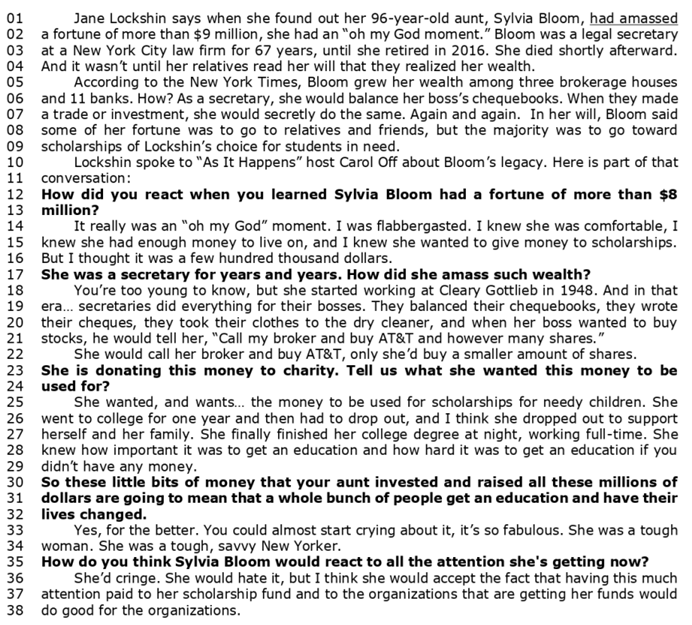
96-year-old secretary secretly grew a $9M fortune
By Sarah Jackson
(Available at: https://www.cbc.ca/radio/asithappens/as-it-happens-monday-full-episode-1.4651457/96-yearold-secretary-secretly-grew-9m-fortune-then-donates-to-students-1.4651864 - text specially adapted for this test).
The word "finally" in "She finally finished her college degree" (l. 30) is a/an:
Ano: 2025
Banca:
FUNDATEC
Órgão:
Prefeitura de Montenegro - RS
Prova:
FUNDATEC - 2025 - Prefeitura de Montenegro - RS - Professor Área II - Estrangeira/Inglês |
Q3707608
Inglês
Texto associado
96-year-old secretary secretly grew a $9M fortune
By Sarah Jackson
(Available at: https://www.cbc.ca/radio/asithappens/as-it-happens-monday-full-episode-1.4651457/96-yearold-secretary-secretly-grew-9m-fortune-then-donates-to-students-1.4651864 - text specially adapted for this test).
The last question asked by the interviewer presents an unreal situation; it would be
impossible for Bloom to learn her story became public because it happened after she died. Which of
the alternatives below correctly presents a third conditional structure commonly used in such cases?
Ano: 2025
Banca:
FUNDATEC
Órgão:
Prefeitura de Montenegro - RS
Prova:
FUNDATEC - 2025 - Prefeitura de Montenegro - RS - Professor Área II - Estrangeira/Inglês |
Q3707607
Inglês
Texto associado
96-year-old secretary secretly grew a $9M fortune
By Sarah Jackson
(Available at: https://www.cbc.ca/radio/asithappens/as-it-happens-monday-full-episode-1.4651457/96-yearold-secretary-secretly-grew-9m-fortune-then-donates-to-students-1.4651864 - text specially adapted for this test).
Mark the correct statement about the excerpt "How did you react when you learned
Sylvia Bloom had a fortune of more than $8 million?" (l. 12-13).
Ano: 2025
Banca:
FUNDATEC
Órgão:
Prefeitura de Montenegro - RS
Prova:
FUNDATEC - 2025 - Prefeitura de Montenegro - RS - Professor Área II - Estrangeira/Inglês |
Q3707606
Inglês
Texto associado
96-year-old secretary secretly grew a $9M fortune
By Sarah Jackson
(Available at: https://www.cbc.ca/radio/asithappens/as-it-happens-monday-full-episode-1.4651457/96-yearold-secretary-secretly-grew-9m-fortune-then-donates-to-students-1.4651864 - text specially adapted for this test).
Analyze the statements below about the excerpt "Bloom was a legal secretary at a
New York City law firm." (I. 02-03):
I. The use of the indefinite article before "legal secretary" is incorrect, since Bloom was already referred to in the article.
II. Both articles are correctly paired with a single countable noun.
III. The indefinite article before "New York City law firm" is correct because it is the first time the firm is mentioned.
Which ones are correct?
I. The use of the indefinite article before "legal secretary" is incorrect, since Bloom was already referred to in the article.
II. Both articles are correctly paired with a single countable noun.
III. The indefinite article before "New York City law firm" is correct because it is the first time the firm is mentioned.
Which ones are correct?
Ano: 2025
Banca:
FUNDATEC
Órgão:
Prefeitura de Montenegro - RS
Prova:
FUNDATEC - 2025 - Prefeitura de Montenegro - RS - Professor Área II - Estrangeira/Inglês |
Q3707605
Inglês
Texto associado
96-year-old secretary secretly grew a $9M fortune
By Sarah Jackson
(Available at: https://www.cbc.ca/radio/asithappens/as-it-happens-monday-full-episode-1.4651457/96-yearold-secretary-secretly-grew-9m-fortune-then-donates-to-students-1.4651864 - text specially adapted for this test).
Why was the past perfect tense used in the following sentence "Jane Lockshin says
when she found out her 96-year-old aunt, Sylvia Bloom, had amassed a fortune of more than
$9 million, she had an 'oh my God' moment." (I. 01-02)?
Ano: 2025
Banca:
FUNDATEC
Órgão:
Prefeitura de Montenegro - RS
Prova:
FUNDATEC - 2025 - Prefeitura de Montenegro - RS - Professor Área II - Estrangeira/Inglês |
Q3707604
Inglês
Texto associado
96-year-old secretary secretly grew a $9M fortune
By Sarah Jackson
(Available at: https://www.cbc.ca/radio/asithappens/as-it-happens-monday-full-episode-1.4651457/96-yearold-secretary-secretly-grew-9m-fortune-then-donates-to-students-1.4651864 - text specially adapted for this test).
Mark the INCORRECT statement about the article.
Ano: 2025
Banca:
FUNDATEC
Órgão:
Prefeitura de Montenegro - RS
Prova:
FUNDATEC - 2025 - Prefeitura de Montenegro - RS - Professor Área II - Estrangeira/Inglês |
Q3707603
Inglês
Texto associado
96-year-old secretary secretly grew a $9M fortune
By Sarah Jackson
(Available at: https://www.cbc.ca/radio/asithappens/as-it-happens-monday-full-episode-1.4651457/96-yearold-secretary-secretly-grew-9m-fortune-then-donates-to-students-1.4651864 - text specially adapted for this test).
Acсording to the text, analyze the statements below and mark T, if true, or F, if false.
( ) Jane Lockshin is Sylvia Bloom's lawyer.
( ) Sylvia Bloom retired at the age of 67.
( ) Friends and family received part of Sylvia Bloom's inheritance.
( ) Sylvia Bloom lived for many years after retiring.
The correct order of filling in the parentheses, from top to bottom, is:
( ) Jane Lockshin is Sylvia Bloom's lawyer.
( ) Sylvia Bloom retired at the age of 67.
( ) Friends and family received part of Sylvia Bloom's inheritance.
( ) Sylvia Bloom lived for many years after retiring.
The correct order of filling in the parentheses, from top to bottom, is:
Ano: 2025
Banca:
FUNDATEC
Órgão:
Prefeitura de Montenegro - RS
Prova:
FUNDATEC - 2025 - Prefeitura de Montenegro - RS - Professor Área II - Estrangeira/Inglês |
Q3707602
Inglês
Texto associado
96-year-old secretary secretly grew a $9M fortune
By Sarah Jackson
(Available at: https://www.cbc.ca/radio/asithappens/as-it-happens-monday-full-episode-1.4651457/96-yearold-secretary-secretly-grew-9m-fortune-then-donates-to-students-1.4651864 - text specially adapted for this test).
Why did Sylvia Bloom have access to her boss's investments?
Ano: 2025
Banca:
FUNDATEC
Órgão:
Prefeitura de Montenegro - RS
Prova:
FUNDATEC - 2025 - Prefeitura de Montenegro - RS - Professor Área II - Estrangeira/Inglês |
Q3707601
Inglês
Texto associado
96-year-old secretary secretly grew a $9M fortune
By Sarah Jackson
(Available at: https://www.cbc.ca/radio/asithappens/as-it-happens-monday-full-episode-1.4651457/96-yearold-secretary-secretly-grew-9m-fortune-then-donates-to-students-1.4651864 - text specially adapted for this test).
How did Sylvia Bloom build her fortune?
Ano: 2025
Banca:
FUNDATEC
Órgão:
Prefeitura de Montenegro - RS
Provas:
FUNDATEC - 2025 - Prefeitura de Montenegro - RS - Professor Área II - Língua Portuguesa
|
FUNDATEC - 2025 - Prefeitura de Montenegro - RS - Professor Área II - Estrangeira/Inglês |
FUNDATEC - 2025 - Prefeitura de Montenegro - RS - Professor Área II - Matemática |
FUNDATEC - 2025 - Prefeitura de Montenegro - RS - Professor Área II - Geografia |
FUNDATEC - 2025 - Prefeitura de Montenegro - RS - Professor Área II - História |
FUNDATEC - 2025 - Prefeitura de Montenegro - RS - Professor Área II - Ciências |
FUNDATEC - 2025 - Prefeitura de Montenegro - RS - Professor Área II - Ensino Religioso |
FUNDATEC - 2025 - Prefeitura de Montenegro - RS - Professor Área II - Educação Física |
FUNDATEC - 2025 - Prefeitura de Montenegro - RS - Professor Área II - Artes Visuais |
FUNDATEC - 2025 - Prefeitura de Montenegro - RS - Professor Área II - Dança |
FUNDATEC - 2025 - Prefeitura de Montenegro - RS - Professor Área II - Música |
FUNDATEC - 2025 - Prefeitura de Montenegro - RS - Professor Área II - Teatro |
FUNDATEC - 2025 - Prefeitura de Montenegro - RS - Professor Área II - Libras |
FUNDATEC - 2025 - Prefeitura de Montenegro - RS - Apoio Pedagógico - Supervisão |
FUNDATEC - 2025 - Prefeitura de Montenegro - RS - Apoio Pedagógico - Orientação |
Q3707265
Pedagogia
A atuação do professor na era digital exige novas competências e metodologias
capazes de integrar tecnologias, promover autonomia e estimular o trabalho colaborativo.
Considerando o contexto da educação digital, analise as assertivas abaixо:
I. A educação digital amplia as possibilidades de aprendizagem e reduz a dependência de aulas exclusivamente expositivas.
II. A aprendizagem baseada em projetos permite que os alunos enfrentem problemas reais de forma cooperativa, desenvolvendo pensamento crítico e competências sociais.
III. O ensino digital torna o processo mais autônomo por parte do aluno e com menor carga de trabalho docente.
Quais estão corretas?
I. A educação digital amplia as possibilidades de aprendizagem e reduz a dependência de aulas exclusivamente expositivas.
II. A aprendizagem baseada em projetos permite que os alunos enfrentem problemas reais de forma cooperativa, desenvolvendo pensamento crítico e competências sociais.
III. O ensino digital torna o processo mais autônomo por parte do aluno e com menor carga de trabalho docente.
Quais estão corretas?
Ano: 2025
Banca:
FUNDATEC
Órgão:
Prefeitura de Montenegro - RS
Provas:
FUNDATEC - 2025 - Prefeitura de Montenegro - RS - Professor Área II - Língua Portuguesa
|
FUNDATEC - 2025 - Prefeitura de Montenegro - RS - Professor Área II - Estrangeira/Inglês |
FUNDATEC - 2025 - Prefeitura de Montenegro - RS - Professor Área II - Matemática |
FUNDATEC - 2025 - Prefeitura de Montenegro - RS - Professor Área II - Geografia |
FUNDATEC - 2025 - Prefeitura de Montenegro - RS - Professor Área II - História |
FUNDATEC - 2025 - Prefeitura de Montenegro - RS - Professor Área II - Ciências |
FUNDATEC - 2025 - Prefeitura de Montenegro - RS - Professor Área II - Ensino Religioso |
FUNDATEC - 2025 - Prefeitura de Montenegro - RS - Professor Área II - Educação Física |
FUNDATEC - 2025 - Prefeitura de Montenegro - RS - Professor Área II - Artes Visuais |
FUNDATEC - 2025 - Prefeitura de Montenegro - RS - Professor Área II - Dança |
FUNDATEC - 2025 - Prefeitura de Montenegro - RS - Professor Área II - Música |
FUNDATEC - 2025 - Prefeitura de Montenegro - RS - Professor Área II - Teatro |
FUNDATEC - 2025 - Prefeitura de Montenegro - RS - Professor Área II - Libras |
FUNDATEC - 2025 - Prefeitura de Montenegro - RS - Apoio Pedagógico - Supervisão |
FUNDATEC - 2025 - Prefeitura de Montenegro - RS - Apoio Pedagógico - Orientação |
Q3707264
Pedagogia
A Inteligência Artificial (IA) tem sido amplamente incorporada ao campo educacional,
trazendo novas possibilidades para a personalização e a inovação dos processos de ensino e
aprendizagem. Com base nas aplicações de IA na educação, assinale a alternativa INCORRETA.
Ano: 2025
Banca:
FUNDATEC
Órgão:
Prefeitura de Montenegro - RS
Provas:
FUNDATEC - 2025 - Prefeitura de Montenegro - RS - Professor Área II - Língua Portuguesa
|
FUNDATEC - 2025 - Prefeitura de Montenegro - RS - Professor Área II - Estrangeira/Inglês |
FUNDATEC - 2025 - Prefeitura de Montenegro - RS - Professor Área II - Matemática |
FUNDATEC - 2025 - Prefeitura de Montenegro - RS - Professor Área II - Geografia |
FUNDATEC - 2025 - Prefeitura de Montenegro - RS - Professor Área II - História |
FUNDATEC - 2025 - Prefeitura de Montenegro - RS - Professor Área II - Ciências |
FUNDATEC - 2025 - Prefeitura de Montenegro - RS - Professor Área II - Ensino Religioso |
FUNDATEC - 2025 - Prefeitura de Montenegro - RS - Professor Área II - Educação Física |
FUNDATEC - 2025 - Prefeitura de Montenegro - RS - Professor Área II - Artes Visuais |
FUNDATEC - 2025 - Prefeitura de Montenegro - RS - Professor Área II - Dança |
FUNDATEC - 2025 - Prefeitura de Montenegro - RS - Professor Área II - Música |
FUNDATEC - 2025 - Prefeitura de Montenegro - RS - Professor Área II - Teatro |
FUNDATEC - 2025 - Prefeitura de Montenegro - RS - Professor Área II - Libras |
FUNDATEC - 2025 - Prefeitura de Montenegro - RS - Apoio Pedagógico - Supervisão |
FUNDATEC - 2025 - Prefeitura de Montenegro - RS - Apoio Pedagógico - Orientação |
Q3707263
Pedagogia
Segundo Celso dos Santos Vasconcellos, "Quando o professor planeja, ele consegue
pensar nos objetivos, nas estratégias de ensino e na forma de avaliar o que foi aprendido pelos
alunos". Com base nesse trecho, é correto afirmar que o planejamento:
Ano: 2025
Banca:
FUNDATEC
Órgão:
Prefeitura de Montenegro - RS
Provas:
FUNDATEC - 2025 - Prefeitura de Montenegro - RS - Professor Área II - Língua Portuguesa
|
FUNDATEC - 2025 - Prefeitura de Montenegro - RS - Professor Área II - Estrangeira/Inglês |
FUNDATEC - 2025 - Prefeitura de Montenegro - RS - Professor Área II - Matemática |
FUNDATEC - 2025 - Prefeitura de Montenegro - RS - Professor Área II - Geografia |
FUNDATEC - 2025 - Prefeitura de Montenegro - RS - Professor Área II - História |
FUNDATEC - 2025 - Prefeitura de Montenegro - RS - Professor Área II - Ciências |
FUNDATEC - 2025 - Prefeitura de Montenegro - RS - Professor Área II - Ensino Religioso |
FUNDATEC - 2025 - Prefeitura de Montenegro - RS - Professor Área II - Educação Física |
FUNDATEC - 2025 - Prefeitura de Montenegro - RS - Professor Área II - Artes Visuais |
FUNDATEC - 2025 - Prefeitura de Montenegro - RS - Professor Área II - Dança |
FUNDATEC - 2025 - Prefeitura de Montenegro - RS - Professor Área II - Música |
FUNDATEC - 2025 - Prefeitura de Montenegro - RS - Professor Área II - Teatro |
FUNDATEC - 2025 - Prefeitura de Montenegro - RS - Professor Área II - Libras |
FUNDATEC - 2025 - Prefeitura de Montenegro - RS - Apoio Pedagógico - Supervisão |
FUNDATEC - 2025 - Prefeitura de Montenegro - RS - Apoio Pedagógico - Orientação |
Q3707262
Pedagogia
A avaliação mediadora, de acordo com Jussara Hoffmann, propõe uma ruptura com
práticas tradicionais e busca promover uma relação dialógica na construção do conhecimento.
Considerando esse contexto, qual das alternativas abaixo NÃO reflete os princípios da abordagem
apresentada?
Ano: 2025
Banca:
FUNDATEC
Órgão:
Prefeitura de Montenegro - RS
Provas:
FUNDATEC - 2025 - Prefeitura de Montenegro - RS - Professor Área II - Língua Portuguesa
|
FUNDATEC - 2025 - Prefeitura de Montenegro - RS - Professor Área II - Estrangeira/Inglês |
FUNDATEC - 2025 - Prefeitura de Montenegro - RS - Professor Área II - Matemática |
FUNDATEC - 2025 - Prefeitura de Montenegro - RS - Professor Área II - Geografia |
FUNDATEC - 2025 - Prefeitura de Montenegro - RS - Professor Área II - História |
FUNDATEC - 2025 - Prefeitura de Montenegro - RS - Professor Área II - Ciências |
FUNDATEC - 2025 - Prefeitura de Montenegro - RS - Professor Área II - Ensino Religioso |
FUNDATEC - 2025 - Prefeitura de Montenegro - RS - Professor Área II - Educação Física |
FUNDATEC - 2025 - Prefeitura de Montenegro - RS - Professor Área II - Artes Visuais |
FUNDATEC - 2025 - Prefeitura de Montenegro - RS - Professor Área II - Dança |
FUNDATEC - 2025 - Prefeitura de Montenegro - RS - Professor Área II - Música |
FUNDATEC - 2025 - Prefeitura de Montenegro - RS - Professor Área II - Teatro |
FUNDATEC - 2025 - Prefeitura de Montenegro - RS - Professor Área II - Libras |
FUNDATEC - 2025 - Prefeitura de Montenegro - RS - Apoio Pedagógico - Supervisão |
FUNDATEC - 2025 - Prefeitura de Montenegro - RS - Apoio Pedagógico - Orientação |
Q3707261
Pedagogia
Analise as assertivas abaixo sobre o Projeto Político-Pedagógico (PPP) e assinale V,
se verdadeiras, ou F, se falsas.
( ) Reúne as propostas e ações planejadas pela escola, orientando sua execução e avaliação conforme princípios e diretrizes educativas.
( ) Tem caráter principalmente organizacional, voltado à gestão e ao planejamento institucional, podendo ou não abordar aspectos pedagógicos.
( ) Expressa as finalidades que a instituição pretende alcançar, funcionando como um guia para suas práticas pedagógicas e de gestão.
( ) Sua construção e efetivação dependem da gestão escolar e do envolvimento coletivo da comunidade educativa.
( ) Deve ser elaborado de forma para cumprir exigências legais e administrativas.
A ordem correta de preenchimento dos parênteses, de cima para baixo, é:
( ) Reúne as propostas e ações planejadas pela escola, orientando sua execução e avaliação conforme princípios e diretrizes educativas.
( ) Tem caráter principalmente organizacional, voltado à gestão e ao planejamento institucional, podendo ou não abordar aspectos pedagógicos.
( ) Expressa as finalidades que a instituição pretende alcançar, funcionando como um guia para suas práticas pedagógicas e de gestão.
( ) Sua construção e efetivação dependem da gestão escolar e do envolvimento coletivo da comunidade educativa.
( ) Deve ser elaborado de forma para cumprir exigências legais e administrativas.
A ordem correta de preenchimento dos parênteses, de cima para baixo, é:
Ano: 2025
Banca:
FUNDATEC
Órgão:
Prefeitura de Montenegro - RS
Provas:
FUNDATEC - 2025 - Prefeitura de Montenegro - RS - Professor Área II - Língua Portuguesa
|
FUNDATEC - 2025 - Prefeitura de Montenegro - RS - Professor Área II - Estrangeira/Inglês |
FUNDATEC - 2025 - Prefeitura de Montenegro - RS - Professor Área II - Matemática |
FUNDATEC - 2025 - Prefeitura de Montenegro - RS - Professor Área II - Geografia |
FUNDATEC - 2025 - Prefeitura de Montenegro - RS - Professor Área II - História |
FUNDATEC - 2025 - Prefeitura de Montenegro - RS - Professor Área II - Ciências |
FUNDATEC - 2025 - Prefeitura de Montenegro - RS - Professor Área II - Ensino Religioso |
FUNDATEC - 2025 - Prefeitura de Montenegro - RS - Professor Área II - Educação Física |
FUNDATEC - 2025 - Prefeitura de Montenegro - RS - Professor Área II - Artes Visuais |
FUNDATEC - 2025 - Prefeitura de Montenegro - RS - Professor Área II - Dança |
FUNDATEC - 2025 - Prefeitura de Montenegro - RS - Professor Área II - Música |
FUNDATEC - 2025 - Prefeitura de Montenegro - RS - Professor Área II - Teatro |
FUNDATEC - 2025 - Prefeitura de Montenegro - RS - Professor Área II - Libras |
FUNDATEC - 2025 - Prefeitura de Montenegro - RS - Apoio Pedagógico - Supervisão |
FUNDATEC - 2025 - Prefeitura de Montenegro - RS - Apoio Pedagógico - Orientação |
Q3707260
Pedagogia
A didática é um campo fundamental da prática docente, pois orienta o processo de
ensino e aprendizagem em suas diferentes dimensões. Sobre o tema, analise as assertivas e assinale
V, se verdadeiras, ou F, se falsas.
( ) A didática compreende tanto a teoria quanto a prática do ensino, envolvendo reflexão, planejamento e ação pedagógica.
( ) A função da didática é apenas planejar o ensino, sem se ocupar da execução ou da avaliação das aulas.
( ) A didática organiza a relação entre objetivos, conteúdos, métodos e formas de avaliação do processo educativo.
( ) Didática e metodologia são exatamente a mesma coisa e podem ser usadas como sinônimos.
( ) Uma didática eficaz considera o contexto social, histórico e cultural dos alunos, buscando tornar o ensino mais significativo.
A ordem correta de preenchimento dos parênteses, de cima para baixo, é:
( ) A didática compreende tanto a teoria quanto a prática do ensino, envolvendo reflexão, planejamento e ação pedagógica.
( ) A função da didática é apenas planejar o ensino, sem se ocupar da execução ou da avaliação das aulas.
( ) A didática organiza a relação entre objetivos, conteúdos, métodos e formas de avaliação do processo educativo.
( ) Didática e metodologia são exatamente a mesma coisa e podem ser usadas como sinônimos.
( ) Uma didática eficaz considera o contexto social, histórico e cultural dos alunos, buscando tornar o ensino mais significativo.
A ordem correta de preenchimento dos parênteses, de cima para baixo, é:
Ano: 2025
Banca:
FUNDATEC
Órgão:
Prefeitura de Montenegro - RS
Provas:
FUNDATEC - 2025 - Prefeitura de Montenegro - RS - Professor Área II - Língua Portuguesa
|
FUNDATEC - 2025 - Prefeitura de Montenegro - RS - Professor Área II - Estrangeira/Inglês |
FUNDATEC - 2025 - Prefeitura de Montenegro - RS - Professor Área II - Matemática |
FUNDATEC - 2025 - Prefeitura de Montenegro - RS - Professor Área II - Geografia |
FUNDATEC - 2025 - Prefeitura de Montenegro - RS - Professor Área II - História |
FUNDATEC - 2025 - Prefeitura de Montenegro - RS - Professor Área II - Ciências |
FUNDATEC - 2025 - Prefeitura de Montenegro - RS - Professor Área II - Ensino Religioso |
FUNDATEC - 2025 - Prefeitura de Montenegro - RS - Professor Área II - Educação Física |
FUNDATEC - 2025 - Prefeitura de Montenegro - RS - Professor Área II - Artes Visuais |
FUNDATEC - 2025 - Prefeitura de Montenegro - RS - Professor Área II - Dança |
FUNDATEC - 2025 - Prefeitura de Montenegro - RS - Professor Área II - Música |
FUNDATEC - 2025 - Prefeitura de Montenegro - RS - Professor Área II - Teatro |
FUNDATEC - 2025 - Prefeitura de Montenegro - RS - Professor Área II - Libras |
FUNDATEC - 2025 - Prefeitura de Montenegro - RS - Apoio Pedagógico - Supervisão |
FUNDATEC - 2025 - Prefeitura de Montenegro - RS - Apoio Pedagógico - Orientação |
Q3707259
Pedagogia
Durante uma reunião pedagógica, o coordenador propõe revisar o currículo escolar
para que ele esteja mais alinhado aos princípios da Educação 5.0. O grupo discute a importância de
repensar as práticas pedagógicas, o papel do aluno e a relação entre teoria e prática no processo de
ensino e aprendizagem. Sobre a Educação 5.0, analise as assertivas abaixo:
I. Propõe novas formas de organização curricular, valorizando a autonomia do estudante e o uso de metodologias que estimulem a aprendizagem ativa.
II. Seu currículo pode priorizar tanto a transmissão de conteúdos quanto o desenvolvimento de competências, dependendo das finalidades e objetivos educacionais estabelecidas pela escola.
III. Busca integrar conhecimentos, habilidades e atitudes, promovendo o aprendizado conectado à realidade e aos desafios contemporâneos.
Quais estão corretas?
I. Propõe novas formas de organização curricular, valorizando a autonomia do estudante e o uso de metodologias que estimulem a aprendizagem ativa.
II. Seu currículo pode priorizar tanto a transmissão de conteúdos quanto o desenvolvimento de competências, dependendo das finalidades e objetivos educacionais estabelecidas pela escola.
III. Busca integrar conhecimentos, habilidades e atitudes, promovendo o aprendizado conectado à realidade e aos desafios contemporâneos.
Quais estão corretas?
Ano: 2025
Banca:
FUNDATEC
Órgão:
Prefeitura de Montenegro - RS
Provas:
FUNDATEC - 2025 - Prefeitura de Montenegro - RS - Professor Área II - Língua Portuguesa
|
FUNDATEC - 2025 - Prefeitura de Montenegro - RS - Professor Área II - Estrangeira/Inglês |
FUNDATEC - 2025 - Prefeitura de Montenegro - RS - Professor Área II - Matemática |
FUNDATEC - 2025 - Prefeitura de Montenegro - RS - Professor Área II - Geografia |
FUNDATEC - 2025 - Prefeitura de Montenegro - RS - Professor Área II - História |
FUNDATEC - 2025 - Prefeitura de Montenegro - RS - Professor Área II - Ciências |
FUNDATEC - 2025 - Prefeitura de Montenegro - RS - Professor Área II - Ensino Religioso |
FUNDATEC - 2025 - Prefeitura de Montenegro - RS - Professor Área II - Educação Física |
FUNDATEC - 2025 - Prefeitura de Montenegro - RS - Professor Área II - Artes Visuais |
FUNDATEC - 2025 - Prefeitura de Montenegro - RS - Professor Área II - Dança |
FUNDATEC - 2025 - Prefeitura de Montenegro - RS - Professor Área II - Música |
FUNDATEC - 2025 - Prefeitura de Montenegro - RS - Professor Área II - Teatro |
FUNDATEC - 2025 - Prefeitura de Montenegro - RS - Professor Área II - Libras |
FUNDATEC - 2025 - Prefeitura de Montenegro - RS - Apoio Pedagógico - Supervisão |
FUNDATEC - 2025 - Prefeitura de Montenegro - RS - Apoio Pedagógico - Orientação |
Q3707258
Pedagogia
Durante uma formação continuada, um grupo de docentes do Ensino Fundamental
discute estratégias para tornar as aulas mais envolventes e eficazes no desenvolvimento das
competências dos alunos. Uma professora propõe utilizar jogos digitais e atividades baseadas em
narrativas para promover a aprendizagem ativa, a resolução de problemas e o trabalho colaborativo.
Outro professor questiona se isso realmente contribui para o desenvolvimento cognitivo ou se é apenas uma forma de entretenimento. Com base nos estudos sobre aprendizagem por histórias e jogos, assinale a alternativa que melhor justifica o uso pedagógico dessas estratégias em sala de aula.

 Conheça nossos planos