Questões de Concurso
Sobre voz ativa e passiva | passive and active voice em inglês
Foram encontradas 377 questões



O texto seguinte servirá de base para responder à questão.
Are 'the world's most beautiful islands' in danger?
Norway's stunning Lofoten Islands have gone viral for their midnight summer sun. But as the isles face overtourism for the first time, residents have an important message for visitors.
Located 300km inside the Arctic Circle, Norway's Lofoten archipelago rises dramatically from the sea in a jagged, mountainous crescendo. Its otherworldly glacier-sculpted landscapes and magical 24-hour summer daylight have led the isles to proudly dub themselves "the world's most beautiful islands". But it's a roadside stop, not a soaring summit or majestic fjord, that convinces me of this self-declared moniker.
Just a few paces away from the village of Flakstad on the island of Flakstadøya, I spy a beach where the water shifts from turquoise to glass-clear as it laps against basalt rock and sugar-white sand. It's a scene more Aegean than Arctic − until you see the ridge of craggy mountains floating above the fjord, the last snow clinging to their flanks. From late May to the end of July, Lofoten is bathed in constant daylight, and in this endless summer sun, the colours feel heightened. Standing on the sand, it's hard to imagine anywhere more idyllic.
Locals tell me that the 24-hour sun bathes these islands in a unique light and point to round-the-clock fishing and 02:00 tee times as quintessential summertime experiences. But kayaks crisscross the waters in every season, and hikers come year-round for the panoramic mountaintop views of silent fjords and romantic waterside villages that define the islands, chasing the midnight sun or the Northern Lights. At times, the only sounds around are the cries of the island's resident avians: sea eagles, puffins and razorbills.
The Lofoten archipelago is made up of seven principal islands off the North West coast of Norway. The E10 highway runs for nearly 175km through the archipelago, threading the five largest, Austvågøya, Vestvågøya, Moskenesøya, Flakstadøya and Gimsøya, by a series of impressively engineered bridges and tunnels, allowing drivers to move between islands with ease.
Visitors here are nothing new. The islands were home to northern Norway's earliest Viking settlement, drawing traders from as far away as Iceland. For centuries, tens of thousands of sailors journeyed here each winter to fish for Arctic cod, a tradition still reflected in the red rorbuer (fishermen's cabins) that now host tourists instead of seafarers.
And yet, tourism was late to come to this far-flung corner of the world. It only started to grow significantly in the past 20 years, helped initially by improved road and ferry links, then accelerated as social media began showcasing Lofoten's stunning scenery to a global audience. Now Lofoten's beauty is no longer a secret, and what was once a seasonal outpost of survival and commerce has evolved into one of Norway's most popular destinations. In 2023, the islands welcomed around one million visitors, or roughly 40 times Lofoten's permanent population of 25,000.
But as European heatwaves drive travellers further north and new seasonal flights from Paris, Frankfurt and Zurich launched last year, tourism is only set to rise further. A weaker Norwegian krone is helping to seal the deal.
Lofoten residents Astrid Haugen and Frida Berg explain that they're proud to share their home and welcome the jobs (and the new bars and restaurants) brought about by tourism, but wonder whether infrastructure can keep up. They also worry whether this influx of visitors will affect the landscape and fragile ecosystem that make Lofoten so special.
I meet up with them on Unstad beach, at the north-western corner of Vestvågøy, one of the best places on the islands to catch the midnight sun, thanks to its unobstructed views across the bay. Even at 23:00, surfers cheer each another on from the waves. Families enjoy snacks on the rocks while children shriek in the shallows as they splash in the frigid, single-digit Arctic waters. Mountains hover on either side of us, framed by a sky a few shades paler than the sea.
"When I used to travel abroad and said I was from Lofoten, people looked blank," says Haugen, as we stroll the beach. "Now they've seen pictures online and can't believe this is my everyday view."
"That's part of the problem," adds Berg. "This is our home − not just a backdrop for a Facebook selfie. When people litter or block roads, it's so frustrating".
Many residents I speak with share this frustration. They're not just bothered by the number of visitors, but by their behaviour.
I see many examples of this during my week on Lofoten. RVs creep along narrow fjordside roads to snap a photo, oblivious to the traffic building behind them. At 20:00, the car park hike up the vertiginous Reinebringen mountain resembles a suburban shopping centre on Black Friday, jarring with the peaceful surroundings. Groups of eager tourists spill out, eager to tackle the 1,978 steps that separate them from the vertiginous panorama at the summit.
Some locals have had enough. In a recent radio interview, Flakstad mayor Einar Benjaminson warned of shifting sentiment: "Ten years ago, maybe 2% of our residents didn't want tourism. Now it's more like 25%."
As in many tourist hotspots, Lofoten residents are also frustrated that an increasing number of homes are being bought by wealthy outsiders. Some are purchased as seasonal getaways or turned into short-term accommodation, hollowing out villages in winter; in other areas whole settlements have been turned into sleek resorts.
Nusfjord, on Lofoten's southern coast, illustrates this shift. The historic fishing village is postcard-perfect, with ed and ochre warehouses perched on a narrow isthmus facing the sea, appearing frozen in time on its 19th-Century foundations.
The permanent population? 22. The number of annual tourists? 90,000.
After the village's fishing industry migrated to more populated areas, Nusfjord's centre became a Unesco World Heritage site, combining tourist accommodation and "a living museum where you can touch, feel and breathe the history of coastal Norway," according to local historian Ingrid Larsen. It remains an utterly charming stop: the museum, set in a former cod liver factory, offers insights into the village's fishing legacy; the restored general store serves excellent cinnamon buns; and the boardwalk, backed by a rippled grey ridgeline, is undeniably scenic.
Erling Hansen, a tour guide, understands the locals' concern but is pragmatic: "Without tourism, there probably would be no village in Nusfjord anymore."
Later that day in Henningsvær − 80km and several peninsulas away from Nusfjord − the contrast is stark. Even at 22:00, the village hums with life as locals revel in the extended daylight. Teenagers swarm towards the floodlit football pitch, improbably perched on a rocky outcrop. Two neighbours paint their front doors − one white, one blue − gesturing mid-conversation with dripping brushes.
At the harbour, tools clank as fishermen check their nets. "The fish bite better at midnight," one says with a grin.
Tourism supports 19% of local jobs on the islands. Around-the-clock fishing trips offer visitors a taste of tradition − and locals a new income stream. The message is clear: guests are welcome, but as Hansen says, "We're not some Arctic Disneyworld".
Earlier this year, the Norwegian government gave councils in high-tourism areas the right to introduce a visitor tax. Lofoten plans to roll it out in 2026. The revenue will help fund overstretched infrastructure, from extra parking to trail signage urging hikers to stick to the path − in case the dizzying drop-offs weren't clear enough.
Mayor Benjaminson welcomes the budgetary relief. "We no longer need to choose between renovating a school or cleaning up after tourists," he says dryly.
It's part of a broader, gently persuasive strategy. Local tourism campaigns feature locals − including schoolchildren − asking visitors to drive responsibly, take their rubbish home and avoid disturbing local wildlife when hiking. Officials also hope to promote Lofoten year-round, easing the summer surge and preventing areas becoming ghost towns when the light fades.
Back at Unstad, the light softens to amber as I walk along the shore with Haugen and Berg. A lone surfer rides a gilded wave while multiple families are trying − and failing − to convince their children that constant daylight doesn't cancel bedtime.
"It's hard," says Berg. "We want people to love Lofoten − just not so much that it stops being Lofoten."
She has captured the dilemma. Tourism funds heritage projects that might otherwise vanish, but the endless days − and the crowds they bring − stretch local patience and infrastructure.
And still, Lofoten captivates. Peaks catch fire as the sun stretches over the sea, quietly inviting us to linger.
Amid this serene beauty are homes, schools and businesses. Locals are learning how to share the magic without losing it. They hope visitors will do more than admire the view − that they'll tread lightly, listen closely and help protect what attracted them in the first place.
https://www.bbc.com/travel/article/20250801-are-the-worlds-most-beaut iful-islands-in-dange
Texto: Challenges in Global Education Systems
Education is a fundamental pillar of societal development, but many global education systems face significant challenges that hinder their ability to provide equal and quality learning opportunities. These challenges vary from country to country but share common themes such as inequality, lack of resources, outdated curricula, and the rapid pace of technological change.
One of the most pressing challenges in global education systems is inequality. In many parts of the world, access to quality education is not universal, and disparities in educational opportunities persist along socioeconomic, geographic, and gender lines. In low-income countries, educational infrastructure may be underdeveloped, with inadequate classrooms, outdated textbooks, and insufficient access to digital technologies. Rural areas often face more severe challenges, with limited access to schools or well-trained teachers. Similarly, marginalized communities — such as girls in some parts of Africa or indigenous populations — face cultural and societal barriers that prevent them from accessing education. In wealthier countries, while access to education may not be an issue, disparities remain within local communities, particularly in urban areas. Students from lowerincome backgrounds may face challenges in accessing tutoring, extracurricular activities, and the technology required for modern learning. Addressing these inequities is crucial to ensuring that all students have the opportunity to succeed.
Another significant challenge in global education systems is the outdated nature of curricula and teaching methods. In many cases, education systems are still based on models from the 19th or 20th centuries, designed to meet the needs of an industrialized economy rather than a knowledge-based, technology-driven society. Traditional curricula often emphasize rote learning and memorization rather than critical thinking, creativity, and problem-solving — skills that are essential in today’s globalized world. Moreover, teaching methods may be rigid, focusing on passive learning rather than active student engagement. This makes it difficult for students to develop the skills necessary to thrive in modern workplaces, where adaptability, innovation, and collaboration are highly valued.
In many parts of the world, education systems have been slow to adapt to the integration of digital technologies and 21st-century learning strategies. Without updating curricula to reflect the demands of the modern world, students may leave school without the skills needed to succeed in higher education or the workforce. A lack of effective teacher training is another challenge that impacts global education systems. Teachers are the heart of any educational system, and their ability to deliver quality instruction directly affects student outcomes.
In recent years, technology has become a critical part of the education system. However, the digital divide remains a significant barrier to achieving global educational equity. While students in wealthier countries have easy access to digital tools, high-speed internet, and online resources, students in low-income or rural areas often lack access to the necessary technology. The COVID19 pandemic highlighted these disparities, as many students in underserved communities struggled with remote learning due to limited access to devices or reliable internet connections. The digital divide not only limits access to education but also prevents students from gaining essential digital skills that are crucial in today’s job market.
The pressures of academic performance, social media, and external expectations can take a toll on students’ mental well-being. In highpressure educational systems, students may experience stress, anxiety, and burnout, which can hinder their ability to focus, learn, and succeed. Additionally, a lack of access to mental health resources or support services further exacerbates these issues. Teachers, too, face significant mental health challenges. The demands of managing large classrooms, addressing diverse learning needs, and meeting educational standards can lead to burnout and job dissatisfaction. Addressing mental health and well-being for both students and educators is essential for creating a healthy and effective learning environment.
In conclusion, the challenges faced by global education systems are multifaceted and complex, ranging from inequality and outdated curricula to teacher training and the digital divide. These challenges impact not only the quality of education but also the future success and wellbeing of students. To overcome these issues, it is crucial for governments, educational institutions, and communities to collaborate on innovative solutions that address the root causes of these challenges. By investing in equitable access to education, updating curricula, enhancing teacher training, and integrating technology, we can create a more inclusive and effective global education system that equips students for success in an increasingly interconnected world.
Taken and adapted from:
https://portaleducoas.org/challenges-in-globaleducation-systems/
Leia o texto a seguir.
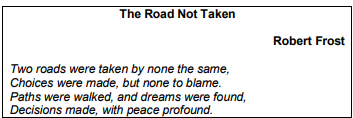
Texto inspirado em FROST, Robert. The Road Not Taken. (1916). [Adaptado].
No trecho apresentado, o uso da Passive Voice (voz passiva) contribui para mostrar que:
Text 1
Smatphones are banned in Brazilian Schools
Brazil’s president has signed a law to limit smartphone use in schools, starting in February. This rule will apply to elementary and high schools across the country. Phones will only be allowed in emergencies, for educational activities, or for students with disabilities. The goal is to help students focus better and reduce distractions caused by phones.
Officials explained that children are using the internet at younger ages, which makes it harder for parents to monitor them. Limiting smartphones at school can help students concentrate on studying. A recent survey found that nearly two-thirds of Brazilians support banning smartphones in schools, and over threequarters believe these devices are harmful for kids.
Some families and students agree with the move, saying it will encourage more interaction and help classmates focus better. However, others believe it won’t solve all school issues, like bullying and harassment.
As of 2023, about two-thirds of Brazilian schools already limit smartphone use, while 28% ban them completely. Some states, such as Rio de Janeiro and Goias, have passed local laws restricting phones in schools, but enforcement has been challenging. In Sao Paulo, discussions are ongoing about banning phones in both public and private schools.
Globally, concerns ______________ smartphone use ______________ children have led to similar measures. Countries ______________ China, France, and parts of the U.S. have introduced restrictions to reduce distractions and protect children’s mental health. A report ______________ UNESCO found that one in four countries has already limited smartphone use in schools.
Adapted from: https://en.islcollective.com
( ) The following underlined words in the sentence (1st paragraph): Brazil’s president has signed a law to limit smartphone use in schools, starting in February., the apostrophe ‘s is the reduced form of the verb to be: is.
( ) The word allowed in : Phones will only be allowed in emergencies, for educational activities, or for students with disabilities (1st paragraph), can be replaced by permitted without changing its meaning.
( ) The number 28% (4th paragraph), refers to the amount of schools which have banned smartphones.
( ) The following verb tenses has signed (1st paragraph) and have passed (4th paragraph) are examples of the past perfect tense.
Choose the alternative which presents the correct sequence, from top to bottom.
Read Text A and answer the question.
Text A
Brazil joins growing list of countries banning cellphones in schools
(1) A bill that bans students from using cellphones in schools was signed into law in Brazil on Monday, the latest example of lawmakers limiting young people’s use of personal technology in the classroom, amongst growing concern about its effect on education and wellbeing.
(2) Brazil’s Education Ministry said in a statement that the law “aims to safeguard the mental, physical and psychological health of children and adolescents.” The law prohibits all students in public and private elementary and secondary schools from using portable electronic devices throughout the school day, the ministry said, though it allows for their educational use and some other exceptions.
(3) Brazil joins several countries that have banned the personal use of cellphones in schools — including the Netherlands, Italy, and France — though there are questions as to whether phone bans are effective in achieving their aims.
(4) On the one hand, the U.N. Educational, Scientific and Cultural Organization (UNESCO) recommended in 2023 that smartphones only be allowed during class time for learning activities. “Even just having a mobile phone nearby with notifications coming through is enough to result in students losing their attention from the task at hand,” it said in a statement.
(5) Despite the concern, an August (2024) global literature review by researchers at three universities in Queensland, Australia, found that there have been limited high-quality studies on the issue. “The evidence for banning mobile phones for the mental health and well-being of students is inconclusive and based only on anecdotes or perceptions, rather than the recorded incidence of mental illness,” authors Marilyn Campbell, professor of early-childhood and inclusive education at the Queensland University of Technology. “Mobile phones are an integral part of our lives,” they added. “We need to be teaching children about appropriate use of phones, rather than simply banning them.”
(Adapted from: https://www.washingtonpost.com/world/2025/01/14/brazil-cellphoneschool-ban/
"Children Wading, painted by Scottish artist Robert Gemmell Hutchison in 1918, was stolen during a museum heist in Glasgow in 1989. Thieves deactivated an alarm system and climbed through an upstairs window into the Haggs Castle Museum of Childhood. The painting was only rediscovered decades later when it unexpectedly surfaced at an auction house and was identified via the Art Loss Register." (BBC News)
The sentence which correctly uses the passive voice while preserving the original meaning of the excerpt above is:
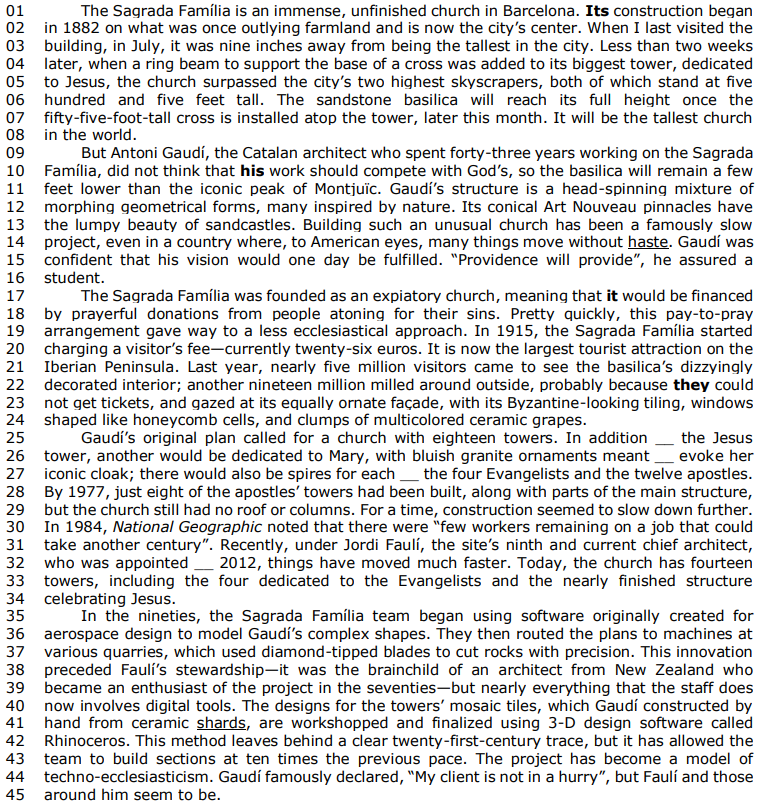
I. It is an active voice structure.
II. It is in the simple past.
III. Its interrogative form is “Was the Sagrada Família founded as an expiatory church?”.
Which ones are correct?
Corporations can now find out exactly how you think through the science of neuromarketing. Advertisers are currently collaborating with scientists to test their products directly on our brains. Some experts believe that one in ten TV commercials have already been designed using neuromarketing.
Analyze the sentences below about the words in bold.
1. Both exactly and currently are adverbs.
2. have already been designed forms the present perfect passive tense.
3. Currently is an adverb of manner.
4. been is the past tense of the verb to be.
Choose the alternative which contains the correct sentences.

Which of the following best describes the voice of the clause: “the adjustments were made by the focus group review committee”?
Text I:
Urbanization and Its Challenges
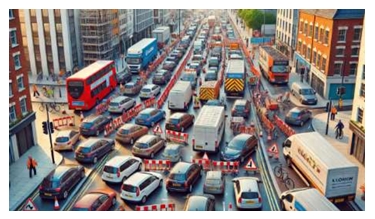
In the last century, urbanization has accelerated at an unprecedented pace. Cities around the world have grown rapidly, attracting people from rural areas seeking better opportunities. While urban centers provide access to jobs, education, and healthcare, they also present significant challenges. Overcrowding, gridlock, pollution, and insufficient housing are common problems. Moreover, social inequality is often more visible in urban areas, where wealthy neighborhoods exist alongside impoverished communities. Urban planners argue that sustainable development, public transportation, and inclusive policies are essential to create cities that can support both economic growth and quality of life.
(Text elaborated exclusive for this test)
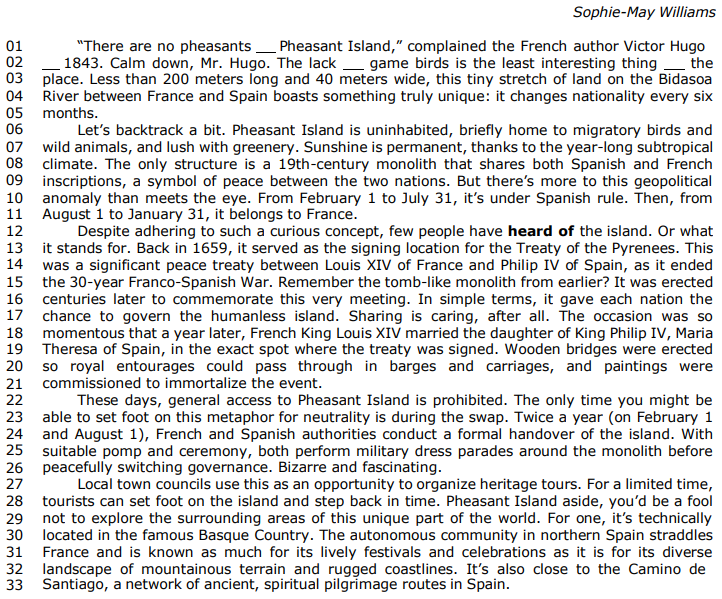
“Wooden bridges were erected so royal entourages could pass through.”
Mark the correct interrogative form of the adapted excerpt in the same verb tense.
•Use Text I for question.
TEXT I
HOW TO COPE WITH THE SUNDAY
SCARIES
by Chantelle Lee
________(1) Sunday night, and you’re feeling sad and anxious about going back to work in the morning.
Say hello to the Sunday scaries
You’re not alone in your workweek dread: “They’re very, very common,” says Susanne Cooperman, a neuropsychologist and psychoanalyst at New York University Langone Huntington Medical Group. “There’s nothing wrong with a person if they feel sad that the weekend is over. It’s when it really interferes in your functioning—when you can’t focus, when you can’t sleep, when you feel yourself medicating with alcohol—then you need help.”
Here’s why people get the Sunday scaries and the best ways to combat those thoughts of doom and gloom.
__________(2) are the Sunday scaries? The Sunday scaries typically manifest in two ways: feelings of depression that the weekend is ending, feelings of anxiety about the week to come, or both. These feelings typically start on Sunday afternoon.
“It could be that you feel sad and irritable and you have difficulty concentrating and fatigue,”
Cooperman says. That collection of feelings is called anhedonia—basically a loss of enjoyment.
If you feel more dread for the work week ahead, that’s called “anticipatory anxiety,” she says.
Why people get them
The scaries strike for all kinds of reasons. They could be related to work—maybe you’re afraid of losing your job, or you’re dreading going to the office in person, or you’re simply having a hard time unplugging from work after hours, Cooperman says.
Or, she adds, it could also be that you overbooked yourself during the week and feel exhausted by the time Sunday comes around.
How to deal with the Sunday scaries
One of the best ways to deal with the Sunday scaries is to mentally plant yourself firmly in the present. One way to achieve this is to try a mediation or relaxation app, even if it’s only for 10 or 15 minutes, Cooperman says. “I think that’s probably the best out of all the tips: stay in the moment, really try to curtail that catastrophizing into the future,” she says. There are other paths away from the scaries, too: Unplug from your phone or social media, maintain a good work-life balance, do some exercise, or get some fresh air. Make sure to schedule fun activities for Sunday afternoon and evening and do things that reliably make you feel better or help you “refuel [your] batteries,” Cooperman says. Just as important is allowing yourself downtime to relax and unwind, she adds. She also recommends trying to split up errands throughout the week so you don’t feel like you wasted your entire Sunday doing them.
While the Sunday scaries are common, people should keep an eye on how they’re coping come the end of the weekend. “Use healthy, adaptive ways to self-soothe when you’re anxious and have the scaries,” Cooperman says. “A glass of wine is fine, but if it’s more than that and you need it every night, then that’s a problem.” If the scaries are so bad that it’s significantly impacting your life, Cooperman suggests talking about these feelings with a therapist or a psychologist. Some warning signs include being so anxious that it’s hard to get out of bed in the morning, having anxiety attacks, needing alcohol to calm down, not being able to focus or sleep, or failing to enjoy the weekend at all. “If you just can’t get out of that loop where you’re constantly unhappy, then I think you’re at a place where you should see a psychologist or a therapist,” Cooperman says. “Sometimes it’s hard to [deal with it] on your own. It’s good to talk to a professional.”
LEE, Chantelle. How to cope with the Sunday scaries. Time, New York, 6 Apr. 2025. Available at: https://time.com/7275089/what-are-sunday-scaries/. Accessed on: 11 Aug. 2025.
Which of the following sentences from the text is written in the passive voice?
Consider the image below:

Source: https://docboss.com/blog/8-simple-rules-forsubmitting-your-vendor-documents/
In formal writing, the passive voice is frequently used to highlight the action or the object of the action rather than the subject. Which sentence correctly employs the present perfect passive voice?


 Conheça nossos planos