🎯 Saiba o que estudar

Avançado com Treinador a partir de R$ 0,76/dia

Questões de Concurso Sobre voz ativa e passiva | passive and active voice em inglês

Questões Discursivas

Foram encontradas 367 questões

Q3848293 Inglês
O texto seguinte servirá de base para responder às questão.


Texto 2

Driven by pre-salt, oil becomes Brazil's top export

Revenues

The discovery of the pre-salt was so significant for Brazil's oil production potential that it led the government to change the regime that authorized companies to explore the submerged resources.

As a result, the pre-salt areas are governed by the sharing regime. Under this model, surplus oil production—the balance after covering costs—is divided between the company and the Brazilian government. During the auction that authorizes exploration, the company offering the highest share of profits to the federal government is granted the right to explore.

This is distinct from the concession model, which applies to the post-salt period. In this system, the risk of investment and exploration lies with the concessionaire, who becomes the owner of all the oil and gas that may be discovered. In return, the company pays royalties and special participation fees, particularly for large production fields, in addition to a signature bonus upon winning the auction.

New frontiers

texto_16-20.png (410×332)

With the pre-salt expected to reach its peak in the 2030s, Brazil's oil industry, led by Petrobras, is shifting its focus to new oil frontiers that are believed to hold significant production potential.

One such frontier is the so-called equatorial margin, located off Brazil's northern coast, where exploration is pending a favorable decision from the Brazilian Institute for the Environment and Renewable Natural Resources (Ibama), an agency under the Ministry of the Environment and Climate Change.

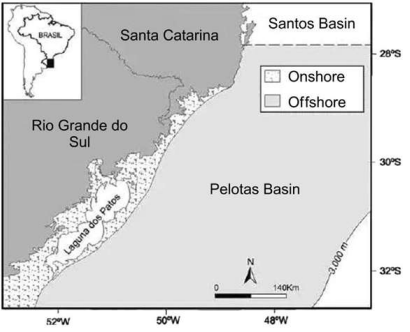
Another promising region is the Pelotas Basin, located off Brazil's southern coast. The growing interest in this area is fueled by the discovery of oil wells in Uruguay and off the coasts of Namibia and South Africa. Experts suggest that the geological conditions in these regions are similar, as the continents were once joined tens of millions of years ago.

According to Petrobras, the company plans to invest $79 billion in exploring new oil and gas frontiers by 2029. Of this amount, 40 percent will be allocated to the South and Southeast regions, 38 percent to the equatorial margin, with the remainder directed towards other countries.


From MOURA, Bruno de Freitas. Driven by pre-salt, oil becomes Brazil's top export. Rio de Janeiro, Agência Brasil, Jan 18th,2025. Accessed on February 21st, 2025 
Choose the option, which the passive would be a better alternative, rather than the active form: 
Alternativas
Q3845455 Inglês
O texto seguinte servirá de base para responder às questão.


Texto 2

Driven by pre-salt, oil becomes Brazil's top export

Revenues

The discovery of the pre-salt was so significant for Brazil's oil production potential that it led the government to change the regime that authorized companies to explore the submerged resources.

As a result, the pre-salt areas are governed by the sharing regime. Under this model, surplus oil production—the balance after covering costs—is divided between the company and the Brazilian government. During the auction that authorizes exploration, the company offering the highest share of profits to the federal government is granted the right to explore.

This is distinct from the concession model, which applies to the post-salt period. In this system, the risk of investment and exploration lies with the concessionaire, who becomes the owner of all the oil and gas that may be discovered. In return, the company pays royalties and special participation fees, particularly for large production fields, in addition to a signature bonus upon winning the auction.

New frontiers

texto_16-20.png (410×332)

With the pre-salt expected to reach its peak in the 2030s, Brazil's oil industry, led by Petrobras, is shifting its focus to new oil frontiers that are believed to hold significant production potential.

One such frontier is the so-called equatorial margin, located off Brazil's northern coast, where exploration is pending a favorable decision from the Brazilian Institute for the Environment and Renewable Natural Resources (Ibama), an agency under the Ministry of the Environment and Climate Change.

Another promising region is the Pelotas Basin, located off Brazil's southern coast. The growing interest in this area is fueled by the discovery of oil wells in Uruguay and off the coasts of Namibia and South Africa. Experts suggest that the geological conditions in these regions are similar, as the continents were once joined tens of millions of years ago.

According to Petrobras, the company plans to invest $79 billion in exploring new oil and gas frontiers by 2029. Of this amount, 40 percent will be allocated to the South and Southeast regions, 38 percent to the equatorial margin, with the remainder directed towards other countries.


From MOURA, Bruno de Freitas. Driven by pre-salt, oil becomes Brazil's top export. Rio de Janeiro, Agência Brasil, Jan 18th,2025. Accessed on February 21st, 2025 
Choose the option, which the passive would be a better alternative, rather than the active form: 
Alternativas
Q3845089 Inglês
O texto seguinte servirá de base para responder a questão.

Biden administration, in its last days, proposes new protections for Arctic Alaska land

imagem_1.jpg (381×223)

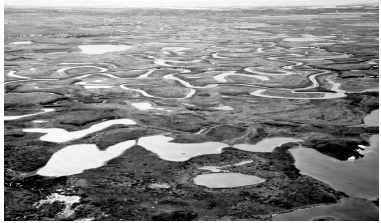
Lakes and connecting streams in the northeastern part of the National Petroleum Reserve in Alaska, June 2014.

Four days before President Joe Biden is set to leave office, his administration recommended that about 3 million more acres in Alaska's western Arctic be protected from development and issued a guideline, effective immediately, requiring additional protections for traditional Native subsistence harvests of fish, caribou and other resources.

The new recommendations and guidance, which apply to the 23-million-acre National Petroleum Reserve in Alaska, run counter to President-elect Donald Trump's expressed plans to expand oil drilling in the Arctic and elsewhere and to overturn Biden administration environmental policies more broadly. 

The recommendations for additional land to be protected as part of what are termed "special areas" and the guidance for elevating the importance of subsistence and tribal consultation could be ignored or scrapped by the incoming Trump administration.

The northeastern part of the reserve is the area considered most likely to hold oil and where development has spread in recent years. There is already production in that area, and the most notable production expected in the future is from ConocoPhillips' Willow project. Willow won Biden administration approval in 2023. Production is expected to start by the end of the decade and peak at 180,000 barrels per day; current production from all North Slope fields amounts to less than 470,000 barrels per day.

Like the existing Teshekpuk special area, which holds important habitat for caribou, fish and migratory birds, the village of Nuiqsut is in the general area of the reserve's northeastern corner, where new oil development has occurred. Nuiqsut is so close that oilfield infrastructure can be seen from the village.

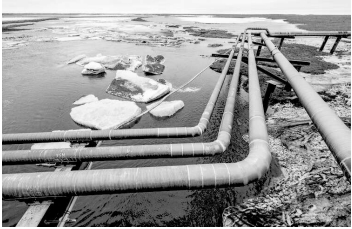
texto_1.jpg (352×229)

Pipelines extend across the landscape outside Nuiqsut, Alaska, May 2019.

"But at the same time, I think we and our partners have also made it abundantly clear that we're going to keep fighting, and keep fighting for protections in the Western Arctic," she said.

(From ROSEN, Yereth. Biden administration, in its last days, proposes new protections for Arctic Alaska land, Alaska Beacon, January 17, 2025. In alaskabeacon.com/2025/01/17/biden-administration-in-its-last-days-pro poses-new-protections-for-arctic-alaska-land/, accessed on February 19th, 2025)


Mark the sentence that correctly represents the passive voice of I think we and our partners have also made it abundantly clear that we're going to keep fighting (lines 32 and 33):
Alternativas
Q3844001 Inglês

O texto seguinte servirá de base para responder à questão.


Texto 2


Driven by pre-salt, oil becomes Brazil's top export


Revenues


The discovery of the pre-salt was so significant for Brazil's oil production potential that it led the government to change the regime that authorized companies to explore the submerged resources.


As a result, the pre-salt areas are governed by the sharing regime. Under this model, surplus oil production—the balance after covering costs—is divided between the company and the Brazilian government. During the auction that authorizes exploration, the company offering the highest share of profits to the federal government is granted the right to explore.


This is distinct from the concession model, which applies to the post-salt period. In this system, the risk of investment and exploration lies with the concessionaire, who becomes the owner of all the oil and gas that may be discovered. In return, the company pays royalties and special participation fees, particularly for large production fields, in addition to a signature bonus upon winning the auction.


New frontiers


imag_16 a 20.png (492×395)


With the pre-salt expected to reach its peak in the 2030s, Brazil's oil industry, led by Petrobras, is shifting its focus to new oil frontiers that are believed to hold significant production potential.


One such frontier is the so-called equatorial margin, located off Brazil's northern coast, where exploration is pending a favorable decision from the Brazilian Institute for the Environment and Renewable Natural Resources (Ibama), an agency under the Ministry of the Environment and Climate Change.


Another promising region is the Pelotas Basin, located off Brazil's southern coast. The growing interest in this area is fueled by the discovery of oil wells in Uruguay and off the coasts of Namibia and South Africa. Experts suggest that the geological conditions in these regions are similar, as the continents were once joined tens of millions of years ago.


According to Petrobras, the company plans to invest $79 billion in exploring new oil and gas frontiers by 2029. Of this amount, 40 percent will be allocated to the South and Southeast regions, 38 percent to the equatorial margin, with the remainder directed towards other countries.


From MOURA, Bruno de Freitas. Driven by pre-salt, oil becomes Brazil's top export. Rio de Janeiro, Agência Brasil, Jan 18th,2025. Accessed on February 21st, 2025


Choose the option, which the passive would be a better alternative, rather than the active form: 
Alternativas
Q3843188 Inglês
O texto seguinte servirá de base para responder às questão.


Texto 2

Driven by pre-salt, oil becomes Brazil's top export

Revenues

The discovery of the pre-salt was so significant for Brazil's oil production potential that it led the government to change the regime that authorized companies to explore the submerged resources.

As a result, the pre-salt areas are governed by the sharing regime. Under this model, surplus oil production—the balance after covering costs—is divided between the company and the Brazilian government. During the auction that authorizes exploration, the company offering the highest share of profits to the federal government is granted the right to explore.

This is distinct from the concession model, which applies to the post-salt period. In this system, the risk of investment and exploration lies with the concessionaire, who becomes the owner of all the oil and gas that may be discovered. In return, the company pays royalties and special participation fees, particularly for large production fields, in addition to a signature bonus upon winning the auction.

New frontiers

texto_16-20.png (410×332)

With the pre-salt expected to reach its peak in the 2030s, Brazil's oil industry, led by Petrobras, is shifting its focus to new oil frontiers that are believed to hold significant production potential.

One such frontier is the so-called equatorial margin, located off Brazil's northern coast, where exploration is pending a favorable decision from the Brazilian Institute for the Environment and Renewable Natural Resources (Ibama), an agency under the Ministry of the Environment and Climate Change.

Another promising region is the Pelotas Basin, located off Brazil's southern coast. The growing interest in this area is fueled by the discovery of oil wells in Uruguay and off the coasts of Namibia and South Africa. Experts suggest that the geological conditions in these regions are similar, as the continents were once joined tens of millions of years ago.

According to Petrobras, the company plans to invest $79 billion in exploring new oil and gas frontiers by 2029. Of this amount, 40 percent will be allocated to the South and Southeast regions, 38 percent to the equatorial margin, with the remainder directed towards other countries.


From MOURA, Bruno de Freitas. Driven by pre-salt, oil becomes Brazil's top export. Rio de Janeiro, Agência Brasil, Jan 18th,2025. Accessed on February 21st, 2025 
Choose the option, which the passive would be a better alternative, rather than the active form: 
Alternativas
Q3843185 Inglês
O texto seguinte servirá de base para responder à questão.


Downstream: Refining and Marketing

While refining is a complex process, the goal is straightforward: to take crude oil, which is virtually unusable in its natural state, and transform it into petroleum products used for a variety of purposes such as heating homes, fueling vehicles and making petrochemical plastics. Wolcott, Marion Post. Barnsdall oil refinery. Kansas, 1941.

texto_11-15.png (438×322)

Wolcott, Marion Post. Barnsdall oil refinery. Kansas, 1941. 


A number of processes are involved in refining depending on the wanted end product. Hydrotreating is used to remove unwanted elements, such as sulphur and nitrogen from hydrocarbons; cracking breaks molecules into smaller fragments to produce gasoline and other lighter hydrocarbons. The gases produced by cracking are used to create other products like synthetic rubber and plastics. When making gasoline, refiners need high octane numbers to prevent engine knocking. Despite knowing the dangers of lead, tetraethyl lead was added to gasoline in the United States in the 1920s in order to increase the octane. Since the U.S. government banned lead in vehicle gasoline in 1996 as part of the U.S. Clean Air Act, refineries use alkylation and reforming to develop high-octane gasoline.


(From Oil and Gas Industry: A Research Guide, Library of Congress https://guides.loc.gov/oil-and-gas-industry/downstream, accessed on February 19th, 2025)
"By 1996, with the establishment of new federal standards of air pollutants, tetraethyl ______________ to gasoline in the U.S." is suitably filled in with: 
Alternativas
Q3842131 Inglês

O texto seguinte servirá de base para responder à questão.


Texto 2


Driven by pre-salt, oil becomes Brazil's top export

Revenues


The discovery of the pre-salt was so significant for Brazil's oil production potential that it led the government to change the regime that authorized companies to explore the submerged resources.


As a result, the pre-salt areas are governed by the sharing regime. Under this model, surplus oil production—the balance after covering costs—is divided between the company and the Brazilian government. During the auction that authorizes exploration, the company offering the highest share of profits to the federal government is granted the right to explore.


This is distinct from the concession model, which applies to the post-salt period. In this system, the risk of investment and exploration lies with the concessionaire, who becomes the owner of all the oil and gas that may be discovered. In return, the company pays royalties and special participation fees, particularly for large production fields, in addition to a signature bonus upon winning the auction.


New frontiers


imag_16 a 20.png (492×395)


With the pre-salt expected to reach its peak in the 2030s, Brazil's oil industry, led by Petrobras, is shifting its focus to new oil frontiers that are believed to hold significant production potential.


One such frontier is the so-called equatorial margin, located off Brazil's northern coast, where exploration is pending a favorable decision from the Brazilian Institute for the Environment and Renewable Natural Resources (Ibama), an agency under the Ministry of the Environment and Climate Change.


Another promising region is the Pelotas Basin, located off Brazil's southern coast. The growing interest in this area is fueled by the discovery of oil wells in Uruguay and off the coasts of Namibia and South Africa. Experts suggest that the geological conditions in these regions are similar, as the continents were once joined tens of millions of years ago.


According to Petrobras, the company plans to invest $79 billion in exploring new oil and gas frontiers by 2029. Of this amount, 40 percent will be allocated to the South and Southeast regions, 38 percent to the equatorial margin, with the remainder directed towards other countries.


From MOURA, Bruno de Freitas. Driven by pre-salt, oil becomes Brazil's top export. Rio de Janeiro, Agência Brasil, Jan 18th,2025. Accessed on February 21st, 2025


Choose the option, which the passive would be a better alternative, rather than the active form: 
Alternativas
Q3841361 Inglês

O texto seguinte servirá de base para responder à questão.


Texto 2


Driven by pre-salt, oil becomes Brazil's top export


Revenues


The discovery of the pre-salt was so significant for Brazil's oil production potential that it led the government to change the regime that authorized companies to explore the submerged resources.


As a result, the pre-salt areas are governed by the sharing regime. Under this model, surplus oil production—the balance after covering costs—is divided between the company and the Brazilian government. During the auction that authorizes exploration, the company offering the highest share of profits to the federal government is granted the right to explore.


This is distinct from the concession model, which applies to the post-salt period. In this system, the risk of investment and exploration lies with the concessionaire, who becomes the owner of all the oil and gas that may be discovered. In return, the company pays royalties and special participation fees, particularly for large production fields, in addition to a signature bonus upon winning the auction.


New frontiers 


With the pre-salt expected to reach its peak in the 2030s, Brazil's oil industry, led by Petrobras, is shifting its focus to new oil frontiers that are believed to hold significant production potential.


One such frontier is the so-called equatorial margin, located off Brazil's northern coast, where exploration is pending a favorable decision from the Brazilian Institute for the Environment and Renewable Natural Resources (Ibama), an agency under the Ministry of the Environment and Climate Change.


Another promising region is the Pelotas Basin, located off Brazil's southern coast. The growing interest in this area is fueled by the discovery of oil wells in Uruguay and off the coasts of Namibia and South Africa. Experts suggest that the geological conditions in these regions are similar, as the continents were once joined tens of millions of years ago.


According to Petrobras, the company plans to invest $79 billion in exploring new oil and gas frontiers by 2029. Of this amount, 40 percent will be allocated to the South and Southeast regions, 38 percent to the equatorial margin, with the remainder directed towards other countries.


From MOURA, Bruno de Freitas. Driven by pre-salt, oil becomes Brazil's top export. Rio de Janeiro, Agência Brasil, Jan 18th,2025. Accessed on February 21st, 2025   

Choose the option, which the passive would be a better alternative, rather than the active form: 
Alternativas
Q3841355 Inglês

O texto seguinte servirá de base para responder à questão.


Downstream: Refining and Marketing


While refining is a complex process, the goal is straightforward: to take crude oil, which is virtually unusable in its natural state, and transform it into petroleum products used for a variety of purposes such as heating homes, fueling vehicles and making petrochemical plastics.


Wolcott, Marion Post. Barnsdall oil refinery. Kansas, 1941.


A number of processes are involved in refining depending on the wanted end product. Hydrotreating is used to remove unwanted elements, such as sulphur and nitrogen from hydrocarbons; cracking breaks molecules into smaller fragments to produce gasoline and other lighter hydrocarbons. The gases produced by cracking are used to create other products like synthetic rubber and plastics. When making gasoline, refiners need high octane numbers to prevent engine knocking. Despite knowing the dangers of lead, tetraethyl lead was added to gasoline in the United States in the 1920s in order to increase the octane. Since the U.S. government banned lead in vehicle gasoline in 1996 as part of the U.S. Clean Air Act, refineries use alkylation and reforming to develop high-octane gasoline.


(From Oil and Gas Industry: A Research Guide, Library of Congress https://guides.loc.gov/oil-and-gas-industry/downstream, accessed on February 19th, 2025)

"By 1996, with the establishment of new federal standards of air pollutants, tetraethyl ______________ to gasoline in the U.S." is suitably filled in with:
Alternativas
Q3825090 Inglês

TEXT:


Building Rapport

Establishing strong foundations for teaching and learning


By Stephanie Hirchman

September 2, 2025


How do teachers build rapport with students? I can’t think of a more important question; after all, learning is all about relationships. In fact, I hope the word “rapport” runs through all the blogs I’ve written, like the letters in a stick of rock. However, as the summer holidays draw to a close and with new beginnings in sight, I’m going to focus exclusively on building rapport.


Fostering rapport

Let’s get out the metaphors! If learning is a house, then rapport is the foundation, but because it needs constant maintenance, rapport is also a garden, tended with care on a daily basis. When there is a good rapport, students feel:

• seen – each student is greeted individually, and the teacher makes an eff ort to interact with each one during the lesson.

• confident in the teacher, the course, and themselves - the teacher knows what each student needs and how to deliver it so students make progress. Classroom routines are predictable, fair, and make sense.

• safe – they know the teacher will not embarrass them or expose their sensitivities or weaknesses. Mistakes are dealt with sensitively and treated as learning opportunities.

• accepted – the teacher meets each individual student exactly where they are, without judgment, academically and personally. If someone is called out on their behaviour, this is done in private, and an explanation is given about why this behaviour is unproductive or unacceptable.


Student profiles – the basis for rapport

Whatever your teaching context, you’ve got to get to know each student as an individual. This can be considered as an initial information gathering phase, with several possible pathways.

A good starting point is to test students either before they start the course or in the first few days, making it clear that this is a process that produces information that will help you to plan and them to learn. Try to generate as full a picture as possible, so you have an idea about their abilities in all four skills.

Secondly, you need to conduct a needs analysis, either privately or publicly. You can read more about this process, but bear in mind that a public needs analysis can also serve to make everyone in the class aware of each other’s interests and thus of the rationale for including certain topics, language points, or skills work in the course syllabus.

Finally, use whatever resources you have to identify students with specific learning differences or traumas/triggers. This information may be disclosed at registration, self-disclosed (perhaps at interview) or in a private needs analysis, or tentatively identified through your own observations. Obviously, this information is private, between you and the student (and their parents, if they are under 18).


Classroom activities to build rapport at the start of a course

These rapport-building activities aim to generate information in such a way that students feel well-supported.

In a first lesson, the top priority is to make sure you know everybody’s preferred names and how to pronounce them. I’ve always found it helpful to have small desktop cards with this information on display – at least for a couple of sessions. Why not ask the students to make these themselves, or at least to personalize them? The back of the card could have some classroom language phrases to help prompt students, and there’s also the option of including this useful functional language as an introductory lesson – note that this generates a lot of information about student performance in areas like listening (including following instructions), speaking (including pronunciation) and studentship (including note-taking), facility with vocabulary, grammar and functional language. It can also serve as an introduction to pair and group work and to questioning and correction techniques, and, of course, builds confidence for students to take an active part in lessons.


Rapport thrives on praise

Teachers must remember that students are putting themselves on the line every time they come to class. Every effort carries a risk of failure, and not everyone is robust enough to bounce back easily when this occurs. Praise is the magic ingredient here – individualized, sincere and specific. Even when things have gone a bit wrong, find something that went well. It may be that you’re praising eff ort (“Good try, Haruka, I like that idea, but it isn’t what I’m looking for right now.”) or scaffolding achievement (“That’s a pretty good sentence, Juan, the verb tense is correct. But think again about the subject – should it be singular or plural?”). It may be delivered in written form (“This essay makes some relevant points. You used a lot of new vocabulary and improved your accuracy with punctuation. Next time, put the information into paragraphs.”). And when you make a mistake, as you inevitably will, model a positive reaction – check the information, put it right and thank the person who pointed it out.

Finally, make plenty of space for laughter and smiles, as they not only reduce stress, but have a positive effect on engagement, learning and recall. Rapport really does serve learning.


Adapted from: https://www.linguahouse.com/blog/post/building-rapport Acesso em 18/10/2025

Dentre as frases abaixo, todas retiradas do texto, a que está na voz passiva é: 
Alternativas
Q3824369 Inglês
You are revising a formal report that must foreground the process rather than the agent. Select the rewrite that preserves the original present progressive meaning and maintains a formal passive focus.
Alternativas
Ano: 2025 Banca: IDCAP Órgão: PPSA Prova: IDCAP - 2025 - PPSA - Advogado - Jurídico |
Q3821316 Inglês
O texto seguinte servirá de base para responder a questão.

Driven by pre-salt, oil becomes Brazil's top export Revenues

The discovery of the pre-salt was so significant for Brazil's oil production potential that it led the government to change the regime that authorized companies to explore the submerged resources. 

As a result, the pre-salt areas are governed by the sharing regime. Under this model, surplus oil production—the balance after covering costs—is divided between the company and the Brazilian government. During the auction that authorizes exploration, the company offering the highest share of profits to the federal government is granted the right to explore.

This is distinct from the concession model, which applies to the post-salt period. In this system, the risk of investment and exploration lies with the concessionaire, who becomes the owner of all the oil and gas that may be discovered. In return, the company pays royalties and special participation fees, particularly for large production fields, in addition to a signature bonus upon winning the auction.

New frontiers

texto_1.jpg (323×263)

With the pre-salt expected to reach its peak in the 2030s, Brazil's oil industry, led by Petrobras, is shifting its focus to new oil frontiers that are believed to hold significant production potential.

One such frontier is the so-called equatorial margin, located off Brazil's northern coast, where exploration is pending a favorable decision from the Brazilian Institute for the Environment and Renewable Natural Resources (Ibama), an agency under the Ministry of the Environment and Climate Change.

Another promising region is the Pelotas Basin, located off Brazil's southern coast. The growing interest in this area is fueled by the discovery of oil wells in Uruguay and off the coasts of Namibia and South Africa. Experts suggest that the geological conditions in these regions are similar, as the continents were once joined tens of millions of years ago. 

According to Petrobras, the company plans to invest $79 billion in exploring new oil and gas frontiers by 2029. Of this amount, 40 percent will be allocated to the South and Southeast regions, 38 percent to the equatorial margin, with the remainder directed towards other countries. 

From MOURA, Bruno de Freitas. Driven by pre-salt, oil becomes Brazil's top export. Rio de Janeiro, Agência Brasil, Jan 18th,2025. Accessed on February 21st, 2025
Choose the option, which the passive would be a better alternative, rather than the active form:
Alternativas
Q3820728 Inglês

Leia o texto a seguir:


Jobs and Professions


    As has been the case for many years, jobs, or forms of employment wherein employees perform a service or duty in exchange for financial compensation, play a prominent role in society. Furthermore, all jobs — even those of seemingly little significance — are important, as they simply wouldn't exist if their specific responsibilities weren't of value to employers (companies or persons that pay others for their work), customers (individuals who pay money for a product or service), and the economy generally.

    Teachers, or educational professionals tasked with helping students understand certain subjects and topics, are especially crucial today. In short, teachers help their students to become qualified for their future careers.

    Doctors, or medical professionals who specialize in providing health-related assistance to patients, are some of the most respected individuals in America and the world. It's the responsibility of doctors to help those who feel less-than-stellar to determine the underlying health issue(s) and recommend an effective treatment (or remedy to a disease, disorder, or condition).

    There are quite a few types of specialty doctors in America (besides MD, which simply means "medical doctor"), all of whom can be referred to simply as "Doctor (Name)." Dentists (mouth/ teeth doctors), dermatologists (skin doctors), and psychiatrists (mental-health doctors) are just a few examples of the many different types of doctors.

    Additionally, nurses are medical professionals who help to administer doctor-ordered treatments to patients.

    Police officers are law enforcement professionals whose job it is to protect citizens, solve crimes, and assure that rules and regulations are followed. Similarly, firefighters serve the public by responding to fires (and other emergency situations) and using high-tech equipment to extinguish these fires, while bringing any individuals who're in danger to safety.

    Farmers maintain fields of crops (or vegetable/fruit plants) and/ or collections of animals with the intention of selling these products as food.

    Chefs/cooks prepare meals in professional settings, including restaurants, cafeterias, and other venues wherein food and drink are sold, for customers. Chefs are generally experienced in cooking and managing kitchens.

    Waiters bring menus, beverages, meals, and ultimately, the check (or a bill of the foods and drinks purchased in a transaction) to tables in restaurants and other establishments that serve food.

    Artists produce art, or works of creative significance, including music, paintings, drawings, poetry, writing, and more.


Fonte: https://pdfcoffee.com/meeting-5-basic-english-for-academic-porposes-pdffree.html. Acessado em 25/08/2025

A alternativa abaixo que está estruturada em passive voice, isto é, o agente sofre a ação verbal, é:
Alternativas
Q3815051 Inglês
Read the excerpt from the book "Language across the curriculum & CLIL in English as an additional language (EAL) Contexts", written by Angel M. Y. Lin (2016)


How language varies has important educational implications. If language varies according to its use in different contexts, then students need to develop language proficiencies appropriate for use in different contexts. Regarding this, Cummins (1980/2001) has proposed two dimensions of language proficiency: Basic Interpersonal Communication Skills (BICS) and Cognitive Academic Language Proficiency (CALP). 

We use BICS in our everyday life, such as in conversations with family members and friends, informal interactions with shop assistants when we go shopping or casual chit-chat on Facebook [and Instagram], WhatsApp, Twitter or Internet forums. In contrast, we use CALP to understand and discuss academic topics in the classroom and to read and write about these topics in school assignments and examinations. BICS are said to be used in contextembedded conversations and this means that the conversation is often face-to-face and offers many cues to the listener such as facial expressions, gestures and concrete objects of reference. CALP, on the other hand, is said to be necessary for context-reduced communication, such as those that take place in the classroom where there are supposed to be fewer nonverbal cues and the language is more abstract. However, in recent developments of new media interactions, this face-to-face context can often be a virtual one such as that of a [Google Meet] or WhatsApp conversation. It is, therefore, better to conceive of BICS and CALP not as discrete categories but as lying on a continuum. Similarly, it is best not to see spoken and written modes as discrete categories but as discrete categories but as lying on a ‘mode continuum’ (Lin, 2016, p. 9-10).  
Considering the text from question 1, answer:
Which of the following sentences is correctly written in the passive voice and accurately reflects an idea from the text?  
Alternativas
Q3813937 Inglês
Analyze the following statements regarding verbs in English:

I.The past simple tense is used for actions that started and finished in the past.
II.The imperative mood expresses commands or instructions.
III.In the passive voice, the subject performs the action of the verb.
IV.The passive voice is formed by inverting the subject and the object while the verb remains unchanged.


Regarding these statements, select the correct answer:
Alternativas
Q3813281 Inglês

Laszlo Krasznahorkai Is Awarded Nobel Prize in Literature


    Laszlo Krasznahorkai, a Hungarian novelist known for his dystopian themes and relentless prose, with winding sentences that can run on for pages, was awarded the Nobel Prize in Literature on Thursday. The Swedish Academy, which organizes the prize, said at a news conference that Krasznahorkai had received the award “for his compelling and visionary oeuvre that, in the midst of apocalyptic terror, reaffirms the power of art.”


   Krasznahorkai (pronounced CRAS-now-hoar-kay), 71, has been a perennial favorite for the Nobel. Hailed as a “master of the apocalypse” by Susan Sontag, Krasznahorkai has long been revered by fellow writers for his idiosyncratic style and bleak narratives that can often be slyly humorous.


   He’s also written half a dozen screenplays in collaboration with the Hungarian movie director Bela Tarr, who has adapted several of his novels for the screen. Tarr filmed “The Melancholy of Resistance,” which is among Krasznahorkai’s best-known works, as “Werckmeister Harmonies,” in 2000. The novel, filled with vast sentences, concerns events in a small Hungarian town after a circus arrives with a huge stuffed whale in tow.


   Krasznahorkai told The New York Times in 2014 that he had tried to develop an absolutely original style, adding, “I wanted to be free to stray far from my literary ancestors, and not make some new version of Kafka or Dostoyevsky or Faulkner.”


  Steve Sem-Sandberg, a member of the committee that awarded the prize, praised Krasznahorkai’s “powerful, musically inspired epic style” at the news conference announcing the Nobel. “It is Krasznahorkai’s artistic gaze, which is entirely free of illusion and which sees through the fragility of the social order, combined with his unwavering belief in the power of art that has motivated the academy to award the prize,” Sem-Sandberg added.


   A spokeswoman for Krasznahorkai’s German publisher said in an email on Thursday that the author was not conducting any interviews, although earlier in the day he briefly spoke to Swedish radio: “I’m very happy, thank you,” he said, adding, “I don’t know what’s coming in the future.”


   Krasznahorkai was born in Gyula, a small town about 120 miles from Budapest, in 1954. His family’s Jewish roots were kept a secret — his grandfather changed the family name from Korin to Krasznahorkai to assimilate — and Krasznahorkai didn’t know about his Jewish heritage until his father told him when he was 11.


   He was a musical prodigy, and worked as a professional musician for several years in his youth, playing piano in a jazz band and singing in a rock group. His father was a lawyer, and his mother worked in the social welfare ministry. Inspired by Kafka, an author he revered, he planned to study law and was fascinated by criminal psychology, but ended up studying Hungarian language and literature.


   After school, Krasznahorkai undertook military service but, he has said in interviews, deserted the army after being punished for insubordination. He then took on odd jobs — including working as a miner and as a night watchman for 300 cows, a post that allowed him to read work by Dostoyevsky and Malcolm Lowry’s “Under the Volcano,” a book he called his “bible.”


   When he began writing, his aim was to complete one book, then pursue a career in music. At the time he published his first short story, artists and writers were subject to censorship under Hungary’s Communist regime, and he was taken in for questioning by the police, who interrogated him about his anti-Communist views and took away his passport.


   Krasznahorkai was undeterred. In 1985, he published his subversive debut novel, “Satantango,” about life in a poor, crumbling hamlet, which was a literary sensation in Hungary. “Nobody, myself included, could understand how it was possible to publish ‘Satantango’ because it’s anything but an unproblematic novel for the Communist system,” he said in a 2018 Paris Review interview.


  “He doesn’t deal with grand politics, he’s dealing with the experiences of people who live within societies that are decaying and falling apart,” said the poet George Szirtes, who translated “Satantango” and several other works by Krasznahorkai. Tarr filmed an adaptation, which lasts for over seven hours, in 1994. In an interview on Thursday he recalled reading the book in one night and asking if he could turn it into a movie, only to find the author annoyed to be woken up during Easter holidays. The novel was filled with “these poor people, these miserable people,” Tarr said, but Krasznahorkai gave them a rare “dignity.”


   Szirtes said that Krasznahorkai never expected his books — filled with endless clauses and sub-clauses — to catch on with a wide international audience. “The books can look daunting in some ways, simply because there is no break in them,” Szirtes said. In recent decades, Krasznahorkai has received a stream of accolades outside his home country. In 2015, he won the Man Booker International Prize, which at the time was awarded for an author’s entire body of work rather than a specific novel.


   In the United States, New Directions has published a dozen of his books in translation, and more are forthcoming, including “Zsömle Is Gone,” a satire about an elderly retired electrician living in the countryside who believes he’s a descendant of Hungarian royalty. Barbara Epler, the publisher of New Directions, said one of the most striking things about Krasznahorkai’s work is his ability to weave unexpected humor into bleak stories. “What’s amazing is its anti-gravitational element — all this darkness and within it, an escalating, incredibly deadpan hilarity,” she said.


   The Nobel Prize is literature’s major honor, and typically the capstone to a writer’s career. Past recipients have included the authors Saul Bellow and Toni Morrison, the playwright Harold Pinter and, in 2016, Bob Dylan. Krasznahorkai had featured among bookmakers’ favorites to win the prize for many years. He is the second Hungarian to receive the literature Nobel after Imre Kertész, a novelist and Holocaust survivor, in 2002.


   While Krasznahorkai’s work has often been praised for its political overtones, he has rejected the idea that he’s writing political allegories. “I never want to write some political novels,” he told The New York Times in 2014. “My resistance against the Communist regime was not political. It was against a society.”


   Krasznahorkai isn’t comfortable being cast as a social or political prognosticator. He has said he’s never felt at ease discussing his work, and doesn’t see himself as “part of literary life.” “Writing, for me, is a totally private act,” he told The Paris Review. “I’m ashamed to speak about my literature — it’s the same as if you were to ask me about my most private secrets.”


Adapted from: https://www.nytimes.com/2025/10/09/


In the sentence “While Krasznahorkai’s work has often been praised for its political overtones, he has rejected the idea that he’s writing political allegories.”, the verb tenses are, respectively,
Alternativas
Q3813279 Inglês

Laszlo Krasznahorkai Is Awarded Nobel Prize in Literature


    Laszlo Krasznahorkai, a Hungarian novelist known for his dystopian themes and relentless prose, with winding sentences that can run on for pages, was awarded the Nobel Prize in Literature on Thursday. The Swedish Academy, which organizes the prize, said at a news conference that Krasznahorkai had received the award “for his compelling and visionary oeuvre that, in the midst of apocalyptic terror, reaffirms the power of art.”


   Krasznahorkai (pronounced CRAS-now-hoar-kay), 71, has been a perennial favorite for the Nobel. Hailed as a “master of the apocalypse” by Susan Sontag, Krasznahorkai has long been revered by fellow writers for his idiosyncratic style and bleak narratives that can often be slyly humorous.


   He’s also written half a dozen screenplays in collaboration with the Hungarian movie director Bela Tarr, who has adapted several of his novels for the screen. Tarr filmed “The Melancholy of Resistance,” which is among Krasznahorkai’s best-known works, as “Werckmeister Harmonies,” in 2000. The novel, filled with vast sentences, concerns events in a small Hungarian town after a circus arrives with a huge stuffed whale in tow.


   Krasznahorkai told The New York Times in 2014 that he had tried to develop an absolutely original style, adding, “I wanted to be free to stray far from my literary ancestors, and not make some new version of Kafka or Dostoyevsky or Faulkner.”


  Steve Sem-Sandberg, a member of the committee that awarded the prize, praised Krasznahorkai’s “powerful, musically inspired epic style” at the news conference announcing the Nobel. “It is Krasznahorkai’s artistic gaze, which is entirely free of illusion and which sees through the fragility of the social order, combined with his unwavering belief in the power of art that has motivated the academy to award the prize,” Sem-Sandberg added.


   A spokeswoman for Krasznahorkai’s German publisher said in an email on Thursday that the author was not conducting any interviews, although earlier in the day he briefly spoke to Swedish radio: “I’m very happy, thank you,” he said, adding, “I don’t know what’s coming in the future.”


   Krasznahorkai was born in Gyula, a small town about 120 miles from Budapest, in 1954. His family’s Jewish roots were kept a secret — his grandfather changed the family name from Korin to Krasznahorkai to assimilate — and Krasznahorkai didn’t know about his Jewish heritage until his father told him when he was 11.


   He was a musical prodigy, and worked as a professional musician for several years in his youth, playing piano in a jazz band and singing in a rock group. His father was a lawyer, and his mother worked in the social welfare ministry. Inspired by Kafka, an author he revered, he planned to study law and was fascinated by criminal psychology, but ended up studying Hungarian language and literature.


   After school, Krasznahorkai undertook military service but, he has said in interviews, deserted the army after being punished for insubordination. He then took on odd jobs — including working as a miner and as a night watchman for 300 cows, a post that allowed him to read work by Dostoyevsky and Malcolm Lowry’s “Under the Volcano,” a book he called his “bible.”


   When he began writing, his aim was to complete one book, then pursue a career in music. At the time he published his first short story, artists and writers were subject to censorship under Hungary’s Communist regime, and he was taken in for questioning by the police, who interrogated him about his anti-Communist views and took away his passport.


   Krasznahorkai was undeterred. In 1985, he published his subversive debut novel, “Satantango,” about life in a poor, crumbling hamlet, which was a literary sensation in Hungary. “Nobody, myself included, could understand how it was possible to publish ‘Satantango’ because it’s anything but an unproblematic novel for the Communist system,” he said in a 2018 Paris Review interview.


  “He doesn’t deal with grand politics, he’s dealing with the experiences of people who live within societies that are decaying and falling apart,” said the poet George Szirtes, who translated “Satantango” and several other works by Krasznahorkai. Tarr filmed an adaptation, which lasts for over seven hours, in 1994. In an interview on Thursday he recalled reading the book in one night and asking if he could turn it into a movie, only to find the author annoyed to be woken up during Easter holidays. The novel was filled with “these poor people, these miserable people,” Tarr said, but Krasznahorkai gave them a rare “dignity.”


   Szirtes said that Krasznahorkai never expected his books — filled with endless clauses and sub-clauses — to catch on with a wide international audience. “The books can look daunting in some ways, simply because there is no break in them,” Szirtes said. In recent decades, Krasznahorkai has received a stream of accolades outside his home country. In 2015, he won the Man Booker International Prize, which at the time was awarded for an author’s entire body of work rather than a specific novel.


   In the United States, New Directions has published a dozen of his books in translation, and more are forthcoming, including “Zsömle Is Gone,” a satire about an elderly retired electrician living in the countryside who believes he’s a descendant of Hungarian royalty. Barbara Epler, the publisher of New Directions, said one of the most striking things about Krasznahorkai’s work is his ability to weave unexpected humor into bleak stories. “What’s amazing is its anti-gravitational element — all this darkness and within it, an escalating, incredibly deadpan hilarity,” she said.


   The Nobel Prize is literature’s major honor, and typically the capstone to a writer’s career. Past recipients have included the authors Saul Bellow and Toni Morrison, the playwright Harold Pinter and, in 2016, Bob Dylan. Krasznahorkai had featured among bookmakers’ favorites to win the prize for many years. He is the second Hungarian to receive the literature Nobel after Imre Kertész, a novelist and Holocaust survivor, in 2002.


   While Krasznahorkai’s work has often been praised for its political overtones, he has rejected the idea that he’s writing political allegories. “I never want to write some political novels,” he told The New York Times in 2014. “My resistance against the Communist regime was not political. It was against a society.”


   Krasznahorkai isn’t comfortable being cast as a social or political prognosticator. He has said he’s never felt at ease discussing his work, and doesn’t see himself as “part of literary life.” “Writing, for me, is a totally private act,” he told The Paris Review. “I’m ashamed to speak about my literature — it’s the same as if you were to ask me about my most private secrets.”


Adapted from: https://www.nytimes.com/2025/10/09/


In terms of voice of the verb, the sentences “…he was taken in for questioning by the police.” and “He doesn’t deal with grand politics” are, respectively, in the 
Alternativas
Q3806775 Inglês
Read the excert to answer the question.


In the Common Core National Curriculum (Base Nacional Comum Curricular, or BNCC) for basic education which came into effect in 2018, the declared ideological basis was a preoccupation with citizenship seen as a concern with the quality of education in Brazil with its extreme regional differences. It is intended to overcome the perceived shortcomings of previous national curricula, such as the […] National Curriculum Document (Parâmetros Curriculares Nacionais, or PCN`s), which were based on the homogeneous educational needs, demands and characterisitcs of the largely urban, industrial and prosperous Southeast of the country. With a lack of adequate funding for materials and teacher education in the rest of the country, it is claimed that the previous curricula ended up privileging learners in the Southeast who received an adequate education, and created a divide with the rest of the country whose needs, demands, and largely rural characteristics were not attended to, thus prejudicing equality of opportunities and citizenship. The BNCC then proceeds to offer the possibility of a “commom core” model of which at least 60% of its content needs to be covered nationally, while 40% can be “complemented” regionally by schools systems. What concern us here is how the teaching of languages is portrayed In the BNCC, and the political implications of this.


(Available at: Menezes de Souza, L. M. T. Coloniality, epistemicide, and language learning in Brazil. In: Multilingual Nations, Monolingual Schools: Confronting colonial language policies across the Americas. New York: Teachers College Press, p. 64, 2024 )
In the passage “With a lack of adequate funding for materials and teacher education in the rest of the country, it is claimed that the previous curricula ended up privileging learners…”, the underlined structure “it is claimed that” functions as: 
Alternativas
Q3795579 Inglês
Choose the correct option:
I - I had my room cleaned.
II- Tom had his car washed.
III- She had the electrician look at her broken light.
IV- I have cleaned my house.
Alternativas
Q3794567 Inglês
O texto seguinte servirá de base para responder às questão.


Italians


The peak period of Italian immigration to the United States occurred between 1880 and 1921, when approximately 4.2 million Italians came to America. The vast majority of these immigrants, about 80 percent, hailed from the Mezzogiorno in southern Italy, a region in the midst of great tumult and hardship. Having only been officially unified in 1860, political tension between the government in the north and the rural peasants in the south increased in the 1870s, when the government placed an onerous tax on wheat and salt, which were necessities for southern farmers and fishermen. In the 1880s, disease ravaged both staple and cash crops; malaria and other epidemics also devastated southern Italy during this period. Additionally, a series of earthquakes and the eruptions of Mount Etna and Mount Vesuvius in the early 1900s destroyed cities and killed tens of thousands of people.

Conditions in the United States during this era appeared to be very favorable to many in southern Italy. Wages for both skilled and unskilled laborers in the industrialized US could be three times greater than wages for the same work in the depressed Italian economy. Even illiterate day laborers could find better paying jobs with better working conditions in cities like Boston. In the late nineteenth century, Italian immigrants were often referred to as "birds of passage"−young men who migrated alone, earning money to buy land and support their families at home and eventually returning to Italy. After World War I, however, immigration patterns changed and more Italian immigrants began to bring their families over and put down permanent roots in the region.

Patterns of Settlement

Boston's North End neighborhood became the locus of Italian settlement in eastern New England. Once the home of English colonists and revolutionaries like Paul Revere, Irish and Jewish immigrants settled in the North End before the wave of Italian immigration in the late 1800s. By the early 20th century, the North End was densely filled with tenements, in which tens of thousands of Italians lived. Much of the appeal of the North End for immigrant groups was its proximity to work opportunities on the waterfront and in downtown Boston. By 1920, over 50 percent of Italian immigrants in Boston lived in the North End. Those who could afford more spacious dwellings moved across the harbor to East Boston, which by the mid-twentieth century became the city's largest Italian-American community. Others moved to nearby suburbs such as Somerville, Revere and Saugus, especially after World War II. But even as immigrants and their children moved to these areas, many Italian small businesses and restaurants remained in the North End, and it is still an important center of Italian culture in New England.

Workforce Participation

Most Italian immigrants in the late nineteenth and early twentieth centuries worked menial, unskilled jobs upon their arrival in Boston, as day laborers, dockworkers, or fruit sellers. Others opened shops and small businesses, and some skilled workers (like tailors) found higher-paying jobs. In neighborhoods like the North End and East Boston, immigrants operated Italian restaurants that attracted a growing clientele from across the city. For the earlier "birds of passage," though, assimilating into the wider American culture was not a priority; for more permanent Italian settlers, cultural obstacles such as the language barrier and lower levels of education made upward mobility difficult. Within a few generations, however, Italian Americans in Boston became better educated and were able to move into middle-class and professional occupations, including some of the highest echelons of business and politics.


https://globalboston.bc.edu/index.php/home/ethnic-groups/italians/ 
In the clause "disease ravaged both staple and cash crops," the active voice foregrounds the agent and the action simultaneously. If transformed into a passive construction without altering meaning, which alternative preserves both grammatical accuracy and semantic equivalence?
Alternativas
Respostas
81: A
82: C
83: B
84: B
85: C
86: D
87: B
88: B
89: D
90: C
91: A
92: B
93: B
94: B
95: B
96: A
97: D
98: A
99: B
100: B