Questões de Concurso
Sobre sinônimos | synonyms em inglês
Foram encontradas 1.586 questões


For question, consider the following text.
South Korea’s President Yoon Suk Yeol _____1 investigated _____ 2 to declare martial law. Prosecutors accuse him _____3 insurrection.
Former Defense Minister Kim Yong-hyun, who resigned, is barred from _____4 the country.
Yoon’s impeachment is being debated. While his party, the People Power Party (PPP), opposes it, some members voted _____5 his martial law order. Party leader Han Dong-hun called Yoon’s actions unconstitutional but warned that impeachment could create chaos. If impeached, the Prime Minister would lead _____ 6 elections in 60 days.
Amid the controversy, Yoon accepted Defense Minister Kim’s resignation and nominated Choi Byung-hyuk as his replacement. Several _____ 7 ministers plan to resign. Yoon’s martial law lasted only hours after lawmakers in an emergency vote repealed it, even blocking troops from entering parliament.
Source: <https://www.newsinlevels.com/products/southkorea-political-crisis-level-3/>
For question, consider the following text.
South Korea’s President Yoon Suk Yeol _____1 investigated _____ 2 to declare martial law. Prosecutors accuse him _____3 insurrection.
Former Defense Minister Kim Yong-hyun, who resigned, is barred from _____4 the country.
Yoon’s impeachment is being debated. While his party, the People Power Party (PPP), opposes it, some members voted _____5 his martial law order. Party leader Han Dong-hun called Yoon’s actions unconstitutional but warned that impeachment could create chaos. If impeached, the Prime Minister would lead _____ 6 elections in 60 days.
Amid the controversy, Yoon accepted Defense Minister Kim’s resignation and nominated Choi Byung-hyuk as his replacement. Several _____ 7 ministers plan to resign. Yoon’s martial law lasted only hours after lawmakers in an emergency vote repealed it, even blocking troops from entering parliament.
Source: <https://www.newsinlevels.com/products/southkorea-political-crisis-level-3/>
Text I
Understanding bias in facial recognition technologies
Over the past couple of years, the growing debate around automated facial recognition has reached a boiling point. As developers have continued to swiftly expand the scope of these kinds of technologies into an almost unbounded range of applications, an increasingly strident chorus of critical voices has sounded concerns about the injurious effects of the proliferation of such systems on impacted individuals and communities. Critics argue that the irresponsible design and use of facial detection and recognition technologies (FDRTs) threaten to violate civil liberties, infringe on basic human rights and further entrench structural racism and systemic marginalisation. In addition, they argue that the gradual creep of face surveillance infrastructures into every domain of lived experience may eventually eradicate the modern democratic forms of life that have long provided cherished means to individual flourishing, social solidarity and human self-creation.
Defenders, by contrast, emphasise the gains in public safety, security and efficiency that digitally streamlined capacities for facial identification, identity verification and trait characterisation may bring. These proponents point to potential real-world benefits like the added security of facial recognition enhanced border control, the increased efficacy of missing children or criminal suspect searches that are driven by the application of brute force facial analysis to largescale databases and the many added conveniences of facial verification in the business of everyday life.
Whatever side of the debate on which one lands, it would appear that FDRTs are here to stay.
Adapted from: understanding_bias_in_facial_recognition_technology.pdf
In accordance with the text, check the option that indicates a synonym for claims.
O texto seguinte servirá de base para responder à questão.
Biden administration, in its last days, proposes new protections for Arctic Alaska land
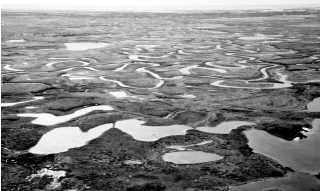
Lakes and connecting streams in the northeastern part of the National Petroleum Reserve in Alaska, June 2014.
Four days before President Joe Biden is set to leave office, his administration recommended that about 3 million more acres in Alaska's western Arctic be protected from development and issued a guideline, effective immediately, requiring additional protections for traditional Native subsistence harvests of fish, caribou and other resources.
The new recommendations and guidance, which apply to the 23-million-acre National Petroleum Reserve in Alaska, run counter to President-elect Donald Trump's expressed plans to expand oil drilling in the Arctic and elsewhere and to overturn Biden administration environmental policies more broadly.
The recommendations for additional land to be protected as part of what are termed "special areas" and the guidance for elevating the importance of subsistence and tribal consultation could be ignored or scrapped by the incoming Trump administration.
The northeastern part of the reserve is the area considered most likely to hold oil and where development has spread in recent years. There is already production in that area, and the most notable production expected in the future is from ConocoPhillips' Willow project. Willow won Biden administration approval in 2023. Production is expected to start by the end of the decade and peak at 180,000 barrels per day; current production from all North Slope fields amounts to less than 470,000 barrels per day.
Like the existing Teshekpuk special area, which holds important habitat for caribou, fish and migratory birds, the village of Nuiqsut is in the general area of the reserve's northeastern corner, where new oil development has occurred. Nuiqsut is so close that oilfield infrastructure can be seen from the village.
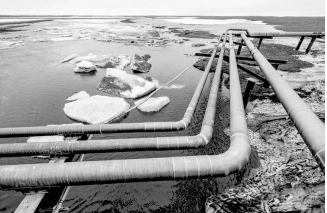
Pipelines extend across the landscape outside Nuiqsut, Alaska, May 2019.
"But at the same time, I think we and our partners have also made it abundantly clear that we're going to keep fighting, and keep fighting for protections in the Western Arctic," she said.
(From ROSEN, Yereth. Biden administration, in its last days, proposes new protections for Arctic Alaska land, Alaska Beacon, January 17, 2025. In alaskabeacon.com/2025/01/17/biden-administration-in-its-last-days-pro poses-new-protections-for-arctic-alaska-land/, accessed on February 19th, 2025)
O texto seguinte servirá de base para responder à questão.
Biden administration, in its last days, proposes new protections for Arctic Alaska land
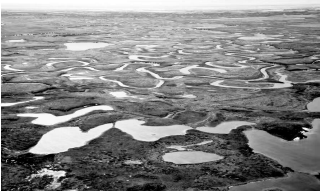
Lakes and connecting streams in the northeastern part of the National Petroleum Reserve in Alaska, June 2014.
Four days before President Joe Biden is set to leave office, his administration recommended that about 3 million more acres in Alaska's western Arctic be protected from development and issued a guideline, effective immediately, requiring additional protections for traditional Native subsistence harvests of fish, caribou and other resources.
The new recommendations and guidance, which apply to the 23-million-acre National Petroleum Reserve in Alaska, run counter to President-elect Donald Trump's expressed plans to expand oil drilling in the Arctic and elsewhere and to overturn Biden administration environmental policies more broadly.
The recommendations for additional land to be protected as part of what are termed "special areas" and the guidance for elevating the importance of subsistence and tribal consultation could be ignored or scrapped by the incoming Trump administration.
The northeastern part of the reserve is the area considered most likely to hold oil and where development has spread in recent years. There is already production in that area, and the most notable production expected in the future is from ConocoPhillips' Willow project. Willow won Biden administration approval in 2023. Production is expected to start by the end of the decade and peak at 180,000 barrels per day; current production from all North Slope fields amounts to less than 470,000 barrels per day.
Like the existing Teshekpuk special area, which holds important habitat for caribou, fish and migratory birds, the village of Nuiqsut is in the general area of the reserve's northeastern corner, where new oil development has occurred. Nuiqsut is so close that oilfield infrastructure can be seen from the village.
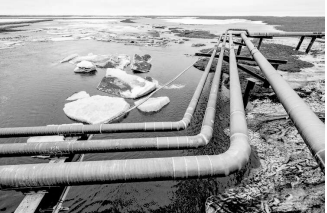
Pipelines extend across the landscape outside Nuiqsut, Alaska, May 2019.
"But at the same time, I think we and our partners have also made it abundantly clear that we're going to keep fighting, and keep fighting for protections in the Western Arctic," she said.
(From ROSEN, Yereth. Biden administration, in its last days, proposes new protections for Arctic Alaska land, Alaska Beacon, January 17, 2025. In alaskabeacon.com/2025/01/17/biden-administration-in-its-last-days-pro poses-new-protections-for-arctic-alaska-land/, accessed on February 19th, 2025)
Pipelines extend across the landscape outside Nuiqsut, Alaska, May 2019.
"But at the same time, I think we and our partners have also made it abundantly clear that we're going to keep fighting, and keep fighting for protections in the Western Arctic," she said.
(From ROSEN, Yereth. Biden administration, in its last days, proposes new protections for Arctic Alaska land, Alaska Beacon, January 17, 2025. In alaskabeacon.com/2025/01/17/biden-administration-in-its-last-days-pro poses-new-protections-for-arctic-alaska-land/, accessed on February 19th, 2025)
O texto seguinte servirá de base para responder à questão.
Biden administration, in its last days, proposes new protections for Arctic Alaska land
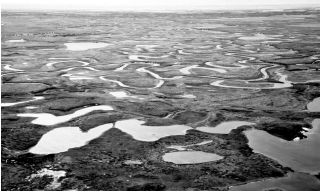
Lakes and connecting streams in the northeastern part of the National Petroleum Reserve in Alaska, June 2014.
Four days before President Joe Biden is set to leave office, his administration recommended that about 3 million more acres in Alaska's western Arctic be protected from development and issued a guideline, effective immediately, requiring additional protections for traditional Native subsistence harvests of fish, caribou and other resources.
The new recommendations and guidance, which apply to the 23-million-acre National Petroleum Reserve in Alaska, run counter to President-elect Donald Trump's expressed plans to expand oil drilling in the Arctic and elsewhere and to overturn Biden administration environmental policies more broadly.
The recommendations for additional land to be protected as part of what are termed "special areas" and the guidance for elevating the importance of subsistence and tribal consultation could be ignored or scrapped by the incoming Trump administration.
The northeastern part of the reserve is the area considered most likely to hold oil and where development has spread in recent years. There is already production in that area, and the most notable production expected in the future is from ConocoPhillips' Willow project. Willow won Biden administration approval in 2023. Production is expected to start by the end of the decade and peak at 180,000 barrels per day; current production from all North Slope fields amounts to less than 470,000 barrels per day.
Like the existing Teshekpuk special area, which holds important habitat for caribou, fish and migratory birds, the village of Nuiqsut is in the general area of the reserve's northeastern corner, where new oil development has occurred. Nuiqsut is so close that oilfield infrastructure can be seen from the village.
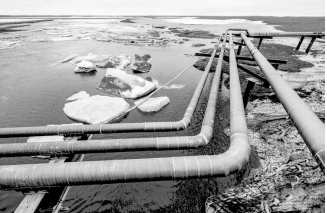
Pipelines extend across the landscape outside Nuiqsut, Alaska, May 2019.
"But at the same time, I think we and our partners have also made it abundantly clear that we're going to keep fighting, and keep fighting for protections in the Western Arctic," she said.
(From ROSEN, Yereth. Biden administration, in its last days, proposes new protections for Arctic Alaska land, Alaska Beacon, January 17, 2025. In alaskabeacon.com/2025/01/17/biden-administration-in-its-last-days-pro poses-new-protections-for-arctic-alaska-land/, accessed on February 19th, 2025)
Biden administration, in its last days, proposes new protections for Arctic Alaska land
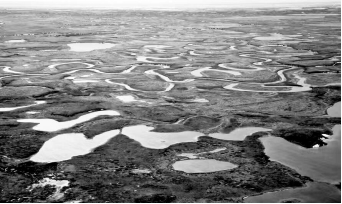
Lakes and connecting streams in the northeastern part of the National Petroleum Reserve in Alaska, June 2014.
Four days before President Joe Biden is set to leave office, his administration recommended that about 3 million more acres in Alaska's western Arctic be protected from development and issued a guideline, effective immediately, requiring additional protections for traditional Native subsistence harvests of fish, caribou and other resources.
The new recommendations and guidance, which apply to the 23-million-acre National Petroleum Reserve in Alaska, run counter to President-elect Donald Trump's expressed plans to expand oil drilling in the Arctic and elsewhere and to overturn Biden administration environmental policies more broadly.
The recommendations for additional land to be protected as part of what are termed "special areas" and the guidance for elevating the importance of subsistence and tribal consultation could be ignored or scrapped by the incoming Trump administration.
The northeastern part of the reserve is the area considered most likely to hold oil and where development has spread in recent years. There is already production in that area, and the most notable production expected in the future is from ConocoPhillips' Willow project. Willow won Biden administration approval in 2023. Production is expected to start by the end of the decade and peak at 180,000 barrels per day; current production from all North Slope fields amounts to less than 470,000 barrels per day.
Like the existing Teshekpuk special area, which holds important habitat for caribou, fish and migratory birds, the village of Nuiqsut is in the general area of the reserve's northeastern corner, where new oil development has occurred. Nuiqsut is so close that oilfield infrastructure can be seen from the village.
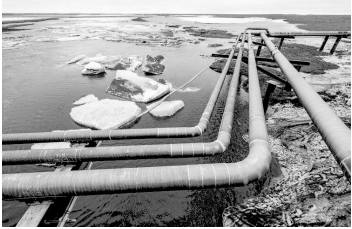
Pipelines extend across the landscape outside Nuiqsut, Alaska, May 2019.
"But at the same time, I think we and our partners have also made it abundantly clear that we're going to keep fighting, and keep fighting for protections in the Western Arctic," she said.
(From ROSEN, Yereth. Biden administration, in its last days, proposes new protections for Arctic Alaska land, Alaska Beacon, January 17, 2025. In
alaskabeacon.com/2025/01/17/biden-administration-in-its-last-days-pro poses-new-protections-for-arctic-alaska-land/, accessed on February 19th, 2025)
Biden administration, in its last days, proposes new protections for Arctic Alaska land
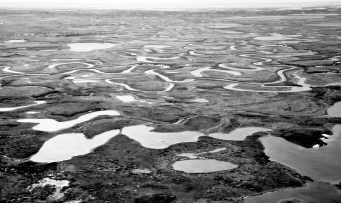
Lakes and connecting streams in the northeastern part of the National Petroleum Reserve in Alaska, June 2014.
Four days before President Joe Biden is set to leave office, his administration recommended that about 3 million more acres in Alaska's western Arctic be protected from development and issued a guideline, effective immediately, requiring additional protections for traditional Native subsistence harvests of fish, caribou and other resources.
The new recommendations and guidance, which apply to the 23-million-acre National Petroleum Reserve in Alaska, run counter to President-elect Donald Trump's expressed plans to expand oil drilling in the Arctic and elsewhere and to overturn Biden administration environmental policies more broadly.
The recommendations for additional land to be protected as part of what are termed "special areas" and the guidance for elevating the importance of subsistence and tribal consultation could be ignored or scrapped by the incoming Trump administration.
The northeastern part of the reserve is the area considered most likely to hold oil and where development has spread in recent years. There is already production in that area, and the most notable production expected in the future is from ConocoPhillips' Willow project. Willow won Biden administration approval in 2023. Production is expected to start by the end of the decade and peak at 180,000 barrels per day; current production from all North Slope fields amounts to less than 470,000 barrels per day.
Like the existing Teshekpuk special area, which holds important habitat for caribou, fish and migratory birds, the village of Nuiqsut is in the general area of the reserve's northeastern corner, where new oil development has occurred. Nuiqsut is so close that oilfield infrastructure can be seen from the village.
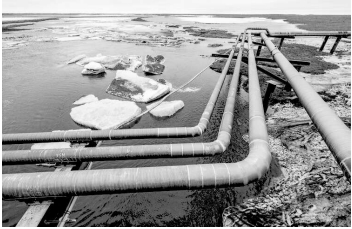
Pipelines extend across the landscape outside Nuiqsut, Alaska, May 2019.
"But at the same time, I think we and our partners have also made it abundantly clear that we're going to keep fighting, and keep fighting for protections in the Western Arctic," she said.
(From ROSEN, Yereth. Biden administration, in its last days, proposes new protections for Arctic Alaska land, Alaska Beacon, January 17, 2025. In
alaskabeacon.com/2025/01/17/biden-administration-in-its-last-days-pro poses-new-protections-for-arctic-alaska-land/, accessed on February 19th, 2025)
Biden administration, in its last days, proposes new protections for Arctic Alaska land
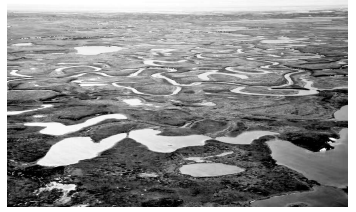
Lakes and connecting streams in the northeastern part of the National Petroleum Reserve in Alaska, June 2014.
Four days before President Joe Biden is set to leave office, his administration recommended that about 3 million more acres in Alaska's western Arctic be protected from development and issued a guideline, effective immediately, requiring additional protections for traditional Native subsistence harvests of fish, caribou and other resources.
The new recommendations and guidance, which apply to the 23-million-acre National Petroleum Reserve in Alaska, run counter to President-elect Donald Trump's expressed plans to expand oil drilling in the Arctic and elsewhere and to overturn Biden administration environmental policies more broadly.
The recommendations for additional land to be protected as part of what are termed "special areas" and the guidance for elevating the importance of subsistence and tribal consultation could be ignored or scrapped by the incoming Trump administration.
The northeastern part of the reserve is the area considered most likely to hold oil and where development has spread in recent years. There is already production in that area, and the most notable production expected in the future is from ConocoPhillips' Willow project. Willow won Biden administration approval in 2023. Production is expected to start by the end of the decade and peak at 180,000 barrels per day; current production from all North Slope fields amounts to less than 470,000 barrels per day.
Like the existing Teshekpuk special area, which holds important habitat for caribou, fish and migratory birds, the village of Nuiqsut is in the general area of the reserve's northeastern corner, where new oil development has occurred. Nuiqsut is so close that oilfield infrastructure can be seen from the village.
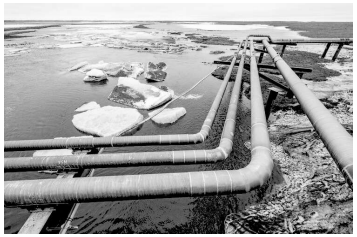
Pipelines extend across the landscape outside Nuiqsut, Alaska, May 2019.
"But at the same time, I think we and our partners have also made it abundantly clear that we're going to keep fighting, and keep fighting for protections in the Western Arctic," she said.
(From ROSEN, Yereth. Biden administration, in its last days, proposes new protections for Arctic Alaska land, Alaska Beacon, January 17, 2025. In alaskabeacon.com/2025/01/17/biden-administration-in-its-last-days-proposes-new-protections-for-arctic-alaska-land/, accessed on February 19th, 202
Biden administration, in its last days, proposes new protections for Arctic Alaska land
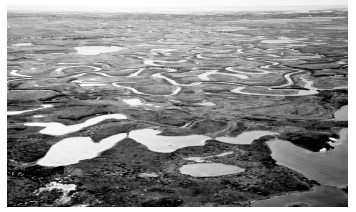
Lakes and connecting streams in the northeastern part of the National Petroleum Reserve in Alaska, June 2014.
Four days before President Joe Biden is set to leave office, his administration recommended that about 3 million more acres in Alaska's western Arctic be protected from development and issued a guideline, effective immediately, requiring additional protections for traditional Native subsistence harvests of fish, caribou and other resources.
The new recommendations and guidance, which apply to the 23-million-acre National Petroleum Reserve in Alaska, run counter to President-elect Donald Trump's expressed plans to expand oil drilling in the Arctic and elsewhere and to overturn Biden administration environmental policies more broadly.
The recommendations for additional land to be protected as part of what are termed "special areas" and the guidance for elevating the importance of subsistence and tribal consultation could be ignored or scrapped by the incoming Trump administration.
The northeastern part of the reserve is the area considered most likely to hold oil and where development has spread in recent years. There is already production in that area, and the most notable production expected in the future is from ConocoPhillips' Willow project. Willow won Biden administration approval in 2023. Production is expected to start by the end of the decade and peak at 180,000 barrels per day; current production from all North Slope fields amounts to less than 470,000 barrels per day.
Like the existing Teshekpuk special area, which holds important habitat for caribou, fish and migratory birds, the village of Nuiqsut is in the general area of the reserve's northeastern corner, where new oil development has occurred. Nuiqsut is so close that oilfield infrastructure can be seen from the village.
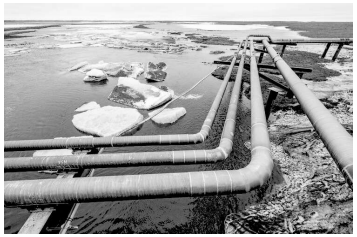
Pipelines extend across the landscape outside Nuiqsut, Alaska, May 2019.
"But at the same time, I think we and our partners have also made it abundantly clear that we're going to keep fighting, and keep fighting for protections in the Western Arctic," she said.
(From ROSEN, Yereth. Biden administration, in its last days, proposes new protections for Arctic Alaska land, Alaska Beacon, January 17, 2025. In alaskabeacon.com/2025/01/17/biden-administration-in-its-last-days-proposes-new-protections-for-arctic-alaska-land/, accessed on February 19th, 202
Leia o texto a seguir:
Jobs and Professions
As has been the case for many years, jobs, or forms of employment wherein employees perform a service or duty in exchange for financial compensation, play a prominent role in society. Furthermore, all jobs — even those of seemingly little significance — are important, as they simply wouldn't exist if their specific responsibilities weren't of value to employers (companies or persons that pay others for their work), customers (individuals who pay money for a product or service), and the economy generally.
Teachers, or educational professionals tasked with helping students understand certain subjects and topics, are especially crucial today. In short, teachers help their students to become qualified for their future careers.
Doctors, or medical professionals who specialize in providing health-related assistance to patients, are some of the most respected individuals in America and the world. It's the responsibility of doctors to help those who feel less-than-stellar to determine the underlying health issue(s) and recommend an effective treatment (or remedy to a disease, disorder, or condition).
There are quite a few types of specialty doctors in America (besides MD, which simply means "medical doctor"), all of whom can be referred to simply as "Doctor (Name)." Dentists (mouth/ teeth doctors), dermatologists (skin doctors), and psychiatrists (mental-health doctors) are just a few examples of the many different types of doctors.
Additionally, nurses are medical professionals who help to administer doctor-ordered treatments to patients.
Police officers are law enforcement professionals whose job it is to protect citizens, solve crimes, and assure that rules and regulations are followed. Similarly, firefighters serve the public by responding to fires (and other emergency situations) and using high-tech equipment to extinguish these fires, while bringing any individuals who're in danger to safety.
Farmers maintain fields of crops (or vegetable/fruit plants) and/ or collections of animals with the intention of selling these products as food.
Chefs/cooks prepare meals in professional settings, including restaurants, cafeterias, and other venues wherein food and drink are sold, for customers. Chefs are generally experienced in cooking and managing kitchens.
Waiters bring menus, beverages, meals, and ultimately, the check (or a bill of the foods and drinks purchased in a transaction) to tables in restaurants and other establishments that serve food.
Artists produce art, or works of creative significance, including music, paintings, drawings, poetry, writing, and more.
Fonte: https://pdfcoffee.com/meeting-5-basic-english-for-academic-porposes-pdffree.html. Acessado em 25/08/2025
Observe o trecho a seguir retirado do texto:
As has been the case for many years, jobs, or forms of employment wherein employees perform a service or duty in exchange for financial compensation, play a prominent role in society
A palavra destacada pode ser substituída, sem prejuízo do sentido, por:

 Conheça nossos planos