Questões de Concurso
Sobre sinônimos | synonyms em inglês
Foram encontradas 1.586 questões


ADVANTAGES AND DISADVANTAGES OF AI IN EDUCATION
As artificial intelligence becomes more common in our daily lives, its effect on education calls for both enthusiasm and caution. Supporters believe that AI offers great opportunities for personalized learning, making administrative tasks easier and bringing new ways to teach. However, there are still worries about privacy, fairness and the possibility of replacing traditional teaching jobs. A study by the Digital Education Council found that 86% of students admit to using AI in their studies. To further that, 24% use it daily and 54% use it weekly. What is artificial intelligence in education?
Artificial intelligence in education refers to the use of computer systems that can perform tasks typically requiring human intelligence to enhance learning experiences, streamline administrative processes, and support educators. AI technologies include machine learning, natural language processing and robotics, which can personalize learning by adapting content and pace to individual student needs. This personalized approach helps address diverse learning styles and paces, ensuring that each student receives the attention and resources they need to succeed.
In addition to personalized learning, AI can assist educators by automating administrative tasks. By reducing the time spent on these repetitive tasks, teachers can focus more on instruction and student engagement. AI-powered tools can also provide insights into student performance and progress, enabling early intervention for those who may be struggling and recognizing those who excel. This data-driven approach allows for more informed decision-making and tailored support for students. AI in education can facilitate innovative teaching methods and interactive learning environments. As AI continues to evolve, its potential to transform education by making it more accessible, efficient and personalized becomes increasingly evident.
The role of Artificial Intelligence in education is rapidly transforming how students learn and how educators teach. AI-powered tools enable personalized learning experiences, adapting content and pace to meet individual student needs. Intelligent tutoring systems, automated grading and virtual assistants enhance both teaching efficiency and student engagement. By analyzing learning patterns, AI can also help identify struggling students early, allowing for timely intervention and support. Another key aspect of the role of AI in education is its ability to improve accessibility and inclusivity. AI-driven platforms can provide real-time translations, speech-to-text capabilities and adaptive learning materials for students with disabilities. Moreover, educators benefit from AI by gaining data-driven insights into curriculum effectiveness and student performance. As the technology continues to evolve, AI holds the potential to create more equitable and effective educational environments worldwide. Artificial intelligence is revolutionizing various sectors and education is no exception. The integration of AI in education has brought about significant changes that enhance learning experiences, streamline administrative tasks and support both students and educators in various ways.
As artificial intelligence continues to integrate into various sectors, its application in education is both celebrated and scrutinized. While AI holds significant potential to transform learning experiences, it also presents several disadvantages that need careful consideration that must be addressed to ensure a balanced and effective learning environment. Another major concern is the growing dependence on technology that AI in education fosters. As educational institutions increasingly rely on AI-driven tools for teaching, assessment and administrative tasks, there is a risk of becoming overly dependent on these technologies. This dependence can lead to significant disruptions in the event of technical failures or cyber-attacks. Furthermore, it may also diminish the development of critical thinking and problem-solving skills among students, as they may become accustomed to AI systems providing answers and solutions.
The lack of human touch is another critical disadvantage of AI in education, leading to a dehumanized learning experience. Traditional education relies heavily on human interaction, with teachers providing not only academic instruction but also emotional support and mentorship. AI systems, while efficient, cannot replicate the empathy, understanding and personal connection that human educators offer. This absence of human elements can affect students' social and emotional development, as well as their overall engagement and motivation in the learning process. AI in education also raises the risk of cheating. Advanced AI tools can be exploited by students to find ways to bypass academic integrity measures. For instance, AI-powered plagiarism detection systems may themselves be outsmarted by sophisticated AI-generated content that mimics genuine student work. Additionally, AI-based tutoring systems and automated assessments might be manipulated to provide undue assistance, undermining the fairness and integrity of academic evaluations. Schools and institutions must continuously adapt and update their AI tools to mitigate these risks.
Lastly, the rise of AI in education brings the concern of teacher job displacement. As AI systems take on more roles traditionally filled by educators, there is a fear that teachers may become obsolete. Automated grading, AI-driven tutoring, and administrative tasks handled by AI could reduce the need for human teachers, leading to job losses and a devaluation of the teaching profession. While AI can certainly support and enhance educational practices, it is essential to balance its implementation to ensure that teachers remain integral to the educational process, providing the human touch that technology cannot replace.
Taken and adapted from: https://www.ucanwest.ca/blog/education-careers-tips/advantages-and-disadvantages-of-ai-ineducation
Consider the following excerpt from the text: “As artificial intelligence continues to integrate into various sectors, its application in education is both celebrated and scrutinized. While AI holds significant potential to transform learning experiences, it also presents several disadvantages that need careful consideration that must be addressed to ensure a balanced and effective learning environment. Another major concern is the growing dependence on technology that AI in education fosters.” In this context, the word scrutinized most nearly means:
Lexical semantics studies word meaning. Regarding synonyms and antonyms in English, mark T for true statements and F for false ones:
(__) Synonyms are words that have identical meanings in all contexts and can be freely substituted without any change in meaning or nuance (e.g., "big" and "large").
(__) Antonyms are words that express opposite meanings (e.g., "hot" and "cold," "happy" and "sad").
(__) Many words considered synonyms actually have subtle differences in meaning, connotation, or register (formal/informal), which makes lexical choice important for communicative precision.
(__) The word "fast" can be considered both a synonym of "quick" and an antonym of "slow."
After analysis, select the alternative that presents the correct sequence, from top to bottom:
I It is correct to conclude from the first paragraph of the text that some students are open to embracing AI chatbots as an acceptable learning technology, whereas others are more skeptical.
II The text implies, in its last paragraph, that implementing AI chatbots in educational settings may jeopardize the significant communication that occurs among students.
III In the second sentence of the second paragraph, the verb “support” is a synonymous with assist, and the two can be used interchangeably without altering the overall meaning of the sentence.
Choose the correct option.
Read the passage and answer question.
Palestinians in Gaza Reflect on One Year of Israel’s War With Hamas Oct. 7, 2024
The war has killed tens of thousands and devastated entire cities, leaving many in Gaza without a home and fueling a humanitarian catastrophe.
By Bilal Shbair and Hiba Yazbek Reporting from the Gaza Strip and Jerusalem.
Last October, Fadi Abu Kheir of southern Gaza had big plans. He was going to be engaged to the woman he loved. After they got married, he said, they would move in together, into an apartment that he spent years building.
“Now,” Mr. Abu Kheir, 24, said, “I am clueless about my future. I cannot even think how I can adapt to life postwar.”
It has been a year since the Hamas-led terrorist attacks impelled Israel to launch a retaliatory offensive in Gaza. For Mr. Abu Kheir — and, indeed, for Palestinians across the enclave — every day since, he said, has teemed with “sadness, depression and fury.”
The war has killed over 41,000 people, according to Gazan health officials, and devastated entire neighborhoods and cities, leaving hundreds of thousands without a home and fueling a humanitarian catastrophe.
More than 2 million people lived in the strip before the conflict. No one has been unaffected.
“We were so happy before this war,” said Maisaa al-Naffar, 20, of Khan Younis, breaking into tears as she recalled her first few weeks as a newlywed before the war began. She added: “I am not the person I used to be.”
Nine months pregnant, she is sheltering in a tent in southern Gaza.
“I miss my old life. I miss the days when we used to have fun or laugh at even the smallest things.
I miss my life when we had enough healthy food and snacks,”
Ms. al-Naffar said. “Today, everything has become a hell, full of dust and darkness.”
Throughout the enclave, similar stories abound. For Mr. Abu Kheir, the image from the war that lingers is that of a naked, lifeless woman lying in the street, blown out of a house that had been bombarded, he said. The conflict has killed two of his best friends, and displaced him and his family, he said. It also destroyed the apartment he was building, in the southern Gaza city of Rafah. The war, he said, has “destroyed my dreams.”
Portuguese Man Accidentally Finds 82-Foot-Long Dinosaur in His Backyard
By Margaret Osborne

(Available at: https://www.smithsonianmag.com/smart-news/portuguese-man-accidentally-finds-82-foot-longdinosaur-in-his-backyard-180980672/ – text specially adapted for this test).
Text II:
The Future of the Planet

Our planet is facing serious environmental problems. Climate change is causing extreme weather, ice is melting in the polar regions, and many species are disappearing. Governments and individuals must work together to reduce pollution and protect natural resources. Renewable energy, recycling, and education are key to building a sustainable future. The choices we make today will determine the world we live in tomorrow.
(Fonte: Linguapress – texto autêntico adaptado para uso educacional)
Text I:
Urbanization and Its Challenges
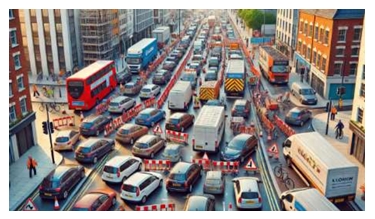
In the last century, urbanization has accelerated at an unprecedented pace. Cities around the world have grown rapidly, attracting people from rural areas seeking better opportunities. While urban centers provide access to jobs, education, and healthcare, they also present significant challenges. Overcrowding, gridlock, pollution, and insufficient housing are common problems. Moreover, social inequality is often more visible in urban areas, where wealthy neighborhoods exist alongside impoverished communities. Urban planners argue that sustainable development, public transportation, and inclusive policies are essential to create cities that can support both economic growth and quality of life.
(Text elaborated exclusive for this test)
“Formal education entails structured instruction, teaching, and training delivered by professional educators. It involves the application of pedagogy and the creation of curricula.”
Analyze the affirmatives below about the words in bold.
1. Both words are synonyms.
2. Entails and Involves refer to formal education
3. Both have different grammatical structures in sentences.
4. Involves is used as a verb.
Choose the alternative which contains the correct affirmatives.
•Use Text I for question.
TEXT I
HOW TO COPE WITH THE SUNDAY
SCARIES
by Chantelle Lee
________(1) Sunday night, and you’re feeling sad and anxious about going back to work in the morning.
Say hello to the Sunday scaries
You’re not alone in your workweek dread: “They’re very, very common,” says Susanne Cooperman, a neuropsychologist and psychoanalyst at New York University Langone Huntington Medical Group. “There’s nothing wrong with a person if they feel sad that the weekend is over. It’s when it really interferes in your functioning—when you can’t focus, when you can’t sleep, when you feel yourself medicating with alcohol—then you need help.”
Here’s why people get the Sunday scaries and the best ways to combat those thoughts of doom and gloom.
__________(2) are the Sunday scaries? The Sunday scaries typically manifest in two ways: feelings of depression that the weekend is ending, feelings of anxiety about the week to come, or both. These feelings typically start on Sunday afternoon.
“It could be that you feel sad and irritable and you have difficulty concentrating and fatigue,”
Cooperman says. That collection of feelings is called anhedonia—basically a loss of enjoyment.
If you feel more dread for the work week ahead, that’s called “anticipatory anxiety,” she says.
Why people get them
The scaries strike for all kinds of reasons. They could be related to work—maybe you’re afraid of losing your job, or you’re dreading going to the office in person, or you’re simply having a hard time unplugging from work after hours, Cooperman says.
Or, she adds, it could also be that you overbooked yourself during the week and feel exhausted by the time Sunday comes around.
How to deal with the Sunday scaries
One of the best ways to deal with the Sunday scaries is to mentally plant yourself firmly in the present. One way to achieve this is to try a mediation or relaxation app, even if it’s only for 10 or 15 minutes, Cooperman says. “I think that’s probably the best out of all the tips: stay in the moment, really try to curtail that catastrophizing into the future,” she says. There are other paths away from the scaries, too: Unplug from your phone or social media, maintain a good work-life balance, do some exercise, or get some fresh air. Make sure to schedule fun activities for Sunday afternoon and evening and do things that reliably make you feel better or help you “refuel [your] batteries,” Cooperman says. Just as important is allowing yourself downtime to relax and unwind, she adds. She also recommends trying to split up errands throughout the week so you don’t feel like you wasted your entire Sunday doing them.
While the Sunday scaries are common, people should keep an eye on how they’re coping come the end of the weekend. “Use healthy, adaptive ways to self-soothe when you’re anxious and have the scaries,” Cooperman says. “A glass of wine is fine, but if it’s more than that and you need it every night, then that’s a problem.” If the scaries are so bad that it’s significantly impacting your life, Cooperman suggests talking about these feelings with a therapist or a psychologist. Some warning signs include being so anxious that it’s hard to get out of bed in the morning, having anxiety attacks, needing alcohol to calm down, not being able to focus or sleep, or failing to enjoy the weekend at all. “If you just can’t get out of that loop where you’re constantly unhappy, then I think you’re at a place where you should see a psychologist or a therapist,” Cooperman says. “Sometimes it’s hard to [deal with it] on your own. It’s good to talk to a professional.”
LEE, Chantelle. How to cope with the Sunday scaries. Time, New York, 6 Apr. 2025. Available at: https://time.com/7275089/what-are-sunday-scaries/. Accessed on: 11 Aug. 2025.


 Conheça nossos planos