Foram encontradas 40.252 questões
Resolva questões gratuitamente!
Junte-se a mais de 4 milhões de concurseiros!


A exposição ao risco de contaminação e disseminação do Sars-CoV-2 no contexto da assistência odontológica é elevada. A esse respeito, marque para as afirmativas verdadeiras e F para as falsas.
( ) Alguns equipamentos rotatórios geram aerossóis e gotículas muito pequenas que permanecem suspensas no ar por períodos mais longos e colaboram com a disseminação da carga viral no ambiente.
( ) As medidas a serem tomadas na atenção odontológica em razão da pandemia envolvem não somente o reforço a todos os protocolos de biossegurança como também a redução do número de consultas e otimização do tempo clínico.
( ) Fazem parte das condições e fatores de risco ás formas graves da doença identificados pelo Ministério da Saúde tabagismo, obesidade, miocardiopatias de diferentes etiologias, hipertensão arterial e imunodepressão.
Assinale a sequência correta.
Em alguns distúrbios sistêmicos, hemorragias gengivais excessivas e de difícil controle ocorrem espontaneamente ou após irritação dos tecidos. A respeito de tratamento cirúrgico em pacientes com esses distúrbios, marque V para as afirmativas verdadeiras e F para as falsas.
( ) Em pacientes com trombocitopenia, a terapia periodontal deve ser direcionada para reduzir a inflamação através da remoção de irritantes locais para evitar a necessidade de tratamento mais agressivo.
( ) Durante a anamnese pré-cirúrgica, o histórico do paciente sobre sua família deve ser aprofundado, buscando alguma relação de hereditariedade das doenças, uma vez que todos os dist rbios de coagulação são hereditários.
( ) As manifestações hemorrágicas em pacientes que apresentam a doença de Von Willebrand são leves a moderadas e incluem facilidade de apresentar hematoma e sangramento de mucosa. Porém, em pacientes com esse distúrbio, sangramento anormal é observado após procedimentos cirúrgicos, como extração de dentes.
Assinale a sequência correta.
Pessoas que sofrem de depressão costumam ter seu estilo de vida, suas emoções e tarefas diárias afetadas, além de se sentirem mais cansadas, infelizes e insatisfeitas com a vida pessoal e profissional, o que pode redundar em alterações bucais. Sobre o tema, analise as afirmativas.
I- Entre os sinais e sintomas bucais da depressão estão aumento no risco de desenvolver periodontite, sensações de queimação na boca e distúrbios na articulação temporomandibular.
II- Os fármacos utilizados no tratamento da depressão provocam diferentes graus de xerostomia e podem aumentar a probabilidade de cáries e outros problemas relacionados com a saúde oral.
III- O uso de anestésicos locais deve ser evitado por provocar sérias complicações na interação com medicamentos antidepressivos.
Está correto o que se afirma em
A erupção parcial ou incompleta dos terceiros molares está frequentemente relacionada com a ocorrência de pericoronarites. Sobre os sinais e sintomas mais frequentes da pericoronarite, considere:
I- Presença de mau hálito
II- Inchaço da gengiva no local acometido
III- Dor no local
IV- Aumento do tamanho ou do número de linfonodos cervicais
São sinais e sintomas
Com os avanços da Odontologia, constatou-se que o uso do flúor é a medida de maior impacto e relevância para o controle da cárie dentária. Uma das razões principais para o sucesso do flúor é a facilidade e diversidade de suas formas de aplicação. A respeito do uso do flúor, marque V para as afirmativas verdadeiras e F para as falsas.
( ) Embora os métodos de liberação de flúor possam ser divididos em sistêmicos e tópicos, o modo primário de ação desse mineral resulta de atividade tópica na cavidade bucal.
( ) necessário manter a exposição regular ao flúor, seja com o uso sistêmico ou tópico para manter sua concentração no ambiente bucal e na placa dentária.
( ) O uso tópico do flúor tem efeito na remineralização das lesões erosivas e também na prevenção do desenvolvimento futuro dessas lesões.
Assinale a sequ ncia correta.
Na última década, triplicou entre os jovens um problema conhecido como envelhecimento precoce dos dentes. A esse respeito, marque V para as afirmativas verdadeiras e F para as falsas.
( ) As lesões causadas pela erosão nos tecidos dentais são irreversíveis.
( ) Alimentos e bebidas ácidas, como refrigerante, energético, álcool e açúcar, quando consumidos em elevada frequência e de modo inadequado, facilitam a degeneração dos tecidos dentais.
( ) O pH crítico para dissolução do esmalte é 6,5.
( ) O estilo de vida também pode impactar, pois o estresse diário pode provocar alterações gástricas.
Assinale a sequ ncia correta.
A decisão por reparar ou substituir restaurações de resina composta é um desafio que vários dentistas enfrentam no dia a dia da prática profissional. A respeito dos procedimentos de reparo em resina composta, analise as afirmativas.
I- O processo de reparo pode ser mais complicado em uma restauração antiga de resina composta, porque a quantidade de ligações duplas de carbono remanescentes diminui com o tempo.
II- O tratamento de superf cie tem por finalidade remover a camada superficial alterada, aumentar a energia de superf cie da resina envelhecida e ainda aumentar sua área com a criação de irregularidades.
III- A asperização de superf cie deve ser realizada por meio de pontas diamantadas ou jateamento com xido de alum nio.
IV- O condicionamento da resina com ácido fosf rico promove alteração sobre o seu padrão morfol gico, aumentando a força de união do reparo.
Está correto o que se afirma em
O processo para restaurações com materiais adesivos estéticos é complexo, uma vez que envolve a união dos materiais restauradores aos tecidos dentais. A respeito de adesão e restauração em resina composta de dentes posteriores, analise as afirmativas.
I- Em cavidades com profundidade de até 4 mm, resinas bulk fill podem ser inseridas em incrementos únicos. Isso se deve ao fato de que o stress de contração é minimizado por seu baixo grau de contração de polimerização e porque sua alta translucidez permite que a luz incidente penetre mais profundamente na resina.
II- A energia resultante de uma exposição de luz a 1.000 mW/cm2 por segundos é idêntica energia de uma exposição a m cm2 por 40 segundos, assim o tempo de exposição de fotopolimerizadores com intensidade de luz menor pode ser compensada pelo aumento no tempo de exposição.
III- Adesivos odontológicos autocondicionantes de dois passos requerem que a dentina, após condicionamento com ácido fosfórico 37% por 15 segundos, seja mantida úmida para que ocorra a exposição de um emaranhado de fibras colágenas de modo a permitir a infiltração subsequente do adesivo.
IV- Ap s a instalação da matriz metálica e cunha nas faces mesial e distal, a inserção da resina composta em cavidades MO é iniciada simultaneamente pelas caixas proximais, por meio da aplicação sucessiva de pequenos incrementos horizontais, fotoativados individualmente.
Está correto o que se afirma em
A saúde periodontal é um pré-requisito da Odontologia integral bem-sucedida, e a preparação do periodonto para a Odontologia restauradora é fundamental para se alcançar a longevidade do tratamento. Sobre o tema, analise as afirmativas.
I- A infecção periodontal ativa deve ser tratada e controlada antes do início da Odontologia restauradora, estética e de implantes.
II- Forças traumáticas posicionadas sobre dentes com periodontite em progressão podem aumentar a mobilidade dentária, o desconforto e a perda de inserção.
III- A movimentação ortodôntica de dentes mal posicionados deve ser feita antes do tratamento periodontal, porque tem o tempo de duração diminuído devido à qualidade, quantidade e topografia do periodonto.
IV- Pelo fato de a terapia periodontal e restauradora ser situacional e específica para cada paciente, o plano de tratamento deve ser adaptável a alterações, dependendo de variáveis encontradas no curso do tratamento.
Estão corretas as afirmativas
Analise a figura abaixo, que apresenta a história natural de uma doença infecciosa, fazendo analogia com o conceito de iceberg.
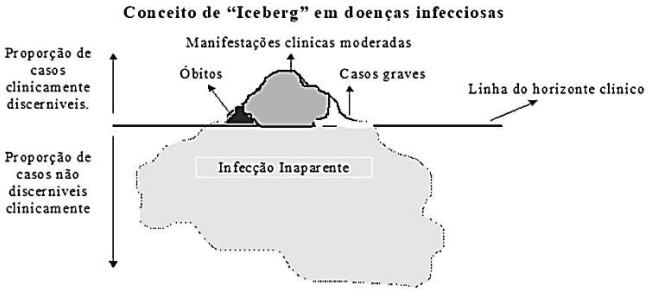
Fonte: Waldman EA (1998).
Considerando que a infecção pelo vírus SARS-Cov2, causador da COVID-19, representa exatamente esse
perfil de história natural, é correto afirmar que a letalidade dessa virose é
O quadro abaixo apresenta as situações de violência interpessoal que são objeto de notificação compulsória no Brasil.
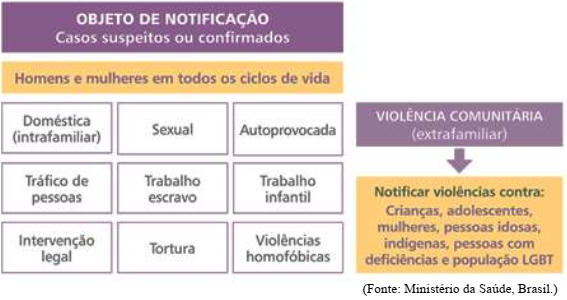
O sistema de informação nacional, no qual o profissional de saúde e a unidade de saúde devem registrar a
notificação obrigatória desses casos é:

 Conheça nossos planos