Questões de Concurso
Foram encontradas 231.905 questões
Resolva questões gratuitamente!
Junte-se a mais de 4 milhões de concurseiros!


Ano: 2026
Banca:
FGV
Órgão:
AL-RO
Provas:
FGV - 2026 - AL-RO - Assistente Legislativo (Sem Especialidade)
|
FGV - 2026 - AL-RO - Assistente Legislativo (Técnico em Arquivo) |
FGV - 2026 - AL-RO - Assistente Legislativo (Técnico em Contabilidade) |
FGV - 2026 - AL-RO - Assistente Legislativo (Técnico em Desenho de Construção Civil) |
FGV - 2026 - AL-RO - Assistente Legislativo (Técnico em Edificações) |
FGV - 2026 - AL-RO - Assistente Legislativo (Técnico em Eletromecânica - Eletrotécnica) |
FGV - 2026 - AL-RO - Assistente Legislativo (Técnico em Informática) |
FGV - 2026 - AL-RO - Assistente Legislativo (Técnico em Eletroeletrônica) |
FGV - 2026 - AL-RO - Assistente Legislativo (Técnico em Logística) |
FGV - 2026 - AL-RO - Assistente Legislativo (Técnico em Produção de Áudio e Vídeo) |
FGV - 2026 - AL-RO - Assistente Legislativo (Técnico em Comunicação Visual) |
FGV - 2026 - AL-RO - Assistente Legislativo (Técnico em Segurança do Trabalho) |
FGV - 2026 - AL-RO - Assistente Legislativo (Técnico em Tradução e Interpretação de Libras) |
Q3880662
Português
Assinale a opção em que há erro na classificação gramatical do
termo sublinhado.
Ano: 2026
Banca:
FGV
Órgão:
AL-RO
Provas:
FGV - 2026 - AL-RO - Assistente Legislativo (Sem Especialidade)
|
FGV - 2026 - AL-RO - Assistente Legislativo (Técnico em Arquivo) |
FGV - 2026 - AL-RO - Assistente Legislativo (Técnico em Contabilidade) |
FGV - 2026 - AL-RO - Assistente Legislativo (Técnico em Desenho de Construção Civil) |
FGV - 2026 - AL-RO - Assistente Legislativo (Técnico em Edificações) |
FGV - 2026 - AL-RO - Assistente Legislativo (Técnico em Eletromecânica - Eletrotécnica) |
FGV - 2026 - AL-RO - Assistente Legislativo (Técnico em Informática) |
FGV - 2026 - AL-RO - Assistente Legislativo (Técnico em Eletroeletrônica) |
FGV - 2026 - AL-RO - Assistente Legislativo (Técnico em Logística) |
FGV - 2026 - AL-RO - Assistente Legislativo (Técnico em Produção de Áudio e Vídeo) |
FGV - 2026 - AL-RO - Assistente Legislativo (Técnico em Comunicação Visual) |
FGV - 2026 - AL-RO - Assistente Legislativo (Técnico em Segurança do Trabalho) |
FGV - 2026 - AL-RO - Assistente Legislativo (Técnico em Tradução e Interpretação de Libras) |
Q3880661
Português
Assinale a opção em que a lacuna da frase deve ser preenchida
pelo segundo elemento contido nos parênteses.
Ano: 2026
Banca:
FGV
Órgão:
AL-RO
Provas:
FGV - 2026 - AL-RO - Assistente Legislativo (Sem Especialidade)
|
FGV - 2026 - AL-RO - Assistente Legislativo (Técnico em Arquivo) |
FGV - 2026 - AL-RO - Assistente Legislativo (Técnico em Contabilidade) |
FGV - 2026 - AL-RO - Assistente Legislativo (Técnico em Desenho de Construção Civil) |
FGV - 2026 - AL-RO - Assistente Legislativo (Técnico em Edificações) |
FGV - 2026 - AL-RO - Assistente Legislativo (Técnico em Eletromecânica - Eletrotécnica) |
FGV - 2026 - AL-RO - Assistente Legislativo (Técnico em Informática) |
FGV - 2026 - AL-RO - Assistente Legislativo (Técnico em Eletroeletrônica) |
FGV - 2026 - AL-RO - Assistente Legislativo (Técnico em Logística) |
FGV - 2026 - AL-RO - Assistente Legislativo (Técnico em Produção de Áudio e Vídeo) |
FGV - 2026 - AL-RO - Assistente Legislativo (Técnico em Comunicação Visual) |
FGV - 2026 - AL-RO - Assistente Legislativo (Técnico em Segurança do Trabalho) |
FGV - 2026 - AL-RO - Assistente Legislativo (Técnico em Tradução e Interpretação de Libras) |
Q3880660
Português
Leia a frase a seguir.
A fala e a escrita são modalidades diferentes da linguagem humana __ a primeira se utiliza de unidades sonoras __ a segunda __ ao contrário __ emprega sinais gráficos.
Assinale a pontuação que preenche corretamente as lacunas da frase acima.
A fala e a escrita são modalidades diferentes da linguagem humana __ a primeira se utiliza de unidades sonoras __ a segunda __ ao contrário __ emprega sinais gráficos.
Assinale a pontuação que preenche corretamente as lacunas da frase acima.
Ano: 2026
Banca:
FGV
Órgão:
AL-RO
Provas:
FGV - 2026 - AL-RO - Assistente Legislativo (Sem Especialidade)
|
FGV - 2026 - AL-RO - Assistente Legislativo (Técnico em Arquivo) |
FGV - 2026 - AL-RO - Assistente Legislativo (Técnico em Contabilidade) |
FGV - 2026 - AL-RO - Assistente Legislativo (Técnico em Desenho de Construção Civil) |
FGV - 2026 - AL-RO - Assistente Legislativo (Técnico em Edificações) |
FGV - 2026 - AL-RO - Assistente Legislativo (Técnico em Eletromecânica - Eletrotécnica) |
FGV - 2026 - AL-RO - Assistente Legislativo (Técnico em Informática) |
FGV - 2026 - AL-RO - Assistente Legislativo (Técnico em Eletroeletrônica) |
FGV - 2026 - AL-RO - Assistente Legislativo (Técnico em Logística) |
FGV - 2026 - AL-RO - Assistente Legislativo (Técnico em Produção de Áudio e Vídeo) |
FGV - 2026 - AL-RO - Assistente Legislativo (Técnico em Comunicação Visual) |
FGV - 2026 - AL-RO - Assistente Legislativo (Técnico em Segurança do Trabalho) |
FGV - 2026 - AL-RO - Assistente Legislativo (Técnico em Tradução e Interpretação de Libras) |
Q3880659
Português
Assinale a opção em que não há crase em lacuna alguma.
Ano: 2026
Banca:
FGV
Órgão:
AL-RO
Provas:
FGV - 2026 - AL-RO - Assistente Legislativo (Sem Especialidade)
|
FGV - 2026 - AL-RO - Assistente Legislativo (Técnico em Arquivo) |
FGV - 2026 - AL-RO - Assistente Legislativo (Técnico em Contabilidade) |
FGV - 2026 - AL-RO - Assistente Legislativo (Técnico em Desenho de Construção Civil) |
FGV - 2026 - AL-RO - Assistente Legislativo (Técnico em Edificações) |
FGV - 2026 - AL-RO - Assistente Legislativo (Técnico em Eletromecânica - Eletrotécnica) |
FGV - 2026 - AL-RO - Assistente Legislativo (Técnico em Informática) |
FGV - 2026 - AL-RO - Assistente Legislativo (Técnico em Eletroeletrônica) |
FGV - 2026 - AL-RO - Assistente Legislativo (Técnico em Logística) |
FGV - 2026 - AL-RO - Assistente Legislativo (Técnico em Produção de Áudio e Vídeo) |
FGV - 2026 - AL-RO - Assistente Legislativo (Técnico em Comunicação Visual) |
FGV - 2026 - AL-RO - Assistente Legislativo (Técnico em Segurança do Trabalho) |
FGV - 2026 - AL-RO - Assistente Legislativo (Técnico em Tradução e Interpretação de Libras) |
Q3880658
Português
A charge é antiga, mas o assunto continua atual.
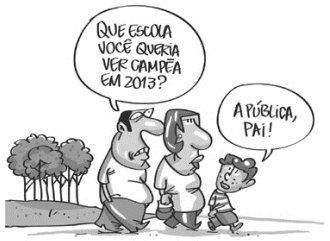
Na charge, produzida por Erasmo e retirada do Jornal de Piracicaba, o efeito de humor se dá sobretudo
Ano: 2026
Banca:
FGV
Órgão:
AL-RO
Provas:
FGV - 2026 - AL-RO - Assistente Legislativo (Sem Especialidade)
|
FGV - 2026 - AL-RO - Assistente Legislativo (Técnico em Arquivo) |
FGV - 2026 - AL-RO - Assistente Legislativo (Técnico em Contabilidade) |
FGV - 2026 - AL-RO - Assistente Legislativo (Técnico em Desenho de Construção Civil) |
FGV - 2026 - AL-RO - Assistente Legislativo (Técnico em Edificações) |
FGV - 2026 - AL-RO - Assistente Legislativo (Técnico em Eletromecânica - Eletrotécnica) |
FGV - 2026 - AL-RO - Assistente Legislativo (Técnico em Informática) |
FGV - 2026 - AL-RO - Assistente Legislativo (Técnico em Eletroeletrônica) |
FGV - 2026 - AL-RO - Assistente Legislativo (Técnico em Logística) |
FGV - 2026 - AL-RO - Assistente Legislativo (Técnico em Produção de Áudio e Vídeo) |
FGV - 2026 - AL-RO - Assistente Legislativo (Técnico em Comunicação Visual) |
FGV - 2026 - AL-RO - Assistente Legislativo (Técnico em Segurança do Trabalho) |
FGV - 2026 - AL-RO - Assistente Legislativo (Técnico em Tradução e Interpretação de Libras) |
Q3880657
Redação Oficial
Avalie as afirmativas a seguir, relativas a textos normativos legais.
I. Alíneas devem ser designadas por letras minúsculas, seguidas de um parêntese de fechamento: a), b), c).
II. Na numeração de artigos, utiliza-se apenas a numeração ordinal: art. 1º, art. 8º, art. 10º.
III. Na numeração de parágrafos, utiliza-se apenas a numeração cardinal: § 3, § 9, § 10.
IV. Incisos devem ser designados por algarismos romanos e iniciados por letra minúscula: I, II, III.
Está correto o que se afirma em
Ano: 2026
Banca:
FGV
Órgão:
AL-RO
Provas:
FGV - 2026 - AL-RO - Assistente Legislativo (Sem Especialidade)
|
FGV - 2026 - AL-RO - Assistente Legislativo (Técnico em Arquivo) |
FGV - 2026 - AL-RO - Assistente Legislativo (Técnico em Contabilidade) |
FGV - 2026 - AL-RO - Assistente Legislativo (Técnico em Desenho de Construção Civil) |
FGV - 2026 - AL-RO - Assistente Legislativo (Técnico em Edificações) |
FGV - 2026 - AL-RO - Assistente Legislativo (Técnico em Eletromecânica - Eletrotécnica) |
FGV - 2026 - AL-RO - Assistente Legislativo (Técnico em Informática) |
FGV - 2026 - AL-RO - Assistente Legislativo (Técnico em Eletroeletrônica) |
FGV - 2026 - AL-RO - Assistente Legislativo (Técnico em Logística) |
FGV - 2026 - AL-RO - Assistente Legislativo (Técnico em Produção de Áudio e Vídeo) |
FGV - 2026 - AL-RO - Assistente Legislativo (Técnico em Comunicação Visual) |
FGV - 2026 - AL-RO - Assistente Legislativo (Técnico em Segurança do Trabalho) |
FGV - 2026 - AL-RO - Assistente Legislativo (Técnico em Tradução e Interpretação de Libras) |
Q3880656
Português
Texto associado
ATENÇÃO: O texto a seguir se refere à questão.
'Quer adressar?', me perguntou a moça
De início não entendi o verbo cravado no coração da frase e,
usando o etarismo a meu favor, pedi graciosamente, por favor,
que a moça repetisse.
O cenário era a loja de um shopping no Leblon, onde eu
negociava com ela, vendedora educadíssima, os últimos detalhes
da compra de um produto volumoso que, sem carro, eu não
podia levar naquele momento. Foram necessárias três repetições
da frase até que – como se falava no tempo do orelhão, quando o
português era ouvido por aqui – a ficha caiu:
“Eu posso adressar o produto?”, era o que perguntava a
moça, fazendo-se finalmente entender. A moça queria ostentar
na fala o mesmo padrão internacional do shopping.
A pureza vernacular não linka com a minha prosa vadia de
cronista. A ideia aqui é mexer com a língua, roçar na de Luís de
Camões e – como o tamanduá esticando a dele para pegar as
formigas – tirar prazer disso. Para manter o emprego, equilibro
num parágrafo as ordens do manual de redação – exibindo às
vezes uma mesóclise de polainas – e já no parágrafo seguinte caio
de boca – com o piercing no lábio inferior – no saboreio do último
barbarismo ouvido na esquina. Nada a ver com os rigores de um
professor de português. O target não é preparar o leitor para a
nota mil do Enem, mas meter a língua onde não se foi chamado.
A propósito. Preciso dizer que quando eu, cliente, finalmente
entendi o que a moça na loja do shopping queria dizer com a
proposta de “adressar” a compra, eu aquiesci jovial – e me fiz
up to date:
“Sim, por favor, adressa, sim”.
(Trecho adaptado da crônica de Joaquim Ferreira dos Santos,
publicada em “O Globo”.)
Assinale a frase, retirada do texto, que apresenta
intertextualidade com outra frase conhecida, considerada como
um ditado popular.
Ano: 2026
Banca:
FGV
Órgão:
AL-RO
Provas:
FGV - 2026 - AL-RO - Assistente Legislativo (Sem Especialidade)
|
FGV - 2026 - AL-RO - Assistente Legislativo (Técnico em Arquivo) |
FGV - 2026 - AL-RO - Assistente Legislativo (Técnico em Contabilidade) |
FGV - 2026 - AL-RO - Assistente Legislativo (Técnico em Desenho de Construção Civil) |
FGV - 2026 - AL-RO - Assistente Legislativo (Técnico em Edificações) |
FGV - 2026 - AL-RO - Assistente Legislativo (Técnico em Eletromecânica - Eletrotécnica) |
FGV - 2026 - AL-RO - Assistente Legislativo (Técnico em Informática) |
FGV - 2026 - AL-RO - Assistente Legislativo (Técnico em Eletroeletrônica) |
FGV - 2026 - AL-RO - Assistente Legislativo (Técnico em Logística) |
FGV - 2026 - AL-RO - Assistente Legislativo (Técnico em Produção de Áudio e Vídeo) |
FGV - 2026 - AL-RO - Assistente Legislativo (Técnico em Comunicação Visual) |
FGV - 2026 - AL-RO - Assistente Legislativo (Técnico em Segurança do Trabalho) |
FGV - 2026 - AL-RO - Assistente Legislativo (Técnico em Tradução e Interpretação de Libras) |
Q3880655
Português
Texto associado
ATENÇÃO: O texto a seguir se refere à questão.
'Quer adressar?', me perguntou a moça
De início não entendi o verbo cravado no coração da frase e,
usando o etarismo a meu favor, pedi graciosamente, por favor,
que a moça repetisse.
O cenário era a loja de um shopping no Leblon, onde eu
negociava com ela, vendedora educadíssima, os últimos detalhes
da compra de um produto volumoso que, sem carro, eu não
podia levar naquele momento. Foram necessárias três repetições
da frase até que – como se falava no tempo do orelhão, quando o
português era ouvido por aqui – a ficha caiu:
“Eu posso adressar o produto?”, era o que perguntava a
moça, fazendo-se finalmente entender. A moça queria ostentar
na fala o mesmo padrão internacional do shopping.
A pureza vernacular não linka com a minha prosa vadia de
cronista. A ideia aqui é mexer com a língua, roçar na de Luís de
Camões e – como o tamanduá esticando a dele para pegar as
formigas – tirar prazer disso. Para manter o emprego, equilibro
num parágrafo as ordens do manual de redação – exibindo às
vezes uma mesóclise de polainas – e já no parágrafo seguinte caio
de boca – com o piercing no lábio inferior – no saboreio do último
barbarismo ouvido na esquina. Nada a ver com os rigores de um
professor de português. O target não é preparar o leitor para a
nota mil do Enem, mas meter a língua onde não se foi chamado.
A propósito. Preciso dizer que quando eu, cliente, finalmente
entendi o que a moça na loja do shopping queria dizer com a
proposta de “adressar” a compra, eu aquiesci jovial – e me fiz
up to date:
“Sim, por favor, adressa, sim”.
(Trecho adaptado da crônica de Joaquim Ferreira dos Santos,
publicada em “O Globo”.)
Em relação ao texto, assinale a afirmativa correta.
Ano: 2026
Banca:
FGV
Órgão:
AL-RO
Provas:
FGV - 2026 - AL-RO - Assistente Legislativo (Sem Especialidade)
|
FGV - 2026 - AL-RO - Assistente Legislativo (Técnico em Arquivo) |
FGV - 2026 - AL-RO - Assistente Legislativo (Técnico em Contabilidade) |
FGV - 2026 - AL-RO - Assistente Legislativo (Técnico em Desenho de Construção Civil) |
FGV - 2026 - AL-RO - Assistente Legislativo (Técnico em Edificações) |
FGV - 2026 - AL-RO - Assistente Legislativo (Técnico em Eletromecânica - Eletrotécnica) |
FGV - 2026 - AL-RO - Assistente Legislativo (Técnico em Informática) |
FGV - 2026 - AL-RO - Assistente Legislativo (Técnico em Eletroeletrônica) |
FGV - 2026 - AL-RO - Assistente Legislativo (Técnico em Logística) |
FGV - 2026 - AL-RO - Assistente Legislativo (Técnico em Produção de Áudio e Vídeo) |
FGV - 2026 - AL-RO - Assistente Legislativo (Técnico em Comunicação Visual) |
FGV - 2026 - AL-RO - Assistente Legislativo (Técnico em Segurança do Trabalho) |
FGV - 2026 - AL-RO - Assistente Legislativo (Técnico em Tradução e Interpretação de Libras) |
Q3880654
Português
Texto associado
ATENÇÃO: O texto a seguir se refere à questão.
'Quer adressar?', me perguntou a moça
De início não entendi o verbo cravado no coração da frase e,
usando o etarismo a meu favor, pedi graciosamente, por favor,
que a moça repetisse.
O cenário era a loja de um shopping no Leblon, onde eu
negociava com ela, vendedora educadíssima, os últimos detalhes
da compra de um produto volumoso que, sem carro, eu não
podia levar naquele momento. Foram necessárias três repetições
da frase até que – como se falava no tempo do orelhão, quando o
português era ouvido por aqui – a ficha caiu:
“Eu posso adressar o produto?”, era o que perguntava a
moça, fazendo-se finalmente entender. A moça queria ostentar
na fala o mesmo padrão internacional do shopping.
A pureza vernacular não linka com a minha prosa vadia de
cronista. A ideia aqui é mexer com a língua, roçar na de Luís de
Camões e – como o tamanduá esticando a dele para pegar as
formigas – tirar prazer disso. Para manter o emprego, equilibro
num parágrafo as ordens do manual de redação – exibindo às
vezes uma mesóclise de polainas – e já no parágrafo seguinte caio
de boca – com o piercing no lábio inferior – no saboreio do último
barbarismo ouvido na esquina. Nada a ver com os rigores de um
professor de português. O target não é preparar o leitor para a
nota mil do Enem, mas meter a língua onde não se foi chamado.
A propósito. Preciso dizer que quando eu, cliente, finalmente
entendi o que a moça na loja do shopping queria dizer com a
proposta de “adressar” a compra, eu aquiesci jovial – e me fiz
up to date:
“Sim, por favor, adressa, sim”.
(Trecho adaptado da crônica de Joaquim Ferreira dos Santos,
publicada em “O Globo”.)
Assinale a opção em que a substituição do termo sublinhado por
um sinônimo é incorreta.
Ano: 2026
Banca:
FGV
Órgão:
AL-RO
Provas:
FGV - 2026 - AL-RO - Assistente Legislativo (Sem Especialidade)
|
FGV - 2026 - AL-RO - Assistente Legislativo (Técnico em Arquivo) |
FGV - 2026 - AL-RO - Assistente Legislativo (Técnico em Contabilidade) |
FGV - 2026 - AL-RO - Assistente Legislativo (Técnico em Desenho de Construção Civil) |
FGV - 2026 - AL-RO - Assistente Legislativo (Técnico em Edificações) |
FGV - 2026 - AL-RO - Assistente Legislativo (Técnico em Eletromecânica - Eletrotécnica) |
FGV - 2026 - AL-RO - Assistente Legislativo (Técnico em Informática) |
FGV - 2026 - AL-RO - Assistente Legislativo (Técnico em Eletroeletrônica) |
FGV - 2026 - AL-RO - Assistente Legislativo (Técnico em Logística) |
FGV - 2026 - AL-RO - Assistente Legislativo (Técnico em Produção de Áudio e Vídeo) |
FGV - 2026 - AL-RO - Assistente Legislativo (Técnico em Comunicação Visual) |
FGV - 2026 - AL-RO - Assistente Legislativo (Técnico em Segurança do Trabalho) |
FGV - 2026 - AL-RO - Assistente Legislativo (Técnico em Tradução e Interpretação de Libras) |
Q3880653
Português
Texto associado
ATENÇÃO: O texto a seguir se refere à questão.
'Quer adressar?', me perguntou a moça
De início não entendi o verbo cravado no coração da frase e,
usando o etarismo a meu favor, pedi graciosamente, por favor,
que a moça repetisse.
O cenário era a loja de um shopping no Leblon, onde eu
negociava com ela, vendedora educadíssima, os últimos detalhes
da compra de um produto volumoso que, sem carro, eu não
podia levar naquele momento. Foram necessárias três repetições
da frase até que – como se falava no tempo do orelhão, quando o
português era ouvido por aqui – a ficha caiu:
“Eu posso adressar o produto?”, era o que perguntava a
moça, fazendo-se finalmente entender. A moça queria ostentar
na fala o mesmo padrão internacional do shopping.
A pureza vernacular não linka com a minha prosa vadia de
cronista. A ideia aqui é mexer com a língua, roçar na de Luís de
Camões e – como o tamanduá esticando a dele para pegar as
formigas – tirar prazer disso. Para manter o emprego, equilibro
num parágrafo as ordens do manual de redação – exibindo às
vezes uma mesóclise de polainas – e já no parágrafo seguinte caio
de boca – com o piercing no lábio inferior – no saboreio do último
barbarismo ouvido na esquina. Nada a ver com os rigores de um
professor de português. O target não é preparar o leitor para a
nota mil do Enem, mas meter a língua onde não se foi chamado.
A propósito. Preciso dizer que quando eu, cliente, finalmente
entendi o que a moça na loja do shopping queria dizer com a
proposta de “adressar” a compra, eu aquiesci jovial – e me fiz
up to date:
“Sim, por favor, adressa, sim”.
(Trecho adaptado da crônica de Joaquim Ferreira dos Santos,
publicada em “O Globo”.)
No trecho “e já no parágrafo seguinte caio de boca [...] no
saboreio do último barbarismo ouvido na esquina”, o processo de
formação da palavra sublinhada é
Ano: 2026
Banca:
FGV
Órgão:
AL-RO
Provas:
FGV - 2026 - AL-RO - Assistente Legislativo (Sem Especialidade)
|
FGV - 2026 - AL-RO - Assistente Legislativo (Técnico em Arquivo) |
FGV - 2026 - AL-RO - Assistente Legislativo (Técnico em Contabilidade) |
FGV - 2026 - AL-RO - Assistente Legislativo (Técnico em Desenho de Construção Civil) |
FGV - 2026 - AL-RO - Assistente Legislativo (Técnico em Edificações) |
FGV - 2026 - AL-RO - Assistente Legislativo (Técnico em Eletromecânica - Eletrotécnica) |
FGV - 2026 - AL-RO - Assistente Legislativo (Técnico em Informática) |
FGV - 2026 - AL-RO - Assistente Legislativo (Técnico em Eletroeletrônica) |
FGV - 2026 - AL-RO - Assistente Legislativo (Técnico em Logística) |
FGV - 2026 - AL-RO - Assistente Legislativo (Técnico em Produção de Áudio e Vídeo) |
FGV - 2026 - AL-RO - Assistente Legislativo (Técnico em Comunicação Visual) |
FGV - 2026 - AL-RO - Assistente Legislativo (Técnico em Segurança do Trabalho) |
FGV - 2026 - AL-RO - Assistente Legislativo (Técnico em Tradução e Interpretação de Libras) |
Q3880652
Português
Texto associado
ATENÇÃO: O texto a seguir se refere à questão.
'Quer adressar?', me perguntou a moça
De início não entendi o verbo cravado no coração da frase e,
usando o etarismo a meu favor, pedi graciosamente, por favor,
que a moça repetisse.
O cenário era a loja de um shopping no Leblon, onde eu
negociava com ela, vendedora educadíssima, os últimos detalhes
da compra de um produto volumoso que, sem carro, eu não
podia levar naquele momento. Foram necessárias três repetições
da frase até que – como se falava no tempo do orelhão, quando o
português era ouvido por aqui – a ficha caiu:
“Eu posso adressar o produto?”, era o que perguntava a
moça, fazendo-se finalmente entender. A moça queria ostentar
na fala o mesmo padrão internacional do shopping.
A pureza vernacular não linka com a minha prosa vadia de
cronista. A ideia aqui é mexer com a língua, roçar na de Luís de
Camões e – como o tamanduá esticando a dele para pegar as
formigas – tirar prazer disso. Para manter o emprego, equilibro
num parágrafo as ordens do manual de redação – exibindo às
vezes uma mesóclise de polainas – e já no parágrafo seguinte caio
de boca – com o piercing no lábio inferior – no saboreio do último
barbarismo ouvido na esquina. Nada a ver com os rigores de um
professor de português. O target não é preparar o leitor para a
nota mil do Enem, mas meter a língua onde não se foi chamado.
A propósito. Preciso dizer que quando eu, cliente, finalmente
entendi o que a moça na loja do shopping queria dizer com a
proposta de “adressar” a compra, eu aquiesci jovial – e me fiz
up to date:
“Sim, por favor, adressa, sim”.
(Trecho adaptado da crônica de Joaquim Ferreira dos Santos,
publicada em “O Globo”.)
Na crônica de Joaquim Ferreira dos Santos, a função
predominante é
Ano: 2026
Banca:
FGV
Órgão:
AL-RO
Provas:
FGV - 2026 - AL-RO - Assistente Legislativo (Sem Especialidade)
|
FGV - 2026 - AL-RO - Assistente Legislativo (Técnico em Arquivo) |
FGV - 2026 - AL-RO - Assistente Legislativo (Técnico em Contabilidade) |
FGV - 2026 - AL-RO - Assistente Legislativo (Técnico em Desenho de Construção Civil) |
FGV - 2026 - AL-RO - Assistente Legislativo (Técnico em Edificações) |
FGV - 2026 - AL-RO - Assistente Legislativo (Técnico em Eletromecânica - Eletrotécnica) |
FGV - 2026 - AL-RO - Assistente Legislativo (Técnico em Informática) |
FGV - 2026 - AL-RO - Assistente Legislativo (Técnico em Eletroeletrônica) |
FGV - 2026 - AL-RO - Assistente Legislativo (Técnico em Logística) |
FGV - 2026 - AL-RO - Assistente Legislativo (Técnico em Produção de Áudio e Vídeo) |
FGV - 2026 - AL-RO - Assistente Legislativo (Técnico em Comunicação Visual) |
FGV - 2026 - AL-RO - Assistente Legislativo (Técnico em Segurança do Trabalho) |
FGV - 2026 - AL-RO - Assistente Legislativo (Técnico em Tradução e Interpretação de Libras) |
Q3880651
Português
Texto associado
ATENÇÃO: O texto a seguir se refere à questão.
'Quer adressar?', me perguntou a moça
De início não entendi o verbo cravado no coração da frase e,
usando o etarismo a meu favor, pedi graciosamente, por favor,
que a moça repetisse.
O cenário era a loja de um shopping no Leblon, onde eu
negociava com ela, vendedora educadíssima, os últimos detalhes
da compra de um produto volumoso que, sem carro, eu não
podia levar naquele momento. Foram necessárias três repetições
da frase até que – como se falava no tempo do orelhão, quando o
português era ouvido por aqui – a ficha caiu:
“Eu posso adressar o produto?”, era o que perguntava a
moça, fazendo-se finalmente entender. A moça queria ostentar
na fala o mesmo padrão internacional do shopping.
A pureza vernacular não linka com a minha prosa vadia de
cronista. A ideia aqui é mexer com a língua, roçar na de Luís de
Camões e – como o tamanduá esticando a dele para pegar as
formigas – tirar prazer disso. Para manter o emprego, equilibro
num parágrafo as ordens do manual de redação – exibindo às
vezes uma mesóclise de polainas – e já no parágrafo seguinte caio
de boca – com o piercing no lábio inferior – no saboreio do último
barbarismo ouvido na esquina. Nada a ver com os rigores de um
professor de português. O target não é preparar o leitor para a
nota mil do Enem, mas meter a língua onde não se foi chamado.
A propósito. Preciso dizer que quando eu, cliente, finalmente
entendi o que a moça na loja do shopping queria dizer com a
proposta de “adressar” a compra, eu aquiesci jovial – e me fiz
up to date:
“Sim, por favor, adressa, sim”.
(Trecho adaptado da crônica de Joaquim Ferreira dos Santos,
publicada em “O Globo”.)
Com relação ao texto, assinale o comentário inadequado.
Ano: 2026
Banca:
AMEOSC
Órgão:
Prefeitura de Paraíso - SC
Prova:
AMEOSC - 2026 - Prefeitura de Paraíso - SC - Professor de Língua Inglesa |
Q3880544
Inglês
English is often described as having a "deep
orthography," meaning there is not a one-to-one
correspondence between sounds and letters. This leads
to challenges in both reading and spelling. Mark T for
True and F for False:
(__)The "Silent E" rule often indicates that the preceding vowel should be pronounced as a long vowel, as seen in the word "plane" compared to "plan."
(__)The digraph "ch" always represents the phoneme /t?/ across all words of English origin, Greek origin, and French origin.
(__)Homophones are words that share the same spelling but have different pronunciations and meanings, such as "lead" (metal) and "lead" (to guide).
(__)The letter "c" usually represents the phoneme /s/ when followed by the vowels "e", "i", or "y", as in the word "cinema" or "center."
After analysis, choose the alternative that presents the correct sequence:
Ano: 2026
Banca:
AMEOSC
Órgão:
Prefeitura de Paraíso - SC
Prova:
AMEOSC - 2026 - Prefeitura de Paraíso - SC - Professor de Língua Inglesa |
Q3880543
Linguística
Pragmatics and contextual semantics show that the
meaning of an utterance is not fixed but depends on
environmental, social, and linguistic factors. Mark T for
True and F for False:
(__)"Deixis" refers to words whose meaning is entirely dependent on the context of the speaker, such as "here," "now," and "me."
(__)"Polysemy" occurs when a single word has multiple related meanings, such as the word "bank" referring to both a financial institution and a river edge.
(__)In a "high-context" communication style, most of the information is explicitly stated in the words spoken, leaving very little to cultural interpretation.
(__)Ambiguity in language can often be resolved by looking at the "co-text," which consists of the words that surround a specific ambiguous term.
After analysis, choose the alternative that presents the correct sequence:
Ano: 2026
Banca:
AMEOSC
Órgão:
Prefeitura de Paraíso - SC
Prova:
AMEOSC - 2026 - Prefeitura de Paraíso - SC - Professor de Língua Inglesa |
Q3880542
Inglês
The complexity of a sentence is determined by the
number and type of clauses it contains. Mastery of these
structures allows for more nuanced and sophisticated
communication. Analyze the following statements:
I.A "Simple Sentence" contains only one independent clause and no subordinate clauses, even if it has a compound subject or verb.
II.A "Compound Sentence" consists of two or more independent clauses joined by coordinating conjunctions such as "and," "but," or "or."
III.A "Complex Sentence" is formed by joining two or more independent clauses without the use of any dependent clauses or relative pronouns.
Which statements are correct:
Ano: 2026
Banca:
AMEOSC
Órgão:
Prefeitura de Paraíso - SC
Prova:
AMEOSC - 2026 - Prefeitura de Paraíso - SC - Professor de Língua Inglesa |
Q3880541
Inglês
Textual genres are social constructs that dictate the style,
tone, and structure of a document based on its
communicative purpose. Mark T for True and F for False:
(__)A "Report" is typically characterized by an objective tone, the use of headings, and the presentation of facts or findings without excessive poetic imagery.
(__)An "Argumentative Essay" must present a clear thesis and provide logical evidence to persuade the reader to accept a specific point of view.
(__)"Formal Letters" in English should always begin with the salutation "Hi there!" to establish a friendly and approachable relationship with the recipient.
(__)"Narratives" often follow a structural pattern involving an orientation, a complication, a climax, and a resolution to engage the reader's interest.
After analysis, choose the alternative that presents the correct sequence:
Ano: 2026
Banca:
AMEOSC
Órgão:
Prefeitura de Paraíso - SC
Prova:
AMEOSC - 2026 - Prefeitura de Paraíso - SC - Professor de Língua Inglesa |
Q3880540
Inglês
Morphological changes in English adjectives and nouns
often follow predictable patterns, but irregular forms
persist due to historical linguistic influences. Regarding
plurals, comparatives, and superlatives, choose the
correct alternative.
Ano: 2026
Banca:
AMEOSC
Órgão:
Prefeitura de Paraíso - SC
Prova:
AMEOSC - 2026 - Prefeitura de Paraíso - SC - Professor de Língua Inglesa |
Q3880539
Inglês
Effective writing requires the logical organization of ideas
through the use of "Topic Sentences" and "Transitions."
A coherent paragraph must focus on a single unifying
idea. Regarding the structure and coherence of written
production, choose the correct alternative.
Ano: 2026
Banca:
AMEOSC
Órgão:
Prefeitura de Paraíso - SC
Prova:
AMEOSC - 2026 - Prefeitura de Paraíso - SC - Professor de Língua Inglesa |
Q3880538
Inglês
Reading strategies in the English Language Teaching
context often involve specific cognitive processes such as
scanning, skimming, and predicting. However, a less
frequently discussed but vital technique for advanced
critical literacy is the "Socratic Questioning" method
applied to texts, which aims to uncover underlying
assumptions and perspectives within a passage.
Considering the development of high-level reading skills,
choose the correct alternative regarding reading
strategies.
Ano: 2026
Banca:
AMEOSC
Órgão:
Prefeitura de Paraíso - SC
Prova:
AMEOSC - 2026 - Prefeitura de Paraíso - SC - Professor de Língua Inglesa |
Q3880537
Inglês
English is primarily an SVO (Subject-Verb-Object)
language, meaning the position of a word often
determines its grammatical role. However, certain
structures allow for "Inversion" for emphasis or literary
effect. Regarding sentence structure, mark T for True and
F for False:
(__)Subject-Auxiliary Inversion is mandatory in most direct questions, such as "Have you seen the film?" instead of "You have seen the film."
(__)The "Direct Object" always follows the "Indirect Object" when the preposition "to" or "for" is omitted, as in "He gave her the flowers."
(__)In English, the adjective must always be placed after the noun it modifies to ensure the sentence follows a logical predicative order.
(__)A "Complement" is a word or phrase that completes the meaning of a subject or object, often following a linking verb like "be" or "seem."
After analysis, choose the alternative that presents the correct sequence:
 Conheça nossos planos