Questões de Concurso
Sobre tradução | translation em inglês
Foram encontradas 656 questões


Ano: 2025
Banca:
CETAP
Órgão:
BANPARÁ
Prova:
Fundação CETAP - 2025 - BANPARÁ - Técnico em Informática - Banco de Dados |
Q3251985
Inglês
De um manual técnico de um SGBD, escrito em inglês, a seguinte frase foi retirada: "the following sample table". Em português o significado desta frase é:
Ano: 2025
Banca:
VUNESP
Órgão:
Prefeitura de Itapevi - SP
Prova:
VUNESP - 2025 - Prefeitura de Itapevi - SP - Professor Educação Básica II - Inglês |
Q3235074
Inglês
Texto associado

Leia o texto para responder à questão.
In teaching, “fidelity” refers to closely following specific
procedures for how to teach a lesson or respond to student
behavior. For example, following a curriculum to fidelity
might mean a teacher is required to read from a script, use a
certain tone or expression, or teach from a designated page
in a guidebook on a specific day. While prevalent across
the country, this kind of micromanaging is more common in
schools that serve low-income and minority students.
I’m a former elementary school teacher in the United
States and I now study how teachers make ethical decisions.
This includes how they observe their students and try to help
them – regardless of whether their decisions align with a
prescribed curriculum.
In a recent study, I interviewed 12 teachers about how
they deal with problems that arise in the classroom every day.
These teachers discussed how they came up with responses
based on best practices they had learned from their own
experience as teachers. They also spoke of the knowledge
acquired in professional development courses.
Of the nine who worked in public schools, however, all
but one of the teachers were influenced by pressure to follow
a curriculum to fidelity. This kindergarten teacher described
how, when she was teaching preschool, her students who
lived in a rural area did not understand references to crossing
busy city streets in a book she was required to read as part
of the curriculum. She brought her students outside to the
parking lot to practice street crossing and listen to the noises
of local traffic. This was not part of the curriculum. Had the
teacher followed the curriculum strictly, the students may not
have been able to grasp the lesson from the book.
Research shows that flexibility in teaching methods and
curricula allows teachers and students to participate more
fully in the learning process – and even promotes a more
democratic society. Instead of mandating that teachers stick
to the curriculum word for word, schools should trust teachers
and ask why they want to teach. Working with teachers should
begin with the belief in their good intentions.
(Cara Elizabeth Furman. http://theconversation.com, 11.12.2024. Adaptado)
Leia os trechos abaixo, retirados do terceiro parágrafo:
“They discussed how they came up with responses based on best practices they had learned from their own experience as teachers.”
“They also spoke of the knowledge acquired in professional development courses.”
O conjunto das duas citações ilustra como, para enfrentar os problemas que surgem no seu dia a dia, os professores participantes do estudo descrito no texto recorrem
“They discussed how they came up with responses based on best practices they had learned from their own experience as teachers.”
“They also spoke of the knowledge acquired in professional development courses.”
O conjunto das duas citações ilustra como, para enfrentar os problemas que surgem no seu dia a dia, os professores participantes do estudo descrito no texto recorrem
Ano: 2025
Banca:
Fênix Concursos
Órgão:
Prefeitura de Jupiá - SC
Prova:
Fênix Concursos - 2025 - Prefeitura de Jupiá - SC - Professor de Inglês |
Q3173030
Inglês
Na tradução da frase em inglês "She is looking forward to
her trip to Brazil", qual das alternativas corresponde ao
significado mais adequado no contexto em português?
Ano: 2024
Banca:
Instituto JK
Órgão:
Prefeitura de Cachoeira Grande - MA
Prova:
Instituto JK - 2024 - Prefeitura de Cachoeira Grande - MA - Professor Anos Finais - Inglês |
Q3990438
Inglês
The expression “But it ain’t no lie” can be
changed for:
Ano: 2024
Banca:
Educax Educacional
Órgão:
Prefeitura de Itapura - SP
Provas:
Educax Educacional - 2024 - Prefeitura de Itapura - SP - Professor Educação Física - PEB II
|
Educax Educacional - 2024 - Prefeitura de Itapura - SP - Psicólogo Educacional |
Q3627520
Inglês
NBA Station: conheça projeto social da
maior liga de basquete do mundo
Antonio Souza
Publicado em 18 de outubro de 2023 às, 12h02.
NBA Station: Em parceria com as ONGs Gerando Falcões e Instituto Manda Ver, a NBA inaugurou, nesta segunda-feira, 16, sua mais nova quadra no bairro de Vergel do Lago, em Maceió (Mirelly Pereira/Reprodução)
A NBA, considerada a marca esportiva mais poderosa do mundo, se destaca ano após ano por diversos aspectos. Além de produtos oficiais e patrocínios, a marca que completa 10 anos no Brasil, tem investido em projetos sociais no país.
Com a quadra presente na comunidade, a liga organizará uma variedade de eventos e programação para aspirantes a jogadores, fãs e famílias nas quadras. A NBA e Gerando Falcões ofertarão aulas de basquete semanais e gratuitas para as crianças da região e também disponibilizarão materiais esportivos com selo de qualidade NBA.
A sigla americana NBA, pode ser traduzida para o português como:
Antonio Souza
Publicado em 18 de outubro de 2023 às, 12h02.
NBA Station: Em parceria com as ONGs Gerando Falcões e Instituto Manda Ver, a NBA inaugurou, nesta segunda-feira, 16, sua mais nova quadra no bairro de Vergel do Lago, em Maceió (Mirelly Pereira/Reprodução)
A NBA, considerada a marca esportiva mais poderosa do mundo, se destaca ano após ano por diversos aspectos. Além de produtos oficiais e patrocínios, a marca que completa 10 anos no Brasil, tem investido em projetos sociais no país.
Com a quadra presente na comunidade, a liga organizará uma variedade de eventos e programação para aspirantes a jogadores, fãs e famílias nas quadras. A NBA e Gerando Falcões ofertarão aulas de basquete semanais e gratuitas para as crianças da região e também disponibilizarão materiais esportivos com selo de qualidade NBA.
A sigla americana NBA, pode ser traduzida para o português como:
Ano: 2024
Banca:
POLICON
Órgão:
Prefeitura de Canarana - MT
Prova:
POLICON - 2024 - Prefeitura de Canarana - MT - Professor de Língua Estrangeira - Inglês |
Q3620076
Inglês
Observe a imagem a seguir:

No segundo quadro foi suprimido um termo em inglês. Assinale a alternativa que completa corretamente a lacuna indicando a ideia de “devagar”.
No segundo quadro foi suprimido um termo em inglês. Assinale a alternativa que completa corretamente a lacuna indicando a ideia de “devagar”.
Ano: 2024
Banca:
POLICON
Órgão:
Prefeitura de Canarana - MT
Prova:
POLICON - 2024 - Prefeitura de Canarana - MT - Professor de Língua Estrangeira - Inglês |
Q3620075
Inglês
Observe a figura abaixo:

A transcrição da fala da personagem para a Língua Inglesa é:
A transcrição da fala da personagem para a Língua Inglesa é:
Ano: 2024
Banca:
POLICON
Órgão:
Prefeitura de Canarana - MT
Prova:
POLICON - 2024 - Prefeitura de Canarana - MT - Professor de Língua Estrangeira - Inglês |
Q3620070
Inglês
Assinale V para as afirmativas verdadeiras e F para as
falsas em relação aos termos e suas respectivas traduções
do inglês para o português:
( ) king – amável
( ) Astonished – surpreso
( ) Seasick – maleável
A alternativa que complete corretamente os parentêses é:
( ) king – amável
( ) Astonished – surpreso
( ) Seasick – maleável
A alternativa que complete corretamente os parentêses é:
Ano: 2024
Banca:
Avança SP
Órgão:
Prefeitura de Ubatuba - SP
Prova:
Avança SP - 2024 - Prefeitura de Ubatuba - SP - Professor da Educação Básica II - Inglês |
Q3480453
Inglês
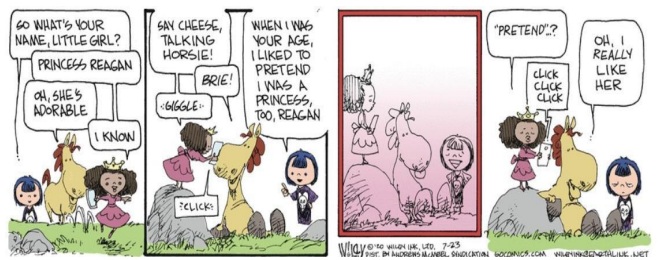
Available at: https://www.gocomics.com/nonsequitur
In the comic strip, the equivalent in Portuguese for the word "pretend" is:
Ano: 2024
Banca:
FUNATEC
Órgão:
Prefeitura de Santo Amaro do Maranhão - MA
Prova:
FUNATEC - 2024 - Prefeitura de Santo Amaro do Maranhão - MA - Professor II - Língua Inglesa |
Q3438649
Inglês
In which alternative is the translation wrong?
Ano: 2024
Banca:
OBJETIVA
Órgão:
Prefeitura de Catuípe - RS
Prova:
OBJETIVA - 2024 - Prefeitura de Catuípe - RS - Professor - Língua Inglesa |
Q3414587
Inglês
Alguns erros de tradução ocorrem devido aos chamados “false friends”. Sendo assim, assinalar a alternativa em que a tradução para a língua portuguesa está CORRETA:
Ano: 2024
Banca:
OBJETIVA
Órgão:
Prefeitura de Catuípe - RS
Prova:
OBJETIVA - 2024 - Prefeitura de Catuípe - RS - Professor - Língua Inglesa |
Q3414586
Inglês
Em relação ao processo de tradução, assinalar a alternativa CORRETA:
Ano: 2024
Banca:
OBJETIVA
Órgão:
Prefeitura de Galvão - SC
Prova:
OBJETIVA - 2024 - Prefeitura de Galvão - SC - Professor - Língua Inglesa |
Q3391674
Inglês
No contexto da prática de tradução, assinalar a
alternativa CORRETA:
Ano: 2024
Banca:
AEVSF/FACAPE
Órgão:
Prefeitura de Petrolina - PE
Prova:
AEVSF/FACAPE - 2024 - Prefeitura de Petrolina - PE - Professor Substituto do Ensino Fundamental - Anos Finais de Língua Estrangeira Moderna - Inglês |
Q3380953
Inglês
Escolha a alternativa que melhor traduz a palavra em negrito da sentença abaixo.
My mother is a very sensible woman.
Ano: 2024
Banca:
AEVSF/FACAPE
Órgão:
Prefeitura de Petrolina - PE
Prova:
AEVSF/FACAPE - 2024 - Prefeitura de Petrolina - PE - Professor Substituto do Ensino Fundamental - Anos Finais de Língua Estrangeira Moderna - Inglês |
Q3380950
Inglês
A tradução do ditado – A picture is worth one
thousand words é:
Ano: 2024
Banca:
FURB
Órgão:
Prefeitura de Guabiruba - SC
Prova:
FURB - 2024 - Prefeitura de Guabiruba - SC - Professor IV - Inglês |
Q3329006
Inglês
Texto associado
NO KID-DING Why you should never let your kids take a
bag on the plane − even if it's free
(§ 1) A TRAVEL expert has revealed you should never let
your kids bring a bag on the plane if you want a
stress-free journey.
(§ 2) Experienced flyer, Vanessa Grant recommends
parents don't let their kids take a bag with them after
sharing her recent experience of travelling with her kids -
aged 8 and 11.
(§ 3) "Smart packing is what really saved us," she said.
(§ 4) Vanessa did two long-haul flights with her family
from Canada to Indonesia which went smoothly because
the kids didn't have bags, she claims.
(§ 5) It is important to "instil a sense of responsibility" in
kids however, it is not worth the stress of tracking down a
lost backpack __ a busy international airport, according
to the travel expert.
(§ 6) Vanessa explained: "The stakes are just too high
and even replacing a charging cord can be pricey at a
duty-free shop, let alone a whole backpack's worth of
stuff."
(§ 7) It is also important to bring the right type of carry-on
when travelling with your family, to make your life a lot
easier.
(§ 8) A small rolling suitcase is perfect for long-haul
flights and "is like the clown car of carry-ons".
(§ 9) Vanessa added: "It fits a change of clothes for three
of us, plus toiletries and some snacks."
(§ 10) Instead of storing your carry-on in the overhead
bins you should put it __ the seat of your shortest child so
they'll be able to rest their feet on it, Vanessa
recommends.
(§ 11) This clever hack will stop your child from
complaining as it is "uncomfortable to have your legs
hanging for hours".
(§ 12) Packing a change of clothes for everyone will
ensure you have a smoother journey, according to the
experienced flyer.
(§ 13) "Spills and vomiting can happen to anyone," she
said.
(§ 14) Vanessa added: "One of my kids lost multiple
socks __ the plane and in the hotel.
(§ 15) "Luckily most airlines give passengers a little
package including a toothbrush and toothpaste, ear
plugs, an eye mask and socks so we had a few extra
pairs."
(§ 16) Bringing snacks for your kids can end up saving a
lot of money as they likely won't eat all the food offered
by airlines, "unless your child is a unicorn".
(§ 17) Vanessa also recommends bringing an empty
water bottle you can fill up before getting on the plane.
(§ 18) Most kids on flights are thrilled to get "hours of
uninterrupted screen time, both on their tablets and the screens on the back of seats in front of them".
(§ 19) However, screens even for kids can get old
quickly.
(§ 20) Parents should bring alternative activities for their
children.
(§ 21) Vanessa brought a book, notepad and pens which
kept them entertained throughout the flight.
(§ 22) Forgetting either your charger or headphones can
spoil the whole journey, the travel expert claims.
(§ 23) Parents will need the chargers to make sure their
children can stay entertained on the screens.
(§ 24) "We brought headphones for everyone," Vanessa
said.
(§ 25) She added: "No one—including you—wants to
hear the sound effects from your kid's favourite video
game for hours on end."
https://www.thesun.co.uk/travel/26306770/never-let-your-kidstake-a-bag-on-plane/ (adaptado)
Consider the text and the following assertives:
I.charging cord (§ 6) could be translated as "cabo de carregamento".
II.carry-on (§ 7) could be translated as "bagagem de mão".
III.spoil (§ 22) could be translated as "mimar".
Which one(s) is(are) correct?
Ano: 2024
Banca:
INAZ do Pará
Órgão:
Prefeitura de Capão Alto - SC
Prova:
INAZ do Pará - 2024 - Prefeitura de Capão Alto - SC - Professor de Inglês |
Q3199455
Inglês
Which of the alternatives below presents the correct
translation for the term "sensible", avoiding a false
cognate error?
"She is a very sensible person, always considering others' needs before making decisions".
"She is a very sensible person, always considering others' needs before making decisions".
Ano: 2024
Banca:
INAZ do Pará
Órgão:
Prefeitura de Capão Alto - SC
Prova:
INAZ do Pará - 2024 - Prefeitura de Capão Alto - SC - Professor de Inglês |
Q3199454
Inglês
Read the sentence in English and choose the best
option for your translation, considering maintaining the
ironic tone and cultural context:
"He aways knew that people who talk a lot often say very little of substance”.
Which of the options below best reflects the tone and original meaning of the sentence?
"He aways knew that people who talk a lot often say very little of substance”.
Which of the options below best reflects the tone and original meaning of the sentence?
Ano: 2024
Banca:
INAZ do Pará
Órgão:
Prefeitura de Capão Alto - SC
Prova:
INAZ do Pará - 2024 - Prefeitura de Capão Alto - SC - Professor de Inglês |
Q3199445
Inglês
Texto associado
TEXT 2

Available at: https://timesidiomas.com.br/blog/quadrinhosem-ingles-praticar-idioma/
What is the meaning of the verb "must" used in TEXT
2?
Ano: 2024
Banca:
Instituto Fênix
Órgão:
Prefeitura de Agrolândia - SC
Prova:
Instituto Fênix - 2024 - Prefeitura de Agrolândia - SC - Professor de Língua Estrangeira - Inglês |
Q3180913
Inglês
Select the correct translation of the sentence:
“She has been teaching English for five years.”

 Conheça nossos planos