Selecionar segmento
Estude com questões de diferentes segmentos
Atenção: Isso limpará todos os campos já preenchidos no filtro!
Foram encontradas 19.798 questões
Resolva questões gratuitamente!
Junte-se a mais de 4 milhões de concurseiros!


Ano: 2026
Banca:
Marinha
Órgão:
ESCOLA NAVAL
Prova:
Marinha - 2026 - ESCOLA NAVAL - Aspirante - 1º Dia |
Q4277328
Inglês
Texto associado
To Type or to Write, That Is the Question
At the highest level of learning, should you type or
write by hand?
[1] Research by Mueller and Oppenheimer (2014)
compared students who typed lecture notes on laptops
with those who wrote them by hand during the same time.
[2] In terms of immediate results, laptop users typed and
recorded more words during the lectures, and their notes
were aimost word-for-word transcripts of the lectures. The
initial assumption was that this would ultimately be
beneficial for these students compared with those who
were handwriting their notes.
[3] After the lectures, the two groups of students in this
study were tested on the information presented. The
results showed that students who wrote by hand during
lectures scored significantly higher on the tests than those
who typed.
[4] The immediate question was: "Why was this the case?"
Muelier and Oppenheimer (2014) found that students who
handwrote their notes were consistently engaged in higherlevel thinking. This meant that throughout their lectures,
these students were actively listening and intellectually
analyzing what to record. This led to higher knowledge-based outcomes.
[5] Luo et al. (2018) found that handwritten notes contained
more meaningful content (such as deeper thought and
greater intellectual structure), resulting in higher scores on
knowledge-based tests.
[6] Morehead et al. (2019) confirmed that the benefits of
handwriting are most evident when students are assessed
on higher-order conceptual understanding rather than on
memorizing facts.
[7] These studies confirm that handwriting is an essential
cognitive process and a highly beneficial intellectual
activity that enhances learning at advanced levels of
education and that begins from the first day of school and
continues thereafter.
Handwriting Helps to Advance Knowledge and
Enhance Ideas
[8] This evidence from university classrooms illustrates a
broader principle: handwriting for note-taking is a deeper
thinking skill. When students write by hand, they actively
select and synthesize information.
[9] This process requires them to decide what is essential,
how ideas connect, and how best to represent them in their
own words. The research indicates that this type of
engagement develops, advances, and enhances critical
thinking (defined as the ability to analyze, evaluate, and
make reasoned, detailed judgments), because handwriting
forces students to process information conceptually rather
than transcribe it verbatim.
[10] The research also indicates that this process helps to
develop higher-order thinking, which involves analyzing,
applying, synthesizing, and evaluating information. This
then develops a deeper knowledge potential. Additionally, as confirmed by classroom studies and evidence from
neuroscience, handwriting activates broader brain
networks than typing.
[11] Building on this, some studies explain that the ongoing
substitution of handwriting by typewriting in almost every
educational setting may seem somewhat misguided, as it
could negatively affect the learning process.
[12] However, Van der Weel and Van der Meer (2024)
emphasise the importance of staying current in this everchanging digital world. With this in mind, they state that
children must, first and foremost, learn handwriting. Only
after they are absoiutely proficient, especially at complex
narrative handwriting, should typing be considered.
(Adapted from: https://www.psychologytoday.com)
After tests were applied to students, the results
demonstrated that students who wrote by hand during the
lectures:
Ano: 2026
Banca:
Marinha
Órgão:
MARINHA
Prova:
Marinha - 2026 - MARINHA - Oficial da Marinha - Administração, Contabilidade e Economia |
Q4275860
Inglês
Read the text and mark the option that fills the blanks
correctly.
Artificial intelligence (Al) _______ around since the birth of computers in the 1950s. The original pioneers _________ of making 'computer brains' that could perform the same kinds of tasks as our own brains, such as playing chess or translating languages. But hopes that Al would quickly reach human-level intelligence ________ to fruition. Over the following decades, technology _______ at an exponential rate. Computers got faster, and the internet ________.
Artificial intelligence (Al) _______ around since the birth of computers in the 1950s. The original pioneers _________ of making 'computer brains' that could perform the same kinds of tasks as our own brains, such as playing chess or translating languages. But hopes that Al would quickly reach human-level intelligence ________ to fruition. Over the following decades, technology _______ at an exponential rate. Computers got faster, and the internet ________.
Ano: 2026
Banca:
Marinha
Órgão:
MARINHA
Prova:
Marinha - 2026 - MARINHA - Oficial da Marinha - Administração, Contabilidade e Economia |
Q4275859
Inglês
Read the sentences below and identify which one follows
the correct rules regarding the use of prepositions. Then,
mark the correct option.
Ano: 2026
Banca:
Marinha
Órgão:
MARINHA
Prova:
Marinha - 2026 - MARINHA - Oficial da Marinha - Administração, Contabilidade e Economia |
Q4275858
Inglês
Considering the use of gerunds and infinitives, mark the
sequence in which all the verbs follow the same pattern of
the verb in bold, in the sentences below.
"The crew agreed to sail through the night to reach the port."
"The crew agreed to sail through the night to reach the port."
Ano: 2026
Banca:
Marinha
Órgão:
MARINHA
Prova:
Marinha - 2026 - MARINHA - Oficial da Marinha - Administração, Contabilidade e Economia |
Q4275857
Inglês
Choose the correct option to complete the sentence.
Unfortunately, the city council had to stop the construction of the community centre as their resources _________ .
Unfortunately, the city council had to stop the construction of the community centre as their resources _________ .
Ano: 2026
Banca:
Marinha
Órgão:
MARINHA
Prova:
Marinha - 2026 - MARINHA - Oficial da Marinha - Administração, Contabilidade e Economia |
Q4275856
Inglês
Texto associado
New Al System could prevent vessel collisions by
reducing dependence on ship Captain
Researchers at Texas A&M University have created an
intelligent Al system that can help prevent accidents and
collisions at sea. Named 'Ship Collision Avoidance of
Machine Learning and Radar Technology for Stationary
Entities and Avoidance', or SMART-SEA, the platform
works to decrease the dependence on ship captains.
The project team was led by Dr Mirjan Fürth, an assistant
professor of ocean engineering, who was awarded a
contract by the US Department of the Interior (DOI) and
the US Department of Energy (DOE) through the Ocean
Energy Safety Institute (OESI). It is not completely an
autonomous system, rather it provides 'a human-in-theloop', who gives real-time instructions based on maritime
traffic,weather and other factors.
This makes navigation safer and easier for the crew,
transiting crucial or dangerous waterways by providing
additional information and instructions. Collisions between
vessels and accidents like ships hitting stationary
structures like rigs or lighthouses are becoming common,
and most are caused by human error. This Al system will
help eliminate that, stated the project team.
Massive vessels have a lot of forward momentum that
their shipping distances are measured in miles rather than
metres. They also turn very slowly, meaning that any
collision has to factor in this slow movement while also
adjusting for sensor time lags, ocean current impacts and
several other factors.
The Al system has been developed keeping all the above-mentioned factors in mind and is extremely accurate. The
research team also said that the system combines raw
radar imaging data with machine learning, enabling it to
identify moving objects even in bad weather with limited
visibility.
The machine learning algorithm detects stationary objects
as well from a large distance. The system uses
computational fluid dynamics models and machine
learning, which have been previously trained on vessel
motions, the team added. The system does all of this
while complying with International Regulations for
Preventing Collisions at Sea (COLREGS).
(From: <https://www.marineinsight.com/.../new-ai-systemcould.../>)
Mark the option that completes the text correctly.
By the time the tugboat finally _____________, the other vessel ____________ for two hours. The Captain later _____________ that if the engine had failed earlier, the grounding _____________ .
By the time the tugboat finally _____________, the other vessel ____________ for two hours. The Captain later _____________ that if the engine had failed earlier, the grounding _____________ .
Ano: 2026
Banca:
Marinha
Órgão:
MARINHA
Prova:
Marinha - 2026 - MARINHA - Oficial da Marinha - Administração, Contabilidade e Economia |
Q4275855
Inglês
Texto associado
New Al System could prevent vessel collisions by
reducing dependence on ship Captain
Researchers at Texas A&M University have created an
intelligent Al system that can help prevent accidents and
collisions at sea. Named 'Ship Collision Avoidance of
Machine Learning and Radar Technology for Stationary
Entities and Avoidance', or SMART-SEA, the platform
works to decrease the dependence on ship captains.
The project team was led by Dr Mirjan Fürth, an assistant
professor of ocean engineering, who was awarded a
contract by the US Department of the Interior (DOI) and
the US Department of Energy (DOE) through the Ocean
Energy Safety Institute (OESI). It is not completely an
autonomous system, rather it provides 'a human-in-theloop', who gives real-time instructions based on maritime
traffic,weather and other factors.
This makes navigation safer and easier for the crew,
transiting crucial or dangerous waterways by providing
additional information and instructions. Collisions between
vessels and accidents like ships hitting stationary
structures like rigs or lighthouses are becoming common,
and most are caused by human error. This Al system will
help eliminate that, stated the project team.
Massive vessels have a lot of forward momentum that
their shipping distances are measured in miles rather than
metres. They also turn very slowly, meaning that any
collision has to factor in this slow movement while also
adjusting for sensor time lags, ocean current impacts and
several other factors.
The Al system has been developed keeping all the above-mentioned factors in mind and is extremely accurate. The
research team also said that the system combines raw
radar imaging data with machine learning, enabling it to
identify moving objects even in bad weather with limited
visibility.
The machine learning algorithm detects stationary objects
as well from a large distance. The system uses
computational fluid dynamics models and machine
learning, which have been previously trained on vessel
motions, the team added. The system does all of this
while complying with International Regulations for
Preventing Collisions at Sea (COLREGS).
(From: <https://www.marineinsight.com/.../new-ai-systemcould.../>)
Mark the alternative in which the relative pronoun is used
correctly in the sentence.
Ano: 2026
Banca:
Marinha
Órgão:
MARINHA
Prova:
Marinha - 2026 - MARINHA - Oficial da Marinha - Administração, Contabilidade e Economia |
Q4275854
Inglês
Texto associado
New Al System could prevent vessel collisions by
reducing dependence on ship Captain
Researchers at Texas A&M University have created an
intelligent Al system that can help prevent accidents and
collisions at sea. Named 'Ship Collision Avoidance of
Machine Learning and Radar Technology for Stationary
Entities and Avoidance', or SMART-SEA, the platform
works to decrease the dependence on ship captains.
The project team was led by Dr Mirjan Fürth, an assistant
professor of ocean engineering, who was awarded a
contract by the US Department of the Interior (DOI) and
the US Department of Energy (DOE) through the Ocean
Energy Safety Institute (OESI). It is not completely an
autonomous system, rather it provides 'a human-in-theloop', who gives real-time instructions based on maritime
traffic,weather and other factors.
This makes navigation safer and easier for the crew,
transiting crucial or dangerous waterways by providing
additional information and instructions. Collisions between
vessels and accidents like ships hitting stationary
structures like rigs or lighthouses are becoming common,
and most are caused by human error. This Al system will
help eliminate that, stated the project team.
Massive vessels have a lot of forward momentum that
their shipping distances are measured in miles rather than
metres. They also turn very slowly, meaning that any
collision has to factor in this slow movement while also
adjusting for sensor time lags, ocean current impacts and
several other factors.
The Al system has been developed keeping all the above-mentioned factors in mind and is extremely accurate. The
research team also said that the system combines raw
radar imaging data with machine learning, enabling it to
identify moving objects even in bad weather with limited
visibility.
The machine learning algorithm detects stationary objects
as well from a large distance. The system uses
computational fluid dynamics models and machine
learning, which have been previously trained on vessel
motions, the team added. The system does all of this
while complying with International Regulations for
Preventing Collisions at Sea (COLREGS).
(From: <https://www.marineinsight.com/.../new-ai-systemcould.../>)
Mark the correct option to fill in the blank.
The analysts didn't know which platform to choose from. Both platforms seemed to have a _____ integration with the other tools.
The analysts didn't know which platform to choose from. Both platforms seemed to have a _____ integration with the other tools.
Ano: 2026
Banca:
Marinha
Órgão:
MARINHA
Prova:
Marinha - 2026 - MARINHA - Oficial da Marinha - Administração, Contabilidade e Economia |
Q4275853
Inglês
Texto associado
New Al System could prevent vessel collisions by
reducing dependence on ship Captain
Researchers at Texas A&M University have created an
intelligent Al system that can help prevent accidents and
collisions at sea. Named 'Ship Collision Avoidance of
Machine Learning and Radar Technology for Stationary
Entities and Avoidance', or SMART-SEA, the platform
works to decrease the dependence on ship captains.
The project team was led by Dr Mirjan Fürth, an assistant
professor of ocean engineering, who was awarded a
contract by the US Department of the Interior (DOI) and
the US Department of Energy (DOE) through the Ocean
Energy Safety Institute (OESI). It is not completely an
autonomous system, rather it provides 'a human-in-theloop', who gives real-time instructions based on maritime
traffic,weather and other factors.
This makes navigation safer and easier for the crew,
transiting crucial or dangerous waterways by providing
additional information and instructions. Collisions between
vessels and accidents like ships hitting stationary
structures like rigs or lighthouses are becoming common,
and most are caused by human error. This Al system will
help eliminate that, stated the project team.
Massive vessels have a lot of forward momentum that
their shipping distances are measured in miles rather than
metres. They also turn very slowly, meaning that any
collision has to factor in this slow movement while also
adjusting for sensor time lags, ocean current impacts and
several other factors.
The Al system has been developed keeping all the above-mentioned factors in mind and is extremely accurate. The
research team also said that the system combines raw
radar imaging data with machine learning, enabling it to
identify moving objects even in bad weather with limited
visibility.
The machine learning algorithm detects stationary objects
as well from a large distance. The system uses
computational fluid dynamics models and machine
learning, which have been previously trained on vessel
motions, the team added. The system does all of this
while complying with International Regulations for
Preventing Collisions at Sea (COLREGS).
(From: <https://www.marineinsight.com/.../new-ai-systemcould.../>)
Which of the following statements represents the
relationship between the Al system and the ship Captain,
as decribed in the text above?
Ano: 2026
Banca:
Marinha
Órgão:
MARINHA
Prova:
Marinha - 2026 - MARINHA - Oficial da Marinha - Administração, Contabilidade e Economia |
Q4275852
Inglês
Texto associado
Read the text and answer the question that follow it.
Balancing Al and Critical Thinking for the Military Leaders
of Tomorrow
Al is becoming increasingly embedded in daily life,
transforming the way we work, communicate, and make
decisions. From virtual assistants and personalized
recommendations to smart home devices and automated
customer service, Al streamlines everyday tasks and
enhances convenience. As Al continues to evolve, its role
in our livelihoods will only expand, making it an essential
tool for productivity and innovation. Rather than resisting
this technology, we should embrace it. Al has the
potential to enhance and expand our knowledge, enabling
more informed decision-making.
For future military leaders, it is critical that education and
training prioritize independent thinking and decisive action
rather than an overreliance on Al-driven systems. Leaders
must develop the confidence to question Al outputs,
evaluate their accuracy, and consider multiple perspectives
before making informed decisions, rather than blindly
accepting computer-generated recommendations. Al
struggles in unpredictable, high-stakes environments
where training data is insufficient to cover every potential
contingency. Future conflicts will demand leaders who can
adapt in real time, assess emerging threats, and execute
decisions based on experience, judgment, and battlefield
awareness - not just what a computer system suggests. To
maintain a strategic edge and operational superiority,
military leaders must cultivate a disciplined decision-making process that integrates Al as a tool while ensuring
that human intuition, adaptability, and ethical reasoning
remain at the forefront of command decisions. Though the
possibilities of Al are vast and impressive, it is crucial to
remember that its role should not be replace, but to
complement human intelligence.
The rapid evolution of Al presents both a strategic
advantage and a formidable challenge in shaping the next
generation of military leaders. Al can enhance decisionmaking, optimize operations, and expand battlefield
awareness, yet it must remain a force multiplier - not a
replacement for human intellect. The true test of future
leadership lies in striking the right balance: leveraging Al's
capabilities while preserving the independent thought,
adaptability, and critical reasoning essential for command
in today's volatile geopolitical environment. In an era
where peer adversaries are racing to develop their own Aldriven strategies, our leaders must be prepared to
out-think, not just out-tech, the competition. Al should
sharpen human cognition, not dull it - because the future of
warfare will be won by those who can command both
machine intelligence and the power of the human mind.
(Abridged from <https://mwi.westpoint.edu/warfare-at-thespeed-of-thought-balancing-ai-and-critical-thinking-for-themilitary-leaders-of-tomorrow/>)
Read the statements about the text and decide whether
they are true (T) or false (F). Then mark the correct
sequence.
( ) Al is increasingly immersed in most aspects of daily life, such as communications and conveniences.
( ) Future military leaders should not rely solely on Al for decision-making, as its output may not be precise.
( ) Questioning Al outputs and evaluating their accuracy are skills that ought to be developed in military training.
( ) Relying primarily on Al may optimise decision-making in high-stake environments.
( ) Al should be seen as an essential tool to out-tech and out-think potential enemies.
Ano: 2026
Banca:
Marinha
Órgão:
MARINHA
Prova:
Marinha - 2026 - MARINHA - Oficial da Marinha - Administração, Contabilidade e Economia |
Q4275851
Inglês
Texto associado
Read the text and answer the question that follow it.
Balancing Al and Critical Thinking for the Military Leaders
of Tomorrow
Al is becoming increasingly embedded in daily life,
transforming the way we work, communicate, and make
decisions. From virtual assistants and personalized
recommendations to smart home devices and automated
customer service, Al streamlines everyday tasks and
enhances convenience. As Al continues to evolve, its role
in our livelihoods will only expand, making it an essential
tool for productivity and innovation. Rather than resisting
this technology, we should embrace it. Al has the
potential to enhance and expand our knowledge, enabling
more informed decision-making.
For future military leaders, it is critical that education and
training prioritize independent thinking and decisive action
rather than an overreliance on Al-driven systems. Leaders
must develop the confidence to question Al outputs,
evaluate their accuracy, and consider multiple perspectives
before making informed decisions, rather than blindly
accepting computer-generated recommendations. Al
struggles in unpredictable, high-stakes environments
where training data is insufficient to cover every potential
contingency. Future conflicts will demand leaders who can
adapt in real time, assess emerging threats, and execute
decisions based on experience, judgment, and battlefield
awareness - not just what a computer system suggests. To
maintain a strategic edge and operational superiority,
military leaders must cultivate a disciplined decision-making process that integrates Al as a tool while ensuring
that human intuition, adaptability, and ethical reasoning
remain at the forefront of command decisions. Though the
possibilities of Al are vast and impressive, it is crucial to
remember that its role should not be replace, but to
complement human intelligence.
The rapid evolution of Al presents both a strategic
advantage and a formidable challenge in shaping the next
generation of military leaders. Al can enhance decisionmaking, optimize operations, and expand battlefield
awareness, yet it must remain a force multiplier - not a
replacement for human intellect. The true test of future
leadership lies in striking the right balance: leveraging Al's
capabilities while preserving the independent thought,
adaptability, and critical reasoning essential for command
in today's volatile geopolitical environment. In an era
where peer adversaries are racing to develop their own Aldriven strategies, our leaders must be prepared to
out-think, not just out-tech, the competition. Al should
sharpen human cognition, not dull it - because the future of
warfare will be won by those who can command both
machine intelligence and the power of the human mind.
(Abridged from <https://mwi.westpoint.edu/warfare-at-thespeed-of-thought-balancing-ai-and-critical-thinking-for-themilitary-leaders-of-tomorrow/>)
Concerning the vocabulary underlined in the text and their
meaning in context, we can only affirm that:
Q4246616
Inglês
Texto associado
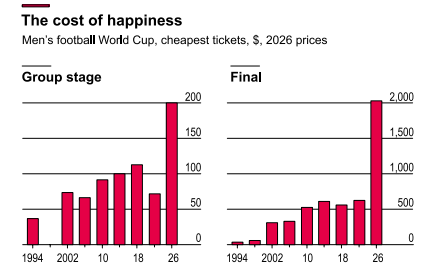
Leia o texto para responder à questão.
FIFA’s exorbitant World Cup tickets could backfire
Gianni Infantino, the boss of the Fédération Internationale
de Football Association (FIFA), calls football’s governing body
the world’s provider of happiness. At the 2026 World Cup in
North America, that happiness comes at a price. The cheapest
tickets for group-stage games1
averaged $200; those for the
final went for higher than $2,000. The data presented in the
chart suggest this year’s World Cup is the most expensive
cultural event ever.
World Cup tickets are usually priced well below what the
market might accept. Throughout the tournament’s history
demand has tended to surpass supply. Rather than charge
more, FIFA has kept prices at levels ordinary fans could afford
and distributed seats through lotteries. Broadcasting and
sponsorship rights mattered far more to the organisation’s
finances than matchday receipts.
In 2026 it is different. For the first time FIFA has taken
direct control of ticketing, rather than outsourcing to local
organisers. It has embraced dynamic pricing, whereby
prices rise in line with demand, and opened an official resale
marketplace, from which it takes a 15% share from both the
buyer and the seller. Even after adjusting for inflation, World
Cup tickets across the United States, Canada and Mexico
cost more than twice as much as they did in Qatar in 2022.
Even if higher prices compensate for weaker sales, FIFA
risks damaging the product itself — which could, in turn, hurt
its more lucrative revenue streams2. Full stadiums create the
noise and tension that make matches irresistible on TV and
other screens. FIFA faced embarrassment last year during
the Club World Cup, when spectators were reportedly moved
towards television cameras at sparsely attended matches.
Studies have shown that wealthier fans are quieter and less
overtly passionate about their teams.
(www.economist.com, 18.05.2026. Adaptado.)
1 group-stage games: jogos da fase de grupos. Rodada inicial da Copa
do Mundo na qual as nações participantes são divididas em grupos
menores para disputar o torneio.
2 revenue streams: fontes de receita.
O quarto parágrafo do texto
Q4246615
Inglês
Texto associado
Leia o texto para responder à questão.
FIFA’s exorbitant World Cup tickets could backfire
Gianni Infantino, the boss of the Fédération Internationale
de Football Association (FIFA), calls football’s governing body
the world’s provider of happiness. At the 2026 World Cup in
North America, that happiness comes at a price. The cheapest
tickets for group-stage games1
averaged $200; those for the
final went for higher than $2,000. The data presented in the
chart suggest this year’s World Cup is the most expensive
cultural event ever.
World Cup tickets are usually priced well below what the
market might accept. Throughout the tournament’s history
demand has tended to surpass supply. Rather than charge
more, FIFA has kept prices at levels ordinary fans could afford
and distributed seats through lotteries. Broadcasting and
sponsorship rights mattered far more to the organisation’s
finances than matchday receipts.
In 2026 it is different. For the first time FIFA has taken
direct control of ticketing, rather than outsourcing to local
organisers. It has embraced dynamic pricing, whereby
prices rise in line with demand, and opened an official resale
marketplace, from which it takes a 15% share from both the
buyer and the seller. Even after adjusting for inflation, World
Cup tickets across the United States, Canada and Mexico
cost more than twice as much as they did in Qatar in 2022.
Even if higher prices compensate for weaker sales, FIFA
risks damaging the product itself — which could, in turn, hurt
its more lucrative revenue streams2. Full stadiums create the
noise and tension that make matches irresistible on TV and
other screens. FIFA faced embarrassment last year during
the Club World Cup, when spectators were reportedly moved
towards television cameras at sparsely attended matches.
Studies have shown that wealthier fans are quieter and less
overtly passionate about their teams.
(www.economist.com, 18.05.2026. Adaptado.)
1 group-stage games: jogos da fase de grupos. Rodada inicial da Copa
do Mundo na qual as nações participantes são divididas em grupos
menores para disputar o torneio.
2 revenue streams: fontes de receita.
In the excerpt from the third paragraph “It has embraced
dynamic pricing, whereby prices rise in line with demand”, the
underlined phrase presents
Q4246614
Inglês
Texto associado
Leia o texto para responder à questão.
FIFA’s exorbitant World Cup tickets could backfire
Gianni Infantino, the boss of the Fédération Internationale
de Football Association (FIFA), calls football’s governing body
the world’s provider of happiness. At the 2026 World Cup in
North America, that happiness comes at a price. The cheapest
tickets for group-stage games1
averaged $200; those for the
final went for higher than $2,000. The data presented in the
chart suggest this year’s World Cup is the most expensive
cultural event ever.
World Cup tickets are usually priced well below what the
market might accept. Throughout the tournament’s history
demand has tended to surpass supply. Rather than charge
more, FIFA has kept prices at levels ordinary fans could afford
and distributed seats through lotteries. Broadcasting and
sponsorship rights mattered far more to the organisation’s
finances than matchday receipts.
In 2026 it is different. For the first time FIFA has taken
direct control of ticketing, rather than outsourcing to local
organisers. It has embraced dynamic pricing, whereby
prices rise in line with demand, and opened an official resale
marketplace, from which it takes a 15% share from both the
buyer and the seller. Even after adjusting for inflation, World
Cup tickets across the United States, Canada and Mexico
cost more than twice as much as they did in Qatar in 2022.
Even if higher prices compensate for weaker sales, FIFA
risks damaging the product itself — which could, in turn, hurt
its more lucrative revenue streams2. Full stadiums create the
noise and tension that make matches irresistible on TV and
other screens. FIFA faced embarrassment last year during
the Club World Cup, when spectators were reportedly moved
towards television cameras at sparsely attended matches.
Studies have shown that wealthier fans are quieter and less
overtly passionate about their teams.
(www.economist.com, 18.05.2026. Adaptado.)
1 group-stage games: jogos da fase de grupos. Rodada inicial da Copa
do Mundo na qual as nações participantes são divididas em grupos
menores para disputar o torneio.
2 revenue streams: fontes de receita.
No trecho do segundo parágrafo “Rather than charge more,
FIFA has kept prices at levels ordinary fans could afford”,
a frase sublinhada pode ser substituída, sem alteração de
sentido, por:
Q4246613
Inglês
Texto associado
Leia o texto para responder à questão.
FIFA’s exorbitant World Cup tickets could backfire
Gianni Infantino, the boss of the Fédération Internationale
de Football Association (FIFA), calls football’s governing body
the world’s provider of happiness. At the 2026 World Cup in
North America, that happiness comes at a price. The cheapest
tickets for group-stage games1
averaged $200; those for the
final went for higher than $2,000. The data presented in the
chart suggest this year’s World Cup is the most expensive
cultural event ever.
World Cup tickets are usually priced well below what the
market might accept. Throughout the tournament’s history
demand has tended to surpass supply. Rather than charge
more, FIFA has kept prices at levels ordinary fans could afford
and distributed seats through lotteries. Broadcasting and
sponsorship rights mattered far more to the organisation’s
finances than matchday receipts.
In 2026 it is different. For the first time FIFA has taken
direct control of ticketing, rather than outsourcing to local
organisers. It has embraced dynamic pricing, whereby
prices rise in line with demand, and opened an official resale
marketplace, from which it takes a 15% share from both the
buyer and the seller. Even after adjusting for inflation, World
Cup tickets across the United States, Canada and Mexico
cost more than twice as much as they did in Qatar in 2022.
Even if higher prices compensate for weaker sales, FIFA
risks damaging the product itself — which could, in turn, hurt
its more lucrative revenue streams2. Full stadiums create the
noise and tension that make matches irresistible on TV and
other screens. FIFA faced embarrassment last year during
the Club World Cup, when spectators were reportedly moved
towards television cameras at sparsely attended matches.
Studies have shown that wealthier fans are quieter and less
overtly passionate about their teams.
(www.economist.com, 18.05.2026. Adaptado.)
1 group-stage games: jogos da fase de grupos. Rodada inicial da Copa
do Mundo na qual as nações participantes são divididas em grupos
menores para disputar o torneio.
2 revenue streams: fontes de receita.
O trecho do texto que tem sua informação contemplada em
um dos gráficos é:
Q4246612
Inglês
Texto associado
Leia o texto para responder à questão.
FIFA’s exorbitant World Cup tickets could backfire
Gianni Infantino, the boss of the Fédération Internationale
de Football Association (FIFA), calls football’s governing body
the world’s provider of happiness. At the 2026 World Cup in
North America, that happiness comes at a price. The cheapest
tickets for group-stage games1
averaged $200; those for the
final went for higher than $2,000. The data presented in the
chart suggest this year’s World Cup is the most expensive
cultural event ever.
World Cup tickets are usually priced well below what the
market might accept. Throughout the tournament’s history
demand has tended to surpass supply. Rather than charge
more, FIFA has kept prices at levels ordinary fans could afford
and distributed seats through lotteries. Broadcasting and
sponsorship rights mattered far more to the organisation’s
finances than matchday receipts.
In 2026 it is different. For the first time FIFA has taken
direct control of ticketing, rather than outsourcing to local
organisers. It has embraced dynamic pricing, whereby
prices rise in line with demand, and opened an official resale
marketplace, from which it takes a 15% share from both the
buyer and the seller. Even after adjusting for inflation, World
Cup tickets across the United States, Canada and Mexico
cost more than twice as much as they did in Qatar in 2022.
Even if higher prices compensate for weaker sales, FIFA
risks damaging the product itself — which could, in turn, hurt
its more lucrative revenue streams2. Full stadiums create the
noise and tension that make matches irresistible on TV and
other screens. FIFA faced embarrassment last year during
the Club World Cup, when spectators were reportedly moved
towards television cameras at sparsely attended matches.
Studies have shown that wealthier fans are quieter and less
overtly passionate about their teams.
(www.economist.com, 18.05.2026. Adaptado.)
1 group-stage games: jogos da fase de grupos. Rodada inicial da Copa
do Mundo na qual as nações participantes são divididas em grupos
menores para disputar o torneio.
2 revenue streams: fontes de receita.
In the excerpt from the first paragraph “At the 2026 World
Cup in North America, that happiness comes at a price”, the
underlined expression is equivalent, in Portuguese, to the
idiom:
Q4246611
Inglês
Texto associado
Leia o texto para responder à questão.
FIFA’s exorbitant World Cup tickets could backfire
Gianni Infantino, the boss of the Fédération Internationale
de Football Association (FIFA), calls football’s governing body
the world’s provider of happiness. At the 2026 World Cup in
North America, that happiness comes at a price. The cheapest
tickets for group-stage games1
averaged $200; those for the
final went for higher than $2,000. The data presented in the
chart suggest this year’s World Cup is the most expensive
cultural event ever.
World Cup tickets are usually priced well below what the
market might accept. Throughout the tournament’s history
demand has tended to surpass supply. Rather than charge
more, FIFA has kept prices at levels ordinary fans could afford
and distributed seats through lotteries. Broadcasting and
sponsorship rights mattered far more to the organisation’s
finances than matchday receipts.
In 2026 it is different. For the first time FIFA has taken
direct control of ticketing, rather than outsourcing to local
organisers. It has embraced dynamic pricing, whereby
prices rise in line with demand, and opened an official resale
marketplace, from which it takes a 15% share from both the
buyer and the seller. Even after adjusting for inflation, World
Cup tickets across the United States, Canada and Mexico
cost more than twice as much as they did in Qatar in 2022.
Even if higher prices compensate for weaker sales, FIFA
risks damaging the product itself — which could, in turn, hurt
its more lucrative revenue streams2. Full stadiums create the
noise and tension that make matches irresistible on TV and
other screens. FIFA faced embarrassment last year during
the Club World Cup, when spectators were reportedly moved
towards television cameras at sparsely attended matches.
Studies have shown that wealthier fans are quieter and less
overtly passionate about their teams.
(www.economist.com, 18.05.2026. Adaptado.)
1 group-stage games: jogos da fase de grupos. Rodada inicial da Copa
do Mundo na qual as nações participantes são divididas em grupos
menores para disputar o torneio.
2 revenue streams: fontes de receita.
The text mainly intends to
Q4246610
Português
Texto associado
Para responder à questão, leia o soneto da
poeta portuguesa Florbela Espanca.
O maior bem
Este querer-te bem sem me quereres,
Este sofrer por ti constantemente,
Andar atrás de ti sem tu me veres
Faria piedade a toda a gente.
Mesmo a beijar-me, a tua boca mente...
Quantos sangrentos beijos de mulheres
Pousa na minha a tua boca ardente,
E quanto engano nos seus vãos dizeres!...
Mas que me importa a mim que me não queiras,
Se esta pena, esta dor, estas canseiras,
Este mísero pungir, árduo e profundo,
Do teu frio desamor, dos teus desdéns,
É na vida, o mais alto dos meus bens?
É tudo quanto eu tenho neste mundo?
(Florbela Espanca. Sonetos, 2025.)
Em “Andar atrás de ti sem tu me veres / Faria piedade a toda
a gente.” (1ª estrofe), o sujeito do verbo “Faria” é
Q4246609
Português
Texto associado
Para responder à questão, leia o soneto da
poeta portuguesa Florbela Espanca.
O maior bem
Este querer-te bem sem me quereres,
Este sofrer por ti constantemente,
Andar atrás de ti sem tu me veres
Faria piedade a toda a gente.
Mesmo a beijar-me, a tua boca mente...
Quantos sangrentos beijos de mulheres
Pousa na minha a tua boca ardente,
E quanto engano nos seus vãos dizeres!...
Mas que me importa a mim que me não queiras,
Se esta pena, esta dor, estas canseiras,
Este mísero pungir, árduo e profundo,
Do teu frio desamor, dos teus desdéns,
É na vida, o mais alto dos meus bens?
É tudo quanto eu tenho neste mundo?
(Florbela Espanca. Sonetos, 2025.)
Verifica-se palavra formada com prefixo que exprime ideia de
negação no seguinte verso:
Q4246608
Português
Texto associado
Para responder à questão, leia o soneto da
poeta portuguesa Florbela Espanca.
O maior bem
Este querer-te bem sem me quereres,
Este sofrer por ti constantemente,
Andar atrás de ti sem tu me veres
Faria piedade a toda a gente.
Mesmo a beijar-me, a tua boca mente...
Quantos sangrentos beijos de mulheres
Pousa na minha a tua boca ardente,
E quanto engano nos seus vãos dizeres!...
Mas que me importa a mim que me não queiras,
Se esta pena, esta dor, estas canseiras,
Este mísero pungir, árduo e profundo,
Do teu frio desamor, dos teus desdéns,
É na vida, o mais alto dos meus bens?
É tudo quanto eu tenho neste mundo?
(Florbela Espanca. Sonetos, 2025.)
“Este querer-te bem sem me quereres,” (1a
estrofe)
Ao se transpor a oração reduzida “sem me quereres” para uma oração desenvolvida, seu verbo assume a seguinte forma:
Ao se transpor a oração reduzida “sem me quereres” para uma oração desenvolvida, seu verbo assume a seguinte forma:

 Conheça nossos planos