In the excerpt from the third paragraph “It has embraced dy...
Próximas questões
Com base no mesmo assunto
Q4246615
Inglês
Texto associado
Leia o texto para responder à questão.
FIFA’s exorbitant World Cup tickets could backfire
Gianni Infantino, the boss of the Fédération Internationale
de Football Association (FIFA), calls football’s governing body
the world’s provider of happiness. At the 2026 World Cup in
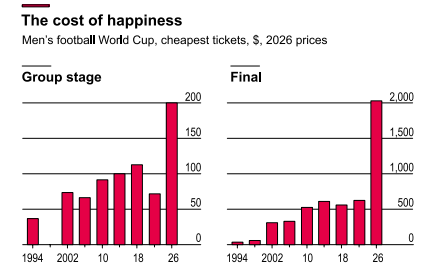
North America, that happiness comes at a price. The cheapest
tickets for group-stage games1
averaged $200; those for the
final went for higher than $2,000. The data presented in the
chart suggest this year’s World Cup is the most expensive
cultural event ever.
World Cup tickets are usually priced well below what the
market might accept. Throughout the tournament’s history
demand has tended to surpass supply. Rather than charge
more, FIFA has kept prices at levels ordinary fans could afford
and distributed seats through lotteries. Broadcasting and
sponsorship rights mattered far more to the organisation’s
finances than matchday receipts.
In 2026 it is different. For the first time FIFA has taken
direct control of ticketing, rather than outsourcing to local
organisers. It has embraced dynamic pricing, whereby
prices rise in line with demand, and opened an official resale
marketplace, from which it takes a 15% share from both the
buyer and the seller. Even after adjusting for inflation, World
Cup tickets across the United States, Canada and Mexico
cost more than twice as much as they did in Qatar in 2022.
Even if higher prices compensate for weaker sales, FIFA
risks damaging the product itself — which could, in turn, hurt
its more lucrative revenue streams2. Full stadiums create the
noise and tension that make matches irresistible on TV and
other screens. FIFA faced embarrassment last year during
the Club World Cup, when spectators were reportedly moved
towards television cameras at sparsely attended matches.
Studies have shown that wealthier fans are quieter and less
overtly passionate about their teams.
(www.economist.com, 18.05.2026. Adaptado.)
1 group-stage games: jogos da fase de grupos. Rodada inicial da Copa
do Mundo na qual as nações participantes são divididas em grupos
menores para disputar o torneio.
2 revenue streams: fontes de receita.
In the excerpt from the third paragraph “It has embraced
dynamic pricing, whereby prices rise in line with demand”, the
underlined phrase presents
 Conheça nossos planos