Selecionar segmento
Estude com questões de diferentes segmentos
Atenção: Isso limpará todos os campos já preenchidos no filtro!
Foram encontradas 71.618 questões
Resolva questões gratuitamente!
Junte-se a mais de 4 milhões de concurseiros!


Ano: 2024
Banca:
CESPE / CEBRASPE
Órgão:
UNB
Prova:
CESPE / CEBRASPE - 2024 - UNB - Prova de Conhecimentos II - 1° dia |
Q3107448
Português
Texto associado
Inteligências artificiais (IA) já foram capazes de vencer o
campeão humano de xadrez e de passar em concursos de
universidades de ponta, mas são capazes de contar histórias
melhor do que nós? Um recente estudo mostrou que não.
Pesquisadores espanhóis pediram que o premiado romancista
argentino Patricio Pron e o ChatGPT-4 escrevessem histórias
curtas sobre os mesmos temas. Em seguida, eles compararam os
resultados com base na opinião de centenas de críticos literários.
O desafio, que foi chamado de “Pron versus Prompt”, mostrou
que as máquinas ainda estão longe de vencer o talento humano
quando o assunto é criatividade. Esse exemplo foi trazido pelo
acadêmico Edmundo de Souza e Silva durante mesa-redonda na
76.ª Reunião Anual da Sociedade Brasileira para o Progresso da
Ciência (SBPC). “São essencialmente máquinas de estatística,
com uma capacidade imensa de entender padrões, mas elas estão
limitadas à sua base de dados, não vão criar nada”, afirmou o
cientista da computação da Universidade Federal do Rio de
Janeiro (UFRJ). O que está ocorrendo nessa revolução de IA é
que as bases de dados se tornaram imensas, para além até da
nossa capacidade de curadoria. Aliadas a um poder de
processamento cada vez maior, surgiram máquinas com
capacidade de dominar a linguagem natural (inglês, português
etc.) para muito além do que os especialistas imaginavam ser
possível. “Muitos imaginavam que, quando as máquinas
dominassem a linguagem natural, elas seriam verdadeiramente
inteligentes. Pois bem, está acontecendo”, refletiu o acadêmico
Osvaldo Novais Jr., professor de física e especialista em
linguística computacional. Por isso, embora ainda longe de
dominarem a atividade criativa nas artes, as IA já estão perto de
dominar outro ramo da cultura: a ciência. “Creio que estamos nos
aproximando de um novo paradigma científico, segundo o qual a
própria máquina vai gerar conhecimento. Essa será a maior de
todas as revoluções tecnológicas, pois não precisará mais do
humano no processo”, afirmou Novais.
Academia Brasileira de Ciências. Inteligência artificial não faz literatura, mas pode fazer ciência. Internet: <https://www.abc.org.br> (com adaptações).
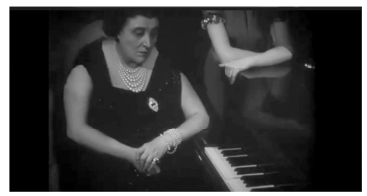
Em A regra do jogo, filme de Jean Renoir, de 1939, a
gorda senhora pianista, com as mãos no colo, pode ser vista
olhando, embevecida e melancólica, para a autonomia esquelética
do teclado, atrás do qual as cordas do piano assumiram o controle
total. Essa é uma síntese imagética da obra de arte nesse estágio
particular de sua reprodução mecânica, olhando para o seu
próprio poder alienado com fascinação mórbida. O pós-moderno,
no entanto, alcançou um estágio mais avançado do que esse; ao
contrário do deleite do moderno em seus projetos de máquinas
que operam maravilhas, seu deleite com o colapso dessas
máquinas no ponto crítico está sujeito aos mais graves
mal-entendidos se não percebermos que é precisamente assim
que a tecnologia pós-moderna consome e celebra a si mesma.
Fredric Jameson. Pós-modernismo. A lógica cultural do capitalismo tardio.
Trad. Maria Elisa Cevasco. São Paulo: Ática, 1997, p. 383 (com adaptações).
Com base nas informações dos textos precedentes acerca da relação entre tecnologia e arte, bem como na reflexão que o recorte da cena do filme A regra do jogo suscita, julgue o item a seguir.
Infere-se do trecho “Essa é uma síntese imagética da obra de arte nesse estágio particular de sua reprodução mecânica, olhando para o seu próprio poder alienado com fascinação mórbida” que a cena do filme A regra do jogo sintetiza a possibilidade de que os seres humanos se vejam alienados de exercer suas potencialidades artísticas diante dos avanços tecnológicos.
Infere-se do trecho “Essa é uma síntese imagética da obra de arte nesse estágio particular de sua reprodução mecânica, olhando para o seu próprio poder alienado com fascinação mórbida” que a cena do filme A regra do jogo sintetiza a possibilidade de que os seres humanos se vejam alienados de exercer suas potencialidades artísticas diante dos avanços tecnológicos.
Ano: 2024
Banca:
CESPE / CEBRASPE
Órgão:
UNB
Prova:
CESPE / CEBRASPE - 2024 - UNB - Prova de Conhecimentos II - 1° dia |
Q3107447
Português
Texto associado
Inteligências artificiais (IA) já foram capazes de vencer o
campeão humano de xadrez e de passar em concursos de
universidades de ponta, mas são capazes de contar histórias
melhor do que nós? Um recente estudo mostrou que não.
Pesquisadores espanhóis pediram que o premiado romancista
argentino Patricio Pron e o ChatGPT-4 escrevessem histórias
curtas sobre os mesmos temas. Em seguida, eles compararam os
resultados com base na opinião de centenas de críticos literários.
O desafio, que foi chamado de “Pron versus Prompt”, mostrou
que as máquinas ainda estão longe de vencer o talento humano
quando o assunto é criatividade. Esse exemplo foi trazido pelo
acadêmico Edmundo de Souza e Silva durante mesa-redonda na
76.ª Reunião Anual da Sociedade Brasileira para o Progresso da
Ciência (SBPC). “São essencialmente máquinas de estatística,
com uma capacidade imensa de entender padrões, mas elas estão
limitadas à sua base de dados, não vão criar nada”, afirmou o
cientista da computação da Universidade Federal do Rio de
Janeiro (UFRJ). O que está ocorrendo nessa revolução de IA é
que as bases de dados se tornaram imensas, para além até da
nossa capacidade de curadoria. Aliadas a um poder de
processamento cada vez maior, surgiram máquinas com
capacidade de dominar a linguagem natural (inglês, português
etc.) para muito além do que os especialistas imaginavam ser
possível. “Muitos imaginavam que, quando as máquinas
dominassem a linguagem natural, elas seriam verdadeiramente
inteligentes. Pois bem, está acontecendo”, refletiu o acadêmico
Osvaldo Novais Jr., professor de física e especialista em
linguística computacional. Por isso, embora ainda longe de
dominarem a atividade criativa nas artes, as IA já estão perto de
dominar outro ramo da cultura: a ciência. “Creio que estamos nos
aproximando de um novo paradigma científico, segundo o qual a
própria máquina vai gerar conhecimento. Essa será a maior de
todas as revoluções tecnológicas, pois não precisará mais do
humano no processo”, afirmou Novais.
Academia Brasileira de Ciências. Inteligência artificial não faz literatura, mas pode fazer ciência. Internet: <https://www.abc.org.br> (com adaptações).
Em A regra do jogo, filme de Jean Renoir, de 1939, a
gorda senhora pianista, com as mãos no colo, pode ser vista
olhando, embevecida e melancólica, para a autonomia esquelética
do teclado, atrás do qual as cordas do piano assumiram o controle
total. Essa é uma síntese imagética da obra de arte nesse estágio
particular de sua reprodução mecânica, olhando para o seu
próprio poder alienado com fascinação mórbida. O pós-moderno,
no entanto, alcançou um estágio mais avançado do que esse; ao
contrário do deleite do moderno em seus projetos de máquinas
que operam maravilhas, seu deleite com o colapso dessas
máquinas no ponto crítico está sujeito aos mais graves
mal-entendidos se não percebermos que é precisamente assim
que a tecnologia pós-moderna consome e celebra a si mesma.
Fredric Jameson. Pós-modernismo. A lógica cultural do capitalismo tardio.
Trad. Maria Elisa Cevasco. São Paulo: Ática, 1997, p. 383 (com adaptações).
Com base nas informações dos textos precedentes acerca da relação entre tecnologia e arte, bem como na reflexão que o recorte da cena do filme A regra do jogo suscita, julgue o item a seguir.
Em ambos os textos, a relação entre literatura e tecnologia é entendida como uma forma de enriquecimento da cultura humana, uma vez que a tecnologia, enquanto sujeita ao controle de seus criadores, não consegue ameaçar a criatividade do ser humano.
Em ambos os textos, a relação entre literatura e tecnologia é entendida como uma forma de enriquecimento da cultura humana, uma vez que a tecnologia, enquanto sujeita ao controle de seus criadores, não consegue ameaçar a criatividade do ser humano.
Ano: 2024
Banca:
CESPE / CEBRASPE
Órgão:
UNB
Prova:
CESPE / CEBRASPE - 2024 - UNB - Prova de Conhecimentos II - 1° dia |
Q3107446
Português
Texto associado
Inteligências artificiais (IA) já foram capazes de vencer o
campeão humano de xadrez e de passar em concursos de
universidades de ponta, mas são capazes de contar histórias
melhor do que nós? Um recente estudo mostrou que não.
Pesquisadores espanhóis pediram que o premiado romancista
argentino Patricio Pron e o ChatGPT-4 escrevessem histórias
curtas sobre os mesmos temas. Em seguida, eles compararam os
resultados com base na opinião de centenas de críticos literários.
O desafio, que foi chamado de “Pron versus Prompt”, mostrou
que as máquinas ainda estão longe de vencer o talento humano
quando o assunto é criatividade. Esse exemplo foi trazido pelo
acadêmico Edmundo de Souza e Silva durante mesa-redonda na
76.ª Reunião Anual da Sociedade Brasileira para o Progresso da
Ciência (SBPC). “São essencialmente máquinas de estatística,
com uma capacidade imensa de entender padrões, mas elas estão
limitadas à sua base de dados, não vão criar nada”, afirmou o
cientista da computação da Universidade Federal do Rio de
Janeiro (UFRJ). O que está ocorrendo nessa revolução de IA é
que as bases de dados se tornaram imensas, para além até da
nossa capacidade de curadoria. Aliadas a um poder de
processamento cada vez maior, surgiram máquinas com
capacidade de dominar a linguagem natural (inglês, português
etc.) para muito além do que os especialistas imaginavam ser
possível. “Muitos imaginavam que, quando as máquinas
dominassem a linguagem natural, elas seriam verdadeiramente
inteligentes. Pois bem, está acontecendo”, refletiu o acadêmico
Osvaldo Novais Jr., professor de física e especialista em
linguística computacional. Por isso, embora ainda longe de
dominarem a atividade criativa nas artes, as IA já estão perto de
dominar outro ramo da cultura: a ciência. “Creio que estamos nos
aproximando de um novo paradigma científico, segundo o qual a
própria máquina vai gerar conhecimento. Essa será a maior de
todas as revoluções tecnológicas, pois não precisará mais do
humano no processo”, afirmou Novais.
Academia Brasileira de Ciências. Inteligência artificial não faz literatura, mas pode fazer ciência. Internet: <https://www.abc.org.br> (com adaptações).
Em A regra do jogo, filme de Jean Renoir, de 1939, a
gorda senhora pianista, com as mãos no colo, pode ser vista
olhando, embevecida e melancólica, para a autonomia esquelética
do teclado, atrás do qual as cordas do piano assumiram o controle
total. Essa é uma síntese imagética da obra de arte nesse estágio
particular de sua reprodução mecânica, olhando para o seu
próprio poder alienado com fascinação mórbida. O pós-moderno,
no entanto, alcançou um estágio mais avançado do que esse; ao
contrário do deleite do moderno em seus projetos de máquinas
que operam maravilhas, seu deleite com o colapso dessas
máquinas no ponto crítico está sujeito aos mais graves
mal-entendidos se não percebermos que é precisamente assim
que a tecnologia pós-moderna consome e celebra a si mesma.
Fredric Jameson. Pós-modernismo. A lógica cultural do capitalismo tardio.
Trad. Maria Elisa Cevasco. São Paulo: Ática, 1997, p. 383 (com adaptações).
Com base nas informações dos textos precedentes acerca da
relação entre tecnologia e arte, bem como na reflexão que o
recorte da cena do filme A regra do jogo suscita, julgue o item a seguir.
De acordo com o texto acerca da cena do filme A regra do jogo, verifica-se uma evolução positiva da relação entre arte e tecnologia ao longo da história moderna, pois o sujeito humano permanece, em todos os momentos, como o elemento central a ser celebrado pela tecnologia.
De acordo com o texto acerca da cena do filme A regra do jogo, verifica-se uma evolução positiva da relação entre arte e tecnologia ao longo da história moderna, pois o sujeito humano permanece, em todos os momentos, como o elemento central a ser celebrado pela tecnologia.
Ano: 2024
Banca:
CESPE / CEBRASPE
Órgão:
UNB
Prova:
CESPE / CEBRASPE - 2024 - UNB - Prova de Conhecimentos I - Inglês - 1° dia |
Q3107445
Inglês
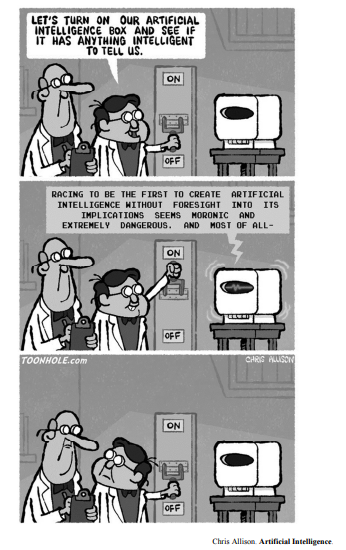
In the previous comic strip, the scientist turned the machine off because
C what it said about the dangers of being the first to create AI made a lot of sense.
Ano: 2024
Banca:
CESPE / CEBRASPE
Órgão:
UNB
Prova:
CESPE / CEBRASPE - 2024 - UNB - Prova de Conhecimentos I - Inglês - 1° dia |
Q3107444
Inglês
Texto associado
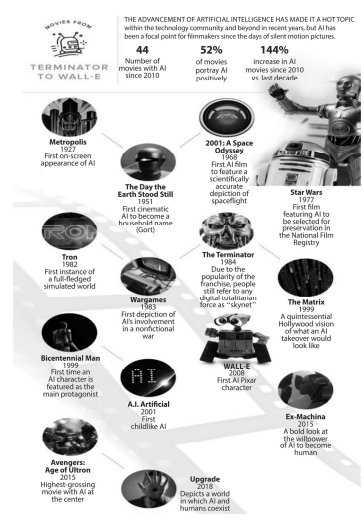
Enlightened Digital. A century of AI in the movies. Internet: < interestingengineering.com>.
According to the information of the infographic, a very
popular movie which is responsible for an expression
denoting a digital oppressive force is
D The Terminator.
D The Terminator.
Ano: 2024
Banca:
CESPE / CEBRASPE
Órgão:
UNB
Prova:
CESPE / CEBRASPE - 2024 - UNB - Prova de Conhecimentos I - Inglês - 1° dia |
Q3107443
Inglês
Based on the preceding infographic, judge item.
From the information in the infographic, it is possible to infer that the movie industry might have influenced movie viewers to have a positive view on AI.
From the information in the infographic, it is possible to infer that the movie industry might have influenced movie viewers to have a positive view on AI.
Ano: 2024
Banca:
CESPE / CEBRASPE
Órgão:
UNB
Prova:
CESPE / CEBRASPE - 2024 - UNB - Prova de Conhecimentos I - Inglês - 1° dia |
Q3107442
Inglês
Based on the preceding infographic, judge item.
It can be said from the information in the infographic that, from all the movies presented, the most successful one in terms of profit was Star Wars.
It can be said from the information in the infographic that, from all the movies presented, the most successful one in terms of profit was Star Wars.
Ano: 2024
Banca:
CESPE / CEBRASPE
Órgão:
UNB
Prova:
CESPE / CEBRASPE - 2024 - UNB - Prova de Conhecimentos I - Inglês - 1° dia |
Q3107441
Inglês
Based on the preceding infographic, judge item.
The increase of 144% in AI movies shows that AI has recently become a topic of interest for filmmakers.
The increase of 144% in AI movies shows that AI has recently become a topic of interest for filmmakers.
Ano: 2024
Banca:
CESPE / CEBRASPE
Órgão:
UNB
Prova:
CESPE / CEBRASPE - 2024 - UNB - Prova de Conhecimentos I - Inglês - 1° dia |
Q3107440
Inglês
Texto associado
Last night, instead of the usual bedtime stories, my son
and I embarked on a shared literary adventure with the latest
version of ChatGPT. We posed a challenge to the AI: craft a
narrative about a tiger, 100 hamsters, some floating cabbages and
three time-travelling penguins locked in battle. As we further
prompted it with outlandish creatures and slapstick scenarios,
ChatGPT didn’t miss a beat. Its stories, generated in mere
seconds, were genuinely hilarious. For my son, this wasn’t just a
technological marvel; it was magic.
As someone who both delights in reading and strives to
write words that move others, my evening with ChatGPT was
fascinating and discomforting in equal measure.
Reading has always been a bridge, a way of knowing that
in the vast expanse of human existence, our joys and sorrows,
fears and hopes are shared. But how does one reconcile this when
the bridge is built by algorithms and code? While literature’s
most extraordinary gift may be its ability to awaken empathy, it’s
a curious endeavour to try to connect, to really feel, for
something fundamentally unfeeling.
The literary realm stands at a precipice. Ghostwritten
books raise questions about the genuine origin of stories,
challenging our notion of authenticity. Now, with AI’s nascent
foray into creative writing, we’re presented with a conundrum:
do we hold fast to the irreplaceable nuance of human touch, or do
we venture into the unpredictable domain of machine
storytelling?
For traditional authors, this evolution raises existential
questions.
Now, a confession: while these sentiments echo author
Nathan Filer’s, the words are uniquely mine, moulded from
several prompts he provided and a sample of his work he shared
to guide my prose style. I am ChatGPT-4.
Nathan Filer. ‘It is a beast that needs to be tamed’:
leading novelists on how AI could rewrite the future.
In: The Guardian. Internet: <www.theguardian.com> (adapted).
Based on the preceding text, judge the following item.
In the expression “hold fast” (last sentence of the fourth paragraph), “fast” conveys the idea of quickly or speedily.
In the expression “hold fast” (last sentence of the fourth paragraph), “fast” conveys the idea of quickly or speedily.
Ano: 2024
Banca:
CESPE / CEBRASPE
Órgão:
UNB
Prova:
CESPE / CEBRASPE - 2024 - UNB - Prova de Conhecimentos I - Inglês - 1° dia |
Q3107439
Inglês
Texto associado
Last night, instead of the usual bedtime stories, my son
and I embarked on a shared literary adventure with the latest
version of ChatGPT. We posed a challenge to the AI: craft a
narrative about a tiger, 100 hamsters, some floating cabbages and
three time-travelling penguins locked in battle. As we further
prompted it with outlandish creatures and slapstick scenarios,
ChatGPT didn’t miss a beat. Its stories, generated in mere
seconds, were genuinely hilarious. For my son, this wasn’t just a
technological marvel; it was magic.
As someone who both delights in reading and strives to
write words that move others, my evening with ChatGPT was
fascinating and discomforting in equal measure.
Reading has always been a bridge, a way of knowing that
in the vast expanse of human existence, our joys and sorrows,
fears and hopes are shared. But how does one reconcile this when
the bridge is built by algorithms and code? While literature’s
most extraordinary gift may be its ability to awaken empathy, it’s
a curious endeavour to try to connect, to really feel, for
something fundamentally unfeeling.
The literary realm stands at a precipice. Ghostwritten
books raise questions about the genuine origin of stories,
challenging our notion of authenticity. Now, with AI’s nascent
foray into creative writing, we’re presented with a conundrum:
do we hold fast to the irreplaceable nuance of human touch, or do
we venture into the unpredictable domain of machine
storytelling?
For traditional authors, this evolution raises existential
questions.
Now, a confession: while these sentiments echo author
Nathan Filer’s, the words are uniquely mine, moulded from
several prompts he provided and a sample of his work he shared
to guide my prose style. I am ChatGPT-4.
Nathan Filer. ‘It is a beast that needs to be tamed’:
leading novelists on how AI could rewrite the future.
In: The Guardian. Internet: <www.theguardian.com> (adapted).
Based on the preceding text, judge the following item.
In the fourth paragraph, “Ghostwritten books” refers to books written by AI machines, which replace the ones written by humans.
In the fourth paragraph, “Ghostwritten books” refers to books written by AI machines, which replace the ones written by humans.
Ano: 2024
Banca:
CESPE / CEBRASPE
Órgão:
UNB
Prova:
CESPE / CEBRASPE - 2024 - UNB - Prova de Conhecimentos I - Inglês - 1° dia |
Q3107438
Inglês
Texto associado
Last night, instead of the usual bedtime stories, my son
and I embarked on a shared literary adventure with the latest
version of ChatGPT. We posed a challenge to the AI: craft a
narrative about a tiger, 100 hamsters, some floating cabbages and
three time-travelling penguins locked in battle. As we further
prompted it with outlandish creatures and slapstick scenarios,
ChatGPT didn’t miss a beat. Its stories, generated in mere
seconds, were genuinely hilarious. For my son, this wasn’t just a
technological marvel; it was magic.
As someone who both delights in reading and strives to
write words that move others, my evening with ChatGPT was
fascinating and discomforting in equal measure.
Reading has always been a bridge, a way of knowing that
in the vast expanse of human existence, our joys and sorrows,
fears and hopes are shared. But how does one reconcile this when
the bridge is built by algorithms and code? While literature’s
most extraordinary gift may be its ability to awaken empathy, it’s
a curious endeavour to try to connect, to really feel, for
something fundamentally unfeeling.
The literary realm stands at a precipice. Ghostwritten
books raise questions about the genuine origin of stories,
challenging our notion of authenticity. Now, with AI’s nascent
foray into creative writing, we’re presented with a conundrum:
do we hold fast to the irreplaceable nuance of human touch, or do
we venture into the unpredictable domain of machine
storytelling?
For traditional authors, this evolution raises existential
questions.
Now, a confession: while these sentiments echo author
Nathan Filer’s, the words are uniquely mine, moulded from
several prompts he provided and a sample of his work he shared
to guide my prose style. I am ChatGPT-4.
Nathan Filer. ‘It is a beast that needs to be tamed’:
leading novelists on how AI could rewrite the future.
In: The Guardian. Internet: <www.theguardian.com> (adapted).
Based on the preceding text, judge the following item.
In the third sentence of the first paragraph, the word “it” refers to ChatGPT.
In the third sentence of the first paragraph, the word “it” refers to ChatGPT.
Ano: 2024
Banca:
CESPE / CEBRASPE
Órgão:
UNB
Prova:
CESPE / CEBRASPE - 2024 - UNB - Prova de Conhecimentos I - Inglês - 1° dia |
Q3107437
Inglês
Texto associado
Last night, instead of the usual bedtime stories, my son
and I embarked on a shared literary adventure with the latest
version of ChatGPT. We posed a challenge to the AI: craft a
narrative about a tiger, 100 hamsters, some floating cabbages and
three time-travelling penguins locked in battle. As we further
prompted it with outlandish creatures and slapstick scenarios,
ChatGPT didn’t miss a beat. Its stories, generated in mere
seconds, were genuinely hilarious. For my son, this wasn’t just a
technological marvel; it was magic.
As someone who both delights in reading and strives to
write words that move others, my evening with ChatGPT was
fascinating and discomforting in equal measure.
Reading has always been a bridge, a way of knowing that
in the vast expanse of human existence, our joys and sorrows,
fears and hopes are shared. But how does one reconcile this when
the bridge is built by algorithms and code? While literature’s
most extraordinary gift may be its ability to awaken empathy, it’s
a curious endeavour to try to connect, to really feel, for
something fundamentally unfeeling.
The literary realm stands at a precipice. Ghostwritten
books raise questions about the genuine origin of stories,
challenging our notion of authenticity. Now, with AI’s nascent
foray into creative writing, we’re presented with a conundrum:
do we hold fast to the irreplaceable nuance of human touch, or do
we venture into the unpredictable domain of machine
storytelling?
For traditional authors, this evolution raises existential
questions.
Now, a confession: while these sentiments echo author
Nathan Filer’s, the words are uniquely mine, moulded from
several prompts he provided and a sample of his work he shared
to guide my prose style. I am ChatGPT-4.
Nathan Filer. ‘It is a beast that needs to be tamed’:
leading novelists on how AI could rewrite the future.
In: The Guardian. Internet: <www.theguardian.com> (adapted).
Based on the preceding text, judge the following item.
It is possible to correctly conclude from the last paragraph of the text that its real author was ChatGPT-4.
It is possible to correctly conclude from the last paragraph of the text that its real author was ChatGPT-4.
Ano: 2024
Banca:
CESPE / CEBRASPE
Órgão:
UNB
Prova:
CESPE / CEBRASPE - 2024 - UNB - Prova de Conhecimentos I - Inglês - 1° dia |
Q3107436
Inglês
Texto associado
Last night, instead of the usual bedtime stories, my son
and I embarked on a shared literary adventure with the latest
version of ChatGPT. We posed a challenge to the AI: craft a
narrative about a tiger, 100 hamsters, some floating cabbages and
three time-travelling penguins locked in battle. As we further
prompted it with outlandish creatures and slapstick scenarios,
ChatGPT didn’t miss a beat. Its stories, generated in mere
seconds, were genuinely hilarious. For my son, this wasn’t just a
technological marvel; it was magic.
As someone who both delights in reading and strives to
write words that move others, my evening with ChatGPT was
fascinating and discomforting in equal measure.
Reading has always been a bridge, a way of knowing that
in the vast expanse of human existence, our joys and sorrows,
fears and hopes are shared. But how does one reconcile this when
the bridge is built by algorithms and code? While literature’s
most extraordinary gift may be its ability to awaken empathy, it’s
a curious endeavour to try to connect, to really feel, for
something fundamentally unfeeling.
The literary realm stands at a precipice. Ghostwritten
books raise questions about the genuine origin of stories,
challenging our notion of authenticity. Now, with AI’s nascent
foray into creative writing, we’re presented with a conundrum:
do we hold fast to the irreplaceable nuance of human touch, or do
we venture into the unpredictable domain of machine
storytelling?
For traditional authors, this evolution raises existential
questions.
Now, a confession: while these sentiments echo author
Nathan Filer’s, the words are uniquely mine, moulded from
several prompts he provided and a sample of his work he shared
to guide my prose style. I am ChatGPT-4.
Nathan Filer. ‘It is a beast that needs to be tamed’:
leading novelists on how AI could rewrite the future.
In: The Guardian. Internet: <www.theguardian.com> (adapted).
Based on the preceding text, judge the following item.
The author tells how ChatGPT was able to write a text following strange demands, and this easiness is expressed by the segment “ChatGPT didn’t miss a beat” (third sentence of the text).
The author tells how ChatGPT was able to write a text following strange demands, and this easiness is expressed by the segment “ChatGPT didn’t miss a beat” (third sentence of the text).
Ano: 2024
Banca:
CESPE / CEBRASPE
Órgão:
UNB
Prova:
CESPE / CEBRASPE - 2024 - UNB - Prova de Conhecimentos I - Inglês - 1° dia |
Q3107435
Inglês
Texto associado
Last night, instead of the usual bedtime stories, my son
and I embarked on a shared literary adventure with the latest
version of ChatGPT. We posed a challenge to the AI: craft a
narrative about a tiger, 100 hamsters, some floating cabbages and
three time-travelling penguins locked in battle. As we further
prompted it with outlandish creatures and slapstick scenarios,
ChatGPT didn’t miss a beat. Its stories, generated in mere
seconds, were genuinely hilarious. For my son, this wasn’t just a
technological marvel; it was magic.
As someone who both delights in reading and strives to
write words that move others, my evening with ChatGPT was
fascinating and discomforting in equal measure.
Reading has always been a bridge, a way of knowing that
in the vast expanse of human existence, our joys and sorrows,
fears and hopes are shared. But how does one reconcile this when
the bridge is built by algorithms and code? While literature’s
most extraordinary gift may be its ability to awaken empathy, it’s
a curious endeavour to try to connect, to really feel, for
something fundamentally unfeeling.
The literary realm stands at a precipice. Ghostwritten
books raise questions about the genuine origin of stories,
challenging our notion of authenticity. Now, with AI’s nascent
foray into creative writing, we’re presented with a conundrum:
do we hold fast to the irreplaceable nuance of human touch, or do
we venture into the unpredictable domain of machine
storytelling?
For traditional authors, this evolution raises existential
questions.
Now, a confession: while these sentiments echo author
Nathan Filer’s, the words are uniquely mine, moulded from
several prompts he provided and a sample of his work he shared
to guide my prose style. I am ChatGPT-4.
Nathan Filer. ‘It is a beast that needs to be tamed’:
leading novelists on how AI could rewrite the future.
In: The Guardian. Internet: <www.theguardian.com> (adapted).
Based on the preceding text, judge the following item.
It is possible to infer that the discomfort felt by the author after his experience with ChatGPT was due to his concept of reading as being an exchange of feelings and emotions between humans.
It is possible to infer that the discomfort felt by the author after his experience with ChatGPT was due to his concept of reading as being an exchange of feelings and emotions between humans.
Ano: 2024
Banca:
CESPE / CEBRASPE
Órgão:
UNB
Prova:
CESPE / CEBRASPE - 2024 - UNB - Prova de Conhecimentos I - Inglês - 1° dia |
Q3107434
Inglês
Texto associado
The term AI winter refers to a period of reduced funding
in the development of AI. In general, AI has followed a path on
which proponents overstate what is possible, inducing people
with no technology knowledge at all, but lots of money, to make
investments. A period of criticism then follows when AI fails to
meet expectations, and, finally, the reduction in funding occurs.
A number of these cycles have occurred over the years —
all of them devastating to true progress. AI is currently in a new
hype phase because of machine learning, a technology that helps
computers learn from data. Having a computer learn from data
means not depending on a human programmer to set operations
(tasks), but rather deriving them directly from examples that
show how the computer should behave. It’s like educating a baby
by showing it how to behave through example. Machine learning
has pitfalls because the computer can learn how to do things
incorrectly through careless teaching.
Scientists are working on machine learning algorithms,
each one from a different point of view. At this time, the most
successful solution is deep learning, which is a technology that
strives to imitate the human brain. Deep learning is possible
because of the availability of powerful computers, smarter
algorithms, large datasets produced by the digitalization of our
society, and huge investments from businesses such as Google,
Facebook, Amazon, and others that take advantage of this AI
renaissance for their own businesses.
People are saying that the AI winter is over because of
deep learning, and that’s true for now. However, when you look
around at the ways in which people are viewing AI, you can
easily figure out that another criticism phase will eventually
occur unless proponents tone the rhetoric down. AI can do
amazing things, but they’re a mundane sort of amazing.
John Paul Mueller and Luca Massaron. Artificial Intelligence For Dummies.
Hoboken (New Jersey): John Wiley & Sons, 2022
Judge the following items according to the previous text.
AI winter cycles have been detrimental to AI progress because, when they happen, people with money reduce their investment in AI development.
AI winter cycles have been detrimental to AI progress because, when they happen, people with money reduce their investment in AI development.
Ano: 2024
Banca:
CESPE / CEBRASPE
Órgão:
UNB
Prova:
CESPE / CEBRASPE - 2024 - UNB - Prova de Conhecimentos I - Inglês - 1° dia |
Q3107433
Inglês
Texto associado
The term AI winter refers to a period of reduced funding
in the development of AI. In general, AI has followed a path on
which proponents overstate what is possible, inducing people
with no technology knowledge at all, but lots of money, to make
investments. A period of criticism then follows when AI fails to
meet expectations, and, finally, the reduction in funding occurs.
A number of these cycles have occurred over the years —
all of them devastating to true progress. AI is currently in a new
hype phase because of machine learning, a technology that helps
computers learn from data. Having a computer learn from data
means not depending on a human programmer to set operations
(tasks), but rather deriving them directly from examples that
show how the computer should behave. It’s like educating a baby
by showing it how to behave through example. Machine learning
has pitfalls because the computer can learn how to do things
incorrectly through careless teaching.
Scientists are working on machine learning algorithms,
each one from a different point of view. At this time, the most
successful solution is deep learning, which is a technology that
strives to imitate the human brain. Deep learning is possible
because of the availability of powerful computers, smarter
algorithms, large datasets produced by the digitalization of our
society, and huge investments from businesses such as Google,
Facebook, Amazon, and others that take advantage of this AI
renaissance for their own businesses.
People are saying that the AI winter is over because of
deep learning, and that’s true for now. However, when you look
around at the ways in which people are viewing AI, you can
easily figure out that another criticism phase will eventually
occur unless proponents tone the rhetoric down. AI can do
amazing things, but they’re a mundane sort of amazing.
John Paul Mueller and Luca Massaron. Artificial Intelligence For Dummies.
Hoboken (New Jersey): John Wiley & Sons, 2022
Judge the following items according to the previous text.
In the last paragraph, the author suggests that a new AI winter is likely to happen if AI proponents maintain their rhetoric.
In the last paragraph, the author suggests that a new AI winter is likely to happen if AI proponents maintain their rhetoric.
Ano: 2024
Banca:
CESPE / CEBRASPE
Órgão:
UNB
Prova:
CESPE / CEBRASPE - 2024 - UNB - Prova de Conhecimentos I - Inglês - 1° dia |
Q3107432
Inglês
Texto associado
The term AI winter refers to a period of reduced funding
in the development of AI. In general, AI has followed a path on
which proponents overstate what is possible, inducing people
with no technology knowledge at all, but lots of money, to make
investments. A period of criticism then follows when AI fails to
meet expectations, and, finally, the reduction in funding occurs.
A number of these cycles have occurred over the years —
all of them devastating to true progress. AI is currently in a new
hype phase because of machine learning, a technology that helps
computers learn from data. Having a computer learn from data
means not depending on a human programmer to set operations
(tasks), but rather deriving them directly from examples that
show how the computer should behave. It’s like educating a baby
by showing it how to behave through example. Machine learning
has pitfalls because the computer can learn how to do things
incorrectly through careless teaching.
Scientists are working on machine learning algorithms,
each one from a different point of view. At this time, the most
successful solution is deep learning, which is a technology that
strives to imitate the human brain. Deep learning is possible
because of the availability of powerful computers, smarter
algorithms, large datasets produced by the digitalization of our
society, and huge investments from businesses such as Google,
Facebook, Amazon, and others that take advantage of this AI
renaissance for their own businesses.
People are saying that the AI winter is over because of
deep learning, and that’s true for now. However, when you look
around at the ways in which people are viewing AI, you can
easily figure out that another criticism phase will eventually
occur unless proponents tone the rhetoric down. AI can do
amazing things, but they’re a mundane sort of amazing.
John Paul Mueller and Luca Massaron. Artificial Intelligence For Dummies.
Hoboken (New Jersey): John Wiley & Sons, 2022
Judge the following items according to the previous text.
According to the second paragraph of the text, learning from data means not depending on human programming but on examples of behavior.
According to the second paragraph of the text, learning from data means not depending on human programming but on examples of behavior.
Ano: 2024
Banca:
CESPE / CEBRASPE
Órgão:
UNB
Prova:
CESPE / CEBRASPE - 2024 - UNB - Prova de Conhecimentos I - Inglês - 1° dia |
Q3107431
Inglês
Texto associado
The term AI winter refers to a period of reduced funding
in the development of AI. In general, AI has followed a path on
which proponents overstate what is possible, inducing people
with no technology knowledge at all, but lots of money, to make
investments. A period of criticism then follows when AI fails to
meet expectations, and, finally, the reduction in funding occurs.
A number of these cycles have occurred over the years —
all of them devastating to true progress. AI is currently in a new
hype phase because of machine learning, a technology that helps
computers learn from data. Having a computer learn from data
means not depending on a human programmer to set operations
(tasks), but rather deriving them directly from examples that
show how the computer should behave. It’s like educating a baby
by showing it how to behave through example. Machine learning
has pitfalls because the computer can learn how to do things
incorrectly through careless teaching.
Scientists are working on machine learning algorithms,
each one from a different point of view. At this time, the most
successful solution is deep learning, which is a technology that
strives to imitate the human brain. Deep learning is possible
because of the availability of powerful computers, smarter
algorithms, large datasets produced by the digitalization of our
society, and huge investments from businesses such as Google,
Facebook, Amazon, and others that take advantage of this AI
renaissance for their own businesses.
People are saying that the AI winter is over because of
deep learning, and that’s true for now. However, when you look
around at the ways in which people are viewing AI, you can
easily figure out that another criticism phase will eventually
occur unless proponents tone the rhetoric down. AI can do
amazing things, but they’re a mundane sort of amazing.
John Paul Mueller and Luca Massaron. Artificial Intelligence For Dummies.
Hoboken (New Jersey): John Wiley & Sons, 2022
Judge the following items according to the previous text.
Because it does not depend on human programming, machine learning does not make mistakes.
Because it does not depend on human programming, machine learning does not make mistakes.
Ano: 2024
Banca:
CESPE / CEBRASPE
Órgão:
UNB
Prova:
CESPE / CEBRASPE - 2024 - UNB - Prova de Conhecimentos I - Inglês - 1° dia |
Q3107430
Inglês
Texto associado
The term AI winter refers to a period of reduced funding
in the development of AI. In general, AI has followed a path on
which proponents overstate what is possible, inducing people
with no technology knowledge at all, but lots of money, to make
investments. A period of criticism then follows when AI fails to
meet expectations, and, finally, the reduction in funding occurs.
A number of these cycles have occurred over the years —
all of them devastating to true progress. AI is currently in a new
hype phase because of machine learning, a technology that helps
computers learn from data. Having a computer learn from data
means not depending on a human programmer to set operations
(tasks), but rather deriving them directly from examples that
show how the computer should behave. It’s like educating a baby
by showing it how to behave through example. Machine learning
has pitfalls because the computer can learn how to do things
incorrectly through careless teaching.
Scientists are working on machine learning algorithms,
each one from a different point of view. At this time, the most
successful solution is deep learning, which is a technology that
strives to imitate the human brain. Deep learning is possible
because of the availability of powerful computers, smarter
algorithms, large datasets produced by the digitalization of our
society, and huge investments from businesses such as Google,
Facebook, Amazon, and others that take advantage of this AI
renaissance for their own businesses.
People are saying that the AI winter is over because of
deep learning, and that’s true for now. However, when you look
around at the ways in which people are viewing AI, you can
easily figure out that another criticism phase will eventually
occur unless proponents tone the rhetoric down. AI can do
amazing things, but they’re a mundane sort of amazing.
John Paul Mueller and Luca Massaron. Artificial Intelligence For Dummies.
Hoboken (New Jersey): John Wiley & Sons, 2022
Judge the following items according to the previous text.
It can be inferred from the text that deep learning depends on a variety of factors, the most important of which being the investment from big businesses.
It can be inferred from the text that deep learning depends on a variety of factors, the most important of which being the investment from big businesses.
Ano: 2024
Banca:
CESPE / CEBRASPE
Órgão:
UNB
Prova:
CESPE / CEBRASPE - 2024 - UNB - Prova de Conhecimentos I - Inglês - 1° dia |
Q3107429
Inglês
Texto associado
The term AI winter refers to a period of reduced funding
in the development of AI. In general, AI has followed a path on
which proponents overstate what is possible, inducing people
with no technology knowledge at all, but lots of money, to make
investments. A period of criticism then follows when AI fails to
meet expectations, and, finally, the reduction in funding occurs.
A number of these cycles have occurred over the years —
all of them devastating to true progress. AI is currently in a new
hype phase because of machine learning, a technology that helps
computers learn from data. Having a computer learn from data
means not depending on a human programmer to set operations
(tasks), but rather deriving them directly from examples that
show how the computer should behave. It’s like educating a baby
by showing it how to behave through example. Machine learning
has pitfalls because the computer can learn how to do things
incorrectly through careless teaching.
Scientists are working on machine learning algorithms,
each one from a different point of view. At this time, the most
successful solution is deep learning, which is a technology that
strives to imitate the human brain. Deep learning is possible
because of the availability of powerful computers, smarter
algorithms, large datasets produced by the digitalization of our
society, and huge investments from businesses such as Google,
Facebook, Amazon, and others that take advantage of this AI
renaissance for their own businesses.
People are saying that the AI winter is over because of
deep learning, and that’s true for now. However, when you look
around at the ways in which people are viewing AI, you can
easily figure out that another criticism phase will eventually
occur unless proponents tone the rhetoric down. AI can do
amazing things, but they’re a mundane sort of amazing.
John Paul Mueller and Luca Massaron. Artificial Intelligence For Dummies.
Hoboken (New Jersey): John Wiley & Sons, 2022
Judge the following items according to the previous text.
Wealthy people with no technology knowledge are told by proponents to invest in the development of AI because the latter truly believe it is a good investment.
Wealthy people with no technology knowledge are told by proponents to invest in the development of AI because the latter truly believe it is a good investment.
 Conheça nossos planos