Questões de Vestibular
Sobre tradução | translation em inglês
Foram encontradas 170 questões


ADOLESCENCE is universally...Disponível em:<www.integraloptions.blogspot.com>


Adaptado de: HOGAN, Linda. Sightings:
The Gray Whales’ Mysterious Journey. Washington,
D.C.: National Geographic, 2002. p. 29-30.

Adaptado de: SHAKESPEARE, W. The Life and Death of
Julius Caesar. Disponível em:
<http://shakespeare.mit.edu/ julius_caesar/full.html>.
Acesso em: 12 nov. 2016.

Coral reefs are colorful underwater forests which teem with life and act as a natural protective barrier for coastal regions. The fishes and plants which call them home belong to some of the most diverse ― and fragile ― ecosystems on the planet. Higher sea temperatures from global warming have already caused major coral bleaching events. Bleaching occurs when corals respond to the stress of warmer temperatures by expelling the colorful algae that live within them. Increased levels of atmospheric carbon dioxide result in higher levels of CO² in the water, leading to ocean acidification, which is also a threat to coral. As the oceans become more acidic, the corals' ability to form skeletons through calcification is inhibited, causing their growth to slow. Increasing sea levels caused by melting sea ice could also cause problems for some reefs by making them too deep to receive adequate sunlight, another factor important for survival.
(Adaptado de Coral Reefs, The National Wildlife Federation. Disponível em https://www.nwf.org/Wildlife/Threats-to-Wildlife/GlobalWarming/Effects-on-Wildlife-and-Habitat/Coral-Reefs.aspx. Acessado em 26/07/2017.)
Considerando o texto e seus conhecimentos, assinale a alternativa correta.
Os recifes de corais estão seriamente ameaçados pela combinação dos seguintes fatores:
Comedian Janey Godley's tweets of a couple's train-bound row raise questions of how to protect our privacy in public places.
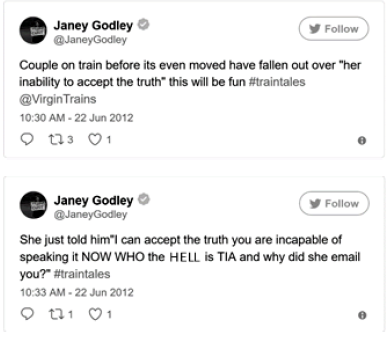
If the troubles of the two travellers had made it on to a newspaper first rather than a comedian's Twitter feed, would we be so relaxed about loss of privacy? I think perhaps not. Social media has done so much for freedom of expression, it would be cruel if it actually leads to less social freedom for fear of having our every misstep, angry word or misbehaviour broadcast there for all to see.
(Adaptado de David Banks, Should Twitter entertain millions with public rows? The Guardian, 13/07/2012. Disponível em https://www.theguardian.com/commentisfree/2012/jul/13/twittermillions-public-rows. Acessado em 10/07/2017.)
No artigo de opinião acima, o autor
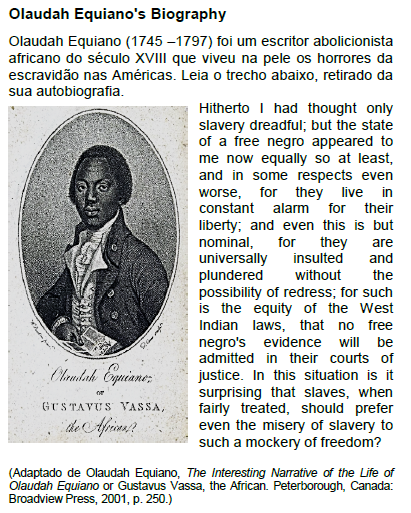
Segundo o testemunho de Olaudah Equiano,
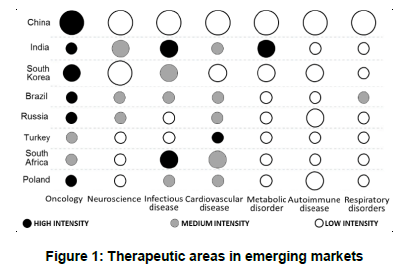
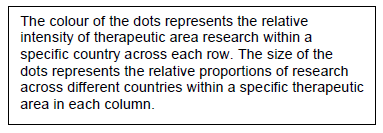
(Adaptado de Ajay Gautam, Lily Li e Kumar Srinivasan, Market watch: Therapeutic area ‘heat map’ for emerging markets. Nature Reviews Drug Discovery 14, p. 518, jul. 2015.)
De acordo com o gráfico apresentado,
ZOMBIE NEUROSCIENCE
I don’t know if cockroaches dream, but I imagine if they do, jewel wasps feature prominently in their nightmares. These small, solitary tropical wasps are of little concern to us humans; after all, they don’t manipulate our minds so that they can serve us up as willing, living meals to their newborns, as they do to unsuspecting cockroaches. The story is simple, if grotesque: the female wasp controls the minds of the cockroaches she feeds to her offspring, taking away their sense of fear or will to escape their fate. What turns a once healthy cockroach into a mindless zombie it’s venom. Not just any venom, either: a specific venom that acts like a drug, targeting the cockroach's brain.
(Adaptado de Christie Wilcox, Zombie Neuroscience. Scientific American, New York, v. 315, n. 2, p. 70–73, 2016.)
De acordo com o autor,
Elderly flight passenger throws coins into engine for ‘luck’, delays take-off for hours
China Southern Airlines Flight 380 was held up at the Shanghai Pudong International Airport after an elderly woman passenger caused a disruption, according to the airline’s official WeChat account. An investigation into the incident is under way.
Passengers boarding the flight reportedly saw an elderly woman throwing coins at the engine for “blessings” from the middle of the boarding staircase and alerted the crew.
Ground staff said the woman, who appeared to be about 80 and had limited mobility, was accompanied by her husband, daughter and son-in-law.
The captain was quoted as saying the metal, if sucked up
by the engine, could have caused serious damage,
including failure.
The flight was later given a green light and took off at 5.52pm, more than five hours late. It is scheduled to arrive in Guangzhou at 8.14pm.
(Adaptado de Sarah Zheng, Elderly flight passenger throws coins into engine for ‘luck’, delays take-off for hours. South China Morning Post, 27/06/2017. Disponível em http://www.scmp.com/news/china/society/article/2100242/elderlyflight-passenger-throws-coins-engine-luck-delays-take. Acessado em 10/07/2017.)
O que é correto afirmar sobre o incidente relatado na
notícia anterior?

Entre as inadequações no uso do inglês observadas nas
figuras 1 e 2, podemos citar:
When does the brain work best?
The peak times and ages for learning

What’s your ideal time of the day for brain performance? Surprisingly, the answer to this isn’t as simple as being a morning or a night person. New research has shown that certain times of the day are best for completing specific tasks, and listening to your body’s natural clock may help you to accomplish more in 24 hours.
Science suggests that the best time for our natural peak productivity is late morning. Our body temperatures start to rise just before we wake up in the morning and continue to increase through midday, Steve Kay, a professor of molecular and computational biology at the University of Southern California told The Wall Street Journal. This gradual increase in body temperature means that our working memory, alertness, and concentration also gradually improve, peaking at about mid morning. Our alertness tends to dip after this point, but one study suggested that midday fatigue may actually boost our creative abilities. For a 2011 study, 428 students were asked to solve a series of two types of problems, requiring either analytical or novel thinking. Results showed that their performance on the second type was best at non-peak times of day when they were tired.
As for the age where our brains are at peak condition, science has long held that fluid intelligence, or the ability to think quickly and recall information, peaks at around age 20. However, a 2015 study revealed that peak brain age is far more complicated than previously believed and concluded that there are about 30 subsets of intelligence, all of which peak at different ages for different people. For example, the study found that raw speed in processing information appears to peak around age 18 or 19, then immediately starts to decline, but short-term memory continues to improve until around age 25, and then begins to drop around age 35, Medical Xpress reported. The ability to evaluate other people’s emotional states peaked much later, in the 40s or 50s. In addition, the study suggested that out our vocabulary may peak as late as our 60s’s or 70’s.
Still, while working according to your body’s natural clock may sound helpful, it’s important to remember that these times may differ from person to person. On average, people can be divided into two distinct groups: morning people tend to wake up and go to sleep earlier and to be most productive early in the day. Evening people tend to wake up later, start more slowly and peak in the evening. If being a morning or evening person has been working for you the majority of your life, it may be best to not fix what’s not broken.
(Dana Dovey. www.medicaldaily.com, 08.08.2016. Adaptado.)
When does the brain work best?
The peak times and ages for learning
What’s your ideal time of the day for brain performance? Surprisingly, the answer to this isn’t as simple as being a morning or a night person. New research has shown that certain times of the day are best for completing specific tasks, and listening to your body’s natural clock may help you to accomplish more in 24 hours.
Science suggests that the best time for our natural peak productivity is late morning. Our body temperatures start to rise just before we wake up in the morning and continue to increase through midday, Steve Kay, a professor of molecular and computational biology at the University of Southern California told The Wall Street Journal. This gradual increase in body temperature means that our working memory, alertness, and concentration also gradually improve, peaking at about mid morning. Our alertness tends to dip after this point, but one study suggested that midday fatigue may actually boost our creative abilities. For a 2011 study, 428 students were asked to solve a series of two types of problems, requiring either analytical or novel thinking. Results showed that their performance on the second type was best at non-peak times of day when they were tired.
As for the age where our brains are at peak condition, science has long held that fluid intelligence, or the ability to think quickly and recall information, peaks at around age 20. However, a 2015 study revealed that peak brain age is far more complicated than previously believed and concluded that there are about 30 subsets of intelligence, all of which peak at different ages for different people. For example, the study found that raw speed in processing information appears to peak around age 18 or 19, then immediately starts to decline, but short-term memory continues to improve until around age 25, and then begins to drop around age 35, Medical Xpress reported. The ability to evaluate other people’s emotional states peaked much later, in the 40s or 50s. In addition, the study suggested that out our vocabulary may peak as late as our 60s’s or 70’s.
Still, while working according to your body’s natural clock may sound helpful, it’s important to remember that these times may differ from person to person. On average, people can be divided into two distinct groups: morning people tend to wake up and go to sleep earlier and to be most productive early in the day. Evening people tend to wake up later, start more slowly and peak in the evening. If being a morning or evening person has been working for you the majority of your life, it may be best to not fix what’s not broken.
(Dana Dovey. www.medicaldaily.com, 08.08.2016. Adaptado.)
“One never builds something finished”:
the brilliance of architect Paulo Mendes da Rocha
Oliver Wainwright
February 4, 2017
“All space is public,” says Paulo Mendes da Rocha. “The only private space that you can imagine is in the human mind.” It is an optimistic statement from the 88-year-old Brazilian architect, given he is a resident of São Paulo, a city where the triumph of the private realm over the public could not be more stark. The sprawling megalopolis is a place of such marked inequality that its superrich hop between their rooftop helipads because they are too scared of street crime to come down from the clouds.
But for Mendes da Rocha, who received the 2017 gold medal from the Royal Institute of British Architects this week – an accolade previously bestowed on such luminaries as Le Corbusier and Frank Lloyd Wright – the ground is everything. He has spent his 60-year career lifting his massive concrete buildings up, in gravity-defying balancing acts, or else burying them below ground in an attempt to liberate the Earth’s surface as a continuous democratic public realm. “The city has to be for everybody,” he says, “not just for the very few.”
(www.theguardian.com. Adaptado.)

It is essential to promote social inclusion by providing spaces for people of all socio-economic backgrounds to use and enjoy. Quality public spaces such as libraries and parks can supplement housing as study and recreational spaces for the urban poor.
There is a need to ensure that there is an equitable distribution of public spaces within cities. Through the provision of quality public spaces in cities can reduce the economic and social segregation that is prevalent in many developed and developing cities. By ensuring the distribution, coverage and quality of public spaces, it is possible to directly influence the dynamics of urban density, to combine uses and to promote the social mixture of cities’ inhabitants.
Rights and duties of all the public space stakeholders should be clearly defined. Public spaces are public assets as a public space is by definition a place where all citizens are legitimate to be and discrimination should be tackled there. Public space has the capacity to gather people and break down social barriers. Protecting the inclusiveness of public space is a key prerequisite for the right to the city and an important asset to foster tolerance, conviviality and dialogue.
Public spaces in slums are only used to enable people to move. There is a lack of public space both in quantity and quality, leading to high residential density, high crime rates, lack of public facilities such as toilets or water, difficulties to practice outdoor sports and other recreational activities among others.
(www.learning.uclg.org)

NOGUEIRA, Salvador. Translated by Marina Della Valle. Disponível em: <
www1folha.uol.com.br/internacional/em/scienceandhealth/2016/03/
1755511-russia-will-install-telescope-in-brazil..shtml>. Acesso em: 27 set.
2016.
Leia o texto a seguir para responder à questão.
The Internet of Things
The “Internet of Things” (IoT) is becoming an increasingly growing topic of conversation both in the workplace and outside of it. It’s a concept that not only has the potential to impact how we live but also how we work. But what exactly is the “Internet of Things” and what impact is it going to have on you, if any? There are a lot of complexities around the “Internet of Things” but we want to stick to the basics. Lots of technical and policyrelated conversations are being had but many people are still just trying to grasp the foundation of what the heck these conversations are about.
Let’s start with understanding a few things.
Broadband Internet is becoming more widely available, the cost of connecting is decreasing, more devices are being created with Wi-Fi capabilities and sensors built into them, technology costs are going down, and smartphone penetration is sky-rocketing. All of these things are creating a “perfect storm” for the IoT.
So What Is The Internet of Things?
Simply put, this is the concept of basically connecting any device with an on and off switch to the Internet (and/or to each other). This includes everything from cellphones, coffee makers, washing machines, headphones, lamps, wearable devices and almost anything else you can think of.
So what now?
The new rule for the future is going to be, “Anything that can be connected, will be connected.”


Translated by Milli Legrain. Disponível em: <www1.folha.uol.com.br/…/
1441449-fire-and-drought-turns-amazon…shtml>. Acesso em: 7 set.
2016.

 Conheça nossos planos