Questões de Vestibular Sobre tradução | translation em inglês

Foram encontradas 172 questões

Ano: 2016 Banca: Univap Órgão: Univap Prova: Univap - 2016 - Univap - Vestibular - Processo Seletivo 2 |
Q1388695 Inglês

As questão é referente às imagens abaixo.


Na história em quadrinhos, acima, a palavra "tank" significa
Alternativas
Ano: 2016 Banca: Univap Órgão: Univap Prova: Univap - 2016 - Univap - Vestibular - Processo Seletivo 2 |
Q1388691 Inglês
A questão é referente ao texto abaixo.

Long trip with no money

A man decided to test lessons, which he learned from the Dalai Lama, and he went on a pilgrimage. He and others went on a 322- kilometre journey from London to Glastonbury. The people had no money – they wanted to see if it was possible to live through kindness. It seems, that in 21st century Britain, it is. The man talked about their experience – he said that when you smile at people, take time to understand their story, then they will come forward and are naturally kind. One woman gave them rice and a man brought them all tea. And one time, a person even gave them the keys to his flat!
Disponível em http://www.newsinlevels.com/products/long-trip-with-no-money-level-21/
O significado de palavra “kind” no texto acima é
Alternativas
Q1342618 Inglês

Leia o texto para responder à questão.

Reducing food waste would mitigate climate change, study shows

April 7, 2016

    Reducing food waste around the world would help curb emissions of planet-warming gases, lessening some of the impacts of climate change such as more extreme weather and rising seas, scientists said on Thursday.
    Up to 14% of emissions from agriculture in 2050 could be avoided by managing food use and distribution better, according to a new study from the Potsdam Institute for Climate Impact Research (PIK). “Agriculture is a major driver of climate change, accounting for more than 20% of overall global greenhouse gas emissions in 2010,” said co-author Prajal Pradhan. “Avoiding food loss and waste would therefore avoid unnecessary greenhouse gas emissions and help mitigate climate change.”
    Between 30 and 40% of food produced around the world is never eaten, because it is spoiled after harvest and during transportation, or thrown away by shops and consumers. The share of food wasted is expected to increase drastically if emerging economies like China and India adopt western food habits, including a shift to eating more meat, the researchers warned. Richer countries tend to consume more food than is healthy or simply waste it, they noted.
    As poorer countries develop and the world’s population grows, emissions associated with food waste could soar from 0.5 gigatonnes (GT) of carbon dioxide equivalent per year to between 1.9 and 2.5 GT annually by mid-century, showed the study published in the Environmental Science & Technology journal. It is widely argued that cutting food waste and distributing the world’s surplus food where it is needed could help tackle hunger in places that do not have enough - especially given that land to expand farming is limited.
    But Jürgen Kropp, another of the study’s co-authors and PIK’s head of climate change and development, told the Thomson Reuters Foundation the potential for food waste curbs to reduce emissions should be given more attention. “It is not a strategy of governments at the moment,” he said.

             (www.theguardian.com. Adaptado.)

No trecho inicial do quarto parágrafo “As poorer countries develop and the world’s population grows”, o termo em destaque tem sentido equivalente, em português, a
Alternativas
Q1342616 Inglês

Leia o texto para responder à questão.

Reducing food waste would mitigate climate change, study shows

April 7, 2016

    Reducing food waste around the world would help curb emissions of planet-warming gases, lessening some of the impacts of climate change such as more extreme weather and rising seas, scientists said on Thursday.
    Up to 14% of emissions from agriculture in 2050 could be avoided by managing food use and distribution better, according to a new study from the Potsdam Institute for Climate Impact Research (PIK). “Agriculture is a major driver of climate change, accounting for more than 20% of overall global greenhouse gas emissions in 2010,” said co-author Prajal Pradhan. “Avoiding food loss and waste would therefore avoid unnecessary greenhouse gas emissions and help mitigate climate change.”
    Between 30 and 40% of food produced around the world is never eaten, because it is spoiled after harvest and during transportation, or thrown away by shops and consumers. The share of food wasted is expected to increase drastically if emerging economies like China and India adopt western food habits, including a shift to eating more meat, the researchers warned. Richer countries tend to consume more food than is healthy or simply waste it, they noted.
    As poorer countries develop and the world’s population grows, emissions associated with food waste could soar from 0.5 gigatonnes (GT) of carbon dioxide equivalent per year to between 1.9 and 2.5 GT annually by mid-century, showed the study published in the Environmental Science & Technology journal. It is widely argued that cutting food waste and distributing the world’s surplus food where it is needed could help tackle hunger in places that do not have enough - especially given that land to expand farming is limited.
    But Jürgen Kropp, another of the study’s co-authors and PIK’s head of climate change and development, told the Thomson Reuters Foundation the potential for food waste curbs to reduce emissions should be given more attention. “It is not a strategy of governments at the moment,” he said.

             (www.theguardian.com. Adaptado.)

No trecho do segundo parágrafo “Agriculture is a major driver of climate change”, os termos em destaque têm sentido equivalente, em português, a
Alternativas
Ano: 2016 Banca: IF Sul Rio-Grandense Órgão: IF Sul Rio-Grandense Prova: IF Sul Rio-Grandense - 2016 - IF Sul Rio-Grandense - Vestibular Primeiro Semestre - Língua Inglesa |
Q1341486 Inglês
Considere as seguintes afirmativas sobre algumas palavras e expressões usadas no texto.

I - “However” (linha 09) poderia ser substituída, sem prejuízo de significado, por “Moreover”.
II - “Don’t take my word for it” (linha 12) equivale à “Não precisa acreditar em mim”.
III - “They” (linha 21) refere-se a “immigrants” (linha 21).
IV- A palavra “acknowledge“ pode ser usada como antônimo de “deny” (linha 23).

Estão corretas as afirmativas
Alternativas
Ano: 2016 Banca: INEP Órgão: IF Sul Rio-Grandense Prova: INEP - 2016 - IF Sul Rio-Grandense - Vestibular Primeiro Semestre - Língua Inglesa |
Q1341194 Inglês

INSTRUÇÃO: Para responder à questão, considere o texto abaixo.


(Excerpt from Zen and the Art of Motorcycle Maintenance, By Robert M. Pirsig. New York: Harpertorch, 1974)

Considere as afirmações abaixo.

I - A frase “John demurs.” (l. 04), significa, “John discorda.”, visto que ele tem atitude contrária a do narrador sobre a manutenção de motocicletas.
II - A forma nominal “building” na frase “The building stops” (l. 11) refere-se à conversa que se desenrola na frase “the conversation just naturally builds pleasantly” (l. 10) e que é interrompida.
III - As palavras “surface” (l. 17) e “underneath” (l. 17) têm sentidos opostos, sendo seus significados, respectivamente, “superfície” e “sob a superfície”.

Assinale a alternativa correta.
Alternativas
Ano: 2016 Banca: VUNESP Órgão: FAMERP Prova: VUNESP - 2016 - FAMERP - Conhecimentos Gerais |
Q1335810 Inglês
Leia o texto para responder à questão.

The placebo effect: amazing and real

November 2, 2015
Robert H. Shmerling


    The placebo effect is a mysterious thing. I’ve long been fascinated by the idea that something as inert and harmless as a sugar pill could relieve a person’s pain or hasten their recovery just by the expectation that it would. Studies use placebos – an inactive treatment, such as a sugar pill – in an attempt to understand the true impact of the active drug. Comparing what happens to a group of patients taking the active drug with the results of those taking a placebo can help researchers understand just how good the active drug is.
    The word “placebo” comes from Latin and means “I shall please.” And “please” it does. In study after study, many patients who take a placebo show improvement in their symptoms or condition.

The placebo effect is for real

    Recent research on the placebo effect only confirms how powerful it can be – and that the benefits of a placebo treatment aren’t just “all in your head.” Measureable physiological changes can be observed in those taking a placebo, similar to those observed among people taking effective medications. In particular, blood pressure, heart rate, and blood test results have been shown to improve among subsets of research subjects who responded to a placebo.
    Of course, not everyone has a therapeutic response to a placebo. If that were the case, we wouldn’t need medications at all. Instead, we could simply wield the power of suggestion. Understanding why certain people improve with placebo treatment and others do not is the “holy grail” of placebo research.

Nocebo: Placebo’s evil twin

     The power of suggestion is a double-edged sword. If you expect a treatment to help you, it’s more likely to do so. And if you expect a treatment will be harmful, you are more likely to experience negative effects. That phenomenon is called the “nocebo effect” (from the Latin “I shall harm”). For example, if you tell a person that a headache is a common side effect of a particular medication, that person is more likely to report headaches even if they are actually taking a placebo. The power of expectation is formidable and probably plays a significant role in the benefits and the side effects of commonly prescribed medications.

(www.health.harvard.edu. Adaptado.)
No trecho do quinto parágrafo “The power of suggestion is a double-edged sword.”, a expressão em destaque equivale, em português, a
Alternativas
Ano: 2016 Banca: VUNESP Órgão: FAMERP Prova: VUNESP - 2016 - FAMERP - Conhecimentos Gerais |
Q1335808 Inglês
Leia o texto para responder à questão.

The placebo effect: amazing and real

November 2, 2015
Robert H. Shmerling


    The placebo effect is a mysterious thing. I’ve long been fascinated by the idea that something as inert and harmless as a sugar pill could relieve a person’s pain or hasten their recovery just by the expectation that it would. Studies use placebos – an inactive treatment, such as a sugar pill – in an attempt to understand the true impact of the active drug. Comparing what happens to a group of patients taking the active drug with the results of those taking a placebo can help researchers understand just how good the active drug is.
    The word “placebo” comes from Latin and means “I shall please.” And “please” it does. In study after study, many patients who take a placebo show improvement in their symptoms or condition.

The placebo effect is for real

    Recent research on the placebo effect only confirms how powerful it can be – and that the benefits of a placebo treatment aren’t just “all in your head.” Measureable physiological changes can be observed in those taking a placebo, similar to those observed among people taking effective medications. In particular, blood pressure, heart rate, and blood test results have been shown to improve among subsets of research subjects who responded to a placebo.
    Of course, not everyone has a therapeutic response to a placebo. If that were the case, we wouldn’t need medications at all. Instead, we could simply wield the power of suggestion. Understanding why certain people improve with placebo treatment and others do not is the “holy grail” of placebo research.

Nocebo: Placebo’s evil twin

     The power of suggestion is a double-edged sword. If you expect a treatment to help you, it’s more likely to do so. And if you expect a treatment will be harmful, you are more likely to experience negative effects. That phenomenon is called the “nocebo effect” (from the Latin “I shall harm”). For example, if you tell a person that a headache is a common side effect of a particular medication, that person is more likely to report headaches even if they are actually taking a placebo. The power of expectation is formidable and probably plays a significant role in the benefits and the side effects of commonly prescribed medications.

(www.health.harvard.edu. Adaptado.)
No trecho do quarto parágrafo “Instead, we could simply wield the power of suggestion.”, o termo em destaque equivale, em português, a
Alternativas
Ano: 2016 Banca: VUNESP Órgão: FAMERP Prova: VUNESP - 2016 - FAMERP - Conhecimentos Gerais |
Q1335804 Inglês
Leia o texto para responder à questão.

The placebo effect: amazing and real

November 2, 2015
Robert H. Shmerling


    The placebo effect is a mysterious thing. I’ve long been fascinated by the idea that something as inert and harmless as a sugar pill could relieve a person’s pain or hasten their recovery just by the expectation that it would. Studies use placebos – an inactive treatment, such as a sugar pill – in an attempt to understand the true impact of the active drug. Comparing what happens to a group of patients taking the active drug with the results of those taking a placebo can help researchers understand just how good the active drug is.
    The word “placebo” comes from Latin and means “I shall please.” And “please” it does. In study after study, many patients who take a placebo show improvement in their symptoms or condition.

The placebo effect is for real

    Recent research on the placebo effect only confirms how powerful it can be – and that the benefits of a placebo treatment aren’t just “all in your head.” Measureable physiological changes can be observed in those taking a placebo, similar to those observed among people taking effective medications. In particular, blood pressure, heart rate, and blood test results have been shown to improve among subsets of research subjects who responded to a placebo.
    Of course, not everyone has a therapeutic response to a placebo. If that were the case, we wouldn’t need medications at all. Instead, we could simply wield the power of suggestion. Understanding why certain people improve with placebo treatment and others do not is the “holy grail” of placebo research.

Nocebo: Placebo’s evil twin

     The power of suggestion is a double-edged sword. If you expect a treatment to help you, it’s more likely to do so. And if you expect a treatment will be harmful, you are more likely to experience negative effects. That phenomenon is called the “nocebo effect” (from the Latin “I shall harm”). For example, if you tell a person that a headache is a common side effect of a particular medication, that person is more likely to report headaches even if they are actually taking a placebo. The power of expectation is formidable and probably plays a significant role in the benefits and the side effects of commonly prescribed medications.

(www.health.harvard.edu. Adaptado.)
O trecho do segundo parágrafo “And ‘please’ it does.” tem sentido equivalente, em português, a:
Alternativas
Ano: 2016 Banca: IFN-MG Órgão: IFN-MG Prova: IFN-MG - 2016 - IFN-MG - Vestibular - Primeiro Semestre |
Q1275121 Inglês
As long as poverty, injustice and gross inequality persist in our world, none of us can truly rest.
Nelson Mandela Disponível em:<www.brainyquote.com/quotes/authors/n/nelson_mandela.htm>. Acesso em: 24 ago. 2016
Nelson Mandela foi um líder rebelde, presidente da África do Sul de 1994 a 1999 e agraciado com o prêmio Nobel da paz em 1993. Nesse trecho, Mandela diz que nenhum de nós pode verdadeiramente descansar enquanto persistirem:
Alternativas
Ano: 2016 Banca: IFN-MG Órgão: IFN-MG Prova: IFN-MG - 2016 - IFN-MG - Vestibular - Primeiro Semestre |
Q1275117 Inglês
“Don't be in a hurry to condemn because he doesn't do what you do or think as you think or as fast. There was a time when you didn't know what you know today.” Malcolm X
Disponível em: <http://www.goodreads.com/quotes/281078-don-t-be-in-a-hurry-to-condemn-becausehe-doesn-t>. Acesso em: 12 set. 2016
Citações são passagens curtas retiradas de textos orais ou escritos. Nessa citação, Malcolm X aconselha a:
Alternativas
Ano: 2016 Banca: UFVJM-MG Órgão: UFVJM-MG Prova: UFVJM-MG - 2016 - UFVJM-MG - Vestibular - 2º Etapa |
Q1274719 Inglês
A palavra “scholarship” (linha 1) pode ser traduzida como
Alternativas
Ano: 2016 Banca: IF-RS Órgão: IF-RS Prova: IF-RS - 2016 - IF-RS - Vestibular - Primeiro Semestre |
Q1272159 Inglês
Considere as afirmações abaixo.
I - A frase “John demurs.” (l. 04), significa, “John discorda.”, visto que ele tem atitude contrária a do narrador sobre a manutenção de motocicletas.
II - A forma nominal “building” na frase “The building stops” (l. 11) refere-se à conversa que se desenrola na frase “the conversation just naturally builds pleasantly” (l. 10) e que é interrompida.
III - As palavras “surface” (l. 17) e “underneath” (l. 17) têm sentidos opostos, sendo seus significados, respectivamente, “superfície” e “sob a superfície”.
Assinale a alternativa correta.
Alternativas
Ano: 2016 Banca: IF-MT Órgão: IF-MT Prova: IF-MT - 2016 - IF-MT - Vestibular - Primeiro Semestre |
Q1269160 Inglês

A QUESTÃO REFERE-SE AO TEXTO I   


De acordo com o contexto, considere o significado das palavras nas opções abaixo:

I. “junk food” (L. 14) significa “comida sem valor nutritivo” .

II. “pupils” (L. 14) é sinômimo de “students”.

III. “ultimately” (L. 04) significa “ultimamente”.

IV. “committed” (L.14) significa “engajado”.

Estão corretas:

Alternativas
Ano: 2016 Banca: UPENET/IAUPE Órgão: UPE Prova: UPENET/IAUPE - 2016 - UPE - Vestibular - 1º Dia |
Q1267838 Inglês

Text 3

CHIANG MAI, THAILAND

Care for Elephants

Asian elephants face many threats – especially loss of habitat due to encroaching development, which can lead to conflict with humans. Today the elephant population in Thailand is estimated at only 3,000 to 4,000. Lend a hand with the least fortune of these animals at the Elephant Nature Park outside Chiang Mai. As a sanctuary for orphaned and disabled elephants, some of which have been abused as work animals, the center invites visitors to help feed and bathe the gentle giants, as well as assist with general maintenance around the park.[…]


Text 4

SOUTH DAKOTA

Explore the Badlands

Over the past half million years, erosion has sculpted sediment deposited by the ancient sea that once stretched across the Great Plains into buttes, spires, and pinnacle formations, leaving us the Badlands. Named by the Lakota for its unwelcoming terrain that they believed was riddled with the remains of a mythological horned serpent, the striking landscape inspires awe among visitors today, especially during the magic hours of sunrise and sunset, and under a full moon.[…] 


Text 5

COSTA RICA

Rescue Sea Turtles

Commercial fishing, coastal development, humans harvesting eggs, marine debris, oil spills: The threats to sea turtles are staggering. Only an estimated one in 1,000 to 10,000 survives to adulthood, which is why conservationists around the world depend on volunteers to give these primordial creatures the best shot possible. Help conduct nightly patrols along the black-sand beaches of Tortuguero National Park on Costa Rica’s Caribbean coast, one of the most important nesting sites in the Western Hemisphere.[…] 

(In: Places That Will Change Your Life. Produced by National Geographic Partners, Washington, DC: 2016. Adaptado.)

No trechoLend a hand with the least fortune of these animals at the Elephant Nature Park outside Chiang Mai …’ (texto 3), a expressão grifada corresponde, em português, a
Alternativas
Ano: 2016 Banca: FATEC Órgão: FATEC Prova: FATEC - 2016 - FATEC - Vestibular |
Q1265825 Inglês

Leia a tirinha para responder à questão.


<http://tinyurl.com/hbq57jx> Acesso em: 23.02.2016. Original colorido

No segundo quadrinho da tirinha, o personagem diz que
Alternativas
Ano: 2016 Banca: FATEC Órgão: FATEC Prova: FATEC - 2016 - FATEC - Vestibular |
Q1265824 Inglês

Leia a tirinha para responder à questão.


<http://tinyurl.com/hbq57jx> Acesso em: 23.02.2016. Original colorido

No primeiro quadrinho da tirinha, um dos personagens comunica a sua decisão de

Alternativas
Ano: 2016 Banca: COMVEST UFAM Órgão: UFAM Prova: COMVEST UFAM - 2016 - UFAM - Vestibular |
Q1264672 Inglês
Leia o texto a seguir e responda a questão.

As Games End, Rio Celebrates While Looking Warily to Future
By SIMON ROMERO and ANDREW JACOBS
AUG. 21, 2016


O advérbio “warily” do título significa:
Alternativas
Ano: 2016 Banca: UENP Concursos Órgão: UENP Prova: UENP Concursos - 2016 - UENP - Vestibular - 1º Dia |
Q1264364 Inglês

Last month, University of Washington sophomores Navid Azodi and Thomas Pryor won the 2016 Lemelson-MIT student prize for creating “SignAloud” – gloves that recognize the hand gestures of ASL (American Sign Language) and translate it into text and speech. The gloves are worn on both hands and contain sensors that record movement and send data wirelessly via Bluetooth to a central computer, which interprets words and phrases through a speaker.

The team was one of seven winners in the “Use It” undergraduate category that recognizes technology- -based inventions to improve consumer devices. They were awarded $10,000. For Azodi, the idea sprang from personal experience: At 18 months old, a severe seizure took away his speech. “I didn’t speak until I was seven years old,” he told NBC News. “I used non-verbal communication and basic sign language. For years, I had to go to speech therapy.” Doctors said Azodi would be handicapped and suggested he focus on English and sign language. Though he was born in the United States, Azodi’s parents were from Iran and spoke Farsi. “I understood what it was like to have a communication barrier and I could see how technology could be a useful tool,” he said. Azodi shared his story and the two inventors “bonded in problem solving,” according to Pryor, who studies astronautics engineering. Their prototype gloves, which cost about $100, are lightweight and compact, unlike other devices on the market. “They are a lot more ergonomic,” Pryor told NBC News. “Some devices use video input for gesture and others have impractical sensors all over the body. We wanted to focus on something that consumers would buy.” “We were not really expecting something of this magnitude,” Pryor told NBC News. “It was a personal project between the two of us and something fun to do. It goes to show what opportunities are around the corner.” The students reached out to the deaf community to guide them in grammar and syntax and how the gloves might be used. Pryor said getting feedback had been a “humbling experience.” The gloves have just as much potential for those who hear and want to learn ASL. They also have medical potential to help stroke victims during rehabilitation. Since the prize was announced, the students have received inquiries from investors and manufacturers, some offering technical support. But they caution that the gloves are just an early prototype and work still needs to be done before they are ready to market. “We want to take it further, to push it ahead,” Azodi said. “It has such great potential.”
(Adaptado de: JAMES, S. D. College Students Win $10,000 Prize for Gloves that Translate Sign Language. In NBC News.23 maio 2016. Disponível em: <http://www.nbcnews.com/feature/college-game-plan/college-students-win-10-000-prize-glovestranslate-sign-language-n577636>. Acesso em: 25 jul. 2016.)
Assinale a alternativa que apresenta, corretamente, o equivalente, em português, da expressão sublinhada em “It goes to show what opportunities are around the corner”.
Alternativas
Ano: 2016 Banca: IFF Órgão: IFF Prova: IFF - 2016 - IFF - Vestibular - Primeiro Semestre |
Q1264197 Inglês
How can cities be made more accessible for disabled people?

Europe is an urban continent. The vast majority of the EU population – four out of every five people – live in a town or city. For the roughly 80 million EU citizens who have some form of disability, navigating the bustling maze of a city can pose all sorts of challenges. People with disabilities would often like to be more mobile and independent, so are there better ways to design cities so they are more accessible for everybody?
There might be no wheelchair lifts on local buses, or no Braille on signposts, or perhaps there are annoying steps that block people in wheelchairs (or people with prams, or mobility strollers) from entering a building. Should city planners and architects consider these issues more carefully? And, where there are accessibility challenges, can technology help us overcome them?
How can cities be made more accessible? Can new technology help us to achieve that goal? Let us know your thoughts and comments in the form below and we’ll take them to policymakers and experts for their reactions!  

How can cities be made more accessible for disabled people? I see it the other way around. How can disabled people adapt better and faster to evolving cities? No offence, but I see it as a more rational solution. 

More rational? We already pay out for expensive wheelchairs and mobility aids as it, without being expected to pay more. Especially in this era when disabilities benefits are being stripped away from us. Forward planning is what needed to ensure that all European towns and cities are accessible to all. 

In many European cities the biggest access problem is finding an accessible toilet. Either because they don’t exist or because they are hard to find. 

A good starting point is to start PLANNING! It is as simple as that, PLAN for the accessibility of disabled and limited mobility people. The European population is aging, in case planners have not noticed, and they also need and will continue needing more accessibility. There has been no planning. Only bandaids applied here and there.  

It would take a lot more than a few dropped curbs and disabled spaces to make any impact and to be brutally honest, how can you make things any easier for the disabled when even the able bodied struggle to negotiate many cities at certain times of the day? 

Necessary ramps on beaches! In Greece, they have a University that manufactures specific ramps beaches and is funded by donors. 

Please add to the list accessible toilet facilities. 

Maybe Tokio is a good example, but Japan is not. Most train/metro stations do not have a lift. 

Hey, we’re living in the 21st century! Isn’t it better to make robotized aids for the people with disabilities in such a way that they can go anywhere a healthy person can, instead of making the environment accessible?
 
Sometimes the issue is having adequate, reliable and affordable transportation accessible to all in one’s community. I hardly go anywhere because I don’t drive. 

(Adapted from http://www.debatingeurope.eu/2016/04/05/how-can-cities-be-made-more-accessible-for-disabled people/#.V_vRCOUrLIU, accessed in September/2016) 

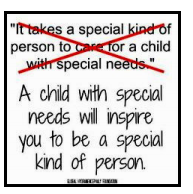
Imagem associada para resolução da questão

(source: https://br.pinterest.com/pin/444167581971867250/, accessed in Septmber/2016.)


Qual das frases a seguir melhor resume a mensagem do texto acima?

Alternativas
Respostas
81: E
82: C
83: D
84: D
85: C
86: E
87: B
88: B
89: A
90: B
91: B
92: B
93: E
94: A
95: B
96: C
97: E
98: C
99: A
100: D