Questões de Vestibular
Sobre interpretação de texto | reading comprehension em inglês
Foram encontradas 5.175 questões


Leia o texto para responder à questão.
The Red Cross
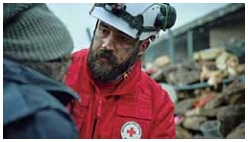
The International Red Cross movement started in 1863 and was inspired by Swiss businessman Henry Dunant. The suffering of thousands of men on both sides of the Battle of Solferino in 1859 upset Dunant. Many were left to die due to lack of care. He proposed creating national relief societies, made up of volunteers, trained in peacetime to provide neutral and impartial help to relieve suffering in times of war.
In response to these ideas, a committee (which later became the International Committee of the Red Cross) was established in Geneva. Dunant also proposed that countries adopt an international agreement, which would recognise the status of medical services and of the injured on the battlefield. This agreement was adopted in 1864.
The formation of the British Red Cross occurred during the war between France and Prussia in July 1870, Colonel Loyd-Lindsay wrote a letter to the newspaper The Times. He called for a National Society to be formed in Britain just like in other European nations. On 4 August 1870, a public meeting was held in London and a resolution passed authorizing the formation of The British National Society for Aid to the Sick and Wounded in War. It gave aid and relief to both warring armies during the Franco-Prussian War and in other wars and campaigns during the 19th century. This was done under the protection of the red cross emblem.
In 1905, the British National Society for Aid to the Sick and Wounded in War was renamed as the British Red Cross. The Red Cross needed many skilled volunteers for its wartime role. The Voluntary Aid Scheme was introduced in 1909 and ensured that Voluntary Aid Detachments were formed across the United Kingdom. Their members would provide aid to the territorial medical forces in times of war.
(www.redcross.org.uk. Adaptado.)
Leia o texto para responder à questão.
The Red Cross
The International Red Cross movement started in 1863 and was inspired by Swiss businessman Henry Dunant. The suffering of thousands of men on both sides of the Battle of Solferino in 1859 upset Dunant. Many were left to die due to lack of care. He proposed creating national relief societies, made up of volunteers, trained in peacetime to provide neutral and impartial help to relieve suffering in times of war.
In response to these ideas, a committee (which later became the International Committee of the Red Cross) was established in Geneva. Dunant also proposed that countries adopt an international agreement, which would recognise the status of medical services and of the injured on the battlefield. This agreement was adopted in 1864.
The formation of the British Red Cross occurred during the war between France and Prussia in July 1870, Colonel Loyd-Lindsay wrote a letter to the newspaper The Times. He called for a National Society to be formed in Britain just like in other European nations. On 4 August 1870, a public meeting was held in London and a resolution passed authorizing the formation of The British National Society for Aid to the Sick and Wounded in War. It gave aid and relief to both warring armies during the Franco-Prussian War and in other wars and campaigns during the 19th century. This was done under the protection of the red cross emblem.
In 1905, the British National Society for Aid to the Sick and Wounded in War was renamed as the British Red Cross. The Red Cross needed many skilled volunteers for its wartime role. The Voluntary Aid Scheme was introduced in 1909 and ensured that Voluntary Aid Detachments were formed across the United Kingdom. Their members would provide aid to the territorial medical forces in times of war.
(www.redcross.org.uk. Adaptado.)
Leia o texto para responder à questão.
The Red Cross
The International Red Cross movement started in 1863 and was inspired by Swiss businessman Henry Dunant. The suffering of thousands of men on both sides of the Battle of Solferino in 1859 upset Dunant. Many were left to die due to lack of care. He proposed creating national relief societies, made up of volunteers, trained in peacetime to provide neutral and impartial help to relieve suffering in times of war.
In response to these ideas, a committee (which later became the International Committee of the Red Cross) was established in Geneva. Dunant also proposed that countries adopt an international agreement, which would recognise the status of medical services and of the injured on the battlefield. This agreement was adopted in 1864.
The formation of the British Red Cross occurred during the war between France and Prussia in July 1870, Colonel Loyd-Lindsay wrote a letter to the newspaper The Times. He called for a National Society to be formed in Britain just like in other European nations. On 4 August 1870, a public meeting was held in London and a resolution passed authorizing the formation of The British National Society for Aid to the Sick and Wounded in War. It gave aid and relief to both warring armies during the Franco-Prussian War and in other wars and campaigns during the 19th century. This was done under the protection of the red cross emblem.
In 1905, the British National Society for Aid to the Sick and Wounded in War was renamed as the British Red Cross. The Red Cross needed many skilled volunteers for its wartime role. The Voluntary Aid Scheme was introduced in 1909 and ensured that Voluntary Aid Detachments were formed across the United Kingdom. Their members would provide aid to the territorial medical forces in times of war.
(www.redcross.org.uk. Adaptado.)
Leia o texto para responder à questão.
The Red Cross
The International Red Cross movement started in 1863 and was inspired by Swiss businessman Henry Dunant. The suffering of thousands of men on both sides of the Battle of Solferino in 1859 upset Dunant. Many were left to die due to lack of care. He proposed creating national relief societies, made up of volunteers, trained in peacetime to provide neutral and impartial help to relieve suffering in times of war.
In response to these ideas, a committee (which later became the International Committee of the Red Cross) was established in Geneva. Dunant also proposed that countries adopt an international agreement, which would recognise the status of medical services and of the injured on the battlefield. This agreement was adopted in 1864.
The formation of the British Red Cross occurred during the war between France and Prussia in July 1870, Colonel Loyd-Lindsay wrote a letter to the newspaper The Times. He called for a National Society to be formed in Britain just like in other European nations. On 4 August 1870, a public meeting was held in London and a resolution passed authorizing the formation of The British National Society for Aid to the Sick and Wounded in War. It gave aid and relief to both warring armies during the Franco-Prussian War and in other wars and campaigns during the 19th century. This was done under the protection of the red cross emblem.
In 1905, the British National Society for Aid to the Sick and Wounded in War was renamed as the British Red Cross. The Red Cross needed many skilled volunteers for its wartime role. The Voluntary Aid Scheme was introduced in 1909 and ensured that Voluntary Aid Detachments were formed across the United Kingdom. Their members would provide aid to the territorial medical forces in times of war.
(www.redcross.org.uk. Adaptado.)
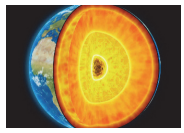
Our planet is home to subterranean lava deposits and smatterings of obsidian—black volcanic glass. Scalding groundwater bubbles to the surface in places. In such a landscape, you remember that the planet’s hard exterior is so thin that we call it a crust. Its superheated interior burns with an estimated forty-four trillion watts of power. Heat mined from underground is called geothermal and can be used to produce steam, spin a turbine, and generate electricity. Until recently, humans have tended to harvest small quantities in the rare places where it surfaces, such as hot springs. The biggest drawback is drilling miles through hot rock, safely. If scientists can do that, next-generation geothermal power could supply clean energy for eons. Right now, geothermal energy meets a puny portion of humanity’s electricity and heating needs. Fossil fuels power about eighty per cent of human activity, pumping out carbon dioxide and short-circuiting our climate to catastrophic effect. Converts argue that geothermal checks three key boxes: it is carbon-free, available everywhere, and effectively unlimited. It is also baseload, which means that, unlike solar panels or wind, it provides a steady flow of energy. “Over the last two years, I have watched this exponential spinup of activity in geothermal,” a drilling expert said. But there is a risk of moon shots: often, they miss. “There’s basically zero chance that you’re going to develop a moon-shot technology and have it be commercial in five years, on a large-scale”, said Mark Jacobson, an engineering professor. That’s how long humanity has to lower emissions before climatic devastation. “There’s a very decent chance you can do that with wind and solar,” he said. Perhaps, when resources and time are finite, trying and failing could be worse than not trying at all.
New Yorker. March 2025. Adaptado.
De acordo com o texto, atualmente a exploração do calor gerado nas regiões subterrâneas do planeta
Considere o texto a seguir:
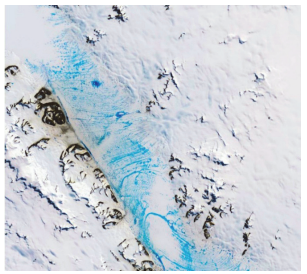
Ice flows across Antarctica and continues to do so as it reaches the edge of the land mass and extends over the ocean. The huge floating tongues of ice often remain attached to the continent. Anything that remains grounded on the land is part of the Antarctic ice sheet; the floating part is an ice shelf. Floating ice shelves surround three-quarters of Antarctica’s coast and make up about 11% of its total area. One of the largest, the Ross Ice Shelf, is roughly the size of France. The George VI Ice Shelf is shown in the image, taken by NASA’s Landsat 8 in January 2020.
It may seem intuitive that all the ice added to the ocean from melting ice shelves would raise global sea level, but that’s not the case. By Archimedes’s principle, ice shelves floating on the water have already displaced their own weight, so their disintegration or melting won’t change the water level. Ice shelves do, however, regulate the speed of glaciers on Antarctica’s land. Ice shelves act to hold glaciers back. Take the shelf away, and the glaciers are free to speed up and flow into the ocean. Any ice and liquid water that the glaciers take with them will raise sea level. Of Earth’s fresh water, 70% is stored in Antarctica’s ice; that is the equivalent of about 58 meters of sea-level rise if all of it were to melt.
Buzzard, S. “The surface hydrology of Antarctica’s floating ice”. Physics Today 75, 28-33 (2022). Adaptado.
Segundo o texto, é correto afirmar:

 Conheça nossos planos