Questões de Vestibular Sobre interpretação de texto | reading comprehension em inglês

Foram encontradas 5.145 questões

Q4038072 Inglês

Leia a tirinha do cartunista Brian Crane.
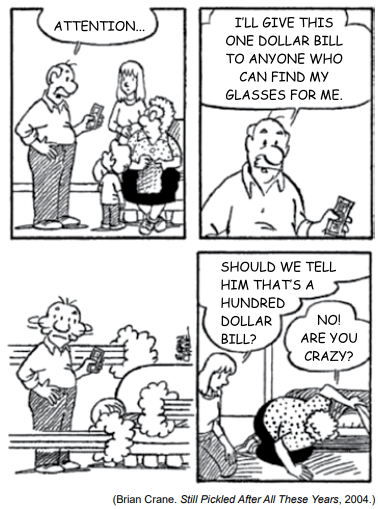


Imagem associada para resolução da questão


O efeito de humor da tirinha decorre, sobretudo, do fato de as mulheres

Alternativas
Q4038070 Inglês
    Autonomous vehicles — also known as self-driving cars or self-driving vehicles — are vehicles that can navigate and operate safely with little or no human input or intervention. Autonomous vehicles are equipped with autonomous driving systems that use a combination of sensors, computing, and software to safely perceive their environment and execute driving tasks.
   Autonomous driving offers a range of benefits. One of the most significant advantages is the potential to improve road safety by reducing vehicle collisions, many of which are caused by human error. Autonomous vehicles are designed to follow traffic laws, monitor blind spots, and detect dangers faster than human drivers.
    Autonomous vehicles also have the potential to deliver freedom of mobility for people who are unable to drive by expanding access to transportation options. They can navigate traffic jams and complex urban environments efficiently, which can help reduce traffic congestion and lower emissions — particularly as the transportation industry moves away from internal combustion engines and toward electric vehicles.

(www.nvidia.com. Adaptado.)
De acordo com o segundo parágrafo, os veículos autônomos tendem a melhorar a segurança nas estradas pois
Alternativas
Q4038068 Inglês
    Autonomous vehicles — also known as self-driving cars or self-driving vehicles — are vehicles that can navigate and operate safely with little or no human input or intervention. Autonomous vehicles are equipped with autonomous driving systems that use a combination of sensors, computing, and software to safely perceive their environment and execute driving tasks.
   Autonomous driving offers a range of benefits. One of the most significant advantages is the potential to improve road safety by reducing vehicle collisions, many of which are caused by human error. Autonomous vehicles are designed to follow traffic laws, monitor blind spots, and detect dangers faster than human drivers.
    Autonomous vehicles also have the potential to deliver freedom of mobility for people who are unable to drive by expanding access to transportation options. They can navigate traffic jams and complex urban environments efficiently, which can help reduce traffic congestion and lower emissions — particularly as the transportation industry moves away from internal combustion engines and toward electric vehicles.

(www.nvidia.com. Adaptado.)
No excerto do primeiro parágrafo “Autonomous vehicles — also known as self-driving cars or self-driving vehicles”, o trecho sublinhado apresenta
Alternativas
Q4038067 Inglês
    Autonomous vehicles — also known as self-driving cars or self-driving vehicles — are vehicles that can navigate and operate safely with little or no human input or intervention. Autonomous vehicles are equipped with autonomous driving systems that use a combination of sensors, computing, and software to safely perceive their environment and execute driving tasks.
   Autonomous driving offers a range of benefits. One of the most significant advantages is the potential to improve road safety by reducing vehicle collisions, many of which are caused by human error. Autonomous vehicles are designed to follow traffic laws, monitor blind spots, and detect dangers faster than human drivers.
    Autonomous vehicles also have the potential to deliver freedom of mobility for people who are unable to drive by expanding access to transportation options. They can navigate traffic jams and complex urban environments efficiently, which can help reduce traffic congestion and lower emissions — particularly as the transportation industry moves away from internal combustion engines and toward electric vehicles.

(www.nvidia.com. Adaptado.)
According to the text, autonomous vehicles
Alternativas
Ano: 2025 Banca: VUNESP Órgão: UNIFIPA Prova: VUNESP - 2025 - UNIFIPA - Vestibular Medicina - Conhecimentos Gerais |
Q3966813 Inglês
Leia o texto e analise o gráfico para responder à questão.


Life Expectancy (1900-2023)


    People are living longer. In 1900, the average life expectancy of a newborn was 32 years. By 2021 this had more than doubled to 71 years.

    The large reduction in child mortality has played an important role in increasing life expectancy. But life expectancy has increased at all ages. Infants, children, adults, and the elderly are all less likely to die than in the past, and death is being delayed. This remarkable shift results from advances in medicine, public health, and living standards. Along with it, many predictions of the “limit” of life expectancy have been broken.


Q83_86.png (357×301)

(Saloni Dattani et al. https://ourworldindata.org, 2023. Adaptado.)
According to the chart,
Alternativas
Ano: 2025 Banca: VUNESP Órgão: UNIFIPA Prova: VUNESP - 2025 - UNIFIPA - Vestibular Medicina - Conhecimentos Gerais |
Q3966812 Inglês
Leia o texto e analise o gráfico para responder à questão.


Life Expectancy (1900-2023)


    People are living longer. In 1900, the average life expectancy of a newborn was 32 years. By 2021 this had more than doubled to 71 years.

    The large reduction in child mortality has played an important role in increasing life expectancy. But life expectancy has increased at all ages. Infants, children, adults, and the elderly are all less likely to die than in the past, and death is being delayed. This remarkable shift results from advances in medicine, public health, and living standards. Along with it, many predictions of the “limit” of life expectancy have been broken.


Q83_86.png (357×301)

(Saloni Dattani et al. https://ourworldindata.org, 2023. Adaptado.)
O trecho do texto que pode ser confirmado no gráfico é:
Alternativas
Ano: 2025 Banca: VUNESP Órgão: UNIFIPA Prova: VUNESP - 2025 - UNIFIPA - Vestibular Medicina - Conhecimentos Gerais |
Q3966810 Inglês
Leia o texto para responder à questão.


Admixture’s impact on Brazilian population evolution and health


    Brazil is a vast continental country home to the largest population in Latin America and boasts the world’s largest recently admixed population1 . The colonization process brought approximately 5 million Europeans to Brazil, alongside the forced migration of at least 5 million Africans and the decimation of Indigenous populations, which once included more than 10 million people speaking more than 1000 languages. This distinctive historical interplay shaped a complex mosaic of genetic diversity, underscoring the importance of detailed genomic studies. Nevertheless, similar to other populations in the Global South2 , the Brazilian population remains notably underrepresented in genomic research, where there is a lack of studies investigating the effects of this population’s admixture on its evolution, diversity, and health status.

    To address these gaps, a research group generated 2723 high-coverage whole-genome sequences of the Brazilian population, encompassing urban, rural, and riverine communities from all five geographical regions of Brazil. This dataset reflects a diverse group of ethnic backgrounds, including Afro-Brazilians and descendants of Indigenous people, and provides a comprehensive representation of Brazilian genomic diversity.


(Kelly Nunes et al. www.science.org, 15.05.2025. Adaptado.)


1admixed population: group of individuals formed through interbreeding of two or more previously isolated populations.

2Global South: a group of countries mainly located in the Southern Hemisphere that are often characterized as developing, less developed or underdeveloped.
No trecho do segundo parágrafo “To address these gaps, a research group generated 2 723 high-coverage whole-genome sequences”, a expressão sublinhada refere-se, no contexto,
Alternativas
Ano: 2025 Banca: VUNESP Órgão: UNIFIPA Prova: VUNESP - 2025 - UNIFIPA - Vestibular Medicina - Conhecimentos Gerais |
Q3966809 Inglês
Leia o texto para responder à questão.


Admixture’s impact on Brazilian population evolution and health


    Brazil is a vast continental country home to the largest population in Latin America and boasts the world’s largest recently admixed population1 . The colonization process brought approximately 5 million Europeans to Brazil, alongside the forced migration of at least 5 million Africans and the decimation of Indigenous populations, which once included more than 10 million people speaking more than 1000 languages. This distinctive historical interplay shaped a complex mosaic of genetic diversity, underscoring the importance of detailed genomic studies. Nevertheless, similar to other populations in the Global South2 , the Brazilian population remains notably underrepresented in genomic research, where there is a lack of studies investigating the effects of this population’s admixture on its evolution, diversity, and health status.

    To address these gaps, a research group generated 2723 high-coverage whole-genome sequences of the Brazilian population, encompassing urban, rural, and riverine communities from all five geographical regions of Brazil. This dataset reflects a diverse group of ethnic backgrounds, including Afro-Brazilians and descendants of Indigenous people, and provides a comprehensive representation of Brazilian genomic diversity.


(Kelly Nunes et al. www.science.org, 15.05.2025. Adaptado.)


1admixed population: group of individuals formed through interbreeding of two or more previously isolated populations.

2Global South: a group of countries mainly located in the Southern Hemisphere that are often characterized as developing, less developed or underdeveloped.
In the excerpt from the first paragraph “Nevertheless, similar to other populations in the Global South”, the underlined word expresses
Alternativas
Ano: 2025 Banca: VUNESP Órgão: UNIFIPA Prova: VUNESP - 2025 - UNIFIPA - Vestibular Medicina - Conhecimentos Gerais |
Q3966807 Inglês
Leia o texto para responder à questão.


Admixture’s impact on Brazilian population evolution and health


    Brazil is a vast continental country home to the largest population in Latin America and boasts the world’s largest recently admixed population1 . The colonization process brought approximately 5 million Europeans to Brazil, alongside the forced migration of at least 5 million Africans and the decimation of Indigenous populations, which once included more than 10 million people speaking more than 1000 languages. This distinctive historical interplay shaped a complex mosaic of genetic diversity, underscoring the importance of detailed genomic studies. Nevertheless, similar to other populations in the Global South2 , the Brazilian population remains notably underrepresented in genomic research, where there is a lack of studies investigating the effects of this population’s admixture on its evolution, diversity, and health status.

    To address these gaps, a research group generated 2723 high-coverage whole-genome sequences of the Brazilian population, encompassing urban, rural, and riverine communities from all five geographical regions of Brazil. This dataset reflects a diverse group of ethnic backgrounds, including Afro-Brazilians and descendants of Indigenous people, and provides a comprehensive representation of Brazilian genomic diversity.


(Kelly Nunes et al. www.science.org, 15.05.2025. Adaptado.)


1admixed population: group of individuals formed through interbreeding of two or more previously isolated populations.

2Global South: a group of countries mainly located in the Southern Hemisphere that are often characterized as developing, less developed or underdeveloped.
According to the first paragraph, one of the facts about the Brazilian population is:
Alternativas
Ano: 2025 Banca: FUVEST Órgão: FUVEST Prova: FUVEST - 2025 - FUVEST - Vestibular - 1ª Fase - Conhecimentos Gerais |
Q3946332 Inglês
    During the nineteen-seventies and eighties, a researcher at the University of Washington started noticing something strange in the college’s experimental forest. For years, a blight of caterpillars had been munching the trees to death. Then, suddenly, the caterpillars themselves started dying off. The forest was able to recover. But what had happened to the caterpillars? The researcher, David Rhoades, who had a background in chemistry and zoology, found that the trees in the forest had changed the chemistry of their leaves, to the detriment of the caterpillars. Even more surprising, trees that had been nibbled by caterpillars weren’t the only ones that had changed their chemistry. Some were changing their leaves before caterpillars reached them, as if they’d received a warning. A shocking possibility presented itself: the trees were signalling to one another.
    Zoë Schlanger recounts Rhoades’s story in her new book, “The Light Eaters: How the Unseen World of Plant Intelligence Offers a New Understanding of Life on Earth.”
    The contemporary world of botany that Schlanger explores in “The Light Eaters” is still divided over the matter of how plants sense the world and whether they can be said to communicate. But, in the past twenty years, the idea that plants communicate has gained broader acceptance. Research in recent decades has shown garden-variety lima beans protecting themselves by synthesizing and releasing chemicals to summon the predators of the insects that eat them; lab-grown pea shoots navigating mazes and responding to the sound of running water; and a chameleonic vine in the jungles of Chile mimicking the shape and color of nearby plants by a mechanism that’s not yet understood.
    Schlanger acknowledges that some of the research yields as many questions as answers. It’s not clear how the vine gathers information about surrounding plants to perform its mimicry.


New Yorker. 12 June 2024. Adaptado.
O caso da vinha chilena apresentado no texto suscita questionamentos científicos quanto
Alternativas
Ano: 2025 Banca: FUVEST Órgão: FUVEST Prova: FUVEST - 2025 - FUVEST - Vestibular - 1ª Fase - Conhecimentos Gerais |
Q3946331 Inglês
    During the nineteen-seventies and eighties, a researcher at the University of Washington started noticing something strange in the college’s experimental forest. For years, a blight of caterpillars had been munching the trees to death. Then, suddenly, the caterpillars themselves started dying off. The forest was able to recover. But what had happened to the caterpillars? The researcher, David Rhoades, who had a background in chemistry and zoology, found that the trees in the forest had changed the chemistry of their leaves, to the detriment of the caterpillars. Even more surprising, trees that had been nibbled by caterpillars weren’t the only ones that had changed their chemistry. Some were changing their leaves before caterpillars reached them, as if they’d received a warning. A shocking possibility presented itself: the trees were signalling to one another.
    Zoë Schlanger recounts Rhoades’s story in her new book, “The Light Eaters: How the Unseen World of Plant Intelligence Offers a New Understanding of Life on Earth.”
    The contemporary world of botany that Schlanger explores in “The Light Eaters” is still divided over the matter of how plants sense the world and whether they can be said to communicate. But, in the past twenty years, the idea that plants communicate has gained broader acceptance. Research in recent decades has shown garden-variety lima beans protecting themselves by synthesizing and releasing chemicals to summon the predators of the insects that eat them; lab-grown pea shoots navigating mazes and responding to the sound of running water; and a chameleonic vine in the jungles of Chile mimicking the shape and color of nearby plants by a mechanism that’s not yet understood.
    Schlanger acknowledges that some of the research yields as many questions as answers. It’s not clear how the vine gathers information about surrounding plants to perform its mimicry.


New Yorker. 12 June 2024. Adaptado.
Conforme o texto, a experiência conduzida por David Rhoades, na floresta experimental da Universidade de Washington, tornou-se marcante para a botânica, por revelar a
Alternativas
Ano: 2025 Banca: FUVEST Órgão: FUVEST Prova: FUVEST - 2025 - FUVEST - Vestibular - 1ª Fase - Conhecimentos Gerais |
Q3946321 Inglês


    Think for a minute about the little bumps on your tongue. You probably saw a diagram of those taste bud arrangements once in a biology textbook — sweet sensors at the tip, salty on either side, sour behind them, bitter in the back.
    But the idea that specific tastes are confined to certain areas of the tongue is a myth that “persists in the collective consciousness, despite decades of research debunking it”, according to a review published this month in The New England Journal of Medicine. Also wrong: the notion that taste is limited to the mouth.
    The old diagram, which has been used in many textbooks over the years, originated in a study published by David Hanig, a German scientist, in 1901. But the scientist was not suggesting that various tastes are segregated on the tongue. He was actually measuring the sensitivity of different areas, said Paul Breslin, a researcher at Monell Chemical Senses Center in Philadelphia. “What he found was that you could detect things at a lower concentration in one part relative to another,” Dr. Breslin said. The tip of the tongue, for example, is dense with sweet sensors but contains the others as well.
    The map’s mistakes are easy to confirm. If you place a lemon wedge at the tip of your tongue, it will taste sour, and if you put a bit of honey toward the side, it will be sweet.
    The perception of taste is a remarkably complex process, starting from that first encounter with the tongue. Taste cells have a variety of sensors that signal the brain when they encounter nutrients or toxins. For some tastes, tiny pores in cell membranes let taste chemicals in.
    Such taste receptors aren’t limited to the tongue; they are also found in the gastrointestinal tract, liver, pancreas, fat cells, brain, muscle cells, thyroid and lungs. We don’t generally think of these organs as tasting anything, but they use the receptors to pick up the presence of various molecules and metabolize them, said Diego Bohórquez, a self-described gut-brain neuroscientist at Duke University. For example, when the gut notices sugar in food, it tells the brain to alert other organs to get ready for digestion.


New York Times. May 29, 2024. Adaptado.
O texto informa que, de acordo com Paul Breslin, a interpretação do estudo de Hanig foi equivocada, porque
Alternativas
Ano: 2025 Banca: FUVEST Órgão: FUVEST Prova: FUVEST - 2025 - FUVEST - Vestibular - 1ª Fase - Conhecimentos Gerais |
Q3946320 Inglês


    Think for a minute about the little bumps on your tongue. You probably saw a diagram of those taste bud arrangements once in a biology textbook — sweet sensors at the tip, salty on either side, sour behind them, bitter in the back.
    But the idea that specific tastes are confined to certain areas of the tongue is a myth that “persists in the collective consciousness, despite decades of research debunking it”, according to a review published this month in The New England Journal of Medicine. Also wrong: the notion that taste is limited to the mouth.
    The old diagram, which has been used in many textbooks over the years, originated in a study published by David Hanig, a German scientist, in 1901. But the scientist was not suggesting that various tastes are segregated on the tongue. He was actually measuring the sensitivity of different areas, said Paul Breslin, a researcher at Monell Chemical Senses Center in Philadelphia. “What he found was that you could detect things at a lower concentration in one part relative to another,” Dr. Breslin said. The tip of the tongue, for example, is dense with sweet sensors but contains the others as well.
    The map’s mistakes are easy to confirm. If you place a lemon wedge at the tip of your tongue, it will taste sour, and if you put a bit of honey toward the side, it will be sweet.
    The perception of taste is a remarkably complex process, starting from that first encounter with the tongue. Taste cells have a variety of sensors that signal the brain when they encounter nutrients or toxins. For some tastes, tiny pores in cell membranes let taste chemicals in.
    Such taste receptors aren’t limited to the tongue; they are also found in the gastrointestinal tract, liver, pancreas, fat cells, brain, muscle cells, thyroid and lungs. We don’t generally think of these organs as tasting anything, but they use the receptors to pick up the presence of various molecules and metabolize them, said Diego Bohórquez, a self-described gut-brain neuroscientist at Duke University. For example, when the gut notices sugar in food, it tells the brain to alert other organs to get ready for digestion.


New York Times. May 29, 2024. Adaptado.
Sobre os receptores gustativos e sua distribuição corporal, o texto sugere que
Alternativas
Ano: 2025 Banca: FUVEST Órgão: FUVEST Prova: FUVEST - 2025 - FUVEST - Vestibular - 1ª Fase - Conhecimentos Gerais |
Q3946318 Inglês


   Researchers investigated the quantities of thousands of muscle proteins and found a possible new explanation for muscle memory. A study showed for the first time that muscles "remember" training at the protein level. It is often thought that the effects of exercise are short-lived, and a break from the gym can cause stress over muscle loss. However, the research has shown that this stress is partly unnecessary, as the effects of resistance training persist in muscles for up to two months and the gains are fast when training is started again. But what mechanisms and changes at the cellular and molecular levels explain muscle memory? In the study, ten weeks of resistance training was followed by a break of the same length and then followed by another ten weeks of resistance training. Using the proteomics method, it was possible to study the quantities of over 3,000 muscle proteins using advanced mass spectrometry equipment. The study found two types of change profiles in muscle proteins. Some proteins changed as a result of training, returned to their pre-training state during the break, and changed again during the new training period similarly to the first training period. These included proteins related to aerobic metabolism. Another group of proteins changed as a result of training and remained changed during the break and after the new training period. Among these proteins were several calcium-binding proteins, such as calpain-2, whose gene has recently been identified to retain a memory trace even after a training break. "At the level of the number of muscle nuclei and the memory traces of genes, that is, epigenetics, long-term responses that persist even after a break and possibly explain 'muscle memory' have previously been observed," says a researcher. "Now, for the first time, we have shown that muscles 'remember' previous resistance training at the protein level for at least two and a half months."


Disponível em https://jyu.fi/en/news/. 14 April 2025. Adaptado.
Segundo o texto, os experimentos demonstram que
Alternativas
Ano: 2025 Banca: FUVEST Órgão: FUVEST Prova: FUVEST - 2025 - FUVEST - Vestibular - 1ª Fase - Conhecimentos Gerais |
Q3946311 Inglês
Nearly a century ago, Edwin Hubble discovered that the universe is getting larger. Modern measurements of how fast it is expanding disagree, however, suggesting that our understanding of the laws of physics might be off. Everyone expected the sharp vision of the James Webb Space Telescope to bring the answer into focus. But a long-awaited analysis of the telescope’s observations released late Monday evening once again gleans conflicting expansion rates from different types of data, while homing in on possible sources of error at the heart of the conflict.

Two rival teams have led the effort to measure the cosmic expansion rate, which is known as the Hubble constant, or H0. One of these teams, led by Adam Riess of Johns Hopkins University, has consistently measured H0 to be about 8 percent higher than the theoretical prediction for how fast space should be expanding, based on the cosmos’s known ingredients and governing equations. This discrepancy, known as the Hubble tension, suggests that the theoretical model of the cosmos might be missing something—some extra ingredient or effect that speeds up cosmic expansion.

Riess and his team released their latest measurement of H0 based on Webb data this spring, getting a value that agrees with their earlier estimates.

But for years a rival team led by Wendy Freedman of the University of Chicago has urged caution, arguing that cleaner measurements were needed. Her team’s own measurements of H0 have invariably landed closer than Riess’ to the theoretical prediction, implying that the Hubble tension may not be real.

Since the Webb telescope started taking data in 2022, the astrophysics community has awaited Freedman’s multipronged analysis using the telescope’s observations of three types of stars. Now, the results are in: Two types of stars yield H0 estimates that align with the theoretical prediction, while the third—the same type of star Riess uses—matches his team’s higher H0 value.


Disponível em https://wired.com/. 08 Sep 2024. Adaptado.
De acordo com o texto, a abordagem metodológica da equipe de Adam Riess¬
Alternativas
Ano: 2025 Banca: FUVEST Órgão: FUVEST Prova: FUVEST - 2025 - FUVEST - Vestibular - 1ª Fase - Conhecimentos Gerais |
Q3946310 Inglês
Nearly a century ago, Edwin Hubble discovered that the universe is getting larger. Modern measurements of how fast it is expanding disagree, however, suggesting that our understanding of the laws of physics might be off. Everyone expected the sharp vision of the James Webb Space Telescope to bring the answer into focus. But a long-awaited analysis of the telescope’s observations released late Monday evening once again gleans conflicting expansion rates from different types of data, while homing in on possible sources of error at the heart of the conflict.

Two rival teams have led the effort to measure the cosmic expansion rate, which is known as the Hubble constant, or H0. One of these teams, led by Adam Riess of Johns Hopkins University, has consistently measured H0 to be about 8 percent higher than the theoretical prediction for how fast space should be expanding, based on the cosmos’s known ingredients and governing equations. This discrepancy, known as the Hubble tension, suggests that the theoretical model of the cosmos might be missing something—some extra ingredient or effect that speeds up cosmic expansion.

Riess and his team released their latest measurement of H0 based on Webb data this spring, getting a value that agrees with their earlier estimates.

But for years a rival team led by Wendy Freedman of the University of Chicago has urged caution, arguing that cleaner measurements were needed. Her team’s own measurements of H0 have invariably landed closer than Riess’ to the theoretical prediction, implying that the Hubble tension may not be real.

Since the Webb telescope started taking data in 2022, the astrophysics community has awaited Freedman’s multipronged analysis using the telescope’s observations of three types of stars. Now, the results are in: Two types of stars yield H0 estimates that align with the theoretical prediction, while the third—the same type of star Riess uses—matches his team’s higher H0 value.


Disponível em https://wired.com/. 08 Sep 2024. Adaptado.
Com base no texto, a principal expectativa em relação ao telescópio James Webb estava associada a 
Alternativas
Ano: 2025 Banca: FUVEST Órgão: FUVEST Prova: FUVEST - 2025 - FUVEST - Vestibular - 1ª Fase - Conhecimentos Gerais |
Q3946278 Inglês
Imagem associada para resolução da questão


Our planet is home to subterranean lava deposits and smatterings of obsidian—black volcanic glass. Scalding groundwater bubbles to the surface in places. In such a landscape, you remember that the planet’s hard exterior is so thin that we call it a crust. Its superheated interior burns with an estimated forty-four trillion watts of power. Heat mined from underground is called geothermal and can be used to produce steam, spin a turbine, and generate electricity. Until recently, humans have tended to harvest small quantities in the rare places where it surfaces, such as hot springs. The biggest drawback is drilling miles through hot rock, safely. If scientists can do that, next-generation geothermal power could supply clean energy for eons. Right now, geothermal energy meets a puny portion of humanity’s electricity and heating needs. Fossil fuels power about eighty per cent of human activity, pumping out carbon dioxide and short-circuiting our climate to catastrophic effect. Converts argue that geothermal checks three key boxes: it is carbon-free, available everywhere, and effectively unlimited. It is also baseload, which means that, unlike solar panels or wind, it provides a steady flow of energy. “Over the last two years, I have watched this exponential spinup of activity in geothermal,” a drilling expert said. But there is a risk of moon shots: often, they miss. “There’s basically zero chance that you’re going to develop a moon-shot technology and have it be commercial in five years, on a large-scale”, said Mark Jacobson, an engineering professor. That’s how long humanity has to lower emissions before climatic devastation. “There’s a very decent chance you can do that with wind and solar,” he said. Perhaps, when resources and time are finite, trying and failing could be worse than not trying at all.
New Yorker. March 2025. Adaptado.

De acordo com o texto, atualmente a exploração do calor gerado nas regiões subterrâneas do planeta
Alternativas
Ano: 2025 Banca: FUVEST Órgão: FUVEST Prova: FUVEST - 2025 - FUVEST - Vestibular - 1ª Fase - Conhecimentos Gerais |
Q3946277 Inglês

Considere o texto a seguir:


Imagem associada para resolução da questão


    Ice flows across Antarctica and continues to do so as it reaches the edge of the land mass and extends over the ocean. The huge floating tongues of ice often remain attached to the continent. Anything that remains grounded on the land is part of the Antarctic ice sheet; the floating part is an ice shelf. Floating ice shelves surround three-quarters of Antarctica’s coast and make up about 11% of its total area. One of the largest, the Ross Ice Shelf, is roughly the size of France. The George VI Ice Shelf is shown in the image, taken by NASA’s Landsat 8 in January 2020.

    It may seem intuitive that all the ice added to the ocean from melting ice shelves would raise global sea level, but that’s not the case. By Archimedes’s principle, ice shelves floating on the water have already displaced their own weight, so their disintegration or melting won’t change the water level. Ice shelves do, however, regulate the speed of glaciers on Antarctica’s land. Ice shelves act to hold glaciers back. Take  the shelf away, and the glaciers are free to speed up and flow into the ocean. Any ice and liquid water that the glaciers take with them will raise sea level. Of Earth’s fresh water, 70% is stored in Antarctica’s ice; that is the equivalent of about 58 meters of sea-level rise if all of it were to melt.


Buzzard, S. “The surface hydrology of Antarctica’s floating ice”. Physics Today 75, 28-33 (2022). Adaptado.


Segundo o texto, é correto afirmar:

Alternativas
Ano: 2025 Banca: ECONRIO Órgão: FACMAR Prova: ECONRIO - 2025 - FACMAR - Vestibular Medicina - Primeiro Semestre 2026 |
Q3902322 Inglês

TEXTO 1


THE IMPACT OF SOCIAL MEDIA ON SELF-IDENTITY FORMATION: A PSYCHOLOGICAL AND SOCIOLOGICAL PERSPECTIVE


Berumen Victoria


Available at: https://www.stasson.org/the-impact-of-social-media-on-self-identity-formation-a-psychological-and-sociological-perspective/. Accessed August 30th, 2025. (Adapted).

In its concluding paragraph, the text claims that social media:
Alternativas
Ano: 2025 Banca: ECONRIO Órgão: FACMAR Prova: ECONRIO - 2025 - FACMAR - Vestibular Medicina - Primeiro Semestre 2026 |
Q3902321 Inglês

TEXTO 1


THE IMPACT OF SOCIAL MEDIA ON SELF-IDENTITY FORMATION: A PSYCHOLOGICAL AND SOCIOLOGICAL PERSPECTIVE


Berumen Victoria


Available at: https://www.stasson.org/the-impact-of-social-media-on-self-identity-formation-a-psychological-and-sociological-perspective/. Accessed August 30th, 2025. (Adapted).

The following sentence presents a negative aspect of social media:
Alternativas
Respostas
1: B
2: B
3: B
4: D
5: A
6: C
7: A
8: E
9: B
10: E
11: B
12: B
13: D
14: B
15: C
16: A
17: A
18: C
19: C
20: B