Questões de Vestibular Sobre interpretação de texto | reading comprehension em inglês

Foram encontradas 5.299 questões

Ano: 2025 Banca: FGV Órgão: FEMPAR Prova: FGV - 2025 - FEMPAR - Vestibular - Medicina |
Q3840974 Inglês
Read Text II below and answer the question that follow it.

Text II


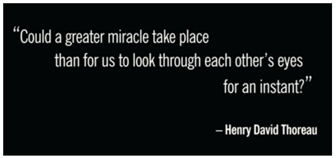
Q20_23.png (336×158)

From: https://cdn.quotesgram.com/img/31/9/1932969763-Thoreau-empathyquote.jpg
The phrasal verb “take place” in this poster means to 
Alternativas
Ano: 2025 Banca: FGV Órgão: FEMPAR Prova: FGV - 2025 - FEMPAR - Vestibular - Medicina |
Q3840972 Inglês
Read Text II below and answer the question that follow it.

Text II


Q20_23.png (336×158)

From: https://cdn.quotesgram.com/img/31/9/1932969763-Thoreau-empathyquote.jpg
The function of the question proposed in this poster is to 
Alternativas
Ano: 2025 Banca: FGV Órgão: FEMPAR Prova: FGV - 2025 - FEMPAR - Vestibular - Medicina |
Q3840971 Inglês
Read Text II below and answer the question that follow it.

Text II


Q20_23.png (336×158)

From: https://cdn.quotesgram.com/img/31/9/1932969763-Thoreau-empathyquote.jpg
This quotation implies that one should be 
Alternativas
Ano: 2025 Banca: FGV Órgão: FEMPAR Prova: FGV - 2025 - FEMPAR - Vestibular - Medicina |
Q3840970 Inglês
Read Text I below and answer the  question that follow it.


Text I


Jonathan Haidt: How to make the 'anxious generation' happy again


Academics researching wellbeing have for a long time almost unanimously agreed on one thing: over the typical lifetime, happiness tends to follow a U-shaped curve, peaking at 30, plummeting at age 50, before spiking again after 70. It’s a pattern replicated using data going back as far as the 1970s in almost 150 countries.

But around 2011, researchers noticed an astonishing reversal in this trend. “This empirical regularity has been replaced by a monotonic decrease in ill-being by age,” they reported in an NBER working paper. In plain English, younger people today are unhappier, both compared to previous generations and to their older peers. Or, to quote the title of the most recent book from Jonathan Haidt, Professor of Ethical Leadership at New York University, they are the anxious generation […].

Today, rather than playing with their friends, kids stay at home on their devices. Instead of hearing chatter and laughter in the corridor of schools, we hear the gentle tapping of screens. The social isolation many of us experienced during pandemic-induced lockdowns was nothing new for children, Haidt said. “They began social distancing as soon as they got smartphones.”

The good news for parents is that, while this trend is worrying, it is not inevitable. There are things we can do. “We can turn this around with four new norms,” Haidt proposed.

The first norm is a commitment to not give our children a smartphone until they are at least 14. “Give them a flip-phone if you want to, so they can call and text you,” he said. “But don’t give the entire world access to your child.” The second is to not allow our children to use social media until they are at least 16. “Social media is wildly inappropriate for children — you have strangers trying to talk to them, cyberbullying, explosive drama.”

The third norm is that schools should be a phone-free environment. “All schools need to be phone free from bell to bell — from the morning when kids arrive to the end when they leave,” Haidt explained.

And finally, the fourth norm involves going back to a time where parents felt more comfortable letting their kids walk to the shops or play outside with friends. “The fourth norm is to give them much more independence in the real world,” he said. “Ultimately, our mission is to restore childhood: the kind of wonderful, fun, exciting childhood we all had, which was full of conflicts, failures, exploration, adventure, risk-taking, thrills and all those emotions that you experienced not with your parents, but when you were out, away from your secure home base.”


Adapted from https://www.weforum.org/stories/2025/01/jonathan-haidt-digitaltechnology-social-media-childhood/
When the author argues that the trend “is not inevitable” (4th paragraph), he means that it is 
Alternativas
Ano: 2025 Banca: FGV Órgão: FEMPAR Prova: FGV - 2025 - FEMPAR - Vestibular - Medicina |
Q3840969 Inglês
Read Text I below and answer the  question that follow it.


Text I


Jonathan Haidt: How to make the 'anxious generation' happy again


Academics researching wellbeing have for a long time almost unanimously agreed on one thing: over the typical lifetime, happiness tends to follow a U-shaped curve, peaking at 30, plummeting at age 50, before spiking again after 70. It’s a pattern replicated using data going back as far as the 1970s in almost 150 countries.

But around 2011, researchers noticed an astonishing reversal in this trend. “This empirical regularity has been replaced by a monotonic decrease in ill-being by age,” they reported in an NBER working paper. In plain English, younger people today are unhappier, both compared to previous generations and to their older peers. Or, to quote the title of the most recent book from Jonathan Haidt, Professor of Ethical Leadership at New York University, they are the anxious generation […].

Today, rather than playing with their friends, kids stay at home on their devices. Instead of hearing chatter and laughter in the corridor of schools, we hear the gentle tapping of screens. The social isolation many of us experienced during pandemic-induced lockdowns was nothing new for children, Haidt said. “They began social distancing as soon as they got smartphones.”

The good news for parents is that, while this trend is worrying, it is not inevitable. There are things we can do. “We can turn this around with four new norms,” Haidt proposed.

The first norm is a commitment to not give our children a smartphone until they are at least 14. “Give them a flip-phone if you want to, so they can call and text you,” he said. “But don’t give the entire world access to your child.” The second is to not allow our children to use social media until they are at least 16. “Social media is wildly inappropriate for children — you have strangers trying to talk to them, cyberbullying, explosive drama.”

The third norm is that schools should be a phone-free environment. “All schools need to be phone free from bell to bell — from the morning when kids arrive to the end when they leave,” Haidt explained.

And finally, the fourth norm involves going back to a time where parents felt more comfortable letting their kids walk to the shops or play outside with friends. “The fourth norm is to give them much more independence in the real world,” he said. “Ultimately, our mission is to restore childhood: the kind of wonderful, fun, exciting childhood we all had, which was full of conflicts, failures, exploration, adventure, risk-taking, thrills and all those emotions that you experienced not with your parents, but when you were out, away from your secure home base.”


Adapted from https://www.weforum.org/stories/2025/01/jonathan-haidt-digitaltechnology-social-media-childhood/

The word “chatter” (3rd paragraph) is a reference to the sound produced by the kids’: 

Alternativas
Ano: 2025 Banca: FGV Órgão: FEMPAR Prova: FGV - 2025 - FEMPAR - Vestibular - Medicina |
Q3840968 Inglês
Read Text I below and answer the  question that follow it.


Text I


Jonathan Haidt: How to make the 'anxious generation' happy again


Academics researching wellbeing have for a long time almost unanimously agreed on one thing: over the typical lifetime, happiness tends to follow a U-shaped curve, peaking at 30, plummeting at age 50, before spiking again after 70. It’s a pattern replicated using data going back as far as the 1970s in almost 150 countries.

But around 2011, researchers noticed an astonishing reversal in this trend. “This empirical regularity has been replaced by a monotonic decrease in ill-being by age,” they reported in an NBER working paper. In plain English, younger people today are unhappier, both compared to previous generations and to their older peers. Or, to quote the title of the most recent book from Jonathan Haidt, Professor of Ethical Leadership at New York University, they are the anxious generation […].

Today, rather than playing with their friends, kids stay at home on their devices. Instead of hearing chatter and laughter in the corridor of schools, we hear the gentle tapping of screens. The social isolation many of us experienced during pandemic-induced lockdowns was nothing new for children, Haidt said. “They began social distancing as soon as they got smartphones.”

The good news for parents is that, while this trend is worrying, it is not inevitable. There are things we can do. “We can turn this around with four new norms,” Haidt proposed.

The first norm is a commitment to not give our children a smartphone until they are at least 14. “Give them a flip-phone if you want to, so they can call and text you,” he said. “But don’t give the entire world access to your child.” The second is to not allow our children to use social media until they are at least 16. “Social media is wildly inappropriate for children — you have strangers trying to talk to them, cyberbullying, explosive drama.”

The third norm is that schools should be a phone-free environment. “All schools need to be phone free from bell to bell — from the morning when kids arrive to the end when they leave,” Haidt explained.

And finally, the fourth norm involves going back to a time where parents felt more comfortable letting their kids walk to the shops or play outside with friends. “The fourth norm is to give them much more independence in the real world,” he said. “Ultimately, our mission is to restore childhood: the kind of wonderful, fun, exciting childhood we all had, which was full of conflicts, failures, exploration, adventure, risk-taking, thrills and all those emotions that you experienced not with your parents, but when you were out, away from your secure home base.”


Adapted from https://www.weforum.org/stories/2025/01/jonathan-haidt-digitaltechnology-social-media-childhood/
The phrase “as soon as” in “as soon as they got smartphones” (3rd paragraph) indicates 
Alternativas
Ano: 2025 Banca: FGV Órgão: FEMPAR Prova: FGV - 2025 - FEMPAR - Vestibular - Medicina |
Q3840967 Inglês
Read Text I below and answer the  question that follow it.


Text I


Jonathan Haidt: How to make the 'anxious generation' happy again


Academics researching wellbeing have for a long time almost unanimously agreed on one thing: over the typical lifetime, happiness tends to follow a U-shaped curve, peaking at 30, plummeting at age 50, before spiking again after 70. It’s a pattern replicated using data going back as far as the 1970s in almost 150 countries.

But around 2011, researchers noticed an astonishing reversal in this trend. “This empirical regularity has been replaced by a monotonic decrease in ill-being by age,” they reported in an NBER working paper. In plain English, younger people today are unhappier, both compared to previous generations and to their older peers. Or, to quote the title of the most recent book from Jonathan Haidt, Professor of Ethical Leadership at New York University, they are the anxious generation […].

Today, rather than playing with their friends, kids stay at home on their devices. Instead of hearing chatter and laughter in the corridor of schools, we hear the gentle tapping of screens. The social isolation many of us experienced during pandemic-induced lockdowns was nothing new for children, Haidt said. “They began social distancing as soon as they got smartphones.”

The good news for parents is that, while this trend is worrying, it is not inevitable. There are things we can do. “We can turn this around with four new norms,” Haidt proposed.

The first norm is a commitment to not give our children a smartphone until they are at least 14. “Give them a flip-phone if you want to, so they can call and text you,” he said. “But don’t give the entire world access to your child.” The second is to not allow our children to use social media until they are at least 16. “Social media is wildly inappropriate for children — you have strangers trying to talk to them, cyberbullying, explosive drama.”

The third norm is that schools should be a phone-free environment. “All schools need to be phone free from bell to bell — from the morning when kids arrive to the end when they leave,” Haidt explained.

And finally, the fourth norm involves going back to a time where parents felt more comfortable letting their kids walk to the shops or play outside with friends. “The fourth norm is to give them much more independence in the real world,” he said. “Ultimately, our mission is to restore childhood: the kind of wonderful, fun, exciting childhood we all had, which was full of conflicts, failures, exploration, adventure, risk-taking, thrills and all those emotions that you experienced not with your parents, but when you were out, away from your secure home base.”


Adapted from https://www.weforum.org/stories/2025/01/jonathan-haidt-digitaltechnology-social-media-childhood/
Based on Text I, mark the statements below as true (T) or false (F).

( ) Happiness among young people has increased compared to previous years.
( ) Today, children prefer playing with their friends at school to using a smartphone.
( ) According to Haidt, social media is harmful to children.

The statements are, respectively: 
Alternativas
Ano: 2025 Banca: CECIERJ Órgão: CEDERJ Prova: CECIERJ - 2025 - CEDERJ - Vestibular - Segundo Semestre |
Q3776531 Inglês
Bill Gates and his vision of the future of jobs with AI

By Clément Pessaux

April 29, 2025


According to Bill Gates, artificial intelligence is about to redefine the job market. Among the professions likely to be widely replaced, Gates directly mentions doctors and teachers. Why these specific sectors? AI has the ability to take on complex tasks such as medical diagnosis or personalized learning, making these services more accessible. In fact, in some developing countries where access to education and healthcare remains limited, such advancements could transform daily life.

But this progress raises concerns. Can we really do without human empathy in these fields? And what about the judgment or sensitivity that a machine can never fully reproduce?

On the other hand, there are professions that AI does not seem ready to replace. Gates specifically mentions energy experts, biologists, and developers. These jobs require specialized expertise, as well as creativity and constant adaptability in the face of environmental or technological challenges.

Creativity, strategic thinking, and empathy remain areas where humans will always have the upper hand. Although he recognizes the immense potential of AI, Gates also emphasizes the limits and the need to think about its deployment by keeping humans at the center of priorities.


Available at: https://3dvf.com/en/bill-gates-predicts-ai-willreplace-humans-in-almost-all-fields-except-these-jobs/ Access: 03 may 2025. Adapted.
According to Bill Gates, teachers and doctors are jobs that will likely be replaced by AI due to:
Alternativas
Ano: 2025 Banca: CECIERJ Órgão: CEDERJ Prova: CECIERJ - 2025 - CEDERJ - Vestibular - Segundo Semestre |
Q3776530 Inglês
Bill Gates and his vision of the future of jobs with AI

By Clément Pessaux

April 29, 2025


According to Bill Gates, artificial intelligence is about to redefine the job market. Among the professions likely to be widely replaced, Gates directly mentions doctors and teachers. Why these specific sectors? AI has the ability to take on complex tasks such as medical diagnosis or personalized learning, making these services more accessible. In fact, in some developing countries where access to education and healthcare remains limited, such advancements could transform daily life.

But this progress raises concerns. Can we really do without human empathy in these fields? And what about the judgment or sensitivity that a machine can never fully reproduce?

On the other hand, there are professions that AI does not seem ready to replace. Gates specifically mentions energy experts, biologists, and developers. These jobs require specialized expertise, as well as creativity and constant adaptability in the face of environmental or technological challenges.

Creativity, strategic thinking, and empathy remain areas where humans will always have the upper hand. Although he recognizes the immense potential of AI, Gates also emphasizes the limits and the need to think about its deployment by keeping humans at the center of priorities.


Available at: https://3dvf.com/en/bill-gates-predicts-ai-willreplace-humans-in-almost-all-fields-except-these-jobs/ Access: 03 may 2025. Adapted.
The main theme of the text is to present Bill Gates’ predictions on: 
Alternativas
Ano: 2025 Banca: CECIERJ Órgão: CEDERJ Prova: CECIERJ - 2025 - CEDERJ - Vestibular - Primeiro Semestre |
Q3776402 Inglês
The rise of reusable rockets: transforming the economics of space travel

By Adam Stockley


Various theoretical designs of reusable launch vehicles (rockets) have been tested during the history of space flight, but they generally proved too expensive or impractical to implement.  

In the 21st century, the rise in industry privatisation led to several companies taking the lead in reusable launcher development. Their focus is on fully-reusable systems.

The potential of reusable rockets to transform the economics of space travel should be evident. Even so, let’s break down the benefits and drawbacks of this technology to understand more.


The Benefits of Reusable Rockets


The most obvious benefit of a reusable rocket is cost savings. Unsurprisingly, it’s much cheaper to refurbish and relaunch a rocket than it is to build a new one. Reusable rockets also use less fuel than their expendable counterparts, making them comparatively better for the environment.


The Drawbacks of Reusable Rockets


The main disadvantage of reusable rockets is their reduced load capacity. By extension, they must be built to survive the difficulties of launch and re-entry, meaning there is much more extra stabilisation equipment. Therefore, the rockets are heavier.


The Long-Term Viability of Reusable Launchers


The bottom line is that now we have a firmer understanding of the concept of reusable launchers, their potential impact is limitless. However, there are some issues to resolve in terms of extra weight and reduced load capacity, but the space industry is very near to perhaps its biggest revolution in terms of cost reduction and accessibility.


Available at: https://www.kdcresource.com/insights-events/therise-of-reusable-rockets-transforming-the-economics-of-spacetravel/. Access 16 out. 2024. Adapted. 
The drawbacks of reusable rockets are:
Alternativas
Ano: 2025 Banca: CECIERJ Órgão: CEDERJ Prova: CECIERJ - 2025 - CEDERJ - Vestibular - Primeiro Semestre |
Q3776401 Inglês
The rise of reusable rockets: transforming the economics of space travel

By Adam Stockley


Various theoretical designs of reusable launch vehicles (rockets) have been tested during the history of space flight, but they generally proved too expensive or impractical to implement.  

In the 21st century, the rise in industry privatisation led to several companies taking the lead in reusable launcher development. Their focus is on fully-reusable systems.

The potential of reusable rockets to transform the economics of space travel should be evident. Even so, let’s break down the benefits and drawbacks of this technology to understand more.


The Benefits of Reusable Rockets


The most obvious benefit of a reusable rocket is cost savings. Unsurprisingly, it’s much cheaper to refurbish and relaunch a rocket than it is to build a new one. Reusable rockets also use less fuel than their expendable counterparts, making them comparatively better for the environment.


The Drawbacks of Reusable Rockets


The main disadvantage of reusable rockets is their reduced load capacity. By extension, they must be built to survive the difficulties of launch and re-entry, meaning there is much more extra stabilisation equipment. Therefore, the rockets are heavier.


The Long-Term Viability of Reusable Launchers


The bottom line is that now we have a firmer understanding of the concept of reusable launchers, their potential impact is limitless. However, there are some issues to resolve in terms of extra weight and reduced load capacity, but the space industry is very near to perhaps its biggest revolution in terms of cost reduction and accessibility.


Available at: https://www.kdcresource.com/insights-events/therise-of-reusable-rockets-transforming-the-economics-of-spacetravel/. Access 16 out. 2024. Adapted. 
The benefits of reusable rockets are related to their positive effect on: 
Alternativas
Ano: 2025 Banca: CECIERJ Órgão: CEDERJ Prova: CECIERJ - 2025 - CEDERJ - Vestibular - Primeiro Semestre |
Q3776400 Inglês
The rise of reusable rockets: transforming the economics of space travel

By Adam Stockley


Various theoretical designs of reusable launch vehicles (rockets) have been tested during the history of space flight, but they generally proved too expensive or impractical to implement.  

In the 21st century, the rise in industry privatisation led to several companies taking the lead in reusable launcher development. Their focus is on fully-reusable systems.

The potential of reusable rockets to transform the economics of space travel should be evident. Even so, let’s break down the benefits and drawbacks of this technology to understand more.


The Benefits of Reusable Rockets


The most obvious benefit of a reusable rocket is cost savings. Unsurprisingly, it’s much cheaper to refurbish and relaunch a rocket than it is to build a new one. Reusable rockets also use less fuel than their expendable counterparts, making them comparatively better for the environment.


The Drawbacks of Reusable Rockets


The main disadvantage of reusable rockets is their reduced load capacity. By extension, they must be built to survive the difficulties of launch and re-entry, meaning there is much more extra stabilisation equipment. Therefore, the rockets are heavier.


The Long-Term Viability of Reusable Launchers


The bottom line is that now we have a firmer understanding of the concept of reusable launchers, their potential impact is limitless. However, there are some issues to resolve in terms of extra weight and reduced load capacity, but the space industry is very near to perhaps its biggest revolution in terms of cost reduction and accessibility.


Available at: https://www.kdcresource.com/insights-events/therise-of-reusable-rockets-transforming-the-economics-of-spacetravel/. Access 16 out. 2024. Adapted. 
The main theme of the text is the:
Alternativas
Ano: 2025 Banca: Aeronáutica Órgão: ITA Prova: Aeronáutica - 2025 - ITA - Vestibular - 1ª Fase |
Q3754112 Inglês

Leia o texto a seguir para responder à questão.


The problem with artificial intelligence? It's neither artificial, nor intelligent.


    Elon Musk and Apple's co-founder Steve Wozniak have recently signed a letter calling for a six-month moratorium on the development of AI systems. The goal is to give society time to adapt to what the signatories describe as an “AI summer”, which they believe will ultimately benefit humanity, as long as the right guardrails are put in place. These guardrails include rigorously audited safety protocols.


    It is a laudable goal, but there is an even better way to spend these six months: retiring the hackneyed label of “artificial intelligence” from public debate.


[...]

    However, many critics have pointed out that intelligence is not just about pattern-matching. Equally important is the ability to draw generalisations. Marcel Duchamp's 1917 work of art Fountain is a prime example of this. Before Duchamp's piece, a urinal was just a urinal. But, with a change of perspective, Duchamp turned it into a work of art. At that moment, he was generalising about art.


[...]

    Human intelligence is not one-dimensional. It rests on what the 20th-century Chilean psychoanalyst Ignacio Matte Blanco called bi-logic: a fusion of the static and timeless logic of formal reasoning and the contextual and highly dynamic logic of emotion. The former searches for differences; the latter is quick to erase them. Marcel Duchamp's mind knew that the urinal belonged in a bathroom; his heart didn't. Bi-logic explains how we regroup mundane things in novel and insightful ways. We all do this — not just Duchamp.


    AI will never get there because machines cannot have a sense (rather than mere knowledge) of the past, the present and the future; of history, injury or nostalgia. Without that, there’s no emotion, depriving bi-logic of one of its components. Thus, machines remain trapped in the singular formal logic.


[...]

    But the reason why tools like ChatGPT can do anything even remotely creative is because their training sets were produced by actually existing humans, with their complex emotions, anxieties and all. If we want such creativity to persist, we should also be funding the production of art, fiction and history — not just data centres and machine learning.


    That’s not at all where things point now. The ultimate risk of not retiring terms such as “artificial intelligence” is that they will render the creative work of intelligence invisible, while making the world more predictable and dumb.


    So, instead of spending six months auditing the algorithms while we wait for the “AI summer,” we might as well go and reread Shakespeare’s A Midsummer Night’s Dream. That will do so much more to increase the intelligence in our world.


Fonte: MOROZOV, Evgeny. The problem with artificial intelligence? It’s neither artificial nor intelligent. The Guardian, 30 mar. 2023. Disponível em: https://www.theguardian.com/commentisfree/2023/mar/30/artificial-intelligence-chatgpt-human-mind

In the extract “The former searches for differences; the latter is quick to erase them.”, the terms FORMER and LATTER refer respectively to
Alternativas
Ano: 2025 Banca: Aeronáutica Órgão: ITA Prova: Aeronáutica - 2025 - ITA - Vestibular - 1ª Fase |
Q3754111 Inglês

Leia o texto a seguir para responder à questão.


The problem with artificial intelligence? It's neither artificial, nor intelligent.


    Elon Musk and Apple's co-founder Steve Wozniak have recently signed a letter calling for a six-month moratorium on the development of AI systems. The goal is to give society time to adapt to what the signatories describe as an “AI summer”, which they believe will ultimately benefit humanity, as long as the right guardrails are put in place. These guardrails include rigorously audited safety protocols.


    It is a laudable goal, but there is an even better way to spend these six months: retiring the hackneyed label of “artificial intelligence” from public debate.


[...]

    However, many critics have pointed out that intelligence is not just about pattern-matching. Equally important is the ability to draw generalisations. Marcel Duchamp's 1917 work of art Fountain is a prime example of this. Before Duchamp's piece, a urinal was just a urinal. But, with a change of perspective, Duchamp turned it into a work of art. At that moment, he was generalising about art.


[...]

    Human intelligence is not one-dimensional. It rests on what the 20th-century Chilean psychoanalyst Ignacio Matte Blanco called bi-logic: a fusion of the static and timeless logic of formal reasoning and the contextual and highly dynamic logic of emotion. The former searches for differences; the latter is quick to erase them. Marcel Duchamp's mind knew that the urinal belonged in a bathroom; his heart didn't. Bi-logic explains how we regroup mundane things in novel and insightful ways. We all do this — not just Duchamp.


    AI will never get there because machines cannot have a sense (rather than mere knowledge) of the past, the present and the future; of history, injury or nostalgia. Without that, there’s no emotion, depriving bi-logic of one of its components. Thus, machines remain trapped in the singular formal logic.


[...]

    But the reason why tools like ChatGPT can do anything even remotely creative is because their training sets were produced by actually existing humans, with their complex emotions, anxieties and all. If we want such creativity to persist, we should also be funding the production of art, fiction and history — not just data centres and machine learning.


    That’s not at all where things point now. The ultimate risk of not retiring terms such as “artificial intelligence” is that they will render the creative work of intelligence invisible, while making the world more predictable and dumb.


    So, instead of spending six months auditing the algorithms while we wait for the “AI summer,” we might as well go and reread Shakespeare’s A Midsummer Night’s Dream. That will do so much more to increase the intelligence in our world.


Fonte: MOROZOV, Evgeny. The problem with artificial intelligence? It’s neither artificial nor intelligent. The Guardian, 30 mar. 2023. Disponível em: https://www.theguardian.com/commentisfree/2023/mar/30/artificial-intelligence-chatgpt-human-mind

The sentence that BEST summarizes the main idea of the text is
Alternativas
Ano: 2025 Banca: Aeronáutica Órgão: ITA Prova: Aeronáutica - 2025 - ITA - Vestibular - 1ª Fase |
Q3754109 Inglês

Leia o texto a seguir para responder à questão.


Back To School But Not To Screens: States Ramp Up Cellphone Bans


        Work has been easier for public high school teacher Brian Kerekes since last August, when he first experienced the impacts of a newly enacted Florida law to restrict students’ cellphone use during class. The longtime statistics instructor, who started a new school year on Monday, now spends less time circling the classroom policing students and more time educating them on how to gather and interpret data.


        Before Florida passed the ban in May 2023 — becoming the first of at least eight U.S. states to prohibit or restrict cellphone use in schools — phones proved a constant disruption in Kerekes’ classroom at Tohopekaliga High School in the central Florida city of Kissimmee.


        “Students were either using them to talk to someone in a different class or talk to someone on the other side of the room or just to zone out, get on TikTok or whatever,” Kerekes, who's been a teacher for 17 years, said in an interview.


        Fellow teachers nationwide face the same challenge, which explains why more states and districts are moving to limit or outright ban cellphones in the classroom, and even during the school day altogether.


        The rules will look different from state to state and district to district, but all stem from the same concerns.


        Seventy-two percent of high school teachers cite cellphones as a major distraction in the classroom, according to a fall 2023 Pew Research Center study. Educators also worry that constant access to social media can adversely impact kids’ mental health.


        U.S. Surgeon General Vivek Murthy went so far as to issue a health advisory last year, warning that enough evidence exists to show social media can be unsafe for children and teens. “We are in the middle of a national youth mental health crisis,” he said, “and I am concerned that social media is an important driver of that crisis, one that we must urgently address.”


        While social media can connect kids, make them feel less alone and offer an entertaining and creative outlet, it also exposes them to harmful content, Murthy pointed out in the advisory released by the U.S. Department of Health and Human Services. And, as educators such as Kerekes note, some students use their phones to bully fellow students online during the school day, and in the most extreme cases, to set up fights and film them.

The hope is that cellphone bans will reduce such incidents. Kerekes said he’s hearing they have.


Fonte: KATZ, Leslie. Back To School But Not To Screens: States Ramp Up Cellphone Bans. Forbes, 13 ago. 2024. Disponível em: https://www.forbes.com/sites/lesliekatz/2024/08/13/back-to-school-but-not-to-screens-more-students-face-cellphone-bans/

Referring to the establishment of a national youth mental health crisis, U.S. Surgeon General Vivek Murthy stated: “| am concerned that social media is an important driver of that crisis, one that we must urgently address". In this sentence, the modal verb MUST indicates
Alternativas
Ano: 2025 Banca: Aeronáutica Órgão: ITA Prova: Aeronáutica - 2025 - ITA - Vestibular - 1ª Fase |
Q3754107 Inglês

Leia o texto a seguir para responder à questão.


Back To School But Not To Screens: States Ramp Up Cellphone Bans


        Work has been easier for public high school teacher Brian Kerekes since last August, when he first experienced the impacts of a newly enacted Florida law to restrict students’ cellphone use during class. The longtime statistics instructor, who started a new school year on Monday, now spends less time circling the classroom policing students and more time educating them on how to gather and interpret data.


        Before Florida passed the ban in May 2023 — becoming the first of at least eight U.S. states to prohibit or restrict cellphone use in schools — phones proved a constant disruption in Kerekes’ classroom at Tohopekaliga High School in the central Florida city of Kissimmee.


        “Students were either using them to talk to someone in a different class or talk to someone on the other side of the room or just to zone out, get on TikTok or whatever,” Kerekes, who's been a teacher for 17 years, said in an interview.


        Fellow teachers nationwide face the same challenge, which explains why more states and districts are moving to limit or outright ban cellphones in the classroom, and even during the school day altogether.


        The rules will look different from state to state and district to district, but all stem from the same concerns.


        Seventy-two percent of high school teachers cite cellphones as a major distraction in the classroom, according to a fall 2023 Pew Research Center study. Educators also worry that constant access to social media can adversely impact kids’ mental health.


        U.S. Surgeon General Vivek Murthy went so far as to issue a health advisory last year, warning that enough evidence exists to show social media can be unsafe for children and teens. “We are in the middle of a national youth mental health crisis,” he said, “and I am concerned that social media is an important driver of that crisis, one that we must urgently address.”


        While social media can connect kids, make them feel less alone and offer an entertaining and creative outlet, it also exposes them to harmful content, Murthy pointed out in the advisory released by the U.S. Department of Health and Human Services. And, as educators such as Kerekes note, some students use their phones to bully fellow students online during the school day, and in the most extreme cases, to set up fights and film them.

The hope is that cellphone bans will reduce such incidents. Kerekes said he’s hearing they have.


Fonte: KATZ, Leslie. Back To School But Not To Screens: States Ramp Up Cellphone Bans. Forbes, 13 ago. 2024. Disponível em: https://www.forbes.com/sites/lesliekatz/2024/08/13/back-to-school-but-not-to-screens-more-students-face-cellphone-bans/

De acordo com as informações presentes no texto, depreende-se que

Alternativas
Ano: 2025 Banca: Aeronáutica Órgão: ITA Prova: Aeronáutica - 2025 - ITA - Vestibular - 1ª Fase |
Q3754106 Inglês

Leia o texto a seguir para responder à questão.


The decline of teenagers reading is an impact on education


        If you are a teenager reading this story, you are in the minority. Statistics show that 80% of teenagers do not read for pleasure on a daily basis. It is no coincidence that the teenage reading rate has declined as technology and social media have taken over nearly all aspects of teenage life. With the downfall of teenage reading, may come the downfall of teenage education altogether.


      With technology taking over the world, teenagers have all the knowledge they need and more right at their fingertips. There is no reason for people to open up nonfiction books anymore when they can simply pull out their phones and find any information on any topic. The rise of technology has also dramatically affected the amount of fiction reading teenagers do as they would rather watch YouTube or keep up with their friends on Instagram than read an all-time classic like Harry Potter or Lord of the Rings.


        Speaking of all-time great books, it seems like just about every bestseller has been turned into a movie that either gives the book a bad rap or receives great reviews and overshadows the book. Why would anyone read a book for days or even weeks when they can just watch the movie in one sitting?


        Teenagers have also stopped reading because of the amount of homework they are given, including any school-assigned reading. When students are forced to read particular books in school that they may not be interested in, they begin to associate reading with work instead of pleasure or entertainment. Reading books also always seems to take longer when it is one you are not interested in, which is often the case with school-assigned books.

No matter how boring teenagers find reading, its decline could have direct consequences for all teenagers and their education. Reading is a major part of school, and without the ability to read at a high level students could find it impossible to learn anything at all. From history textbooks to English literature, reading is used in nearly every class of every school and is essential to getting a good education.


Fonte: WHITAKER, Drew. The decline of teenagers reading is an impact on education. The Mirror, 15 dez. 2022. Disponivel em: https://desmetmirror.com/11058/editorials/the-decline-of-teenagers-reading-is-animpact-on-education/

Check the alternative that best rephrases the following sentence, without altering its meaning:


“Speaking of all-time great books, it seems like just about every bestseller has been turned into a movie that either gives the book a bad rap or receives great reviews and overshadows the book.”


Alternativas
Ano: 2025 Banca: Aeronáutica Órgão: ITA Prova: Aeronáutica - 2025 - ITA - Vestibular - 1ª Fase |
Q3754105 Inglês

Leia o texto a seguir para responder à questão.


The decline of teenagers reading is an impact on education


        If you are a teenager reading this story, you are in the minority. Statistics show that 80% of teenagers do not read for pleasure on a daily basis. It is no coincidence that the teenage reading rate has declined as technology and social media have taken over nearly all aspects of teenage life. With the downfall of teenage reading, may come the downfall of teenage education altogether.


      With technology taking over the world, teenagers have all the knowledge they need and more right at their fingertips. There is no reason for people to open up nonfiction books anymore when they can simply pull out their phones and find any information on any topic. The rise of technology has also dramatically affected the amount of fiction reading teenagers do as they would rather watch YouTube or keep up with their friends on Instagram than read an all-time classic like Harry Potter or Lord of the Rings.


        Speaking of all-time great books, it seems like just about every bestseller has been turned into a movie that either gives the book a bad rap or receives great reviews and overshadows the book. Why would anyone read a book for days or even weeks when they can just watch the movie in one sitting?


        Teenagers have also stopped reading because of the amount of homework they are given, including any school-assigned reading. When students are forced to read particular books in school that they may not be interested in, they begin to associate reading with work instead of pleasure or entertainment. Reading books also always seems to take longer when it is one you are not interested in, which is often the case with school-assigned books.

No matter how boring teenagers find reading, its decline could have direct consequences for all teenagers and their education. Reading is a major part of school, and without the ability to read at a high level students could find it impossible to learn anything at all. From history textbooks to English literature, reading is used in nearly every class of every school and is essential to getting a good education.


Fonte: WHITAKER, Drew. The decline of teenagers reading is an impact on education. The Mirror, 15 dez. 2022. Disponivel em: https://desmetmirror.com/11058/editorials/the-decline-of-teenagers-reading-is-animpact-on-education/

De acordo com as informações do texto, é CORRETO afirmar que


Alternativas
Ano: 2025 Banca: Aeronáutica Órgão: ITA Prova: Aeronáutica - 2025 - ITA - Vestibular - 1ª Fase |
Q3754102 Inglês

Leia o texto a seguir para responder à questão.


        The voluminous literature dealing with the idea of human progress is decidedly a mixed bag. While some of these writings are impressive and even inspiring, many of them are superficial, perhaps even ridiculous, in their reiteration (especially during the nineteenth century) of the comforting prospect that every day in every way we are growing better and better.


        This kind of foolishness is manifested especially in discussions of such matters as economic, political, and moral progress, and of progress in art. [...]


        From time to time, there seems to be real and measurable improvement in these areas. At other times the opposite seems equally to be the case. Thus the fervent belief of writers like the French sociophilosopher Auguste Comte in the inevitability of progress in all fields of human endeavor must be viewed as insupportable. We cannot accept it any longer, even if we once thought it was true.


        Progress in human knowledge is another matter. Here it is possible to argue cogently that progress is in the nature of things. “Not only does each individual progress from day to day”, wrote French philosopher, mathematician, and mystic Blaise Pascal, “but mankind as a whole constantly progresses... in proportion as the universe grows older.” The essence of man as a rational being, as a later historian would put it, is that he develops his potential capacities by accumulating the experience of past generations.


        Just as in our individual lives we learn more and more from day to day and from year to year because we remember some at least of what we have learned and add our new knowledge to it, so in the history of the race the collective memory retains at least some knowledge from the past to which is added every new discovery.


        The memories of individuals fail and the persons die, but the memory of the race is eternal, or at least it can be expected to endure as long as human beings continue to write books and read them, or — which becomes more and more common — store up their knowledge in other mediums for the use of future generations.


Fonte: VAN DOREN, Charles. A History of Knowledge: Past, Present and Future. New York: The Random House Publishing Group, 1991, p. XV–XVI.

The sentence which describes an idea which is NOT in the text is


Alternativas
Ano: 2025 Banca: FUNDEPES Órgão: Qualin Prova: FUNDEPES - 2025 - Qualin - Vestibular - Medicina - Segundo Semestre - 1º Dia |
Q3747866 Inglês
Bacteria use antimicrobial agent to kill competition

    Hospitalized patients are often given antibiotics, which reduces the diversity of bacteria in their microbiomes. It also allows drug-resistant strains to gain a foothold and take over. Enterococcus faecium is a gut bacterium that can cause lethal infections if it gets into the bloodstream. Vancomycin-resistant E. faecium (VREfm), which is resistant to vancomycin and multiple other antibiotics, is a growing problem in healthcare settings. Populations of VREfm within healthcare systems are known to change over time. But the factors driving these changes aren’t well understood.
    NIH-supported researchers at the University of Pittsburgh Medical Center have been collecting and sequencing bacterial DNA from hospitalized patients through the Enhanced Detection System for Healthcare-Associated Transmission (EDS-HAT). This helps clinicians to recognize and stop potential outbreaks. As part of this effort, researchers collected more than 700 VREfm samples between 2017 and 2022. A team at the university, led by Dr. Daria Van Tyne, used data from these samples to track VREfm evolution. Their findings appeared in Nature Microbiology on March 21, 2025.
    Genome sequencing of the samples identified 42 different genetic lineages, or strains, of VREfm. Almost half of the samples were closely related to at least one other sample. This suggests a high level of transmission within the hospital. Before 2020, about a third of the samples belonged to the strain ST17. From 2020 onward, two new strains, ST80 and ST117, began to take over. By the end of 2022, these two strains made up more than 80% of all samples, while ST17 was not detected.
    The researchers found that ST80 and ST117 could kill ST17, but not vice versa. Further examination revealed that ST80 and ST117, but not ST17, produce an antimicrobial peptide (a short chain of amino acids) called bacteriocin T8. Both in laboratory cultures and the guts of mice, strains that made bacteriocin T8 outcompeted strains that didn’t.
    Next, the team analyzed more than 15,000 publicly available VREfm genomes collected worldwide between 2002 and 2022. They saw the same trend, with ST17 replaced by ST80 and ST117. This suggests that the changes observed in a single hospital reflected global trends.
Disponível em: https://www.nih.gov/news-events/nih-research-matters/bacteria-use-antimicrobialagent-kill-competition. Acesso em: 3 abr. 2025.

According to the text, how do strains ST80 and ST117 outcompete ST17?  

Alternativas
Respostas
101: A
102: A
103: D
104: B
105: B
106: C
107: D
108: A
109: C
110: C
111: B
112: C
113: D
114: B
115: B
116: D
117: A
118: B
119: D
120: D