Questões de Concurso
Para professor - inglês
Foram encontradas 31.245 questões
Resolva questões gratuitamente!
Junte-se a mais de 4 milhões de concurseiros!


Ano: 2024
Banca:
CETAP
Órgão:
Prefeitura de Castanhal - PA
Prova:
CETAP - 2024 - Prefeitura de Castanhal - PA - Professor de Inglês |
Q3418936
Inglês
Observe os cenários descritos nos itens a seguir, e
marque a alternativa que apresenta os tipos de avaliação
descritos, respectivamente.
I- Ao final do semestre, os alunos realizam um exame escrito abrangente que aborda todo o conteúdo ensinado no curso de EFL, incluindo gramática, vocabulário, habilidades de leitura, escrita, compreensão auditiva e expressão oral.
lI- Antes de iniciar uma nova unidade sobre questões ambientais, o professor aplica um teste preliminar para avaliar o conhecimento prévio dos alunos sobre vocabulário relacionado ao meio ambiente e sua capacidade de discutir tópicos ambientais.
IlI- Durante uma atividade de fala em uma aula de inglês como língua estrangeira (EFL), o professor avalia a pronúncia, fluência e uso de vocabulário dos alunos. Após a atividade, o professor dá feedback e sugere maneiras de melhorar.
I- Ao final do semestre, os alunos realizam um exame escrito abrangente que aborda todo o conteúdo ensinado no curso de EFL, incluindo gramática, vocabulário, habilidades de leitura, escrita, compreensão auditiva e expressão oral.
lI- Antes de iniciar uma nova unidade sobre questões ambientais, o professor aplica um teste preliminar para avaliar o conhecimento prévio dos alunos sobre vocabulário relacionado ao meio ambiente e sua capacidade de discutir tópicos ambientais.
IlI- Durante uma atividade de fala em uma aula de inglês como língua estrangeira (EFL), o professor avalia a pronúncia, fluência e uso de vocabulário dos alunos. Após a atividade, o professor dá feedback e sugere maneiras de melhorar.
Ano: 2024
Banca:
CETAP
Órgão:
Prefeitura de Castanhal - PA
Prova:
CETAP - 2024 - Prefeitura de Castanhal - PA - Professor de Inglês |
Q3418935
Inglês
Leia as afirmativas seguintes sobre gêneros textuais e
suas implicações para o ensino de inglês como língua
adicional (LAd), e marque a alternativa correta.
I- No ensino de inglês, o uso de gêneros textuais é fundamental para promover uma compreensão mais ampla e profunda da linguagem. Ao expor os alunos a uma variedade de textos, como narrativas, artigos de jornal, cartas e ensaios, os professores podem ajudá-los a desenvolver habilidades de leitura crítica, compreensão auditiva e expressão escrita. Além disso, trabalhar com diferentes gêneros textuais permite aos alunos aprenderem sobre as convenções linguísticas e estruturais específicas de cada tipo de texto, preparando-os para comunicarem-se de forma eficaz em situações reais.
lI- Os gêneros textuais no ensino de inglês são uma ferramenta valiosa para promover a aprendizagem significativa e a motivação dos alunos. Ao trabalhar com uma variedade de textos autênticos, os alunos têm a oportunidade de se envolver com temas relevantes e interessantes, desenvolvendo suas habilidades linguísticas de maneira contextualizada. Além disso, o uso de gêneros textuais permite aos professores adaptarem seu ensino às necessidades e interesses individuais dos alunos, tornando a aprendizagem mais personalizada e eficaz.
IlI- O ensino com gêneros textuais abrange principalmente a proficiência na escrita. Os alunos aprendem a se expressar especificamente em contextos acadêmicos, com foco em ensaios, relatórios, artigos e outros textos formais. A instrução enfatiza o desenvolvimento da clareza e precisão gramatical. Os professores oferecem oportunidades para os alunos praticarem a escrita para fins acadêmicos, incentivando o pensamento discursivo e crítico.
I- No ensino de inglês, o uso de gêneros textuais é fundamental para promover uma compreensão mais ampla e profunda da linguagem. Ao expor os alunos a uma variedade de textos, como narrativas, artigos de jornal, cartas e ensaios, os professores podem ajudá-los a desenvolver habilidades de leitura crítica, compreensão auditiva e expressão escrita. Além disso, trabalhar com diferentes gêneros textuais permite aos alunos aprenderem sobre as convenções linguísticas e estruturais específicas de cada tipo de texto, preparando-os para comunicarem-se de forma eficaz em situações reais.
lI- Os gêneros textuais no ensino de inglês são uma ferramenta valiosa para promover a aprendizagem significativa e a motivação dos alunos. Ao trabalhar com uma variedade de textos autênticos, os alunos têm a oportunidade de se envolver com temas relevantes e interessantes, desenvolvendo suas habilidades linguísticas de maneira contextualizada. Além disso, o uso de gêneros textuais permite aos professores adaptarem seu ensino às necessidades e interesses individuais dos alunos, tornando a aprendizagem mais personalizada e eficaz.
IlI- O ensino com gêneros textuais abrange principalmente a proficiência na escrita. Os alunos aprendem a se expressar especificamente em contextos acadêmicos, com foco em ensaios, relatórios, artigos e outros textos formais. A instrução enfatiza o desenvolvimento da clareza e precisão gramatical. Os professores oferecem oportunidades para os alunos praticarem a escrita para fins acadêmicos, incentivando o pensamento discursivo e crítico.
Ano: 2024
Banca:
CETAP
Órgão:
Prefeitura de Castanhal - PA
Prova:
CETAP - 2024 - Prefeitura de Castanhal - PA - Professor de Inglês |
Q3418934
Inglês
Leia o trecho da resenha do filme "The Thing on the Door
Step", e marque a alternativa que não corresponde aos
comentários do resenhista.
Suitable Flesh review - eye - rolling Heather Graham in erotic body-swap horror thriller.
Adapted from a 1937 HP Lovecraft story, this has some nice stylistic touches, even if the demonic possession, wafting sax and softcore silliness is a bit over the top.
There's some ripe softcore silliness here from veteran horror screenwriter Dennis Paoli and director Joe Lynch, inspired by HP Lovecraft's story, The Thing on the Doorstep. Despite a very game lead performance from Heather Graham, and some amusing 90s - style erotic thriller mannerisms - voile curtains blowing on a hot summer night while a sex scene happens to a wafting sax accompaniment - this left me not knowing quite where to look.
(Petter Bradshaw, The Guardian Disponível em: https://www.theguardian.com/film/2023/oct/24/suitable-flesh-review-eye-rolling-heather-graham-in-erotic-body-swa p-horror-thriller acesso em 25 abr. 2024 (adaptado)).
Suitable Flesh review - eye - rolling Heather Graham in erotic body-swap horror thriller.
Adapted from a 1937 HP Lovecraft story, this has some nice stylistic touches, even if the demonic possession, wafting sax and softcore silliness is a bit over the top.
There's some ripe softcore silliness here from veteran horror screenwriter Dennis Paoli and director Joe Lynch, inspired by HP Lovecraft's story, The Thing on the Doorstep. Despite a very game lead performance from Heather Graham, and some amusing 90s - style erotic thriller mannerisms - voile curtains blowing on a hot summer night while a sex scene happens to a wafting sax accompaniment - this left me not knowing quite where to look.
(Petter Bradshaw, The Guardian Disponível em: https://www.theguardian.com/film/2023/oct/24/suitable-flesh-review-eye-rolling-heather-graham-in-erotic-body-swa p-horror-thriller acesso em 25 abr. 2024 (adaptado)).
Ano: 2024
Banca:
CETAP
Órgão:
Prefeitura de Castanhal - PA
Prova:
CETAP - 2024 - Prefeitura de Castanhal - PA - Professor de Inglês |
Q3418933
Inglês
Uma das estratégias de leitura em língua adicional é
mover rapidamente os olhos sobre o texto em busca de
palavras-chave ou frases que correspondam à
informação desejada. Essa estratégia, que permite aos
alunos localizarem a informação necessária de forma
mais eficiente, sem precisar ler o texto em sua totalidade,
é chamada de:
Ano: 2024
Banca:
CETAP
Órgão:
Prefeitura de Castanhal - PA
Prova:
CETAP - 2024 - Prefeitura de Castanhal - PA - Professor de Inglês |
Q3418932
Inglês
Leia o trecho da notícia a seguir, e marque a alternativa
que aponta o principal problema relatado sobre o
programa Space Launch System (SLS) da NASA, de
acordo com o relatório da US Government Accountability
Office.
NASA's mega moon rocket is 'unaffordable,' according to accountability report. Senior NASA officials say that the agency's Space Launch System - the massive rocket designed to propel its ambitious Artemis program to establish a base on the moon - is "unaffordable," according to a report Thursday from the US Government Accountability Office.
The report, which breaks down SLS program expenditures, makes the striking admission that senior NASA officials deem the rocket to be unsustainable "at current cost leveis," and it criticizes what the GAO said is a lack of transparency into the program's ongoing costs. The report does not name which officials - or how many - at NASA made such claims.
(Jackie Watlles, CNN - September 7, 2023. Disponível em: https: / /edition.cnn.com/2023/09/07 /world/nasa-gao-report-sls-moon-rocket-scn/index.html. Acesso 2024 (adaptado)).
NASA's mega moon rocket is 'unaffordable,' according to accountability report. Senior NASA officials say that the agency's Space Launch System - the massive rocket designed to propel its ambitious Artemis program to establish a base on the moon - is "unaffordable," according to a report Thursday from the US Government Accountability Office.
The report, which breaks down SLS program expenditures, makes the striking admission that senior NASA officials deem the rocket to be unsustainable "at current cost leveis," and it criticizes what the GAO said is a lack of transparency into the program's ongoing costs. The report does not name which officials - or how many - at NASA made such claims.
(Jackie Watlles, CNN - September 7, 2023. Disponível em: https: / /edition.cnn.com/2023/09/07 /world/nasa-gao-report-sls-moon-rocket-scn/index.html. Acesso 2024 (adaptado)).
Ano: 2024
Banca:
CETAP
Órgão:
Prefeitura de Castanhal - PA
Prova:
CETAP - 2024 - Prefeitura de Castanhal - PA - Professor de Inglês |
Q3418931
Pedagogia
Marque a alternativa que apresenta as entidades que
colaboram na garantia da política nacional de formação
dos profissionais da educação, de acordo com o Plano
Nacional de Educação - PNE (2014-2024).
Ano: 2024
Banca:
CETAP
Órgão:
Prefeitura de Castanhal - PA
Prova:
CETAP - 2024 - Prefeitura de Castanhal - PA - Professor de Inglês |
Q3418930
Inglês
Leia o trecho da biografia "Kissinger", escrita por Walter
lsaacson, e marque a alternativa que contém o tipo
textual predominante no trecho.
One oft-told tale about Kissinger [ ... ] involved a report that Winston Lord had worked on for days. After giving it to Kissinger, he got it back with the notation: "Is this the best you can do?" Lord rewrote and polished and finally submitted it; back it carne with the sarne curt question.
After redrafting it one more time - and once again getting the sarne question from Kissinger - Lord snapped, "Damn it, yes, it's the best I can do."
"Fine, then I guess I'II read it this time."
Fonte: Walter lsaacson, Kissinger: a biography, 2005, p. 217)
One oft-told tale about Kissinger [ ... ] involved a report that Winston Lord had worked on for days. After giving it to Kissinger, he got it back with the notation: "Is this the best you can do?" Lord rewrote and polished and finally submitted it; back it carne with the sarne curt question.
After redrafting it one more time - and once again getting the sarne question from Kissinger - Lord snapped, "Damn it, yes, it's the best I can do."
"Fine, then I guess I'II read it this time."
Fonte: Walter lsaacson, Kissinger: a biography, 2005, p. 217)
Ano: 2024
Banca:
CETAP
Órgão:
Prefeitura de Castanhal - PA
Prova:
CETAP - 2024 - Prefeitura de Castanhal - PA - Professor de Inglês |
Q3418929
Inglês
Leia o trecho do conto "The Black Cat" escrito por Edgar
Allan Poe e publicado em 1845.
To those who have cherished an affection for a faithful and sagacious dog, 1 need hardly be at the trouble of explaining the nature or the intensity of the gratification thus derivable. There is something in the unselfish and self-sacrificing love of a brute, which goes directly to the heart of him who has had frequent occasion to test the paltry friendship and gossamer fidelity of mere Man.
Edgar Allan Poe, The Black Cat, 1845, p.1
A palavra "gossamer", na última linha do trecho, pode ser substituída, sem alterar o significado da frase, por:
To those who have cherished an affection for a faithful and sagacious dog, 1 need hardly be at the trouble of explaining the nature or the intensity of the gratification thus derivable. There is something in the unselfish and self-sacrificing love of a brute, which goes directly to the heart of him who has had frequent occasion to test the paltry friendship and gossamer fidelity of mere Man.
Edgar Allan Poe, The Black Cat, 1845, p.1
A palavra "gossamer", na última linha do trecho, pode ser substituída, sem alterar o significado da frase, por:
Ano: 2024
Banca:
CETAP
Órgão:
Prefeitura de Castanhal - PA
Prova:
CETAP - 2024 - Prefeitura de Castanhal - PA - Professor de Inglês |
Q3418928
Inglês
De acordo com a Base Nacional Comum Curricular
BNCC, no que diz respeito às competências específicas
de língua inglesa para o ensino fundamental, analise as
afirmativas seguintes e marque a alternativa correta.
I Identificar o lugar de si como falante de língua estrangeira pertencente a um país monolingue, refletindo, criticamente, sobre como a aprendizagem da língua inglesa contribui para a inserção desse país no mundo globalizado, inclusive no que concerne ao mundo do trabalho.
lI- Comunicar-se na língua inglesa, por meio do uso variado de linguagens em mídias impressas ou digitais, reconhecendo-a como ferramenta de acesso ao conhecimento, de ampliação das perspectivas e de possibilidades para a compreensão dos valores e interesses de outras culturas e para o exercício do protagonismo social.
IlI- Elaborar repertórios linguístico-discursivos da língua inglesa, usados em diferentes países e por grupos sociais distintos dentro de um mesmo país, de modo a reconhecer a diversidade linguística como direito e valorizar os usos heterogêneos, híbridos e multimodais emergentes nas sociedades contemporâneas.
IV- Conhecer diferentes patrimônios culturais, materiais e imateriais, difundidos na língua inglesa, com vistas ao exercício da fruição e da ampliação de perspectivas no contato com diferentes manifestações artístico-culturais.
I Identificar o lugar de si como falante de língua estrangeira pertencente a um país monolingue, refletindo, criticamente, sobre como a aprendizagem da língua inglesa contribui para a inserção desse país no mundo globalizado, inclusive no que concerne ao mundo do trabalho.
lI- Comunicar-se na língua inglesa, por meio do uso variado de linguagens em mídias impressas ou digitais, reconhecendo-a como ferramenta de acesso ao conhecimento, de ampliação das perspectivas e de possibilidades para a compreensão dos valores e interesses de outras culturas e para o exercício do protagonismo social.
IlI- Elaborar repertórios linguístico-discursivos da língua inglesa, usados em diferentes países e por grupos sociais distintos dentro de um mesmo país, de modo a reconhecer a diversidade linguística como direito e valorizar os usos heterogêneos, híbridos e multimodais emergentes nas sociedades contemporâneas.
IV- Conhecer diferentes patrimônios culturais, materiais e imateriais, difundidos na língua inglesa, com vistas ao exercício da fruição e da ampliação de perspectivas no contato com diferentes manifestações artístico-culturais.
Ano: 2024
Banca:
CETAP
Órgão:
Prefeitura de Castanhal - PA
Prova:
CETAP - 2024 - Prefeitura de Castanhal - PA - Professor de Inglês |
Q3418927
Inglês
Na sentença "You should listen to your teacher, or you
____ understand the lesson.", o verbo modal que a
completa corretamente a frase é:
Ano: 2024
Banca:
CETAP
Órgão:
Prefeitura de Castanhal - PA
Prova:
CETAP - 2024 - Prefeitura de Castanhal - PA - Professor de Inglês |
Q3418915
Noções de Informática
A tabela mostrada a seguir foi feita em Excel, versão 2010, em português-BR.
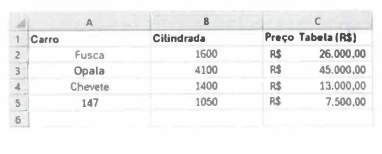
A fórmula seguinte foi digitada na célula A6:
A fórmula seguinte foi digitada na célula A6:
=CONCAT(INDIRETO("a"&CORRESP(MÁXIMO(C1 :C5);
C1 :C5));TEXTO(INDIRETO("b"&CORRESP(MÁXIMO(C1
:C5);C1 :C5));"-0000"))
Qual conteúdo será mostrado na célula A6?
Ano: 2024
Banca:
CETAP
Órgão:
Prefeitura de Castanhal - PA
Prova:
CETAP - 2024 - Prefeitura de Castanhal - PA - Professor de Inglês |
Q3418914
Noções de Informática
O Microsoft Word 2010 oferece suporte a uma variedade
de formatos de arquivos que podem ser usados como
fonte de dados para gerar mala direta. Qual das
alternativas a seguir contém um tipo de arquivo que não
pode ser usado diretamente pela ferramenta de mala
direta do Word 2010?
Ano: 2024
Banca:
CETAP
Órgão:
Prefeitura de Castanhal - PA
Prova:
CETAP - 2024 - Prefeitura de Castanhal - PA - Professor de Inglês |
Q3418913
Noções de Informática
Qual alternativa seguinte contém somente navegadores
web listados?
Ano: 2024
Banca:
CETAP
Órgão:
Prefeitura de Castanhal - PA
Prova:
CETAP - 2024 - Prefeitura de Castanhal - PA - Professor de Inglês |
Q3418903
Português
Texto associado
O texto seguinte servirá de base para responder à questão.
As receitas
Quando eu era menino, na escola, as professoras me ensinaram que o Brasil estava destinado a um futuro grandioso porque as suas terras estavam cheias de riquezas: ferro, ouro, diamantes, florestas e coisas semelhantes. Ensinaram errado. O que me disseram equivale a predizer que um homem será um grande pintor por ser dono de uma loja de tintas. Mas o que faz um quadro não é a tinta: são as ideias que moram na cabeça do pintor. São as ideias dançantes na cabeça que fazem as tintas dançar sobre a tela.
Por isso, sendo um país tão rico, somos um povo tão pobre. Somos pobres em idéias. Não sabemos pensar. Nisto nos parecemos com os dinossauros, que tinham excesso de massa muscular e cérebros de galinha. Hoje, nas relações de troca entre os países, o bem mais caro, o bem mais cuidadosamente guardado, o bem que não se vende, são as ideias. É com as ideias que o mundo é feito. Prova disso são os tigres asiáticos, Japão, Coreia, Formosa que, pobres de recursos naturais, se enriqueceram por ter se especializado na arte de pensar.
Minha filha me fez uma pergunta: "O que é pensar?" Disse-me que 'esta era uma pergunta que o professor de filosofia havia proposto à classe. Pelo que lhe dou os parabéns. Primeiro por ter ido diretamente à questão essencial. Segundo, por ter tido a sabedoria de fazer a pergunta, sem dar a resposta. Porque, se tivesse dado a resposta, teria com ela cortado as asas do pensamento. O pensamento é como a águia que só alça vôo nos espaços vazios do desconhecido. Pensar é voar sobre o que não se sabe. Não existe nada mais fatal para o pensamento que o ensino das respostas certas. Para isso existem as escolas: não para ensinar as respostas, mas para ensinar as perguntas. As respostas nos permitem andar sobre a terra firme. Mas somente as perguntas nos permitem entrar pelo mar desconhecido.
E, no entanto, não podemos viver sem as respostas. As asas, para o impulso inicial do vôo, dependem de pés apoiados na terra firme. Os pássaros, antes de saber voar, aprendem a se apoiar sobre os seus pés. Também as crianças, antes de aprender a voar, têm que aprender a caminhar sobre a terra firme. Terra firme: as milhares de perguntas para as quais as gerações passadas já descobriram as respostas. O primeiro momento da educação é a transmissão deste saber. Nas palavras de Roland Barthes: "Há um momento em que se ensina o que se sabe ... " E o curioso é que este aprendizado é justamente para nos poupar da necessidade de pensar.
As gerações mais velhas ensinam às mais novas as receitas que funcionam. Sei amarrar os meus sapatos automaticamente, sei dar o nó na minha gravata automaticamente: as mãos fazem o seu trabalho com destreza enquanto as ideias andam por outros lugares. Aquilo que um dia eu não sabia me foi ensinado; eu aprendi com o corpo e esqueci com a cabeça. E a condição para que minhas mãos saibam bem é que a cabeça não pense sobre o que elas estão fazendo. Um pianista que, na hora da execução, pensa sobre os caminhos que seus dedos deverão seguir, tropeçará fatalmente. Há a estória de uma centopeia que andava feliz pelo jardim, quando foi interpelada por um grilo: "Dona Centopeia, sempre tive curiosidade sobre uma coisa: quando a senhora anda, qual, dentre as suas cem pernas, é aquela que a senhora movimenta primeiro?" "Curioso", ela respondeu. "Sempre andei, mas nunca me propus esta questão. Da próxima vez, prestarei atenção." Termina a estória dizendo que a centopéia nunca mais conseguiu andar.
Todo mundo fala, e fala bem. Ninguém sabe como a linguagem foi ensinada e nem como ela foi aprendida. A despeito disto, o ensino foi tão eficiente que não preciso pensar para falar. Ao falar não sei se estou usando um substantivo, um verbo ou um adjetivo, e nem me lembro das regras da gramática. Quem, para falar, tem de se lembrar destas coisas, não sabe falar. Há um nível de aprendizado em que o pensamento é um estorvo. Só se sabe bem com o corpo aquilo que a cabeça esqueceu. E assim escrevemos, lemos, andamos de bicicleta, nadamos, pregamos pregos, guiamos carros: sem saber com a cabeça, porque o corpo sabe melhor. É um conhecimento que se tornou parte inconsciente de mim mesmo. E isso me poupa do trabalho de pensar o já sabido. Ensinar aqui, é inconscientizar.
O sabido é o não-pensado, que fica guardado, pronto para ser usado como receita, na memória desse computador que se chama cérebro. Basta aper tar a tecla adequada para que a receita apareça no vídeo da consciência. Aperto a tecla moqueca. A receita aparece no meu vídeo cerebral: panela de barro, azeite, peixe, tomate, cebola, coentro, cheiro verde, urucum, sal, pimenta, seguidos de uma se série de instruções sobre o que fazer. Não é coisa que eu tenha inventado. Me foi ensinado. Não precisei pensar. Gostei. Foi para a memória. Esta é a regra fundamental desse computador que vive no corpo humano: só vai para a memória aquilo que e objeto do desejo.
A tarefa primordial do professor: seduzir o aluno para que ele deseje e, desejando, aprenda. E o saber fica memorizado de cor - etimologicamente, no coração -, à espera de que a tecla do desejo de novo o chame do seu lugar de esquecimento. Memória: um saber que 0 passado sedimentou. Indispensável para se repetir as receitas que os mortos nos legaram. E elas são boas. Tão boas que elas nos fazem esquecer que é preciso voar. Permitem que andemos pelas trilhas batidas. Mas nada têm a dizer sobre mares desconhecidos. Muitas pessoas, de tanto repetir as receitas, metamorfosearam-se de águias em tartarugas. E não são poucas as tartarugas que possuem diplomas universitários. Aqui se encontra o perigo das escolas: de tanto ensinar o que o passado legou - e ensinar bem - fazem os alunos se esquecer de que o seu destino não é o passado cristalizado em saber, mas um futuro que se abre como vazio, um não saber que somente pode ser explorado com as asas do pensamento. Compreende-se então que 8arthes tenha dito que, seguindo-se ao tempo em que se ensina o que se sabe, deve chegar o tempo quando se ensina o que não se sabe.
(Rubem Alves, no livro "A alegria de ensinar". São Paulo: Ars Poetica Editora Lida, 1994.)
"Nisto nos parecemos com os dinossauros (...)". Em
relação à tipologia pronominal, é correto afirmar:
Ano: 2024
Banca:
CETAP
Órgão:
Prefeitura de Castanhal - PA
Prova:
CETAP - 2024 - Prefeitura de Castanhal - PA - Professor de Inglês |
Q3418899
Português
Texto associado
O texto seguinte servirá de base para responder à questão.
As receitas
Quando eu era menino, na escola, as professoras me ensinaram que o Brasil estava destinado a um futuro grandioso porque as suas terras estavam cheias de riquezas: ferro, ouro, diamantes, florestas e coisas semelhantes. Ensinaram errado. O que me disseram equivale a predizer que um homem será um grande pintor por ser dono de uma loja de tintas. Mas o que faz um quadro não é a tinta: são as ideias que moram na cabeça do pintor. São as ideias dançantes na cabeça que fazem as tintas dançar sobre a tela.
Por isso, sendo um país tão rico, somos um povo tão pobre. Somos pobres em idéias. Não sabemos pensar. Nisto nos parecemos com os dinossauros, que tinham excesso de massa muscular e cérebros de galinha. Hoje, nas relações de troca entre os países, o bem mais caro, o bem mais cuidadosamente guardado, o bem que não se vende, são as ideias. É com as ideias que o mundo é feito. Prova disso são os tigres asiáticos, Japão, Coreia, Formosa que, pobres de recursos naturais, se enriqueceram por ter se especializado na arte de pensar.
Minha filha me fez uma pergunta: "O que é pensar?" Disse-me que 'esta era uma pergunta que o professor de filosofia havia proposto à classe. Pelo que lhe dou os parabéns. Primeiro por ter ido diretamente à questão essencial. Segundo, por ter tido a sabedoria de fazer a pergunta, sem dar a resposta. Porque, se tivesse dado a resposta, teria com ela cortado as asas do pensamento. O pensamento é como a águia que só alça vôo nos espaços vazios do desconhecido. Pensar é voar sobre o que não se sabe. Não existe nada mais fatal para o pensamento que o ensino das respostas certas. Para isso existem as escolas: não para ensinar as respostas, mas para ensinar as perguntas. As respostas nos permitem andar sobre a terra firme. Mas somente as perguntas nos permitem entrar pelo mar desconhecido.
E, no entanto, não podemos viver sem as respostas. As asas, para o impulso inicial do vôo, dependem de pés apoiados na terra firme. Os pássaros, antes de saber voar, aprendem a se apoiar sobre os seus pés. Também as crianças, antes de aprender a voar, têm que aprender a caminhar sobre a terra firme. Terra firme: as milhares de perguntas para as quais as gerações passadas já descobriram as respostas. O primeiro momento da educação é a transmissão deste saber. Nas palavras de Roland Barthes: "Há um momento em que se ensina o que se sabe ... " E o curioso é que este aprendizado é justamente para nos poupar da necessidade de pensar.
As gerações mais velhas ensinam às mais novas as receitas que funcionam. Sei amarrar os meus sapatos automaticamente, sei dar o nó na minha gravata automaticamente: as mãos fazem o seu trabalho com destreza enquanto as ideias andam por outros lugares. Aquilo que um dia eu não sabia me foi ensinado; eu aprendi com o corpo e esqueci com a cabeça. E a condição para que minhas mãos saibam bem é que a cabeça não pense sobre o que elas estão fazendo. Um pianista que, na hora da execução, pensa sobre os caminhos que seus dedos deverão seguir, tropeçará fatalmente. Há a estória de uma centopeia que andava feliz pelo jardim, quando foi interpelada por um grilo: "Dona Centopeia, sempre tive curiosidade sobre uma coisa: quando a senhora anda, qual, dentre as suas cem pernas, é aquela que a senhora movimenta primeiro?" "Curioso", ela respondeu. "Sempre andei, mas nunca me propus esta questão. Da próxima vez, prestarei atenção." Termina a estória dizendo que a centopéia nunca mais conseguiu andar.
Todo mundo fala, e fala bem. Ninguém sabe como a linguagem foi ensinada e nem como ela foi aprendida. A despeito disto, o ensino foi tão eficiente que não preciso pensar para falar. Ao falar não sei se estou usando um substantivo, um verbo ou um adjetivo, e nem me lembro das regras da gramática. Quem, para falar, tem de se lembrar destas coisas, não sabe falar. Há um nível de aprendizado em que o pensamento é um estorvo. Só se sabe bem com o corpo aquilo que a cabeça esqueceu. E assim escrevemos, lemos, andamos de bicicleta, nadamos, pregamos pregos, guiamos carros: sem saber com a cabeça, porque o corpo sabe melhor. É um conhecimento que se tornou parte inconsciente de mim mesmo. E isso me poupa do trabalho de pensar o já sabido. Ensinar aqui, é inconscientizar.
O sabido é o não-pensado, que fica guardado, pronto para ser usado como receita, na memória desse computador que se chama cérebro. Basta aper tar a tecla adequada para que a receita apareça no vídeo da consciência. Aperto a tecla moqueca. A receita aparece no meu vídeo cerebral: panela de barro, azeite, peixe, tomate, cebola, coentro, cheiro verde, urucum, sal, pimenta, seguidos de uma se série de instruções sobre o que fazer. Não é coisa que eu tenha inventado. Me foi ensinado. Não precisei pensar. Gostei. Foi para a memória. Esta é a regra fundamental desse computador que vive no corpo humano: só vai para a memória aquilo que e objeto do desejo.
A tarefa primordial do professor: seduzir o aluno para que ele deseje e, desejando, aprenda. E o saber fica memorizado de cor - etimologicamente, no coração -, à espera de que a tecla do desejo de novo o chame do seu lugar de esquecimento. Memória: um saber que 0 passado sedimentou. Indispensável para se repetir as receitas que os mortos nos legaram. E elas são boas. Tão boas que elas nos fazem esquecer que é preciso voar. Permitem que andemos pelas trilhas batidas. Mas nada têm a dizer sobre mares desconhecidos. Muitas pessoas, de tanto repetir as receitas, metamorfosearam-se de águias em tartarugas. E não são poucas as tartarugas que possuem diplomas universitários. Aqui se encontra o perigo das escolas: de tanto ensinar o que o passado legou - e ensinar bem - fazem os alunos se esquecer de que o seu destino não é o passado cristalizado em saber, mas um futuro que se abre como vazio, um não saber que somente pode ser explorado com as asas do pensamento. Compreende-se então que 8arthes tenha dito que, seguindo-se ao tempo em que se ensina o que se sabe, deve chegar o tempo quando se ensina o que não se sabe.
(Rubem Alves, no livro "A alegria de ensinar". São Paulo: Ars Poetica Editora Lida, 1994.)
No 1º parágrafo, o vocábulo que é hiperônimo de: "( ... )
ferro, ouro, diamante, florestas e coisas semelhantes." é:
Ano: 2024
Banca:
Avança SP
Órgão:
Prefeitura de Lorena - SP
Prova:
Avança SP - 2024 - Prefeitura de Lorena - SP - Professor de Ensino Básico II - Inglês |
Q3415804
Inglês
Match the authors to their respective works.
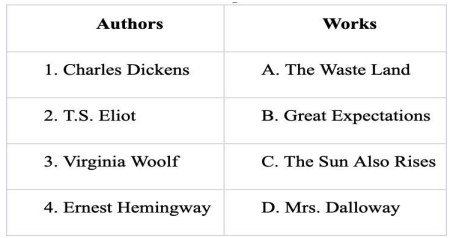
The correct combination is:
Ano: 2024
Banca:
Avança SP
Órgão:
Prefeitura de Lorena - SP
Prova:
Avança SP - 2024 - Prefeitura de Lorena - SP - Professor de Ensino Básico II - Inglês |
Q3415803
Inglês
In the word 'unhappiness', how many morphemes are present?
Ano: 2024
Banca:
Avança SP
Órgão:
Prefeitura de Lorena - SP
Prova:
Avança SP - 2024 - Prefeitura de Lorena - SP - Professor de Ensino Básico II - Inglês |
Q3415802
Inglês
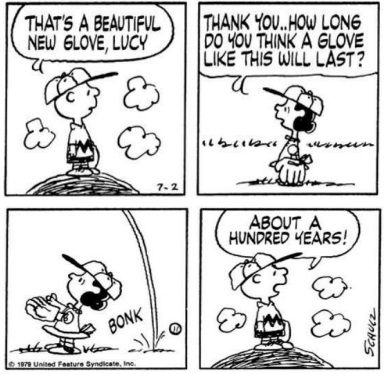
In the final panel of the comic strip, the character humorously suggests that the glove will last "about a hundred years." What is implied by this statement?
Ano: 2024
Banca:
Avança SP
Órgão:
Prefeitura de Lorena - SP
Prova:
Avança SP - 2024 - Prefeitura de Lorena - SP - Professor de Ensino Básico II - Inglês |
Q3415801
Inglês
Charles Dickens often used his novels to
comment on societal issues. Which novel of his
primarily addresses the themes of wealth and
poverty in Victorian England?
Ano: 2024
Banca:
Avança SP
Órgão:
Prefeitura de Lorena - SP
Prova:
Avança SP - 2024 - Prefeitura de Lorena - SP - Professor de Ensino Básico II - Inglês |
Q3415800
Inglês
Emily Bronte is known for her novel set in the
Yorkshire moors. What is the name of this only
novel she wrote?

 Conheça nossos planos