Questões de Concurso Para professor - inglês

Foram encontradas 31.120 questões

Resolva questões gratuitamente!

Junte-se a mais de 4 milhões de concurseiros!

Q4034371 Inglês
Digital archeology

The City Gallery presents Filip Popov with his exhibition "Digital Archeology"

With a large exhibition, including works from his most famous cycles, the visual artist Filip Popov will exhibit in the Hall "2019" at 32 Gladstone Street from March 2 to 31.

For the first time the artist makes such a large-scale performance in the city where he was born.

The opening will be on March 2 from 17:00 to 19:30.

The topics that excite the author of the exhibition "Digital Archeology" can be deciphered in the titles of the series of works created over the past 8 years: TransOrganic, Para Bellum, Order, Posthuman, Paleomatic Monologues and Prayers to the latest series - Bunker City and Zero City. As Velizara Ivanova emphasizes in her analysis:

Combining works dating back to 2014, Digital Archeology reflects Philip Popov's continuing focus on the posthumanism and transhumanism, confronting technology and our uncertain future and insight into the way machines are woven into our tomorrow's world. "

Born in 1964 in Plovdiv, Filip Popov spent several years of his childhood in Germany, where he formed his ideas for unity between art, architecture, design and technology. He studied art at the National Academy of Arts in Sofia, moved to Basel to study at the Kunstgewerbeschule, and later lived in Zurich.

He has had solo exhibitions at EASA, West Berlin (1988), EKG, Wetzikon, CH (1993), Binz Foundation 39, Zurich (1994), Kunsthalle Liesthal, CH (1996), ArtFront Gallery, Tokyo (2005). It is presented in the most famous galleries in Sofia and the country. In 2014 he participated in the National Autumn Exhibitions in Plovdiv. Filip Popov exhibits his works in numerous group exhibitions in Bulgaria, Switzerland, Austria, France.


https://www.visitplovdiv.com/en/node/10577
A professor of discourse analysis and textual genres is conducting a graduate seminar on professional communication in the contemporary art world, using the exhibition announcement "Digital Archeology" as case study material for analyzing genre conventions, register appropriateness, and rhetorical strategies. Students are asked to evaluate various aspects of the text's linguistic construction, audience positioning, and communicative effectiveness within the institutional context of gallery announcements and press releases. The professor emphasizes the importance of recognizing how lexical choices, structural organization, and intertextual references work together to establish credibility, inform audiences, and persuade potential visitors to attend exhibitions. Regarding the textual genre and discourse analysis of "Digital Archeology," mark the INCORRECT alternative.
Alternativas
Q4034370 Inglês
Digital archeology

The City Gallery presents Filip Popov with his exhibition "Digital Archeology"

With a large exhibition, including works from his most famous cycles, the visual artist Filip Popov will exhibit in the Hall "2019" at 32 Gladstone Street from March 2 to 31.

For the first time the artist makes such a large-scale performance in the city where he was born.

The opening will be on March 2 from 17:00 to 19:30.

The topics that excite the author of the exhibition "Digital Archeology" can be deciphered in the titles of the series of works created over the past 8 years: TransOrganic, Para Bellum, Order, Posthuman, Paleomatic Monologues and Prayers to the latest series - Bunker City and Zero City. As Velizara Ivanova emphasizes in her analysis:

Combining works dating back to 2014, Digital Archeology reflects Philip Popov's continuing focus on the posthumanism and transhumanism, confronting technology and our uncertain future and insight into the way machines are woven into our tomorrow's world. "

Born in 1964 in Plovdiv, Filip Popov spent several years of his childhood in Germany, where he formed his ideas for unity between art, architecture, design and technology. He studied art at the National Academy of Arts in Sofia, moved to Basel to study at the Kunstgewerbeschule, and later lived in Zurich.

He has had solo exhibitions at EASA, West Berlin (1988), EKG, Wetzikon, CH (1993), Binz Foundation 39, Zurich (1994), Kunsthalle Liesthal, CH (1996), ArtFront Gallery, Tokyo (2005). It is presented in the most famous galleries in Sofia and the country. In 2014 he participated in the National Autumn Exhibitions in Plovdiv. Filip Popov exhibits his works in numerous group exhibitions in Bulgaria, Switzerland, Austria, France.


https://www.visitplovdiv.com/en/node/10577
Judge the sentences below as TRUE (T) or FALSE (F) regarding translation theory and practice applied to the text "Digital Archeology."

(__)The phrase "large-scale performance" presents a translation challenge requiring the translator to consider register, domain-specific vocabulary, and context; a functionally equivalent Brazilian Portuguese translation would be "mostra de grande escala" or "exposição abrangente," prioritizing dynamic equivalence over formal equivalence to ensure target audience comprehension of the exhibition's scope and importance.

(__)The series titles "TransOrganic," "Para Bellum," "Posthuman," and "Bunker City" should all be systematically translated into Portuguese as "TransOrgânico," "Para a Guerra," "Pós-humano," and "Cidade Bunker" to ensure Brazilian readers fully comprehend the thematic content, as maintaining English titles would create unnecessary barriers to understanding and contradict accessibility principles in translation for non-specialist audiences.

(__)The sentence "The topics that excite the author of the exhibition" contains the verb "excite" which shares identical semantic range with Portuguese "excitar," making direct cognate translation appropriate and recommended, as both verbs carry the same connotations of intellectual stimulation and enthusiasm across academic and professional contexts in both languages without semantic divergence.


The CORRECT sequence is: 
Alternativas
Q4034369 Inglês

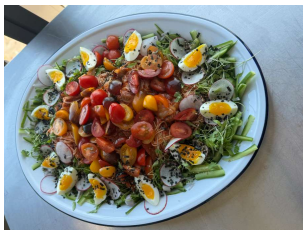
Cold Kimchi Tomato Bibim Noodles


Ingredients

For the sauce

 3 tablespoons tomato paste

 2 tablespoons gochujang

 1 teaspoon kosher salt

 1 1/2 tablespoons sesame oil

 3 tablespoons apple cider vinegar

 3 tablespoons kimchi juice

 1 tablespoon honey

 1 cup chopped kimchi

For the noodles

150 grams somen noodles

For the toppings

 2 Persian cucumbers, sliced into matchsticks

 1 shallot, minced

 2 cups cherry tomatoes, halved

 2 soft-boiled eggs (7 minutes, jammy yolks)

 4 radishes, thinly sliced

To finish

Extra sesame oil, for drizzling

 2 tablespoons furikake

Handful of cilantro

Directions

•Step 1


Make the sauce: In a medium bowl, whisk together the tomato paste, gochujang, salt, sesame oil, vinegar, kimchi juice, and honey until smooth. Stir in the chopped kimchi until evenly coated.

•Step 2 

Cook the noodles: Bring a pot of water to a rolling boil. Add the somen noodles and cook for 3 to 4 minutes, until just tender. Drain and rinse under cold water until completely cooled, then shake off excess water.

•Step 3

Toss together: Add the chilled noodles to the sauce bowl. Using tongs, gently mix until each strand is coated in the kimchi-gochujang sauce. 

•Step 4

Assemble: Divide the noodles between bowls. Top with cucumbers, shallot, tomatoes, soft-boiled eggs, and radishes. 

•Step 5

Finish & serve: Drizzle with a little extra sesame oil, sprinkle with furikake, and top with cilantro. Mix everything together at the table before eating.


https://food52.com/recipes/cold-kimchi-tomato-bibim-noodles
Consider the following pedagogical scenario:
An English teacher planning a lesson for Brazilian high school students using this recipe as authentic material wants to analyze the syntactic complexity and verb phrase structures to assess text difficulty level and design appropriate scaffolding activities. Examining sentences like "Bring a pot of water to a rolling boil," "Stir in the chopped kimchi until evenly coated," and "Using tongs, gently mix until each strand is coated," the teacher conducts a syntactic analysis focusing on verb phrase types, clause structures, and non-finite constructions. Regarding the syntactic features that impact text difficulty and pedagogical implications for supporting reading comprehension among intermediate EFL learners, which analysis is syntactically and pedagogically accurate?
Alternativas
Q4034368 Inglês

Cold Kimchi Tomato Bibim Noodles


Ingredients

For the sauce

 3 tablespoons tomato paste

 2 tablespoons gochujang

 1 teaspoon kosher salt

 1 1/2 tablespoons sesame oil

 3 tablespoons apple cider vinegar

 3 tablespoons kimchi juice

 1 tablespoon honey

 1 cup chopped kimchi

For the noodles

150 grams somen noodles

For the toppings

 2 Persian cucumbers, sliced into matchsticks

 1 shallot, minced

 2 cups cherry tomatoes, halved

 2 soft-boiled eggs (7 minutes, jammy yolks)

 4 radishes, thinly sliced

To finish

Extra sesame oil, for drizzling

 2 tablespoons furikake

Handful of cilantro

Directions

•Step 1


Make the sauce: In a medium bowl, whisk together the tomato paste, gochujang, salt, sesame oil, vinegar, kimchi juice, and honey until smooth. Stir in the chopped kimchi until evenly coated.

•Step 2 

Cook the noodles: Bring a pot of water to a rolling boil. Add the somen noodles and cook for 3 to 4 minutes, until just tender. Drain and rinse under cold water until completely cooled, then shake off excess water.

•Step 3

Toss together: Add the chilled noodles to the sauce bowl. Using tongs, gently mix until each strand is coated in the kimchi-gochujang sauce. 

•Step 4

Assemble: Divide the noodles between bowls. Top with cucumbers, shallot, tomatoes, soft-boiled eggs, and radishes. 

•Step 5

Finish & serve: Drizzle with a little extra sesame oil, sprinkle with furikake, and top with cilantro. Mix everything together at the table before eating.


https://food52.com/recipes/cold-kimchi-tomato-bibim-noodles
Judge the sentences below as TRUE (T) or FALSE (F) regarding lexical-semantic analysis and vocabulary comprehension of culinary terms in the recipe "Cold Kimchi Tomato Bibim Noodles."

(__)The verb "drizzle" in the instruction "Drizzle with a little extra sesame oil" belongs to the semantic field of liquid application techniques, denoting controlled pouring of liquid in thin stream, and shares semantic features with verbs like "sprinkle" and "pour," though with distinct manner specifications regarding quantity and distribution pattern.

(__)The compound adjective "soft-boiled" in "2 soft-boiled eggs (7 minutes, jammy yolks)" functions as a hyphenated attributive modifier specifying a cooking method, and its morphological structure combines adjective + past participle to create a specialized culinary term that would be translated into Portuguese as "ovos cozidos moles" or "ovos quentes."

(__)The noun "matchsticks" in "sliced into matchsticks" represents a metaphorical extension through shape similarity, where the lexical item originally denoting small wooden sticks for lighting fires has undergone semantic broadening to describe a cutting technique (julienne) in culinary contexts, demonstrating how concrete nouns can acquire specialized technical meanings in professional domains.


The CORRECT sequence is:
Alternativas
Q4034367 Inglês

Cold Kimchi Tomato Bibim Noodles


Ingredients

For the sauce

 3 tablespoons tomato paste

 2 tablespoons gochujang

 1 teaspoon kosher salt

 1 1/2 tablespoons sesame oil

 3 tablespoons apple cider vinegar

 3 tablespoons kimchi juice

 1 tablespoon honey

 1 cup chopped kimchi

For the noodles

150 grams somen noodles

For the toppings

 2 Persian cucumbers, sliced into matchsticks

 1 shallot, minced

 2 cups cherry tomatoes, halved

 2 soft-boiled eggs (7 minutes, jammy yolks)

 4 radishes, thinly sliced

To finish

Extra sesame oil, for drizzling

 2 tablespoons furikake

Handful of cilantro

Directions

•Step 1


Make the sauce: In a medium bowl, whisk together the tomato paste, gochujang, salt, sesame oil, vinegar, kimchi juice, and honey until smooth. Stir in the chopped kimchi until evenly coated.

•Step 2 

Cook the noodles: Bring a pot of water to a rolling boil. Add the somen noodles and cook for 3 to 4 minutes, until just tender. Drain and rinse under cold water until completely cooled, then shake off excess water.

•Step 3

Toss together: Add the chilled noodles to the sauce bowl. Using tongs, gently mix until each strand is coated in the kimchi-gochujang sauce. 

•Step 4

Assemble: Divide the noodles between bowls. Top with cucumbers, shallot, tomatoes, soft-boiled eggs, and radishes. 

•Step 5

Finish & serve: Drizzle with a little extra sesame oil, sprinkle with furikake, and top with cilantro. Mix everything together at the table before eating.


https://food52.com/recipes/cold-kimchi-tomato-bibim-noodles
Read the excerpt below:
"In a medium bowl, whisk together the tomato paste, gochujang, salt, sesame oil, vinegar, kimchi juice, and honey until smooth. Stir in the chopped kimchi until evenly coated."
A translation professor analyzing this instructional text for a Brazilian audience must address the challenge of translating the adverb "evenly" in the phrase "until evenly coated," which modifies the past participle and specifies the manner and distribution quality of the coating action. When considering semantic precision, register appropriateness, and naturalness in Brazilian Portuguese while maintaining the instructional clarity essential for successful recipe execution, the most adequate translation strategy for "until evenly coated" would be______.
Fill in the blank above and select the correct alternative. 
Alternativas
Q4034366 Inglês

Cold Kimchi Tomato Bibim Noodles


Ingredients

For the sauce

 3 tablespoons tomato paste

 2 tablespoons gochujang

 1 teaspoon kosher salt

 1 1/2 tablespoons sesame oil

 3 tablespoons apple cider vinegar

 3 tablespoons kimchi juice

 1 tablespoon honey

 1 cup chopped kimchi

For the noodles

150 grams somen noodles

For the toppings

 2 Persian cucumbers, sliced into matchsticks

 1 shallot, minced

 2 cups cherry tomatoes, halved

 2 soft-boiled eggs (7 minutes, jammy yolks)

 4 radishes, thinly sliced

To finish

Extra sesame oil, for drizzling

 2 tablespoons furikake

Handful of cilantro

Directions

•Step 1


Make the sauce: In a medium bowl, whisk together the tomato paste, gochujang, salt, sesame oil, vinegar, kimchi juice, and honey until smooth. Stir in the chopped kimchi until evenly coated.

•Step 2 

Cook the noodles: Bring a pot of water to a rolling boil. Add the somen noodles and cook for 3 to 4 minutes, until just tender. Drain and rinse under cold water until completely cooled, then shake off excess water.

•Step 3

Toss together: Add the chilled noodles to the sauce bowl. Using tongs, gently mix until each strand is coated in the kimchi-gochujang sauce. 

•Step 4

Assemble: Divide the noodles between bowls. Top with cucumbers, shallot, tomatoes, soft-boiled eggs, and radishes. 

•Step 5

Finish & serve: Drizzle with a little extra sesame oil, sprinkle with furikake, and top with cilantro. Mix everything together at the table before eating.


https://food52.com/recipes/cold-kimchi-tomato-bibim-noodles
Consider the following translation challenge:

A professional translator working on a Brazilian Portuguese edition of an international cookbook encounters the recipe title "Cold Kimchi Tomato Bibim Noodles" and several culture-specific ingredients including "gochujang," "furikake," "Persian cucumbers," and "somen noodles." The translator must decide between foreignization (maintaining source-language terms to preserve cultural authenticity) and domestication (adapting to target-culture equivalents for familiarity). Regarding translation theory, particularly Lawrence Venuti's concepts of foreignization versus domestication and Eugene Nida's formal versus dynamic equivalence, which approach demonstrates the most theoretically informed and contextually appropriate translation strategy? 
Alternativas
Q4034365 Linguística

Cold Kimchi Tomato Bibim Noodles


Ingredients

For the sauce

 3 tablespoons tomato paste

 2 tablespoons gochujang

 1 teaspoon kosher salt

 1 1/2 tablespoons sesame oil

 3 tablespoons apple cider vinegar

 3 tablespoons kimchi juice

 1 tablespoon honey

 1 cup chopped kimchi

For the noodles

150 grams somen noodles

For the toppings

 2 Persian cucumbers, sliced into matchsticks

 1 shallot, minced

 2 cups cherry tomatoes, halved

 2 soft-boiled eggs (7 minutes, jammy yolks)

 4 radishes, thinly sliced

To finish

Extra sesame oil, for drizzling

 2 tablespoons furikake

Handful of cilantro

Directions

•Step 1


Make the sauce: In a medium bowl, whisk together the tomato paste, gochujang, salt, sesame oil, vinegar, kimchi juice, and honey until smooth. Stir in the chopped kimchi until evenly coated.

•Step 2 

Cook the noodles: Bring a pot of water to a rolling boil. Add the somen noodles and cook for 3 to 4 minutes, until just tender. Drain and rinse under cold water until completely cooled, then shake off excess water.

•Step 3

Toss together: Add the chilled noodles to the sauce bowl. Using tongs, gently mix until each strand is coated in the kimchi-gochujang sauce. 

•Step 4

Assemble: Divide the noodles between bowls. Top with cucumbers, shallot, tomatoes, soft-boiled eggs, and radishes. 

•Step 5

Finish & serve: Drizzle with a little extra sesame oil, sprinkle with furikake, and top with cilantro. Mix everything together at the table before eating.


https://food52.com/recipes/cold-kimchi-tomato-bibim-noodles
Read the following excerpt from the recipe:
"Bring a pot of water to a rolling boil. Add the somen noodles and cook for 3 to 4 minutes, until just tender. Drain and rinse under cold water until completely cooled, then shake off excess water."An English teacher specializing in pragmatics and speech act theory is analyzing this instructional sequence with advanced students. When examining the illocutionary force of imperative constructions in procedural discourse and their pragmatic functions within the recipe genre, particularly how directives function to guide reader behavior while maintaining cooperative communication principles, the teacher should recognize that: 
Alternativas
Q4034364 Inglês

Cold Kimchi Tomato Bibim Noodles


Ingredients

For the sauce

 3 tablespoons tomato paste

 2 tablespoons gochujang

 1 teaspoon kosher salt

 1 1/2 tablespoons sesame oil

 3 tablespoons apple cider vinegar

 3 tablespoons kimchi juice

 1 tablespoon honey

 1 cup chopped kimchi

For the noodles

150 grams somen noodles

For the toppings

 2 Persian cucumbers, sliced into matchsticks

 1 shallot, minced

 2 cups cherry tomatoes, halved

 2 soft-boiled eggs (7 minutes, jammy yolks)

 4 radishes, thinly sliced

To finish

Extra sesame oil, for drizzling

 2 tablespoons furikake

Handful of cilantro

Directions

•Step 1


Make the sauce: In a medium bowl, whisk together the tomato paste, gochujang, salt, sesame oil, vinegar, kimchi juice, and honey until smooth. Stir in the chopped kimchi until evenly coated.

•Step 2 

Cook the noodles: Bring a pot of water to a rolling boil. Add the somen noodles and cook for 3 to 4 minutes, until just tender. Drain and rinse under cold water until completely cooled, then shake off excess water.

•Step 3

Toss together: Add the chilled noodles to the sauce bowl. Using tongs, gently mix until each strand is coated in the kimchi-gochujang sauce. 

•Step 4

Assemble: Divide the noodles between bowls. Top with cucumbers, shallot, tomatoes, soft-boiled eggs, and radishes. 

•Step 5

Finish & serve: Drizzle with a little extra sesame oil, sprinkle with furikake, and top with cilantro. Mix everything together at the table before eating.


https://food52.com/recipes/cold-kimchi-tomato-bibim-noodles
Regarding morphosyntactic structures and verb phrase analysis in the recipe "Cold Kimchi Tomato Bibim Noodles," judge the statements below.

I.The phrasal verb "shake off" in "shake off excess water" consists of a transitive separable phrasal verb where "shake" functions as the lexical verb and "off" as an adverbial particle modifying the verb's meaning to indicate removal or elimination, and this construction could be paraphrased as "remove by shaking" without significant semantic loss.

II.The passive voice construction "until each strand is coated" demonstrates a grammatical transformation from an active equivalent "until the sauce coats each strand," where the patient (each strand) becomes the syntactic subject while the agent (sauce) is demoted or omitted, and this passivization serves the rhetorical function of maintaining focus on the noodles rather than the sauce throughout the instructional sequence.

III.The temporal subordinate clause "until completely cooled" in "rinse under cold water until completely cooled" exhibits ellipsis of the subject and auxiliary verb, with the complete structure being "until [the noodles are] completely cooled," and this syntactic reduction represents a common feature of procedural discourse where redundant elements are omitted for brevity and efficiency.


The following statement(s) is/are CORRECT:
Alternativas
Q4034363 Pedagogia

Cold Kimchi Tomato Bibim Noodles


Ingredients

For the sauce

 3 tablespoons tomato paste

 2 tablespoons gochujang

 1 teaspoon kosher salt

 1 1/2 tablespoons sesame oil

 3 tablespoons apple cider vinegar

 3 tablespoons kimchi juice

 1 tablespoon honey

 1 cup chopped kimchi

For the noodles

150 grams somen noodles

For the toppings

 2 Persian cucumbers, sliced into matchsticks

 1 shallot, minced

 2 cups cherry tomatoes, halved

 2 soft-boiled eggs (7 minutes, jammy yolks)

 4 radishes, thinly sliced

To finish

Extra sesame oil, for drizzling

 2 tablespoons furikake

Handful of cilantro

Directions

•Step 1


Make the sauce: In a medium bowl, whisk together the tomato paste, gochujang, salt, sesame oil, vinegar, kimchi juice, and honey until smooth. Stir in the chopped kimchi until evenly coated.

•Step 2 

Cook the noodles: Bring a pot of water to a rolling boil. Add the somen noodles and cook for 3 to 4 minutes, until just tender. Drain and rinse under cold water until completely cooled, then shake off excess water.

•Step 3

Toss together: Add the chilled noodles to the sauce bowl. Using tongs, gently mix until each strand is coated in the kimchi-gochujang sauce. 

•Step 4

Assemble: Divide the noodles between bowls. Top with cucumbers, shallot, tomatoes, soft-boiled eggs, and radishes. 

•Step 5

Finish & serve: Drizzle with a little extra sesame oil, sprinkle with furikake, and top with cilantro. Mix everything together at the table before eating.


https://food52.com/recipes/cold-kimchi-tomato-bibim-noodles
Read the pedagogical context below:
An English teacher is designing a lesson sequence based on the Cold Kimchi Tomato Bibim Noodles recipe, aiming to align with Brazil's Base Nacional Comum Curricular (BNCC) competencies for English language teaching. The BNCC emphasizes developing students' repertoires through contact with linguistic and cultural manifestations, critical language awareness, intercultural communication, and English as a lingua franca. The teacher plans activities exploring the recipe's fusion of Korean, Japanese, and Western ingredients as a metaphor for linguistic and cultural hybridity, discussing food globalization, analyzing how recipes constitute intercultural texts, and having students create their own fusion recipes using Brazilian ingredients. Regarding the BNCC's theoretical framework and contemporary approaches to English language teaching that reject native-speaker models and emphasize pluricentric, decolonial perspectives, which pedagogical approach best exemplifies BNCC-aligned practice?
Alternativas
Q4034362 Linguística

Cold Kimchi Tomato Bibim Noodles


Ingredients

For the sauce

 3 tablespoons tomato paste

 2 tablespoons gochujang

 1 teaspoon kosher salt

 1 1/2 tablespoons sesame oil

 3 tablespoons apple cider vinegar

 3 tablespoons kimchi juice

 1 tablespoon honey

 1 cup chopped kimchi

For the noodles

150 grams somen noodles

For the toppings

 2 Persian cucumbers, sliced into matchsticks

 1 shallot, minced

 2 cups cherry tomatoes, halved

 2 soft-boiled eggs (7 minutes, jammy yolks)

 4 radishes, thinly sliced

To finish

Extra sesame oil, for drizzling

 2 tablespoons furikake

Handful of cilantro

Directions

•Step 1


Make the sauce: In a medium bowl, whisk together the tomato paste, gochujang, salt, sesame oil, vinegar, kimchi juice, and honey until smooth. Stir in the chopped kimchi until evenly coated.

•Step 2 

Cook the noodles: Bring a pot of water to a rolling boil. Add the somen noodles and cook for 3 to 4 minutes, until just tender. Drain and rinse under cold water until completely cooled, then shake off excess water.

•Step 3

Toss together: Add the chilled noodles to the sauce bowl. Using tongs, gently mix until each strand is coated in the kimchi-gochujang sauce. 

•Step 4

Assemble: Divide the noodles between bowls. Top with cucumbers, shallot, tomatoes, soft-boiled eggs, and radishes. 

•Step 5

Finish & serve: Drizzle with a little extra sesame oil, sprinkle with furikake, and top with cilantro. Mix everything together at the table before eating.


https://food52.com/recipes/cold-kimchi-tomato-bibim-noodles
Analyze the semantic aspects below:
An English semantics professor is teaching a graduate seminar on polysemy and context-dependent meaning using culinary vocabulary from the recipe. The professor highlights the word "tender" in the instruction "cook for 3 to 4 minutes, until just tender" and asks students to analyze its semantic range across different contexts: "tender meat," "a tender moment," "legal tender," "tender loving care," and "tender one's resignation." When discussing how context disambiguates polysemous meanings and how semantic features shift across different domains (physical texture, emotional quality, monetary function, affectionate care, formal offering), which linguistic analysis demonstrates the most sophisticated understanding of lexical semantics?
Alternativas
Q3997826 Inglês

Tom has a big family. He has two sisters and one brother. Every Sunday, they visit their grandmother and have lunch together. Tom loves spending time with his cousins and playing games in the garden."


What do Tom and his family do on Sundays?

Alternativas
Q3997825 Inglês
 Segundo a BNCC, no ensino da Língua Inglesa nos anos iniciais, a língua deve ser vista como: 
Alternativas
Q3997824 Pedagogia
Em relação ao ensino de Língua Inglesa nos anos iniciais, a BNCC recomenda que as atividades desenvolvam principalmente:
Alternativas
Q3997823 Inglês
Anna always drinks a glass of milk before going to bed. What does Anna do before going to bed?
Alternativas
Q3997822 Inglês
Qual concepção metodológica é coerente com as diretrizes da BNCC para o ensino de Língua Inglesa nos anos iniciais?
Alternativas
Q3997821 Inglês
De acordo com a BNCC, o ensino da Língua Inglesa nos anos iniciais deve priorizar:
Alternativas
Q3997711 Pedagogia
Segundo o ECA, é direito da criança e do adolescente no ambiente escolar: 
Alternativas
Q3997710 Pedagogia
Acerca do direito à educação, a Constituição da República Federativa do Brasil dispõe que é dever do Estado garantir:
Alternativas
Q3997708 Pedagogia
De acordo com a LDB (Lei nº 9.394/96), a educação básica no Brasil é composta por quais etapas?
Alternativas
Q3997707 Pedagogia
Como a BNCC propõe a abordagem da Educação Inclusiva?
Alternativas
Respostas
3841: A
3842: D
3843: D
3844: B
3845: A
3846: C
3847: C
3848: B
3849: A
3850: B
3851: B
3852: B
3853: C
3854: B
3855: B
3856: C
3857: A
3858: A
3859: B
3860: B