Questões de Concurso Para prefeitura de cuité - pb

Questões Discursivas

Foram encontradas 980 questões

Resolva questões gratuitamente!

Junte-se a mais de 4 milhões de concurseiros!

Q3946997 Inglês
Which sentence uses the future perfect in a way that is both semantically appropriate and syntactically precise, CORRECTLY expressing an action that will be completed before a specified future point?
Alternativas
Q3946996 Inglês
Which option employs the connector in a way that most accurately reflects concessive contrast while maintaining syntactic CORRECTNESS academic tone, and logical coherence?

Target meaning: The theory is widely accepted; however, it still fails to explain several anomalies in the data.
Alternativas
Q3946995 Inglês
Which option below provides the most accurate and pragmatically appropriate transformation of the sentence from direct to indirect speech, preserving the original temporal, modal, and attitudinal meanings?

“Had I known you were coming,” she exclaimed, “I could have arranged something far more suitable!”
Alternativas
Q3946994 Inglês
Which of the following rewrites most accurately preserves both meaning and pragmatic emphasis of the sentence: “People have long considered multilingualism to foster cognitive flexibility.”while shifting it into a reliable and natural passive construction?
Alternativas
Q3946993 Inglês

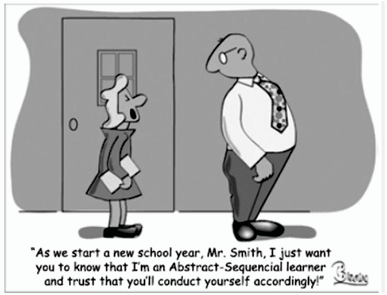
Imagem associada para resolução da questão


Source: GLASBERGEN, Randy. Education Cartoons. Glasbergen Cartoon Service, [s.d.]. Disponível em: https://www.glasbergen.com/education-cartoons/. Acesso em: 10 mar. 2026.


In the cartoon, the student tells Mr. Smith that she is an “Abstract-Sequential learner.” What is the primary source of humor in this interaction?

Alternativas
Q3946992 Inglês


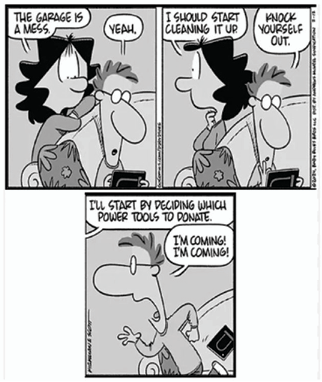
Source: KIRKMAN, Rick; SCOTT, Jerry. Baby Blues. GoComics, 12 fev. 2024. Disponível em: www.gocomics.com. Acesso em: 10 mar. 2026.

In the comic strip, the man replies “Knock yourself out” when the woman says she should start cleaning the garage. What is the most accurate interpretation of this expression in that context?
Alternativas
Q3946991 Inglês


Source: KIRKMAN, Rick; SCOTT, Jerry. Baby Blues. GoComics, 12 fev. 2024. Disponível em: www.gocomics.com. Acesso em: 10 mar. 2026.

What primarily motivates the man to suddenly run toward the garage at the end of the comic strip?


Alternativas
Q3946990 Inglês
        Digital technologies have transformed the way English is taught and learned, offering educators and students more dynamic and flexible ways to engage with language. According to recent research, tools such as computer-assisted instruction, mobile devices, and online multimedia platforms enable both teachers and learners to access a wide variety of resources — from interactive exercises, videos, and audio recordings to adaptive learning modules. 


        These tools facilitate exposure to real language input, allow for repetition and individual pacing, and help learners practise all four language skills (listening, speaking, reading, writing) beyond the constraints of the traditional classroom schedule. 


        Moreover, the integration of technology in English-language instruction tends to increase student motivation and engagement. Studies report that when classrooms incorporate digital media and interactive tasks, students often show greater participation, interest, and willingness to communicate — factors that contribute to better learning outcomes.


        In contexts where technology offers immediate feedback or allows for collaborative online work, learners also benefit from more autonomy and personalized learning paths, which can boost confidence and foster a more learner-centered environment. 


       However, effective technology integration depends on thoughtful planning, teacher training, and pedagogical balance. The literature warns that simply having access to digital tools does not guarantee improved learning; educators must design meaningful tasks, adapt materials appropriately, and support learners' needs. 


          Furthermore, in settings where access to devices or internet is limited, or where teachers lack sufficient training, the potential benefits may not be realized — which underlines the importance of institutional support and professional development for successful implementation. 


Source: Günüç, S. (2023). Technology Integration in English Language Teaching and Learning. International Journal of Language Learning and Applied Linguistics. Nishat Tasneem (2024). The Impact of Technology-Enhanced EFL Reading Classes on Learners' Performances and Participations. International Journal of English Learning and Applied Linguistics.

In the sentence “These tools facilitate exposure to real language input, allow for repetition and individual pacing, and help learners practise all four language skills…”, the word “These” refers to:
Alternativas
Q3946989 Inglês
        Digital technologies have transformed the way English is taught and learned, offering educators and students more dynamic and flexible ways to engage with language. According to recent research, tools such as computer-assisted instruction, mobile devices, and online multimedia platforms enable both teachers and learners to access a wide variety of resources — from interactive exercises, videos, and audio recordings to adaptive learning modules. 


        These tools facilitate exposure to real language input, allow for repetition and individual pacing, and help learners practise all four language skills (listening, speaking, reading, writing) beyond the constraints of the traditional classroom schedule. 


        Moreover, the integration of technology in English-language instruction tends to increase student motivation and engagement. Studies report that when classrooms incorporate digital media and interactive tasks, students often show greater participation, interest, and willingness to communicate — factors that contribute to better learning outcomes.


        In contexts where technology offers immediate feedback or allows for collaborative online work, learners also benefit from more autonomy and personalized learning paths, which can boost confidence and foster a more learner-centered environment. 


       However, effective technology integration depends on thoughtful planning, teacher training, and pedagogical balance. The literature warns that simply having access to digital tools does not guarantee improved learning; educators must design meaningful tasks, adapt materials appropriately, and support learners' needs. 


          Furthermore, in settings where access to devices or internet is limited, or where teachers lack sufficient training, the potential benefits may not be realized — which underlines the importance of institutional support and professional development for successful implementation. 


Source: Günüç, S. (2023). Technology Integration in English Language Teaching and Learning. International Journal of Language Learning and Applied Linguistics. Nishat Tasneem (2024). The Impact of Technology-Enhanced EFL Reading Classes on Learners' Performances and Participations. International Journal of English Learning and Applied Linguistics.

In the text, the noun “integration” is used when discussing how technology is incorporated into teaching. Which option CORRECTLY provides the adjective form that best fits the context of describing this process?
Alternativas
Q3946988 Inglês
        Digital technologies have transformed the way English is taught and learned, offering educators and students more dynamic and flexible ways to engage with language. According to recent research, tools such as computer-assisted instruction, mobile devices, and online multimedia platforms enable both teachers and learners to access a wide variety of resources — from interactive exercises, videos, and audio recordings to adaptive learning modules. 


        These tools facilitate exposure to real language input, allow for repetition and individual pacing, and help learners practise all four language skills (listening, speaking, reading, writing) beyond the constraints of the traditional classroom schedule. 


        Moreover, the integration of technology in English-language instruction tends to increase student motivation and engagement. Studies report that when classrooms incorporate digital media and interactive tasks, students often show greater participation, interest, and willingness to communicate — factors that contribute to better learning outcomes.


        In contexts where technology offers immediate feedback or allows for collaborative online work, learners also benefit from more autonomy and personalized learning paths, which can boost confidence and foster a more learner-centered environment. 


       However, effective technology integration depends on thoughtful planning, teacher training, and pedagogical balance. The literature warns that simply having access to digital tools does not guarantee improved learning; educators must design meaningful tasks, adapt materials appropriately, and support learners' needs. 


          Furthermore, in settings where access to devices or internet is limited, or where teachers lack sufficient training, the potential benefits may not be realized — which underlines the importance of institutional support and professional development for successful implementation. 


Source: Günüç, S. (2023). Technology Integration in English Language Teaching and Learning. International Journal of Language Learning and Applied Linguistics. Nishat Tasneem (2024). The Impact of Technology-Enhanced EFL Reading Classes on Learners' Performances and Participations. International Journal of English Learning and Applied Linguistics.

In the sentence “Studies report that when classrooms incorporate digital media and interactive tasks, students often show greater participation, interest, and willingness to communicate”, the word “incorporate” is closest in meaning to:
Alternativas
Q3946987 Inglês
        Digital technologies have transformed the way English is taught and learned, offering educators and students more dynamic and flexible ways to engage with language. According to recent research, tools such as computer-assisted instruction, mobile devices, and online multimedia platforms enable both teachers and learners to access a wide variety of resources — from interactive exercises, videos, and audio recordings to adaptive learning modules. 


        These tools facilitate exposure to real language input, allow for repetition and individual pacing, and help learners practise all four language skills (listening, speaking, reading, writing) beyond the constraints of the traditional classroom schedule. 


        Moreover, the integration of technology in English-language instruction tends to increase student motivation and engagement. Studies report that when classrooms incorporate digital media and interactive tasks, students often show greater participation, interest, and willingness to communicate — factors that contribute to better learning outcomes.


        In contexts where technology offers immediate feedback or allows for collaborative online work, learners also benefit from more autonomy and personalized learning paths, which can boost confidence and foster a more learner-centered environment. 


       However, effective technology integration depends on thoughtful planning, teacher training, and pedagogical balance. The literature warns that simply having access to digital tools does not guarantee improved learning; educators must design meaningful tasks, adapt materials appropriately, and support learners' needs. 


          Furthermore, in settings where access to devices or internet is limited, or where teachers lack sufficient training, the potential benefits may not be realized — which underlines the importance of institutional support and professional development for successful implementation. 


Source: Günüç, S. (2023). Technology Integration in English Language Teaching and Learning. International Journal of Language Learning and Applied Linguistics. Nishat Tasneem (2024). The Impact of Technology-Enhanced EFL Reading Classes on Learners' Performances and Participations. International Journal of English Learning and Applied Linguistics.

Based on the information in the text, what can be inferred about the role of technology in English-language teaching?


Alternativas
Q3946986 Inglês
        Digital technologies have transformed the way English is taught and learned, offering educators and students more dynamic and flexible ways to engage with language. According to recent research, tools such as computer-assisted instruction, mobile devices, and online multimedia platforms enable both teachers and learners to access a wide variety of resources — from interactive exercises, videos, and audio recordings to adaptive learning modules. 


        These tools facilitate exposure to real language input, allow for repetition and individual pacing, and help learners practise all four language skills (listening, speaking, reading, writing) beyond the constraints of the traditional classroom schedule. 


        Moreover, the integration of technology in English-language instruction tends to increase student motivation and engagement. Studies report that when classrooms incorporate digital media and interactive tasks, students often show greater participation, interest, and willingness to communicate — factors that contribute to better learning outcomes.


        In contexts where technology offers immediate feedback or allows for collaborative online work, learners also benefit from more autonomy and personalized learning paths, which can boost confidence and foster a more learner-centered environment. 


       However, effective technology integration depends on thoughtful planning, teacher training, and pedagogical balance. The literature warns that simply having access to digital tools does not guarantee improved learning; educators must design meaningful tasks, adapt materials appropriately, and support learners' needs. 


          Furthermore, in settings where access to devices or internet is limited, or where teachers lack sufficient training, the potential benefits may not be realized — which underlines the importance of institutional support and professional development for successful implementation. 


Source: Günüç, S. (2023). Technology Integration in English Language Teaching and Learning. International Journal of Language Learning and Applied Linguistics. Nishat Tasneem (2024). The Impact of Technology-Enhanced EFL Reading Classes on Learners' Performances and Participations. International Journal of English Learning and Applied Linguistics.

According to the text, what is one key benefit of integrating digital technologies into English-language teaching?


Alternativas
Q3946985 Inglês

            Perisylvian polymicrogyria (PMG) is a malformation of cortical development in which the cortex around the Sylvian fissures shows excessive small gyri and abnormal cortical lamination. This regional form of PMG is among the commonest patterns seen on MRI and may vary from focal posterior perisylvian involvement to extensive bilateral disease that (Magnetic Resonance Imaging) extends beyond the perisylvian region. Imaging typically demonstrates a thickened, irregular cortical ribbon with shallow sulci and an irregular gray–white matter junction, which is best characterized using high-resolution MRI.


            Clinically, perisylvian PMG—especially when bilateral—is frequently associated with oromotor dysfunction (dysarthria, feeding and swallowing difficulties), language impairments, cognitive delay, and epilepsy; severity correlates with the extent and symmetry of cortical involvement. The condition is genetically and etiologically heterogeneous: cases may be sporadic, associated with prenatal injury (for example infectious or vascular insults), or linked to chromosomal and single-gene variants in some familial forms. Management focuses on symptomatic therapies (speech/feeding therapy, epilepsy control) and genetic/neurological evaluation when appropriate.


Source: Barkovich, A. J., Guerrini, R., Kuzniecky, R. I., Jackson, G. D., & Dobyns, W. B. (2010). Current concepts of polymicrogyria. Neuroradiology. Leventer, R. J., Jansen, A., Pilz, D. T., et al. (2010). Clinical and imaging heterogeneity of polymicrogyria. Brain.

In the sentence “Clinically, perisylvian PMG—especially when bilateral—is frequently associated with oromotor dysfunction, language impairments, cognitive delay, and epilepsy; severity correlates with the extent and symmetry of cortical involvement.”, which connective would best replace the semicolon to preserve the logical relationship between the two clauses?
Alternativas
Q3946984 Inglês

            Perisylvian polymicrogyria (PMG) is a malformation of cortical development in which the cortex around the Sylvian fissures shows excessive small gyri and abnormal cortical lamination. This regional form of PMG is among the commonest patterns seen on MRI and may vary from focal posterior perisylvian involvement to extensive bilateral disease that (Magnetic Resonance Imaging) extends beyond the perisylvian region. Imaging typically demonstrates a thickened, irregular cortical ribbon with shallow sulci and an irregular gray–white matter junction, which is best characterized using high-resolution MRI.


            Clinically, perisylvian PMG—especially when bilateral—is frequently associated with oromotor dysfunction (dysarthria, feeding and swallowing difficulties), language impairments, cognitive delay, and epilepsy; severity correlates with the extent and symmetry of cortical involvement. The condition is genetically and etiologically heterogeneous: cases may be sporadic, associated with prenatal injury (for example infectious or vascular insults), or linked to chromosomal and single-gene variants in some familial forms. Management focuses on symptomatic therapies (speech/feeding therapy, epilepsy control) and genetic/neurological evaluation when appropriate.


Source: Barkovich, A. J., Guerrini, R., Kuzniecky, R. I., Jackson, G. D., & Dobyns, W. B. (2010). Current concepts of polymicrogyria. Neuroradiology. Leventer, R. J., Jansen, A., Pilz, D. T., et al. (2010). Clinical and imaging heterogeneity of polymicrogyria. Brain.

In the sentence “The condition is genetically and etiologically heterogeneous: cases may be sporadic, associated with prenatal injury, or linked to chromosomal and single-gene variants in some familial forms.”, what does the word “cases” refer to?
Alternativas
Q3946983 Inglês

            Perisylvian polymicrogyria (PMG) is a malformation of cortical development in which the cortex around the Sylvian fissures shows excessive small gyri and abnormal cortical lamination. This regional form of PMG is among the commonest patterns seen on MRI and may vary from focal posterior perisylvian involvement to extensive bilateral disease that (Magnetic Resonance Imaging) extends beyond the perisylvian region. Imaging typically demonstrates a thickened, irregular cortical ribbon with shallow sulci and an irregular gray–white matter junction, which is best characterized using high-resolution MRI.


            Clinically, perisylvian PMG—especially when bilateral—is frequently associated with oromotor dysfunction (dysarthria, feeding and swallowing difficulties), language impairments, cognitive delay, and epilepsy; severity correlates with the extent and symmetry of cortical involvement. The condition is genetically and etiologically heterogeneous: cases may be sporadic, associated with prenatal injury (for example infectious or vascular insults), or linked to chromosomal and single-gene variants in some familial forms. Management focuses on symptomatic therapies (speech/feeding therapy, epilepsy control) and genetic/neurological evaluation when appropriate.


Source: Barkovich, A. J., Guerrini, R., Kuzniecky, R. I., Jackson, G. D., & Dobyns, W. B. (2010). Current concepts of polymicrogyria. Neuroradiology. Leventer, R. J., Jansen, A., Pilz, D. T., et al. (2010). Clinical and imaging heterogeneity of polymicrogyria. Brain.

According to the text, which statement best describes perisylvian polymicrogyria?
Alternativas
Q3946982 Artes Visuais

A respeito de como o uso da Inteligência Artificial (IA) tem sido explorado por artistas brasileiros para criar novas formas de arte, avalie as assertivas a seguir:


I - Artistas têm utilizado IA para criar letras de músicas e inovar nas produções sonoras, com a ajuda de sistemas que geram palavras e rimas de maneira autônoma, incorporando assim um processo criativo colaborativo com a máquina.


II - O artista visual brasileiro Hermeto Sivuca tem usado IA apenas como ferramenta para criar arte, como a capa de seu álbum fotográfico “Zabumbê-Bum-A” (Imagem 14, abaixo), sem qualquer interação entre suas criações e o público ou outros artistas, limitando-se ao uso tradicional da ferramenta.


Imagem 14: Capa do álbum Zabumbê-Bum-A, de 2025, de Hermeto Sivuca.

Imagem associada para resolução da questão


III - Artistas brasileiros são os únicos que podem utilizar a Inteligência Artificial empregando, por exemplo, de IA para criar experiências interativas e dinâmicas em exposições de arte, nas quais o público também pode interagir com as máquinas, tornando-se coautores.


IV - Ao gerar Arte Interativa, o artista visual de IA está realizando obras que se encaixam no que se convenciona como hibridismo artístico. Porém, artistas como Emicida, Nanda Costa e Rafael RG se limitam a utilizar a tecnologia apenas de forma passiva.


É CORRETO o que se afirma em:


Alternativas
Q3946981 Artes Cênicas

O Pianista , filme de 2002, dirigido por Roman Polanski, foi responsável por dar o primeiro Oscar de melhor ator a Adrien Brody. O filme se baseou na autobiografia de Wladyslaw Szpilman, de como ele sobreviveu à ocupação alemã de Varsóvia e ao Holocausto. Já em 2025, Brody recebeu a mesma premiação pelo filme O Brutalista , de 2024, dirigido por Brady Corbet. O Brutalista acompanha décadas da vida do arquiteto húngaro László Toth, praticante da arquitetura brutalista que, após sobreviver aos campos de concentração do Holocausto, parte para os EUA em busca de recomeço. Toth é uma personagem fictícia, mas foi criada a partir de referências reais como Marcel Breuer e Ernő Goldfinger.


A partir do exposto, avalie os itens abaixo.


I - Apesar de utilizar uma personagem fictícia, o filme O Brutalista (2024) é uma obra que se encaixa no que se define como estilo cinematográfico documental, pois retrata fatos que realmente ocorreram nas vidas dos arquitetos Marcel Breuer e Ernő Goldfinger.


II - Brutalismo e Bauhaus não são o mesmo estilo arquitetônico, embora compartilhem princípios modernos. O primeiro radicaliza a materialidade e a expressão construtiva, enquanto o segundo se concentra na síntese funcional e industrial do espaço.


III - Por ser baseado na vida de Władysław Szpilman, O Pianista , (2002) é uma adaptação cinematográfica. É indispensável que a encenação cinematográfica utilize apenas o preto e o branco para dar mais realismo à obra.


É CORRETO o que se afirma apenas em:


Alternativas
Q3946980 Educação Artística
No campo das teorias da Arte e do ensino da Arte, algumas abordagens compreendem o fazer artístico como um processo aberto, no qual a obra se constrói durante sua execução, articulando prática, reflexão e descoberta. Nessa perspectiva, o ensino da arte valoriza a experimentação, o erro e o percurso criativo, mais do que um resultado previamente determinado.

Assinale, entre as alternativas abaixo, a que corresponde CORRETAMENTE a essa concepção teórica.
Alternativas
Q3946979 Artes Visuais
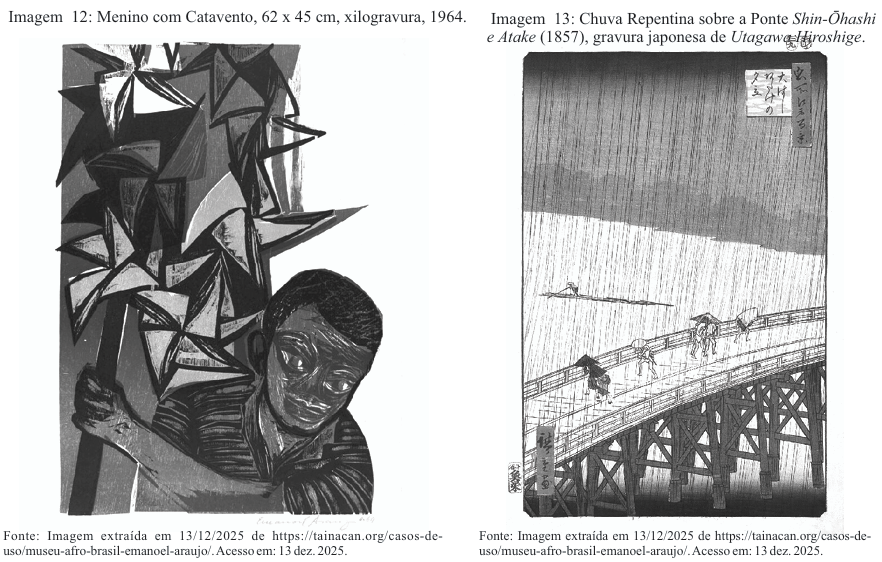
A respeito do diálogo entre a produção de um artista brasileiro contemporâneo, Emanoel Araújo (criador do Museu Afro Brasil), conforme imagem exemplo de sua obra (Imagem 12) e a tradição japonesa das ukiyo-e , especialmente a obra “Chuva Repentina sobre a Ponte Shin-Ōhashi e Atake ” (1857), Imagem 13, de Utagawa Hiroshige , assinale a alternativa CORRETA.
Imagem associada para resolução da questão
Alternativas
Q3946978 Artes Visuais
“O século XX muitas vezes desafia nossa concepção de arte, já que os estilos artísticos tomaram rumos muito diversos. Como no passado, a arte pode ser experimental e questionar nossas ideias e compreensão do mundo e se inspira em nosso estilo de vida” (Kindersley, 2016, p. 102). 

Fonte:KINDERSLEY, Dorling. Arte para crianças. Tradução de Maria Anunciação Rodrigues. São Paulo: Publifolhinha, 2016. p. 102. 141.

Observe as imagens (8 a 11) abaixo.
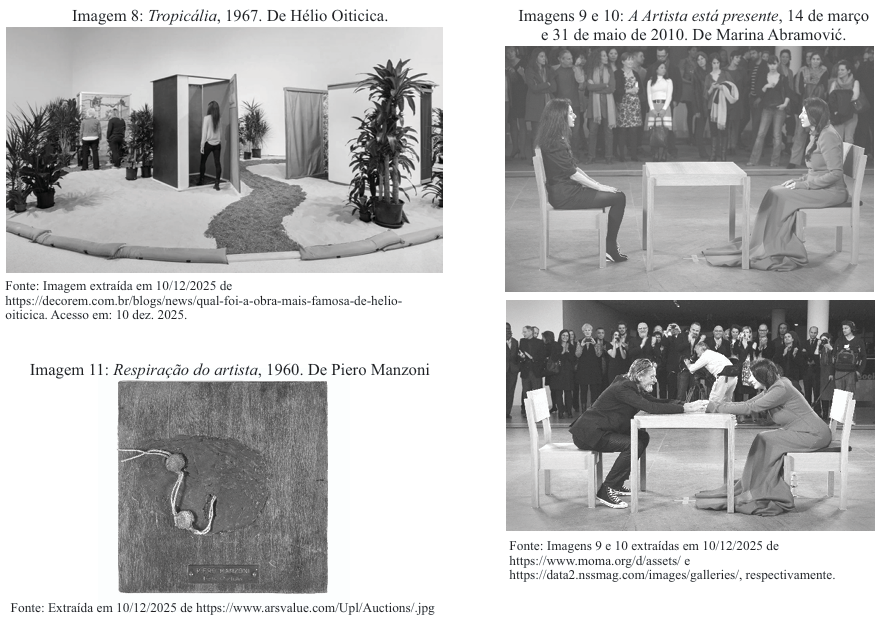
Imagem associada para resolução da questão
A partir do exposto e de seus conhecimentos sobre Arte e teorias a respeito dela, avalie as assertivas abaixo.

I - Na Arte Conceitual , a ideia (ou conceito) da obra é mais importante que a sua aparência. Na Imagem 11, “Respiração do artista (1960), de Piero Manzoni, o artista desloca o foco da arte do objeto material para a ideia. Ao envasar o próprio “ar respirado” como obra, Manzoni questiona o valor atribuído ao artista, a autenticidade da arte, e o próprio sistema artístico, fazendo da proposição conceitual — e não do resultado físico — o verdadeiro núcleo da obra. Em poucas palavras: a ideia supera a forma, princípio essencial da Arte Conceitual.

II - As Imagens (9 e 10) que remetem à obra “A artista está presente” (2010), constatam uma Performance ” porque tal tipo de Arte consiste na ação corporal da artista — sentada imóvel, olhando diretamente para cada participante — realizada em tempo real, diante do público, no espaço do museu. O foco não está em um objeto, mas no gesto, na presença física, na duração e na relação entre artista e espectador. Esses elementos definem a essência da Arte Performática.

III - “Tropicália” (1967), Imagem 8, transforma o espaço em Arte e, por isso, é considerada Instalação . Nela, Hélio Oiticica organiza um conjunto de elementos no espaço — como areia, plantas, estruturas arquitetônicas, entre outros e percursos imersivos — criando um ambiente vivencial no qual o público entra e circula. A obra não é um objeto isolado, mas um espaço construído que envolve o corpo do espectador, ativando múltiplos sentidos e exigindo participação. Esse modo de criar um ambiente artístico experiencial, concebido para ser vivido e não apenas observado, é uma das características essenciais da arte de instalação.

É CORRETO o que se afirma em:

Alternativas
Respostas
61: C
62: B
63: D
64: E
65: A
66: D
67: B
68: A
69: E
70: A
71: E
72: B
73: D
74: C
75: C
76: B
77: E
78: D
79: B
80: C