Questões de Concurso
Comentadas para técnico de laboratório
Foram encontradas 8.066 questões
Resolva questões gratuitamente!
Junte-se a mais de 4 milhões de concurseiros!


Ano: 2025
Banca:
Instituto JK
Órgão:
Prefeitura de São Raimundo das Mangabeiras - MA
Prova:
Instituto JK - 2025 - Prefeitura de São Raimundo das Mangabeiras - MA - Técnico em Laboratório |
Q3981567
Técnicas em Laboratório
Qual dos equipamentos a seguir é utilizado para medir e transferir volumes líquidos com
maior precisão do que um béquer ou
Erlenmeyer, mas não pode ser aquecido?
Ano: 2025
Banca:
Instituto JK
Órgão:
Prefeitura de São Raimundo das Mangabeiras - MA
Prova:
Instituto JK - 2025 - Prefeitura de São Raimundo das Mangabeiras - MA - Técnico em Laboratório |
Q3981566
Técnicas em Laboratório
Um técnico de laboratório precisa realizar uma
reação de precipitação, dissolver substâncias
sólidas e aquecer líquidos. Qual o equipamento
mais adequado para essas finalidades?
Ano: 2025
Banca:
Instituto JK
Órgão:
Prefeitura de São Raimundo das Mangabeiras - MA
Provas:
Instituto JK - 2025 - Prefeitura de São Raimundo das Mangabeiras - MA - Agente Administrativo
|
Instituto JK - 2025 - Prefeitura de São Raimundo das Mangabeiras - MA - Auxiliar de Consultório Dentário |
Instituto JK - 2025 - Prefeitura de São Raimundo das Mangabeiras - MA - Guarda Municipal |
Instituto JK - 2025 - Prefeitura de São Raimundo das Mangabeiras - MA - Técnico Agrícola |
Instituto JK - 2025 - Prefeitura de São Raimundo das Mangabeiras - MA - Técnico em Enfermagem |
Instituto JK - 2025 - Prefeitura de São Raimundo das Mangabeiras - MA - Técnico em Laboratório |
Q3980775
Noções de Informática
Dentre as alternativas abaixo apresentas,
aquela que NÃO é uma possível função da
entrada USB-C é:
Ano: 2025
Banca:
Instituto JK
Órgão:
Prefeitura de São Raimundo das Mangabeiras - MA
Provas:
Instituto JK - 2025 - Prefeitura de São Raimundo das Mangabeiras - MA - Agente Administrativo
|
Instituto JK - 2025 - Prefeitura de São Raimundo das Mangabeiras - MA - Auxiliar de Consultório Dentário |
Instituto JK - 2025 - Prefeitura de São Raimundo das Mangabeiras - MA - Guarda Municipal |
Instituto JK - 2025 - Prefeitura de São Raimundo das Mangabeiras - MA - Técnico Agrícola |
Instituto JK - 2025 - Prefeitura de São Raimundo das Mangabeiras - MA - Técnico em Enfermagem |
Instituto JK - 2025 - Prefeitura de São Raimundo das Mangabeiras - MA - Técnico em Laboratório |
Q3980774
Noções de Informática
No navegador Google Chrome, o atalho CTRL
+ SHIFT + B:
Ano: 2025
Banca:
Instituto JK
Órgão:
Prefeitura de São Raimundo das Mangabeiras - MA
Provas:
Instituto JK - 2025 - Prefeitura de São Raimundo das Mangabeiras - MA - Agente Administrativo
|
Instituto JK - 2025 - Prefeitura de São Raimundo das Mangabeiras - MA - Auxiliar de Consultório Dentário |
Instituto JK - 2025 - Prefeitura de São Raimundo das Mangabeiras - MA - Guarda Municipal |
Instituto JK - 2025 - Prefeitura de São Raimundo das Mangabeiras - MA - Técnico Agrícola |
Instituto JK - 2025 - Prefeitura de São Raimundo das Mangabeiras - MA - Técnico em Enfermagem |
Instituto JK - 2025 - Prefeitura de São Raimundo das Mangabeiras - MA - Técnico em Laboratório |
Q3980773
Sistemas Operacionais
Qual das seguintes opções NÃO é a função
principal de um sistema operacional?
Ano: 2025
Banca:
Instituto JK
Órgão:
Prefeitura de São Raimundo das Mangabeiras - MA
Provas:
Instituto JK - 2025 - Prefeitura de São Raimundo das Mangabeiras - MA - Agente Administrativo
|
Instituto JK - 2025 - Prefeitura de São Raimundo das Mangabeiras - MA - Auxiliar de Consultório Dentário |
Instituto JK - 2025 - Prefeitura de São Raimundo das Mangabeiras - MA - Guarda Municipal |
Instituto JK - 2025 - Prefeitura de São Raimundo das Mangabeiras - MA - Técnico Agrícola |
Instituto JK - 2025 - Prefeitura de São Raimundo das Mangabeiras - MA - Técnico em Enfermagem |
Instituto JK - 2025 - Prefeitura de São Raimundo das Mangabeiras - MA - Técnico em Laboratório |
Q3980772
Segurança da Informação
A prática de utilizar engenharia social através
da rede telefônica para enganar vítimas é
chamada de:
Ano: 2025
Banca:
Instituto JK
Órgão:
Prefeitura de São Raimundo das Mangabeiras - MA
Provas:
Instituto JK - 2025 - Prefeitura de São Raimundo das Mangabeiras - MA - Agente Administrativo
|
Instituto JK - 2025 - Prefeitura de São Raimundo das Mangabeiras - MA - Auxiliar de Consultório Dentário |
Instituto JK - 2025 - Prefeitura de São Raimundo das Mangabeiras - MA - Guarda Municipal |
Instituto JK - 2025 - Prefeitura de São Raimundo das Mangabeiras - MA - Técnico Agrícola |
Instituto JK - 2025 - Prefeitura de São Raimundo das Mangabeiras - MA - Técnico em Enfermagem |
Instituto JK - 2025 - Prefeitura de São Raimundo das Mangabeiras - MA - Técnico em Laboratório |
Q3980771
Noções de Informática
O navegador Google Chrome possui um
recurso que permite que o usuário consiga
focar no texto de uma página com mais
facilidade, removendo imagens e vídeos. Esse
recurso é o:
Ano: 2025
Banca:
Instituto JK
Órgão:
Prefeitura de São Raimundo das Mangabeiras - MA
Provas:
Instituto JK - 2025 - Prefeitura de São Raimundo das Mangabeiras - MA - Agente Administrativo
|
Instituto JK - 2025 - Prefeitura de São Raimundo das Mangabeiras - MA - Auxiliar de Consultório Dentário |
Instituto JK - 2025 - Prefeitura de São Raimundo das Mangabeiras - MA - Guarda Municipal |
Instituto JK - 2025 - Prefeitura de São Raimundo das Mangabeiras - MA - Técnico Agrícola |
Instituto JK - 2025 - Prefeitura de São Raimundo das Mangabeiras - MA - Técnico em Enfermagem |
Instituto JK - 2025 - Prefeitura de São Raimundo das Mangabeiras - MA - Técnico em Laboratório |
Q3980763
Português
Identifique a opção em que os vocábulos
obedecem a mesma regra de acentuação
gráfica.
Ano: 2025
Banca:
Instituto JK
Órgão:
Prefeitura de São Raimundo das Mangabeiras - MA
Provas:
Instituto JK - 2025 - Prefeitura de São Raimundo das Mangabeiras - MA - Agente Administrativo
|
Instituto JK - 2025 - Prefeitura de São Raimundo das Mangabeiras - MA - Auxiliar de Consultório Dentário |
Instituto JK - 2025 - Prefeitura de São Raimundo das Mangabeiras - MA - Guarda Municipal |
Instituto JK - 2025 - Prefeitura de São Raimundo das Mangabeiras - MA - Técnico Agrícola |
Instituto JK - 2025 - Prefeitura de São Raimundo das Mangabeiras - MA - Técnico em Enfermagem |
Instituto JK - 2025 - Prefeitura de São Raimundo das Mangabeiras - MA - Técnico em Laboratório |
Q3980762
Português
Analise as frases abaixo e assinale a única
alternativa em que a concordância verbal está
em desacordo com a norma gramatical.
Ano: 2025
Banca:
Instituto JK
Órgão:
Prefeitura de São Raimundo das Mangabeiras - MA
Provas:
Instituto JK - 2025 - Prefeitura de São Raimundo das Mangabeiras - MA - Agente Administrativo
|
Instituto JK - 2025 - Prefeitura de São Raimundo das Mangabeiras - MA - Auxiliar de Consultório Dentário |
Instituto JK - 2025 - Prefeitura de São Raimundo das Mangabeiras - MA - Guarda Municipal |
Instituto JK - 2025 - Prefeitura de São Raimundo das Mangabeiras - MA - Técnico Agrícola |
Instituto JK - 2025 - Prefeitura de São Raimundo das Mangabeiras - MA - Técnico em Enfermagem |
Instituto JK - 2025 - Prefeitura de São Raimundo das Mangabeiras - MA - Técnico em Laboratório |
Q3980761
Português
Leia as proposições e assinale a alternativa
que contém afirmações verdadeiras.
I. A palavra para (verbo) perdeu o acento na reforma ortográfica.
II. A palavra jerimum está grafada corretamente.
III. As palavras mau e bem são antônimas.
IV. A forma verbal “veem” está grafada corretamente.
I. A palavra para (verbo) perdeu o acento na reforma ortográfica.
II. A palavra jerimum está grafada corretamente.
III. As palavras mau e bem são antônimas.
IV. A forma verbal “veem” está grafada corretamente.
Ano: 2025
Banca:
Instituto JK
Órgão:
Prefeitura de São Raimundo das Mangabeiras - MA
Provas:
Instituto JK - 2025 - Prefeitura de São Raimundo das Mangabeiras - MA - Agente Administrativo
|
Instituto JK - 2025 - Prefeitura de São Raimundo das Mangabeiras - MA - Auxiliar de Consultório Dentário |
Instituto JK - 2025 - Prefeitura de São Raimundo das Mangabeiras - MA - Guarda Municipal |
Instituto JK - 2025 - Prefeitura de São Raimundo das Mangabeiras - MA - Técnico Agrícola |
Instituto JK - 2025 - Prefeitura de São Raimundo das Mangabeiras - MA - Técnico em Enfermagem |
Instituto JK - 2025 - Prefeitura de São Raimundo das Mangabeiras - MA - Técnico em Laboratório |
Q3980760
Português
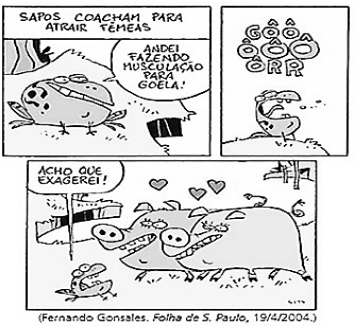
Assinale a alternativa correta em relação à
classificação da palavra QUE presente no
terceiro quadrinho da tirinha abaixo:
Ano: 2025
Banca:
Instituto JK
Órgão:
Prefeitura de São Raimundo das Mangabeiras - MA
Provas:
Instituto JK - 2025 - Prefeitura de São Raimundo das Mangabeiras - MA - Agente Administrativo
|
Instituto JK - 2025 - Prefeitura de São Raimundo das Mangabeiras - MA - Auxiliar de Consultório Dentário |
Instituto JK - 2025 - Prefeitura de São Raimundo das Mangabeiras - MA - Guarda Municipal |
Instituto JK - 2025 - Prefeitura de São Raimundo das Mangabeiras - MA - Técnico Agrícola |
Instituto JK - 2025 - Prefeitura de São Raimundo das Mangabeiras - MA - Técnico em Enfermagem |
Instituto JK - 2025 - Prefeitura de São Raimundo das Mangabeiras - MA - Técnico em Laboratório |
Q3980759
Português
Texto associado
Furtei uma flor daquele jardim. O porteiro do
edifício cochilava e eu furtei a flor. Trouxe-a para
casa e coloquei-a no copo com água. Logo senti
que ela não estava feliz. O copo destina-se a
beber, e flor não é para ser bebida.
Passei-a para o vaso, e notei que ela me
agradecia, revelando melhor sua delicada
composição. Quantas novidades há numa flor, se
a contemplarmos bem. Sendo autor do furto, eu
assumira a obrigação de conservá-la. Renovei a
água do vaso, mas a flor empalidecia. Temi por
sua vida. Não adiantava restituí-la ao jardim. Nem
apelar para o médico das flores. Eu a furtara, eu a
via morrer.
Já murcha, e com a cor particular da morte,
peguei-a docemente e fui depositá-la no jardim
onde desabrochara. O porteiro estava atento e
repreendeu-me:
– Que ideia a sua, vir jogar lixo de sua casa
neste jardim!
Carlos Drummond de Andrade
Leia atentamente a frase abaixo e assinale a
alternativa CORRETA em relação ao pronome
lhe.
“Assim que o Papa chegou, o Arcebispo beijou-lhe a mão.”
“Assim que o Papa chegou, o Arcebispo beijou-lhe a mão.”
Ano: 2025
Banca:
Instituto JK
Órgão:
Prefeitura de São Raimundo das Mangabeiras - MA
Provas:
Instituto JK - 2025 - Prefeitura de São Raimundo das Mangabeiras - MA - Agente Administrativo
|
Instituto JK - 2025 - Prefeitura de São Raimundo das Mangabeiras - MA - Auxiliar de Consultório Dentário |
Instituto JK - 2025 - Prefeitura de São Raimundo das Mangabeiras - MA - Guarda Municipal |
Instituto JK - 2025 - Prefeitura de São Raimundo das Mangabeiras - MA - Técnico Agrícola |
Instituto JK - 2025 - Prefeitura de São Raimundo das Mangabeiras - MA - Técnico em Enfermagem |
Instituto JK - 2025 - Prefeitura de São Raimundo das Mangabeiras - MA - Técnico em Laboratório |
Q3980758
Português
Texto associado
Furtei uma flor daquele jardim. O porteiro do
edifício cochilava e eu furtei a flor. Trouxe-a para
casa e coloquei-a no copo com água. Logo senti
que ela não estava feliz. O copo destina-se a
beber, e flor não é para ser bebida.
Passei-a para o vaso, e notei que ela me
agradecia, revelando melhor sua delicada
composição. Quantas novidades há numa flor, se
a contemplarmos bem. Sendo autor do furto, eu
assumira a obrigação de conservá-la. Renovei a
água do vaso, mas a flor empalidecia. Temi por
sua vida. Não adiantava restituí-la ao jardim. Nem
apelar para o médico das flores. Eu a furtara, eu a
via morrer.
Já murcha, e com a cor particular da morte,
peguei-a docemente e fui depositá-la no jardim
onde desabrochara. O porteiro estava atento e
repreendeu-me:
– Que ideia a sua, vir jogar lixo de sua casa
neste jardim!
Carlos Drummond de Andrade
Leia atentamente as frases abaixo e assinale a alternativa CORRETA:
I. Estava disposto à disputar uma vaga.
II. Vou à Roma.
III. Obedeço à minha irmã.
IV. Os marinheiros desceram à terra dos anões
Ano: 2025
Banca:
Instituto JK
Órgão:
Prefeitura de São Raimundo das Mangabeiras - MA
Provas:
Instituto JK - 2025 - Prefeitura de São Raimundo das Mangabeiras - MA - Agente Administrativo
|
Instituto JK - 2025 - Prefeitura de São Raimundo das Mangabeiras - MA - Auxiliar de Consultório Dentário |
Instituto JK - 2025 - Prefeitura de São Raimundo das Mangabeiras - MA - Guarda Municipal |
Instituto JK - 2025 - Prefeitura de São Raimundo das Mangabeiras - MA - Técnico Agrícola |
Instituto JK - 2025 - Prefeitura de São Raimundo das Mangabeiras - MA - Técnico em Enfermagem |
Instituto JK - 2025 - Prefeitura de São Raimundo das Mangabeiras - MA - Técnico em Laboratório |
Q3980757
Português
Texto associado
Furtei uma flor daquele jardim. O porteiro do
edifício cochilava e eu furtei a flor. Trouxe-a para
casa e coloquei-a no copo com água. Logo senti
que ela não estava feliz. O copo destina-se a
beber, e flor não é para ser bebida.
Passei-a para o vaso, e notei que ela me
agradecia, revelando melhor sua delicada
composição. Quantas novidades há numa flor, se
a contemplarmos bem. Sendo autor do furto, eu
assumira a obrigação de conservá-la. Renovei a
água do vaso, mas a flor empalidecia. Temi por
sua vida. Não adiantava restituí-la ao jardim. Nem
apelar para o médico das flores. Eu a furtara, eu a
via morrer.
Já murcha, e com a cor particular da morte,
peguei-a docemente e fui depositá-la no jardim
onde desabrochara. O porteiro estava atento e
repreendeu-me:
– Que ideia a sua, vir jogar lixo de sua casa
neste jardim!
Carlos Drummond de Andrade
No primeiro período do texto a oração
classifica-se como:
Ano: 2025
Banca:
Instituto JK
Órgão:
Prefeitura de São Raimundo das Mangabeiras - MA
Provas:
Instituto JK - 2025 - Prefeitura de São Raimundo das Mangabeiras - MA - Agente Administrativo
|
Instituto JK - 2025 - Prefeitura de São Raimundo das Mangabeiras - MA - Auxiliar de Consultório Dentário |
Instituto JK - 2025 - Prefeitura de São Raimundo das Mangabeiras - MA - Guarda Municipal |
Instituto JK - 2025 - Prefeitura de São Raimundo das Mangabeiras - MA - Técnico Agrícola |
Instituto JK - 2025 - Prefeitura de São Raimundo das Mangabeiras - MA - Técnico em Enfermagem |
Instituto JK - 2025 - Prefeitura de São Raimundo das Mangabeiras - MA - Técnico em Laboratório |
Q3980756
Português
Texto associado
Furtei uma flor daquele jardim. O porteiro do
edifício cochilava e eu furtei a flor. Trouxe-a para
casa e coloquei-a no copo com água. Logo senti
que ela não estava feliz. O copo destina-se a
beber, e flor não é para ser bebida.
Passei-a para o vaso, e notei que ela me
agradecia, revelando melhor sua delicada
composição. Quantas novidades há numa flor, se
a contemplarmos bem. Sendo autor do furto, eu
assumira a obrigação de conservá-la. Renovei a
água do vaso, mas a flor empalidecia. Temi por
sua vida. Não adiantava restituí-la ao jardim. Nem
apelar para o médico das flores. Eu a furtara, eu a
via morrer.
Já murcha, e com a cor particular da morte,
peguei-a docemente e fui depositá-la no jardim
onde desabrochara. O porteiro estava atento e
repreendeu-me:
– Que ideia a sua, vir jogar lixo de sua casa
neste jardim!
Carlos Drummond de Andrade
O texto pertence a tipologia textual:
Ano: 2025
Banca:
FUVEST
Órgão:
USP
Prova:
FUVEST - 2025 - USP - Técnico de Laboratório (Bioquímica) |
Q3809286
Biologia
Um experimento simples realizado nas aulas de ciências do
ensino básico para extração do DNA é descrito a seguir:
• Material: - 1 saco plástico tipo ziploc; - 1 morango; - 10 mL de solução de extração de DNA (preparo a seguir); - 1 filtro de papel com funil; - Álcool etílico gelado (pode ser álcool 70º g.l.); - 1 tubo de ensaio limpo; - 1 palito de madeira para manicure.
• Solução de extração de DNA (suficiente para 100 grupos): - 50 mL de detergente sem corantes; - 15 gramas de NaCl (sal de cozinha) = 2 colheres de chá; - 900 mL de água (H2O), de preferência mineral.
• Método: - Coloque um morango em um saco ziploc; - Esmague o morango com o punho por, no mínimo, 2 minutos; - Adicione a solução de extração ao conteúdo do saco; - Misture tudo, apertando com as mãos, por 1 minuto; - Derrame o extrato no aparato filtrante e deixe filtrar diretamente dentro do tubo; - Derrame devagar o álcool gelado no tubo, até que o encha até a metade; - Mergulhe o pau-de-laranjeira dentro do tubo no local onde a camada de álcool faz contato com a camada de extrato; - Mantenha o tubo ao nível dos olhos para ver o que está acontecendo.
Os componentes do protocolo que rompem a parede celular, a membrana plasmática e possibilitam a precipitação do DNA são, respectivamente,
• Material: - 1 saco plástico tipo ziploc; - 1 morango; - 10 mL de solução de extração de DNA (preparo a seguir); - 1 filtro de papel com funil; - Álcool etílico gelado (pode ser álcool 70º g.l.); - 1 tubo de ensaio limpo; - 1 palito de madeira para manicure.
• Solução de extração de DNA (suficiente para 100 grupos): - 50 mL de detergente sem corantes; - 15 gramas de NaCl (sal de cozinha) = 2 colheres de chá; - 900 mL de água (H2O), de preferência mineral.
• Método: - Coloque um morango em um saco ziploc; - Esmague o morango com o punho por, no mínimo, 2 minutos; - Adicione a solução de extração ao conteúdo do saco; - Misture tudo, apertando com as mãos, por 1 minuto; - Derrame o extrato no aparato filtrante e deixe filtrar diretamente dentro do tubo; - Derrame devagar o álcool gelado no tubo, até que o encha até a metade; - Mergulhe o pau-de-laranjeira dentro do tubo no local onde a camada de álcool faz contato com a camada de extrato; - Mantenha o tubo ao nível dos olhos para ver o que está acontecendo.
Os componentes do protocolo que rompem a parede celular, a membrana plasmática e possibilitam a precipitação do DNA são, respectivamente,
Ano: 2025
Banca:
FUVEST
Órgão:
USP
Prova:
FUVEST - 2025 - USP - Técnico de Laboratório (Bioquímica) |
Q3809282
Biologia
Transgênicos na lupa
Entre 1998 e 2019, a CTNBio aprovou 152 produtos geneticamente modificados no Brasil, sendo a agricultura um dos segmentos da economia mais beneficiados. É praticamente impossível para um brasileiro não consumir ao menos algum derivado de planta geneticamente modificada todos os dias.
A visão de que é possível utilizar transgênicos com segurança é compartilhada pela maioria dos membros da CTNBio, mas a questão não está pacificada, apesar do consumo desses alimentos não ter causado nenhum malefício à saúde nesses 25 anos.
Quando se transfere um gene para outro organismo, isso pode afetar outras expressões além das características pretendidas e ter consequências de longo prazo, que precisam ser monitoradas.
Ao contrário do que se prometia, os transgênicos não reduziram o uso de agroquímicos na agricultura, ao contrário hoje há plantas transgênicas resistentes a vários herbicidas e o lançamento no solo de misturas tóxicas sobre as quais há pouca informação.
O uso de transgênicos pode produzir impactos que ainda não são mensurados. Por exemplo, a presença de um gene inseticida que mata lagartas em um cultivar de milhões de hectares, leva à morte as lagartas e seus predadores, após um período as lagartas podem adquirir resistência e encontrar um ambiente com poucos predadores.
Economicamente, para pequenos produtores, comprar sementes transgênicas impõe um custo adicional que não é compensado por um aumento de rendimento.
Entretanto, uma das atribuições da CTNBio é acompanhar a evolução das tecnologias e propor normas adequadas para novas realidades.
Revista Pesquisa FAPESP. Ed. 303. Maio/2021 (adaptado).
Segundo o texto, a introdução de plantas geneticamente modificadas na agricultura de larga escala traz debates importantes sobre a segurança dos alimentos e impactos socioambientais como:
Entre 1998 e 2019, a CTNBio aprovou 152 produtos geneticamente modificados no Brasil, sendo a agricultura um dos segmentos da economia mais beneficiados. É praticamente impossível para um brasileiro não consumir ao menos algum derivado de planta geneticamente modificada todos os dias.
A visão de que é possível utilizar transgênicos com segurança é compartilhada pela maioria dos membros da CTNBio, mas a questão não está pacificada, apesar do consumo desses alimentos não ter causado nenhum malefício à saúde nesses 25 anos.
Quando se transfere um gene para outro organismo, isso pode afetar outras expressões além das características pretendidas e ter consequências de longo prazo, que precisam ser monitoradas.
Ao contrário do que se prometia, os transgênicos não reduziram o uso de agroquímicos na agricultura, ao contrário hoje há plantas transgênicas resistentes a vários herbicidas e o lançamento no solo de misturas tóxicas sobre as quais há pouca informação.
O uso de transgênicos pode produzir impactos que ainda não são mensurados. Por exemplo, a presença de um gene inseticida que mata lagartas em um cultivar de milhões de hectares, leva à morte as lagartas e seus predadores, após um período as lagartas podem adquirir resistência e encontrar um ambiente com poucos predadores.
Economicamente, para pequenos produtores, comprar sementes transgênicas impõe um custo adicional que não é compensado por um aumento de rendimento.
Entretanto, uma das atribuições da CTNBio é acompanhar a evolução das tecnologias e propor normas adequadas para novas realidades.
Revista Pesquisa FAPESP. Ed. 303. Maio/2021 (adaptado).
Segundo o texto, a introdução de plantas geneticamente modificadas na agricultura de larga escala traz debates importantes sobre a segurança dos alimentos e impactos socioambientais como:
Ano: 2025
Banca:
FUVEST
Órgão:
USP
Prova:
FUVEST - 2025 - USP - Técnico de Laboratório (Bioquímica) |
Q3809281
Biologia
Células eucarióticas e procarióticas possuem componentes
semelhantes, presentes nas duas classes celulares tais como
Ano: 2025
Banca:
FUVEST
Órgão:
USP
Prova:
FUVEST - 2025 - USP - Técnico de Laboratório (Bioquímica) |
Q3809280
Medicina Legal
A genética forense é a área da biologia forense que analisa
vestígios e utiliza preceitos da hereditariedade e de técnicas
da biologia molecular com a finalidade de buscar, por meio da
comparação das amostras questionadas e conhecidas, a
compatibilidade e o possível vínculo de parentesco genético
existente. Uma amostra de sangue foi retirada de uma cena
de crime, onde investiga-se o sexo biológico da vítima e sua
relação com uma possível mãe. Para os testes genéticos, é
interessante verificar, respectivamente, a
Ano: 2025
Banca:
FUVEST
Órgão:
USP
Prova:
FUVEST - 2025 - USP - Técnico de Laboratório (Bioquímica) |
Q3809279
Biologia
Um paciente felino sem raça definida, macho, de cinco meses
de idade foi atendido apresentando sinais progressivos de
ataxia cerebelar e tremor de intenção. O paciente havia sido
adotado três meses antes e na ocasião já apresentava um leve
tremor de cabeça. Não havia informações sobre os pais ou
irmãos de ninhada. Realizou-se a investigação para doenças
inflamatórias/infecciosas através de exames de sangue e
análise do líquido cerebroespinhal, porém nenhuma causa
pôde ser identificada. Após quase dois meses desde o
atendimento inicial, a despeito do tratamento, o paciente
continuava a apresentar sinais neurológicos progressivos,
incluindo ataxia cerebelar e proprioceptiva, tremor de
intenção, tendência a cair, resposta à ameaça ausente
bilateralmente, reflexo oculocefálico ausente bilateralmente e
déficits proprioceptivos nos quatro membros, sendo então
eutanasiado. O exame post mortem foi realizado, revelando
tumefação neuronal com intensa vacuolização citoplasmática
e moderada formação de esferoides axonais. Também foi
observada vacuolização citoplasmática em células dos rins e
do fígado. Tais achados justificam o quadro neurológico do
paciente, sendo compatíveis com doenças de acúmulo - um
grupo de doenças degenerativas raras, de causa genética,
caracterizadas por deficiências enzimáticas que geram
acúmulo de substrato não digerido dentro das células, e
consequente morte celular. A organela com função
prejudicada na condição relatada é o

 Conheça nossos planos