Questões de Concurso
Comentadas para professor - inglês
Foram encontradas 24.397 questões
Resolva questões gratuitamente!
Junte-se a mais de 4 milhões de concurseiros!


Ano: 2026
Banca:
NUCEPE
Órgão:
Prefeitura de Teresina - PI
Prova:
NUCEPE - 2026 - Prefeitura de Teresina - PI - Professor de Língua inglesa |
Q4013501
Inglês
Texto associado
Scientists Reveal Simple Trick To Make You Seem More Persuasive
One simple trick can make you seem more persuasive when you're talking to people.
This is the discovery of University of British Columbia (UBC), University of Pennsylvania and University
of Southern California (USC) researchers, who have revealed that while words are important, talking with
your hands could hold more power.
In fact, "purposeful" hand gestures-and one type in particular-can make you appear both more
convincing and competent.
Building on previous research exploring speech patterns and facial expressions, this is the "first" study to
examine hand gestures at scale, according to the team.
Audiences can interpret illustrative gestures as a sign of mastery, explains paper author and information
systems researcher professor Mi Zhou of UBC.
"If a person uses their hands to visually illustrate what they're talking about, the audience perceives that
this person has more knowledge and can make things easier to understand," Zhou said in a statement.
Disponível em: https://www.newsweek.com/hand-gesturesscientists-reveal-simple-trick-more-persuasive-11003419)Acesso em 25/10/2025
A palavra "purposefuľ' no grupo nominal "purposeful handgestures" significa:
Ano: 2026
Banca:
NUCEPE
Órgão:
Prefeitura de Teresina - PI
Prova:
NUCEPE - 2026 - Prefeitura de Teresina - PI - Professor de Língua inglesa |
Q4013500
Inglês
Texto associado
Scientists Reveal Simple Trick To Make You Seem More Persuasive
One simple trick can make you seem more persuasive when you're talking to people.
This is the discovery of University of British Columbia (UBC), University of Pennsylvania and University
of Southern California (USC) researchers, who have revealed that while words are important, talking with
your hands could hold more power.
In fact, "purposeful" hand gestures-and one type in particular-can make you appear both more
convincing and competent.
Building on previous research exploring speech patterns and facial expressions, this is the "first" study to
examine hand gestures at scale, according to the team.
Audiences can interpret illustrative gestures as a sign of mastery, explains paper author and information
systems researcher professor Mi Zhou of UBC.
"If a person uses their hands to visually illustrate what they're talking about, the audience perceives that
this person has more knowledge and can make things easier to understand," Zhou said in a statement.
Disponível em: https://www.newsweek.com/hand-gesturesscientists-reveal-simple-trick-more-persuasive-11003419)Acesso em 25/10/2025
O verbo modal "can" na sentença "One simple trick can make you seem more persuasive" indica:
Ano: 2026
Banca:
NUCEPE
Órgão:
Prefeitura de Teresina - PI
Prova:
NUCEPE - 2026 - Prefeitura de Teresina - PI - Professor de Língua inglesa |
Q4013499
Inglês
Texto associado
Scientists Reveal Simple Trick To Make You Seem More Persuasive
One simple trick can make you seem more persuasive when you're talking to people.
This is the discovery of University of British Columbia (UBC), University of Pennsylvania and University
of Southern California (USC) researchers, who have revealed that while words are important, talking with
your hands could hold more power.
In fact, "purposeful" hand gestures-and one type in particular-can make you appear both more
convincing and competent.
Building on previous research exploring speech patterns and facial expressions, this is the "first" study to
examine hand gestures at scale, according to the team.
Audiences can interpret illustrative gestures as a sign of mastery, explains paper author and information
systems researcher professor Mi Zhou of UBC.
"If a person uses their hands to visually illustrate what they're talking about, the audience perceives that
this person has more knowledge and can make things easier to understand," Zhou said in a statement.
Disponível em: https://www.newsweek.com/hand-gesturesscientists-reveal-simple-trick-more-persuasive-11003419)Acesso em 25/10/2025
Qual sentença da língua inglesa revela o impacto dos gestos na percepção do público?
Ano: 2026
Banca:
NUCEPE
Órgão:
Prefeitura de Teresina - PI
Prova:
NUCEPE - 2026 - Prefeitura de Teresina - PI - Professor de Língua inglesa |
Q4013498
Inglês
Texto associado
Scientists Reveal Simple Trick To Make You Seem More Persuasive
One simple trick can make you seem more persuasive when you're talking to people.
This is the discovery of University of British Columbia (UBC), University of Pennsylvania and University
of Southern California (USC) researchers, who have revealed that while words are important, talking with
your hands could hold more power.
In fact, "purposeful" hand gestures-and one type in particular-can make you appear both more
convincing and competent.
Building on previous research exploring speech patterns and facial expressions, this is the "first" study to
examine hand gestures at scale, according to the team.
Audiences can interpret illustrative gestures as a sign of mastery, explains paper author and information
systems researcher professor Mi Zhou of UBC.
"If a person uses their hands to visually illustrate what they're talking about, the audience perceives that
this person has more knowledge and can make things easier to understand," Zhou said in a statement.
Disponível em: https://www.newsweek.com/hand-gesturesscientists-reveal-simple-trick-more-persuasive-11003419)Acesso em 25/10/2025
Qual foi a principal descoberta dos pesquisadores citados no texto?
Ano: 2026
Banca:
NUCEPE
Órgão:
Prefeitura de Teresina - PI
Prova:
NUCEPE - 2026 - Prefeitura de Teresina - PI - Professor de Língua inglesa |
Q4013492
Inglês
Texto associado
Texto para a questão.
Growing Up With A.I.: A Multimedia Challenge for Teenagers and Educators
Show us - in words or images, audio or video - how this technology is affecting you and the teenagers
you know. Contest dates: Sept. 10-Oct. 22, 2025.
What's it like to think, create, teach and learn at a time when artificial intelligence is transforming our
world?
What do you think its rise will mean for the generation in high school now?
This fall, we invite students and educators to explore these questions, and then show - in words or
images, audio or video - how this technology is affecting you and the teenagers you know.
We know we don't have to explain to anyone in a classroom today just how profoundly generative A.I.
has changed life in and out of school since ChatGPT was released in late 2022. Our goal, instead, is to
learn from you, our core audience of middle and secondary students and teachers.
What is it like to grow up alongside A.I.? How, if at all, have you used it? What about it is surprising,.
interesting or exciting? What is concerning, perplexing, scary - or even boring? What do you wish more
people understood? What can you show or tell from your unique point of view that might add nuance to
the conversation?
We can't wait to see what you'll make. Click on the topic headings below for more resources and details,
and review the full rules here. You might also consider hanging this one-page announcement on your
class bulletin board.
Questions? Post a comment here or write to us at [email protected].
(...)
The Challenge
This contest asks you to address one or both of these focus questions:
• What's it like to think, create, teach and learn at a time when artificial intelligence is transforming our
world?
• What do you think its rise will mean for the generation in high school now?
How you address them is up to you. You can take on any aspect of the topic, big or small, negative or
positive. You can focus on your life in or out of school, and you can work alone or with others.
Disponível em: https://www.nytimes.com/2025/09/05/learning/growing-up-with-ai-a-multimedia-challenge-for-teenagers-andeducators.html?smid=nytcore-android-share. (adaptado) Acesso em: 30 outubro 2025
Em "How, if at all, have you used it?", linha 12, a inversão ocorre porque:
Ano: 2026
Banca:
NUCEPE
Órgão:
Prefeitura de Teresina - PI
Prova:
NUCEPE - 2026 - Prefeitura de Teresina - PI - Professor de Língua inglesa |
Q4013491
Inglês
Texto associado
Texto para a questão.
Growing Up With A.I.: A Multimedia Challenge for Teenagers and Educators
Show us - in words or images, audio or video - how this technology is affecting you and the teenagers
you know. Contest dates: Sept. 10-Oct. 22, 2025.
What's it like to think, create, teach and learn at a time when artificial intelligence is transforming our
world?
What do you think its rise will mean for the generation in high school now?
This fall, we invite students and educators to explore these questions, and then show - in words or
images, audio or video - how this technology is affecting you and the teenagers you know.
We know we don't have to explain to anyone in a classroom today just how profoundly generative A.I.
has changed life in and out of school since ChatGPT was released in late 2022. Our goal, instead, is to
learn from you, our core audience of middle and secondary students and teachers.
What is it like to grow up alongside A.I.? How, if at all, have you used it? What about it is surprising,.
interesting or exciting? What is concerning, perplexing, scary - or even boring? What do you wish more
people understood? What can you show or tell from your unique point of view that might add nuance to
the conversation?
We can't wait to see what you'll make. Click on the topic headings below for more resources and details,
and review the full rules here. You might also consider hanging this one-page announcement on your
class bulletin board.
Questions? Post a comment here or write to us at [email protected].
(...)
The Challenge
This contest asks you to address one or both of these focus questions:
• What's it like to think, create, teach and learn at a time when artificial intelligence is transforming our
world?
• What do you think its rise will mean for the generation in high school now?
How you address them is up to you. You can take on any aspect of the topic, big or small, negative or
positive. You can focus on your life in or out of school, and you can work alone or with others.
Disponível em: https://www.nytimes.com/2025/09/05/learning/growing-up-with-ai-a-multimedia-challenge-for-teenagers-andeducators.html?smid=nytcore-android-share. (adaptado) Acesso em: 30 outubro 2025
A sentence "We can't wait to see what you'll make", presente na linha 16, contém
Ano: 2026
Banca:
NUCEPE
Órgão:
Prefeitura de Teresina - PI
Prova:
NUCEPE - 2026 - Prefeitura de Teresina - PI - Professor de Língua inglesa |
Q4013490
Inglês
Texto associado
Texto para a questão.
Growing Up With A.I.: A Multimedia Challenge for Teenagers and Educators
Show us - in words or images, audio or video - how this technology is affecting you and the teenagers
you know. Contest dates: Sept. 10-Oct. 22, 2025.
What's it like to think, create, teach and learn at a time when artificial intelligence is transforming our
world?
What do you think its rise will mean for the generation in high school now?
This fall, we invite students and educators to explore these questions, and then show - in words or
images, audio or video - how this technology is affecting you and the teenagers you know.
We know we don't have to explain to anyone in a classroom today just how profoundly generative A.I.
has changed life in and out of school since ChatGPT was released in late 2022. Our goal, instead, is to
learn from you, our core audience of middle and secondary students and teachers.
What is it like to grow up alongside A.I.? How, if at all, have you used it? What about it is surprising,.
interesting or exciting? What is concerning, perplexing, scary - or even boring? What do you wish more
people understood? What can you show or tell from your unique point of view that might add nuance to
the conversation?
We can't wait to see what you'll make. Click on the topic headings below for more resources and details,
and review the full rules here. You might also consider hanging this one-page announcement on your
class bulletin board.
Questions? Post a comment here or write to us at [email protected].
(...)
The Challenge
This contest asks you to address one or both of these focus questions:
• What's it like to think, create, teach and learn at a time when artificial intelligence is transforming our
world?
• What do you think its rise will mean for the generation in high school now?
How you address them is up to you. You can take on any aspect of the topic, big or small, negative or
positive. You can focus on your life in or out of school, and you can work alone or with others.
Disponível em: https://www.nytimes.com/2025/09/05/learning/growing-up-with-ai-a-multimedia-challenge-for-teenagers-andeducators.html?smid=nytcore-android-share. (adaptado) Acesso em: 30 outubro 2025
Na sentença "What's it like to think, create, teach and learn at a time when artificial intelligence
transforming our world?", presente na quarta linha do texto, a palavra "like” exprime
Ano: 2026
Banca:
NUCEPE
Órgão:
Prefeitura de Teresina - PI
Prova:
NUCEPE - 2026 - Prefeitura de Teresina - PI - Professor de Língua inglesa |
Q4013488
Inglês
Texto associado
Texto para a questão.
Growing Up With A.I.: A Multimedia Challenge for Teenagers and Educators
Show us - in words or images, audio or video - how this technology is affecting you and the teenagers
you know. Contest dates: Sept. 10-Oct. 22, 2025.
What's it like to think, create, teach and learn at a time when artificial intelligence is transforming our
world?
What do you think its rise will mean for the generation in high school now?
This fall, we invite students and educators to explore these questions, and then show - in words or
images, audio or video - how this technology is affecting you and the teenagers you know.
We know we don't have to explain to anyone in a classroom today just how profoundly generative A.I.
has changed life in and out of school since ChatGPT was released in late 2022. Our goal, instead, is to
learn from you, our core audience of middle and secondary students and teachers.
What is it like to grow up alongside A.I.? How, if at all, have you used it? What about it is surprising,.
interesting or exciting? What is concerning, perplexing, scary - or even boring? What do you wish more
people understood? What can you show or tell from your unique point of view that might add nuance to
the conversation?
We can't wait to see what you'll make. Click on the topic headings below for more resources and details,
and review the full rules here. You might also consider hanging this one-page announcement on your
class bulletin board.
Questions? Post a comment here or write to us at [email protected].
(...)
The Challenge
This contest asks you to address one or both of these focus questions:
• What's it like to think, create, teach and learn at a time when artificial intelligence is transforming our
world?
• What do you think its rise will mean for the generation in high school now?
How you address them is up to you. You can take on any aspect of the topic, big or small, negative or
positive. You can focus on your life in or out of school, and you can work alone or with others.
Disponível em: https://www.nytimes.com/2025/09/05/learning/growing-up-with-ai-a-multimedia-challenge-for-teenagers-andeducators.html?smid=nytcore-android-share. (adaptado) Acesso em: 30 outubro 2025
O principal objetivo do concurso mencionado no texto é
Ano: 2026
Banca:
NUCEPE
Órgão:
Prefeitura de Teresina - PI
Provas:
NUCEPE - 2026 - Prefeitura de Teresina - PI - Professor de Polivalência
|
NUCEPE - 2026 - Prefeitura de Teresina - PI - Professor de História |
NUCEPE - 2026 - Prefeitura de Teresina - PI - Professor de Língua inglesa |
NUCEPE - 2026 - Prefeitura de Teresina - PI - Professor de Língua Portuguesa |
NUCEPE - 2026 - Prefeitura de Teresina - PI - Professor de Matemática |
NUCEPE - 2026 - Prefeitura de Teresina - PI - Professor de Arte |
NUCEPE - 2026 - Prefeitura de Teresina - PI - Professor de Ciências |
NUCEPE - 2026 - Prefeitura de Teresina - PI - Professor de Educação Física |
NUCEPE - 2026 - Prefeitura de Teresina - PI - Professor de Ensino Religioso |
NUCEPE - 2026 - Prefeitura de Teresina - PI - Professor de Geografia |
Q4012292
Português
Texto associado
TEXTO 7
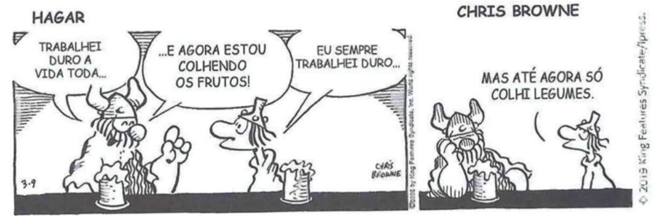
(In: Terra, Ernani. Práticas de leitura e escrita. São Paulo: Saraiva, 2019, p.46).
Sobre palavra "duro" utilizada no texto, escolha a alternativa que contenha APENAS afirmativas
corretas.
I. Poderia ser substituída, sem alterar o sentido, por arduamente.
II. Trata-se de um adjetivo.
III. Tem a função sintática de complemento nominal.
IV. Modifica a forma verbal "trabalhei".
I. Poderia ser substituída, sem alterar o sentido, por arduamente.
II. Trata-se de um adjetivo.
III. Tem a função sintática de complemento nominal.
IV. Modifica a forma verbal "trabalhei".
Ano: 2026
Banca:
NUCEPE
Órgão:
Prefeitura de Teresina - PI
Provas:
NUCEPE - 2026 - Prefeitura de Teresina - PI - Professor de Polivalência
|
NUCEPE - 2026 - Prefeitura de Teresina - PI - Professor de História |
NUCEPE - 2026 - Prefeitura de Teresina - PI - Professor de Língua inglesa |
NUCEPE - 2026 - Prefeitura de Teresina - PI - Professor de Língua Portuguesa |
NUCEPE - 2026 - Prefeitura de Teresina - PI - Professor de Matemática |
NUCEPE - 2026 - Prefeitura de Teresina - PI - Professor de Arte |
NUCEPE - 2026 - Prefeitura de Teresina - PI - Professor de Ciências |
NUCEPE - 2026 - Prefeitura de Teresina - PI - Professor de Educação Física |
NUCEPE - 2026 - Prefeitura de Teresina - PI - Professor de Ensino Religioso |
NUCEPE - 2026 - Prefeitura de Teresina - PI - Professor de Geografia |
Q4012291
Português
Texto associado
TEXTO 7
(In: Terra, Ernani. Práticas de leitura e escrita. São Paulo: Saraiva, 2019, p.46).
O humor presente na tira resulta do fato de:
Ano: 2026
Banca:
NUCEPE
Órgão:
Prefeitura de Teresina - PI
Provas:
NUCEPE - 2026 - Prefeitura de Teresina - PI - Professor de Polivalência
|
NUCEPE - 2026 - Prefeitura de Teresina - PI - Professor de História |
NUCEPE - 2026 - Prefeitura de Teresina - PI - Professor de Língua inglesa |
NUCEPE - 2026 - Prefeitura de Teresina - PI - Professor de Língua Portuguesa |
NUCEPE - 2026 - Prefeitura de Teresina - PI - Professor de Matemática |
NUCEPE - 2026 - Prefeitura de Teresina - PI - Professor de Arte |
NUCEPE - 2026 - Prefeitura de Teresina - PI - Professor de Ciências |
NUCEPE - 2026 - Prefeitura de Teresina - PI - Professor de Educação Física |
NUCEPE - 2026 - Prefeitura de Teresina - PI - Professor de Ensino Religioso |
NUCEPE - 2026 - Prefeitura de Teresina - PI - Professor de Geografia |
Q4012290
Português
Texto associado
TEXTO 6
Meio ambiente e educação no Brasil
O planeta Terra tem um ciclo de vida que acontece de forma natural, sob o controle da
natureza - a água, o solo, a flora, a fauna, entre outros elementos. Entretanto, o fato de o homem ser
racional e social o levou a modificar o ambiente natural e a construir empreendimentos
socioeconômicos.
Aqui no Brasil, a educação é a mais poderosa de todas as ferramentas de intervenção. É por
meio dela que se promove a construção de novos conhecimentos, transmitidos de geração em geração.
A educação ambiental deve ser entendida como um processo permanente, que possibilite a
cada cidadão compreender a complexidade do meio ambiente e assumir uma postura crítica e ativa na
busca por soluções.
A escola é um espaço privilegiado para a construção de valores éticos e sustentáveis. Mas a educação ambiental precisa ultrapassar seus muros e atingir a comunidade.
(IDE, Sahda Marta; IDE; Juliana Costardi. Meio ambiente e educação no Brasil. JornaldaUSP, São Paulo, 30 mar. 2023.
Disponível em: https://jornal.usp.br/artigos/meio-ambiente-e-educacao-no-brasil. Acesso em: 31 out. 2025.)
Sobre o trecho "escola é um espaço privilegiado para a construção de valores éticos
sustentáveis", escolha a alternativa que contenha APENAS as afirmativas corretas.
I. Tem sujeito composto.
II. O elemento coesivo introduz uma ideia de finalidade.
III. Possui um complemtento nominal.
IV. A forma verbal encontra-se no modo subjuntiivo.
I. Tem sujeito composto.
II. O elemento coesivo introduz uma ideia de finalidade.
III. Possui um complemtento nominal.
IV. A forma verbal encontra-se no modo subjuntiivo.
Ano: 2026
Banca:
NUCEPE
Órgão:
Prefeitura de Teresina - PI
Provas:
NUCEPE - 2026 - Prefeitura de Teresina - PI - Professor de Polivalência
|
NUCEPE - 2026 - Prefeitura de Teresina - PI - Professor de História |
NUCEPE - 2026 - Prefeitura de Teresina - PI - Professor de Língua inglesa |
NUCEPE - 2026 - Prefeitura de Teresina - PI - Professor de Língua Portuguesa |
NUCEPE - 2026 - Prefeitura de Teresina - PI - Professor de Matemática |
NUCEPE - 2026 - Prefeitura de Teresina - PI - Professor de Arte |
NUCEPE - 2026 - Prefeitura de Teresina - PI - Professor de Ciências |
NUCEPE - 2026 - Prefeitura de Teresina - PI - Professor de Educação Física |
NUCEPE - 2026 - Prefeitura de Teresina - PI - Professor de Ensino Religioso |
NUCEPE - 2026 - Prefeitura de Teresina - PI - Professor de Geografia |
Q4012289
Português
Texto associado
TEXTO 6
Meio ambiente e educação no Brasil
O planeta Terra tem um ciclo de vida que acontece de forma natural, sob o controle da
natureza - a água, o solo, a flora, a fauna, entre outros elementos. Entretanto, o fato de o homem ser
racional e social o levou a modificar o ambiente natural e a construir empreendimentos
socioeconômicos.
Aqui no Brasil, a educação é a mais poderosa de todas as ferramentas de intervenção. É por
meio dela que se promove a construção de novos conhecimentos, transmitidos de geração em geração.
A educação ambiental deve ser entendida como um processo permanente, que possibilite a
cada cidadão compreender a complexidade do meio ambiente e assumir uma postura crítica e ativa na
busca por soluções.
A escola é um espaço privilegiado para a construção de valores éticos e sustentáveis. Mas a educação ambiental precisa ultrapassar seus muros e atingir a comunidade.
(IDE, Sahda Marta; IDE; Juliana Costardi. Meio ambiente e educação no Brasil. JornaldaUSP, São Paulo, 30 mar. 2023.
Disponível em: https://jornal.usp.br/artigos/meio-ambiente-e-educacao-no-brasil. Acesso em: 31 out. 2025.)
O trecho "Aqui no Brasil, a educação é a mais poderosa de todas as ferramentas de intervenção"
apresenta o adjetivo no grau:
Ano: 2026
Banca:
NUCEPE
Órgão:
Prefeitura de Teresina - PI
Provas:
NUCEPE - 2026 - Prefeitura de Teresina - PI - Professor de Polivalência
|
NUCEPE - 2026 - Prefeitura de Teresina - PI - Professor de História |
NUCEPE - 2026 - Prefeitura de Teresina - PI - Professor de Língua inglesa |
NUCEPE - 2026 - Prefeitura de Teresina - PI - Professor de Língua Portuguesa |
NUCEPE - 2026 - Prefeitura de Teresina - PI - Professor de Matemática |
NUCEPE - 2026 - Prefeitura de Teresina - PI - Professor de Arte |
NUCEPE - 2026 - Prefeitura de Teresina - PI - Professor de Ciências |
NUCEPE - 2026 - Prefeitura de Teresina - PI - Professor de Educação Física |
NUCEPE - 2026 - Prefeitura de Teresina - PI - Professor de Ensino Religioso |
NUCEPE - 2026 - Prefeitura de Teresina - PI - Professor de Geografia |
Q4012288
Pedagogia
Texto associado
TEXTO 6
Meio ambiente e educação no Brasil
O planeta Terra tem um ciclo de vida que acontece de forma natural, sob o controle da
natureza - a água, o solo, a flora, a fauna, entre outros elementos. Entretanto, o fato de o homem ser
racional e social o levou a modificar o ambiente natural e a construir empreendimentos
socioeconômicos.
Aqui no Brasil, a educação é a mais poderosa de todas as ferramentas de intervenção. É por
meio dela que se promove a construção de novos conhecimentos, transmitidos de geração em geração.
A educação ambiental deve ser entendida como um processo permanente, que possibilite a
cada cidadão compreender a complexidade do meio ambiente e assumir uma postura crítica e ativa na
busca por soluções.
A escola é um espaço privilegiado para a construção de valores éticos e sustentáveis. Mas a educação ambiental precisa ultrapassar seus muros e atingir a comunidade.
(IDE, Sahda Marta; IDE; Juliana Costardi. Meio ambiente e educação no Brasil. JornaldaUSP, São Paulo, 30 mar. 2023.
Disponível em: https://jornal.usp.br/artigos/meio-ambiente-e-educacao-no-brasil. Acesso em: 31 out. 2025.)
Segundo o texto, qual é o papel da educação na relação entre o ser humano e o meio ambiente?
Ano: 2026
Banca:
NUCEPE
Órgão:
Prefeitura de Teresina - PI
Provas:
NUCEPE - 2026 - Prefeitura de Teresina - PI - Professor de Polivalência
|
NUCEPE - 2026 - Prefeitura de Teresina - PI - Professor de História |
NUCEPE - 2026 - Prefeitura de Teresina - PI - Professor de Língua inglesa |
NUCEPE - 2026 - Prefeitura de Teresina - PI - Professor de Língua Portuguesa |
NUCEPE - 2026 - Prefeitura de Teresina - PI - Professor de Matemática |
NUCEPE - 2026 - Prefeitura de Teresina - PI - Professor de Arte |
NUCEPE - 2026 - Prefeitura de Teresina - PI - Professor de Ciências |
NUCEPE - 2026 - Prefeitura de Teresina - PI - Professor de Educação Física |
NUCEPE - 2026 - Prefeitura de Teresina - PI - Professor de Ensino Religioso |
NUCEPE - 2026 - Prefeitura de Teresina - PI - Professor de Geografia |
Q4012287
Português
Texto associado
TEXTO 5
Velhas árvores
Olha estas velhas árvores, mais belas
Do que as árvores novas, mais amigas
Tanto mais belas quanto mais antigas,
Vencedoras da idade e das procelas...
O homem, a fera, e o inseto, à sombra delas
Vivem, livres de fomes e fadigas;
E em seus galhos abrigam-se as cantigas
E os amores das aves tagarelas.
Não choremos, amigo, a mocidade!
Envelheçamos rindo! Envelheçamos
Como as árvores fortes envelhecem:
Na glória da alegria e da bondade,
Agasalhando os pássaros nos ramos,
Dando sombra e consolo aos que padeсет!
(Olavo Bilac In: Poesia. Disponível em: http://www.citador.pt/poemas/velhas-arvores-olavo-bilac Acesso em 29/10/2025)
Acerca do vocábulo destacado em: "O homem, a fera, e o inseto, à sombra delas", assinale a
alternativa que contenha APENAS as afirmativas corretas.
I. Tem como referente "estas velhas árvores".
II É um pronome demonstrativo.
III. Exerce a função de adjunto adverbial.
IV. Está empregado com o valor de possessivo.
I. Tem como referente "estas velhas árvores".
II É um pronome demonstrativo.
III. Exerce a função de adjunto adverbial.
IV. Está empregado com o valor de possessivo.
Ano: 2026
Banca:
NUCEPE
Órgão:
Prefeitura de Teresina - PI
Provas:
NUCEPE - 2026 - Prefeitura de Teresina - PI - Professor de Polivalência
|
NUCEPE - 2026 - Prefeitura de Teresina - PI - Professor de História |
NUCEPE - 2026 - Prefeitura de Teresina - PI - Professor de Língua inglesa |
NUCEPE - 2026 - Prefeitura de Teresina - PI - Professor de Língua Portuguesa |
NUCEPE - 2026 - Prefeitura de Teresina - PI - Professor de Matemática |
NUCEPE - 2026 - Prefeitura de Teresina - PI - Professor de Arte |
NUCEPE - 2026 - Prefeitura de Teresina - PI - Professor de Ciências |
NUCEPE - 2026 - Prefeitura de Teresina - PI - Professor de Educação Física |
NUCEPE - 2026 - Prefeitura de Teresina - PI - Professor de Ensino Religioso |
NUCEPE - 2026 - Prefeitura de Teresina - PI - Professor de Geografia |
Q4012286
Português
Texto associado
TEXTO 5
Velhas árvores
Olha estas velhas árvores, mais belas
Do que as árvores novas, mais amigas
Tanto mais belas quanto mais antigas,
Vencedoras da idade e das procelas...
O homem, a fera, e o inseto, à sombra delas
Vivem, livres de fomes e fadigas;
E em seus galhos abrigam-se as cantigas
E os amores das aves tagarelas.
Não choremos, amigo, a mocidade!
Envelheçamos rindo! Envelheçamos
Como as árvores fortes envelhecem:
Na glória da alegria e da bondade,
Agasalhando os pássaros nos ramos,
Dando sombra e consolo aos que padeсет!
(Olavo Bilac In: Poesia. Disponível em: http://www.citador.pt/poemas/velhas-arvores-olavo-bilac Acesso em 29/10/2025)
A expressão "mais belas do que as árvores novas" é um exemplo de:
Ano: 2026
Banca:
NUCEPE
Órgão:
Prefeitura de Teresina - PI
Provas:
NUCEPE - 2026 - Prefeitura de Teresina - PI - Professor de Polivalência
|
NUCEPE - 2026 - Prefeitura de Teresina - PI - Professor de História |
NUCEPE - 2026 - Prefeitura de Teresina - PI - Professor de Língua inglesa |
NUCEPE - 2026 - Prefeitura de Teresina - PI - Professor de Língua Portuguesa |
NUCEPE - 2026 - Prefeitura de Teresina - PI - Professor de Matemática |
NUCEPE - 2026 - Prefeitura de Teresina - PI - Professor de Arte |
NUCEPE - 2026 - Prefeitura de Teresina - PI - Professor de Ciências |
NUCEPE - 2026 - Prefeitura de Teresina - PI - Professor de Educação Física |
NUCEPE - 2026 - Prefeitura de Teresina - PI - Professor de Ensino Religioso |
NUCEPE - 2026 - Prefeitura de Teresina - PI - Professor de Geografia |
Q4012285
Português
Texto associado
TEXTO 5
Velhas árvores
Olha estas velhas árvores, mais belas
Do que as árvores novas, mais amigas
Tanto mais belas quanto mais antigas,
Vencedoras da idade e das procelas...
O homem, a fera, e o inseto, à sombra delas
Vivem, livres de fomes e fadigas;
E em seus galhos abrigam-se as cantigas
E os amores das aves tagarelas.
Não choremos, amigo, a mocidade!
Envelheçamos rindo! Envelheçamos
Como as árvores fortes envelhecem:
Na glória da alegria e da bondade,
Agasalhando os pássaros nos ramos,
Dando sombra e consolo aos que padeсет!
(Olavo Bilac In: Poesia. Disponível em: http://www.citador.pt/poemas/velhas-arvores-olavo-bilac Acesso em 29/10/2025)
A palavra que melhor define a atitude assumida pelo eu poético em relação a seu interlocutor é:
Ano: 2026
Banca:
NUCEPE
Órgão:
Prefeitura de Teresina - PI
Provas:
NUCEPE - 2026 - Prefeitura de Teresina - PI - Professor de Polivalência
|
NUCEPE - 2026 - Prefeitura de Teresina - PI - Professor de História |
NUCEPE - 2026 - Prefeitura de Teresina - PI - Professor de Língua inglesa |
NUCEPE - 2026 - Prefeitura de Teresina - PI - Professor de Língua Portuguesa |
NUCEPE - 2026 - Prefeitura de Teresina - PI - Professor de Matemática |
NUCEPE - 2026 - Prefeitura de Teresina - PI - Professor de Arte |
NUCEPE - 2026 - Prefeitura de Teresina - PI - Professor de Ciências |
NUCEPE - 2026 - Prefeitura de Teresina - PI - Professor de Educação Física |
NUCEPE - 2026 - Prefeitura de Teresina - PI - Professor de Ensino Religioso |
NUCEPE - 2026 - Prefeitura de Teresina - PI - Professor de Geografia |
Q4012284
Português
Texto associado
TEXTO 4
Leia o Mundo, Transforme-se
Você já reparou como um livro pode mudar o seu dia?
Em apenas algumas páginas, você viaja, aprende, se emociona e cresce.
Ler é muito mais do que decifrar palavras — é descobrir novos olhares sobre o mundo.
Seja em casa, no ônibus ou na fila do banco, um livro cabe em qualquer lugar.
Comece hoje mesmo: escolha uma história e permita-se viver outras vidas.
(Uma campanha do Ministério da Cultura em parceria com o Programa Nacional do Livro e da Leitura)
Na frase "Você já reparou como um livro pode mudar o seu dia?", a forma verbal "pode" expressa:
Ano: 2026
Banca:
NUCEPE
Órgão:
Prefeitura de Teresina - PI
Provas:
NUCEPE - 2026 - Prefeitura de Teresina - PI - Professor de Polivalência
|
NUCEPE - 2026 - Prefeitura de Teresina - PI - Professor de História |
NUCEPE - 2026 - Prefeitura de Teresina - PI - Professor de Língua inglesa |
NUCEPE - 2026 - Prefeitura de Teresina - PI - Professor de Língua Portuguesa |
NUCEPE - 2026 - Prefeitura de Teresina - PI - Professor de Matemática |
NUCEPE - 2026 - Prefeitura de Teresina - PI - Professor de Arte |
NUCEPE - 2026 - Prefeitura de Teresina - PI - Professor de Ciências |
NUCEPE - 2026 - Prefeitura de Teresina - PI - Professor de Educação Física |
NUCEPE - 2026 - Prefeitura de Teresina - PI - Professor de Ensino Religioso |
NUCEPE - 2026 - Prefeitura de Teresina - PI - Professor de Geografia |
Q4012283
Português
Texto associado
TEXTO 4
Leia o Mundo, Transforme-se
Você já reparou como um livro pode mudar o seu dia?
Em apenas algumas páginas, você viaja, aprende, se emociona e cresce.
Ler é muito mais do que decifrar palavras — é descobrir novos olhares sobre o mundo.
Seja em casa, no ônibus ou na fila do banco, um livro cabe em qualquer lugar.
Comece hoje mesmo: escolha uma história e permita-se viver outras vidas.
(Uma campanha do Ministério da Cultura em parceria com o Programa Nacional do Livro e da Leitura)
A respeito do texto assinale a alternativa que contenha APENAS as afirmativas corretas.
I. Em "Leia o Mundo, Transforme-se" as formas verbais encontram-se no modo indicativo.
II. No trecho "Em apenas algumas páginas, você viaja" a linguagem é figurada.
III. Utiliza uma linguagem persuasiva com recursos expressivos e emocionais.
IV. Em "um livro cabe em qualquer lugar" o verbo é transitivo e regular.
Estão CORRETAS.
I. Em "Leia o Mundo, Transforme-se" as formas verbais encontram-se no modo indicativo.
II. No trecho "Em apenas algumas páginas, você viaja" a linguagem é figurada.
III. Utiliza uma linguagem persuasiva com recursos expressivos e emocionais.
IV. Em "um livro cabe em qualquer lugar" o verbo é transitivo e regular.
Estão CORRETAS.
Ano: 2026
Banca:
NUCEPE
Órgão:
Prefeitura de Teresina - PI
Provas:
NUCEPE - 2026 - Prefeitura de Teresina - PI - Professor de Polivalência
|
NUCEPE - 2026 - Prefeitura de Teresina - PI - Professor de História |
NUCEPE - 2026 - Prefeitura de Teresina - PI - Professor de Língua inglesa |
NUCEPE - 2026 - Prefeitura de Teresina - PI - Professor de Língua Portuguesa |
NUCEPE - 2026 - Prefeitura de Teresina - PI - Professor de Matemática |
NUCEPE - 2026 - Prefeitura de Teresina - PI - Professor de Arte |
NUCEPE - 2026 - Prefeitura de Teresina - PI - Professor de Ciências |
NUCEPE - 2026 - Prefeitura de Teresina - PI - Professor de Educação Física |
NUCEPE - 2026 - Prefeitura de Teresina - PI - Professor de Ensino Religioso |
NUCEPE - 2026 - Prefeitura de Teresina - PI - Professor de Geografia |
Q4012282
Português
Texto associado
TEXTO 4
Leia o Mundo, Transforme-se
Você já reparou como um livro pode mudar o seu dia?
Em apenas algumas páginas, você viaja, aprende, se emociona e cresce.
Ler é muito mais do que decifrar palavras — é descobrir novos olhares sobre o mundo.
Seja em casa, no ônibus ou na fila do banco, um livro cabe em qualquer lugar.
Comece hoje mesmo: escolha uma história e permita-se viver outras vidas.
(Uma campanha do Ministério da Cultura em parceria com o Programa Nacional do Livro e da Leitura)
O principal objetivo do texto é:
Ano: 2026
Banca:
NUCEPE
Órgão:
Prefeitura de Teresina - PI
Provas:
NUCEPE - 2026 - Prefeitura de Teresina - PI - Professor de Polivalência
|
NUCEPE - 2026 - Prefeitura de Teresina - PI - Professor de História |
NUCEPE - 2026 - Prefeitura de Teresina - PI - Professor de Língua inglesa |
NUCEPE - 2026 - Prefeitura de Teresina - PI - Professor de Língua Portuguesa |
NUCEPE - 2026 - Prefeitura de Teresina - PI - Professor de Matemática |
NUCEPE - 2026 - Prefeitura de Teresina - PI - Professor de Arte |
NUCEPE - 2026 - Prefeitura de Teresina - PI - Professor de Ciências |
NUCEPE - 2026 - Prefeitura de Teresina - PI - Professor de Educação Física |
NUCEPE - 2026 - Prefeitura de Teresina - PI - Professor de Ensino Religioso |
NUCEPE - 2026 - Prefeitura de Teresina - PI - Professor de Geografia |
Q4012281
Português
Texto associado
TEXTO3
"O nosso primeiro natal de família, depois da morte de meu pai acontecida cinco meses antes, foi de
consequências decisivas pra a felicidade familiar. Nós sempre fôramos familiarmente felizes, nesse
sentido muito abstrato da felicidade: gente honesta, sem crimes, lar sem brigas internas nem graves
dificuldades econômicas. Mas, devido principalmente à natureza cinzenta de meu pai, ser desprovido de
qualquer lirismo, duma exemplaridade incapaz, alcoachoada no medríocre, sempre nos faltara aquele
aproveitamento da vida, aquele gosto pelas coisas materiais, um vinho bom, uma estação de águas,
aquisição de geladeira, coisas assim. Meu pai de um bom errado, quase dramático, o puro sangue do
desmancha-prazeres."
(Andrade, Mario. O peru de natal. In: Contos novos. Rio de Janeiro: Nova Fronteira, 2015, p.74)
Em "sempre nos faltara aquele aproveitamento da vida", o pronome "nos" tem função de:

 Conheça nossos planos