Questões de Concurso Sobre pedagogia
Foram encontradas 152.287 questões


Ano: 2026
Banca:
FGV
Órgão:
SEDUC-SP
Prova:
FGV - 2026 - SEDUC-SP - Professor de Ensino Fundamental e Ensino Médio – Anos Iniciais |
Q4246772
Pedagogia
Leia a notícia a seguir
Copa do Mundo é tema de projeto pedagógico para ampliar o aprendizado na Educação Infantil. Com inspiração do torneio esportivo em sala de aula, iniciativa ajuda a desenvolver habilidades socioemocionais, ampliar o repertório cultural e tornar o aprendizado mais significativo. Por Maria Avelar - 11/06/2026
A Copa do Mundo é um dos eventos que mais mobilizam pessoas em diferentes países e culturas. Nas escolas, esse interesse natural das crianças pelo torneio pode se transformar em uma oportunidade pedagógica capaz de promover aprendizagens que vão muito além do futebol. Utilizando o tema como ponto de partida, educadores conseguem trabalhar conteúdos relacionados à diversidade cultural, linguagem, movimento, convivência, cidadania e habilidades socioemocionais.
https://gazetadasemana.com.br/noticia/285738
Inspirado pela proximidade da Copa do Mundo, um professor dos Anos Iniciais do Ensino Fundamental propõe um projeto temático de letramento. Em uma das aulas, utiliza a notícia como texto de referência para desenvolver atividades de linguagem.
Considerando os objetivos do ensino de Língua Portuguesa nos Anos Iniciais, especialmente no contexto da alfabetização e do letramento, a proposta pedagógica mais adequada deve priorizar
Copa do Mundo é tema de projeto pedagógico para ampliar o aprendizado na Educação Infantil. Com inspiração do torneio esportivo em sala de aula, iniciativa ajuda a desenvolver habilidades socioemocionais, ampliar o repertório cultural e tornar o aprendizado mais significativo. Por Maria Avelar - 11/06/2026
A Copa do Mundo é um dos eventos que mais mobilizam pessoas em diferentes países e culturas. Nas escolas, esse interesse natural das crianças pelo torneio pode se transformar em uma oportunidade pedagógica capaz de promover aprendizagens que vão muito além do futebol. Utilizando o tema como ponto de partida, educadores conseguem trabalhar conteúdos relacionados à diversidade cultural, linguagem, movimento, convivência, cidadania e habilidades socioemocionais.
https://gazetadasemana.com.br/noticia/285738
Inspirado pela proximidade da Copa do Mundo, um professor dos Anos Iniciais do Ensino Fundamental propõe um projeto temático de letramento. Em uma das aulas, utiliza a notícia como texto de referência para desenvolver atividades de linguagem.
Considerando os objetivos do ensino de Língua Portuguesa nos Anos Iniciais, especialmente no contexto da alfabetização e do letramento, a proposta pedagógica mais adequada deve priorizar
Ano: 2026
Banca:
FGV
Órgão:
SEDUC-SP
Prova:
FGV - 2026 - SEDUC-SP - Professor de Ensino Fundamental e Ensino Médio – Anos Iniciais |
Q4246771
Pedagogia
Em uma atividade avaliativa de Língua Portuguesa, o professor
apresentou aos estudantes do 4º ano do Ensino Fundamental um
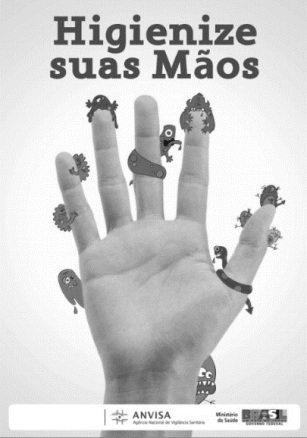
cartaz da campanha da Anvisa sobre a importância da higienização
das mãos.
 https://www.aracaju.se.gov.br/agencia_de_noticias
Após a leitura da peça, o docente solicitou que explicassem a função dos elementos imagéticos em relação ao objetivo da campanha: Além das palavras, o cartaz utiliza imagens para transmitir uma mensagem. Expliquem qual é a importância dessas imagens para convencer as pessoas a higienizarem as mãos.
Ao analisar as respostas produzidas pelos estudantes, o professor identificou que a atividade permitiu verificar se eles compreenderam a função dos elementos imagéticos presentes na campanha em relação ao objetivo comunicativo do texto.
Nesse contexto, a aprendizagem esperada pelo professor corresponde à compreensão de que os elementos imagéticos
https://www.aracaju.se.gov.br/agencia_de_noticias
Após a leitura da peça, o docente solicitou que explicassem a função dos elementos imagéticos em relação ao objetivo da campanha: Além das palavras, o cartaz utiliza imagens para transmitir uma mensagem. Expliquem qual é a importância dessas imagens para convencer as pessoas a higienizarem as mãos.
Ao analisar as respostas produzidas pelos estudantes, o professor identificou que a atividade permitiu verificar se eles compreenderam a função dos elementos imagéticos presentes na campanha em relação ao objetivo comunicativo do texto.
Nesse contexto, a aprendizagem esperada pelo professor corresponde à compreensão de que os elementos imagéticos
Ano: 2026
Banca:
FGV
Órgão:
SEDUC-SP
Prova:
FGV - 2026 - SEDUC-SP - Professor de Ensino Fundamental e Ensino Médio – Anos Iniciais |
Q4246770
Pedagogia
Em uma atividade avaliativa no 5º ano do Ensino Fundamental, o
professor trabalhou a fábula de Esopo A Lebre e a Tartaruga, cuja
moral destaca que a paciência e a disciplina contribuem para a
conquista dos objetivos. Após a leitura da fábula, o professor
solicitou que os estudantes explicassem a relação entre o
comportamento das personagens e a moral da história.
Ao analisar as respostas, observou que muitos estudantes apenas recontaram a sequência dos acontecimentos, sem explicitar a relação entre as ações das personagens e o ensinamento da fábula.
Considerando esse diagnóstico, assinale a opção que indica a intervenção pedagógica mais adequada para favorecer o desenvolvimento da habilidade de relacionar os acontecimentos da narrativa à moral da fábula.
Ao analisar as respostas, observou que muitos estudantes apenas recontaram a sequência dos acontecimentos, sem explicitar a relação entre as ações das personagens e o ensinamento da fábula.
Considerando esse diagnóstico, assinale a opção que indica a intervenção pedagógica mais adequada para favorecer o desenvolvimento da habilidade de relacionar os acontecimentos da narrativa à moral da fábula.
Ano: 2026
Banca:
FGV
Órgão:
SEDUC-SP
Prova:
FGV - 2026 - SEDUC-SP - Professor de Ensino Fundamental e Ensino Médio – Anos Iniciais |
Q4246769
Pedagogia
Ou isto ou aquilo
Ou se tem chuva e não se tem sol, ou se tem sol e não se tem chuva!
Ou se calça a luva e não se põe o anel, ou se põe o anel e não se calça a luva!
Quem sobe nos ares não fica no chão, quem fica no chão não sobe nos ares.
É uma grande pena que não se possa estar ao mesmo tempo nos dois lugares!
Ou guardo o dinheiro e não compro o doce, ou compro o doce e gasto o dinheiro.
Ou isto ou aquilo: ou isto ou aquilo… e vivo escolhendo o dia inteiro!
Não sei se brinco, não sei se estudo, se saio correndo ou fico tranquilo.
Mas não consegui entender ainda qual é melhor: se é isto ou aquilo.
MEIRELES, Cecília. Ou isto ou aquilo - Edição comemorativa - 60 anos. Global Editora: São Paulo, 2024.
Ao utilizar o poema em uma atividade de leitura nos Anos Iniciais do Ensino Fundamental, o professor pretende desenvolver, de forma articulada, a fluência leitora e a análise linguística. Para isso, a prática pedagógica mais adequada consiste em
Ou se tem chuva e não se tem sol, ou se tem sol e não se tem chuva!
Ou se calça a luva e não se põe o anel, ou se põe o anel e não se calça a luva!
Quem sobe nos ares não fica no chão, quem fica no chão não sobe nos ares.
É uma grande pena que não se possa estar ao mesmo tempo nos dois lugares!
Ou guardo o dinheiro e não compro o doce, ou compro o doce e gasto o dinheiro.
Ou isto ou aquilo: ou isto ou aquilo… e vivo escolhendo o dia inteiro!
Não sei se brinco, não sei se estudo, se saio correndo ou fico tranquilo.
Mas não consegui entender ainda qual é melhor: se é isto ou aquilo.
MEIRELES, Cecília. Ou isto ou aquilo - Edição comemorativa - 60 anos. Global Editora: São Paulo, 2024.
Ao utilizar o poema em uma atividade de leitura nos Anos Iniciais do Ensino Fundamental, o professor pretende desenvolver, de forma articulada, a fluência leitora e a análise linguística. Para isso, a prática pedagógica mais adequada consiste em
Ano: 2026
Banca:
FGV
Órgão:
SEDUC-SP
Prova:
FGV - 2026 - SEDUC-SP - Professor de Ensino Fundamental e Ensino Médio – Anos Iniciais |
Q4246768
Pedagogia
Dileta Delmanto ressalta que a escola deve assumir como uma de
suas principais responsabilidades a formação de leitores,
direcionando seu trabalho para práticas que desenvolvam nos
estudantes a capacidade de utilizar a leitura para enfrentar os
desafios da vida em sociedade. A autora acrescenta que, diante
das constantes transformações do mundo contemporâneo, cabe à
escola oferecer aos estudantes instrumentos que lhes permitam
buscar, analisar, selecionar, relacionar e organizar as informações
complexas do mundo contemporâneo.
GONÇALVES, Debora S. N. A importância da leitura nos anos iniciais escolares. In: https://www.ffp.uerj.br/arquivos/dedu/monografias/dsng.pdf
Considerando a concepção de leitura apresentada no excerto, assinale a prática pedagógica mais coerente com a formação de leitores capazes de utilizar a leitura para atuar nas diferentes situações da vida em sociedade.
GONÇALVES, Debora S. N. A importância da leitura nos anos iniciais escolares. In: https://www.ffp.uerj.br/arquivos/dedu/monografias/dsng.pdf
Considerando a concepção de leitura apresentada no excerto, assinale a prática pedagógica mais coerente com a formação de leitores capazes de utilizar a leitura para atuar nas diferentes situações da vida em sociedade.
Ano: 2026
Banca:
FGV
Órgão:
SEDUC-SP
Prova:
FGV - 2026 - SEDUC-SP - Professor de Ensino Fundamental e Ensino Médio – Anos Iniciais |
Q4246766
Pedagogia
A oralidade constitui uma prática social interativa voltada para fins
comunicativos, que se realiza por meio de diferentes gêneros
textuais fundamentados na modalidade sonora, variando de
situações mais informais a mais formais, conforme o contexto de
uso. O letramento, por sua vez, compreende as diversas práticas
sociais de leitura e escrita. A fala é uma forma de produção textual-discursiva na modalidade oral, realizada sem o emprego de
tecnologias além do próprio aparato fonador humano. A escrita,
por sua vez, é uma forma de produção textual-discursiva com
características materiais próprias, marcada por sua constituição
gráfica.
Adaptado de MARCUSCHI, Luiz Antônio. Da fala para a escrita: atividades de retextualização. São Paulo: Cortez, 2001. p.93.
Com base nas concepções de oralidade, fala, escrita e letramento apresentadas no excerto, assinale a prática pedagógica que melhor traduz essas ideias no contexto dos anos iniciais do Ensino Fundamental.
Adaptado de MARCUSCHI, Luiz Antônio. Da fala para a escrita: atividades de retextualização. São Paulo: Cortez, 2001. p.93.
Com base nas concepções de oralidade, fala, escrita e letramento apresentadas no excerto, assinale a prática pedagógica que melhor traduz essas ideias no contexto dos anos iniciais do Ensino Fundamental.
Ano: 2026
Banca:
FGV
Órgão:
SEDUC-SP
Prova:
FGV - 2026 - SEDUC-SP - Professor de Ensino Fundamental e Ensino Médio – Anos Iniciais |
Q4246765
Pedagogia
Na prática da expressão oral, o envolvimento lúdico e a
informalidade parecem predominar nas atividades propostas na
escola, particularmente por meio daquele que vem sendo o
instrumento privilegiado de acompanhamento das aulas: o livro
didático. Ordens como "converse com seu colega", "exponha sua
opinião" e "discuta em grupo", tão vagas quanto pouco razoáveis,
costumam suceder-se nas atividades propostas, em geral, ao final
das lições, sem qualquer sistematização ou justificativa.
Ora, a mera oralidade não caracteriza pedagogicamente a atividade de uso da linguagem em situações formais e informais de comunicação oral.
Adaptado de TEIXEIRA, Lucia. Gêneros orais na escola. In: https://doi.org/10.1590/S2176-45732012000100014
Considerando as críticas apresentadas no excerto sobre o trabalho com os gêneros orais na escola, é correto afirmar que o professor dos Anos Iniciais do Ensino Fundamental deve
Ora, a mera oralidade não caracteriza pedagogicamente a atividade de uso da linguagem em situações formais e informais de comunicação oral.
Adaptado de TEIXEIRA, Lucia. Gêneros orais na escola. In: https://doi.org/10.1590/S2176-45732012000100014
Considerando as críticas apresentadas no excerto sobre o trabalho com os gêneros orais na escola, é correto afirmar que o professor dos Anos Iniciais do Ensino Fundamental deve
Ano: 2026
Banca:
FGV
Órgão:
SEDUC-SP
Prova:
FGV - 2026 - SEDUC-SP - Professor de Ensino Fundamental e Ensino Médio – Anos Iniciais |
Q4246764
Pedagogia
Gêneros discursivos são tipos relativamente estáveis de
enunciados que, produzidos nas diferentes esferas de utilização da
língua, organizam o discurso. Todo e qualquer discurso está
vinculado à história e ao mundo social.
BAKHTIN, M. Estética da criação verbal. São Paulo: Martins Fontes, 2003. p. 279
A concepção de gêneros discursivos apresentada por Bakhtin implica que o ensino de Língua Portuguesa deve considerar a linguagem em seus contextos de uso. Nessa perspectiva, assinale a prática pedagógica mais coerente com esse entendimento.
BAKHTIN, M. Estética da criação verbal. São Paulo: Martins Fontes, 2003. p. 279
A concepção de gêneros discursivos apresentada por Bakhtin implica que o ensino de Língua Portuguesa deve considerar a linguagem em seus contextos de uso. Nessa perspectiva, assinale a prática pedagógica mais coerente com esse entendimento.
Ano: 2026
Banca:
FGV
Órgão:
SEDUC-SP
Prova:
FGV - 2026 - SEDUC-SP - Professor de Ensino Fundamental e Ensino Médio – Anos Iniciais |
Q4246763
Pedagogia
Leia o texto a seguir.
A BNCC reconhece a especificidade da alfabetização e propõe a mescla de duas linhas de ensino: a primeira indica a centralidade do texto e o trabalho com as práticas sociais de leitura e escrita; a segunda soma a isso o planejamento de atividades que permitam aos alunos refletirem sobre o sistema de escrita alfabética (estudar, por exemplo, as relações entre sons e letras e investigar com quantas e quais letras se escreve uma palavra, e onde elas devem estar posicionadas ou como se organizam as sílabas). Uma das funções da escola hoje é alfabetizar os alunos em um contexto letrado, ou seja, em um contexto que envolva as práticas sociais de leitura e escrita. Com essa aprendizagem, os alunos tornam-se usuários da escrita em suas diferentes funções sociais, mesmo não estando ainda alfabetizados. Para se alfabetizar, é preciso compreender para que serve a escrita, atribuindo-lhe significado e percebendo o que ela representa e como representa.
Adaptado de https://www.revistamaiseducacao.com/en/artigosv5-n9-novembro2022/18/
Ao discutir as especificidades da alfabetização na BNCC, a concepção apresentada no excerto orienta práticas pedagógicas que visam
A BNCC reconhece a especificidade da alfabetização e propõe a mescla de duas linhas de ensino: a primeira indica a centralidade do texto e o trabalho com as práticas sociais de leitura e escrita; a segunda soma a isso o planejamento de atividades que permitam aos alunos refletirem sobre o sistema de escrita alfabética (estudar, por exemplo, as relações entre sons e letras e investigar com quantas e quais letras se escreve uma palavra, e onde elas devem estar posicionadas ou como se organizam as sílabas). Uma das funções da escola hoje é alfabetizar os alunos em um contexto letrado, ou seja, em um contexto que envolva as práticas sociais de leitura e escrita. Com essa aprendizagem, os alunos tornam-se usuários da escrita em suas diferentes funções sociais, mesmo não estando ainda alfabetizados. Para se alfabetizar, é preciso compreender para que serve a escrita, atribuindo-lhe significado e percebendo o que ela representa e como representa.
Adaptado de https://www.revistamaiseducacao.com/en/artigosv5-n9-novembro2022/18/
Ao discutir as especificidades da alfabetização na BNCC, a concepção apresentada no excerto orienta práticas pedagógicas que visam
Ano: 2026
Banca:
FGV
Órgão:
SEDUC-SP
Prova:
FGV - 2026 - SEDUC-SP - Professor de Ensino Fundamental e Ensino Médio – Anos Iniciais |
Q4246760
Pedagogia
A transição dos números naturais para os números racionais exige
que os estudantes compreendam que as regras de comparação de
ordens decimais diferem daquelas aplicadas aos números inteiros.
Durante uma atividade, um professor pediu que a turma organizasse os seguintes números em ordem crescente, do menor para o maior:
0,7 0,25 0,125 0,62
Um aluno apresentou a seguinte resposta: "0,7 é o menor de todos porque só tem uma casa, e o maior é 0,125 porque 125 tem três algarismos".
Assinale a opção que apresenta o equívoco conceitual associado à dificuldade do aluno na comparação de números decimais.
Durante uma atividade, um professor pediu que a turma organizasse os seguintes números em ordem crescente, do menor para o maior:
0,7 0,25 0,125 0,62
Um aluno apresentou a seguinte resposta: "0,7 é o menor de todos porque só tem uma casa, e o maior é 0,125 porque 125 tem três algarismos".
Assinale a opção que apresenta o equívoco conceitual associado à dificuldade do aluno na comparação de números decimais.
Ano: 2026
Banca:
FGV
Órgão:
SEDUC-SP
Prova:
FGV - 2026 - SEDUC-SP - Professor de Ensino Fundamental e Ensino Médio – Anos Iniciais |
Q4246753
Pedagogia
Em uma atividade sobre Tratamento da Informação, a professora
apresentou uma tabela de frequências contendo a preferência
esportiva dos alunos.
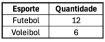
Em seguida, apresentou os mesmos dados em um gráfico de barras verticais.
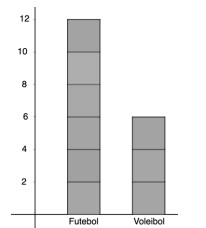
Ao analisar o gráfico, uma aluna afirmou: "Professora, a barra do futebol tem 6 quadradinhos pintados de altura e a do voleibol tem 3 quadradinhos. Então, o futebol recebeu exatamente 3 votos a mais que o vôlei."
Tomando a resposta da aluna como uma evidência de sua forma de interpretar representações estatísticas, a professora identificou que ela confundiu a unidade geométrica de construção do gráfico (os quadradinhos da malha) com a unidade de medida da variável representada (os votos), desconsiderando a escala indicada no eixo vertical.
A docente pretende realizar uma intervenção que favoreça a compreensão da relação entre a escala gráfica e os valores representados, levando a estudante a revisar sua interpretação de forma autônoma.
O encaminhamento pedagógico matematicamente correto e didaticamente mais adequado é
Em seguida, apresentou os mesmos dados em um gráfico de barras verticais.
Ao analisar o gráfico, uma aluna afirmou: "Professora, a barra do futebol tem 6 quadradinhos pintados de altura e a do voleibol tem 3 quadradinhos. Então, o futebol recebeu exatamente 3 votos a mais que o vôlei."
Tomando a resposta da aluna como uma evidência de sua forma de interpretar representações estatísticas, a professora identificou que ela confundiu a unidade geométrica de construção do gráfico (os quadradinhos da malha) com a unidade de medida da variável representada (os votos), desconsiderando a escala indicada no eixo vertical.
A docente pretende realizar uma intervenção que favoreça a compreensão da relação entre a escala gráfica e os valores representados, levando a estudante a revisar sua interpretação de forma autônoma.
O encaminhamento pedagógico matematicamente correto e didaticamente mais adequado é
Ano: 2026
Banca:
FGV
Órgão:
SEDUC-SP
Prova:
FGV - 2026 - SEDUC-SP - Professor de Ensino Fundamental e Ensino Médio – Anos Iniciais |
Q4246752
Pedagogia
Em uma turma de 4º ano do Ensino Fundamental, o professor
apresenta aos estudantes duas figuras representando o mesmo
inteiro.
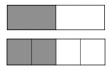
Uma das figuras está dividida em 2 partes iguais, sendo uma delas destacada. A outra figura está dividida em 4 partes iguais, sendo duas delas destacadas. Ao observar as representações, um aluno afirma: "Professor, a segunda figura mostra uma quantidade maior, porque ela tem duas partes pintadas e a primeira tem apenas uma.".
Considerando o raciocínio utilizado pelo aluno e o objetivo de favorecer a construção do conceito de equivalência de frações, assinale a opção que apresenta o encaminhamento pedagógico matematicamente correto e didaticamente mais adequado.
Uma das figuras está dividida em 2 partes iguais, sendo uma delas destacada. A outra figura está dividida em 4 partes iguais, sendo duas delas destacadas. Ao observar as representações, um aluno afirma: "Professor, a segunda figura mostra uma quantidade maior, porque ela tem duas partes pintadas e a primeira tem apenas uma.".
Considerando o raciocínio utilizado pelo aluno e o objetivo de favorecer a construção do conceito de equivalência de frações, assinale a opção que apresenta o encaminhamento pedagógico matematicamente correto e didaticamente mais adequado.
Ano: 2026
Banca:
FGV
Órgão:
SEDUC-SP
Prova:
FGV - 2026 - SEDUC-SP - Professor de Ensino Fundamental e Ensino Médio – Anos Iniciais |
Q4246751
Pedagogia
Em uma sala de aula de 3º ano do Ensino Fundamental, durante
uma atividade de localização de números naturais na reta
numérica, um aluno afirma: "Professora, o 5 vem logo depois do 4.
Então, não existe nenhum número no mundo entre o 4 e o 5,
certo?".
A fala do aluno revela uma hipótese baseada na ideia de que, no conjunto dos números naturais, cada número possui um sucessor imediato e que, portanto, entre dois números consecutivos não haveria outros valores possíveis.
Considere essa hipótese e a necessidade de favorecer a construção progressiva do conceito de número, sem antecipar inadequadamente conteúdos ou criar obstáculos para futuras ampliações numéricas.
Dito isso, assinale a opção que indica a intervenção docente matematicamente correta e didaticamente adequada.
A fala do aluno revela uma hipótese baseada na ideia de que, no conjunto dos números naturais, cada número possui um sucessor imediato e que, portanto, entre dois números consecutivos não haveria outros valores possíveis.
Considere essa hipótese e a necessidade de favorecer a construção progressiva do conceito de número, sem antecipar inadequadamente conteúdos ou criar obstáculos para futuras ampliações numéricas.
Dito isso, assinale a opção que indica a intervenção docente matematicamente correta e didaticamente adequada.
Ano: 2026
Banca:
FGV
Órgão:
SEDUC-SP
Prova:
FGV - 2026 - SEDUC-SP - Professor de Ensino Fundamental e Ensino Médio – Sociologia |
Q4246745
Pedagogia
O professor de Sociologia propôs uma atividade sobre os fatores
que explicam o sucesso escolar. Inicialmente, os estudantes
registraram suas hipóteses com base em suas próprias
percepções. Na discussão, surgiram explicações centradas no
esforço individual e outras relacionadas a fatores como renda,
escolaridade familiar, acesso a bens culturais e qualidade da
escola. Em seguida, o professor solicitou que analisassem como
suas experiências e valores influenciaram suas interpretações e
reformulassem o problema de pesquisa com base em critérios
científicos.
A atividade desenvolvida exemplifica aspectos da reflexividade científica em Pierre Bourdieu. Com base nela, analise as afirmativas a seguir e assinale (V) para a verdadeira e (F) para a falsa.
( ) A diversidade de hipóteses apresentadas pelos grupos na primeira etapa da atividade evidenciou que o conhecimento sociológico exige a análise reflexiva dos condicionantes sociais que incidem sobre o próprio pesquisador.
( ) A reformulação do problema de pesquisa após o exame crítico das hipóteses iniciais evidencia a vigilância epistemológica, que exige a revisão crítica permanente das categorias mobilizadas pelo pesquisador.
( ) A definição de estratégias metodológicas comuns na etapa final da atividade demonstra que a neutralidade científica decorre da observância rigorosa dos procedimentos de investigação.
As afirmativas são, respectivamente,
A atividade desenvolvida exemplifica aspectos da reflexividade científica em Pierre Bourdieu. Com base nela, analise as afirmativas a seguir e assinale (V) para a verdadeira e (F) para a falsa.
( ) A diversidade de hipóteses apresentadas pelos grupos na primeira etapa da atividade evidenciou que o conhecimento sociológico exige a análise reflexiva dos condicionantes sociais que incidem sobre o próprio pesquisador.
( ) A reformulação do problema de pesquisa após o exame crítico das hipóteses iniciais evidencia a vigilância epistemológica, que exige a revisão crítica permanente das categorias mobilizadas pelo pesquisador.
( ) A definição de estratégias metodológicas comuns na etapa final da atividade demonstra que a neutralidade científica decorre da observância rigorosa dos procedimentos de investigação.
As afirmativas são, respectivamente,
Ano: 2026
Banca:
Avança SP
Órgão:
Prefeitura de Ubatuba - SP
Prova:
Avança SP - 2026 - Prefeitura de Ubatuba - SP - Professor da Educação Básica II - Arte |
Q4246271
Pedagogia
Segundo os parâmetros e diretrizes conceituais que orientam o ensino de Artes, a linguagem musical
possui uma natureza integradora que articula tanto a dimensão pessoal quanto a cultural. Assinale a
alternativa que indica corretamente, de forma literal, como a Música é conceituada nesse referencial
teórico:
Ano: 2026
Banca:
Avança SP
Órgão:
Prefeitura de Ubatuba - SP
Prova:
Avança SP - 2026 - Prefeitura de Ubatuba - SP - Professor da Educação Básica II - Arte |
Q4246265
Pedagogia
No livro Jogos Teatrais Na Sala de Aula, Viola Spolin fundamenta sua prática pedagógica dialogando
com importantes teorias do desenvolvimento humano. Ao resgatar os estudos de Jean Piaget sobre o
agrupamento e as interações sociais, a obra destaca que o desenvolvimento moral infantil transita entre
dois tipos de moral.
Com base nos fundamentos teóricos dessa obra, assinale a alternativa que apresenta corretamente esses dois tipos de moral:
Com base nos fundamentos teóricos dessa obra, assinale a alternativa que apresenta corretamente esses dois tipos de moral:
Ano: 2026
Banca:
Avança SP
Órgão:
Prefeitura de Ubatuba - SP
Prova:
Avança SP - 2026 - Prefeitura de Ubatuba - SP - Professor da Educação Básica II - Arte |
Q4246262
Pedagogia
A Base Nacional Comum Curricular (BNCC) aborda a organização das linguagens artísticas e a
importância de promover conexões no processo de ensino e aprendizagem. No contexto das diretrizes
para o componente curricular Arte, complete a lacuna da frase a seguir:
"Ainda que, na BNCC, as linguagens artísticas das Artes visuais, da Dança, da Música e do Teatro sejam consideradas em suas especificidades, as experiências e vivências dos sujeitos em sua relação com a Arte ."
Assinale a alternativa que completa a lacuna de forma correta:
"Ainda que, na BNCC, as linguagens artísticas das Artes visuais, da Dança, da Música e do Teatro sejam consideradas em suas especificidades, as experiências e vivências dos sujeitos em sua relação com a Arte ."
Assinale a alternativa que completa a lacuna de forma correta:
Ano: 2026
Banca:
Avança SP
Órgão:
Prefeitura de Ubatuba - SP
Prova:
Avança SP - 2026 - Prefeitura de Ubatuba - SP - Professor da Educação Básica II - Arte |
Q4246259
Pedagogia
As competências específicas de Arte orientam o trabalho pedagógico e o desenvolvimento dos
estudantes ao longo do Ensino Fundamental. Ao tratar da valorização dos bens culturais e das memórias
de diferentes povos, assinale a alternativa que apresenta a diretriz para a abordagem do patrimônio
artístico:
Ano: 2026
Banca:
Avança SP
Órgão:
Prefeitura de Ubatuba - SP
Provas:
Avança SP - 2026 - Prefeitura de Ubatuba - SP - Professor da Educação Básica II - Arte
|
Avança SP - 2026 - Prefeitura de Ubatuba - SP - Professor da Educação Básica II - Ciências |
Avança SP - 2026 - Prefeitura de Ubatuba - SP - Professor da Educação Básica II - História |
Avança SP - 2026 - Prefeitura de Ubatuba - SP - Professor da Educação Básica II - Português |
Avança SP - 2026 - Prefeitura de Ubatuba - SP - Professor da Educação Básica II - Educação Física |
Q4246247
Pedagogia
A Política Nacional de Educação Especial
Inclusiva institui como um dos objetivos do
Atendimento Educacional Especializado (AEE)
o seguinte:
Ano: 2026
Banca:
Avança SP
Órgão:
Prefeitura de Ubatuba - SP
Provas:
Avança SP - 2026 - Prefeitura de Ubatuba - SP - Professor da Educação Básica II - Arte
|
Avança SP - 2026 - Prefeitura de Ubatuba - SP - Professor da Educação Básica II - Ciências |
Avança SP - 2026 - Prefeitura de Ubatuba - SP - Professor da Educação Básica II - História |
Avança SP - 2026 - Prefeitura de Ubatuba - SP - Professor da Educação Básica II - Português |
Avança SP - 2026 - Prefeitura de Ubatuba - SP - Professor da Educação Básica II - Educação Física |
Q4246246
Pedagogia
Analise as afirmativas a seguir. Segundo as
Diretrizes Nacionais da Educação em Direitos
Humanos, a inserção dos conhecimentos
concernentes à Educação em Direitos Humanos
na organização dos currículos da Educação
Básica poderá ocorrer da(s) seguinte(s)
forma(s):
I. Pela transversalidade, por meio de temas relacionados aos Direitos Humanos e tratados interdisciplinarmente.
II. Como um conteúdo específico de uma das disciplinas já existentes no currículo escolar.
III. De maneira mista, ou seja, combinando transversalidade e disciplinaridade.
IV. Quaisquer outras formas mesmo que inobservadas as especificidades dos níveis e modalidades.
Assinale a alternativa correta.
I. Pela transversalidade, por meio de temas relacionados aos Direitos Humanos e tratados interdisciplinarmente.
II. Como um conteúdo específico de uma das disciplinas já existentes no currículo escolar.
III. De maneira mista, ou seja, combinando transversalidade e disciplinaridade.
IV. Quaisquer outras formas mesmo que inobservadas as especificidades dos níveis e modalidades.
Assinale a alternativa correta.

 Conheça nossos planos