🎯 Saiba o que estudar

Avançado com Treinador a partir de R$ 0,76/dia

Questões de Concurso Sobre sinônimos | synonyms em inglês

Foram encontradas 1.586 questões

Q3273383 Inglês
O texto seguinte servirá de base para responder à questão.

YOUNG MINDS Number of children facing mental health crisis soars 53% in 4 years − 16 signs your child is at risk

Some 32,521 under-18s were referred for emergency care at mental health services in 2022 to 2023, up from 21,242 in 2019 to 2020.

Doctors at the Royal College of Psychiatrists said the shocking numbers "cannot become the new norm".

The college said many of these under-18s have suffered worsening mental health while on NHS waiting lists for treatment.

Dr Elaine Lockhart, chair of the college's child and adolescent faculty, said: "It's unacceptable that so many children and young people are reaching crisis point before they are able to access care.

"Severe mental illness is not just an adult problem. The need for specialist mental health services for children and young people is growing all the time.

"The evidence shows us that children who receive support quickly are less likely to develop long-term conditions, that negatively affect their education, social development and health in later life.

"Government and integrated care boards must commit to reducing the rate of mental illness among children by setting an achievable target.

"This needs to be backed by an expansion of the mental health workforce and additional funding for services.

"Investing in children's mental health will ultimately free up NHS time and resources, while ensuring the country has a healthy and productive population in the years to come."

The college said around half of mental health conditions arise before the age of 14 and three-quarters before the age of 24.

Data shows under-18s who are waiting for follow-up after a GP referral for mental health problems have already waited on average five months and, in the worst case, almost two years.

The Royal College of Psychiatrists said last year's Government announcement of an extra £5million to improve access to existing early support hubs was welcome.

But it said it predicts an extra £125 to £205million is needed to establish hubs in every local authority, with running costs of at least £114m per year.

It comes as the Royal College of Paediatrics and Child Health (RCPCH) published a statement outlining the "changing role" for paediatricians in being involved in identifying and helping children with poor mental health.

RCPCH officer for mental health Dr Karen Street said: "The entire children's workforce has a role to play in tackling the current crisis in children's mental health but as paediatricians we are particularly well placed to make a difference.

"Research shows paediatricians are the most trusted profession for secondary school children, across all ethnicities and backgrounds and that children see doctors as a key group to support their mental health.

"We know that paediatric settings and emergency departments are not ideal for children and young people experiencing a crisis in their mental health, but they cannot be left without support.

"If we are ever to get out of this dire situation then we need meaningful support for health services and staff, as well as child focused polices that can improve the physical, emotional, social and educational wellbeing of young people.

"The responsibility to tackle this growing mental health emergency cannot be left to healthcare professionals alone."

Liberal Democrat health and social care spokesperson Daisy Cooper said: "This devastating explosion of mental ill health among children should be a wake-up call for the government.

"Conservative ministers have neglected children's mental health during and after the pandemic, leaving mental health services and families in crisis.

"We have seen a litany of broken promises from this government including the failure to deliver maximum waiting times for children, ending out of area placements or reforming the Mental Health Act."

https://www.thesun.co.uk/health/25760424/children-mental-health-crisis -soars/
In the sentence, "The Royal College of Psychiatrists said last year's Government announcement of an extra £5million to improve access to existing early support hubs was welcome," what does the word "welcome" most likely mean? 
Alternativas
Q3269545 Inglês

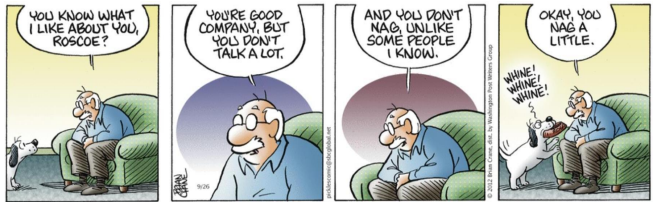
Imagem associada para resolução da questão


Available at: http://www.gocomics.com/pickles/2012/09/26


The word "nag" in the third panel of the strip has the closest meaning to:

Alternativas
Q3258847 Inglês
Text I


Shock of the old: Believe it or not, battery-powered vehicles
have been around since Victorian times.

   The history of the electric car is surprisingly enraging. If you imagine early electric vehicles at all (full disclosure: I didn’t until recently), it will probably be as the quixotic and possibly dangerous dream of a few eccentrics, maybe in the 1920s or 1930s, when domestic electrification became widespread. It’s easy to imagine some stiff-collared proto-Musk getting bored of hunting and affairs, eyeing his newly installed electric lights speculatively, then wreaking untold havoc and mass electrocutions. The reality is entirely different.

   By 1900, a third of all cars on the road in the US were electric; we’re looking at the history of a cruelly missed opportunity, and it started astonishingly early. The Scottish engineer Robert Anderson had a go at an electric car of sorts way back in the 1830s, though his invention was somewhat stymied by the fact rechargeable batteries were not invented until 1859, making his crude carriage something of a one-trick pony (and far less useful than an actual pony).

   It’s debatable whether or not Scotland was ready for this brave new world anyway: in 1842, Robert Davidson (another Scot, who had, a few years earlier, also tried his hand at an electric vehicle) saw his electric locomotive Galvani “broken by some malicious hands almost beyond repair” in Perth. The contemporary consensus was that it was attacked by railway workers fearful for their jobs.

   Despite this unpromising start, electric vehicles had entered widespread commercial circulation by the start of the 20th century, particularly in the US. Electric cabs crisscrossed Manhattan, 1897’s bestselling US car was electric and, when he was shot in 1901, President McKinley was taken to hospital in an electric ambulance. London had Walter Bersey’s electric taxis, and Berlin’s fire engines went electric in 1908; the future looked bright, clean and silent.

   By the 1930s, however, the tide had definitively turned against electric, cursed by range limitations and impractical charging times while petrol gained the upper hand thanks partly – and ironically – to the electric starter motor. The Horseless Age magazine, which vehemently backed the petrol non-horse, would have been delighted. There was a brief resurgence of interest in the late 1960s, when the US Congress passed a bill promoting electrical vehicle development, but nothing much actually happened until the Nissan Leaf sparked interest in 2009. Electric still isn’t quite there yet, battling infrastructure and battery problems that might have been familiar to Anderson and friends.


Adapted from The Guardian, Tuesday 24 October 2023, p. 6 https://www.theguardian.com/lifeandstyle/series/shock-of-the-old/2023/oct/24/all
In “which vehemently backed” (5th paragraph) the verb is similar in meaning to:
Alternativas
Q3258845 Inglês
Text I


Shock of the old: Believe it or not, battery-powered vehicles
have been around since Victorian times.

   The history of the electric car is surprisingly enraging. If you imagine early electric vehicles at all (full disclosure: I didn’t until recently), it will probably be as the quixotic and possibly dangerous dream of a few eccentrics, maybe in the 1920s or 1930s, when domestic electrification became widespread. It’s easy to imagine some stiff-collared proto-Musk getting bored of hunting and affairs, eyeing his newly installed electric lights speculatively, then wreaking untold havoc and mass electrocutions. The reality is entirely different.

   By 1900, a third of all cars on the road in the US were electric; we’re looking at the history of a cruelly missed opportunity, and it started astonishingly early. The Scottish engineer Robert Anderson had a go at an electric car of sorts way back in the 1830s, though his invention was somewhat stymied by the fact rechargeable batteries were not invented until 1859, making his crude carriage something of a one-trick pony (and far less useful than an actual pony).

   It’s debatable whether or not Scotland was ready for this brave new world anyway: in 1842, Robert Davidson (another Scot, who had, a few years earlier, also tried his hand at an electric vehicle) saw his electric locomotive Galvani “broken by some malicious hands almost beyond repair” in Perth. The contemporary consensus was that it was attacked by railway workers fearful for their jobs.

   Despite this unpromising start, electric vehicles had entered widespread commercial circulation by the start of the 20th century, particularly in the US. Electric cabs crisscrossed Manhattan, 1897’s bestselling US car was electric and, when he was shot in 1901, President McKinley was taken to hospital in an electric ambulance. London had Walter Bersey’s electric taxis, and Berlin’s fire engines went electric in 1908; the future looked bright, clean and silent.

   By the 1930s, however, the tide had definitively turned against electric, cursed by range limitations and impractical charging times while petrol gained the upper hand thanks partly – and ironically – to the electric starter motor. The Horseless Age magazine, which vehemently backed the petrol non-horse, would have been delighted. There was a brief resurgence of interest in the late 1960s, when the US Congress passed a bill promoting electrical vehicle development, but nothing much actually happened until the Nissan Leaf sparked interest in 2009. Electric still isn’t quite there yet, battling infrastructure and battery problems that might have been familiar to Anderson and friends.


Adapted from The Guardian, Tuesday 24 October 2023, p. 6 https://www.theguardian.com/lifeandstyle/series/shock-of-the-old/2023/oct/24/all
In “Despite this unpromising start” (4th paragraph), the first word can be replaced by:
Alternativas
Q3258844 Inglês
Text I


Shock of the old: Believe it or not, battery-powered vehicles
have been around since Victorian times.

   The history of the electric car is surprisingly enraging. If you imagine early electric vehicles at all (full disclosure: I didn’t until recently), it will probably be as the quixotic and possibly dangerous dream of a few eccentrics, maybe in the 1920s or 1930s, when domestic electrification became widespread. It’s easy to imagine some stiff-collared proto-Musk getting bored of hunting and affairs, eyeing his newly installed electric lights speculatively, then wreaking untold havoc and mass electrocutions. The reality is entirely different.

   By 1900, a third of all cars on the road in the US were electric; we’re looking at the history of a cruelly missed opportunity, and it started astonishingly early. The Scottish engineer Robert Anderson had a go at an electric car of sorts way back in the 1830s, though his invention was somewhat stymied by the fact rechargeable batteries were not invented until 1859, making his crude carriage something of a one-trick pony (and far less useful than an actual pony).

   It’s debatable whether or not Scotland was ready for this brave new world anyway: in 1842, Robert Davidson (another Scot, who had, a few years earlier, also tried his hand at an electric vehicle) saw his electric locomotive Galvani “broken by some malicious hands almost beyond repair” in Perth. The contemporary consensus was that it was attacked by railway workers fearful for their jobs.

   Despite this unpromising start, electric vehicles had entered widespread commercial circulation by the start of the 20th century, particularly in the US. Electric cabs crisscrossed Manhattan, 1897’s bestselling US car was electric and, when he was shot in 1901, President McKinley was taken to hospital in an electric ambulance. London had Walter Bersey’s electric taxis, and Berlin’s fire engines went electric in 1908; the future looked bright, clean and silent.

   By the 1930s, however, the tide had definitively turned against electric, cursed by range limitations and impractical charging times while petrol gained the upper hand thanks partly – and ironically – to the electric starter motor. The Horseless Age magazine, which vehemently backed the petrol non-horse, would have been delighted. There was a brief resurgence of interest in the late 1960s, when the US Congress passed a bill promoting electrical vehicle development, but nothing much actually happened until the Nissan Leaf sparked interest in 2009. Electric still isn’t quite there yet, battling infrastructure and battery problems that might have been familiar to Anderson and friends.


Adapted from The Guardian, Tuesday 24 October 2023, p. 6 https://www.theguardian.com/lifeandstyle/series/shock-of-the-old/2023/oct/24/all
The phrase “wreaking […] havoc” (1st paragraph) is similar in meaning to:
Alternativas
Q3246735 Inglês
Leia o texto para responder à questão.


What does a Theatrical Company Manager do?


    It’s difficult to pin down exactly what a theatrical company manager does simply because they do so much: negotiate contracts, organize payroll, pay for purchases of outside materials, organize rehearsals, arrange transportation and lodging for cast and crew, assist the director, and – of course – handle emergencies inside and outside of the theater. Crucially, company managers also act as the link between the general manager – their boss – and the rest of the company. A generalized problem solver with a focus on human resources and logistics, the company manager’s work is never over, and rarely the same from day to day.

Expected Professional Education

    The company manager is one of the highest-ranking professionals in any theater company or production, responsible for overseeing almost all logistical and administrative processes. While a company manager could possibly do well with no more than a bachelor’s degree, most theater companies prefer a master’s degree in theater management, business management, or arts administration. 

    Many company managers get started as stage managers, working directly with the director, actors, and designers in rehearsal and calling the show. Over time, they may move gradually towards the broader logistical duties of a company manager, perhaps progressing first to become the head of operations or audience services. As this is a high-ranking position, most company managers advance by seeking longterm positions with prestigious and well-funded companies. They can also progress to become general managers, or even choose to become production managers.

(https://www.berklee.edu. Adaptado)
In the fragment from the first paragraph “and – of course – handle emergencies inside and outside of the theater”, the word in bold means
Alternativas
Q3229278 Inglês
O texto seguinte servirá de base para responder à questão.


Exceptional Noise Cancellation

The AirPods Pro deliver excellent noise cancellation, but you might notice that the ANC seems weak initially. Simply wait a few seconds. The earphones first need to measure the surrounding noise and create a custom ANC profile appropriate for your current environment. And then, when it kicks in, it's exceptional. Another positive note—the ANC doesn't seem to introduce any noticeable hiss in quiet settings, which cheap earphones often use as a crutch.

In my tests, the AirPods Pro dramatically lowered powerful low-frequency rumble (like you hear on an airplane) after an initial adjustment period. In some of our deep rumble tests, the AirPods even matched the performance of the $299 Bose QuietComfort Earbuds, which is impressive.

What's even more impressive is that, in some tests, the AirPods Pro fare better than the QuietComfort Earbuds. The problem, if you can call it one, is consistency, and something I experienced with the AirPods Max as well. The latter are also capable of shockingly effective noise cancellation, but sometimes a slight head turn can reduce their efficacy. The AirPods Pro are more likely to remain effective after the initial adjustment, but sometimes the resulting profile didn't impress me. But, to their credit, a slight change to the in-ear fit can induce a far more competent noise cancellation profile. So don't be afraid to play around with how the earpieces sit in your ear if the ANC isn't initially impressive.


https://www.pcmag.com
In the context of the text, what does the word "crutch" in the sentence "which cheap earphones often use as a crutch" most closely mean? 
Alternativas
Q3199443 Inglês
TEXT 1
SCHOOL RULES.
The British College of Benalmádena provides its students with an environment in which they can feel safe, cared for and supported, in which they can adequately develop their individual skills, helping them to face the modern world in an autonomous and critical way, preparing them to participate positively in society and in the various professional fields to which they may one day have access.

To achieve these objectives, we encourage our students to accept responsibility and be tolerant, to understand the point of view of others, to help their peers and to maintain a high standard of work, to the best of their ability.

In addition, they must maintain a code of conduct based essentially on respect for their teachers and their peers, as well as on some basic rules that, although obvious, are important to remember:

1. Students must arrive at school on time.

2. During school hours, the pupils are the responsibility of the school and their teachers and therefore, they must always follow their indications.

3. A lack of respect towards peers or teachers will not be tolerated at any time.

4. No type of bullying, neither psychological, physical or cyber will be tolerated under any circumstances.

5. To help their fellow students whenever necessary, to protect the younger ones and be friendly towards everybody is a golden rule for our students.

6. All the school uniform must be worn by all students throughout the school.

7. Students should not bring any valuable items to school. If for any reason they have to do so, they must hand it into the office for safekeeping.

8. Mobiles phones are TOTALLY FORBIDDEN.

9. The school keeps an exhaustive record of the absences of the students and immediately contacts the parents if a child is absent. We therefore beg parents to notify the school of any absences that they might know of in advance, such as doctor’s and dentist’s appointments, etc.

10. Any work missed through absence will have to be made up, including internal examinations.

11. Obviously, smoking or drinking alcohol is TOTALLY FORBIDDEN in school.

12. Students must look after their own belongings and respect others’, as well as the school’s.


Available at: https://thebritishcollege.com/school-rules/
In the excerpt: "Students SHOULD NOT bring any valuable items to school. If for any reason they have to do so, they must hand it into the office for safekeeping." the modal verb "should NOT" is used. We can replace this modal verb with:
Alternativas
Q3166595 Inglês

Preencha corretamente:


Christmas is on the of December all over world. However, other celebrations  occur in different dates fron country to country. The Father’s Day in the United States for ______ is always on the third Sunday  June.


Alternativas
Q3154165 Inglês

TEXTO PARA A QUESTÃO

Foods with Good Bacteria 


MOTHER EARTH NEWS – Like many of us, I didn’t think much about my gut health when I was younger. But being more responsible for my own foods when I moved out of the house changed what I bought. For some items, it’s a matter of swapping out a product that’s high in processed sugar and other additives for a healthier option. For others, I’ve rethought my food choices altogether, which includes considering guthealthy options to buy at my local store or make myself. If you’re beginning to explore fermented foods, you’re in the right spot. Here are a few foods with good bacteria and some fermented foods recipes you can try. 


Source: https://www.postjournal.com/wire/?category=5307&ID=317975 

The word swapping in the text can best be replaced by:
Alternativas
Q3154162 Inglês

TEXTO PARA A QUESTÃO

Foods with Good Bacteria 


MOTHER EARTH NEWS – Like many of us, I didn’t think much about my gut health when I was younger. But being more responsible for my own foods when I moved out of the house changed what I bought. For some items, it’s a matter of swapping out a product that’s high in processed sugar and other additives for a healthier option. For others, I’ve rethought my food choices altogether, which includes considering guthealthy options to buy at my local store or make myself. If you’re beginning to explore fermented foods, you’re in the right spot. Here are a few foods with good bacteria and some fermented foods recipes you can try. 


Source: https://www.postjournal.com/wire/?category=5307&ID=317975 

The word includes in the phrase “which includes considering gut-healthy options…” could be replaced by: 
Alternativas
Q3149334 Inglês

New Research Sheds Light to The Persian Plateau: A Crucial Hub for Homo Sapiens Post-Africa Migration


March 31, 2024


The Persian plateau, a region that spans modern-day Iran, has been identified as a critical hub for Homo sapiens following their migration out of Africa. This pivotal role was established through the integration of genetic evidence, paleoecological models, and archaeological findings. The research, led by a team of scientists from various institutions, indicates that Homo sapiens dispersed from Africa approximately 70−60 thousand years ago (kya), but it wasn't until around 45 kya that they began to colonize all of Eurasia extensively. The interim period, which saw these early humans settle in the Persian plateau, has been a subject of considerable scientific interest.


The Genetic Evidence


Genetic studies reveal that populations within the Persian Plateau possess ancestry components closely matching those of the earliest Homo sapiens who left Africa. This suggests that the plateau acted as a significant waypoint for our species during their early Eurasian colonization attempts. The genetic markers found in the region provide a direct link to these ancient travelers, shedding light on the movements and expansions of early human populations.


Paleoecological Insights


The research further explores the environmental conditions that made the Persian plateau a suitable habitation site for early Homo sapiens. Using paleoecological models, the team reconstructed the climatic conditions of the plateau between 70 and 30 kya. The models indicate that the region could support human life throughout this period, offering a stable environment for these communities. Moreover, the plateau's ecological diversity and resources could sustain larger populations compared to other West Asian regions, making it an ideal settlement area during this epoch.


Archaeological Corroboration


Archaeological evidence from the Persian Plate supports the genetic and paleoecological findings. Sites across the region have yielded artifacts and remains dating back to the relevant period, indicating a continuous human presence. These archaeological sites, alongside the genetic and environmental data, paint a comprehensive picture of the plateau as a bustling hub for early humans.


The combination of genetic, paleoecological, and archaeological evidence positions the Persian plateau as a critical juncture in the story of human migration and settlement. This research not only highlights the importance of the region in our prehistoric past but also opens new avenues for understanding the complex journey of Homo sapiens as they spread across the globe. Further investigations into this area are likely to yield even more insights into the early chapters of human history.


https://www.thearchaeologist.org/blog/new-research-sheds-light-to-the persian-plateau-a-crucial-hub-for-homo-sapiens-post-africa-migration

In the context of the passage, what does the word "interim" mean in the sentence: "The interim period, which saw these early humans settle in the Persian plateau, has been a subject of considerable scientific interest"?
Alternativas
Q3143764 Inglês
Which word best substitutes the verb “leverage” in 4º§? 
Alternativas
Q3128644 Inglês
Scan the following content:


From Woolf to Sackville-West

52 Tavistock Square
Tuesday, January 26.

    Your letter from Trieste came this morning – But why do you think I don’t feel, or that I make phrases? ‘Lovely phrases’ you say which rob things of reality. Just the opposite. Always, always, always I try to say what I feel. Will you then believe that after you went last Tuesday – exactly a week ago – out I went into the slums of Bloomsbury, to find a barrel organ. But it did not make me cheerful … And ever since, nothing important has happened – Somehow it's dull and damp. I have been dull; I have missed you. I do miss you. I shall miss you. And if you don’t believe it, you’re a long eared owl and ass. Lovely phrases? …
    But of course (to return to your letter) I always knew about your standoffishness. Only I said to myself, I insist upon kindness. With this aim in view, I came to Long Barn. Open the top button of your jersey and you will see, nestling inside, a lively squirrel with the most inquisitive habits, but a dear creature all the same – V.
In “But of course (to return to your letter) I always knew about your STANDOFFISHNESS.” appoint the fitting option that best substitutes the highlighted word.
Alternativas
Q3128629 Inglês
Read thoroughly to answer the following question.

    Had the great pleasure of introducing my 14-year-old son to one of my favorite movies tonight. I saw SCREAM five times when it was released theatrically in 1996. I was a freshman in college and working part-time at my hometown movie theater, Cineplex Odeon in Bowie, Maryland, and I remember loving it so much that I would sometimes spend my 15-minute breaks in the back of the theater just to admire the filmmaking.
   The movie absolutely knocked the wind out of me in '96, and I'm pleased to report that it still works beautifully for me today.
    SCREAM is a riff on the high-school slasher film, where a group of friends are picked off one-by-one by a masked killer. The difference is that both the killer and the intended victims are aware of (and in some cases well-versed in) the very movies that created this genre, and try to use those tropes as a means of attack, or a way to survive. This kind of meta-genre deconstruction was pretty revolutionary in 1996, but SCREAM succeeds at being an exceptional slasher film even as it takes the genre apart, and that is truly miraculous to behold.
    Kevin Williamson's script is crackling with wit, humor, and deep respect and love for the genre. Craven's direction is fluid, confident, and full of brilliant misdirection – it feels like watching close-up magic, and his slight of hand is balanced with some truly inspired set pieces and beautiful cinematography. The cast is wonderful, and I found myself smiling about just how affectionately I remember these characters. When the movie started, I didn't think “oh there's Neve Campbell, and there's Matt Lillard” – I was thinking “There's Sid, there's Stu.”
    It's easy to forgot how revolutionary and astonishing the iconic opening sequence was, and I marvel now at the extended party set-piece, which takes up almost the entirety of the second half of the film. Just wonderful stuff.
     SCREAM is a gleeful, brilliant deconstruction of the genre itself, breaking it apart with profound respect and love, and celebrating the very tropes it is exposing. There's a reason it had such impact on release, and that the franchise is still finding some fuel in the tank nearly three decades later. It's also a time capsule of the late 90's, and reminds me so much of my youth – I grinned when the sheriff asks Billy Loomis “Why do you have a cellular telephone, son?” This was, at the time, not an unreasonable question. It's a different world, but horror still works just as well.
     If I would have told my 18 year-old self that someday I'd work with (and become great friends with) Matthew Lillard, enjoy meals and social deduction games with Kevin Williamson, and have a relaxed, casual dinner with Neve Campbell... I frankly would never have believed it. I've now gotten to personally thank those artists for the impact this film had on me, and that in and of itself only further blurs the lines between movies and reality – a sensation I faintly felt watching NEW NIGHTMARE in 1994, and felt completely with SCREAM. What a wild world this is.
    This movie was formative for me, and changed the way I looked at what was possible in the genre. I loved it when I was 18, and I loved it tonight. And, my son also loved it... so a great evening all around.

(Available: https://letterboxd.com/flanaganfilm/films/reviews/ Accessed in: November/2024.)
The word “riff” in paragraph 3 is best replaced by:
Alternativas
Q3128628 Inglês
Read thoroughly to answer the following question.

    Had the great pleasure of introducing my 14-year-old son to one of my favorite movies tonight. I saw SCREAM five times when it was released theatrically in 1996. I was a freshman in college and working part-time at my hometown movie theater, Cineplex Odeon in Bowie, Maryland, and I remember loving it so much that I would sometimes spend my 15-minute breaks in the back of the theater just to admire the filmmaking.
   The movie absolutely knocked the wind out of me in '96, and I'm pleased to report that it still works beautifully for me today.
    SCREAM is a riff on the high-school slasher film, where a group of friends are picked off one-by-one by a masked killer. The difference is that both the killer and the intended victims are aware of (and in some cases well-versed in) the very movies that created this genre, and try to use those tropes as a means of attack, or a way to survive. This kind of meta-genre deconstruction was pretty revolutionary in 1996, but SCREAM succeeds at being an exceptional slasher film even as it takes the genre apart, and that is truly miraculous to behold.
    Kevin Williamson's script is crackling with wit, humor, and deep respect and love for the genre. Craven's direction is fluid, confident, and full of brilliant misdirection – it feels like watching close-up magic, and his slight of hand is balanced with some truly inspired set pieces and beautiful cinematography. The cast is wonderful, and I found myself smiling about just how affectionately I remember these characters. When the movie started, I didn't think “oh there's Neve Campbell, and there's Matt Lillard” – I was thinking “There's Sid, there's Stu.”
    It's easy to forgot how revolutionary and astonishing the iconic opening sequence was, and I marvel now at the extended party set-piece, which takes up almost the entirety of the second half of the film. Just wonderful stuff.
     SCREAM is a gleeful, brilliant deconstruction of the genre itself, breaking it apart with profound respect and love, and celebrating the very tropes it is exposing. There's a reason it had such impact on release, and that the franchise is still finding some fuel in the tank nearly three decades later. It's also a time capsule of the late 90's, and reminds me so much of my youth – I grinned when the sheriff asks Billy Loomis “Why do you have a cellular telephone, son?” This was, at the time, not an unreasonable question. It's a different world, but horror still works just as well.
     If I would have told my 18 year-old self that someday I'd work with (and become great friends with) Matthew Lillard, enjoy meals and social deduction games with Kevin Williamson, and have a relaxed, casual dinner with Neve Campbell... I frankly would never have believed it. I've now gotten to personally thank those artists for the impact this film had on me, and that in and of itself only further blurs the lines between movies and reality – a sensation I faintly felt watching NEW NIGHTMARE in 1994, and felt completely with SCREAM. What a wild world this is.
    This movie was formative for me, and changed the way I looked at what was possible in the genre. I loved it when I was 18, and I loved it tonight. And, my son also loved it... so a great evening all around.

(Available: https://letterboxd.com/flanaganfilm/films/reviews/ Accessed in: November/2024.)
In paragraph 2, the following match the same meaning EXCEPT:
Alternativas
Q3103328 Inglês
TEXT:


How students can make rapid progress by reading
independently


By Stephanie Hirshman
January 2, 2024


Let me start with a true story. When I was seven years old, my family spent a year in France, and I had to go to school there. The only thing was, I didn’t speak French. Luckily my mother was fluent in that language, and she set out to prepare me a few months before we left. Armed only with a second-hand copy of a little picture book called Totor et Tristan, she sat me down on the sofa with her a few times a week for around 10 minutes. Sometimes she read the book to me while I followed the text silently and sometimes I had to read a page myself. She asked me questions in French and I answered in French, or she corrected my pronunciation. That was it.


My first day at school in France was memorable for many reasons, but one of these was that I was the only child in a class of native French speakers to score 100% on our first spelling test! Everyone was amazed, me most of all because I didn’t even know what most of the words meant.


So, what made this possible? I think it was reading with my mother – I guess had read more in French than my classmates and thus was able to recognize the tricky relationship between sound and spelling. My confidence was sky high and I was fluent within four months.


Exploring a written text for fun, on your own terms, is called extensive reading, and teachers can support their students to realize its many benefits.


Graded readers


Graded readers are books which have been adapted to be suitable for specific levels of language learners to enjoy. They can be classics (The Phantom of the Opera), film adaptations (Rain Man) or original works of fiction or non-fiction. They can be purchased online or at bookshops, or you can obtain them from libraries or even find some on websites.


There are many reasons for making them available to students. First, reading is fun. It’s also magic learning. Students who have a sustained habit of extensive reading see improvements in a range of areas: lexical, grammatical and spelling as well as reading speed, which is vital for success in academic and work contexts. Being able to select their own reading material gives students a sense of ownership.


Choosing a book


It’s helpful if a teacher initially introduces students to graded readers and explains how to choose and use them. Students should examine both covers carefully, using the picture and the blurb to determine the genre and read a basic description of the story. Additional information can be found inside the book, in the Introduction.


While it’s not necessary to have 100% comprehension of the text, choosing a book which is too difficult or too easy will not lead to an enjoyable experience. Most books are labelled with a level, but no two intermediate readers will have the same needs. Therefore, a simple test can be performed: the student should choose one page at random and read it to see how many unknown words they encounter. If the answer is seven or fewer, this book will be suitable. More than seven, and it’ll be too hard to get a good flow going when reading.


Activities


While students are reading, they should try to work out the meaning of unfamiliar items from context. They should also be made aware of the Glossary at the back of some books and, of course, they can use a dictionary if they really need to. However, some items do notreally need further exploration - making decisions about what’s important and what’s not is an important skill for language learners. Some books also have comprehension questions at the back.


However, the main aim is to get into and enjoy the story without lots of interruptions and checks. Encourage students to read ten minutes a day on a regular basis (perhaps in bed or while commuting). Results will not be immediate, but within a few weeks, students should recognize the improvements.


Conclusion


A collection of readers is well worth investing in. Be creative when looking for material – why not try a graphic novel? Even authentic texts not intended for language learners can be worthwhile for advanced students or those with a special interest in or knowledge of a topic.


Adapted from: https://www.linguahouse.com/blog/post/how-students-can-make-rapid-progress-by-reading-independently
Acesso em 04/11/2024

  No trecho: “Students should examine both covers carefully, using the picture and the blurb to determine the genre and read a basic description of the story”, o termo em destaque pode ser substituído, sem prejuízo de significado, por: 
Alternativas
Q3101542 Inglês

Reading skill will help you to improve your understanding of the language and build your vocabulary.

Social Media Across Generations

Today’s grandparents are joining their grandchildren on social media, but the different generations’ online habits couldn’t be more different. In the UK the over-55s are joining Facebook in increasing numbers, meaning that they will soon be the site’s second biggest user group, with 3.5 million users aged 55-64 and 2.9 million over-65s.

Sheila, aged 59, says, I joined to see what my grandchildren are doing, as my daughter posts videos and photos of them. It’s a much better way to see what they’re doing than waiting for letters and photos in the post. That’s how we did it when I was a child, but I think I’m lucky I get to see so much more of their lives than my grandparents did.

Ironically, Sheila’s grandchildren are less likely to use Facebook themselves. Children under 17 in the UK are leaving the site – only 2.2 million users are under 17 – but they’re not going far from their smartphones. Chloe, aged 15, even sleeps with her phone. It’s my alarm clock so I have to she says. I look at it before I go to sleep and as soon as I wake up.

Unlike her grandmother’s generation, Chloe’s age group is spending so much time.......... their phones.......... home that they are missing out on spending time with their friends in real life. Sheila, on the other hand, has made contact with old friends from school she hasn’t heard...................40 years. We use Facebook to arrange to meet all over the country, she says. It’s changed my social life completely.

Teenagers might have their parents to thank for their smartphone and social media addiction as their parents were the early adopters of the smartphone. Peter, 38 and father of two teenagers, reports that he used to be on his phone or laptop constantly. I was always connected and I felt like I was always working, he says. How could I tell my kids to get off their phones if I was always in front of a screen myself? So, in the evenings and at weekends, he takes his SIM card out of his smartphone and puts it into an old-style mobile phone that can only make calls and send text messages. I’m not completely cut off from the world in case of emergencies, but the important thing is I’m setting a better example to my kids and spending more quality time with them.

Read the sentences below and determine whether they are true ( T ) or false ( F ), according to structure and grammar use.

( ) In the 5th paragraph of the text, the modal verb might can be replaced by may without changing its meaning.
( ) In the 2nd paragraph, the words what and when are being used as relative pronouns.
( ) The negative form of the sentence: That’s how we did it when I was a child, […] (from the 2nd paragraph of the text) is That’s how we didn’t do it when I wasn’t a child,[…]
( ) The word Unlike, in the 4th paragraph of the text, is an adjective that means different, not similar.
Select the option that presents the correct sequence from top to bottom.
Alternativas
Q3087182 Inglês

Text


Reading skill will help you to improve your understanding of the language and build your vocabulary.


Read the text below carefully.


Social media, magazines and shop windows bombard people daily with things to buy, and British consumers are buying more clothes and shoes than ever before. Online shopping means it is easy for customers to buy without thinking, while major brands offer such cheap clothes that they can be treated like disposable items – worn two or three times and then thrown away


In Britain, the average person spends more than £1,000 on new clothes a year, which is around four per cent of their income. That might not sound like much, but that figure hides two far more worrying trends for society and for the environment. First, a lot of that consumer spending is via credit cards. British people currently owe approximately £670 per adult to credit card companies. That’s 66 per cent of the average wardrobe budget. Also, not only are people spending money they don’t have, they’re using it to buy things they don’t need. Britain throws away 300,000 tons of clothing a year, most of which goes into landfill sites.


People might not realize they are part of the disposable clothing problem because they donate their unwanted clothes to charities. But charity shops can’t sell all those unwanted clothes. Fast fashion goes out of fashion as quickly as it came in and is often too poor quality to recycle; people don’t want to buy it second-hand. Huge quantities end up being thrown away, and a lot of clothes that charities can’t sell are sent abroad, causing even more economic and environmental problems.


However, a different trend is springing up in opposition to consumerism – the ‘buy nothing’ trend. The idea originated in Canada in the early 1990s and then moved to the US, where it became a rejection of the overspending and overconsumption of Black Friday and Cyber Monday during Thanksgiving weekend. On Buy Nothing Day people organize various types of protests and cut up their credit cards. Throughout the year, Buy Nothing groups organize the exchange and repair of items they already own.


The trend has now reached influencers on social media who usually share posts of clothing and make- -up that they recommend for people to buy. Some YouTube stars now encourage their viewers not to buy anything at all for periods as long as a year. Two friends in Canada spent a year working towards buying only food. For the first three months they learned how to live without buying electrical goods, clothes or things for the house. For the next stage, they gave up services, for example haircuts, eating out at restaurants or buying petrol for their cars. In one year, they’d saved $55,000. 


The changes they made meant two fewer cars on the roads, a reduction in plastic and paper packaging and a positive impact on the environment from all the energy saved. If everyone followed a similar plan, the results would be impressive. But even if you can’t manage a full year without going shopping, you can participate in the anti-consumerist movement by refusing to buy things you don’t need. Buy Nothing groups send a clear message to companies that people are no longer willing to accept the environmental and human cost of overconsumption.


source: learnenglish.britishcouncil.org

Match the words (from the text) in column 1 with the correct definitions in column 2.


Column 1 Words


1. disposable


2. overspending


3. a landfill site


4. consumerism


5. to bombard


Column 2 Definitions


( ) a place where rubbish is buried under the ground.


( ) to appear.


( ) the act of spending more money than you should.


( ) the practice of buying and owning lots of products.


( ) designed to be thrown away after use.


Select the option that presents the correct sequence from top to bottom.

Alternativas
Q3076878 Inglês

Read Text II and answer question 


University Degree Sill Best Way into Good Job 


        How do you get a good job? It might literally be a milliondollar question. And researchers from Georgetown University in the US have an answer: the best way is still to get a college education, even if you're a little late. That's their simple answer – one they came up with after looking at US government data for more than 8,000 Americans who were born in the early 1980s. They found that getting a bachelor's degree by the age of 26 gave people a 56% chance of getting a good job by the age of 30. For their study, the researchers defined a "good job" as one paying at least $ 38,000 for workers under the age of 45.

        According to The Wall Street Journal, the research didn't focus on people who went straight to college after finishing high school because they already have a high chance of getting a good job. Instead, it looked at different pathways that people who didn't go straight to college after high school could take to increase their chances of getting a good job. For example, even just beginning a bachelor's degree by age 22 increased the likelihood of getting a good job by 16 percentage points, according to the report. But despite this evidence, according to a separate Wall Street Journal survey, more than half of people don't feel that doing a four-year degree is worth the cost, because students may finish without specific job skills and with a large amount of debt.

        According to US News, in the academic year that ended in the summer of 2023, the average cost of going to an American university for a year started at about $ 10,000 for a public university, and went as high as almost $ 40,000 for a private school. And Zach Mabel, one of the authors of the Georgetown report, admits that although a university education is likely to be beneficial, for financial reasons "the risk of pursuing higher education is higher than it's ever been."


Source: https://engoo.com.br/app/daily-news/article/study-university-degree-stillbest-way-into-good-job/crbIxBR3Ee6ComdOtgdXYw

Read the following excerpt from text II, and then choose the alternative that indicates a word that can replace “likelihood” without changing its meaning in the context of the sentence.
“(…) even just beginning a bachelor's degree by age 22 increased the likelihood of getting a good job by 16 percentage points, according to the report.” 

Alternativas
Respostas
261: C
262: A
263: A
264: E
265: D
266: E
267: D
268: D
269: E
270: B
271: E
272: C
273: C
274: C
275: B
276: C
277: D
278: D
279: C
280: D