Questões de Concurso
Sobre interpretação de texto | reading comprehension em inglês
Foram encontradas 12.689 questões


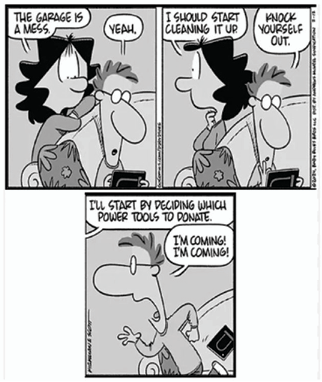
Source: KIRKMAN, Rick; SCOTT, Jerry. Baby Blues. GoComics, 12 fev. 2024. Disponível em: www.gocomics.com. Acesso em: 10 mar. 2026.
What primarily motivates the man to suddenly run toward the garage at the end of the comic strip?
Based on the information in the text, what can be inferred about the role of technology in English-language teaching?
According to the text, what is one key benefit of integrating digital technologies into English-language teaching?
Perisylvian polymicrogyria (PMG) is a malformation of cortical development in which the cortex around the Sylvian fissures shows excessive small gyri and abnormal cortical lamination. This regional form of PMG is among the commonest patterns seen on MRI and may vary from focal posterior perisylvian involvement to extensive bilateral disease that (Magnetic Resonance Imaging) extends beyond the perisylvian region. Imaging typically demonstrates a thickened, irregular cortical ribbon with shallow sulci and an irregular gray–white matter junction, which is best characterized using high-resolution MRI.
Clinically, perisylvian PMG—especially when bilateral—is frequently associated with oromotor dysfunction (dysarthria, feeding and swallowing difficulties), language impairments, cognitive delay, and epilepsy; severity correlates with the extent and symmetry of cortical involvement. The condition is genetically and etiologically heterogeneous: cases may be sporadic, associated with prenatal injury (for example infectious or vascular insults), or linked to chromosomal and single-gene variants in some familial forms. Management focuses on symptomatic therapies (speech/feeding therapy, epilepsy control) and genetic/neurological evaluation when appropriate.
Source: Barkovich, A. J., Guerrini, R., Kuzniecky, R. I., Jackson, G. D., & Dobyns, W. B. (2010). Current concepts of polymicrogyria. Neuroradiology. Leventer, R. J., Jansen, A., Pilz, D. T., et al. (2010). Clinical and imaging heterogeneity of polymicrogyria. Brain.
Perisylvian polymicrogyria (PMG) is a malformation of cortical development in which the cortex around the Sylvian fissures shows excessive small gyri and abnormal cortical lamination. This regional form of PMG is among the commonest patterns seen on MRI and may vary from focal posterior perisylvian involvement to extensive bilateral disease that (Magnetic Resonance Imaging) extends beyond the perisylvian region. Imaging typically demonstrates a thickened, irregular cortical ribbon with shallow sulci and an irregular gray–white matter junction, which is best characterized using high-resolution MRI.
Clinically, perisylvian PMG—especially when bilateral—is frequently associated with oromotor dysfunction (dysarthria, feeding and swallowing difficulties), language impairments, cognitive delay, and epilepsy; severity correlates with the extent and symmetry of cortical involvement. The condition is genetically and etiologically heterogeneous: cases may be sporadic, associated with prenatal injury (for example infectious or vascular insults), or linked to chromosomal and single-gene variants in some familial forms. Management focuses on symptomatic therapies (speech/feeding therapy, epilepsy control) and genetic/neurological evaluation when appropriate.
Source: Barkovich, A. J., Guerrini, R., Kuzniecky, R. I., Jackson, G. D., & Dobyns, W. B. (2010). Current concepts of polymicrogyria. Neuroradiology. Leventer, R. J., Jansen, A., Pilz, D. T., et al. (2010). Clinical and imaging heterogeneity of polymicrogyria. Brain.
TEXT 1
The Decolonial Option in English Teaching: Can the Subaltern Act?
In this reflective article that straddles the personal and the professional, the author shares his critical thoughts on the impact of the steady stream of discourse on the native speaker/nonnative speaker (NS/NNS) inequity in the field of TESOL. His contention is that more than a quarter century of the discoursal output has not in any significant way altered the ground reality of NNS subordination. Therefore, he further contends, it is legitimate to ask what the discourse has achieved, where it has fallen short, why it has fallen short, and what needs to be done. Drawing insights from the works of Gramsci (1971) on hegemony and subalternity, and Mignolo (2010) on decoloniality, the author characterizes the NNS community as a subaltern community and argues that, if it wishes to effectively disrupt the hegemonic power structure, the only option open to it is a decolonial option which demands resultoriented action, not just “intellectual elaboration.” Accordingly, he presents the contours of a five-point plan of action for the consideration of the subaltern community. He claims that only a collective, concerted, and coordinated set of actions carries the potential to shake the foundation of the hegemonic power structure and move the subaltern community forward.
Excerpt extracted and adapted from: KUMARAVADIVELU, Bala. The decolonial option in English teaching: Can the subaltern act? TESOL Quarterly, [S.l.], v. 50, n. 1, p. 66–85, 2016. DOI: 10.1002/tesq.202. Available in: https://doi.org/10.1002/tesq.202.
TEXT 1
The Decolonial Option in English Teaching: Can the Subaltern Act?
In this reflective article that straddles the personal and the professional, the author shares his critical thoughts on the impact of the steady stream of discourse on the native speaker/nonnative speaker (NS/NNS) inequity in the field of TESOL. His contention is that more than a quarter century of the discoursal output has not in any significant way altered the ground reality of NNS subordination. Therefore, he further contends, it is legitimate to ask what the discourse has achieved, where it has fallen short, why it has fallen short, and what needs to be done. Drawing insights from the works of Gramsci (1971) on hegemony and subalternity, and Mignolo (2010) on decoloniality, the author characterizes the NNS community as a subaltern community and argues that, if it wishes to effectively disrupt the hegemonic power structure, the only option open to it is a decolonial option which demands resultoriented action, not just “intellectual elaboration.” Accordingly, he presents the contours of a five-point plan of action for the consideration of the subaltern community. He claims that only a collective, concerted, and coordinated set of actions carries the potential to shake the foundation of the hegemonic power structure and move the subaltern community forward.
Excerpt extracted and adapted from: KUMARAVADIVELU, Bala. The decolonial option in English teaching: Can the subaltern act? TESOL Quarterly, [S.l.], v. 50, n. 1, p. 66–85, 2016. DOI: 10.1002/tesq.202. Available in: https://doi.org/10.1002/tesq.202.
TEXT 1
The Decolonial Option in English Teaching: Can the Subaltern Act?
In this reflective article that straddles the personal and the professional, the author shares his critical thoughts on the impact of the steady stream of discourse on the native speaker/nonnative speaker (NS/NNS) inequity in the field of TESOL. His contention is that more than a quarter century of the discoursal output has not in any significant way altered the ground reality of NNS subordination. Therefore, he further contends, it is legitimate to ask what the discourse has achieved, where it has fallen short, why it has fallen short, and what needs to be done. Drawing insights from the works of Gramsci (1971) on hegemony and subalternity, and Mignolo (2010) on decoloniality, the author characterizes the NNS community as a subaltern community and argues that, if it wishes to effectively disrupt the hegemonic power structure, the only option open to it is a decolonial option which demands resultoriented action, not just “intellectual elaboration.” Accordingly, he presents the contours of a five-point plan of action for the consideration of the subaltern community. He claims that only a collective, concerted, and coordinated set of actions carries the potential to shake the foundation of the hegemonic power structure and move the subaltern community forward.
Excerpt extracted and adapted from: KUMARAVADIVELU, Bala. The decolonial option in English teaching: Can the subaltern act? TESOL Quarterly, [S.l.], v. 50, n. 1, p. 66–85, 2016. DOI: 10.1002/tesq.202. Available in: https://doi.org/10.1002/tesq.202.
I. NS are considered a subaltern professional group in comparison with NNS.
II. NNS could be considered an emerging elite within TESOL.
III. NNS are usually seen as a marginalized or subaltern community.
IV. NNS are a group resistant to change. V. The inequity between NS and NNS is a temporary phenomenon in education.
Now, select the CORRECT alternative, whose statement(s) is/are true:
TEXT 1
The Decolonial Option in English Teaching: Can the Subaltern Act?
In this reflective article that straddles the personal and the professional, the author shares his critical thoughts on the impact of the steady stream of discourse on the native speaker/nonnative speaker (NS/NNS) inequity in the field of TESOL. His contention is that more than a quarter century of the discoursal output has not in any significant way altered the ground reality of NNS subordination. Therefore, he further contends, it is legitimate to ask what the discourse has achieved, where it has fallen short, why it has fallen short, and what needs to be done. Drawing insights from the works of Gramsci (1971) on hegemony and subalternity, and Mignolo (2010) on decoloniality, the author characterizes the NNS community as a subaltern community and argues that, if it wishes to effectively disrupt the hegemonic power structure, the only option open to it is a decolonial option which demands resultoriented action, not just “intellectual elaboration.” Accordingly, he presents the contours of a five-point plan of action for the consideration of the subaltern community. He claims that only a collective, concerted, and coordinated set of actions carries the potential to shake the foundation of the hegemonic power structure and move the subaltern community forward.
Excerpt extracted and adapted from: KUMARAVADIVELU, Bala. The decolonial option in English teaching: Can the subaltern act? TESOL Quarterly, [S.l.], v. 50, n. 1, p. 66–85, 2016. DOI: 10.1002/tesq.202. Available in: https://doi.org/10.1002/tesq.202.
TEXT 1
The Decolonial Option in English Teaching: Can the Subaltern Act?
In this reflective article that straddles the personal and the professional, the author shares his critical thoughts on the impact of the steady stream of discourse on the native speaker/nonnative speaker (NS/NNS) inequity in the field of TESOL. His contention is that more than a quarter century of the discoursal output has not in any significant way altered the ground reality of NNS subordination. Therefore, he further contends, it is legitimate to ask what the discourse has achieved, where it has fallen short, why it has fallen short, and what needs to be done. Drawing insights from the works of Gramsci (1971) on hegemony and subalternity, and Mignolo (2010) on decoloniality, the author characterizes the NNS community as a subaltern community and argues that, if it wishes to effectively disrupt the hegemonic power structure, the only option open to it is a decolonial option which demands resultoriented action, not just “intellectual elaboration.” Accordingly, he presents the contours of a five-point plan of action for the consideration of the subaltern community. He claims that only a collective, concerted, and coordinated set of actions carries the potential to shake the foundation of the hegemonic power structure and move the subaltern community forward.
Excerpt extracted and adapted from: KUMARAVADIVELU, Bala. The decolonial option in English teaching: Can the subaltern act? TESOL Quarterly, [S.l.], v. 50, n. 1, p. 66–85, 2016. DOI: 10.1002/tesq.202. Available in: https://doi.org/10.1002/tesq.202.
Read the text below and answer the questions:
New beginnings in Wrocław: The refugee students building brighter futures
Eighteen-year-old Daria hopes to begin studying psychology at the university in Wroclaw, Poland in the autumn. She already knows what career she wants to pursue: working with formerly incarcerated individuals to support their reintegration into society.
“I want to help people start a new life after having made mistakes,” Daria says. “I believe everyone deserves a chance to change, and I want to support them.” Three years ago, it wasn’t clear that Daria would be able to study psychology at all – or even graduate from secondary school. In early 2022, with the escalation of the war in Ukraine, she was forced to leave her home of Kryvyi Rih in central Ukraine for Wroclaw, together with her mother and younger brother.
Daria was one of hundreds of Ukrainians who ended up at the same high school in Wroclaw. Wrocław’s multicultural identity has long been a source of pride, and the school is no different: out of its 1,500 students, 500 are from Ukraine. There are also students from Belarus, Kyrgyzstan and Kenya, among other countries.
Still, the transition to life in a different country, while being separated from loved ones who remained in Ukraine, was not easy. In the first few months, Daria herself needed psychological support.
Eighteen-year-old Daria hopes to study psychology at university. If that doesn’t work out, she is also considering game design as a backup plan, inspired by her strong interest in video games.
Eighteen-year-old Daria hopes to study psychology at university. If that doesn’t work out, she is also considering game design as a backup plan, inspired by her strong interest in video games.
Fortunately, she found support from the educators and staff at her school. This included the school psychologist, who is Polish but speaks Ukrainian. Her teachers also helped. “They genuinely do everything they can to help us adapt,” Daria says.
“They show us that they are learning together with us – they’re not pretending to know everything. They make mistakes too, they apologize, and everything feels very natural and supportive.”
For 18-year-old Kamila, who graduated from the same high school this year, the language barrier was the greatest challenge. “You don’t immediately understand what the teachers are saying, and you have to ask several times,” she says. “They couldn’t really explain either, because they didn’t speak Ukrainian. That was very hard for me.”
Kamila recalls that during her first months at the new secondary school, she had little time for her hobbies – she spent nearly all her free time learning Polish and keeping up with school assignments. Kamila recalls that during her first months at the new secondary school, she had little time for her hobbies – she spent nearly all her free time learning Polish and keeping up with school assignments.
Subjects like physics and biology were especially difficult because of the complex technical vocabulary. “I had to learn every term from scratch,” says Kamila, who came from IvanoFrankivsk, western Ukraine, with her family in 2022.
Learning Polish wasn’t only key to succeeding in school, but to feeling connected. “Only after I overcame the language barrier I did start participating in extracurricular activities at school,” Kamila explains. “It was important for me to build friendships with Polish students too.”
Despite these difficulties, Kamila now dreams of becoming a translator and is currently learning English and German in addition to Polish.
Seventeen-year-old Sofia, another graduate of the high school, shares this love of language. She studies English, Polish and German. “Aside from languages, I also love history,” she says.
Seventeen-year-old Sofia, who graduated this year from a secondary school in Wrocław, dreams of a career as a translator. She has applied to several universities in Wrocław to pursue her studies.
Seventeen-year-old Sofia, who graduated this year from a secondary school in Wrocław, dreams of a career as a translator. She has applied to several universities in Wrocław to pursue her studies.
Sofia’s passion for history deepened her connection to Wrocław, one of Poland’s oldest and most culturally rich cities. “I really like Wrocław, and right now I think that if my future is in Poland, it will be in this city,” she says.
Like many of her peers, Sofia’s first steps in a new country were filled with fear and uncertainty.
“At the beginning, it was a bit scary – a different country, a different culture, a different language,” she recalls. “But there were actually many kind people who were ready to help. Thanks to them, I managed to adapt, and now I feel quite good living here.”
As well as graduating with honors from her school in Ukraine, in Wroclaw, Sofia received the red stripe distinction, a special recognition for outstanding academic results in Polish schools. She also earned a scholarship for being the top-performing student in the school last year.
Seventeen-year-old Sofia and her mother, Tetiana. The family plans to stay in Poland, as Sofia sees her future in this country.
Sofia and her mother, Tetiana. The family plans to stay in Poland, as Sofia sees her future in this country.
Her family has recently decided to stay in Poland.
“Our daughter sees her future here, and we are ready to support her decision,” her mother Tetiana says.
These stories are a powerful reminder of the resilience and potential of young people when they are given the right opportunities and support.
As we mark International Youth Day, UNICEF celebrates youth like Daria, Kamila and Sofia – who, despite the trauma of war and displacement, are building their futures through education, courage, and determination.
UNICEF, in partnership with local governments and civil society, remains committed to ensuring that every young person has access to quality education and support, no matter their background or circumstances.
This work for refugee children and caregivers from Ukraine in Poland is made possible thanks to the generous support of the Bureau of Population, Refugees, and Migration of the US Department of State (PRM) and the Government of the Republic of Korea and the Government of Japan.
Source: https://www.unicef.org/eca/stories/new-beginnings-in-Wroclaw
Cross-linguistic influence affects how learners process vocabulary in their target language, particularly when surface similarities mask semantic divergence. The text contains terms that may give rise to misleading lexical associations for Brazilian Portuguese speakers.
Select the alternative that correctly identifies the semantic value of the term “scholarship” in the textual context and the lexical association that may interfere with its interpretation.
Read the text below and answer the questions:
New beginnings in Wrocław: The refugee students building brighter futures
Eighteen-year-old Daria hopes to begin studying psychology at the university in Wroclaw, Poland in the autumn. She already knows what career she wants to pursue: working with formerly incarcerated individuals to support their reintegration into society.
“I want to help people start a new life after having made mistakes,” Daria says. “I believe everyone deserves a chance to change, and I want to support them.” Three years ago, it wasn’t clear that Daria would be able to study psychology at all – or even graduate from secondary school. In early 2022, with the escalation of the war in Ukraine, she was forced to leave her home of Kryvyi Rih in central Ukraine for Wroclaw, together with her mother and younger brother.
Daria was one of hundreds of Ukrainians who ended up at the same high school in Wroclaw. Wrocław’s multicultural identity has long been a source of pride, and the school is no different: out of its 1,500 students, 500 are from Ukraine. There are also students from Belarus, Kyrgyzstan and Kenya, among other countries.
Still, the transition to life in a different country, while being separated from loved ones who remained in Ukraine, was not easy. In the first few months, Daria herself needed psychological support.
Eighteen-year-old Daria hopes to study psychology at university. If that doesn’t work out, she is also considering game design as a backup plan, inspired by her strong interest in video games.
Eighteen-year-old Daria hopes to study psychology at university. If that doesn’t work out, she is also considering game design as a backup plan, inspired by her strong interest in video games.
Fortunately, she found support from the educators and staff at her school. This included the school psychologist, who is Polish but speaks Ukrainian. Her teachers also helped. “They genuinely do everything they can to help us adapt,” Daria says.
“They show us that they are learning together with us – they’re not pretending to know everything. They make mistakes too, they apologize, and everything feels very natural and supportive.”
For 18-year-old Kamila, who graduated from the same high school this year, the language barrier was the greatest challenge. “You don’t immediately understand what the teachers are saying, and you have to ask several times,” she says. “They couldn’t really explain either, because they didn’t speak Ukrainian. That was very hard for me.”
Kamila recalls that during her first months at the new secondary school, she had little time for her hobbies – she spent nearly all her free time learning Polish and keeping up with school assignments. Kamila recalls that during her first months at the new secondary school, she had little time for her hobbies – she spent nearly all her free time learning Polish and keeping up with school assignments.
Subjects like physics and biology were especially difficult because of the complex technical vocabulary. “I had to learn every term from scratch,” says Kamila, who came from IvanoFrankivsk, western Ukraine, with her family in 2022.
Learning Polish wasn’t only key to succeeding in school, but to feeling connected. “Only after I overcame the language barrier I did start participating in extracurricular activities at school,” Kamila explains. “It was important for me to build friendships with Polish students too.”
Despite these difficulties, Kamila now dreams of becoming a translator and is currently learning English and German in addition to Polish.
Seventeen-year-old Sofia, another graduate of the high school, shares this love of language. She studies English, Polish and German. “Aside from languages, I also love history,” she says.
Seventeen-year-old Sofia, who graduated this year from a secondary school in Wrocław, dreams of a career as a translator. She has applied to several universities in Wrocław to pursue her studies.
Seventeen-year-old Sofia, who graduated this year from a secondary school in Wrocław, dreams of a career as a translator. She has applied to several universities in Wrocław to pursue her studies.
Sofia’s passion for history deepened her connection to Wrocław, one of Poland’s oldest and most culturally rich cities. “I really like Wrocław, and right now I think that if my future is in Poland, it will be in this city,” she says.
Like many of her peers, Sofia’s first steps in a new country were filled with fear and uncertainty.
“At the beginning, it was a bit scary – a different country, a different culture, a different language,” she recalls. “But there were actually many kind people who were ready to help. Thanks to them, I managed to adapt, and now I feel quite good living here.”
As well as graduating with honors from her school in Ukraine, in Wroclaw, Sofia received the red stripe distinction, a special recognition for outstanding academic results in Polish schools. She also earned a scholarship for being the top-performing student in the school last year.
Seventeen-year-old Sofia and her mother, Tetiana. The family plans to stay in Poland, as Sofia sees her future in this country.
Sofia and her mother, Tetiana. The family plans to stay in Poland, as Sofia sees her future in this country.
Her family has recently decided to stay in Poland.
“Our daughter sees her future here, and we are ready to support her decision,” her mother Tetiana says.
These stories are a powerful reminder of the resilience and potential of young people when they are given the right opportunities and support.
As we mark International Youth Day, UNICEF celebrates youth like Daria, Kamila and Sofia – who, despite the trauma of war and displacement, are building their futures through education, courage, and determination.
UNICEF, in partnership with local governments and civil society, remains committed to ensuring that every young person has access to quality education and support, no matter their background or circumstances.
This work for refugee children and caregivers from Ukraine in Poland is made possible thanks to the generous support of the Bureau of Population, Refugees, and Migration of the US Department of State (PRM) and the Government of the Republic of Korea and the Government of Japan.
Source: https://www.unicef.org/eca/stories/new-beginnings-in-Wroclaw
Daria's testimony provides insight into the teaching practices she encountered at the school in Wrocław. Evaluate the statements regarding the educational practices described:
I. The teachers' performance of epistemic humility—publicly acknowledging knowledge limitations and errors—functions to democratize the classroom power structure and reduce student anxiety about their own imperfect knowledge.
II. Daria's characterization of teacher behavior as "very natural and supportive" following their apologies indicates that pedagogical vulnerability enhances rather than undermines instructional authority.
III. The text implies that this collaborative learning approach was specifically designed as a refugee integration strategy rather than reflecting the school's general pedagogical philosophy.
IV. The bilingual school psychologist's presence represented a sufficient condition for psychological adaptation, rendering the teachers' collaborative approach supplementary rather than essential.
Which combination contains statements supported by the text?

 Conheça nossos planos