Questões de Concurso Sobre interpretação de texto | reading comprehension em inglês

Foram encontradas 13.188 questões

Q3464002 Inglês
Leia a entrevista a seguir para responder à questão.


Can childhood survive the smartphone? 

Q32_40.png (244×136)


    Below is an excerpt from a conversation between the reporter Katty Kay and Jonathan Haidt who, with his book The Anxious Generation, sparked a global reckoning about mobile phone usage among children when it came out last year.

    Katty Kay: It’s been a year since your book came out and caused a huge conversation. I wanted to start by getting a kind of report card of where we are on the various aspects of what you put forward: phones in school, age gating, social media, getting kids to have more free playtime. Who’s doing well and who isn’t in America on all of those issues?

    Jonathan Haidt: I knew that the book was going to be popular. What I wasn’t prepared for is that this issue would spread like wildfire around the world, not just in the US. Because around the world, family life has turned into a fight over screen time. Everyone hates it. Everyone sees it.

    Where it took off most quickly was phone-free schools, because that is something that is more easily done. It’s so hard to teach to a classroom when half of them are watching short videos and playing video games. So, the teachers have hated the phones from the beginning but they were afraid, especially in America – maybe it’s the same in other countries – but in America, there are a lot of parents who want to be able to communicate all the time with their child, and they think they have a right to check in on their child. And, ‘What if something goes wrong? I need to be there.’ So, the overparenting — ...

    KK: That’s a paradox, then, because you’ve got the parents who are super worried about the phones; they see what phones are doing to their kids. But they also don’t want their kids to relinquish their phones when they go into school. 

    JH: Hey, look, people are complicated! They contain multitudes. And I shouldn’t say that everyone saw the problem, because there were a lot of parents who saw the phone as a lifeline. They see the world as very threatening and dangerous. But we have to focus on what it will take to allow kids to have healthy brain development through puberty. We’ve got to give kids a lot less screen time. A lot less fragmenting time. No TikTok. No short videos. Let’s give them a lot more experience interacting with people.


(Katty Kay. www.bbc.com, 10.04.2025. Adaptado)
Suppose this text is read by teachers taking an in-service training course in teaching English as a Foreign Language. One of the course’s objectives is to develop the teachers’ awareness about the importance of critical reading and interculturality. To help achieve these purposes, the following activity is proposed:
Alternativas
Q3464001 Inglês
Leia a entrevista a seguir para responder à questão.


Can childhood survive the smartphone? 

Q32_40.png (244×136)


    Below is an excerpt from a conversation between the reporter Katty Kay and Jonathan Haidt who, with his book The Anxious Generation, sparked a global reckoning about mobile phone usage among children when it came out last year.

    Katty Kay: It’s been a year since your book came out and caused a huge conversation. I wanted to start by getting a kind of report card of where we are on the various aspects of what you put forward: phones in school, age gating, social media, getting kids to have more free playtime. Who’s doing well and who isn’t in America on all of those issues?

    Jonathan Haidt: I knew that the book was going to be popular. What I wasn’t prepared for is that this issue would spread like wildfire around the world, not just in the US. Because around the world, family life has turned into a fight over screen time. Everyone hates it. Everyone sees it.

    Where it took off most quickly was phone-free schools, because that is something that is more easily done. It’s so hard to teach to a classroom when half of them are watching short videos and playing video games. So, the teachers have hated the phones from the beginning but they were afraid, especially in America – maybe it’s the same in other countries – but in America, there are a lot of parents who want to be able to communicate all the time with their child, and they think they have a right to check in on their child. And, ‘What if something goes wrong? I need to be there.’ So, the overparenting — ...

    KK: That’s a paradox, then, because you’ve got the parents who are super worried about the phones; they see what phones are doing to their kids. But they also don’t want their kids to relinquish their phones when they go into school. 

    JH: Hey, look, people are complicated! They contain multitudes. And I shouldn’t say that everyone saw the problem, because there were a lot of parents who saw the phone as a lifeline. They see the world as very threatening and dangerous. But we have to focus on what it will take to allow kids to have healthy brain development through puberty. We’ve got to give kids a lot less screen time. A lot less fragmenting time. No TikTok. No short videos. Let’s give them a lot more experience interacting with people.


(Katty Kay. www.bbc.com, 10.04.2025. Adaptado)
In case you did not yet know the meaning of the word “relinquish” before reading this text, and used contextual clues to arrive at its meaning, you employed the compensatory reading strategy known as
Alternativas
Q3463998 Inglês
Leia a entrevista a seguir para responder à questão.


Can childhood survive the smartphone? 

Q32_40.png (244×136)


    Below is an excerpt from a conversation between the reporter Katty Kay and Jonathan Haidt who, with his book The Anxious Generation, sparked a global reckoning about mobile phone usage among children when it came out last year.

    Katty Kay: It’s been a year since your book came out and caused a huge conversation. I wanted to start by getting a kind of report card of where we are on the various aspects of what you put forward: phones in school, age gating, social media, getting kids to have more free playtime. Who’s doing well and who isn’t in America on all of those issues?

    Jonathan Haidt: I knew that the book was going to be popular. What I wasn’t prepared for is that this issue would spread like wildfire around the world, not just in the US. Because around the world, family life has turned into a fight over screen time. Everyone hates it. Everyone sees it.

    Where it took off most quickly was phone-free schools, because that is something that is more easily done. It’s so hard to teach to a classroom when half of them are watching short videos and playing video games. So, the teachers have hated the phones from the beginning but they were afraid, especially in America – maybe it’s the same in other countries – but in America, there are a lot of parents who want to be able to communicate all the time with their child, and they think they have a right to check in on their child. And, ‘What if something goes wrong? I need to be there.’ So, the overparenting — ...

    KK: That’s a paradox, then, because you’ve got the parents who are super worried about the phones; they see what phones are doing to their kids. But they also don’t want their kids to relinquish their phones when they go into school. 

    JH: Hey, look, people are complicated! They contain multitudes. And I shouldn’t say that everyone saw the problem, because there were a lot of parents who saw the phone as a lifeline. They see the world as very threatening and dangerous. But we have to focus on what it will take to allow kids to have healthy brain development through puberty. We’ve got to give kids a lot less screen time. A lot less fragmenting time. No TikTok. No short videos. Let’s give them a lot more experience interacting with people.


(Katty Kay. www.bbc.com, 10.04.2025. Adaptado)
In the context of the fourth paragraph, the fragment “– maybe it’s the same in other countries –” functions as
Alternativas
Q3463996 Inglês
Leia a entrevista a seguir para responder à questão.


Can childhood survive the smartphone? 

Q32_40.png (244×136)


    Below is an excerpt from a conversation between the reporter Katty Kay and Jonathan Haidt who, with his book The Anxious Generation, sparked a global reckoning about mobile phone usage among children when it came out last year.

    Katty Kay: It’s been a year since your book came out and caused a huge conversation. I wanted to start by getting a kind of report card of where we are on the various aspects of what you put forward: phones in school, age gating, social media, getting kids to have more free playtime. Who’s doing well and who isn’t in America on all of those issues?

    Jonathan Haidt: I knew that the book was going to be popular. What I wasn’t prepared for is that this issue would spread like wildfire around the world, not just in the US. Because around the world, family life has turned into a fight over screen time. Everyone hates it. Everyone sees it.

    Where it took off most quickly was phone-free schools, because that is something that is more easily done. It’s so hard to teach to a classroom when half of them are watching short videos and playing video games. So, the teachers have hated the phones from the beginning but they were afraid, especially in America – maybe it’s the same in other countries – but in America, there are a lot of parents who want to be able to communicate all the time with their child, and they think they have a right to check in on their child. And, ‘What if something goes wrong? I need to be there.’ So, the overparenting — ...

    KK: That’s a paradox, then, because you’ve got the parents who are super worried about the phones; they see what phones are doing to their kids. But they also don’t want their kids to relinquish their phones when they go into school. 

    JH: Hey, look, people are complicated! They contain multitudes. And I shouldn’t say that everyone saw the problem, because there were a lot of parents who saw the phone as a lifeline. They see the world as very threatening and dangerous. But we have to focus on what it will take to allow kids to have healthy brain development through puberty. We’ve got to give kids a lot less screen time. A lot less fragmenting time. No TikTok. No short videos. Let’s give them a lot more experience interacting with people.


(Katty Kay. www.bbc.com, 10.04.2025. Adaptado)
According to the author of The Anxious Generation, one main difficulty in banning child smartphone use from American schools is
Alternativas
Q3456350 Inglês
Leia o texto para responder à questão.


Consider these anecdotes:


1. An ESL teacher instructs a group of 7 children every day for 45 minutes. They sing “I’m a Little Teapot” over and over again. Standing, they make gestures to show the tea pouring out. “I’m a little teapot, short and stout, here is my handle, here is my spout. When I get it all steamed up, hear me shout, just tip me over and pour me out”. And then the group starts again…

2. In visiting a class of a successful ESL teacher, you are struck that each activity lasts no more than ten minutes, that children are usually in movement - making something, holding something, moving their hands and walking somewhere.

There are few major contrasts that we can make between child and adult ESL learners. Children are more likely to play with language than adults are. In general, children are more holistic learners who need to use language for authentic communication in ESL classes.

In a children’s class, activities need to be child centered and communication should be authentic. Several themes repeatedly come up:


•  Focus on meaning, not correctness.

•  Focus on the value of the activity, not the value of language.

•  Focus on collaboration and social development.

•  Provide a rich context, including movement, the senses, objects and pictures, and a variety of activities.

•  Teach ESL holistically, integrating the four skills.

•  Treat learners appropriately in the light of their age and interests. •  Treat language as a tool for children to use for their own social and academic ends.


(S. Peck. Developing Children´s Listening and Speaking. IN: Marianne
Cerce-Murcia(ed). Teaching English as a second or foreign language.
Boston, Massachusstes: Heinle&Heinle. 2nd edition. 2001. Adaptado)
Items 1 and 2 in the excerpt represent 
Alternativas
Q3456347 Inglês
Leia o texto para responder à questão.


     One of the major foci of applied linguistics scholarship has been the foreign or second language classroom. A glance through the past century or so of language teaching gives us an interesting picture of varied interpretations of the best way to teach a foreign language. As schools of thought have come and gone, so have language teaching trends waxed and waned in popularity.

    Albert Marckwardt (1972) saw these “changing winds and shifting sands” as a cyclical pattern where a new paradigm of teaching methodology emerged about every quarter of a century, with each new method breaking from the old but at the same time taking with it some of the positive aspects of the previous paradigm. One of the best examples of the cyclical nature of methods is seen in the revolutionary Audiolingual Method (ALM) of the late 1940s and 1950s. The ALM borrowed principles and beliefs from its predecessor by almost half a century, the Direct Method, while breaking away entirely from the Grammar-Translation paradigm. Within a short time, however, ALM critics were advocating more attention to rules of language which, to some, smacked a return to Grammar Translation.


(BROWN, H.Douglas. Principles of language learning and teaching.
5th ed. Longman, 2000. Adaptado)
É proposta de sala de aula condizente com o ensino comunicativo de línguas:
Alternativas
Q3456346 Inglês
Leia o texto para responder à questão.


     One of the major foci of applied linguistics scholarship has been the foreign or second language classroom. A glance through the past century or so of language teaching gives us an interesting picture of varied interpretations of the best way to teach a foreign language. As schools of thought have come and gone, so have language teaching trends waxed and waned in popularity.

    Albert Marckwardt (1972) saw these “changing winds and shifting sands” as a cyclical pattern where a new paradigm of teaching methodology emerged about every quarter of a century, with each new method breaking from the old but at the same time taking with it some of the positive aspects of the previous paradigm. One of the best examples of the cyclical nature of methods is seen in the revolutionary Audiolingual Method (ALM) of the late 1940s and 1950s. The ALM borrowed principles and beliefs from its predecessor by almost half a century, the Direct Method, while breaking away entirely from the Grammar-Translation paradigm. Within a short time, however, ALM critics were advocating more attention to rules of language which, to some, smacked a return to Grammar Translation.


(BROWN, H.Douglas. Principles of language learning and teaching.
5th ed. Longman, 2000. Adaptado)
In the second half of the XX century, it was the Communicative Approach which would break from the principles of their antecessors, the Audiolingual Method and the Grammar-Translation paradigm. It is correct to say that, in Communicative Language Teaching,
Alternativas
Q3456345 Inglês
Leia o texto para responder à questão.


     One of the major foci of applied linguistics scholarship has been the foreign or second language classroom. A glance through the past century or so of language teaching gives us an interesting picture of varied interpretations of the best way to teach a foreign language. As schools of thought have come and gone, so have language teaching trends waxed and waned in popularity.

    Albert Marckwardt (1972) saw these “changing winds and shifting sands” as a cyclical pattern where a new paradigm of teaching methodology emerged about every quarter of a century, with each new method breaking from the old but at the same time taking with it some of the positive aspects of the previous paradigm. One of the best examples of the cyclical nature of methods is seen in the revolutionary Audiolingual Method (ALM) of the late 1940s and 1950s. The ALM borrowed principles and beliefs from its predecessor by almost half a century, the Direct Method, while breaking away entirely from the Grammar-Translation paradigm. Within a short time, however, ALM critics were advocating more attention to rules of language which, to some, smacked a return to Grammar Translation.


(BROWN, H.Douglas. Principles of language learning and teaching.
5th ed. Longman, 2000. Adaptado)
From Brown’s excerpt it is possible to state that the Audiolingual Method 
Alternativas
Q3456344 Inglês
Leia o texto para responder à questão.


     One of the major foci of applied linguistics scholarship has been the foreign or second language classroom. A glance through the past century or so of language teaching gives us an interesting picture of varied interpretations of the best way to teach a foreign language. As schools of thought have come and gone, so have language teaching trends waxed and waned in popularity.

    Albert Marckwardt (1972) saw these “changing winds and shifting sands” as a cyclical pattern where a new paradigm of teaching methodology emerged about every quarter of a century, with each new method breaking from the old but at the same time taking with it some of the positive aspects of the previous paradigm. One of the best examples of the cyclical nature of methods is seen in the revolutionary Audiolingual Method (ALM) of the late 1940s and 1950s. The ALM borrowed principles and beliefs from its predecessor by almost half a century, the Direct Method, while breaking away entirely from the Grammar-Translation paradigm. Within a short time, however, ALM critics were advocating more attention to rules of language which, to some, smacked a return to Grammar Translation.


(BROWN, H.Douglas. Principles of language learning and teaching.
5th ed. Longman, 2000. Adaptado)
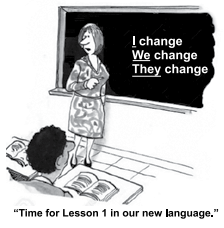
Read the statement from the first paragraph “A glance through the past century or so of language teaching gives us an interesting picture of varied interpretations of the best way to teach a foreign language”. The cartoon below represents the best way to teach a language according to

Imagem associada para resolução da questão
Alternativas
Q3456340 Inglês

Leia o texto para responder às questão.



   Let’s start by discussing smoking. It continues to be the leading cause of preventable disease and death in many countries. The highest percent of smoking tends to be seen among people with a high school diploma (or not even that!), and the lowest is among those with a bachelor’s degree or higher. Trends in efforts to quit smoking habits also vary by educational level. Adults with only a high school diploma historically have had the lowest rates of quitting smoking compared to adults overall. But these data document the relationship when it is too late: Adults don’t drop out of school, children do.


   The field of public health recognizes education is a social determinant of health and an indicator of well-being. National efforts in North America are currently focused on promoting literacy, and increasing high school completion and college enrollment. It is critical to ensure that children have positive learning experiences while they are still young so that they can achieve educational success. This is one of the best ways to ensure that they can live healthier lives as adults.


   A human baby’s brain is not fully developed at birth. Rapid brain developments and the acquisition of foundation skills occur in the first few years of life and then steady into childhood and adolescence. Abuse, neglect, poverty and related stressful exposures can put children at risk for problems with healthy cognitive, social and emotional development, which can interfere with learning.


   To effectively address the problem, learning environments must include staff who have knowledge about trauma and symptoms of trauma. Most importantly, the school ecosystems, which include the schools’ staff, must be prepared and able to provide children, and each other, safe, supportive and trusting environments. Thus, creating effective solutions will require a multigenerational approach – that is, one that focuses on the children affected as well as on the adults dealing with them. In order to promote well-being across the lifespan, we must collectively invest in meeting the needs of future generations.


(Shanta R. Dube. 07.02.2018, https://theconversation.com. Adaptado) 


In the fragment from the fourth paragraph “that is, one that focuses on the children affected as well as on the adults dealing with them”, the expression “that is” introduces
Alternativas
Q3456338 Inglês

Leia o texto para responder às questão.


   Let’s start by discussing smoking. It continues to be the leading cause of preventable disease and death in many countries. The highest percent of smoking tends to be seen among people with a high school diploma (or not even that!), and the lowest is among those with a bachelor’s degree or higher. Trends in efforts to quit smoking habits also vary by educational level. Adults with only a high school diploma historically have had the lowest rates of quitting smoking compared to adults overall. But these data document the relationship when it is too late: Adults don’t drop out of school, children do.


   The field of public health recognizes education is a social determinant of health and an indicator of well-being. National efforts in North America are currently focused on promoting literacy, and increasing high school completion and college enrollment. It is critical to ensure that children have positive learning experiences while they are still young so that they can achieve educational success. This is one of the best ways to ensure that they can live healthier lives as adults.


   A human baby’s brain is not fully developed at birth. Rapid brain developments and the acquisition of foundation skills occur in the first few years of life and then steady into childhood and adolescence. Abuse, neglect, poverty and related stressful exposures can put children at risk for problems with healthy cognitive, social and emotional development, which can interfere with learning.


   To effectively address the problem, learning environments must include staff who have knowledge about trauma and symptoms of trauma. Most importantly, the school ecosystems, which include the schools’ staff, must be prepared and able to provide children, and each other, safe, supportive and trusting environments. Thus, creating effective solutions will require a multigenerational approach – that is, one that focuses on the children affected as well as on the adults dealing with them. In order to promote well-being across the lifespan, we must collectively invest in meeting the needs of future generations.


(Shanta R. Dube. 07.02.2018, https://theconversation.com. Adaptado) 


Pronouns are important reference elements contributing to the cohesion in texts. In the fragment from the second paragraph “This is one of the best ways to”, the bolded pronoun refers to the following idea in the two sentences that precede it: 
Alternativas
Q3456336 Inglês

Leia o texto para responder às questão.


   Let’s start by discussing smoking. It continues to be the leading cause of preventable disease and death in many countries. The highest percent of smoking tends to be seen among people with a high school diploma (or not even that!), and the lowest is among those with a bachelor’s degree or higher. Trends in efforts to quit smoking habits also vary by educational level. Adults with only a high school diploma historically have had the lowest rates of quitting smoking compared to adults overall. But these data document the relationship when it is too late: Adults don’t drop out of school, children do.


   The field of public health recognizes education is a social determinant of health and an indicator of well-being. National efforts in North America are currently focused on promoting literacy, and increasing high school completion and college enrollment. It is critical to ensure that children have positive learning experiences while they are still young so that they can achieve educational success. This is one of the best ways to ensure that they can live healthier lives as adults.


   A human baby’s brain is not fully developed at birth. Rapid brain developments and the acquisition of foundation skills occur in the first few years of life and then steady into childhood and adolescence. Abuse, neglect, poverty and related stressful exposures can put children at risk for problems with healthy cognitive, social and emotional development, which can interfere with learning.


   To effectively address the problem, learning environments must include staff who have knowledge about trauma and symptoms of trauma. Most importantly, the school ecosystems, which include the schools’ staff, must be prepared and able to provide children, and each other, safe, supportive and trusting environments. Thus, creating effective solutions will require a multigenerational approach – that is, one that focuses on the children affected as well as on the adults dealing with them. In order to promote well-being across the lifespan, we must collectively invest in meeting the needs of future generations.


(Shanta R. Dube. 07.02.2018, https://theconversation.com. Adaptado) 


For his exposition in the first paragraph, the writer makes use of information deriving from 
Alternativas
Q3456335 Inglês

Leia o texto para responder às questão.


   Let’s start by discussing smoking. It continues to be the leading cause of preventable disease and death in many countries. The highest percent of smoking tends to be seen among people with a high school diploma (or not even that!), and the lowest is among those with a bachelor’s degree or higher. Trends in efforts to quit smoking habits also vary by educational level. Adults with only a high school diploma historically have had the lowest rates of quitting smoking compared to adults overall. But these data document the relationship when it is too late: Adults don’t drop out of school, children do.


   The field of public health recognizes education is a social determinant of health and an indicator of well-being. National efforts in North America are currently focused on promoting literacy, and increasing high school completion and college enrollment. It is critical to ensure that children have positive learning experiences while they are still young so that they can achieve educational success. This is one of the best ways to ensure that they can live healthier lives as adults.


   A human baby’s brain is not fully developed at birth. Rapid brain developments and the acquisition of foundation skills occur in the first few years of life and then steady into childhood and adolescence. Abuse, neglect, poverty and related stressful exposures can put children at risk for problems with healthy cognitive, social and emotional development, which can interfere with learning.


   To effectively address the problem, learning environments must include staff who have knowledge about trauma and symptoms of trauma. Most importantly, the school ecosystems, which include the schools’ staff, must be prepared and able to provide children, and each other, safe, supportive and trusting environments. Thus, creating effective solutions will require a multigenerational approach – that is, one that focuses on the children affected as well as on the adults dealing with them. In order to promote well-being across the lifespan, we must collectively invest in meeting the needs of future generations.


(Shanta R. Dube. 07.02.2018, https://theconversation.com. Adaptado) 


Though not very recent, the text discusses one topic of major relevance today. One of the text’s main discussions has to do with the
Alternativas
Q3456334 Inglês

Leia o cartum para responder à questão.



(https://au.pinterest.com)


Cantaloupes – a variety of melon

The fragment “Only in Math problems can you buy 60 cataloupes”
Alternativas
Q3456333 Inglês

Leia o cartum para responder à questão.


(https://au.pinterest.com)


Cantaloupes – a variety of melon

The character in the cartoon implicitly criticizes 
Alternativas
Q3439639 Inglês
In the image, the idea of affection between the child and the tiger stands out. The word that best describes the relationship between the two characters is

Q47.png (193×209)
ps://www.gocomics.com/calvinandhobbes

Alternativas
Q3439638 Inglês
Leia o texto a seguir para responder à próxima questão.

    AI has made it easier than ever to find information: Ask ChatGPT almost anything, and the system swiftly delivers an answer. But the large language models that power popular tools like OpenAI’s ChatGPT or Anthropic’s Claude were not designed to be accurate or factual. They regularly “hallucinate” and offer up falsehoods as if they were hard facts.

Yet people are relying more and more on AI to answer their questions. Half of all people in the U.S. between the ages of 14 and 22 now use AI to get information, according to a 2024 Harvard study.


https://theconversation.com/heres-how-researchers-are-helping-ais-gettheir-facts-straight-245463
The word “Yet”, in the beginning of the second paragraph, is polysemic and its meaning depends on the context. In the sentences below, the one in which the word carries the same meaning as the one used in the text is
Alternativas
Q3439625 Inglês
Leia o texto a seguir para responder à próxima questão.

    Because the culture of any community has many facets and manifestations, it would be practically impossible to deal with all of them in the classroom and prepare students for the many situations that they might encounter in the course of their functioning in ESL/EFL environments. However, many important aspects of teaching the second culture can be brought forth and addressed via classroom instruction, and some of these are discussed here. The most important long-term benefits of teaching culture may be to provide learners with the awareness and the tools that will allow them to achieve their academic, professional, social, and personal goals and become successful in their daily functioning in L2 environments.


CELCE-MURCIA, M. et alii. Teaching English as a Second or Foreign Language. 4th ed. USA, Cengage Learning (2013). Adaptado.
In the excerpt “and some of these are discussed below”, the referent of the word in bold is
Alternativas
Q3439620 Inglês
Leia o texto e responda à próxima questão.


Powerful storm knocks out power to 1.4 million homes in Brazil’s largest city


    SAO PAULO (AP) — Around 1.4 million households in Sao Paulo, Brazil, were without power on Saturday almost 24 hours after a brief but powerful storm swept through South America’s largest metropolis. At least seven people were killed.


    Officials in Sao Paulo state said that record winds of up to 67 mph (108 kph) knocked down transmission lines and destroyed trees, causing severe damage in some parts. The storm also shut down several airports and interrupted water service in several areas, according to the state government.


    Authorities originally expected to restore power within a few hours. But several neighborhoods in the metropolitan area, which is home to 21 million people, were still in the dark on Saturday, and authorities were urging residents to limit their consumption of water.


https://apnews.com. Adaptado. Acesso em 24.04.2025
While preparing reading comprehension exercises on the text, the teacher notes the absolute predominance of verbs in the simple past. However, this is not a language class, but a reading one, and the teacher wouldn’t like to deal with the topic “verbs” in isolation, as followers of structuralism would do. This way, in trying to articulate reading comprehension and linguistic knowledge, in a class on the text “Powerful storm knocks out power to 1.4 million homes in Brazil’s largest city”, the teacher 
Alternativas
Q3439619 Inglês
Leia o texto e responda à próxima questão.


Powerful storm knocks out power to 1.4 million homes in Brazil’s largest city


    SAO PAULO (AP) — Around 1.4 million households in Sao Paulo, Brazil, were without power on Saturday almost 24 hours after a brief but powerful storm swept through South America’s largest metropolis. At least seven people were killed.


    Officials in Sao Paulo state said that record winds of up to 67 mph (108 kph) knocked down transmission lines and destroyed trees, causing severe damage in some parts. The storm also shut down several airports and interrupted water service in several areas, according to the state government.


    Authorities originally expected to restore power within a few hours. But several neighborhoods in the metropolitan area, which is home to 21 million people, were still in the dark on Saturday, and authorities were urging residents to limit their consumption of water.


https://apnews.com. Adaptado. Acesso em 24.04.2025
Um professor encontra essa notícia, publicada imediatamente após uma tempestade haver devastado a cidade de São Paulo. Suponha que esse professor considere pertinente trabalhar a notícia com sua turma do 1º ano do Ensino Médio que vem desenvolvendo um projeto interdisciplinar intitulado “Mudanças climáticas: efeitos sentidos no Brasil”. Consciente de que o reconhecimento do contexto de produção favorece o processo de compreensão do tema tratado, o professor propõe, como primeira atividade de sua aula de leitura,
Alternativas
Respostas
2241: D
2242: B
2243: B
2244: D
2245: C
2246: D
2247: A
2248: E
2249: B
2250: E
2251: C
2252: C
2253: D
2254: A
2255: C
2256: A
2257: E
2258: D
2259: E
2260: B