Questões de Concurso
Sobre interpretação de texto | reading comprehension em inglês
Foram encontradas 12.687 questões


Ano: 2025
Banca:
OBJETIVA
Órgão:
Prefeitura de Galvão - SC
Prova:
OBJETIVA - 2025 - Prefeitura de Galvão - SC - Professor – Língua Inglesa |
Q3139907
Inglês
Texto associado
Who votes for the Academy Awards?
After the glitzy red-carpet arrivals, the feel-good
montages, and the host’s opening roast, the Oscars
ceremony switches to its raison d’être: revealing the
previous year’s highest achievers in cinema. One after
another, the presenters list the nominees, open a lavish
envelope, and reveal the winner in each category. The
champions breathlessly accept their awards and, over and
over, effusively thank their mothers, God, and the
academy... What is this obscure body? The academy—that
is, the Academy of Motion Picture Arts and Sciences—is the
organization that votes for the Oscar winners.
The academy is an exclusive Hollywood institution
that has its own governing body, 17 separate branches, and
a thorough rule book on membership eligibility and voting
processes. Since 2016, when the board announced that it
would diversify its membership, the academy has grown to
about 8,000 members. It doesn’t publicize the names of all
those members, but each spring it releases a list of the
individuals it has invited to join its ranks.
The rest of the academy members are not listed,
but we can guess who a few are by looking at some of the
requirements to join the institution. To qualify, an individual
must work in the film industry. This means that neither
individuals who work exclusively in television nor members
of the press may join. Oscar nominees are often considered
for membership automatically, while other candidates must
be sponsored by two active members of the branch they
wish to join. Each branch also has its own specific
requirements.
Encyclopaedia Britannica. Adaptation.
Which author, associated with the Modernist movement, is known for employing a stream-of-consciousness narrative style in works such as Mrs. Dalloway and To the Lighthouse?
Ano: 2025
Banca:
OBJETIVA
Órgão:
Prefeitura de Galvão - SC
Prova:
OBJETIVA - 2025 - Prefeitura de Galvão - SC - Professor – Língua Inglesa |
Q3139905
Inglês
Texto associado
Who votes for the Academy Awards?
After the glitzy red-carpet arrivals, the feel-good
montages, and the host’s opening roast, the Oscars
ceremony switches to its raison d’être: revealing the
previous year’s highest achievers in cinema. One after
another, the presenters list the nominees, open a lavish
envelope, and reveal the winner in each category. The
champions breathlessly accept their awards and, over and
over, effusively thank their mothers, God, and the
academy... What is this obscure body? The academy—that
is, the Academy of Motion Picture Arts and Sciences—is the
organization that votes for the Oscar winners.
The academy is an exclusive Hollywood institution
that has its own governing body, 17 separate branches, and
a thorough rule book on membership eligibility and voting
processes. Since 2016, when the board announced that it
would diversify its membership, the academy has grown to
about 8,000 members. It doesn’t publicize the names of all
those members, but each spring it releases a list of the
individuals it has invited to join its ranks.
The rest of the academy members are not listed,
but we can guess who a few are by looking at some of the
requirements to join the institution. To qualify, an individual
must work in the film industry. This means that neither
individuals who work exclusively in television nor members
of the press may join. Oscar nominees are often considered
for membership automatically, while other candidates must
be sponsored by two active members of the branch they
wish to join. Each branch also has its own specific
requirements.
Encyclopaedia Britannica. Adaptation.
According to the text, mark the CORRECT item.
Ano: 2025
Banca:
OBJETIVA
Órgão:
Prefeitura de Galvão - SC
Prova:
OBJETIVA - 2025 - Prefeitura de Galvão - SC - Professor – Língua Inglesa |
Q3139902
Inglês
Texto associado
Who votes for the Academy Awards?
After the glitzy red-carpet arrivals, the feel-good
montages, and the host’s opening roast, the Oscars
ceremony switches to its raison d’être: revealing the
previous year’s highest achievers in cinema. One after
another, the presenters list the nominees, open a lavish
envelope, and reveal the winner in each category. The
champions breathlessly accept their awards and, over and
over, effusively thank their mothers, God, and the
academy... What is this obscure body? The academy—that
is, the Academy of Motion Picture Arts and Sciences—is the
organization that votes for the Oscar winners.
The academy is an exclusive Hollywood institution
that has its own governing body, 17 separate branches, and
a thorough rule book on membership eligibility and voting
processes. Since 2016, when the board announced that it
would diversify its membership, the academy has grown to
about 8,000 members. It doesn’t publicize the names of all
those members, but each spring it releases a list of the
individuals it has invited to join its ranks.
The rest of the academy members are not listed,
but we can guess who a few are by looking at some of the
requirements to join the institution. To qualify, an individual
must work in the film industry. This means that neither
individuals who work exclusively in television nor members
of the press may join. Oscar nominees are often considered
for membership automatically, while other candidates must
be sponsored by two active members of the branch they
wish to join. Each branch also has its own specific
requirements.
Encyclopaedia Britannica. Adaptation.
The word “lavish”, underlined in the first paragraph, means:
Ano: 2025
Banca:
Unesc
Órgão:
Prefeitura de Campos Novos - SC
Prova:
Unesc - 2025 - Prefeitura de Campos Novos - SC - Professor de Inglês |
Q3139405
Inglês
Leia o trecho abaixo e responda à questão:
"The world is facing a climate crisis. Scientists warn that if we don't take drastic action to reduce greenhouse gas emissions, the consequences will be catastrophic."
O principal objetivo do texto é:
"The world is facing a climate crisis. Scientists warn that if we don't take drastic action to reduce greenhouse gas emissions, the consequences will be catastrophic."
O principal objetivo do texto é:
Ano: 2024
Banca:
Máxima
Órgão:
Prefeitura de Santo Antônio do Grama - MG
Prova:
Máxima - 2024 - Prefeitura de Santo Antônio do Grama - MG - Professor de Inglês |
Q4208660
Inglês
Texto associado
Leia o texto e responda a questão
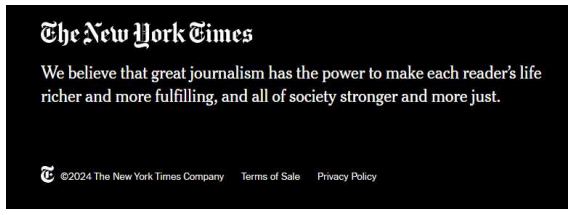
"Qual é a proposta do anúncio feito pelo jornal americano The New York
Times?
Ano: 2024
Banca:
Máxima
Órgão:
Prefeitura de Santo Antônio do Grama - MG
Prova:
Máxima - 2024 - Prefeitura de Santo Antônio do Grama - MG - Professor de Inglês |
Q4208659
Inglês
Texto associado
Leia o texto a seguir.
For decades, it seemed that the purpose of our education system was to
encourage competition. Schools would award prizes to the most talented
student and proudly display their names on bulletin boards. Nowadays, in
many institutions, the key word has become "inclusion": no one should be left
behind. Resources are channeled into helping the east capable; everyone's
work (good or bad) is on the walls; and prize tables are heavily loaded with
awards to make sure everyone is awarded a prize for something. Which
approach is right?
Attempts to make education more inclusive are frequently criticized. Many
point out that once students leave the protective environment of the
classroom, they will face the challenges of the working world: what use will
false reassurance be then? The purpose of school must be to reveal to
people their limitations, so that they can find a vocation that suits them.
In the past, allowing the talented to rise to the top through competition would
certainly have been important. In most factories, it was useful to separate the
potential managers from the unskilled workforce, and companies relied on
finding talented individuals to win business before their competitors did. An
ethos of competition also helped countries to compete effectively with other
nations as they scrambled for territory, raced to accumulate armaments or
even traveled into space ahead of rivals.
But in the 21st century, are we really preparing young people for a world of
competition? The academic James F. Moore argues that the days when
businesses competed with each other are ending. Moore believes we should
talk of "business ecosystems" nowadays. International corporations operate
in global networks of suppliers and partners. Sometimes; even rival
corporations work together. For example: companies often have to
collaborate to define common industry standards.
What's more, hierarchies are disappearing within organizations. Modern
companies have a wider range of business functions (public relations, IT,
research and development), and so skills. Knowledge and decision-making
are spread throughout the organization. In a modern marketing department
alone, there are teams for collecting and analyzing a wealth of customer data,
designing brands, advertising, etc. Each individual contributes vital skills and
must receive equal training. Low-skilled work, by comparison, is increasingly
being performed by automated labor; that is, robots.
But it isn't just in businesses that cooperation is becoming the norm. In the
past, individuals, colleges, governments, and companies didn't have to
collaborate. Now', 'collective impact" is becoming the gold standard. For
example, an anti-obesity project called "Shape Up Somerville" managed to
significantly bring down the average BMI (body mass index) in the town in
just three years, by involving schools, colleges, local businesses, charities,
government, and local citizens in a program of collective action. Led by
academics, and funded by four agencies. The work involved designing
school lunch menus, improving walkways, introducing gym membership
packages, and running campaigns amongst the public.
Competition can still be useful. It's stimulating and can help us learn about
ourselves. But it should not become a dominant feature of education
systems. Those who do not receive investment will find it increasingly hard to
fit into the modern world. It really is learning to take part that counts.
Fonte: (Texto retirado do livro Accelerate 2 p. 56.)
"A palavra que melhor substitui o modal em destaque na frase “The
purpose of school must be to reveal to people their limitations, so that they
can find a vocation that suits them” é:
Ano: 2024
Banca:
Máxima
Órgão:
Prefeitura de Santo Antônio do Grama - MG
Prova:
Máxima - 2024 - Prefeitura de Santo Antônio do Grama - MG - Professor de Inglês |
Q4208656
Inglês
Texto associado
Leia o texto a seguir.
For decades, it seemed that the purpose of our education system was to
encourage competition. Schools would award prizes to the most talented
student and proudly display their names on bulletin boards. Nowadays, in
many institutions, the key word has become "inclusion": no one should be left
behind. Resources are channeled into helping the east capable; everyone's
work (good or bad) is on the walls; and prize tables are heavily loaded with
awards to make sure everyone is awarded a prize for something. Which
approach is right?
Attempts to make education more inclusive are frequently criticized. Many
point out that once students leave the protective environment of the
classroom, they will face the challenges of the working world: what use will
false reassurance be then? The purpose of school must be to reveal to
people their limitations, so that they can find a vocation that suits them.
In the past, allowing the talented to rise to the top through competition would
certainly have been important. In most factories, it was useful to separate the
potential managers from the unskilled workforce, and companies relied on
finding talented individuals to win business before their competitors did. An
ethos of competition also helped countries to compete effectively with other
nations as they scrambled for territory, raced to accumulate armaments or
even traveled into space ahead of rivals.
But in the 21st century, are we really preparing young people for a world of
competition? The academic James F. Moore argues that the days when
businesses competed with each other are ending. Moore believes we should
talk of "business ecosystems" nowadays. International corporations operate
in global networks of suppliers and partners. Sometimes; even rival
corporations work together. For example: companies often have to
collaborate to define common industry standards.
What's more, hierarchies are disappearing within organizations. Modern
companies have a wider range of business functions (public relations, IT,
research and development), and so skills. Knowledge and decision-making
are spread throughout the organization. In a modern marketing department
alone, there are teams for collecting and analyzing a wealth of customer data,
designing brands, advertising, etc. Each individual contributes vital skills and
must receive equal training. Low-skilled work, by comparison, is increasingly
being performed by automated labor; that is, robots.
But it isn't just in businesses that cooperation is becoming the norm. In the
past, individuals, colleges, governments, and companies didn't have to
collaborate. Now', 'collective impact" is becoming the gold standard. For
example, an anti-obesity project called "Shape Up Somerville" managed to
significantly bring down the average BMI (body mass index) in the town in
just three years, by involving schools, colleges, local businesses, charities,
government, and local citizens in a program of collective action. Led by
academics, and funded by four agencies. The work involved designing
school lunch menus, improving walkways, introducing gym membership
packages, and running campaigns amongst the public.
Competition can still be useful. It's stimulating and can help us learn about
ourselves. But it should not become a dominant feature of education
systems. Those who do not receive investment will find it increasingly hard to
fit into the modern world. It really is learning to take part that counts.
Fonte: (Texto retirado do livro Accelerate 2 p. 56.)
Em “Attempts to make education more inclusive are frequently criticized',
a palavra 'frequently' refere-se a um:
Ano: 2024
Banca:
Máxima
Órgão:
Prefeitura de Santo Antônio do Grama - MG
Prova:
Máxima - 2024 - Prefeitura de Santo Antônio do Grama - MG - Professor de Inglês |
Q4208655
Inglês
Texto associado
Leia o texto a seguir.
For decades, it seemed that the purpose of our education system was to
encourage competition. Schools would award prizes to the most talented
student and proudly display their names on bulletin boards. Nowadays, in
many institutions, the key word has become "inclusion": no one should be left
behind. Resources are channeled into helping the east capable; everyone's
work (good or bad) is on the walls; and prize tables are heavily loaded with
awards to make sure everyone is awarded a prize for something. Which
approach is right?
Attempts to make education more inclusive are frequently criticized. Many
point out that once students leave the protective environment of the
classroom, they will face the challenges of the working world: what use will
false reassurance be then? The purpose of school must be to reveal to
people their limitations, so that they can find a vocation that suits them.
In the past, allowing the talented to rise to the top through competition would
certainly have been important. In most factories, it was useful to separate the
potential managers from the unskilled workforce, and companies relied on
finding talented individuals to win business before their competitors did. An
ethos of competition also helped countries to compete effectively with other
nations as they scrambled for territory, raced to accumulate armaments or
even traveled into space ahead of rivals.
But in the 21st century, are we really preparing young people for a world of
competition? The academic James F. Moore argues that the days when
businesses competed with each other are ending. Moore believes we should
talk of "business ecosystems" nowadays. International corporations operate
in global networks of suppliers and partners. Sometimes; even rival
corporations work together. For example: companies often have to
collaborate to define common industry standards.
What's more, hierarchies are disappearing within organizations. Modern
companies have a wider range of business functions (public relations, IT,
research and development), and so skills. Knowledge and decision-making
are spread throughout the organization. In a modern marketing department
alone, there are teams for collecting and analyzing a wealth of customer data,
designing brands, advertising, etc. Each individual contributes vital skills and
must receive equal training. Low-skilled work, by comparison, is increasingly
being performed by automated labor; that is, robots.
But it isn't just in businesses that cooperation is becoming the norm. In the
past, individuals, colleges, governments, and companies didn't have to
collaborate. Now', 'collective impact" is becoming the gold standard. For
example, an anti-obesity project called "Shape Up Somerville" managed to
significantly bring down the average BMI (body mass index) in the town in
just three years, by involving schools, colleges, local businesses, charities,
government, and local citizens in a program of collective action. Led by
academics, and funded by four agencies. The work involved designing
school lunch menus, improving walkways, introducing gym membership
packages, and running campaigns amongst the public.
Competition can still be useful. It's stimulating and can help us learn about
ourselves. But it should not become a dominant feature of education
systems. Those who do not receive investment will find it increasingly hard to
fit into the modern world. It really is learning to take part that counts.
Fonte: (Texto retirado do livro Accelerate 2 p. 56.)
Após a leitura do texto, analise as assertivas abaixo.
I. Ao longo do tempo, as instituições de ensino sempre priorizaram a "inclusão".
II. As escolas modernas procuram assegurar que todos os alunos recebam prêmios.
III. As tentativas de tornar a educação mais inclusiva não são alvo de críticas.
I. Ao longo do tempo, as instituições de ensino sempre priorizaram a "inclusão".
II. As escolas modernas procuram assegurar que todos os alunos recebam prêmios.
III. As tentativas de tornar a educação mais inclusiva não são alvo de críticas.
Q4197170
Inglês
Texto associado
Leia o texto para responder à questão.
Rising sea levels could severely disrupt crude oil
shipments and erode energy security in import-dependent
countries like China, South Korea and Japan, with many of the
world’s biggest terminals vulnerable to flooding, researchers
said on Tuesday.
Melting ice and swelling seas caused by rising
temperatures could “unleash unstoppable multi-metre sea
level rise which will not only sink key oil ports and disrupt
global oil trade but also swamp coastal refineries and
petrochemical facilities”, the China Water Risk (CWR) think
tank warned in a report.
A 2021 report by the Intergovernmental Panel on Climate
Change estimated that on current trends, average sea levels
could rise by more than a metre by the end of the century,
adding that a two-metre rise could not be ruled out.
(www.reuters.com/business/energy/. Adaptado)
No trecho do terceiro parágrafo – … a two-metre rise
could not be ruled out… – a expressão em negrito pode
ser substituída, sem alteração de sentido, por
Q4197169
Inglês
Texto associado
Leia o texto para responder à questão.
Rising sea levels could severely disrupt crude oil
shipments and erode energy security in import-dependent
countries like China, South Korea and Japan, with many of the
world’s biggest terminals vulnerable to flooding, researchers
said on Tuesday.
Melting ice and swelling seas caused by rising
temperatures could “unleash unstoppable multi-metre sea
level rise which will not only sink key oil ports and disrupt
global oil trade but also swamp coastal refineries and
petrochemical facilities”, the China Water Risk (CWR) think
tank warned in a report.
A 2021 report by the Intergovernmental Panel on Climate
Change estimated that on current trends, average sea levels
could rise by more than a metre by the end of the century,
adding that a two-metre rise could not be ruled out.
(www.reuters.com/business/energy/. Adaptado)
No trecho do segundo parágrafo – … which will not only
sink key oil ports and disrupt global oil trade but also
swamp coastal refineries… – as expressões em negrito
indicam
Q4197168
Inglês
Texto associado
Leia o texto para responder à questão.
Rising sea levels could severely disrupt crude oil
shipments and erode energy security in import-dependent
countries like China, South Korea and Japan, with many of the
world’s biggest terminals vulnerable to flooding, researchers
said on Tuesday.
Melting ice and swelling seas caused by rising
temperatures could “unleash unstoppable multi-metre sea
level rise which will not only sink key oil ports and disrupt
global oil trade but also swamp coastal refineries and
petrochemical facilities”, the China Water Risk (CWR) think
tank warned in a report.
A 2021 report by the Intergovernmental Panel on Climate
Change estimated that on current trends, average sea levels
could rise by more than a metre by the end of the century,
adding that a two-metre rise could not be ruled out.
(www.reuters.com/business/energy/. Adaptado)
The text mainly intends to
Q4197167
Inglês
Texto associado
Leia o texto para responder à questão
What are human rights?
Human rights are rights we have simply because we exist
as human beings – they are not granted by any state. These
universal rights are inherent to us all, regardless of nationality,
sex, national or ethnic origin, color, religion, language, or any
other status. They range from the most fundamental – the
right to life – to those that make life worth living, such as the
rights to food, education, work, health, and liberty.
(www.ohchr.org/en/what-are-human-rights. Adaptado)
No trecho do texto – … such as the rights to food,
education, work, health, and liberty. – a expressão destacada em negrito introduz uma
Q4197166
Inglês
Texto associado
Leia o texto para responder à questão
What are human rights?
Human rights are rights we have simply because we exist
as human beings – they are not granted by any state. These
universal rights are inherent to us all, regardless of nationality,
sex, national or ethnic origin, color, religion, language, or any
other status. They range from the most fundamental – the
right to life – to those that make life worth living, such as the
rights to food, education, work, health, and liberty.
(www.ohchr.org/en/what-are-human-rights. Adaptado)
According to the text, human rights are
Q4158887
Inglês
In a High School English class, when dealing with a reading comprehension activity, the teacher brought
to the class the textual genre “movie poster” and presented the following example:
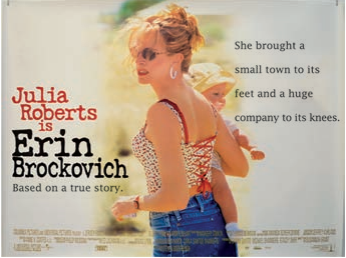 Available at: https://www.pastposters.com. Accessed on: Jun. 7, 2024.
To help the students interpret the text, the teacher should choose the most relevant teaching strategy to go beyond literal meanings, that is, to
Available at: https://www.pastposters.com. Accessed on: Jun. 7, 2024.
To help the students interpret the text, the teacher should choose the most relevant teaching strategy to go beyond literal meanings, that is, to
Q4158872
Inglês
The belief that students don’t learn English effectively in public schools can have a great impact on the
emotions, beliefs, and professional identity of Brazilian English teachers. This belief may stem from a
variety of factors, such as limited resources, large class sizes, and inadequate language proficiency among
students. As a result, teachers may experience a range of emotions, including frustration, disappointment,
and a sense of helplessness in their efforts to facilitate language learning in such environments. Emotions
influence beliefs and vice-versa. Understanding this relationship is necessary to offer a more supportive
environment to help teachers to re-signify their beliefs and emotions. Numerous studies have shown that
emotions are also interconnected with various other concepts, including identities and motivations.
BARCELOS, A.; ARAGÃO, R. Emotions in Language Teaching: A Review of Studies on Teacher Emotions in Brazil. Chinese Journal of Applied Linguistics. v. 41, p. 506-531, 2018 (adapted).
Considering the text, we can state that
BARCELOS, A.; ARAGÃO, R. Emotions in Language Teaching: A Review of Studies on Teacher Emotions in Brazil. Chinese Journal of Applied Linguistics. v. 41, p. 506-531, 2018 (adapted).
Considering the text, we can state that
Q4158864
Inglês
In a High School English class, the teacher decides to use a documentary about cultural travels around the
world. The video presents different tourist destinations, local customs, and different cultural traditions
of some English-speaking countries. The activity aims to develop the students’ knowledge about cultural
diversity and stimulate oral comprehension of English language varieties.
Considering the goal of the activity planned, the directions that the teacher should give to the students after they watch the video is
Considering the goal of the activity planned, the directions that the teacher should give to the students after they watch the video is
Q4151688
Inglês
Burgeoning online environments offer completely new opportunities for ethnographic and other forms of
qualitative research. Yet there are no clear standards for how we study online texts from an ethnographic
perspective. In this article, we identify barriers to the application of traditional qualitative methods online,
using the example of a systematic thematic analysis of weight-loss blogs. These barriers include the influence
of the technology structuring online content, the fluid nature of online texts such as blogs and the highly
connected and public nature of online identities, which may span multiple social media platforms. We
discuss some potential approaches to addressing these challenges as preliminary steps toward developing
a tool kit suited to ethical, high-quality online modes of ethnographic research.
Available at: https://journals.sagepub.com/. Accessed on: August 27, 2024 (adapted).
According to the text, it is correct to state that
Available at: https://journals.sagepub.com/. Accessed on: August 27, 2024 (adapted).
According to the text, it is correct to state that
Q4151675
Inglês
 Available at: https://www.instagram.com/.
Accessed on: June 17, 2024
Available at: https://www.instagram.com/.
Accessed on: June 17, 2024
Last week, when an English teacher got into her High School class, one of her students was showing the poem above to her friends. She said she had found it online and was curious about it because its structure was different from the ones she was used to reading. The teacher was pleased to hear that, and thought this would be an excellent opportunity to introduce her class into this non-canonical literature. She started presenting the author, Rupi Kaur, a contemporary Indian poet. Then, she read it aloud and asked them to work in pairs to figure out its main idea.
Considering the students’ ages, their school level and their critical thinking ability, the teacher anticipated they should be able to understand that
Q4151670
Inglês
TEXT 1
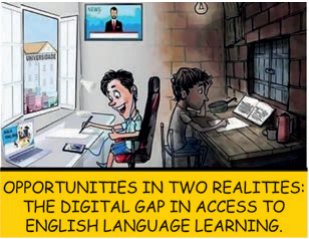 Available at: https://saladerecursos.com.br/. Accessed on: April 8, 2024 (adapted).
TEXT 2
 Available at: https://petletras.paginas.ufsc.br/.
Accessed on: April 8, 2024 (adapted).
Available at: https://petletras.paginas.ufsc.br/.
Accessed on: April 8, 2024 (adapted).
From the analysis of the images above, nowadays, the use of digital technologies in English learning
Available at: https://saladerecursos.com.br/. Accessed on: April 8, 2024 (adapted).
TEXT 2
Available at: https://petletras.paginas.ufsc.br/.
Accessed on: April 8, 2024 (adapted).
From the analysis of the images above, nowadays, the use of digital technologies in English learning
Q4151664
Inglês
Discussions around teaching in a culturally sustaining manner in the English language arts classroom,
specifically when teaching literary analysis, often address the need to incorporate multicultural literature
so that students are exposed to stories told from diverse perspectives. However, the reality in many schools
is that teachers do not have ownership over their curriculum in a way that allows them to choose which
texts they should read and study with students. In this context, culturally sustaining teaching presents a
difficult challenge. In this literature review, the author presents classroom strategies that apply a critical
literacy lens to analysis of canonical literature as a way to create a place for culturally sustaining teaching
within a prescribed curriculum.
ERVIN, J. Critically reading the canon: culturally sustaining approaches to a prescribed literary curriculum. Journal of adolescent & adult literacy, v. 65, n. 4, 2022 (adapted).
The abstract excerpt above points to a challenge faced by literature teachers in finding classroom procedures that ensure more culturally sustaining teaching considering limitations imposed by a prescribed curriculum.
In this context, which of the following examples of classes conducted in the scope of literary analysis would align with the approach advocated in the abstract?
ERVIN, J. Critically reading the canon: culturally sustaining approaches to a prescribed literary curriculum. Journal of adolescent & adult literacy, v. 65, n. 4, 2022 (adapted).
The abstract excerpt above points to a challenge faced by literature teachers in finding classroom procedures that ensure more culturally sustaining teaching considering limitations imposed by a prescribed curriculum.
In this context, which of the following examples of classes conducted in the scope of literary analysis would align with the approach advocated in the abstract?

 Conheça nossos planos