Questões de Concurso
Sobre discurso direto e indireto | reported speech em inglês
Foram encontradas 195 questões


I.Free direct speech is characterized by conveying the original message, but not the speaker's exact words.
II.He said their house had been for sale for six months is an example of reported speech.
III.Free reported speech is used in narratives to convey the thoughts or words of a character, through the narrator's voice.
IV.Reported speech presents with introductory verbs such as to say, to ask or to tell , and with quotation marks.
V.Direct speech can require a shift in verb tenses, pronouns and adverbs.
I. When the reporting verb is in the present, backshift is optional in neutral contexts.
II. Yesterday commonly becomes the previous day in indirect reports.
III. Must for obligation is normally reported as had to under backshift in neutral contexts.
IV. Would generally stays would in reported conditionals.
V. Universal truths often remain in the present even after a past reporting verb.
Which statements are CORRECT?

Mother Goose and Grimm cartoon, by Mike Peters
Read the following statements and choose the correct statement:
Laszlo Krasznahorkai Is Awarded Nobel Prize in Literature
Laszlo Krasznahorkai, a Hungarian novelist known for his dystopian themes and relentless prose, with winding sentences that can run on for pages, was awarded the Nobel Prize in Literature on Thursday. The Swedish Academy, which organizes the prize, said at a news conference that Krasznahorkai had received the award “for his compelling and visionary oeuvre that, in the midst of apocalyptic terror, reaffirms the power of art.”
Krasznahorkai (pronounced CRAS-now-hoar-kay), 71, has been a perennial favorite for the Nobel. Hailed as a “master of the apocalypse” by Susan Sontag, Krasznahorkai has long been revered by fellow writers for his idiosyncratic style and bleak narratives that can often be slyly humorous.
He’s also written half a dozen screenplays in collaboration with the Hungarian movie director Bela Tarr, who has adapted several of his novels for the screen. Tarr filmed “The Melancholy of Resistance,” which is among Krasznahorkai’s best-known works, as “Werckmeister Harmonies,” in 2000. The novel, filled with vast sentences, concerns events in a small Hungarian town after a circus arrives with a huge stuffed whale in tow.
Krasznahorkai told The New York Times in 2014 that he had tried to develop an absolutely original style, adding, “I wanted to be free to stray far from my literary ancestors, and not make some new version of Kafka or Dostoyevsky or Faulkner.”
Steve Sem-Sandberg, a member of the committee that awarded the prize, praised Krasznahorkai’s “powerful, musically inspired epic style” at the news conference announcing the Nobel. “It is Krasznahorkai’s artistic gaze, which is entirely free of illusion and which sees through the fragility of the social order, combined with his unwavering belief in the power of art that has motivated the academy to award the prize,” Sem-Sandberg added.
A spokeswoman for Krasznahorkai’s German publisher said in an email on Thursday that the author was not conducting any interviews, although earlier in the day he briefly spoke to Swedish radio: “I’m very happy, thank you,” he said, adding, “I don’t know what’s coming in the future.”
Krasznahorkai was born in Gyula, a small town about 120 miles from Budapest, in 1954. His family’s Jewish roots were kept a secret — his grandfather changed the family name from Korin to Krasznahorkai to assimilate — and Krasznahorkai didn’t know about his Jewish heritage until his father told him when he was 11.
He was a musical prodigy, and worked as a professional musician for several years in his youth, playing piano in a jazz band and singing in a rock group. His father was a lawyer, and his mother worked in the social welfare ministry. Inspired by Kafka, an author he revered, he planned to study law and was fascinated by criminal psychology, but ended up studying Hungarian language and literature.
After school, Krasznahorkai undertook military service but, he has said in interviews, deserted the army after being punished for insubordination. He then took on odd jobs — including working as a miner and as a night watchman for 300 cows, a post that allowed him to read work by Dostoyevsky and Malcolm Lowry’s “Under the Volcano,” a book he called his “bible.”
When he began writing, his aim was to complete one book, then pursue a career in music. At the time he published his first short story, artists and writers were subject to censorship under Hungary’s Communist regime, and he was taken in for questioning by the police, who interrogated him about his anti-Communist views and took away his passport.
Krasznahorkai was undeterred. In 1985, he published his subversive debut novel, “Satantango,” about life in a poor, crumbling hamlet, which was a literary sensation in Hungary. “Nobody, myself included, could understand how it was possible to publish ‘Satantango’ because it’s anything but an unproblematic novel for the Communist system,” he said in a 2018 Paris Review interview.
“He doesn’t deal with grand politics, he’s dealing with the experiences of people who live within societies that are decaying and falling apart,” said the poet George Szirtes, who translated “Satantango” and several other works by Krasznahorkai. Tarr filmed an adaptation, which lasts for over seven hours, in 1994. In an interview on Thursday he recalled reading the book in one night and asking if he could turn it into a movie, only to find the author annoyed to be woken up during Easter holidays. The novel was filled with “these poor people, these miserable people,” Tarr said, but Krasznahorkai gave them a rare “dignity.”
Szirtes said that Krasznahorkai never expected his books — filled with endless clauses and sub-clauses — to catch on with a wide international audience. “The books can look daunting in some ways, simply because there is no break in them,” Szirtes said. In recent decades, Krasznahorkai has received a stream of accolades outside his home country. In 2015, he won the Man Booker International Prize, which at the time was awarded for an author’s entire body of work rather than a specific novel.
In the United States, New Directions has published a dozen of his books in translation, and more are forthcoming, including “Zsömle Is Gone,” a satire about an elderly retired electrician living in the countryside who believes he’s a descendant of Hungarian royalty. Barbara Epler, the publisher of New Directions, said one of the most striking things about Krasznahorkai’s work is his ability to weave unexpected humor into bleak stories. “What’s amazing is its anti-gravitational element — all this darkness and within it, an escalating, incredibly deadpan hilarity,” she said.
The Nobel Prize is literature’s major honor, and typically the capstone to a writer’s career. Past recipients have included the authors Saul Bellow and Toni Morrison, the playwright Harold Pinter and, in 2016, Bob Dylan. Krasznahorkai had featured among bookmakers’ favorites to win the prize for many years. He is the second Hungarian to receive the literature Nobel after Imre Kertész, a novelist and Holocaust survivor, in 2002.
While Krasznahorkai’s work has often been praised for its political overtones, he has rejected the idea that he’s writing political allegories. “I never want to write some political novels,” he told The New York Times in 2014. “My resistance against the Communist regime was not political. It was against a society.”
Krasznahorkai isn’t comfortable being cast as a social or political prognosticator. He has said he’s never felt at ease discussing his work, and doesn’t see himself as “part of literary life.” “Writing, for me, is a totally private act,” he told The Paris Review. “I’m ashamed to speak about my literature — it’s the same as if you were to ask me about my most private secrets.”
Adapted from: https://www.nytimes.com/2025/10/09/
Match the items in Column B to the corresponding concepts in Column A regarding sentence relationships and forms of speech representation:
Column A: concepts
1.Direct speech
2.Reported speech
3.Discourse markers
Column B: descriptions
(__)Words used to organize ideas in a text, signaling contrast, consequence, addition, or sequence.
(__)A structure in which the speaker's exact words are reproduced without grammatical changes.
(__)A structure that requires changes in pronouns, verb tenses, and time expressions when reporting someone's speech.
Choose the alternative that presents the correct association between the columns:
Read the text below and answer question
Plan to test Liberian schoolchildren for drugs blocked
October 17th, 2025
By Moses Kollie Garzeawu
Monrovia, Liberia, Africa
Liberia's Education Ministry has blocked controversial plans to introduce mandatory drug testing in all of the country's schools.
Speaking to local media, the interim head of the Liberia Drug Enforcement Agency (LDEA), Fitzgerald Biago, said school testing would help address the growing problem of drug abuse.
The announcement sparked a mixed response. Some thought it would help tackle the scourge of drugs, while others saw it as an invasion of privacy, or feared it would cost too much.
Last year, President Joseph Boakai declared drug and substance abuse a national emergency and a recent EU-backed report estimated that one in five young Liberians take drugs.
However, the Education Ministry said it was not aware of any plans to test students and added that such a decision needed to be based on concrete evidence and properly thought through.
Assistant minister in charge of students Sona Toure-Sesay told the BBC that this kind of plan required proper research. "Let's assume we are made aware of the proposed initiatives by the LDEA, it will require us to conduct research and review case studies from other countries where this has been successful," she said.
Toure-Sesay also noted that testing could affect students. "What happens to students who test positive? What are the social services in place for them? Some of them might be bullied even after returning, and it may affect their overall educational performances."
She added that a multi-sectoral committee on drug and substance abuse had been set up, headed by the Health Ministry. Along with strengthening health clubs in schools, she said that this would help to reduce the prevalence of drugs among students.
President Boakai dismissed the leadership of the LDEA in August this year, and recently appointed Biago, a former senior police officer, as interim head of the agency.
Taken from:
https://www.bbc.com/news/articles/c0mxz3x1lr7o
The principal said to the students: “Don’t bring drugs to school”.
Choose the alternative that expresses the above sentence in reported speech:
Direct speech: The chair said to the board, “We can’t approve the draft that the consultant, whose portfolio I admire, emailed yesterday unless she sends us the missing data now.”
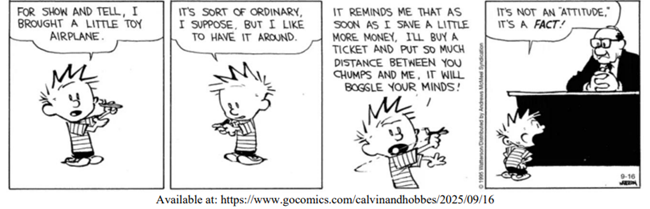
Mark the alternative that transforms Calvin’s sentence into reported speech:
“As soon as I save a little more money, I’ll buy a ticket.”
(__)John said that he would finish the report the following day.
(__)John said that he will finish the report tomorrow.
(__)John told that he would finish the report the next day.
(__)John said that he would finish the report tomorrow.
Mark the alternative that shows the correct sequence, from top to bottom.
Texto: Challenges in Global Education Systems
Education is a fundamental pillar of societal development, but many global education systems face significant challenges that hinder their ability to provide equal and quality learning opportunities. These challenges vary from country to country but share common themes such as inequality, lack of resources, outdated curricula, and the rapid pace of technological change.
One of the most pressing challenges in global education systems is inequality. In many parts of the world, access to quality education is not universal, and disparities in educational opportunities persist along socioeconomic, geographic, and gender lines. In low-income countries, educational infrastructure may be underdeveloped, with inadequate classrooms, outdated textbooks, and insufficient access to digital technologies. Rural areas often face more severe challenges, with limited access to schools or well-trained teachers. Similarly, marginalized communities — such as girls in some parts of Africa or indigenous populations — face cultural and societal barriers that prevent them from accessing education. In wealthier countries, while access to education may not be an issue, disparities remain within local communities, particularly in urban areas. Students from lowerincome backgrounds may face challenges in accessing tutoring, extracurricular activities, and the technology required for modern learning. Addressing these inequities is crucial to ensuring that all students have the opportunity to succeed.
Another significant challenge in global education systems is the outdated nature of curricula and teaching methods. In many cases, education systems are still based on models from the 19th or 20th centuries, designed to meet the needs of an industrialized economy rather than a knowledge-based, technology-driven society. Traditional curricula often emphasize rote learning and memorization rather than critical thinking, creativity, and problem-solving — skills that are essential in today’s globalized world. Moreover, teaching methods may be rigid, focusing on passive learning rather than active student engagement. This makes it difficult for students to develop the skills necessary to thrive in modern workplaces, where adaptability, innovation, and collaboration are highly valued.
In many parts of the world, education systems have been slow to adapt to the integration of digital technologies and 21st-century learning strategies. Without updating curricula to reflect the demands of the modern world, students may leave school without the skills needed to succeed in higher education or the workforce. A lack of effective teacher training is another challenge that impacts global education systems. Teachers are the heart of any educational system, and their ability to deliver quality instruction directly affects student outcomes.
In recent years, technology has become a critical part of the education system. However, the digital divide remains a significant barrier to achieving global educational equity. While students in wealthier countries have easy access to digital tools, high-speed internet, and online resources, students in low-income or rural areas often lack access to the necessary technology. The COVID19 pandemic highlighted these disparities, as many students in underserved communities struggled with remote learning due to limited access to devices or reliable internet connections. The digital divide not only limits access to education but also prevents students from gaining essential digital skills that are crucial in today’s job market.
The pressures of academic performance, social media, and external expectations can take a toll on students’ mental well-being. In highpressure educational systems, students may experience stress, anxiety, and burnout, which can hinder their ability to focus, learn, and succeed. Additionally, a lack of access to mental health resources or support services further exacerbates these issues. Teachers, too, face significant mental health challenges. The demands of managing large classrooms, addressing diverse learning needs, and meeting educational standards can lead to burnout and job dissatisfaction. Addressing mental health and well-being for both students and educators is essential for creating a healthy and effective learning environment.
In conclusion, the challenges faced by global education systems are multifaceted and complex, ranging from inequality and outdated curricula to teacher training and the digital divide. These challenges impact not only the quality of education but also the future success and wellbeing of students. To overcome these issues, it is crucial for governments, educational institutions, and communities to collaborate on innovative solutions that address the root causes of these challenges. By investing in equitable access to education, updating curricula, enhancing teacher training, and integrating technology, we can create a more inclusive and effective global education system that equips students for success in an increasingly interconnected world.
Taken and adapted from:
https://portaleducoas.org/challenges-in-globaleducation-systems/
Choose the alternative that correctly rewrites the sentence in reported speech:
•Use Text I for question.
TEXT I
HOW TO COPE WITH THE SUNDAY
SCARIES
by Chantelle Lee
________(1) Sunday night, and you’re feeling sad and anxious about going back to work in the morning.
Say hello to the Sunday scaries
You’re not alone in your workweek dread: “They’re very, very common,” says Susanne Cooperman, a neuropsychologist and psychoanalyst at New York University Langone Huntington Medical Group. “There’s nothing wrong with a person if they feel sad that the weekend is over. It’s when it really interferes in your functioning—when you can’t focus, when you can’t sleep, when you feel yourself medicating with alcohol—then you need help.”
Here’s why people get the Sunday scaries and the best ways to combat those thoughts of doom and gloom.
__________(2) are the Sunday scaries? The Sunday scaries typically manifest in two ways: feelings of depression that the weekend is ending, feelings of anxiety about the week to come, or both. These feelings typically start on Sunday afternoon.
“It could be that you feel sad and irritable and you have difficulty concentrating and fatigue,”
Cooperman says. That collection of feelings is called anhedonia—basically a loss of enjoyment.
If you feel more dread for the work week ahead, that’s called “anticipatory anxiety,” she says.
Why people get them
The scaries strike for all kinds of reasons. They could be related to work—maybe you’re afraid of losing your job, or you’re dreading going to the office in person, or you’re simply having a hard time unplugging from work after hours, Cooperman says.
Or, she adds, it could also be that you overbooked yourself during the week and feel exhausted by the time Sunday comes around.
How to deal with the Sunday scaries
One of the best ways to deal with the Sunday scaries is to mentally plant yourself firmly in the present. One way to achieve this is to try a mediation or relaxation app, even if it’s only for 10 or 15 minutes, Cooperman says. “I think that’s probably the best out of all the tips: stay in the moment, really try to curtail that catastrophizing into the future,” she says. There are other paths away from the scaries, too: Unplug from your phone or social media, maintain a good work-life balance, do some exercise, or get some fresh air. Make sure to schedule fun activities for Sunday afternoon and evening and do things that reliably make you feel better or help you “refuel [your] batteries,” Cooperman says. Just as important is allowing yourself downtime to relax and unwind, she adds. She also recommends trying to split up errands throughout the week so you don’t feel like you wasted your entire Sunday doing them.
While the Sunday scaries are common, people should keep an eye on how they’re coping come the end of the weekend. “Use healthy, adaptive ways to self-soothe when you’re anxious and have the scaries,” Cooperman says. “A glass of wine is fine, but if it’s more than that and you need it every night, then that’s a problem.” If the scaries are so bad that it’s significantly impacting your life, Cooperman suggests talking about these feelings with a therapist or a psychologist. Some warning signs include being so anxious that it’s hard to get out of bed in the morning, having anxiety attacks, needing alcohol to calm down, not being able to focus or sleep, or failing to enjoy the weekend at all. “If you just can’t get out of that loop where you’re constantly unhappy, then I think you’re at a place where you should see a psychologist or a therapist,” Cooperman says. “Sometimes it’s hard to [deal with it] on your own. It’s good to talk to a professional.”
LEE, Chantelle. How to cope with the Sunday scaries. Time, New York, 6 Apr. 2025. Available at: https://time.com/7275089/what-are-sunday-scaries/. Accessed on: 11 Aug. 2025.
“You’re not alone in your workweek dread: ‘They’re very, very common,’ says Susanne Cooperman, a neuropsychologist and psychoanalyst at New York University Langone Huntington Medical Group.”
I- The sentence ‘They’re very, very common’ consists of a direct speech.
II- In ‘You’re not alone in your workweek dread’, the term “your” is a possessive adjective.
III- Susanne Cooperman is the author of the text “How to Cope with the Sunday Scaries”.
Select the alternative in which the statements are CORRECT.

 Conheça nossos planos