Selecionar segmento
Estude com questões de diferentes segmentos
Atenção: Isso limpará todos os campos já preenchidos no filtro!
Foram encontradas 32.454 questões
Resolva questões gratuitamente!
Junte-se a mais de 4 milhões de concurseiros!


Ano: 2026
Banca:
Marinha
Órgão:
MARINHA
Prova:
Marinha - 2026 - MARINHA - Oficial da Marinha - Administração, Contabilidade e Economia |
Q4275857
Inglês
Choose the correct option to complete the sentence.
Unfortunately, the city council had to stop the construction of the community centre as their resources _________ .
Unfortunately, the city council had to stop the construction of the community centre as their resources _________ .
Ano: 2026
Banca:
Marinha
Órgão:
MARINHA
Prova:
Marinha - 2026 - MARINHA - Oficial da Marinha - Administração, Contabilidade e Economia |
Q4275856
Inglês
Texto associado
New Al System could prevent vessel collisions by
reducing dependence on ship Captain
Researchers at Texas A&M University have created an
intelligent Al system that can help prevent accidents and
collisions at sea. Named 'Ship Collision Avoidance of
Machine Learning and Radar Technology for Stationary
Entities and Avoidance', or SMART-SEA, the platform
works to decrease the dependence on ship captains.
The project team was led by Dr Mirjan Fürth, an assistant
professor of ocean engineering, who was awarded a
contract by the US Department of the Interior (DOI) and
the US Department of Energy (DOE) through the Ocean
Energy Safety Institute (OESI). It is not completely an
autonomous system, rather it provides 'a human-in-theloop', who gives real-time instructions based on maritime
traffic,weather and other factors.
This makes navigation safer and easier for the crew,
transiting crucial or dangerous waterways by providing
additional information and instructions. Collisions between
vessels and accidents like ships hitting stationary
structures like rigs or lighthouses are becoming common,
and most are caused by human error. This Al system will
help eliminate that, stated the project team.
Massive vessels have a lot of forward momentum that
their shipping distances are measured in miles rather than
metres. They also turn very slowly, meaning that any
collision has to factor in this slow movement while also
adjusting for sensor time lags, ocean current impacts and
several other factors.
The Al system has been developed keeping all the above-mentioned factors in mind and is extremely accurate. The
research team also said that the system combines raw
radar imaging data with machine learning, enabling it to
identify moving objects even in bad weather with limited
visibility.
The machine learning algorithm detects stationary objects
as well from a large distance. The system uses
computational fluid dynamics models and machine
learning, which have been previously trained on vessel
motions, the team added. The system does all of this
while complying with International Regulations for
Preventing Collisions at Sea (COLREGS).
(From: <https://www.marineinsight.com/.../new-ai-systemcould.../>)
Mark the option that completes the text correctly.
By the time the tugboat finally _____________, the other vessel ____________ for two hours. The Captain later _____________ that if the engine had failed earlier, the grounding _____________ .
By the time the tugboat finally _____________, the other vessel ____________ for two hours. The Captain later _____________ that if the engine had failed earlier, the grounding _____________ .
Ano: 2026
Banca:
Marinha
Órgão:
MARINHA
Prova:
Marinha - 2026 - MARINHA - Oficial da Marinha - Administração, Contabilidade e Economia |
Q4275855
Inglês
Texto associado
New Al System could prevent vessel collisions by
reducing dependence on ship Captain
Researchers at Texas A&M University have created an
intelligent Al system that can help prevent accidents and
collisions at sea. Named 'Ship Collision Avoidance of
Machine Learning and Radar Technology for Stationary
Entities and Avoidance', or SMART-SEA, the platform
works to decrease the dependence on ship captains.
The project team was led by Dr Mirjan Fürth, an assistant
professor of ocean engineering, who was awarded a
contract by the US Department of the Interior (DOI) and
the US Department of Energy (DOE) through the Ocean
Energy Safety Institute (OESI). It is not completely an
autonomous system, rather it provides 'a human-in-theloop', who gives real-time instructions based on maritime
traffic,weather and other factors.
This makes navigation safer and easier for the crew,
transiting crucial or dangerous waterways by providing
additional information and instructions. Collisions between
vessels and accidents like ships hitting stationary
structures like rigs or lighthouses are becoming common,
and most are caused by human error. This Al system will
help eliminate that, stated the project team.
Massive vessels have a lot of forward momentum that
their shipping distances are measured in miles rather than
metres. They also turn very slowly, meaning that any
collision has to factor in this slow movement while also
adjusting for sensor time lags, ocean current impacts and
several other factors.
The Al system has been developed keeping all the above-mentioned factors in mind and is extremely accurate. The
research team also said that the system combines raw
radar imaging data with machine learning, enabling it to
identify moving objects even in bad weather with limited
visibility.
The machine learning algorithm detects stationary objects
as well from a large distance. The system uses
computational fluid dynamics models and machine
learning, which have been previously trained on vessel
motions, the team added. The system does all of this
while complying with International Regulations for
Preventing Collisions at Sea (COLREGS).
(From: <https://www.marineinsight.com/.../new-ai-systemcould.../>)
Mark the alternative in which the relative pronoun is used
correctly in the sentence.
Ano: 2026
Banca:
Marinha
Órgão:
MARINHA
Prova:
Marinha - 2026 - MARINHA - Oficial da Marinha - Administração, Contabilidade e Economia |
Q4275854
Inglês
Texto associado
New Al System could prevent vessel collisions by
reducing dependence on ship Captain
Researchers at Texas A&M University have created an
intelligent Al system that can help prevent accidents and
collisions at sea. Named 'Ship Collision Avoidance of
Machine Learning and Radar Technology for Stationary
Entities and Avoidance', or SMART-SEA, the platform
works to decrease the dependence on ship captains.
The project team was led by Dr Mirjan Fürth, an assistant
professor of ocean engineering, who was awarded a
contract by the US Department of the Interior (DOI) and
the US Department of Energy (DOE) through the Ocean
Energy Safety Institute (OESI). It is not completely an
autonomous system, rather it provides 'a human-in-theloop', who gives real-time instructions based on maritime
traffic,weather and other factors.
This makes navigation safer and easier for the crew,
transiting crucial or dangerous waterways by providing
additional information and instructions. Collisions between
vessels and accidents like ships hitting stationary
structures like rigs or lighthouses are becoming common,
and most are caused by human error. This Al system will
help eliminate that, stated the project team.
Massive vessels have a lot of forward momentum that
their shipping distances are measured in miles rather than
metres. They also turn very slowly, meaning that any
collision has to factor in this slow movement while also
adjusting for sensor time lags, ocean current impacts and
several other factors.
The Al system has been developed keeping all the above-mentioned factors in mind and is extremely accurate. The
research team also said that the system combines raw
radar imaging data with machine learning, enabling it to
identify moving objects even in bad weather with limited
visibility.
The machine learning algorithm detects stationary objects
as well from a large distance. The system uses
computational fluid dynamics models and machine
learning, which have been previously trained on vessel
motions, the team added. The system does all of this
while complying with International Regulations for
Preventing Collisions at Sea (COLREGS).
(From: <https://www.marineinsight.com/.../new-ai-systemcould.../>)
Mark the correct option to fill in the blank.
The analysts didn't know which platform to choose from. Both platforms seemed to have a _____ integration with the other tools.
The analysts didn't know which platform to choose from. Both platforms seemed to have a _____ integration with the other tools.
Ano: 2026
Banca:
Marinha
Órgão:
MARINHA
Prova:
Marinha - 2026 - MARINHA - Oficial da Marinha - Administração, Contabilidade e Economia |
Q4275853
Inglês
Texto associado
New Al System could prevent vessel collisions by
reducing dependence on ship Captain
Researchers at Texas A&M University have created an
intelligent Al system that can help prevent accidents and
collisions at sea. Named 'Ship Collision Avoidance of
Machine Learning and Radar Technology for Stationary
Entities and Avoidance', or SMART-SEA, the platform
works to decrease the dependence on ship captains.
The project team was led by Dr Mirjan Fürth, an assistant
professor of ocean engineering, who was awarded a
contract by the US Department of the Interior (DOI) and
the US Department of Energy (DOE) through the Ocean
Energy Safety Institute (OESI). It is not completely an
autonomous system, rather it provides 'a human-in-theloop', who gives real-time instructions based on maritime
traffic,weather and other factors.
This makes navigation safer and easier for the crew,
transiting crucial or dangerous waterways by providing
additional information and instructions. Collisions between
vessels and accidents like ships hitting stationary
structures like rigs or lighthouses are becoming common,
and most are caused by human error. This Al system will
help eliminate that, stated the project team.
Massive vessels have a lot of forward momentum that
their shipping distances are measured in miles rather than
metres. They also turn very slowly, meaning that any
collision has to factor in this slow movement while also
adjusting for sensor time lags, ocean current impacts and
several other factors.
The Al system has been developed keeping all the above-mentioned factors in mind and is extremely accurate. The
research team also said that the system combines raw
radar imaging data with machine learning, enabling it to
identify moving objects even in bad weather with limited
visibility.
The machine learning algorithm detects stationary objects
as well from a large distance. The system uses
computational fluid dynamics models and machine
learning, which have been previously trained on vessel
motions, the team added. The system does all of this
while complying with International Regulations for
Preventing Collisions at Sea (COLREGS).
(From: <https://www.marineinsight.com/.../new-ai-systemcould.../>)
Which of the following statements represents the
relationship between the Al system and the ship Captain,
as decribed in the text above?
Ano: 2026
Banca:
Marinha
Órgão:
MARINHA
Prova:
Marinha - 2026 - MARINHA - Oficial da Marinha - Administração, Contabilidade e Economia |
Q4275852
Inglês
Texto associado
Read the text and answer the question that follow it.
Balancing Al and Critical Thinking for the Military Leaders
of Tomorrow
Al is becoming increasingly embedded in daily life,
transforming the way we work, communicate, and make
decisions. From virtual assistants and personalized
recommendations to smart home devices and automated
customer service, Al streamlines everyday tasks and
enhances convenience. As Al continues to evolve, its role
in our livelihoods will only expand, making it an essential
tool for productivity and innovation. Rather than resisting
this technology, we should embrace it. Al has the
potential to enhance and expand our knowledge, enabling
more informed decision-making.
For future military leaders, it is critical that education and
training prioritize independent thinking and decisive action
rather than an overreliance on Al-driven systems. Leaders
must develop the confidence to question Al outputs,
evaluate their accuracy, and consider multiple perspectives
before making informed decisions, rather than blindly
accepting computer-generated recommendations. Al
struggles in unpredictable, high-stakes environments
where training data is insufficient to cover every potential
contingency. Future conflicts will demand leaders who can
adapt in real time, assess emerging threats, and execute
decisions based on experience, judgment, and battlefield
awareness - not just what a computer system suggests. To
maintain a strategic edge and operational superiority,
military leaders must cultivate a disciplined decision-making process that integrates Al as a tool while ensuring
that human intuition, adaptability, and ethical reasoning
remain at the forefront of command decisions. Though the
possibilities of Al are vast and impressive, it is crucial to
remember that its role should not be replace, but to
complement human intelligence.
The rapid evolution of Al presents both a strategic
advantage and a formidable challenge in shaping the next
generation of military leaders. Al can enhance decisionmaking, optimize operations, and expand battlefield
awareness, yet it must remain a force multiplier - not a
replacement for human intellect. The true test of future
leadership lies in striking the right balance: leveraging Al's
capabilities while preserving the independent thought,
adaptability, and critical reasoning essential for command
in today's volatile geopolitical environment. In an era
where peer adversaries are racing to develop their own Aldriven strategies, our leaders must be prepared to
out-think, not just out-tech, the competition. Al should
sharpen human cognition, not dull it - because the future of
warfare will be won by those who can command both
machine intelligence and the power of the human mind.
(Abridged from <https://mwi.westpoint.edu/warfare-at-thespeed-of-thought-balancing-ai-and-critical-thinking-for-themilitary-leaders-of-tomorrow/>)
Read the statements about the text and decide whether
they are true (T) or false (F). Then mark the correct
sequence.
( ) Al is increasingly immersed in most aspects of daily life, such as communications and conveniences.
( ) Future military leaders should not rely solely on Al for decision-making, as its output may not be precise.
( ) Questioning Al outputs and evaluating their accuracy are skills that ought to be developed in military training.
( ) Relying primarily on Al may optimise decision-making in high-stake environments.
( ) Al should be seen as an essential tool to out-tech and out-think potential enemies.
( ) Al is increasingly immersed in most aspects of daily life, such as communications and conveniences.
( ) Future military leaders should not rely solely on Al for decision-making, as its output may not be precise.
( ) Questioning Al outputs and evaluating their accuracy are skills that ought to be developed in military training.
( ) Relying primarily on Al may optimise decision-making in high-stake environments.
( ) Al should be seen as an essential tool to out-tech and out-think potential enemies.
Ano: 2026
Banca:
Marinha
Órgão:
MARINHA
Prova:
Marinha - 2026 - MARINHA - Oficial da Marinha - Administração, Contabilidade e Economia |
Q4275851
Inglês
Texto associado
Read the text and answer the question that follow it.
Balancing Al and Critical Thinking for the Military Leaders
of Tomorrow
Al is becoming increasingly embedded in daily life,
transforming the way we work, communicate, and make
decisions. From virtual assistants and personalized
recommendations to smart home devices and automated
customer service, Al streamlines everyday tasks and
enhances convenience. As Al continues to evolve, its role
in our livelihoods will only expand, making it an essential
tool for productivity and innovation. Rather than resisting
this technology, we should embrace it. Al has the
potential to enhance and expand our knowledge, enabling
more informed decision-making.
For future military leaders, it is critical that education and
training prioritize independent thinking and decisive action
rather than an overreliance on Al-driven systems. Leaders
must develop the confidence to question Al outputs,
evaluate their accuracy, and consider multiple perspectives
before making informed decisions, rather than blindly
accepting computer-generated recommendations. Al
struggles in unpredictable, high-stakes environments
where training data is insufficient to cover every potential
contingency. Future conflicts will demand leaders who can
adapt in real time, assess emerging threats, and execute
decisions based on experience, judgment, and battlefield
awareness - not just what a computer system suggests. To
maintain a strategic edge and operational superiority,
military leaders must cultivate a disciplined decision-making process that integrates Al as a tool while ensuring
that human intuition, adaptability, and ethical reasoning
remain at the forefront of command decisions. Though the
possibilities of Al are vast and impressive, it is crucial to
remember that its role should not be replace, but to
complement human intelligence.
The rapid evolution of Al presents both a strategic
advantage and a formidable challenge in shaping the next
generation of military leaders. Al can enhance decisionmaking, optimize operations, and expand battlefield
awareness, yet it must remain a force multiplier - not a
replacement for human intellect. The true test of future
leadership lies in striking the right balance: leveraging Al's
capabilities while preserving the independent thought,
adaptability, and critical reasoning essential for command
in today's volatile geopolitical environment. In an era
where peer adversaries are racing to develop their own Aldriven strategies, our leaders must be prepared to
out-think, not just out-tech, the competition. Al should
sharpen human cognition, not dull it - because the future of
warfare will be won by those who can command both
machine intelligence and the power of the human mind.
(Abridged from <https://mwi.westpoint.edu/warfare-at-thespeed-of-thought-balancing-ai-and-critical-thinking-for-themilitary-leaders-of-tomorrow/>)
Concerning the vocabulary underlined in the text and their
meaning in context, we can only affirm that:
Ano: 2026
Banca:
Marinha
Órgão:
COLÉGIO NAVAL
Prova:
Marinha - 2026 - COLÉGIO NAVAL - Militar da Ativa - 2° dia |
Q4238825
Química
Sobre ligações químicas e camada de valência, assinale a
opção correta.
Ano: 2026
Banca:
Marinha
Órgão:
COLÉGIO NAVAL
Prova:
Marinha - 2026 - COLÉGIO NAVAL - Militar da Ativa - 2° dia |
Q4238824
Química
A reação entre um ácido forte e uma base forte é uma
reação de neutralização. Em um recipiente cilíndrico,
foram misturados ácido nítrico e hidróxido de sódio. No
mesmo laboratório, em um recipiente esférico, foram
misturados ácido sulfúrico e hidróxido de potássio.
Considerando que todos os reagentes estão em proporção
estequiométrica e que as reações foram completas,
assinale a opção correta.
Ano: 2026
Banca:
Marinha
Órgão:
COLÉGIO NAVAL
Prova:
Marinha - 2026 - COLÉGIO NAVAL - Militar da Ativa - 2° dia |
Q4238823
Química
Sobre a estrutura do átomo e os modelos atômicos,
assinale a opção correta.
Ano: 2026
Banca:
Marinha
Órgão:
COLÉGIO NAVAL
Prova:
Marinha - 2026 - COLÉGIO NAVAL - Militar da Ativa - 2° dia |
Q4238822
Química
Balanceie a reação de combustão do octano apresentada
abaixo e assinale a opção com os índices
estequiométricos corretos da esquerda para a direita:
C8H18+ O2 CO2+ H2O
C8H18+ O2 CO2+ H2O
Ano: 2026
Banca:
Marinha
Órgão:
COLÉGIO NAVAL
Prova:
Marinha - 2026 - COLÉGIO NAVAL - Militar da Ativa - 2° dia |
Q4238821
Química
Assinale a opção que apresenta apenas misturas
homogêneas.
Ano: 2026
Banca:
Marinha
Órgão:
COLÉGIO NAVAL
Prova:
Marinha - 2026 - COLÉGIO NAVAL - Militar da Ativa - 2° dia |
Q4238820
Química
Em um experimento, foram colocados para reagir 213g de
gás cloro e fósforo sólido em excesso, produzindo a
reação balanceada abaixo:
P4(s) + 6 Cl2(g) → 4 PCl3(L)
Calcule a massa de cloreto de fósforo produzido e assinale a opção correta.
Dados: massas molares: Cl = 35,5 g/mol; P = 31 g/mo!.
P4(s) + 6 Cl2(g) → 4 PCl3(L)
Calcule a massa de cloreto de fósforo produzido e assinale a opção correta.
Dados: massas molares: Cl = 35,5 g/mol; P = 31 g/mo!.
Ano: 2026
Banca:
Marinha
Órgão:
COLÉGIO NAVAL
Prova:
Marinha - 2026 - COLÉGIO NAVAL - Militar da Ativa - 2° dia |
Q4238819
Física
A figura abaixo mostra um bloco de massa 3 kg que
desliza a partir de 1 m de altura na superfície e em
seguida atinge uma mola de constante elástica igual a
3.103 N/m, comprimindo-a 10 cm.
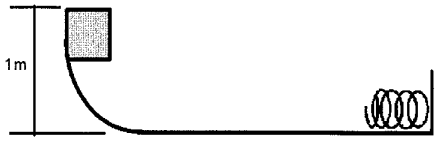
Determine o valor da energia dissipada na situação descrita no sistema acima e assinale a opção correta.
Dado: aceleração da gravidade 10 m/s2
Determine o valor da energia dissipada na situação descrita no sistema acima e assinale a opção correta.
Dado: aceleração da gravidade 10 m/s2
Ano: 2026
Banca:
Marinha
Órgão:
COLÉGIO NAVAL
Prova:
Marinha - 2026 - COLÉGIO NAVAL - Militar da Ativa - 2° dia |
Q4238818
Física
A figura abaixo mostra a correspondência de uma escala
termométrica H com a escala termométrica Celsius.
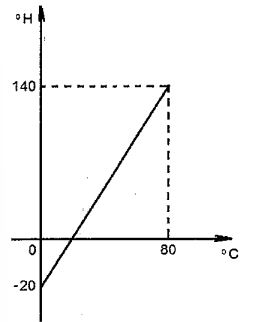
Com base nessas informações, uma temperatura de 100 °C terá um valor correspondente na escala H igual a:
Com base nessas informações, uma temperatura de 100 °C terá um valor correspondente na escala H igual a:
Ano: 2026
Banca:
Marinha
Órgão:
COLÉGIO NAVAL
Prova:
Marinha - 2026 - COLÉGIO NAVAL - Militar da Ativa - 2° dia |
Q4238817
Física
Em uma máquina há duas polias que funcionam num
processo de transmissão de movimento por correia, a primeira tem raio de 15 cm e 150 rotações por segundo.
Qual é a quantidade de voltas em um minuto da segunda
polia se ela tiver um raio de 30 cm?
Ano: 2026
Banca:
Marinha
Órgão:
COLÉGIO NAVAL
Prova:
Marinha - 2026 - COLÉGIO NAVAL - Militar da Ativa - 2° dia |
Q4238816
Física
Considere as afirmativas abaixo sobre o fenômeno de
refração da luz:
I- A velocidade da luz é diretamente proporcional ao indice de refração.
II- A refração é um fenômeno no qual a luz sempre sofre desvio.
IIl- A luz, ao incidir obliquamente em um dioptro plano, pode sofrer reflexão total.
IV- A luz, ao incidir obliquamente em um dioptro, pode sofrer refração aproximando-se da reta normal.
Assinale a opção correta.
I- A velocidade da luz é diretamente proporcional ao indice de refração.
II- A refração é um fenômeno no qual a luz sempre sofre desvio.
IIl- A luz, ao incidir obliquamente em um dioptro plano, pode sofrer reflexão total.
IV- A luz, ao incidir obliquamente em um dioptro, pode sofrer refração aproximando-se da reta normal.
Assinale a opção correta.
Ano: 2026
Banca:
Marinha
Órgão:
COLÉGIO NAVAL
Prova:
Marinha - 2026 - COLÉGIO NAVAL - Militar da Ativa - 2° dia |
Q4238815
Física
A figura abaixo representa um circuito no qual há as siglas
dos aparelhos elétricos: MO - micro-onda, CH - chuveiro
e L - lâmpada, com suas respectivas potências.
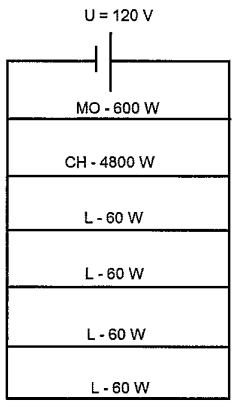
Com base nessas informações, a energia em kWh consumida no circuito durante o uso diário de 3 horas em um mês é de aproximadamente:
Com base nessas informações, a energia em kWh consumida no circuito durante o uso diário de 3 horas em um mês é de aproximadamente:
Ano: 2026
Banca:
Marinha
Órgão:
COLÉGIO NAVAL
Prova:
Marinha - 2026 - COLÉGIO NAVAL - Militar da Ativa - 2° dia |
Q4238814
Física
A figura abaixo mostra um bloco de massa M que desce
um plano inclinado sem atrito puxado para baixo com uma
força horizontal  .
.
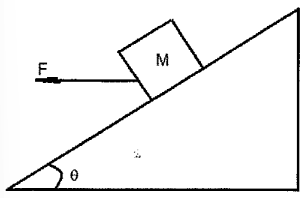
Com base nessas informações, qual a opção que apresenta o módulo da força normal aplicado ao bloco M pela superfície do plano inclinado?
. Com base nessas informações, qual a opção que apresenta o módulo da força normal aplicado ao bloco M pela superfície do plano inclinado?
Ano: 2026
Banca:
Marinha
Órgão:
COLÉGIO NAVAL
Prova:
Marinha - 2026 - COLÉGIO NAVAL - Militar da Ativa - 2° dia |
Q4238813
Biologia
Um professor de ciências acabou de descobrir que será
pai. Ele então pediu aos seus alunos que avaliassem qual
a probabilidade de o seu bebê ter o lóbulo da orelha preso.
Para isso ele deu duas informações importantes:
I- O professor apresenta o lóbulo da orelha solto, enquanto sua esposa apresenta o lóbulo da orelha preso ao pescoço.
II- A condição de lóbulo da orelha solto é dominante em relação à de lóbulo preso.
A partir das informações acima, qual é a resposta correta?
I- O professor apresenta o lóbulo da orelha solto, enquanto sua esposa apresenta o lóbulo da orelha preso ao pescoço.
II- A condição de lóbulo da orelha solto é dominante em relação à de lóbulo preso.
A partir das informações acima, qual é a resposta correta?

 Conheça nossos planos