Foram encontradas 40.245 questões
Resolva questões gratuitamente!
Junte-se a mais de 4 milhões de concurseiros!


Uma reação que pode ocorrer com a pólvora é 2 KNO3 + S + 3 C → K2S + N2 + 3 CO2 Em uma reação completa, foram obtidos 135 kg de produtos, a partir da queima de 101 kg de nitrato de potássio e 16 kg de enxofre. A quantidade de carvão queimada, em quilogramas, foi de
Com relação às características eletrônicas do arsênico (número atômico 33), assinale (V) para a afirmativa verdadeira e (F) para a falsa. ( ) Possui elétrons distribuídos em três níveis eletrônicos. ( ) Seu elétron de maior energia ocupa o nível P. ( ) Possui cinco elétrons na camada de valência.
As afirmativas são, segundo a ordem apresentada, respectivamente,
A tabela a seguir informa o calor específico de algumas substâncias.
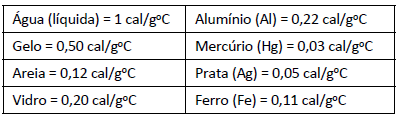
Consultando a tabela, avalie as afirmativas a seguir.
I. A água, por ter um calor específico muito alto, é um excelente elemento termorregulador. A ausência de água faz com que, nos desertos, ocorram enormes diferenças entre a temperatura máxima e a mínima em um mesmo dia.
II. Para refrigerar uma peça aquecida, é comum mergulhá-la em água. Será mais eficiente, para resfriá-la, mergulhá-la em mercúrio. Só não se faz isso porque, além de muito caro, seus vapores são extremamente tóxicos.
III. Se cedermos a mesma quantidade de calor a amostras de massas iguais de alumínio e ferro, a temperatura da amostra de ferro aumentará o dobro do que aumenta a amostra de alumínio.
Está correto o que se afirma em
A figura a seguir mostra a quadra retangular ABCD de um quartel, com 30 m de comprimento e 21 m de largura, dividida em quadrados iguais.
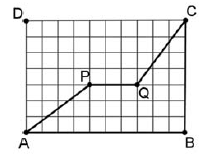
Dois soldados, Pedro e Paulo, caminharam de A até C por caminhos diferentes: Pedro percorreu os lados AB e BC, e Paulo percorreu os segmentos AP, PQ e QC.
É correto concluir que
Considere a equação x2 + x - 3 = 0.
A soma dos cubos das raízes dessa equação é
Sabendo que o logaritmo decimal de ܽa é igual a 0,54, o valor de x é, aproximadamente,
O valor de N é
How facial recognition technology aids police
Police officers’ ability to recognize and locate individuals with a history of committing crime is vital to their work. In fact, it is so important that officers believe possessing it is fundamental to the craft of effective street policing, crime prevention and investigation. However, with the total police workforce falling by almost 20 percent since 2010 and recorded crime rising, police forces are turning to new technological solutions to help enhance their capability and capacity to monitor and track individuals about whom they have concerns.
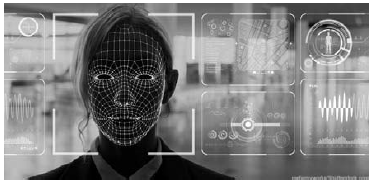
One such technology is Automated Facial Recognition (known as AFR). This works by analyzing key facial features, generating a mathematical representation of them, and then comparing them against known faces in a database, to determine possible matches. While a number of UK and international police forces have been enthusiastically exploring the potential of AFR, some groups have spoken about its legal and ethical status. They are concerned that the technology significantly extends the reach and depth of surveillance by the state.
Until now, however, there has been no robust evidence about what AFR systems can and cannot deliver for policing. Although AFR has become increasingly familiar to the public through its use at airports to help manage passport checks, the environment in such settings is quite controlled. Applying similar procedures to street policing is far more complex. Individuals on the street will be moving and may not look directly towards the camera. Levels of lighting change, too, and the system will have to cope with the vagaries of the British weather.
[…]
As with all innovative policing technologies there are important legal and ethical concerns and issues that still need to be considered. But in order for these to be meaningfully debated and assessed by citizens, regulators and law-makers, we need a detailed understanding of precisely what the technology can realistically accomplish. Sound evidence, rather than references to science fiction technology --- as seen in films such as Minority Report --- is essential.
With this in mind, one of our conclusions is that in terms of describing how AFR is being applied in policing currently, it is more accurate to think of it as “assisted facial recognition,” as opposed to a fully automated system. Unlike border control functions -- where the facial recognition is more of an automated system -- when supporting street policing, the algorithm is not deciding whether there is a match between a person and what is stored in the database. Rather, the system makes suggestions to a police operator about possible similarities. It is then down to the operator to confirm or refute them.
By Bethan Davies, Andrew Dawson, Martin Innes
(Source: https://gcn.com/articles/2018/11/30/facial-recognitionpolicing.aspx, accessed May 30th, 2020)
How facial recognition technology aids police
Police officers’ ability to recognize and locate individuals with a history of committing crime is vital to their work. In fact, it is so important that officers believe possessing it is fundamental to the craft of effective street policing, crime prevention and investigation. However, with the total police workforce falling by almost 20 percent since 2010 and recorded crime rising, police forces are turning to new technological solutions to help enhance their capability and capacity to monitor and track individuals about whom they have concerns.
One such technology is Automated Facial Recognition (known as AFR). This works by analyzing key facial features, generating a mathematical representation of them, and then comparing them against known faces in a database, to determine possible matches. While a number of UK and international police forces have been enthusiastically exploring the potential of AFR, some groups have spoken about its legal and ethical status. They are concerned that the technology significantly extends the reach and depth of surveillance by the state.
Until now, however, there has been no robust evidence about what AFR systems can and cannot deliver for policing. Although AFR has become increasingly familiar to the public through its use at airports to help manage passport checks, the environment in such settings is quite controlled. Applying similar procedures to street policing is far more complex. Individuals on the street will be moving and may not look directly towards the camera. Levels of lighting change, too, and the system will have to cope with the vagaries of the British weather.
[…]
As with all innovative policing technologies there are important legal and ethical concerns and issues that still need to be considered. But in order for these to be meaningfully debated and assessed by citizens, regulators and law-makers, we need a detailed understanding of precisely what the technology can realistically accomplish. Sound evidence, rather than references to science fiction technology --- as seen in films such as Minority Report --- is essential.
With this in mind, one of our conclusions is that in terms of describing how AFR is being applied in policing currently, it is more accurate to think of it as “assisted facial recognition,” as opposed to a fully automated system. Unlike border control functions -- where the facial recognition is more of an automated system -- when supporting street policing, the algorithm is not deciding whether there is a match between a person and what is stored in the database. Rather, the system makes suggestions to a police operator about possible similarities. It is then down to the operator to confirm or refute them.
By Bethan Davies, Andrew Dawson, Martin Innes
(Source: https://gcn.com/articles/2018/11/30/facial-recognitionpolicing.aspx, accessed May 30th, 2020)
How facial recognition technology aids police
Police officers’ ability to recognize and locate individuals with a history of committing crime is vital to their work. In fact, it is so important that officers believe possessing it is fundamental to the craft of effective street policing, crime prevention and investigation. However, with the total police workforce falling by almost 20 percent since 2010 and recorded crime rising, police forces are turning to new technological solutions to help enhance their capability and capacity to monitor and track individuals about whom they have concerns.
One such technology is Automated Facial Recognition (known as AFR). This works by analyzing key facial features, generating a mathematical representation of them, and then comparing them against known faces in a database, to determine possible matches. While a number of UK and international police forces have been enthusiastically exploring the potential of AFR, some groups have spoken about its legal and ethical status. They are concerned that the technology significantly extends the reach and depth of surveillance by the state.
Until now, however, there has been no robust evidence about what AFR systems can and cannot deliver for policing. Although AFR has become increasingly familiar to the public through its use at airports to help manage passport checks, the environment in such settings is quite controlled. Applying similar procedures to street policing is far more complex. Individuals on the street will be moving and may not look directly towards the camera. Levels of lighting change, too, and the system will have to cope with the vagaries of the British weather.
[…]
As with all innovative policing technologies there are important legal and ethical concerns and issues that still need to be considered. But in order for these to be meaningfully debated and assessed by citizens, regulators and law-makers, we need a detailed understanding of precisely what the technology can realistically accomplish. Sound evidence, rather than references to science fiction technology --- as seen in films such as Minority Report --- is essential.
With this in mind, one of our conclusions is that in terms of describing how AFR is being applied in policing currently, it is more accurate to think of it as “assisted facial recognition,” as opposed to a fully automated system. Unlike border control functions -- where the facial recognition is more of an automated system -- when supporting street policing, the algorithm is not deciding whether there is a match between a person and what is stored in the database. Rather, the system makes suggestions to a police operator about possible similarities. It is then down to the operator to confirm or refute them.
By Bethan Davies, Andrew Dawson, Martin Innes
(Source: https://gcn.com/articles/2018/11/30/facial-recognitionpolicing.aspx, accessed May 30th, 2020)
How facial recognition technology aids police
Police officers’ ability to recognize and locate individuals with a history of committing crime is vital to their work. In fact, it is so important that officers believe possessing it is fundamental to the craft of effective street policing, crime prevention and investigation. However, with the total police workforce falling by almost 20 percent since 2010 and recorded crime rising, police forces are turning to new technological solutions to help enhance their capability and capacity to monitor and track individuals about whom they have concerns.
One such technology is Automated Facial Recognition (known as AFR). This works by analyzing key facial features, generating a mathematical representation of them, and then comparing them against known faces in a database, to determine possible matches. While a number of UK and international police forces have been enthusiastically exploring the potential of AFR, some groups have spoken about its legal and ethical status. They are concerned that the technology significantly extends the reach and depth of surveillance by the state.
Until now, however, there has been no robust evidence about what AFR systems can and cannot deliver for policing. Although AFR has become increasingly familiar to the public through its use at airports to help manage passport checks, the environment in such settings is quite controlled. Applying similar procedures to street policing is far more complex. Individuals on the street will be moving and may not look directly towards the camera. Levels of lighting change, too, and the system will have to cope with the vagaries of the British weather.
[…]
As with all innovative policing technologies there are important legal and ethical concerns and issues that still need to be considered. But in order for these to be meaningfully debated and assessed by citizens, regulators and law-makers, we need a detailed understanding of precisely what the technology can realistically accomplish. Sound evidence, rather than references to science fiction technology --- as seen in films such as Minority Report --- is essential.
With this in mind, one of our conclusions is that in terms of describing how AFR is being applied in policing currently, it is more accurate to think of it as “assisted facial recognition,” as opposed to a fully automated system. Unlike border control functions -- where the facial recognition is more of an automated system -- when supporting street policing, the algorithm is not deciding whether there is a match between a person and what is stored in the database. Rather, the system makes suggestions to a police operator about possible similarities. It is then down to the operator to confirm or refute them.
By Bethan Davies, Andrew Dawson, Martin Innes
(Source: https://gcn.com/articles/2018/11/30/facial-recognitionpolicing.aspx, accessed May 30th, 2020)
How facial recognition technology aids police
Police officers’ ability to recognize and locate individuals with a history of committing crime is vital to their work. In fact, it is so important that officers believe possessing it is fundamental to the craft of effective street policing, crime prevention and investigation. However, with the total police workforce falling by almost 20 percent since 2010 and recorded crime rising, police forces are turning to new technological solutions to help enhance their capability and capacity to monitor and track individuals about whom they have concerns.
One such technology is Automated Facial Recognition (known as AFR). This works by analyzing key facial features, generating a mathematical representation of them, and then comparing them against known faces in a database, to determine possible matches. While a number of UK and international police forces have been enthusiastically exploring the potential of AFR, some groups have spoken about its legal and ethical status. They are concerned that the technology significantly extends the reach and depth of surveillance by the state.
Until now, however, there has been no robust evidence about what AFR systems can and cannot deliver for policing. Although AFR has become increasingly familiar to the public through its use at airports to help manage passport checks, the environment in such settings is quite controlled. Applying similar procedures to street policing is far more complex. Individuals on the street will be moving and may not look directly towards the camera. Levels of lighting change, too, and the system will have to cope with the vagaries of the British weather.
[…]
As with all innovative policing technologies there are important legal and ethical concerns and issues that still need to be considered. But in order for these to be meaningfully debated and assessed by citizens, regulators and law-makers, we need a detailed understanding of precisely what the technology can realistically accomplish. Sound evidence, rather than references to science fiction technology --- as seen in films such as Minority Report --- is essential.
With this in mind, one of our conclusions is that in terms of describing how AFR is being applied in policing currently, it is more accurate to think of it as “assisted facial recognition,” as opposed to a fully automated system. Unlike border control functions -- where the facial recognition is more of an automated system -- when supporting street policing, the algorithm is not deciding whether there is a match between a person and what is stored in the database. Rather, the system makes suggestions to a police operator about possible similarities. It is then down to the operator to confirm or refute them.
By Bethan Davies, Andrew Dawson, Martin Innes
(Source: https://gcn.com/articles/2018/11/30/facial-recognitionpolicing.aspx, accessed May 30th, 2020)
( ) In relation to AFR, ethical and legal implications are being brought up. ( ) There is enough data to prove that AFR is efficient in street policing. ( ) AFR performance may be affected by changes in light and motion.
The statements are, respectively,

 Conheça nossos planos