Questões Militares
Sobre interpretação de texto | reading comprehension em inglês
Foram encontradas 2.332 questões


Read the text to answer the question.
To begin the dialogue on cultural identity, it is essential to establish a baseline understanding the concept. Culture can be defined by the “totality of that group’s [a community or population] thought, experiences, and patterns of behavior and its concepts, values, and assumptions about life that guide behavior and how those evolve with contact with other cultures.” Cultural identity refers to people who identify themselves with a specific cultural group that has a shared system of symbols and norms for conduct. Recognition of this identity facilitates others’ understanding of the opportunities and challenges faced by individuals within a cultural group. To assist in understanding the basics of cultural identity, symbols and narratives as elements of culture will be examined in this section.
As many of our judgments are based on external observations, it should not be surprising that identities are shaped through use of symbols. According to sociologist Erik Cohen, the use of symbols in defining identity is a universal human trait. Symbols are employed in value systems such as religion, nationalism, social ideologies, and ethnicity. There are times when symbols become so significant to an existing cultural group’s identity that they stand out amongst all other symbols, dominating the narrative of cultural identity of that group. Dominant symbol systems provide “a set of stories, images, landscapes, scenarios, historical events, national symbols, and rituals which represent the shared experiences, sorrows, and triumphs and disasters which give meaning to the nation.” Therefore, understanding how complex symbol systems function and transmit meaning can help with assessing the motivations that underlie a cultural group’s actions. This is key to developing appropriate engagement strategies with cultural groups in urban environments.
Cultural groups use narrativesas a conduit for conveying messages. Narratives can be used as an analytical framework for understanding a wide spectrum of human activities. The stories conveyed through narrative can be viewed as building-blocks of identity in that they enable cultural groups to understand who they are and what they are in relation to others external to their group. In the search to understand cultural identities, knowledge of a cultural group’s narrative is “instructive for understanding how decisions might have come about, the motivations for actions, the causal assumptions drawn, and the arguments put forward, as well as a variety of other actions or variables. ”Therefore, it can be deduced that the future urban environment an Army may find itself operating within will witness a multitude of competing narratives, which may be further exacerbated by competition over limited resources and power.
Source: https://www.armyupress.army.mil/Journals/Military-Review/Online-Exclusive/2015-Online-Exclusive-Articles/Cultural-Identity/ Acess: 03/19/2026.
Read the text to answer the question.
To begin the dialogue on cultural identity, it is essential to establish a baseline understanding the concept. Culture can be defined by the “totality of that group’s [a community or population] thought, experiences, and patterns of behavior and its concepts, values, and assumptions about life that guide behavior and how those evolve with contact with other cultures.” Cultural identity refers to people who identify themselves with a specific cultural group that has a shared system of symbols and norms for conduct. Recognition of this identity facilitates others’ understanding of the opportunities and challenges faced by individuals within a cultural group. To assist in understanding the basics of cultural identity, symbols and narratives as elements of culture will be examined in this section.
As many of our judgments are based on external observations, it should not be surprising that identities are shaped through use of symbols. According to sociologist Erik Cohen, the use of symbols in defining identity is a universal human trait. Symbols are employed in value systems such as religion, nationalism, social ideologies, and ethnicity. There are times when symbols become so significant to an existing cultural group’s identity that they stand out amongst all other symbols, dominating the narrative of cultural identity of that group. Dominant symbol systems provide “a set of stories, images, landscapes, scenarios, historical events, national symbols, and rituals which represent the shared experiences, sorrows, and triumphs and disasters which give meaning to the nation.” Therefore, understanding how complex symbol systems function and transmit meaning can help with assessing the motivations that underlie a cultural group’s actions. This is key to developing appropriate engagement strategies with cultural groups in urban environments.
Cultural groups use narrativesas a conduit for conveying messages. Narratives can be used as an analytical framework for understanding a wide spectrum of human activities. The stories conveyed through narrative can be viewed as building-blocks of identity in that they enable cultural groups to understand who they are and what they are in relation to others external to their group. In the search to understand cultural identities, knowledge of a cultural group’s narrative is “instructive for understanding how decisions might have come about, the motivations for actions, the causal assumptions drawn, and the arguments put forward, as well as a variety of other actions or variables. ”Therefore, it can be deduced that the future urban environment an Army may find itself operating within will witness a multitude of competing narratives, which may be further exacerbated by competition over limited resources and power.
Source: https://www.armyupress.army.mil/Journals/Military-Review/Online-Exclusive/2015-Online-Exclusive-Articles/Cultural-Identity/ Acess: 03/19/2026.
Read the text to answer the question.
To begin the dialogue on cultural identity, it is essential to establish a baseline understanding the concept. Culture can be defined by the “totality of that group’s [a community or population] thought, experiences, and patterns of behavior and its concepts, values, and assumptions about life that guide behavior and how those evolve with contact with other cultures.” Cultural identity refers to people who identify themselves with a specific cultural group that has a shared system of symbols and norms for conduct. Recognition of this identity facilitates others’ understanding of the opportunities and challenges faced by individuals within a cultural group. To assist in understanding the basics of cultural identity, symbols and narratives as elements of culture will be examined in this section.
As many of our judgments are based on external observations, it should not be surprising that identities are shaped through use of symbols. According to sociologist Erik Cohen, the use of symbols in defining identity is a universal human trait. Symbols are employed in value systems such as religion, nationalism, social ideologies, and ethnicity. There are times when symbols become so significant to an existing cultural group’s identity that they stand out amongst all other symbols, dominating the narrative of cultural identity of that group. Dominant symbol systems provide “a set of stories, images, landscapes, scenarios, historical events, national symbols, and rituals which represent the shared experiences, sorrows, and triumphs and disasters which give meaning to the nation.” Therefore, understanding how complex symbol systems function and transmit meaning can help with assessing the motivations that underlie a cultural group’s actions. This is key to developing appropriate engagement strategies with cultural groups in urban environments.
Cultural groups use narrativesas a conduit for conveying messages. Narratives can be used as an analytical framework for understanding a wide spectrum of human activities. The stories conveyed through narrative can be viewed as building-blocks of identity in that they enable cultural groups to understand who they are and what they are in relation to others external to their group. In the search to understand cultural identities, knowledge of a cultural group’s narrative is “instructive for understanding how decisions might have come about, the motivations for actions, the causal assumptions drawn, and the arguments put forward, as well as a variety of other actions or variables. ”Therefore, it can be deduced that the future urban environment an Army may find itself operating within will witness a multitude of competing narratives, which may be further exacerbated by competition over limited resources and power.
Source: https://www.armyupress.army.mil/Journals/Military-Review/Online-Exclusive/2015-Online-Exclusive-Articles/Cultural-Identity/ Acess: 03/19/2026.
Read the text to answer the question.
To begin the dialogue on cultural identity, it is essential to establish a baseline understanding the concept. Culture can be defined by the “totality of that group’s [a community or population] thought, experiences, and patterns of behavior and its concepts, values, and assumptions about life that guide behavior and how those evolve with contact with other cultures.” Cultural identity refers to people who identify themselves with a specific cultural group that has a shared system of symbols and norms for conduct. Recognition of this identity facilitates others’ understanding of the opportunities and challenges faced by individuals within a cultural group. To assist in understanding the basics of cultural identity, symbols and narratives as elements of culture will be examined in this section.
As many of our judgments are based on external observations, it should not be surprising that identities are shaped through use of symbols. According to sociologist Erik Cohen, the use of symbols in defining identity is a universal human trait. Symbols are employed in value systems such as religion, nationalism, social ideologies, and ethnicity. There are times when symbols become so significant to an existing cultural group’s identity that they stand out amongst all other symbols, dominating the narrative of cultural identity of that group. Dominant symbol systems provide “a set of stories, images, landscapes, scenarios, historical events, national symbols, and rituals which represent the shared experiences, sorrows, and triumphs and disasters which give meaning to the nation.” Therefore, understanding how complex symbol systems function and transmit meaning can help with assessing the motivations that underlie a cultural group’s actions. This is key to developing appropriate engagement strategies with cultural groups in urban environments.
Cultural groups use narrativesas a conduit for conveying messages. Narratives can be used as an analytical framework for understanding a wide spectrum of human activities. The stories conveyed through narrative can be viewed as building-blocks of identity in that they enable cultural groups to understand who they are and what they are in relation to others external to their group. In the search to understand cultural identities, knowledge of a cultural group’s narrative is “instructive for understanding how decisions might have come about, the motivations for actions, the causal assumptions drawn, and the arguments put forward, as well as a variety of other actions or variables. ”Therefore, it can be deduced that the future urban environment an Army may find itself operating within will witness a multitude of competing narratives, which may be further exacerbated by competition over limited resources and power.
Source: https://www.armyupress.army.mil/Journals/Military-Review/Online-Exclusive/2015-Online-Exclusive-Articles/Cultural-Identity/ Acess: 03/19/2026.
Leia a tirinha do cartunista Daniel Shelton para responder à questão.
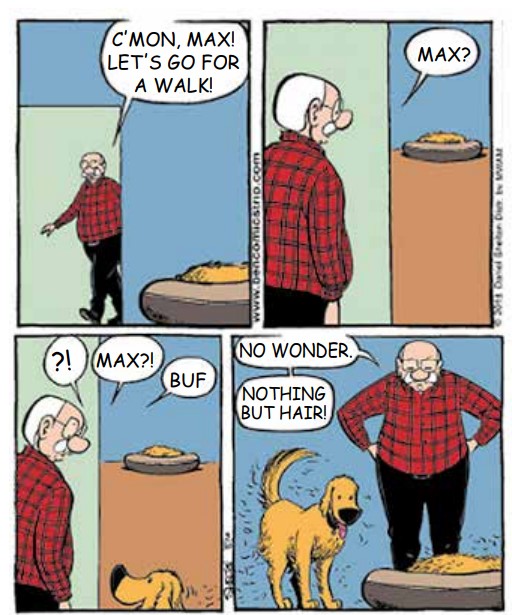
(Daniel Shelton. Ben on the Run, 2018.)
Leia a tirinha do cartunista Daniel Shelton para responder à questão.
(Daniel Shelton. Ben on the Run, 2018.)
In the context of the comic strip, the expression “No wonder”, in the fourth panel, means:
Leia o texto para responder à questão.
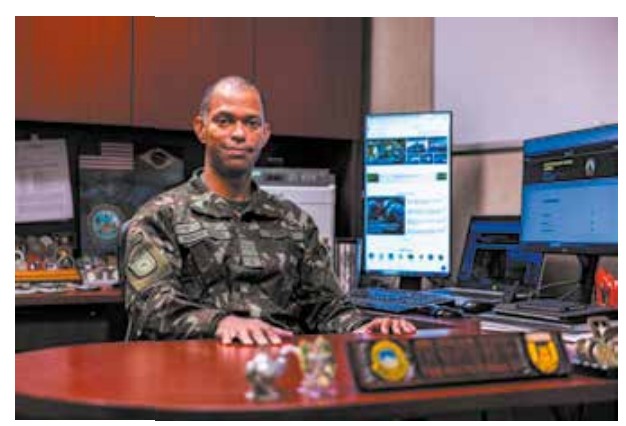
1 Brazilian Army Colonel Sergio Reis Matos serves as one of four United States Army South’s (USARSOUTH) partner nation liaison officers, or PNLO. Since July 2023, Matos has worked to strengthen the historic partnership between Brazil and the United States (US), focusing on enhancing military collaboration and interoperability.
Matos’ journey into the military began with two key influences: his father, a decorated non-commissioned officer in the Brazilian Navy, and his own early experience at a military middle school. “My father earned the rank of sergeant major and was able to travel the world to 23 countries,” said Matos. “He was a brilliant example of the opportunities to be had by serving my homeland.”
In 1987, Matos was accepted into a military middle school which was overseen by the Brazilian Army, which Matos said is very similar to the junior reserve officers’ training corps. His experience there laid the foundation for values and discipline needed for a career in the army.
Matos began his military career in 1993 at the Brazilian Army Cadets’ Preparatory School in São Paulo. Over nearly 32 years, he has held several distinguished roles, including commanding a border detachment in the Amazon, securing military venues during the 2016 Olympic Games in Brazil and leading an infantry battalion steeped in historical ties to the US Fifth Army. “The most memorable period of my career was when I commanded the 11th Mountain Infantry Battalion,” he reflected. “It was one of the units that integrated with US forces during World War II.”
5 His assignment as the Brazilian PNLO at USARSOUTH is not his first encounter with the US Army. In 2007, he attended the Captain’s Career Course at Fort Moore (US) where he earned the Distinguished International Honor Graduate award for excellence in academics and the Order of Saint Maurice Medallion in the rank of Peregrinus, for his notable contributions to the US infantry.
During his tenure at USARSOUTH, he facilitated military coordination between the Brazilian and US armies, focusing on combined operations, joint exercises and strategic engagements. His efforts as the Brazilian PNLO have been central to enhancing interoperability and fostering deeper collaboration.
(Joshua Taeckens. www.army.mil, 11.01.2025. Adaptado.)
Leia o texto para responder à questão.
1 Brazilian Army Colonel Sergio Reis Matos serves as one of four United States Army South’s (USARSOUTH) partner nation liaison officers, or PNLO. Since July 2023, Matos has worked to strengthen the historic partnership between Brazil and the United States (US), focusing on enhancing military collaboration and interoperability.
Matos’ journey into the military began with two key influences: his father, a decorated non-commissioned officer in the Brazilian Navy, and his own early experience at a military middle school. “My father earned the rank of sergeant major and was able to travel the world to 23 countries,” said Matos. “He was a brilliant example of the opportunities to be had by serving my homeland.”
In 1987, Matos was accepted into a military middle school which was overseen by the Brazilian Army, which Matos said is very similar to the junior reserve officers’ training corps. His experience there laid the foundation for values and discipline needed for a career in the army.
Matos began his military career in 1993 at the Brazilian Army Cadets’ Preparatory School in São Paulo. Over nearly 32 years, he has held several distinguished roles, including commanding a border detachment in the Amazon, securing military venues during the 2016 Olympic Games in Brazil and leading an infantry battalion steeped in historical ties to the US Fifth Army. “The most memorable period of my career was when I commanded the 11th Mountain Infantry Battalion,” he reflected. “It was one of the units that integrated with US forces during World War II.”
5 His assignment as the Brazilian PNLO at USARSOUTH is not his first encounter with the US Army. In 2007, he attended the Captain’s Career Course at Fort Moore (US) where he earned the Distinguished International Honor Graduate award for excellence in academics and the Order of Saint Maurice Medallion in the rank of Peregrinus, for his notable contributions to the US infantry.
During his tenure at USARSOUTH, he facilitated military coordination between the Brazilian and US armies, focusing on combined operations, joint exercises and strategic engagements. His efforts as the Brazilian PNLO have been central to enhancing interoperability and fostering deeper collaboration.
(Joshua Taeckens. www.army.mil, 11.01.2025. Adaptado.)
“Matos began his military career in 1993 at the Brazilian Army Cadets’ Preparatory School in São Paulo. Over nearly 32 years, he has held several distinguished roles, including commanding a border detachment in the Amazon, securing military venues during the 2016 Olympic Games in Brazil and leading an infantry battalion steeped in historical ties to the US Fifth Army.” (4º parágrafo)
No contexto em que se insere, o trecho sublinhado indica que, ao longo da carreira, Cel Matos
Leia o texto para responder à questão.
1 Brazilian Army Colonel Sergio Reis Matos serves as one of four United States Army South’s (USARSOUTH) partner nation liaison officers, or PNLO. Since July 2023, Matos has worked to strengthen the historic partnership between Brazil and the United States (US), focusing on enhancing military collaboration and interoperability.
Matos’ journey into the military began with two key influences: his father, a decorated non-commissioned officer in the Brazilian Navy, and his own early experience at a military middle school. “My father earned the rank of sergeant major and was able to travel the world to 23 countries,” said Matos. “He was a brilliant example of the opportunities to be had by serving my homeland.”
In 1987, Matos was accepted into a military middle school which was overseen by the Brazilian Army, which Matos said is very similar to the junior reserve officers’ training corps. His experience there laid the foundation for values and discipline needed for a career in the army.
Matos began his military career in 1993 at the Brazilian Army Cadets’ Preparatory School in São Paulo. Over nearly 32 years, he has held several distinguished roles, including commanding a border detachment in the Amazon, securing military venues during the 2016 Olympic Games in Brazil and leading an infantry battalion steeped in historical ties to the US Fifth Army. “The most memorable period of my career was when I commanded the 11th Mountain Infantry Battalion,” he reflected. “It was one of the units that integrated with US forces during World War II.”
5 His assignment as the Brazilian PNLO at USARSOUTH is not his first encounter with the US Army. In 2007, he attended the Captain’s Career Course at Fort Moore (US) where he earned the Distinguished International Honor Graduate award for excellence in academics and the Order of Saint Maurice Medallion in the rank of Peregrinus, for his notable contributions to the US infantry.
During his tenure at USARSOUTH, he facilitated military coordination between the Brazilian and US armies, focusing on combined operations, joint exercises and strategic engagements. His efforts as the Brazilian PNLO have been central to enhancing interoperability and fostering deeper collaboration.
(Joshua Taeckens. www.army.mil, 11.01.2025. Adaptado.)
“In 1987, Matos was accepted into a military middle school which was overseen by the Brazilian Army, which Matos said is very similar to the junior reserve officers’ training corps. His experience there laid the foundation for values and discipline needed for a career in the army.” (3º parágrafo)
Nesse trecho, o termo sublinhado refere-se, no contexto apresentado,
Leia o texto para responder à questão.
1 Brazilian Army Colonel Sergio Reis Matos serves as one of four United States Army South’s (USARSOUTH) partner nation liaison officers, or PNLO. Since July 2023, Matos has worked to strengthen the historic partnership between Brazil and the United States (US), focusing on enhancing military collaboration and interoperability.
Matos’ journey into the military began with two key influences: his father, a decorated non-commissioned officer in the Brazilian Navy, and his own early experience at a military middle school. “My father earned the rank of sergeant major and was able to travel the world to 23 countries,” said Matos. “He was a brilliant example of the opportunities to be had by serving my homeland.”
In 1987, Matos was accepted into a military middle school which was overseen by the Brazilian Army, which Matos said is very similar to the junior reserve officers’ training corps. His experience there laid the foundation for values and discipline needed for a career in the army.
Matos began his military career in 1993 at the Brazilian Army Cadets’ Preparatory School in São Paulo. Over nearly 32 years, he has held several distinguished roles, including commanding a border detachment in the Amazon, securing military venues during the 2016 Olympic Games in Brazil and leading an infantry battalion steeped in historical ties to the US Fifth Army. “The most memorable period of my career was when I commanded the 11th Mountain Infantry Battalion,” he reflected. “It was one of the units that integrated with US forces during World War II.”
5 His assignment as the Brazilian PNLO at USARSOUTH is not his first encounter with the US Army. In 2007, he attended the Captain’s Career Course at Fort Moore (US) where he earned the Distinguished International Honor Graduate award for excellence in academics and the Order of Saint Maurice Medallion in the rank of Peregrinus, for his notable contributions to the US infantry.
During his tenure at USARSOUTH, he facilitated military coordination between the Brazilian and US armies, focusing on combined operations, joint exercises and strategic engagements. His efforts as the Brazilian PNLO have been central to enhancing interoperability and fostering deeper collaboration.
(Joshua Taeckens. www.army.mil, 11.01.2025. Adaptado.)
Read the poster for a campaign launched by an organization in the United Kingdom to answer question from.

(https://actiononsugar.org, 2025. Adaptado.)
1 sweet talk: persuasive language.
Read the poster for a campaign launched by an organization in the United Kingdom to answer question from.
(https://actiononsugar.org, 2025. Adaptado.)
1 sweet talk: persuasive language.
O retrato
Aldous Huxley




O retrato
Aldous Huxley
What Scott's Antarctic expedition reveals about our seas today
[1] Sea urchins preserved in glass jars in Dr Hugh Carter's desk in the Natural History Museum were coilected from the depths of the Southern Ocean by polar teams led by Sir Ernest Shackleton, Capt Robert Falcon Scott and the Norwegian Carsten Borchgrevink in the 19th and 20th centuries. They tell a tale of heroic exploration and scientific endeavour.
[
2] Now, more than a century later, a new project led by Carter has gathered samples that could be compared with those found on the expeditions that took place more than a century ago. Carter, the Natural History Museum's (NHM) curator of marine invertebrates, hopes the preserved Antarctic urchins, 50 in all, will help tell a different, increasingly urgent story of modern times: how changes in the world's southernmost waters may be affecting marine life.
[3] In January, the biologist undertook a six-week long research trip to visit the exact sites sampled by Borchgrevink's Southern Cross, Shackleton's Discovery and Scott's ill-fated Terra Nova expedition between 1898 and 1913.
[4] In the Antarctic, which is warming at twice the global average, a lack of baseline scientific data makes it difficult to assess the physical and biological changes that have occurred over time.
[5] Carter's theory is that comparing the "tests" or shell of the urchins (a type of invertebrate known as echinoderms, which include starfish and sea cucumbers) in the NHM's collection with modern samples will help reveal more about the impact of ocean acidification, often called the "evil twin" of the climate crisis.
[6] Acidification is caused when carbon díoxide is rapidly absorbed into the ocean, where it then reacts with water molecules leading to a fall in the pH of the seawater.
[7] Preliminary findings on Carter's ship, the deep water research vessel the RV Tangaroa, appeared to confirm his worst fears.
[8] "We know that the ocean has been getting more acidic but in most cases we don't know what the impacts are," he says. "We had a suspicion that [due to ocean acidification] you would get less calcium carbonate in the water. This would make it harder to build a body if that body is made from calcium carbonate."
[9] Corals, sea snails, oysters and small single-celled organisms called foraminifera, a component of plankton, all rely on calcium carbonate to build shells. Calcium carbonate dissolves in acid very easily, so the more acid, the harder it is for animals such as these to survive.
[10] While the tests of the historical urchins on Carter's desk were "robust and healthy", those brought to the surface in January were thinner and more fragile in comparison, so much so that they were crushed by the force of the hose used to clean them.
[11] "All the ones we collected were fragile and some of them collapsed," says Carter. "From initial appearances, the modern specimens we collected have weaker tests than the historical ones, but we need to do more work to establish to what degree and exactly what is causing this.
[12] The biological implications of an acidifying ocean could be enormous, adds Carter. "It could make the seas unliveable for things with a calcium skeleton."
[13] During the expedition, the impact of the climate crisis was tangible; some of the study sites were only accessible because of melting ice. And it coincided with stark findings that the level of global sea ice fell to its lowest recorded level, a symptom of our warming planet.
[14] But there were positive findings on the expedition, too. Carter saw as many as 150 whales on his trip, as well as what he described as "crazy levels" of wildlife on the western edge of Coulman island, which had 17 species of starfish in just 100 metres, the same number found in all of the UK's shallow waters.
[15] "It is a thrill to know that the environment is not as bad in some parts of the world as it could be," he says. "It's the only bit of the world you don't see any plastic or human impacts from fishing."
[16] Prof Craig Stevens, an oceanographer who co-led the Tangaroa expedition, described their work as "sweet and sour".
[17] "This lack of ice is having knock-on effects for not only the regional ocean but the whole planet. This work is very sweet and sour. It is amazing to get the opportunity to advance the science, but at the same time, we are catching glimpses of a future for the planet that we really want to avoid. It brings home in a very tangible way the need to limit emissions of climate-affecting gases."
(Adapted from: www.theguardian.com)
What Scott's Antarctic expedition reveals about our seas today
[1] Sea urchins preserved in glass jars in Dr Hugh Carter's desk in the Natural History Museum were coilected from the depths of the Southern Ocean by polar teams led by Sir Ernest Shackleton, Capt Robert Falcon Scott and the Norwegian Carsten Borchgrevink in the 19th and 20th centuries. They tell a tale of heroic exploration and scientific endeavour.
[
2] Now, more than a century later, a new project led by Carter has gathered samples that could be compared with those found on the expeditions that took place more than a century ago. Carter, the Natural History Museum's (NHM) curator of marine invertebrates, hopes the preserved Antarctic urchins, 50 in all, will help tell a different, increasingly urgent story of modern times: how changes in the world's southernmost waters may be affecting marine life.
[3] In January, the biologist undertook a six-week long research trip to visit the exact sites sampled by Borchgrevink's Southern Cross, Shackleton's Discovery and Scott's ill-fated Terra Nova expedition between 1898 and 1913.
[4] In the Antarctic, which is warming at twice the global average, a lack of baseline scientific data makes it difficult to assess the physical and biological changes that have occurred over time.
[5] Carter's theory is that comparing the "tests" or shell of the urchins (a type of invertebrate known as echinoderms, which include starfish and sea cucumbers) in the NHM's collection with modern samples will help reveal more about the impact of ocean acidification, often called the "evil twin" of the climate crisis.
[6] Acidification is caused when carbon díoxide is rapidly absorbed into the ocean, where it then reacts with water molecules leading to a fall in the pH of the seawater.
[7] Preliminary findings on Carter's ship, the deep water research vessel the RV Tangaroa, appeared to confirm his worst fears.
[8] "We know that the ocean has been getting more acidic but in most cases we don't know what the impacts are," he says. "We had a suspicion that [due to ocean acidification] you would get less calcium carbonate in the water. This would make it harder to build a body if that body is made from calcium carbonate."
[9] Corals, sea snails, oysters and small single-celled organisms called foraminifera, a component of plankton, all rely on calcium carbonate to build shells. Calcium carbonate dissolves in acid very easily, so the more acid, the harder it is for animals such as these to survive.
[10] While the tests of the historical urchins on Carter's desk were "robust and healthy", those brought to the surface in January were thinner and more fragile in comparison, so much so that they were crushed by the force of the hose used to clean them.
[11] "All the ones we collected were fragile and some of them collapsed," says Carter. "From initial appearances, the modern specimens we collected have weaker tests than the historical ones, but we need to do more work to establish to what degree and exactly what is causing this.
[12] The biological implications of an acidifying ocean could be enormous, adds Carter. "It could make the seas unliveable for things with a calcium skeleton."
[13] During the expedition, the impact of the climate crisis was tangible; some of the study sites were only accessible because of melting ice. And it coincided with stark findings that the level of global sea ice fell to its lowest recorded level, a symptom of our warming planet.
[14] But there were positive findings on the expedition, too. Carter saw as many as 150 whales on his trip, as well as what he described as "crazy levels" of wildlife on the western edge of Coulman island, which had 17 species of starfish in just 100 metres, the same number found in all of the UK's shallow waters.
[15] "It is a thrill to know that the environment is not as bad in some parts of the world as it could be," he says. "It's the only bit of the world you don't see any plastic or human impacts from fishing."
[16] Prof Craig Stevens, an oceanographer who co-led the Tangaroa expedition, described their work as "sweet and sour".
[17] "This lack of ice is having knock-on effects for not only the regional ocean but the whole planet. This work is very sweet and sour. It is amazing to get the opportunity to advance the science, but at the same time, we are catching glimpses of a future for the planet that we really want to avoid. It brings home in a very tangible way the need to limit emissions of climate-affecting gases."
(Adapted from: www.theguardian.com)
The analysts didn't know which platform to choose from. Both platforms seemed to have a _____ integration with the other tools.

 Conheça nossos planos