Foram encontradas 74.010 questões

Resolva questões gratuitamente!

Junte-se a mais de 4 milhões de concurseiros!

Ano: 2025 Banca: FUVEST Órgão: FUVEST Prova: FUVEST - 2025 - FUVEST - Vestibular - 1ª Fase - Conhecimentos Gerais |
Q3946321 Inglês


    Think for a minute about the little bumps on your tongue. You probably saw a diagram of those taste bud arrangements once in a biology textbook — sweet sensors at the tip, salty on either side, sour behind them, bitter in the back.
    But the idea that specific tastes are confined to certain areas of the tongue is a myth that “persists in the collective consciousness, despite decades of research debunking it”, according to a review published this month in The New England Journal of Medicine. Also wrong: the notion that taste is limited to the mouth.
    The old diagram, which has been used in many textbooks over the years, originated in a study published by David Hanig, a German scientist, in 1901. But the scientist was not suggesting that various tastes are segregated on the tongue. He was actually measuring the sensitivity of different areas, said Paul Breslin, a researcher at Monell Chemical Senses Center in Philadelphia. “What he found was that you could detect things at a lower concentration in one part relative to another,” Dr. Breslin said. The tip of the tongue, for example, is dense with sweet sensors but contains the others as well.
    The map’s mistakes are easy to confirm. If you place a lemon wedge at the tip of your tongue, it will taste sour, and if you put a bit of honey toward the side, it will be sweet.
    The perception of taste is a remarkably complex process, starting from that first encounter with the tongue. Taste cells have a variety of sensors that signal the brain when they encounter nutrients or toxins. For some tastes, tiny pores in cell membranes let taste chemicals in.
    Such taste receptors aren’t limited to the tongue; they are also found in the gastrointestinal tract, liver, pancreas, fat cells, brain, muscle cells, thyroid and lungs. We don’t generally think of these organs as tasting anything, but they use the receptors to pick up the presence of various molecules and metabolize them, said Diego Bohórquez, a self-described gut-brain neuroscientist at Duke University. For example, when the gut notices sugar in food, it tells the brain to alert other organs to get ready for digestion.


New York Times. May 29, 2024. Adaptado.
O texto informa que, de acordo com Paul Breslin, a interpretação do estudo de Hanig foi equivocada, porque
Alternativas
Ano: 2025 Banca: FUVEST Órgão: FUVEST Prova: FUVEST - 2025 - FUVEST - Vestibular - 1ª Fase - Conhecimentos Gerais |
Q3946320 Inglês


    Think for a minute about the little bumps on your tongue. You probably saw a diagram of those taste bud arrangements once in a biology textbook — sweet sensors at the tip, salty on either side, sour behind them, bitter in the back.
    But the idea that specific tastes are confined to certain areas of the tongue is a myth that “persists in the collective consciousness, despite decades of research debunking it”, according to a review published this month in The New England Journal of Medicine. Also wrong: the notion that taste is limited to the mouth.
    The old diagram, which has been used in many textbooks over the years, originated in a study published by David Hanig, a German scientist, in 1901. But the scientist was not suggesting that various tastes are segregated on the tongue. He was actually measuring the sensitivity of different areas, said Paul Breslin, a researcher at Monell Chemical Senses Center in Philadelphia. “What he found was that you could detect things at a lower concentration in one part relative to another,” Dr. Breslin said. The tip of the tongue, for example, is dense with sweet sensors but contains the others as well.
    The map’s mistakes are easy to confirm. If you place a lemon wedge at the tip of your tongue, it will taste sour, and if you put a bit of honey toward the side, it will be sweet.
    The perception of taste is a remarkably complex process, starting from that first encounter with the tongue. Taste cells have a variety of sensors that signal the brain when they encounter nutrients or toxins. For some tastes, tiny pores in cell membranes let taste chemicals in.
    Such taste receptors aren’t limited to the tongue; they are also found in the gastrointestinal tract, liver, pancreas, fat cells, brain, muscle cells, thyroid and lungs. We don’t generally think of these organs as tasting anything, but they use the receptors to pick up the presence of various molecules and metabolize them, said Diego Bohórquez, a self-described gut-brain neuroscientist at Duke University. For example, when the gut notices sugar in food, it tells the brain to alert other organs to get ready for digestion.


New York Times. May 29, 2024. Adaptado.
Sobre os receptores gustativos e sua distribuição corporal, o texto sugere que
Alternativas
Ano: 2025 Banca: FUVEST Órgão: FUVEST Prova: FUVEST - 2025 - FUVEST - Vestibular - 1ª Fase - Conhecimentos Gerais |
Q3946319 Química


   Researchers investigated the quantities of thousands of muscle proteins and found a possible new explanation for muscle memory. A study showed for the first time that muscles "remember" training at the protein level. It is often thought that the effects of exercise are short-lived, and a break from the gym can cause stress over muscle loss. However, the research has shown that this stress is partly unnecessary, as the effects of resistance training persist in muscles for up to two months and the gains are fast when training is started again. But what mechanisms and changes at the cellular and molecular levels explain muscle memory? In the study, ten weeks of resistance training was followed by a break of the same length and then followed by another ten weeks of resistance training. Using the proteomics method, it was possible to study the quantities of over 3,000 muscle proteins using advanced mass spectrometry equipment. The study found two types of change profiles in muscle proteins. Some proteins changed as a result of training, returned to their pre-training state during the break, and changed again during the new training period similarly to the first training period. These included proteins related to aerobic metabolism. Another group of proteins changed as a result of training and remained changed during the break and after the new training period. Among these proteins were several calcium-binding proteins, such as calpain-2, whose gene has recently been identified to retain a memory trace even after a training break. "At the level of the number of muscle nuclei and the memory traces of genes, that is, epigenetics, long-term responses that persist even after a break and possibly explain 'muscle memory' have previously been observed," says a researcher. "Now, for the first time, we have shown that muscles 'remember' previous resistance training at the protein level for at least two and a half months."


Disponível em https://jyu.fi/en/news/. 14 April 2025. Adaptado.
A espectrometria de massas, utilizada para a identificação das proteínas no estudo apresentado no texto, é uma técnica que permite determinar com precisão a massa molecular de moléculas carregadas. A determinação da massa exata da molécula é feita a partir do conhecimento da sua carga e da razão massa/carga (m/z), parâmetro que influencia no movimento das espécies, permitindo sua determinação. Caso a carga das moléculas seja unitária, a razão m/z é numericamente igual à massa da espécie a ser identificada. Caso a carga seja 2, a razão m/z detectada é metade da massa da molécula.
A imagem a seguir representa, na forma de um gráfico, o resultado de uma análise por espectrometria de massas de uma amostra pura contendo apenas uma espécie intacta com fórmula molecular [C44H69NO12Ca]2+ e massa exata, considerando os isótopos mais abundantes, de 843,444 g/mol, detectada como m/z 421,722.


Imagem associada para resolução da questão


A presença de outros sinais além do sinal de m/z 421,722, mesmo em uma amostra pura não contendo nenhuma outra espécie além do [C44H69NO12Ca]2+, deve-se
Alternativas
Ano: 2025 Banca: FUVEST Órgão: FUVEST Prova: FUVEST - 2025 - FUVEST - Vestibular - 1ª Fase - Conhecimentos Gerais |
Q3946318 Inglês


   Researchers investigated the quantities of thousands of muscle proteins and found a possible new explanation for muscle memory. A study showed for the first time that muscles "remember" training at the protein level. It is often thought that the effects of exercise are short-lived, and a break from the gym can cause stress over muscle loss. However, the research has shown that this stress is partly unnecessary, as the effects of resistance training persist in muscles for up to two months and the gains are fast when training is started again. But what mechanisms and changes at the cellular and molecular levels explain muscle memory? In the study, ten weeks of resistance training was followed by a break of the same length and then followed by another ten weeks of resistance training. Using the proteomics method, it was possible to study the quantities of over 3,000 muscle proteins using advanced mass spectrometry equipment. The study found two types of change profiles in muscle proteins. Some proteins changed as a result of training, returned to their pre-training state during the break, and changed again during the new training period similarly to the first training period. These included proteins related to aerobic metabolism. Another group of proteins changed as a result of training and remained changed during the break and after the new training period. Among these proteins were several calcium-binding proteins, such as calpain-2, whose gene has recently been identified to retain a memory trace even after a training break. "At the level of the number of muscle nuclei and the memory traces of genes, that is, epigenetics, long-term responses that persist even after a break and possibly explain 'muscle memory' have previously been observed," says a researcher. "Now, for the first time, we have shown that muscles 'remember' previous resistance training at the protein level for at least two and a half months."


Disponível em https://jyu.fi/en/news/. 14 April 2025. Adaptado.
Segundo o texto, os experimentos demonstram que
Alternativas
Ano: 2025 Banca: FUVEST Órgão: FUVEST Prova: FUVEST - 2025 - FUVEST - Vestibular - 1ª Fase - Conhecimentos Gerais |
Q3946317 Saúde Pública
A vacina contra a dengue co-desenvolvida pelo Brasil, a Qdenga, começou a ser oferecida pelo SUS em 2024. Indivíduos imunocompetentes recebem vírus atenuados ao serem vacinados, adquirindo imunidade sem ficar doentes. Pessoas com imunodeficiências, indivíduos com HIV sintomático, gestantes e lactantes não podem ser vacinadas. No entanto, estas pessoas podem ser beneficiadas com a vacinação da população, pois
Alternativas
Ano: 2025 Banca: FUVEST Órgão: FUVEST Prova: FUVEST - 2025 - FUVEST - Vestibular - 1ª Fase - Conhecimentos Gerais |
Q3946316 Biologia
Após a confirmação da primeira morte humana por gripe aviária nos Estados Unidos, surge a dúvida sobre a possibilidade de uma nova pandemia. Embora os vírus da gripe aviária ataquem principalmente aves, eles também podem infectar outros animais, incluindo humanos. Infecções humanas com vírus da gripe aviária são raras e, normalmente, não se transmitem de pessoa para pessoa.
Os cientistas concordam que mudanças-chave na sequência genética do vírus seriam necessárias para iniciar uma pandemia. Cada vez que um vírus infecta uma célula e novas unidades virais são produzidas, erros podem ocorrer. Ocasionalmente, há uma mudança genética que ajuda o vírus a se tornar melhor em infectar células. Assim, essa versão do vírus pode superar outras, infectando novos hospedeiros ou novos tipos de hospedeiros.
Disponível em https://www.cnnbrasil.com.br/. Adaptado.

Com base no texto, as mutações no vírus da gripe aviária 
Alternativas
Ano: 2025 Banca: FUVEST Órgão: FUVEST Prova: FUVEST - 2025 - FUVEST - Vestibular - 1ª Fase - Conhecimentos Gerais |
Q3946315 Química
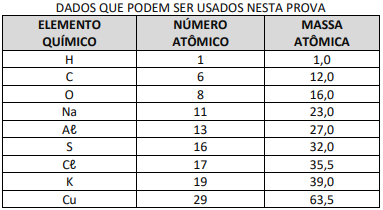
Quem viajou de avião já ouviu o famoso aviso: “Em caso de despressurização da cabine, máscaras de oxigênio cairão automaticamente acima do seu assento. Puxe uma das máscaras, coloque-a sobre o nariz e a boca e respire normalmente (...)”. Porém, ao invés de aviões conterem cilindros de oxigênio que alimentam as máscaras, esse gás é gerado por meio de uma reação química. No compartimento sobre cada passageiro encontra-se um reservatório contendo um sal como o clorato de sódio (NaCl,O3) que, ao se decompor, produz oxigênio (O2), cloreto de sódio (NaCl,) e calor. O clorato de sódio é estável em temperatura ambiente, e sua decomposição só se inicia quando o passageiro puxa a máscara, o que dispara um gatilho que gera calor suficiente para iniciar a reação que, então, se mantém autossuficiente até consumo total do reagente. 
A massa de clorato de sódio consumida na reação deve ser suficiente para gerar, no mínimo, 15 minutos de oxigênio, permitindo que a aeronave baixe sua altitude, restabelecendo a pressão da cabine. Calcule a massa de clorato de sódio mínima, em gramas, que deve ser utilizada por reservatório, para gerar oxigênio suficiente por 15 minutos, considerando que a taxa de respiração média de oxigênio de um adulto é de 1,2 L/min ao nível do mar a 20 °C.
Alternativas
Ano: 2025 Banca: FUVEST Órgão: FUVEST Prova: FUVEST - 2025 - FUVEST - Vestibular - 1ª Fase - Conhecimentos Gerais |
Q3946314 Química
Quem viajou de avião já ouviu o famoso aviso: “Em caso de despressurização da cabine, máscaras de oxigênio cairão automaticamente acima do seu assento. Puxe uma das máscaras, coloque-a sobre o nariz e a boca e respire normalmente (...)”. Porém, ao invés de aviões conterem cilindros de oxigênio que alimentam as máscaras, esse gás é gerado por meio de uma reação química. No compartimento sobre cada passageiro encontra-se um reservatório contendo um sal como o clorato de sódio (NaCl,O3) que, ao se decompor, produz oxigênio (O2), cloreto de sódio (NaCl,) e calor. O clorato de sódio é estável em temperatura ambiente, e sua decomposição só se inicia quando o passageiro puxa a máscara, o que dispara um gatilho que gera calor suficiente para iniciar a reação que, então, se mantém autossuficiente até consumo total do reagente. 
Essa reação de geração de oxigênio
Alternativas
Ano: 2025 Banca: FUVEST Órgão: FUVEST Prova: FUVEST - 2025 - FUVEST - Vestibular - 1ª Fase - Conhecimentos Gerais |
Q3946313 Física
Em 1905, Albert Einstein propôs que a luz, um tipo de radiação eletromagnética, é composta por fótons, sendo que cada fóton tem energia proporcional à frequência da luz (f) e à constante de Planck (h). Nesses termos, E = hf, e a intensidade da luz é a medida da quantidade de fótons. Essa interpretação foi fundamental para o desenvolvimento da teoria quântica da luz e para explicar o efeito fotoelétrico. Esse efeito consiste em um fenômeno físico no qual elétrons são ejetados de um material, geralmente um metal, quando este é irradiado com luz cujos fótons têm energia maior que a energia de ligação do elétron ao material, também conhecida como função trabalho. Assim, quando o fóton incide sobre a superfície do material, a energia excedente transforma-se na energia cinética do elétron que escapa da superfície.
Em qual das situações a seguir a energia cinética do elétron ejetado no efeito fotoelétrico aumenta?
Alternativas
Ano: 2025 Banca: FUVEST Órgão: FUVEST Prova: FUVEST - 2025 - FUVEST - Vestibular - 1ª Fase - Conhecimentos Gerais |
Q3946312 Física
Desde as primeiras descobertas, os buracos negros despertam enorme interesse da humanidade. Eles são caracterizados por regiões suficientemente densas e massivas em que o campo gravitacional é tão intenso que nada que esteja a distâncias inferiores a RSc do buraco negro consegue escapar de sua atração, nem a luz ou outras formas de radiação. Esse raio, também conhecido como raio de Schwarzschild, é expresso por RSc = 2GM/c2, sendo G a constante de gravitação universal, M a massa do buraco negro e c a velocidade da luz.
Considere, por simplicidade, um buraco negro de massa igual à massa solar MSol = 2x1030 kg e de raio igual a RSc. Nesse caso, a razão entre a densidade volumétrica de um buraco negro e a densidade volumétrica do Sol apresenta uma ordem de grandeza mais próxima de:
Alternativas
Ano: 2025 Banca: FUVEST Órgão: FUVEST Prova: FUVEST - 2025 - FUVEST - Vestibular - 1ª Fase - Conhecimentos Gerais |
Q3946311 Inglês
Nearly a century ago, Edwin Hubble discovered that the universe is getting larger. Modern measurements of how fast it is expanding disagree, however, suggesting that our understanding of the laws of physics might be off. Everyone expected the sharp vision of the James Webb Space Telescope to bring the answer into focus. But a long-awaited analysis of the telescope’s observations released late Monday evening once again gleans conflicting expansion rates from different types of data, while homing in on possible sources of error at the heart of the conflict.

Two rival teams have led the effort to measure the cosmic expansion rate, which is known as the Hubble constant, or H0. One of these teams, led by Adam Riess of Johns Hopkins University, has consistently measured H0 to be about 8 percent higher than the theoretical prediction for how fast space should be expanding, based on the cosmos’s known ingredients and governing equations. This discrepancy, known as the Hubble tension, suggests that the theoretical model of the cosmos might be missing something—some extra ingredient or effect that speeds up cosmic expansion.

Riess and his team released their latest measurement of H0 based on Webb data this spring, getting a value that agrees with their earlier estimates.

But for years a rival team led by Wendy Freedman of the University of Chicago has urged caution, arguing that cleaner measurements were needed. Her team’s own measurements of H0 have invariably landed closer than Riess’ to the theoretical prediction, implying that the Hubble tension may not be real.

Since the Webb telescope started taking data in 2022, the astrophysics community has awaited Freedman’s multipronged analysis using the telescope’s observations of three types of stars. Now, the results are in: Two types of stars yield H0 estimates that align with the theoretical prediction, while the third—the same type of star Riess uses—matches his team’s higher H0 value.


Disponível em https://wired.com/. 08 Sep 2024. Adaptado.
De acordo com o texto, a abordagem metodológica da equipe de Adam Riess¬
Alternativas
Ano: 2025 Banca: FUVEST Órgão: FUVEST Prova: FUVEST - 2025 - FUVEST - Vestibular - 1ª Fase - Conhecimentos Gerais |
Q3946310 Inglês
Nearly a century ago, Edwin Hubble discovered that the universe is getting larger. Modern measurements of how fast it is expanding disagree, however, suggesting that our understanding of the laws of physics might be off. Everyone expected the sharp vision of the James Webb Space Telescope to bring the answer into focus. But a long-awaited analysis of the telescope’s observations released late Monday evening once again gleans conflicting expansion rates from different types of data, while homing in on possible sources of error at the heart of the conflict.

Two rival teams have led the effort to measure the cosmic expansion rate, which is known as the Hubble constant, or H0. One of these teams, led by Adam Riess of Johns Hopkins University, has consistently measured H0 to be about 8 percent higher than the theoretical prediction for how fast space should be expanding, based on the cosmos’s known ingredients and governing equations. This discrepancy, known as the Hubble tension, suggests that the theoretical model of the cosmos might be missing something—some extra ingredient or effect that speeds up cosmic expansion.

Riess and his team released their latest measurement of H0 based on Webb data this spring, getting a value that agrees with their earlier estimates.

But for years a rival team led by Wendy Freedman of the University of Chicago has urged caution, arguing that cleaner measurements were needed. Her team’s own measurements of H0 have invariably landed closer than Riess’ to the theoretical prediction, implying that the Hubble tension may not be real.

Since the Webb telescope started taking data in 2022, the astrophysics community has awaited Freedman’s multipronged analysis using the telescope’s observations of three types of stars. Now, the results are in: Two types of stars yield H0 estimates that align with the theoretical prediction, while the third—the same type of star Riess uses—matches his team’s higher H0 value.


Disponível em https://wired.com/. 08 Sep 2024. Adaptado.
Com base no texto, a principal expectativa em relação ao telescópio James Webb estava associada a 
Alternativas
Ano: 2025 Banca: FUVEST Órgão: FUVEST Prova: FUVEST - 2025 - FUVEST - Vestibular - 1ª Fase - Conhecimentos Gerais |
Q3946309 Biologia
Em abril de 2025, uma empresa de biotecnologia anunciou que havia criado lobos com características de lobos-gigantes, ou dire-wolves, uma espécie extinta há milhares de anos. Para isso, a empresa obteve o genoma de lobos-gigantes e o comparou com o genoma de lobos modernos. Com base nesta comparação, foram feitas 20 modificações em 14 genes do genoma do lobo moderno, utilizando tecnologias de edição gênica. Em seguida, o núcleo de uma célula de lobo moderno contendo o DNA editado foi inserido em óvulos anucleados de cachorras. Por fim, os óvulos foram inseminados em cachorras, possibilitando a gestação. O resultado foi o nascimento de três filhotes, dois machos e uma fêmea, que possuem pelagem branca e espessa, além de um tamanho corporal maior, lembrando o fenótipo esperado de um lobo-gigante.

Imagem associada para resolução da questão


Disponível em: https://colossal.com/.

Se, no futuro, a empresa resolver acasalar estes filhotes, espera-se que a prole seja parecida com
Alternativas
Ano: 2025 Banca: FUVEST Órgão: FUVEST Prova: FUVEST - 2025 - FUVEST - Vestibular - 1ª Fase - Conhecimentos Gerais |
Q3946308 Biologia
Aristóteles produziu aquela que é considerada a primeira classificação dos organismos vivos, no mundo ocidental. Nela, considerou principalmente a existência de características compartilhadas para dividir os seres vivos em distintas categorias. Atualmente, a classificação dos seres vivos pauta-se no paradigma da Escola Filogenética (cladística). Tal escola
Alternativas
Ano: 2025 Banca: FUVEST Órgão: FUVEST Prova: FUVEST - 2025 - FUVEST - Vestibular - 1ª Fase - Conhecimentos Gerais |
Q3946307 Matemática
Existem números curiosos na matemática. Os números perfeitos são alguns deles. Um número n (para n∈ℕ∗) é perfeito se, e somente se, for igual à soma de seus divisores positivos (excluindo o próprio). Relacionando números perfeitos e números primos, Euclides escreveu uma proposição em seu famoso livro “Elementos”: se 2n − 1 é um número primo, então 2n-1 (2n − 1) é um número perfeito. Considerando o que foi exposto, é correto afirmar:
Alternativas
Ano: 2025 Banca: FUVEST Órgão: FUVEST Prova: FUVEST - 2025 - FUVEST - Vestibular - 1ª Fase - Conhecimentos Gerais |
Q3946306 Português
Nossa forma de governo não entra em rivalidade com as instituições dos outros. Nosso governo não copia o de nossos vizinhos, mas é um exemplo para eles. É verdade que somos chamados de democracia, pois a administração está nas mãos de muitos e não de poucos. Mas, enquanto existe justiça igual para todos e igualmente em suas disputas privadas, a reivindicação de excelência também é reconhecida; e quando um cidadão é de alguma forma distinto, ele é preferido para o serviço público, não como uma questão de privilégio, mas como recompensa do mérito. Nem a pobreza é um obstáculo, pois um homem pode beneficiar seu país, seja qual for a obscuridade de sua condição. Não há exclusividade em nossa vida pública, e em nossos negócios privados não suspeitamos uns dos outros [...]. Enquanto estamos assim sem restrições em nossos negócios privados, um espírito de reverência permeia nossos atos públicos; somos impedidos de fazer o mal pelo respeito às autoridades e às leis, tendo uma consideração especial por aquelas que são ordenadas para a proteção dos prejudicados, bem como por aquelas leis não escritas. 
Tucídides. Oração Fúnebre de Péricles. University of Minnesota. Human Rights Library. Richard Hoocker, 1996. Adaptado.


O excerto, que pretende reproduzir o discurso fúnebre de Péricles (século V a.C.) na Guerra do Peloponeso,
Alternativas
Ano: 2025 Banca: FUVEST Órgão: FUVEST Prova: FUVEST - 2025 - FUVEST - Vestibular - 1ª Fase - Conhecimentos Gerais |
Q3946305 Direito Internacional Público
A anexação, definida como a incorporação unilateral de território de outro Estado, é proibida pela Carta das Nações Unidas e pelo direito internacional geral, que enfatizam a proibição do uso da força e o respeito à integridade territorial dos Estados (Carta da ONU, 1945).  

Imagem associada para resolução da questão


Disponível em https://www.parlamentomercosur.org. Adaptado. Partindo da carta da ONU e do mapa, é possível indicar que se refere
Alternativas
Ano: 2025 Banca: FUVEST Órgão: FUVEST Prova: FUVEST - 2025 - FUVEST - Vestibular - 1ª Fase - Conhecimentos Gerais |
Q3946304 Geografia
Em 19 de setembro de 2023, o Azerbaijão lançou uma ofensiva contra a autoproclamada República de Nagorno-Karabakh (RAHK ou Artsakh), um território povoado por armênios sob bloqueio desde dezembro de 2022. Em 28 de setembro de 2023, a RAHK anunciou sua dissolução, que entrou em vigor a partir de 1º de janeiro de 2024, após mais de três décadas de existência não reconhecida. Em agosto de 2025, o governo norte americano propôs que a rota de transporte estratégica turco-azerbaijana seja controlada pelos EUA, por 99 anos. Essa proposta ainda está em curso, devido à oposição do Irã. 


Imagem associada para resolução da questão


Reconfiguração geopolítica do Cáucaso (2023). Atlas Géopolitique Mondial, 2025. Adaptado.

Com base no texto, na legenda do mapa e em seus conhecimentos, assinale a alternativa que explica os motivos da ofensiva do Azerbaijão contra os armênios.
Alternativas
Ano: 2025 Banca: FUVEST Órgão: FUVEST Prova: FUVEST - 2025 - FUVEST - Vestibular - 1ª Fase - Conhecimentos Gerais |
Q3946303 Português
No Afeganistão, em vinte anos de guerra, morreram mais de 157 mil pessoas; no Iraque, de 2003 até hoje, dez anos depois de as tropas americanas se retirarem do país, foram mortas entre 308 e 600 mil; e no Paquistão, o aliado dos Estados Unidos na Guerra ao Terror, 70 mil.
As violações de direitos humanos por militares americanos, como os abusos e a tortura de prisioneiros, muitas vezes inocentes, na prisão de Abu Ghraib, no Iraque, e na base de Guantánamo, em Cuba, geraram ainda mais ressentimento nas populações desses países.
A Guerra ao Terror provocou mais radicalização religiosa, conflitos internos, forçou milhões de pessoas a abandonar suas casas e a fugir para outros países, aumentando ainda mais o preconceito em relação a muçulmanos e árabes. Dizem que o mundo nunca mais foi o mesmo depois do Onze de Setembro.
Simone Duarte. O vento mudou de direção: o Onze de Setembro que o mundo não viu. São Paulo: Fósforo, 2021.

O excerto traz informações sobre a atuação militar norte-americana na Ásia após os atentados terroristas de 11 de setembro de 2001 e afirma que essas investidas militares
Alternativas
Ano: 2025 Banca: FUVEST Órgão: FUVEST Prova: FUVEST - 2025 - FUVEST - Vestibular - 1ª Fase - Conhecimentos Gerais |
Q3946302 História
Entre os deveres de todo devoto do Islã está a obrigatoriedade de pelo menos uma vez na vida fazer uma peregrinação a Meca, cidade sagrada na qual Maomé primeiro pregou a religião. Nem todos podiam fazer a peregrinação, mas muitos faziam, geralmente juntando-se às caravanas que percorriam o Saara, chegando a Meca a partir do Cairo. Essa circulação de pessoas, que entravam em contato com os lugares nos quais era intenso o ensino do Islã, criava vínculos entre todo o mundo muçulmano do Sael, norte da África e península Arábica. Os ensinamentos islâmicos eram ainda reforçados pela ação dos ulemás, estudiosos do Alcorão que se assentavam em algumas cidades ou passavam períodos em diferentes lugares. As escolas corânicas, nas quais os meninos liam e decoravam o Alcorão, também eram lugares de atuação dos ulemás, que mantinham vivo o ensino do islã.

Marina de Mello e Souza. África e Brasil africano. São Paulo: Ática, 2007.


Ao tratar do islamismo na Idade Média, o texto caracteriza
Alternativas
Respostas
141: B
142: D
143: A
144: B
145: D
146: C
147: B
148: D
149: C
150: D
151: C
152: A
153: D
154: A
155: B
156: D
157: E
158: A
159: A
160: E