Questões de Concurso Público Prefeitura de Guararema - SP 2026 para Professor de Inglês
Foram encontradas 50 questões


Coll e Monereo (2010) recorrem a Cebrián para tratar da emergência de “inforricos” e “infopobres” no seio da Sociedade da Informação (SI).
A distinção sustenta que
O campo pedagógico com frequência coloca em questão os tipos diversos de formação que a escola pode oferecer a seu alunado. Para Zabala e Arnau (2020), o ensino de competências está prioritariamente comprometido com a formação ________ dos alunos.
Assinale a alternativa que preenche corretamente a lacuna.
Ao discutirem os projetos de trabalho como modo de organização dos conhecimentos escolares, Hernández e Ventura (2017) dissertam sobre a importância das fontes de informação.
Em relação aos projetos, de acordo com os autores,
Visando a analisar o processo do trabalho docente, Tardif (2012) reflete sobre as finalidades – ou objetivos – do ensino.
Assinale a alternativa que apresenta uma afirmação condizente com a perspectiva do autor sobre o tema.
A Resolução CNE/CP nº 1/2012 estabelece as diretrizes nacionais para a Educação em Direitos Humanos (EDH).
O documento recomenda em seu art. 6º que a EDH seja
O documento Conselhos Escolares: democratização da escola e construção da cidadania (Brasil, 2004) apresenta importantes descrições e orientações para o funcionamento desses órgãos.
Assinale a alternativa correta quanto à constituição e atribuições do Conselho Escolar.
Leia o texto a seguir para responder à questão.
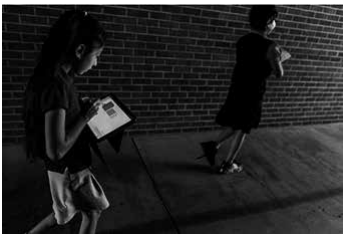
When the covid-19 pandemic forced in-person classroom instruction to go virtual, students suddenly needed to have their own laptops or tablets in order to interact with teachers and complete assignments. In the United States (U.S.), federal pandemic funding was used to address the digital divide – the gap between students and families who had their own tablets, computers and high-speed internet, and those who did not.
While most schools resumed in-person classes by 2021, many of them continued to rely heavily on online platforms and apps to help their students do their work. Today, however, more and more U.S. schools are trying to establish clearer expectations about when technology should be used, for what purpose and at what ages. Instead of treating screens as the default tool for instruction, some schools are directing teachers to use laptops only when the technology adds clear instructional value.
In fact, the distinction between passive consumption and purposeful use is increasingly shaping school policy. Updated policies also reflect an emerging emphasis on age-appropriate screen use. For older students, technology may remain central to learning, particularly when students are using it to program, analyze data, model complex systems and critically evaluate information. Younger children, meanwhile, should have sufficient opportunities for play, conversation, movement and hands-on, “unplugged” learning, without screens.
The issue is not whether students spend more or less time using technology. It is whether the time they spend with technology helps them build understanding, solve problems, think critically and make informed decisions. The technology itself is not what improves learning. What matters is how teachers use it to engage students in deeper thinking.
(Janice Mak. https://theconversation.com, 30.07.2026. Adaptado)
Leia o texto a seguir para responder à questão.
When the covid-19 pandemic forced in-person classroom instruction to go virtual, students suddenly needed to have their own laptops or tablets in order to interact with teachers and complete assignments. In the United States (U.S.), federal pandemic funding was used to address the digital divide – the gap between students and families who had their own tablets, computers and high-speed internet, and those who did not.
While most schools resumed in-person classes by 2021, many of them continued to rely heavily on online platforms and apps to help their students do their work. Today, however, more and more U.S. schools are trying to establish clearer expectations about when technology should be used, for what purpose and at what ages. Instead of treating screens as the default tool for instruction, some schools are directing teachers to use laptops only when the technology adds clear instructional value.
In fact, the distinction between passive consumption and purposeful use is increasingly shaping school policy. Updated policies also reflect an emerging emphasis on age-appropriate screen use. For older students, technology may remain central to learning, particularly when students are using it to program, analyze data, model complex systems and critically evaluate information. Younger children, meanwhile, should have sufficient opportunities for play, conversation, movement and hands-on, “unplugged” learning, without screens.
The issue is not whether students spend more or less time using technology. It is whether the time they spend with technology helps them build understanding, solve problems, think critically and make informed decisions. The technology itself is not what improves learning. What matters is how teachers use it to engage students in deeper thinking.
(Janice Mak. https://theconversation.com, 30.07.2026. Adaptado)
Releia o seguinte trecho do terceiro parágrafo:
“For older students, technology may remain central to learning, particularly when students are using it to program, analyze data, model complex systems and critically evaluate information. Younger children, meanwhile, should have sufficient opportunities for play, conversation, movement and hands-on, ‘unplugged’ learning, without screens.”
No trecho, os verbos modais destacados expressam, respectivamente,
Leia o texto a seguir para responder à questão.
When the covid-19 pandemic forced in-person classroom instruction to go virtual, students suddenly needed to have their own laptops or tablets in order to interact with teachers and complete assignments. In the United States (U.S.), federal pandemic funding was used to address the digital divide – the gap between students and families who had their own tablets, computers and high-speed internet, and those who did not.
While most schools resumed in-person classes by 2021, many of them continued to rely heavily on online platforms and apps to help their students do their work. Today, however, more and more U.S. schools are trying to establish clearer expectations about when technology should be used, for what purpose and at what ages. Instead of treating screens as the default tool for instruction, some schools are directing teachers to use laptops only when the technology adds clear instructional value.
In fact, the distinction between passive consumption and purposeful use is increasingly shaping school policy. Updated policies also reflect an emerging emphasis on age-appropriate screen use. For older students, technology may remain central to learning, particularly when students are using it to program, analyze data, model complex systems and critically evaluate information. Younger children, meanwhile, should have sufficient opportunities for play, conversation, movement and hands-on, “unplugged” learning, without screens.
The issue is not whether students spend more or less time using technology. It is whether the time they spend with technology helps them build understanding, solve problems, think critically and make informed decisions. The technology itself is not what improves learning. What matters is how teachers use it to engage students in deeper thinking.
(Janice Mak. https://theconversation.com, 30.07.2026. Adaptado)
Leia a gravura a seguir:
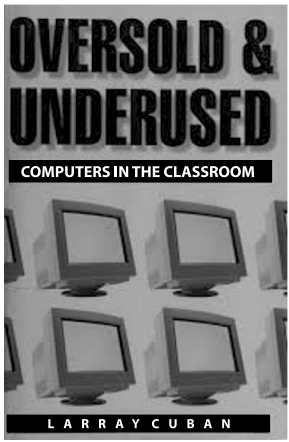
(https://archive.org)
Assinale a alternativa que contém palavras nas quais os prefixos over- e under- carregam o mesmo sentido expresso em oversold e underused.
Leia os textos para responder à questão.
Text 1
A number of researchers have studied conversations between speakers of English as a Lingua Franca (EFL) and have noted a number of surprising lexico-grammatical characteristics, including:
• Increasing of redundancy by adding “inexistent” prepositions (We have to study about...).
• Pluralisation of nouns which are considered uncountable in native-speaker English (informations, staffs).
• Interchangeable use of the relative pronouns who and which (a book who, a boy which).
• Omission of articles where they are mandatory in nativespeaker English.
The evidence suggests that non-native speakers are not conforming to a native English standard. Truly, they seem to get along perfectly well despite the fact that they miss things out and put things in which ‘they should not do’.
(HARMER, J. The practice of English language teaching. 4th ed, Essex: Pearson Longman. Adaptado)
Text 2
Teaching and learning English as a Lingua Franca (ELF) is probably the most radical and controversial approach to emerge in recent years.
Proponents of ELF have already given some indications of how they think conventional approaches to English as a Foreign Language (EFL) should be changed. Jenkins (2000), for example, argues for different priorities in teaching English pronunciation. Teaching certain pronunciation features (which do not cause intelligibility problems), such as the articulation of ‘th’ as an interdental fricative, appears to be a waste of time whereas other common pronunciation problems (such as simplifying consonant clusters) contribute to problems of understanding.
(GRADOLL, H. English Next. UK: British Council, 2006. Adaptado)
Os alunos de uma turma de inglês do Ensino Médio produziram trabalhos sobre o tema Environmental Issues para serem expostos na Feira de Ciências organizada pela escola. À pergunta do professor “Ready for the Science Fair, everyone?”, um aluno replica “No teacher!! We need more informations about it!”
Familiarizado com a perspectiva de ensino de Inglês como Língua Franca proposta pela BNCC, esse professor compreende que o erro linguístico produzido pelo aluno em sua tentativa de se comunicar em inglês
Leia os textos para responder à questão.
Text 1
A number of researchers have studied conversations between speakers of English as a Lingua Franca (EFL) and have noted a number of surprising lexico-grammatical characteristics, including:
• Increasing of redundancy by adding “inexistent” prepositions (We have to study about...).
• Pluralisation of nouns which are considered uncountable in native-speaker English (informations, staffs).
• Interchangeable use of the relative pronouns who and which (a book who, a boy which).
• Omission of articles where they are mandatory in nativespeaker English.
The evidence suggests that non-native speakers are not conforming to a native English standard. Truly, they seem to get along perfectly well despite the fact that they miss things out and put things in which ‘they should not do’.
(HARMER, J. The practice of English language teaching. 4th ed, Essex: Pearson Longman. Adaptado)
Text 2
Teaching and learning English as a Lingua Franca (ELF) is probably the most radical and controversial approach to emerge in recent years.
Proponents of ELF have already given some indications of how they think conventional approaches to English as a Foreign Language (EFL) should be changed. Jenkins (2000), for example, argues for different priorities in teaching English pronunciation. Teaching certain pronunciation features (which do not cause intelligibility problems), such as the articulation of ‘th’ as an interdental fricative, appears to be a waste of time whereas other common pronunciation problems (such as simplifying consonant clusters) contribute to problems of understanding.
(GRADOLL, H. English Next. UK: British Council, 2006. Adaptado)

 Conheça nossos planos