Questões de Concurso Público Prefeitura de Cuité - PB 2026 para Professor de Inglês

Foram encontradas 40 questões

Q3938562 Pedagogia
Ao investigar como diferentes teorias da aprendizagem influenciam a prática pedagógica de professores da Educação Básica, um pesquisador adotou teorias da aprendizagem distintas para elaborar três blocos de questões, que serão aplicados em entrevistas com professores de diferentes perfis profissionais.

Bloco 1
1. Como as ideias de Zona de Desenvolvimento Proximal (ZDP) influenciam sua prática pedagógica, especialmente na hora de identificar e atender às necessidades individuais discentes?
2. Pensando na importância da interação social e da linguagem para o desenvolvimento cognitivo, como você costuma promover essas interações em sua sala de aula para favorecer a aprendizagem discente?

Bloco 2
3. Como a teoria dos estágios do desenvolvimento cognitivo influencia a maneira como você percebe o processo de aprendizagem discente em diferentes faixas etárias?
4. De que maneira você percebe o desenvolvimento da noção de conservação nos discentes durante as atividades em sala de aula?

Bloco 3
5. De que maneira você trabalha a ideia de educação como prática da liberdade com seus alunos e alunas?
6. Como a sua prática pedagógica busca superar a educação bancária e promover uma educação problematizadora e libertadora?

Considerando o contexto, à luz das teorias da aprendizagem, marque a alternativa CORRETA.
Alternativas
Q3938563 Pedagogia
Uma professora recém-formada queria integrar em sua sala de aula a aprendizagem de conteúdos procedimentais. Diante de sua pouca experiência com esse assunto, decidiu perguntar a uma inteligência artificial generativa quais as implicações para a aprendizagem de procedimentos. As respostas seguem no quadro abaixo. 

As implicações metodológicas para a aprendizagem de um procedimento dizem respeito, principalmente, à forma como o ensino é organizado para que o estudante aprenda a fazer, e não apenas a saber sobre algo. Entre as principais implicações, destacam-se:

I- A realização das ações ou passos que compõem os procedimentos constitui uma condição indispensável à aprendizagem de conteúdos procedimentais. Logo, devem ser evitadas estratégias metodológicas que tenham por base somente a memorização dos procedimentos.
II- A exercitação múltipla é o elemento imprescindível para o domínio do procedimento. Assim, é suficiente que os múltiplos passos ou ações de um procedimento sejam realizados uma única vez para que ele seja aprendido.
III- A reflexão sobre a própria atividade permite que se tome consciência da atuação. Não basta repetir um procedimento de forma mecânica. Para aprimorá-lo, é necessário ser capaz de refletir sobre a maneira de realizá-lo e sobre quais são as condições ideais de seu uso.
IV- A aplicação em contextos diferenciados se baseia no fato de que aquilo que aprendemos se torna mais útil à medida que pode ser utilizado em diversas situações.

A partir desse contexto, à luz da tipologia dos conteúdos utilizada por Zabala, é CORRETO o que se afirma apenas nas implicações:
Alternativas
Q3938564 Pedagogia
“A atividade de ensinar é, comumente, compreendida como a transmissão de conteúdos aos alunos, centrada na realização de exercícios repetitivos, na memorização de definições e fórmulas e na reprodução do que consta no livro didático. Nesse modelo, o professor “passa” a matéria, enquanto os alunos escutam, respondem a questionamentos voltados à repetição dos conteúdos, realizam exercícios em sala ou tarefas de casa e decoram os conhecimentos para as avaliações.”.

Fonte: Libâneo, J. C. Didática. São Paulo: Cortez, 1994.

O trecho apresentado, retirado da obra de Libâneo (1994), descreve um modelo de ensino recorrente nos contextos escolares. A partir desse contexto, analise as assertivas a seguir acerca das principais limitações pedagógicas e didáticas desse modelo de ensino.

I- Subestima-se a atividade mental dos estudantes privando-os de desenvolverem suas potencialidades cognitivas, suas capacidades e habilidades, de forma a ganharem independência de pensamento.
II- É dada excessiva importância à matéria que está no livro didático, sem preocupação de torná-la mais significativa para os estudantes. Como se a aprendizagem dependesse de vencer o conteúdo do livro.
III- O trabalho docente fica restrito à prática social, isto é, a realidade social, política, econômica, cultural da qual tanto o professor como os alunos são parte integrante.
IV- O ensino preocupa-se em verificar se os alunos estão preparados para enfrentar a matéria nova e, muitas vezes, acaba se esvaziando na tentativa de identificar as dificuldades individuais dos estudantes na compreensão do conteúdo.

É CORRETO o que se afirma apenas em:
Alternativas
Q3938565 Pedagogia
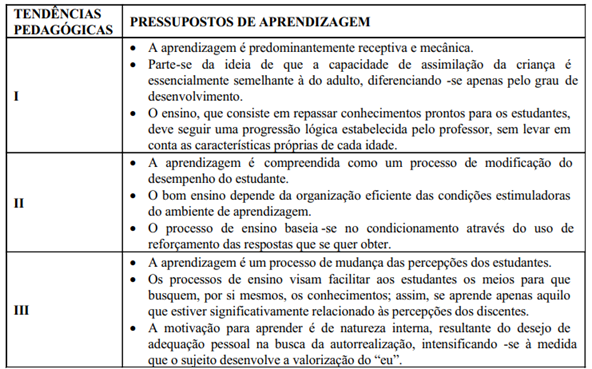
Considere a tabela a seguir.

Q24.png (592×369)

Fonte: LIBÂNEO, J.C. Democratização da escola pública: a pedagogia crítico-social dos conteúdos. 28. Ed. São Paulo: Edições Loyola, 2014.

A partir desse contexto, à luz das tendências pedagógicas conforme discutido por Libâneo (2014), é CORRETO afirmar que as três tendências pedagógicas apresentadas na tabela correspondem, respectivamente, às:
Alternativas
Q3938566 Pedagogia
Na Conferência Mundial sobre os docentes da Unesco, realizada entre 27 e 29 de agosto de 2025, em Santiago do Chile, ganhou amplo apoio internacional a proposta de reconhecer a Relação Professor-Aluno como Património da Humanidade, especialmente num contexto em que se questiona a substituição dos professores pela inteligência artificial.

Sobre os aspectos cognoscitivos e socioemocionais da relação citada anteriormente, analise as assertivas a seguir à luz dos conhecimentos de didática apresentados por Libâneo.
Fonte: Libâneo, J. C. Didática. São Paulo: Cortez, 1994.

I- Ao refletir sobre os aspectos cognoscitivos, é fundamental compreender que o trabalho docente nunca é unidirecional, pois as respostas e opiniões dos estudantes revelam como eles reagem à atuação do professor e às dificuldades que encontram na assimilação dos conhecimentos.
II- Para alcançar satisfatoriamente uma boa relação no aspecto cognoscitivo, é necessário considerar fatores como a adequação da linguagem, o conhecimento do nível de aprendizagem dos estudantes, a utilização de um plano de aula com objetivos claros, bem como a explicitação do que se espera dos estudantes quanto à assimilação dos conteúdos.
III- Os aspectos socioemocionais dizem respeito tanto aos vínculos afetivos estabelecidos entre professor e estudantes quanto às normas e exigências objetivas que orientam a conduta discente em sala de aula. IV- No âmbito dos aspectos socioemocionais, insere-se a discussão sobre a autoridade profissional, moral e técnica do professor. Esta última se manifesta na dedicação profissional, na sensibilidade e no senso de justiça do professor.

É CORRETO o que se afirma apenas em:
Alternativas
Q3946983 Inglês

            Perisylvian polymicrogyria (PMG) is a malformation of cortical development in which the cortex around the Sylvian fissures shows excessive small gyri and abnormal cortical lamination. This regional form of PMG is among the commonest patterns seen on MRI and may vary from focal posterior perisylvian involvement to extensive bilateral disease that (Magnetic Resonance Imaging) extends beyond the perisylvian region. Imaging typically demonstrates a thickened, irregular cortical ribbon with shallow sulci and an irregular gray–white matter junction, which is best characterized using high-resolution MRI.


            Clinically, perisylvian PMG—especially when bilateral—is frequently associated with oromotor dysfunction (dysarthria, feeding and swallowing difficulties), language impairments, cognitive delay, and epilepsy; severity correlates with the extent and symmetry of cortical involvement. The condition is genetically and etiologically heterogeneous: cases may be sporadic, associated with prenatal injury (for example infectious or vascular insults), or linked to chromosomal and single-gene variants in some familial forms. Management focuses on symptomatic therapies (speech/feeding therapy, epilepsy control) and genetic/neurological evaluation when appropriate.


Source: Barkovich, A. J., Guerrini, R., Kuzniecky, R. I., Jackson, G. D., & Dobyns, W. B. (2010). Current concepts of polymicrogyria. Neuroradiology. Leventer, R. J., Jansen, A., Pilz, D. T., et al. (2010). Clinical and imaging heterogeneity of polymicrogyria. Brain.

According to the text, which statement best describes perisylvian polymicrogyria?
Alternativas
Q3946984 Inglês

            Perisylvian polymicrogyria (PMG) is a malformation of cortical development in which the cortex around the Sylvian fissures shows excessive small gyri and abnormal cortical lamination. This regional form of PMG is among the commonest patterns seen on MRI and may vary from focal posterior perisylvian involvement to extensive bilateral disease that (Magnetic Resonance Imaging) extends beyond the perisylvian region. Imaging typically demonstrates a thickened, irregular cortical ribbon with shallow sulci and an irregular gray–white matter junction, which is best characterized using high-resolution MRI.


            Clinically, perisylvian PMG—especially when bilateral—is frequently associated with oromotor dysfunction (dysarthria, feeding and swallowing difficulties), language impairments, cognitive delay, and epilepsy; severity correlates with the extent and symmetry of cortical involvement. The condition is genetically and etiologically heterogeneous: cases may be sporadic, associated with prenatal injury (for example infectious or vascular insults), or linked to chromosomal and single-gene variants in some familial forms. Management focuses on symptomatic therapies (speech/feeding therapy, epilepsy control) and genetic/neurological evaluation when appropriate.


Source: Barkovich, A. J., Guerrini, R., Kuzniecky, R. I., Jackson, G. D., & Dobyns, W. B. (2010). Current concepts of polymicrogyria. Neuroradiology. Leventer, R. J., Jansen, A., Pilz, D. T., et al. (2010). Clinical and imaging heterogeneity of polymicrogyria. Brain.

In the sentence “The condition is genetically and etiologically heterogeneous: cases may be sporadic, associated with prenatal injury, or linked to chromosomal and single-gene variants in some familial forms.”, what does the word “cases” refer to?
Alternativas
Q3946985 Inglês

            Perisylvian polymicrogyria (PMG) is a malformation of cortical development in which the cortex around the Sylvian fissures shows excessive small gyri and abnormal cortical lamination. This regional form of PMG is among the commonest patterns seen on MRI and may vary from focal posterior perisylvian involvement to extensive bilateral disease that (Magnetic Resonance Imaging) extends beyond the perisylvian region. Imaging typically demonstrates a thickened, irregular cortical ribbon with shallow sulci and an irregular gray–white matter junction, which is best characterized using high-resolution MRI.


            Clinically, perisylvian PMG—especially when bilateral—is frequently associated with oromotor dysfunction (dysarthria, feeding and swallowing difficulties), language impairments, cognitive delay, and epilepsy; severity correlates with the extent and symmetry of cortical involvement. The condition is genetically and etiologically heterogeneous: cases may be sporadic, associated with prenatal injury (for example infectious or vascular insults), or linked to chromosomal and single-gene variants in some familial forms. Management focuses on symptomatic therapies (speech/feeding therapy, epilepsy control) and genetic/neurological evaluation when appropriate.


Source: Barkovich, A. J., Guerrini, R., Kuzniecky, R. I., Jackson, G. D., & Dobyns, W. B. (2010). Current concepts of polymicrogyria. Neuroradiology. Leventer, R. J., Jansen, A., Pilz, D. T., et al. (2010). Clinical and imaging heterogeneity of polymicrogyria. Brain.

In the sentence “Clinically, perisylvian PMG—especially when bilateral—is frequently associated with oromotor dysfunction, language impairments, cognitive delay, and epilepsy; severity correlates with the extent and symmetry of cortical involvement.”, which connective would best replace the semicolon to preserve the logical relationship between the two clauses?
Alternativas
Q3946986 Inglês
        Digital technologies have transformed the way English is taught and learned, offering educators and students more dynamic and flexible ways to engage with language. According to recent research, tools such as computer-assisted instruction, mobile devices, and online multimedia platforms enable both teachers and learners to access a wide variety of resources — from interactive exercises, videos, and audio recordings to adaptive learning modules. 


        These tools facilitate exposure to real language input, allow for repetition and individual pacing, and help learners practise all four language skills (listening, speaking, reading, writing) beyond the constraints of the traditional classroom schedule. 


        Moreover, the integration of technology in English-language instruction tends to increase student motivation and engagement. Studies report that when classrooms incorporate digital media and interactive tasks, students often show greater participation, interest, and willingness to communicate — factors that contribute to better learning outcomes.


        In contexts where technology offers immediate feedback or allows for collaborative online work, learners also benefit from more autonomy and personalized learning paths, which can boost confidence and foster a more learner-centered environment. 


       However, effective technology integration depends on thoughtful planning, teacher training, and pedagogical balance. The literature warns that simply having access to digital tools does not guarantee improved learning; educators must design meaningful tasks, adapt materials appropriately, and support learners' needs. 


          Furthermore, in settings where access to devices or internet is limited, or where teachers lack sufficient training, the potential benefits may not be realized — which underlines the importance of institutional support and professional development for successful implementation. 


Source: Günüç, S. (2023). Technology Integration in English Language Teaching and Learning. International Journal of Language Learning and Applied Linguistics. Nishat Tasneem (2024). The Impact of Technology-Enhanced EFL Reading Classes on Learners' Performances and Participations. International Journal of English Learning and Applied Linguistics.

According to the text, what is one key benefit of integrating digital technologies into English-language teaching?


Alternativas
Q3946987 Inglês
        Digital technologies have transformed the way English is taught and learned, offering educators and students more dynamic and flexible ways to engage with language. According to recent research, tools such as computer-assisted instruction, mobile devices, and online multimedia platforms enable both teachers and learners to access a wide variety of resources — from interactive exercises, videos, and audio recordings to adaptive learning modules. 


        These tools facilitate exposure to real language input, allow for repetition and individual pacing, and help learners practise all four language skills (listening, speaking, reading, writing) beyond the constraints of the traditional classroom schedule. 


        Moreover, the integration of technology in English-language instruction tends to increase student motivation and engagement. Studies report that when classrooms incorporate digital media and interactive tasks, students often show greater participation, interest, and willingness to communicate — factors that contribute to better learning outcomes.


        In contexts where technology offers immediate feedback or allows for collaborative online work, learners also benefit from more autonomy and personalized learning paths, which can boost confidence and foster a more learner-centered environment. 


       However, effective technology integration depends on thoughtful planning, teacher training, and pedagogical balance. The literature warns that simply having access to digital tools does not guarantee improved learning; educators must design meaningful tasks, adapt materials appropriately, and support learners' needs. 


          Furthermore, in settings where access to devices or internet is limited, or where teachers lack sufficient training, the potential benefits may not be realized — which underlines the importance of institutional support and professional development for successful implementation. 


Source: Günüç, S. (2023). Technology Integration in English Language Teaching and Learning. International Journal of Language Learning and Applied Linguistics. Nishat Tasneem (2024). The Impact of Technology-Enhanced EFL Reading Classes on Learners' Performances and Participations. International Journal of English Learning and Applied Linguistics.

Based on the information in the text, what can be inferred about the role of technology in English-language teaching?

Alternativas
Q3946988 Inglês
        Digital technologies have transformed the way English is taught and learned, offering educators and students more dynamic and flexible ways to engage with language. According to recent research, tools such as computer-assisted instruction, mobile devices, and online multimedia platforms enable both teachers and learners to access a wide variety of resources — from interactive exercises, videos, and audio recordings to adaptive learning modules. 


        These tools facilitate exposure to real language input, allow for repetition and individual pacing, and help learners practise all four language skills (listening, speaking, reading, writing) beyond the constraints of the traditional classroom schedule. 


        Moreover, the integration of technology in English-language instruction tends to increase student motivation and engagement. Studies report that when classrooms incorporate digital media and interactive tasks, students often show greater participation, interest, and willingness to communicate — factors that contribute to better learning outcomes.


        In contexts where technology offers immediate feedback or allows for collaborative online work, learners also benefit from more autonomy and personalized learning paths, which can boost confidence and foster a more learner-centered environment. 


       However, effective technology integration depends on thoughtful planning, teacher training, and pedagogical balance. The literature warns that simply having access to digital tools does not guarantee improved learning; educators must design meaningful tasks, adapt materials appropriately, and support learners' needs. 


          Furthermore, in settings where access to devices or internet is limited, or where teachers lack sufficient training, the potential benefits may not be realized — which underlines the importance of institutional support and professional development for successful implementation. 


Source: Günüç, S. (2023). Technology Integration in English Language Teaching and Learning. International Journal of Language Learning and Applied Linguistics. Nishat Tasneem (2024). The Impact of Technology-Enhanced EFL Reading Classes on Learners' Performances and Participations. International Journal of English Learning and Applied Linguistics.

In the sentence “Studies report that when classrooms incorporate digital media and interactive tasks, students often show greater participation, interest, and willingness to communicate”, the word “incorporate” is closest in meaning to:
Alternativas
Q3946989 Inglês
        Digital technologies have transformed the way English is taught and learned, offering educators and students more dynamic and flexible ways to engage with language. According to recent research, tools such as computer-assisted instruction, mobile devices, and online multimedia platforms enable both teachers and learners to access a wide variety of resources — from interactive exercises, videos, and audio recordings to adaptive learning modules. 


        These tools facilitate exposure to real language input, allow for repetition and individual pacing, and help learners practise all four language skills (listening, speaking, reading, writing) beyond the constraints of the traditional classroom schedule. 


        Moreover, the integration of technology in English-language instruction tends to increase student motivation and engagement. Studies report that when classrooms incorporate digital media and interactive tasks, students often show greater participation, interest, and willingness to communicate — factors that contribute to better learning outcomes.


        In contexts where technology offers immediate feedback or allows for collaborative online work, learners also benefit from more autonomy and personalized learning paths, which can boost confidence and foster a more learner-centered environment. 


       However, effective technology integration depends on thoughtful planning, teacher training, and pedagogical balance. The literature warns that simply having access to digital tools does not guarantee improved learning; educators must design meaningful tasks, adapt materials appropriately, and support learners' needs. 


          Furthermore, in settings where access to devices or internet is limited, or where teachers lack sufficient training, the potential benefits may not be realized — which underlines the importance of institutional support and professional development for successful implementation. 


Source: Günüç, S. (2023). Technology Integration in English Language Teaching and Learning. International Journal of Language Learning and Applied Linguistics. Nishat Tasneem (2024). The Impact of Technology-Enhanced EFL Reading Classes on Learners' Performances and Participations. International Journal of English Learning and Applied Linguistics.

In the text, the noun “integration” is used when discussing how technology is incorporated into teaching. Which option CORRECTLY provides the adjective form that best fits the context of describing this process?
Alternativas
Q3946990 Inglês
        Digital technologies have transformed the way English is taught and learned, offering educators and students more dynamic and flexible ways to engage with language. According to recent research, tools such as computer-assisted instruction, mobile devices, and online multimedia platforms enable both teachers and learners to access a wide variety of resources — from interactive exercises, videos, and audio recordings to adaptive learning modules. 


        These tools facilitate exposure to real language input, allow for repetition and individual pacing, and help learners practise all four language skills (listening, speaking, reading, writing) beyond the constraints of the traditional classroom schedule. 


        Moreover, the integration of technology in English-language instruction tends to increase student motivation and engagement. Studies report that when classrooms incorporate digital media and interactive tasks, students often show greater participation, interest, and willingness to communicate — factors that contribute to better learning outcomes.


        In contexts where technology offers immediate feedback or allows for collaborative online work, learners also benefit from more autonomy and personalized learning paths, which can boost confidence and foster a more learner-centered environment. 


       However, effective technology integration depends on thoughtful planning, teacher training, and pedagogical balance. The literature warns that simply having access to digital tools does not guarantee improved learning; educators must design meaningful tasks, adapt materials appropriately, and support learners' needs. 


          Furthermore, in settings where access to devices or internet is limited, or where teachers lack sufficient training, the potential benefits may not be realized — which underlines the importance of institutional support and professional development for successful implementation. 


Source: Günüç, S. (2023). Technology Integration in English Language Teaching and Learning. International Journal of Language Learning and Applied Linguistics. Nishat Tasneem (2024). The Impact of Technology-Enhanced EFL Reading Classes on Learners' Performances and Participations. International Journal of English Learning and Applied Linguistics.

In the sentence “These tools facilitate exposure to real language input, allow for repetition and individual pacing, and help learners practise all four language skills…”, the word “These” refers to:
Alternativas
Q3946991 Inglês


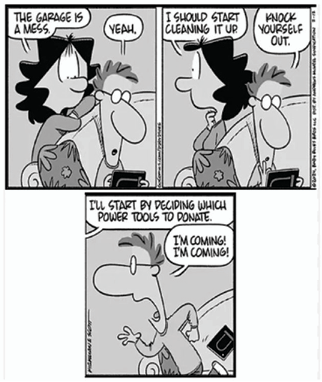
Source: KIRKMAN, Rick; SCOTT, Jerry. Baby Blues. GoComics, 12 fev. 2024. Disponível em: www.gocomics.com. Acesso em: 10 mar. 2026.
What primarily motivates the man to suddenly run toward the garage at the end of the comic strip?


Alternativas
Q3946992 Inglês


Source: KIRKMAN, Rick; SCOTT, Jerry. Baby Blues. GoComics, 12 fev. 2024. Disponível em: www.gocomics.com. Acesso em: 10 mar. 2026.

In the comic strip, the man replies “Knock yourself out” when the woman says she should start cleaning the garage. What is the most accurate interpretation of this expression in that context?
Alternativas
Q3946993 Inglês

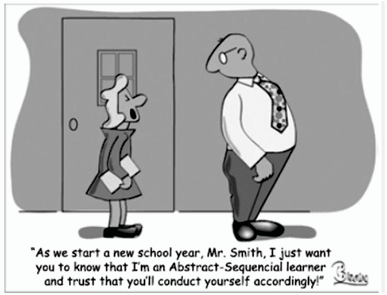
Imagem associada para resolução da questão


Source: GLASBERGEN, Randy. Education Cartoons. Glasbergen Cartoon Service, [s.d.]. Disponível em: https://www.glasbergen.com/education-cartoons/. Acesso em: 10 mar. 2026.


In the cartoon, the student tells Mr. Smith that she is an “Abstract-Sequential learner.” What is the primary source of humor in this interaction?


Alternativas
Q3946994 Inglês
Which of the following rewrites most accurately preserves both meaning and pragmatic emphasis of the sentence: “People have long considered multilingualism to foster cognitive flexibility.”while shifting it into a reliable and natural passive construction?
Alternativas
Q3946995 Inglês
Which option below provides the most accurate and pragmatically appropriate transformation of the sentence from direct to indirect speech, preserving the original temporal, modal, and attitudinal meanings?

“Had I known you were coming,” she exclaimed, “I could have arranged something far more suitable!”
Alternativas
Q3946996 Inglês
Which option employs the connector in a way that most accurately reflects concessive contrast while maintaining syntactic CORRECTNESS academic tone, and logical coherence?

Target meaning: The theory is widely accepted; however, it still fails to explain several anomalies in the data.

Alternativas
Q3946997 Inglês
Which sentence uses the future perfect in a way that is both semantically appropriate and syntactically precise, CORRECTLY expressing an action that will be completed before a specified future point?
Alternativas
Respostas
21: C
22: D
23: A
24: E
25: B
26: C
27: C
28: D
29: B
30: E
31: A
32: E
33: A
34: B
35: D
36: A
37: E
38: D
39: B
40: C