Questões de Concurso Sobre vocabulário | vocabulary em inglês

Foram encontradas 3.314 questões

Q4227862 Inglês

Leia o texto para responder à questão.


Canada: Educating in and for climate emergency 


    Climate change is the most urgent crisis facing our planet today. Youth have repeatedly called for action on tackling this crisis, including the implementation of climate change curricula in schools.


    Canadian students are among those demanding improvement to the sparse and inconsistent delivery of climate change education. A study published in 2019 found that only about half of Canada’s ministries of education and about 60 per cent of school divisions in the country had sustainabilityspecific policy, with this understood to include governance, curriculum, facilities, research, and community outreach. When climate change topics are taught, key concepts are often missing such as the scientific consensus that humans are causing climate change, or a focus on impacts or solutions.


    A recent countrywide survey of 4,035 respondents across the country highlighted the consequences of inadequate climate change education in schools. One-third of Canadians failed a 10-question knowledge quiz. Only around half knew greenhouse gases were the main cause of climate change. Few responded correctly that the average temperature has already increased by more than one degree Celsius. Despite their gaps in knowledge, the majority of survey respondents agreed that we are experiencing a climate emergency and that climate change education should be a high priority.


    Ten percent of survey respondents were educators (406 people), and among this group, half said a lack of time is a barrier when attempting to include climate change education within the classroom. In fact, respected international organizations have noted that implementing climate change education in schools cannot continue to fall on the shoulders of overburdened teachers.


    The traditional way of teaching doesn’t work for complex topics like climate change. Teachers need to shift towards student-directed inquiry and active, real-world learning. It’s not enough to simply quote scientific facts, as a focus on “doom and gloom” can intensify eco-anxiety. Best practices for climate change education include the opportunity to take personal and collective action.


(Karen S. Acton. http://theconversation.com, 07.03.2023. Adaptado)

While reading the text, some students ask for the meaning of “shift”, in the last paragraph. You react by telling them to try and understand the word from the context. As you do this, you offer them the opportunity to develop the reading ability named
Alternativas
Q4227856 Inglês

Leia o texto para responder à questão.


Canada: Educating in and for climate emergency 


    Climate change is the most urgent crisis facing our planet today. Youth have repeatedly called for action on tackling this crisis, including the implementation of climate change curricula in schools.


    Canadian students are among those demanding improvement to the sparse and inconsistent delivery of climate change education. A study published in 2019 found that only about half of Canada’s ministries of education and about 60 per cent of school divisions in the country had sustainabilityspecific policy, with this understood to include governance, curriculum, facilities, research, and community outreach. When climate change topics are taught, key concepts are often missing such as the scientific consensus that humans are causing climate change, or a focus on impacts or solutions.


    A recent countrywide survey of 4,035 respondents across the country highlighted the consequences of inadequate climate change education in schools. One-third of Canadians failed a 10-question knowledge quiz. Only around half knew greenhouse gases were the main cause of climate change. Few responded correctly that the average temperature has already increased by more than one degree Celsius. Despite their gaps in knowledge, the majority of survey respondents agreed that we are experiencing a climate emergency and that climate change education should be a high priority.


    Ten percent of survey respondents were educators (406 people), and among this group, half said a lack of time is a barrier when attempting to include climate change education within the classroom. In fact, respected international organizations have noted that implementing climate change education in schools cannot continue to fall on the shoulders of overburdened teachers.


    The traditional way of teaching doesn’t work for complex topics like climate change. Teachers need to shift towards student-directed inquiry and active, real-world learning. It’s not enough to simply quote scientific facts, as a focus on “doom and gloom” can intensify eco-anxiety. Best practices for climate change education include the opportunity to take personal and collective action.


(Karen S. Acton. http://theconversation.com, 07.03.2023. Adaptado)

In the sentence from the first paragraph “Youth have repeatedly called for action on tackling this crisis, including improved climate change education.”, the underlined fragment means that youth, repeatedly, have
Alternativas
Q4227850 Inglês

Leia o texto para responder à questão.


    Assessment is perhaps one of the least understood areas of language teaching and learning. Students may see tests as a threat to their competence because they are afraid they will not perform well. Teachers often do not like to construct tests and are not altogether satisfied with the results when they do.


     A more constructive view of language testing exists when (a) testing is undertood as an opportunity for interaction between teacher and student; (b) students are judged on the basis of the knowledge they have; (c) the criteria for success on the test are clear to students; (d) students receive a grade for their performance on a set of tests representing different testing methods (not just one!); (e) the tests are intended to help students improve their skills; (f) the results are discussed.


    The seminal efforts by Canalle e Swain (1980) to operationalize Hymes’ (1972) communicative competence have provided a relevant set of criteria for describing tests. Tests should be seen as tapping one or more of the four components making up the construct of communicative competence: grammatical, discourse, sociolinguistic and strategic competence.


(Andrew D.Cohen. Second language Assessment. IN: Marianne

Cerce-Murcia(ed). Teaching English as a second or foreign language.

Boston, Massachusstes: Heinle&Heinle. 2nd edition. 2001. Adaptado)
In the fragment from the first paragraph, “Teachers often do not like to construct tests and are not altogether satisfied with the results”, the underlined word means
Alternativas
Q4227842 Inglês
Leia o texto para responder à questão.

    Through practice and experience in an increasingly wide range of communicative contexts and events, learners gradually expand their communicative competence, consisting of grammatical competence, discourse competence, sociocultural competence and strategic competence. All these components are interrelated. An increase in one component interacts with other components to produce a corresponding increase in overall communicative competence.

    Grammatical competence refers to sentence-level grammatical form, the ability to recognize the lexical, morphological, syntactic and phonological feature of a language and to make use of these features to interpret and form words and whole sentences. One demonstrates grammatical competence not by stating a rule but by using a rule in the interpretation, expression or negotiation of meaning.

    Discourse competence is concerned not with isolated words or phrases but with the interconnectedness of a series of utterances, written words and/or phrases to build a text, a meaningful whole. Two familiar concepts to talk about discourse competence are text coherence and cohesion. Text coherence is the relation of all sentences or utterances in a text to a single global proposition. Local connections or structural links between individual sentences provide cohesion. Sociocultural competence extends well beyond linguistic forms and is an interdisciplinary field of inquiry having to do with the social rules of language use.

    Sociocultural competence requires an understanding of the social context where language is used: the roles of the participants, the information they share, and the function of the interation. And although we are far from an adequate description of sociocultural rules of appropriateness, we use them to communicate successfully in many different contexts of situation. Sociocultural competence also includes a willingness to suspend judgement and take into consideration the possibility of cultural differences in convention and use. Thus the importance of the term cultural flexibility or cultural awareness.

    The ‘’ideal native speaker,’’ someone who knows a language perfectly and uses it appropriately in all social interactions, exists in theory only. None of us knows all there is to know of English in its many manifestations, both around the world and in our own backyards. Communicative competence is always relative. The coping strategies we use in unfamiliar contexts, with constraints due to imperfect knowledge of rules or limiting factors in their application such as fatigue or distraction, are represented as strategic competence. With practice and experience, we gain in grammatical, discourse, and socio-cultural competence. The relative importance of strategic competence thus decreases. However, the effective use of coping strategies is important for communicative competence in all contexts and distinguishes highly competent communicators from those who are less so.


(Sandra J. Savignon. Communicative language teaching for the
twenty-first century. IN: Marianne Celce-Murcia. Teaching English as a
second or foreign language. Boston, Massachusstes: Heinle&Heinle.
3rd edition. 2002. Adaptado)
A word with a silent gh, as in “through” (line 1), is also found in alternative:
Alternativas
Q4227840 Inglês
Leia o texto para responder à questão.

    Through practice and experience in an increasingly wide range of communicative contexts and events, learners gradually expand their communicative competence, consisting of grammatical competence, discourse competence, sociocultural competence and strategic competence. All these components are interrelated. An increase in one component interacts with other components to produce a corresponding increase in overall communicative competence.

    Grammatical competence refers to sentence-level grammatical form, the ability to recognize the lexical, morphological, syntactic and phonological feature of a language and to make use of these features to interpret and form words and whole sentences. One demonstrates grammatical competence not by stating a rule but by using a rule in the interpretation, expression or negotiation of meaning.

    Discourse competence is concerned not with isolated words or phrases but with the interconnectedness of a series of utterances, written words and/or phrases to build a text, a meaningful whole. Two familiar concepts to talk about discourse competence are text coherence and cohesion. Text coherence is the relation of all sentences or utterances in a text to a single global proposition. Local connections or structural links between individual sentences provide cohesion. Sociocultural competence extends well beyond linguistic forms and is an interdisciplinary field of inquiry having to do with the social rules of language use.

    Sociocultural competence requires an understanding of the social context where language is used: the roles of the participants, the information they share, and the function of the interation. And although we are far from an adequate description of sociocultural rules of appropriateness, we use them to communicate successfully in many different contexts of situation. Sociocultural competence also includes a willingness to suspend judgement and take into consideration the possibility of cultural differences in convention and use. Thus the importance of the term cultural flexibility or cultural awareness.

    The ‘’ideal native speaker,’’ someone who knows a language perfectly and uses it appropriately in all social interactions, exists in theory only. None of us knows all there is to know of English in its many manifestations, both around the world and in our own backyards. Communicative competence is always relative. The coping strategies we use in unfamiliar contexts, with constraints due to imperfect knowledge of rules or limiting factors in their application such as fatigue or distraction, are represented as strategic competence. With practice and experience, we gain in grammatical, discourse, and socio-cultural competence. The relative importance of strategic competence thus decreases. However, the effective use of coping strategies is important for communicative competence in all contexts and distinguishes highly competent communicators from those who are less so.


(Sandra J. Savignon. Communicative language teaching for the
twenty-first century. IN: Marianne Celce-Murcia. Teaching English as a
second or foreign language. Boston, Massachusstes: Heinle&Heinle.
3rd edition. 2002. Adaptado)
At the lexical level, competence includes the recognition and use of longer stretches of language such as the underlined expression in “an interdisciplinary field of inquiry having to do with the social rules of language use”. The same meaning for the expression is found in alternative:
Alternativas
Q4212058 Inglês
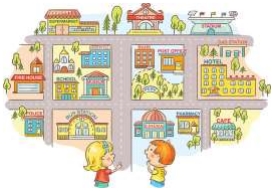
Look at the map below and complete the sentence with the correct word. Choose the CORRECT answer. 
11.jpg (276×191)
“The church is _________ the school.” 
Alternativas
Q4205820 Inglês
Your Brain Could Be Controlling How Sick You Get - And How You Recover

        Hundreds of scientists around the world are looking for ways to treat heart attacks. But few started where Hedva Haykin has: in the brain. Doctor Haykin wants to know whether stimulating a region of the brain involved in positive emotion and motivation can influence how the heart heals.
    
        Late last year, in a small, ____________ microscope room, she pulled out slides from a thin black box, one by one. On them were slices of hearts, no bigger than pumpkin seeds, from mice that had experienced heart attacks. Under a microscope, some of the samples were clearly marred by scars left in the aftermath of the infarction. Others showed mere ____________ of damage visible among streaks of healthy, red-stained cells.
    
        The difference in the hearts’ appearance originated in the brain, Haykin explains. The healthier-looking samples came from mice that had received stimulation of a brain area involved in positive emotion and motivation. Those marked with scars were from unstimulated mice. On the basis of her experiments so far, which have not yet been published, activation of this brain reward centre — called the ventral tegmental area (VTA) — seems to trigger immune changes that contribute to the reduction of scar __________.

(Fonte: Scientific American - adaptado.)
In “Doctor Haykin wants to know whether stimulating a region of the brain involved in positive emotion and motivation can influence how the heart heals”, the underlined word can be substituted without loss of meaning by:
Alternativas
Q4205818 Inglês
Your Brain Could Be Controlling How Sick You Get - And How You Recover

        Hundreds of scientists around the world are looking for ways to treat heart attacks. But few started where Hedva Haykin has: in the brain. Doctor Haykin wants to know whether stimulating a region of the brain involved in positive emotion and motivation can influence how the heart heals.
    
        Late last year, in a small, ____________ microscope room, she pulled out slides from a thin black box, one by one. On them were slices of hearts, no bigger than pumpkin seeds, from mice that had experienced heart attacks. Under a microscope, some of the samples were clearly marred by scars left in the aftermath of the infarction. Others showed mere ____________ of damage visible among streaks of healthy, red-stained cells.
    
        The difference in the hearts’ appearance originated in the brain, Haykin explains. The healthier-looking samples came from mice that had received stimulation of a brain area involved in positive emotion and motivation. Those marked with scars were from unstimulated mice. On the basis of her experiments so far, which have not yet been published, activation of this brain reward centre — called the ventral tegmental area (VTA) — seems to trigger immune changes that contribute to the reduction of scar __________.

(Fonte: Scientific American - adaptado.)
Check the alternative that CORRECTLY fills the gaps in the text:
Alternativas
Q4204830 Inglês
Life just might exist on Mars after all


    The red planet may have once been home to an abundance of microbes. New studies suggest it's possible that some hardy microbes managed to survive underground in a frozen state.

    About 3.5 billion years ago, two of the planets that orbited the sun may have had biospheres of similar bulk. One, Earth, evolved in a way that allowed life to flourish and splinter into endless forms most beautiful. Mars, the other world, followed a different path.

    Today the Martian surface is hostile to life as we know it, but as this scientific story goes, Mars may have once hosted a rich abundance of microbes. Residing in the planet’s briny underworld and shielded from the lethal radiation that bathes the surface, these organisms could have grown in nooks and ____________, multiplying until their collective heft rivaled Earth’s cache of life. Called methanogens, Mars’s microbes would have inhaled atmospheric hydrogen and carbon dioxide and exhaled methane gas - and in a twist, they may have turned out to be their own worst enemy.

    Over time, their growing, insatiable appetite would have robbed the Martian atmosphere of hydrogen - a powerful greenhouse gas during the planet’s early days - ultimately casting a deadly freeze over the planet and driving microbial populations into deeper, warmer crannies. How long those burrowing microbes could have survived in the deep is unknown. It’s possible they were only a shortlived flash of life on an otherwise sterile world.

    “Maybe extinction is the cosmic default of life in the universe,” says Boris Sauterey of the Institut de Biologie de l’Ecole Normale Supérieure in Paris. “It’s not the process of life ____________ that is limiting; it’s life maintaining itself that is limiting.”

    But perhaps, more than 30 feet beneath the surface and encased in ice, these ancient single-celled organisms achieved a state of dormancy - a sort of cryopreserved slumber, ready to perk up when more life-friendly conditions arise.

    The Martian interior may not be as lifeless as its face. It could host a world of alien organisms that are capable of waiting thousands of years between each turn of their metabolic engines.

    This ____________ may sound farfetched, but recent results from scientists modeling the habitability of ancient Mars and studying the hardiness of microbes in labs and beneath our own planet’s surface all point in the same direction: It’s a long shot, but it’s possible life evolved on Mars and still exists. And scientists may just find signs of that life when meteors barrel into Mars and excavate buried layers of ice, or when new spacecraft arrive to plumb this underground realm.


(Fonte: National Geographic - adaptado.)
In “It could host a world of alien organisms...”, the underlined word can be substituted without loss of meaning by:
Alternativas
Q4204828 Inglês
Life just might exist on Mars after all


    The red planet may have once been home to an abundance of microbes. New studies suggest it's possible that some hardy microbes managed to survive underground in a frozen state.

    About 3.5 billion years ago, two of the planets that orbited the sun may have had biospheres of similar bulk. One, Earth, evolved in a way that allowed life to flourish and splinter into endless forms most beautiful. Mars, the other world, followed a different path.

    Today the Martian surface is hostile to life as we know it, but as this scientific story goes, Mars may have once hosted a rich abundance of microbes. Residing in the planet’s briny underworld and shielded from the lethal radiation that bathes the surface, these organisms could have grown in nooks and ____________, multiplying until their collective heft rivaled Earth’s cache of life. Called methanogens, Mars’s microbes would have inhaled atmospheric hydrogen and carbon dioxide and exhaled methane gas - and in a twist, they may have turned out to be their own worst enemy.

    Over time, their growing, insatiable appetite would have robbed the Martian atmosphere of hydrogen - a powerful greenhouse gas during the planet’s early days - ultimately casting a deadly freeze over the planet and driving microbial populations into deeper, warmer crannies. How long those burrowing microbes could have survived in the deep is unknown. It’s possible they were only a shortlived flash of life on an otherwise sterile world.

    “Maybe extinction is the cosmic default of life in the universe,” says Boris Sauterey of the Institut de Biologie de l’Ecole Normale Supérieure in Paris. “It’s not the process of life ____________ that is limiting; it’s life maintaining itself that is limiting.”

    But perhaps, more than 30 feet beneath the surface and encased in ice, these ancient single-celled organisms achieved a state of dormancy - a sort of cryopreserved slumber, ready to perk up when more life-friendly conditions arise.

    The Martian interior may not be as lifeless as its face. It could host a world of alien organisms that are capable of waiting thousands of years between each turn of their metabolic engines.

    This ____________ may sound farfetched, but recent results from scientists modeling the habitability of ancient Mars and studying the hardiness of microbes in labs and beneath our own planet’s surface all point in the same direction: It’s a long shot, but it’s possible life evolved on Mars and still exists. And scientists may just find signs of that life when meteors barrel into Mars and excavate buried layers of ice, or when new spacecraft arrive to plumb this underground realm.


(Fonte: National Geographic - adaptado.)
Check the alternative that CORRECTLY fills the gaps in the text:
Alternativas
Q4201566 Inglês

Leia o texto a seguir para responder a questão.


     What is the difference between access point and router?

    The router acts as a hub that sets up a local area network and manages all of the devices and communication in it. An access point, on the other hand, is a sub-device within the local area network that provides another location for devices to connect from and enables more devices to be on the network.


    Wireless routers can function as access points, but not all access points can work as routers. While routers manage local area networks, communicate with outside network systems, acquire, distribute, and dispatch data in multiple directions, establish a point of connectivity, and ensure security, access points typically only provide access to the router’s established network.


(www.ligowave.com/difference-between-access-point-and-

-router#:~:text=Main%20Differences.&text=While%20routers%20manage%20local%20area,to%20the%20router%27s%20established%20network.

Adaptado)

No trecho do primeiro parágrafo “a sub-device within the local area network that provides another location for devices to connect from” o termo sublinhado equivale, em português, a
Alternativas
Q4201565 Inglês

Leia o texto a seguir para responder a questão.


     What is the difference between access point and router?

    The router acts as a hub that sets up a local area network and manages all of the devices and communication in it. An access point, on the other hand, is a sub-device within the local area network that provides another location for devices to connect from and enables more devices to be on the network.


    Wireless routers can function as access points, but not all access points can work as routers. While routers manage local area networks, communicate with outside network systems, acquire, distribute, and dispatch data in multiple directions, establish a point of connectivity, and ensure security, access points typically only provide access to the router’s established network.


(www.ligowave.com/difference-between-access-point-and-

-router#:~:text=Main%20Differences.&text=While%20routers%20manage%20local%20area,to%20the%20router%27s%20established%20network.

Adaptado)

No trecho do primeiro parágrafo “An access point, on the other hand, is a sub-device within the local area network”, a expressão em negrito equivale, em português, a
Alternativas
Q4197701 Inglês
Leia o texto para responder à questão.

Information Security (InfoSec) defined

Information security, often abbreviated InfoSec, is a set of security procedures and tools that broadly protect sensitive enterprise information from misuse, unauthorized access, disruption, or destruction. InfoSec encompasses physical and environmental security, access control, and cybersecurity. It often includes technologies like cloud access security brokers (CASB), deception tools, endpoint detection and response (EDR), and security testing for DevOps (DevSecOps), among others.

Key elements of information security


InfoSec comprises a range of security tools, solutions, and processes that keep enterprise information secure across devices and locations, helping to protect against cyberattacks or other disruptive events.

•  Application security - Policies, procedures, tools, and best practices enacted to protect applications and their data.w
•  Cloud security - Policies, procedures, tools, and best practices enacted to protect all aspects of the cloud, including systems, data, applications, and infrastructure.
•  Cryptography - An algorithm-based method of securing communication meant to ensure only intended recipients of a specific message can view and decipher it.
•  Disaster recovery - A method to reestablish functional technological systems in the wake of an event like a natural disaster, cyberattack, or another disruptive event.
•  Incident response - An organization’s plan for responding to, remediating, and managing the aftermath of a cyberattack, data breach, or another disruptive event.
•  Infrastructure security - Security that encompasses an organization’s entire technological infrastructure, including both hardware and software systems.
•  Vulnerability management - The process an organization takes to identify, assess, and remediate vulnerabilities in its endpoints, software, and systems.


Three pillars of information security: the CIA triad

Confidentiality, integrity, and availability make up the cornerstones of strong information protection, creating the basis for an enterprise’s security infrastructure. The CIA triad offers these three concepts as guiding principles for implementing an InfoSec plan.


Confidentiality

Privacy is a major component of InfoSec, and organizations should enact measures that allow only authorized users access to information. Data encryption, multi-factor authentication, and data loss prevention are some of the tools enterprises can employ to help ensure data confidentiality.

Integrity

Enterprises must maintain data’s integrity across its entire lifecycle. Enterprises with strong InfoSec will recognize the importance of accurate, reliable data, and permit no unauthorized user to access, alter, or otherwise interfere with it. Tools like file permissions, identity management, and user access controls help ensure data integrity.

Availability

InfoSec involves consistently maintaining physical hardware and regularly completing system upgrades to guarantee that authorized users have dependable, consistent access to data as they need it.


(www.microsoft.com/en-ww/security/business/security-101/ what-is-information-security-infosec#:~:text=Information%20 security%2C%20often%20abbreviated%20(InfoSec,access%2C%20 disruption%2C%20or%20destruction. Adaptado.)

Leia a parte do texto Key elements of information security para responder à questão.


No item “Incident response”, o termo “aftermath” equivale, em português, a

Alternativas
Q4196030 Inglês
Leia o texto para responder à questão.

Information Security (InfoSec) defined

    Information security, often abbreviated InfoSec, is a set of security procedures and tools that broadly protect sensitive enterprise information from misuse, unauthorized access, disruption, or destruction. InfoSec encompasses physical and environmental security, access control, and cybersecurity. It often includes technologies like cloud access security brokers (CASB), deception tools, endpoint detection and response (EDR), and security testing for DevOps (DevSecOps), among others.

Key elements of information security

     InfoSec comprises a range of security tools, solutions, and processes that keep enterprise information secure across devices and locations, helping to protect against cyberattacks or other disruptive events.

•  Application security - Policies, procedures, tools, and best practices enacted to protect applications and their data.w

•  Cloud security - Policies, procedures, tools, and best practices enacted to protect all aspects of the cloud, including systems, data, applications, and infrastructure.

•  Cryptography - An algorithm-based method of securing communication meant to ensure only intended recipients of a specific message can view and decipher it.

•  Disaster recovery - A method to reestablish functional technological systems in the wake of an event like a natural disaster, cyberattack, or another disruptive event.

•  Incident response - An organization’s plan for responding to, remediating, and managing the aftermath of a cyberattack, data breach, or another disruptive event.

•  Infrastructure security - Security that encompasses an organization’s entire technological infrastructure, including both hardware and software systems.

•  Vulnerability management - The process an organization takes to identify, assess, and remediate vulnerabilities in its endpoints, software, and systems.


(www.microsoft.com/en-ww/security/business/security-101/ what-is-information-security-infosec#:~:text=Information%20security%2C%20often%20abbreviated%20(InfoSec,access%2C%20 disruption%2C%20or%20destruction. Adaptado.)
Leia a parte do texto Key elements of information security para responder à questão.

Os termos que evidenciam a diferença entre os objetivos de “Disaster recovery” e de “Incident response” são, respectivamente,
Alternativas
Q4196029 Inglês
Leia o texto para responder à questão.

Information Security (InfoSec) defined

    Information security, often abbreviated InfoSec, is a set of security procedures and tools that broadly protect sensitive enterprise information from misuse, unauthorized access, disruption, or destruction. InfoSec encompasses physical and environmental security, access control, and cybersecurity. It often includes technologies like cloud access security brokers (CASB), deception tools, endpoint detection and response (EDR), and security testing for DevOps (DevSecOps), among others.

Key elements of information security

     InfoSec comprises a range of security tools, solutions, and processes that keep enterprise information secure across devices and locations, helping to protect against cyberattacks or other disruptive events.

•  Application security - Policies, procedures, tools, and best practices enacted to protect applications and their data.w

•  Cloud security - Policies, procedures, tools, and best practices enacted to protect all aspects of the cloud, including systems, data, applications, and infrastructure.

•  Cryptography - An algorithm-based method of securing communication meant to ensure only intended recipients of a specific message can view and decipher it.

•  Disaster recovery - A method to reestablish functional technological systems in the wake of an event like a natural disaster, cyberattack, or another disruptive event.

•  Incident response - An organization’s plan for responding to, remediating, and managing the aftermath of a cyberattack, data breach, or another disruptive event.

•  Infrastructure security - Security that encompasses an organization’s entire technological infrastructure, including both hardware and software systems.

•  Vulnerability management - The process an organization takes to identify, assess, and remediate vulnerabilities in its endpoints, software, and systems.


(www.microsoft.com/en-ww/security/business/security-101/ what-is-information-security-infosec#:~:text=Information%20security%2C%20often%20abbreviated%20(InfoSec,access%2C%20 disruption%2C%20or%20destruction. Adaptado.)
Leia a parte do texto Key elements of information security para responder à questão.

No texto, os elementos chave de Segurança da Informação que mencionam explicitamente o uso de políticas são 
Alternativas
Q4196028 Inglês
Leia o texto para responder à questão.

Information Security (InfoSec) defined

    Information security, often abbreviated InfoSec, is a set of security procedures and tools that broadly protect sensitive enterprise information from misuse, unauthorized access, disruption, or destruction. InfoSec encompasses physical and environmental security, access control, and cybersecurity. It often includes technologies like cloud access security brokers (CASB), deception tools, endpoint detection and response (EDR), and security testing for DevOps (DevSecOps), among others.

Key elements of information security

     InfoSec comprises a range of security tools, solutions, and processes that keep enterprise information secure across devices and locations, helping to protect against cyberattacks or other disruptive events.

•  Application security - Policies, procedures, tools, and best practices enacted to protect applications and their data.w

•  Cloud security - Policies, procedures, tools, and best practices enacted to protect all aspects of the cloud, including systems, data, applications, and infrastructure.

•  Cryptography - An algorithm-based method of securing communication meant to ensure only intended recipients of a specific message can view and decipher it.

•  Disaster recovery - A method to reestablish functional technological systems in the wake of an event like a natural disaster, cyberattack, or another disruptive event.

•  Incident response - An organization’s plan for responding to, remediating, and managing the aftermath of a cyberattack, data breach, or another disruptive event.

•  Infrastructure security - Security that encompasses an organization’s entire technological infrastructure, including both hardware and software systems.

•  Vulnerability management - The process an organization takes to identify, assess, and remediate vulnerabilities in its endpoints, software, and systems.


(www.microsoft.com/en-ww/security/business/security-101/ what-is-information-security-infosec#:~:text=Information%20security%2C%20often%20abbreviated%20(InfoSec,access%2C%20 disruption%2C%20or%20destruction. Adaptado.)
In the excerpt from the first part of the text “It often includes technologies”, the word in bold refers to 
Alternativas
Q4177572 Inglês

Silent letters in English


    The English language is full of words whose written form can , in English we rarely The English language is full of words whose written form can be deceptive. Unlike a language like Spanish, in English we rarely sound out all the letters that we see.


    The result is a series of words which are written in a way which seems very different from their sound. Lots of these strange ‘silent’ letters are due to the history of the English only has it absorbed plenty of vocabulary from invaders, like French, Latin and Norse, but the eventual standardization of sounds in the English language has meant that certain words, whilst keeping their older forms of spelling, have The result is a series of words which are written in a way which seems very different from their sound. Lots of these strange ‘silent’ letters are due to the history of the English language. Not only has it absorbed plenty of vocabulary from invaders, like French, Latin and Norse, but the eventual standardization of sounds in the English language has meant that certain words, whilst keeping their older forms of spelling, have had their sounds refined and softened. [...] 


Disponível em: <https://englishlive.ef.com/blog/language-lab/silent-pronounce/>. Acesso em: 22 mar. 2020. (Adaptado).


Assinale a alternativa cujas letras sublinhadas são todas sem som.

Alternativas
Q4177571 Inglês

What U.S. Health Care Workers


Need to Fight Coronavirus


With respirator masks in short supply across the country, the C.D.C. recently updated its recommendations for health care workers. If respirators are not available, the agency says standard medical masks can be used instead for most coronavirus patient care. These looser-fitting masks protect against droplet transmission from coughs and sneezes, but do not filter out airborne pathogens. [...]


Disponível em: <https://www.nytimes.com/interactive/2020/03/11/us/virus-health-workers.html> . Acesso em: 21 mar. 2020. (Adaptado).   


O termo sublinhado (droplet) significa 

Alternativas
Q4177565 Inglês

Imagem associada para resolução da questão


O phrasal verb work out utilizado no centro da tirinha tem significado equivalente a 

Alternativas
Q4162850 Inglês

Dutch government bans phones in schools The Dutch government has announced a ban ______01 mobile phones, tablets, and smartwatches in classrooms starting ______02 January 1, 2024.


The aim is to reduce distractions ______03 lessons and promote better concentration and studying opportunities for students. ______04, devices


_______________05 if they are specifically required for digital skills lessons, for medical reasons, or students with disabilities.


Education Minister Robbert Dijkgraaf ______06 that ______07 mobile phones are a significant part of ______08 lives, they are not suitable for the classroom, and scientific research ______09 this view.


The ban is the result of an agreement between the ministry, schools, and related organizations. Schools have the flexibility to implement the ban in their way, but if the desired outcomes ______10 achieved by the summer of 2024, legal rules ______11 enforced.


Source: https://www.newsinlevels.com/products/dutch government-bans-phones-in-schools-level-3/. 

The underlined word “suitable” (3rd paragraph) could be replaced in the sentence CORRECTLY and without any major change in meaning for: 
Alternativas
Respostas
1081: B
1082: B
1083: A
1084: B
1085: A
1086: A
1087: C
1088: D
1089: B
1090: B
1091: D
1092: B
1093: E
1094: D
1095: A
1096: C
1097: C
1098: B
1099: D
1100: D