Questões de Concurso
Sobre vocabulário | vocabulary em inglês
Foram encontradas 3.149 questões


Identify the sentence with the correct subject-verb agreement.
Which of the following words is an example of a homonym?
Which of the following sentences best illustrates the concept of semantic ambiguity?
TEXTO 6
ESSENTIAL GAME ELEMENTS
At its heart, gamification is about taking elements from games and applying them to non-game settings (Deterding, 2011). While many look at modern video games as a key inspiration for gamification, central elements such as points and levels come out of tabletop roleplaying games. While no one has yet succeeded in coming up with an undisputed definition for "game," most would agree that to be considered a game, it must include at least the following aspects:
1. Interactivity: If there is no way for the player to affect change on the system; if there is nothing for the player to actually do, then it ceases to be a game.
2. Rules: A mechanism to constrain the behavior of players in pre-specified ways.
3. Goal(s): One or more objectives that players pursue while interacting with the game.
4. Quantifiable measure of progress (or success): This can be as simple as a binary acknowledgement of completion, or as complex as a set of cricket scores.
5. Definite ending: While some applications commonly referred to as games do not have clear endings (The Sims, for example), most games have a clear endpoint. By this measure of game, it could easily be argued that a formal educational course meets these criteria.
Source: Gamification in the Classroom: Old Wine in New Badges, by Katrin Becker and Scott Nicholson. In: Learning, Education and Games Volume Two: Bringing Games into Educational Contexis. ETC Press, 2006. Available on: hitps://www.researchgate.net/publication/308402198 Gam ification in the Classroom Old Wine in New Badges
Analise as seguintes afirmativas:
I. A frase "We aint ready yet" apresenta uma variante informal da negativa no inglês.
II. A frase "I learned a lot” apresenta uma variação linguística no tempo passado simples.
III. A frase "My favorite color is red" apresenta uma variação linguistica regional do inglês.
Marque a alternativa CORRETA:
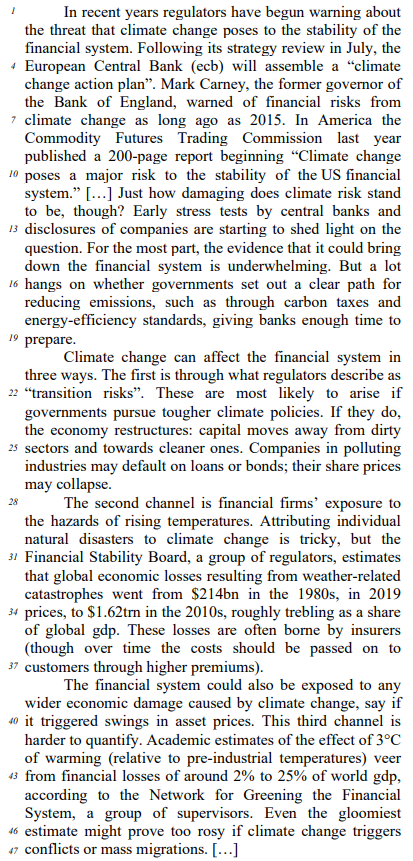
According to the text, mark the statements below as right (C) or wrong (E).
The word “assemble” (line 4) can be correctly replaced
by the word “propose”.
Text to answer the question.
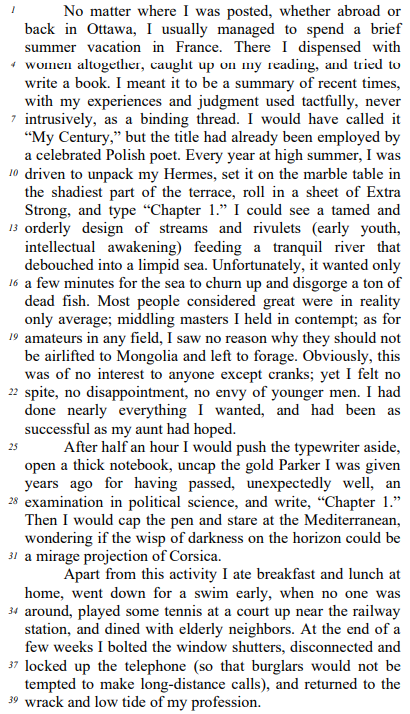
GALLANT, Mavis. Let it Pass. In: Montreal Stories.
Toronto: McClelland & Stewart, 2004. (adapted)
Considering the vocabulary in the text, mark the statements below as right (C) or wrong (E).
In the second paragraph, the word “wisp” (line 30) refers
to something small.
Text to answer the question.
GALLANT, Mavis. Let it Pass. In: Montreal Stories.
Toronto: McClelland & Stewart, 2004. (adapted)
Considering the vocabulary in the text, mark the statements below as right (C) or wrong (E).
The word churn up (line 16) means “to move something
with great force or violently”.
Text to answer the question.
GALLANT, Mavis. Let it Pass. In: Montreal Stories.
Toronto: McClelland & Stewart, 2004. (adapted)
Based on the text, mark the statements below as right (C) or wrong (E).
The word “contempt” (line 18) can be correctly replaced
with disdain.
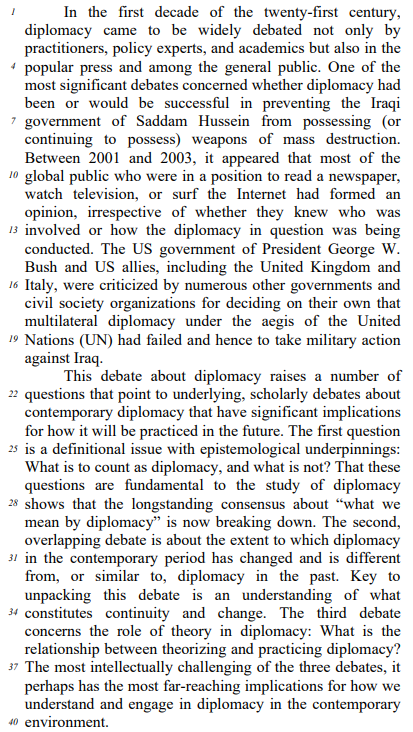
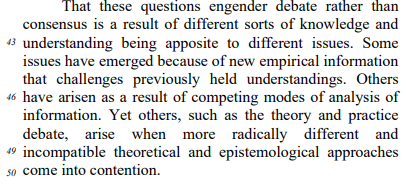
Regarding the vocabulary of the text, mark the statements below as right (C) or wrong (E).
The word “apposite” (line 43) could be replaced by
opposed without changing the meaning of the sentence.
Regarding the vocabulary of the text, mark the statements below as right (C) or wrong (E).
The word “far-reaching” (line 38) means “to have great
influence or many effects”.
Regarding the vocabulary of the text, mark the statements below as right (C) or wrong (E).
“Irrespective of” (line 12) could be replaced by
regardless of without changing the meaning of the
sentence.
In the second paragraph, the word “underpinnings” (line 25) means support, basis or basic structure.
“Under the aegis of” (line 18) is the same as to face strife.
Text to answer the question.
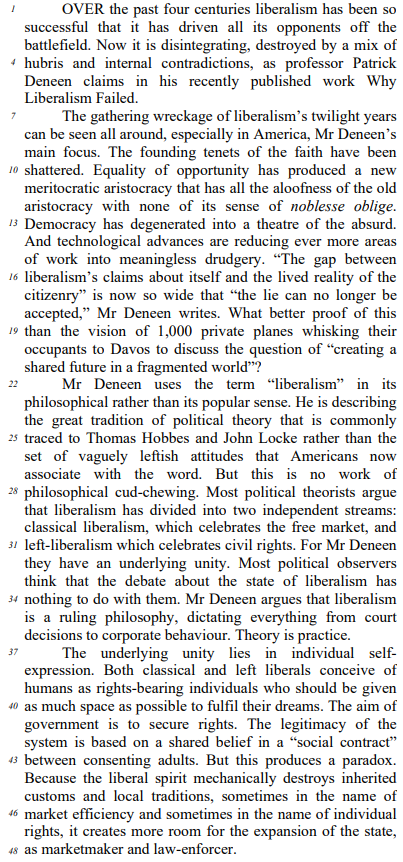
In: Political thought: the problem with liberalism.
The Economist, Edição impressa, p. 74, 27 jan. 2018.
As far as grammar is concerned, mark the statements below as right (C) or wrong (E).
The word “ever” (line 14) can be correctly replaced with
“increasingly”, in this particular context, without
effecting any change in the original meaning.
Text to answer the question.
In: Political thought: the problem with liberalism.
The Economist, Edição impressa, p. 74, 27 jan. 2018.
“Drudgery” (line 15) means “boring, hard, routine work”.
Text to answer the question.
In: Political thought: the problem with liberalism.
The Economist, Edição impressa, p. 74, 27 jan. 2018.
“Twilight” (line 7) can be correctly replaced with “a period of decline.”
What is the English word used for referring to an area where residential housing predominates, for example, where families tend to live together?
“Imagining that you are a web journalist, your job is to create interesting and engaging news articles about various topics for your online readers. You have been tasked with writing a news article about a recent technological discovery that has the potential to change everyday life.”
In order to create an effective and enticing article for a target audience, which of the following aspects should your students prioritize in their writing?

 Conheça nossos planos