Questões de Concurso
Sobre vocabulário | vocabulary em inglês
Foram encontradas 3.149 questões


Ano: 2023
Banca:
FUNDATEC
Órgão:
Prefeitura de Maçambará - RS
Prova:
FUNDATEC - 2023 - Prefeitura de Maçambara - RS - Professor Anos Finais do Ensino Fundamental – Inglês |
Q2209852
Inglês
Texto associado
Try these expert tips for a safer solo trip

(Available at: https://news.airbnb.com/try-these-expert-tips-for-a-safer-solo-trip/ – text especially adapted for
this text).
In which of the sentences below the word “rather” is used with the same meaning as
in line 26?
Ano: 2023
Banca:
FUNDATEC
Órgão:
Prefeitura de Maçambará - RS
Prova:
FUNDATEC - 2023 - Prefeitura de Maçambara - RS - Professor Anos Finais do Ensino Fundamental – Inglês |
Q2209851
Inglês
Texto associado
Try these expert tips for a safer solo trip
(Available at: https://news.airbnb.com/try-these-expert-tips-for-a-safer-solo-trip/ – text especially adapted for
this text).
In line 01 the author says “Traveling alone may seem overwhelming, but it doesn’t
have to be”. Considering the context presented in the article, the underlined structure expresses a
(an):
Ano: 2023
Banca:
Avança SP
Órgão:
Prefeitura de São Lourenço da Serra - SP
Prova:
Avança SP - 2023 - Prefeitura de São Lourenço da Serra - SP - Professor de Educação Básica II - Língua Inglesa |
Q2209580
Inglês
Communication involves not only knowing the context and interlocutors but also having knowledge of
the linguistic resources available to achieve specific communicative purposes. Linguistic or systemic
knowledge refers to the understanding of how language works, including its structure, grammar,
vocabulary, and discourse. It involves knowing how to use different types of language in different
contexts, such as formal and informal, spoken and written, and different genres, such as narrative,
descriptive, and argumentative. Linguistic knowledge also includes an understanding of the
relationship between language and meaning, including figurative language, metaphors, and idioms. In
short, having linguistic knowledge is an essential aspect of successful communication in any language.
Which of the following is NOT part of linguistic or systemic knowledge?
Which of the following is NOT part of linguistic or systemic knowledge?
Ano: 2023
Banca:
Avança SP
Órgão:
Prefeitura de São Lourenço da Serra - SP
Prova:
Avança SP - 2023 - Prefeitura de São Lourenço da Serra - SP - Professor de Educação Básica II - Língua Inglesa |
Q2209561
Inglês
In the study of the English language, it is essential to develop skills that allow the comprehension,
interpretation, and production of different types of texts. Reading strategies, text typology, structure,
and organization are some of the important elements that contribute to the development of these skills.
Which of the following reading techniques can be used to identify specific information in a text?
Which of the following reading techniques can be used to identify specific information in a text?
Ano: 2023
Banca:
JVL Concursos
Órgão:
Prefeitura de São José do Piauí - PI
Prova:
JVL Concursos - 2023 - Prefeitura de São José do Piauí - PI - Professor de Anos Finais - Língua Inglesa |
Q2208084
Inglês
Choose the CORRECT answer.
“The mother posted a birthday card to his son, _________ lives in Australia.”
Ano: 2023
Banca:
Creative Group
Órgão:
Prefeitura de Itá - SC
Prova:
Creative Group - 2023 - Prefeitura de Itá - SC - Professor de Inglês |
Q2206414
Inglês
Texto associado
The Latest Avatar 3
Adapted from the internet
The latest Avatar 3 updates have confirmed that Captain Mick Scoresby (Brendan Cowell) will return for Avatar 3. This could spell either good news or bad for the next Avatar instalment, as his storyline was similar to Quaritch’s in that it was presumed he bit the dust, only to come back for another sequel. In addition, Zoe Saldana recently gave a filming update while speaking to Entertainment Tonight. While director James Cameron had stated that filming is nearly done for Avatar 3 back in 2020, Saldana reported to ET that the crew was going back to film for the summer, and that the process was “70% done there”.
That being said, conflicting Avatar 3 updates come from a Q&A session with producer John Landau, who said that Avatar 3 and the first act of Avatar 4 were filmed simultaneously with Avatar 2. Either way, the consensus is the sequel is nearly done with the filming process. In the same Q&A, Landau revealed that Avatar 3 will introduce two new Na’vi cultures. "But we're going to meet at least two new clans in the next movie, culturally, and go on and on as we continue that," Landau said. Likely one of these new cultures will be the fire Na’vi, of which Oona Chaplin's Varang will be a part of.
In addition, other Avatar 3 updates have confirmed two major character returns. The first is that of Avatar: The Way of Water's breakout character Payakan, the gentle and intelligent Tulkun. In an interview with The Wrap, Landau confirmed that Payakan would be back for Avatar 3, saying, "I always viewed Payakan a little bit like Lassie. And I would say this is a story like a boy and his dog, and they’re both outcasts, and they need each other." In the same interview, Landau also stated that the Avatar secondary villain Parker Selfridge (Giovanni Ribisi), who was absent for the sequel, would come back in a major way for Avatar 3.
“each other”, underlined in the text (paragraph 3),
can be replaced by _____________ without any
changing of meaning.
Ano: 2023
Banca:
Creative Group
Órgão:
Prefeitura de Itá - SC
Prova:
Creative Group - 2023 - Prefeitura de Itá - SC - Professor de Inglês |
Q2206413
Inglês
Texto associado
The Latest Avatar 3
Adapted from the internet
The latest Avatar 3 updates have confirmed that Captain Mick Scoresby (Brendan Cowell) will return for Avatar 3. This could spell either good news or bad for the next Avatar instalment, as his storyline was similar to Quaritch’s in that it was presumed he bit the dust, only to come back for another sequel. In addition, Zoe Saldana recently gave a filming update while speaking to Entertainment Tonight. While director James Cameron had stated that filming is nearly done for Avatar 3 back in 2020, Saldana reported to ET that the crew was going back to film for the summer, and that the process was “70% done there”.
That being said, conflicting Avatar 3 updates come from a Q&A session with producer John Landau, who said that Avatar 3 and the first act of Avatar 4 were filmed simultaneously with Avatar 2. Either way, the consensus is the sequel is nearly done with the filming process. In the same Q&A, Landau revealed that Avatar 3 will introduce two new Na’vi cultures. "But we're going to meet at least two new clans in the next movie, culturally, and go on and on as we continue that," Landau said. Likely one of these new cultures will be the fire Na’vi, of which Oona Chaplin's Varang will be a part of.
In addition, other Avatar 3 updates have confirmed two major character returns. The first is that of Avatar: The Way of Water's breakout character Payakan, the gentle and intelligent Tulkun. In an interview with The Wrap, Landau confirmed that Payakan would be back for Avatar 3, saying, "I always viewed Payakan a little bit like Lassie. And I would say this is a story like a boy and his dog, and they’re both outcasts, and they need each other." In the same interview, Landau also stated that the Avatar secondary villain Parker Selfridge (Giovanni Ribisi), who was absent for the sequel, would come back in a major way for Avatar 3.
“In addition”, underlined in the text (paragraph 3),
can be replaced by _____________ without any
changing of meaning.
Ano: 2023
Banca:
Creative Group
Órgão:
Prefeitura de Itá - SC
Prova:
Creative Group - 2023 - Prefeitura de Itá - SC - Professor de Inglês |
Q2206412
Inglês
Texto associado
The Latest Avatar 3
Adapted from the internet
The latest Avatar 3 updates have confirmed that Captain Mick Scoresby (Brendan Cowell) will return for Avatar 3. This could spell either good news or bad for the next Avatar instalment, as his storyline was similar to Quaritch’s in that it was presumed he bit the dust, only to come back for another sequel. In addition, Zoe Saldana recently gave a filming update while speaking to Entertainment Tonight. While director James Cameron had stated that filming is nearly done for Avatar 3 back in 2020, Saldana reported to ET that the crew was going back to film for the summer, and that the process was “70% done there”.
That being said, conflicting Avatar 3 updates come from a Q&A session with producer John Landau, who said that Avatar 3 and the first act of Avatar 4 were filmed simultaneously with Avatar 2. Either way, the consensus is the sequel is nearly done with the filming process. In the same Q&A, Landau revealed that Avatar 3 will introduce two new Na’vi cultures. "But we're going to meet at least two new clans in the next movie, culturally, and go on and on as we continue that," Landau said. Likely one of these new cultures will be the fire Na’vi, of which Oona Chaplin's Varang will be a part of.
In addition, other Avatar 3 updates have confirmed two major character returns. The first is that of Avatar: The Way of Water's breakout character Payakan, the gentle and intelligent Tulkun. In an interview with The Wrap, Landau confirmed that Payakan would be back for Avatar 3, saying, "I always viewed Payakan a little bit like Lassie. And I would say this is a story like a boy and his dog, and they’re both outcasts, and they need each other." In the same interview, Landau also stated that the Avatar secondary villain Parker Selfridge (Giovanni Ribisi), who was absent for the sequel, would come back in a major way for Avatar 3.
The word “likely”, in bold type in the text
(paragraph 2) is
Ano: 2023
Banca:
FGV
Órgão:
SEDUC-TO
Provas:
FGV - 2023 - SEDUC-TO - Professor da Educação Básica - Professor Regente - Educação Indígena Linguagens e suas Tecnologias
|
FGV - 2023 - SEDUC-TO - Professor da Educação Básica - Professor Regente - Educação Indígena Matemática, Ciências da Natureza e suas Tecnologias |
FGV - 2023 - SEDUC-TO - Professor da Educação Básica - Professor Regente - Educação Indígena Ciências Humanas e Sociais Aplicadas |
Q2206268
Inglês

Disponível em: <https://wl-incrivel.cf.tsp.li/resize/ Acesso em: 10 mar. 2023.
“What do you want to work for us?”
Na Língua Portuguesa, a palavra sublinhada significa
Ano: 2023
Banca:
FGV
Órgão:
Prefeitura de Jaboatão dos Guararapes - PE
Prova:
FGV - 2023 - Prefeitura de Jaboatão dos Guararapes - PE - Professor 2 - Língua inglesa |
Q2204978
Inglês
Texto associado
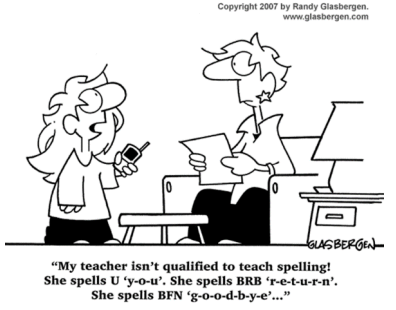
From: https://www.glasbergen.com/teen-cartoons/
The cartoon illustrates the
Ano: 2023
Banca:
FGV
Órgão:
Prefeitura de Jaboatão dos Guararapes - PE
Prova:
FGV - 2023 - Prefeitura de Jaboatão dos Guararapes - PE - Professor 2 - Língua inglesa |
Q2204977
Inglês
Texto associado
From: https://www.glasbergen.com/teen-cartoons/
The first sentence of the speech is a(n)
Ano: 2023
Banca:
FGV
Órgão:
Prefeitura de Jaboatão dos Guararapes - PE
Prova:
FGV - 2023 - Prefeitura de Jaboatão dos Guararapes - PE - Professor 2 - Língua inglesa |
Q2204976
Inglês
Texto associado
From: https://www.glasbergen.com/teen-cartoons/
In her speech, the girl implies that her teacher is
Ano: 2023
Banca:
FGV
Órgão:
Prefeitura de Jaboatão dos Guararapes - PE
Prova:
FGV - 2023 - Prefeitura de Jaboatão dos Guararapes - PE - Professor 2 - Língua inglesa |
Q2204975
Inglês
Texto associado
Text III
Teaching a child to read
Imagery first: the colors primary
Familiar as the sun; the purpose sure –
To hear, to smell, to feel, to taste, to see.
The mind will enter by another door.
The verb is next: we are the rain that falls,
The frog that sees a cricket as it leaps,
The robin that flaps its wings and calls,
The fish that swims, the animal that creeps.
The third is narrative, the moving spell
Of syntax that ad-libs the myths of time.
Alas, we learn before the wishing well
Has dried how words become a hill to climb.
The fourth is symbol: goodness, beauty, love.
This is the time of quarrel, tears and pain.
Sowing the dragons’ teeth, we bob and weave
Until we bring the simple back again.
By Allen Kanfer. Source: https://www.poetryfoundation.org/
poetrymagazine/browse?contentId=28478
Glossary: to ad-lib: If you ad-lib something in a play or a speech, you say something
which has not been planned or written beforehand.
(https://www.collinsdictionary.com/dictionary/english/ad-lib)
The opposite of the preposition in “we learn before the wishing
well/Has dried” is
Ano: 2023
Banca:
FGV
Órgão:
Prefeitura de Jaboatão dos Guararapes - PE
Prova:
FGV - 2023 - Prefeitura de Jaboatão dos Guararapes - PE - Professor 2 - Língua inglesa |
Q2204974
Inglês
Texto associado
Text III
Teaching a child to read
Imagery first: the colors primary
Familiar as the sun; the purpose sure –
To hear, to smell, to feel, to taste, to see.
The mind will enter by another door.
The verb is next: we are the rain that falls,
The frog that sees a cricket as it leaps,
The robin that flaps its wings and calls,
The fish that swims, the animal that creeps.
The third is narrative, the moving spell
Of syntax that ad-libs the myths of time.
Alas, we learn before the wishing well
Has dried how words become a hill to climb.
The fourth is symbol: goodness, beauty, love.
This is the time of quarrel, tears and pain.
Sowing the dragons’ teeth, we bob and weave
Until we bring the simple back again.
By Allen Kanfer. Source: https://www.poetryfoundation.org/
poetrymagazine/browse?contentId=28478
Glossary: to ad-lib: If you ad-lib something in a play or a speech, you say something
which has not been planned or written beforehand.
(https://www.collinsdictionary.com/dictionary/english/ad-lib)
The conjunction in “as it leaps” has the same function as in the
sentence
Ano: 2023
Banca:
FGV
Órgão:
Prefeitura de Jaboatão dos Guararapes - PE
Prova:
FGV - 2023 - Prefeitura de Jaboatão dos Guararapes - PE - Professor 2 - Língua inglesa |
Q2204972
Inglês
Texto associado
Text III
Teaching a child to read
Imagery first: the colors primary
Familiar as the sun; the purpose sure –
To hear, to smell, to feel, to taste, to see.
The mind will enter by another door.
The verb is next: we are the rain that falls,
The frog that sees a cricket as it leaps,
The robin that flaps its wings and calls,
The fish that swims, the animal that creeps.
The third is narrative, the moving spell
Of syntax that ad-libs the myths of time.
Alas, we learn before the wishing well
Has dried how words become a hill to climb.
The fourth is symbol: goodness, beauty, love.
This is the time of quarrel, tears and pain.
Sowing the dragons’ teeth, we bob and weave
Until we bring the simple back again.
By Allen Kanfer. Source: https://www.poetryfoundation.org/
poetrymagazine/browse?contentId=28478
Glossary: to ad-lib: If you ad-lib something in a play or a speech, you say something
which has not been planned or written beforehand.
(https://www.collinsdictionary.com/dictionary/english/ad-lib)
When the poet says that “words become a hill to climb”, he
means that the process may become
Ano: 2023
Banca:
FGV
Órgão:
Prefeitura de Jaboatão dos Guararapes - PE
Prova:
FGV - 2023 - Prefeitura de Jaboatão dos Guararapes - PE - Professor 2 - Língua inglesa |
Q2204971
Inglês
Texto associado
Text III
Teaching a child to read
Imagery first: the colors primary
Familiar as the sun; the purpose sure –
To hear, to smell, to feel, to taste, to see.
The mind will enter by another door.
The verb is next: we are the rain that falls,
The frog that sees a cricket as it leaps,
The robin that flaps its wings and calls,
The fish that swims, the animal that creeps.
The third is narrative, the moving spell
Of syntax that ad-libs the myths of time.
Alas, we learn before the wishing well
Has dried how words become a hill to climb.
The fourth is symbol: goodness, beauty, love.
This is the time of quarrel, tears and pain.
Sowing the dragons’ teeth, we bob and weave
Until we bring the simple back again.
By Allen Kanfer. Source: https://www.poetryfoundation.org/
poetrymagazine/browse?contentId=28478
Glossary: to ad-lib: If you ad-lib something in a play or a speech, you say something
which has not been planned or written beforehand.
(https://www.collinsdictionary.com/dictionary/english/ad-lib)
In the 2nd stanza, “the animal that creeps” is one that
Ano: 2023
Banca:
FGV
Órgão:
Prefeitura de Jaboatão dos Guararapes - PE
Prova:
FGV - 2023 - Prefeitura de Jaboatão dos Guararapes - PE - Professor 2 - Língua inglesa |
Q2204967
Inglês
Texto associado
Text II
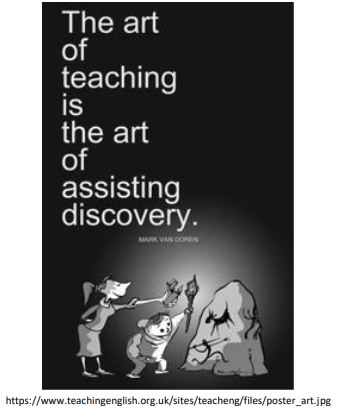
“Discover” is to “Discovery” as
Ano: 2023
Banca:
AMAUC
Órgão:
Prefeitura de Irani - SC
Prova:
AMAUC - 2023 - Prefeitura de Irani - SC - Professor de Inglês |
Q2204599
Inglês
Texto associado
O texto seguinte servirá de base para responder a questão.
(1º§) Arthritis and osteoporosis are long-term conditions
that affect your bones. Arthritis causes swelling and
inflammation. Osteoporosis develops as a result of
decreased bone mass and density, and can lead to
fractures.
(2º§) Jane Atkinson looks at ways to keep your bones
and joints healthy. Regular, low-impact exercise can help
in the battle against joint pain. Nuffield Health has
launched a free joint pain programme to help sufferers
lead a more independent life - and you don't even need
to be a paying member of the gym to join up. As well as
exercises, it offers lifestyle tips and uses relaxation
techniques to try to help with pain so those affected can
sleep.
(3º§) The programme, which lasts six months, has
proven results. Of those who completed it, 69 per cent
say they have improvements in mobility, pain, general
fitness levels and overall quality of life. Among
participants who were in such pain they couldn't work, 30
per cent were able to return after week 12. Working out
what supplements you need and how much you need is
not always easy.
(4º§) Osteo Complete is a bone health complex that
includes calcium, vitamin D3, zinc, boron and copper.
These elements work together to help maintain your
musculoskeletal system, which supports the body and its
movements. Vitamin D3 is crucial for the absorption of
calcium. The minerals magnesium and zinc contribute to
normal protein synthesis, while copper helps maintain
connective tissues.
(5º§) These very tasty vanilla-flavoured tablets are a
good alternative for people who do not like swallowing
pills as you can chew them. 240 chewable tablets,
£18.95, healthspan.co.uk.
(6º§) The world has gone mad for collagen. There are
different types, but for bone health the best is Type I. It
provides structure to your skin, bones, tendons and
ligaments. The change is not instant. Take it regularly
and it could take a year to achieve the full results, but if
you are persistent it does work. I like Correxiko Marine
Collagen Type I. It comes from the skin of deep-sea fish,
caught off the coast of Canada.
(7º§) It is an unflavoured powder that you bung in water
or a coffee. Lisa Snowdon says her menopausal and
age-related aches and pains have gone since she started
using it. £39.95 for a 42-day supply, correxiko.com.
(adapted) https://www.thesun.co.uk/health/22499522/we-test-p
ills-collagen-products-keep-bones-healthy/
(adapted) ts-keeeppboneeshealthy/
k/health/22499522/we-test-pills-collagen-products-keep-bones-healthy/
What is the primary meaning of the word "joints" as used
in the second paragraph?
Select the CORRECT alternative.
Ano: 2023
Banca:
AMAUC
Órgão:
Prefeitura de Irani - SC
Prova:
AMAUC - 2023 - Prefeitura de Irani - SC - Professor de Inglês |
Q2204597
Inglês
Texto associado
O texto seguinte servirá de base para responder a questão.
(1º§) Arthritis and osteoporosis are long-term conditions
that affect your bones. Arthritis causes swelling and
inflammation. Osteoporosis develops as a result of
decreased bone mass and density, and can lead to
fractures.
(2º§) Jane Atkinson looks at ways to keep your bones
and joints healthy. Regular, low-impact exercise can help
in the battle against joint pain. Nuffield Health has
launched a free joint pain programme to help sufferers
lead a more independent life - and you don't even need
to be a paying member of the gym to join up. As well as
exercises, it offers lifestyle tips and uses relaxation
techniques to try to help with pain so those affected can
sleep.
(3º§) The programme, which lasts six months, has
proven results. Of those who completed it, 69 per cent
say they have improvements in mobility, pain, general
fitness levels and overall quality of life. Among
participants who were in such pain they couldn't work, 30
per cent were able to return after week 12. Working out
what supplements you need and how much you need is
not always easy.
(4º§) Osteo Complete is a bone health complex that
includes calcium, vitamin D3, zinc, boron and copper.
These elements work together to help maintain your
musculoskeletal system, which supports the body and its
movements. Vitamin D3 is crucial for the absorption of
calcium. The minerals magnesium and zinc contribute to
normal protein synthesis, while copper helps maintain
connective tissues.
(5º§) These very tasty vanilla-flavoured tablets are a
good alternative for people who do not like swallowing
pills as you can chew them. 240 chewable tablets,
£18.95, healthspan.co.uk.
(6º§) The world has gone mad for collagen. There are
different types, but for bone health the best is Type I. It
provides structure to your skin, bones, tendons and
ligaments. The change is not instant. Take it regularly
and it could take a year to achieve the full results, but if
you are persistent it does work. I like Correxiko Marine
Collagen Type I. It comes from the skin of deep-sea fish,
caught off the coast of Canada.
(7º§) It is an unflavoured powder that you bung in water
or a coffee. Lisa Snowdon says her menopausal and
age-related aches and pains have gone since she started
using it. £39.95 for a 42-day supply, correxiko.com.
(adapted) https://www.thesun.co.uk/health/22499522/we-test-p
ills-collagen-products-keep-bones-healthy/
(adapted) ts-keeeppboneeshealthy/
k/health/22499522/we-test-pills-collagen-products-keep-bones-healthy/
Which pair of words from the text above have similar
sounds but different meanings in different contexts?
Select the CORRECT alternative.
Ano: 2023
Banca:
OBJETIVA
Órgão:
Prefeitura de Piratininga - SP
Prova:
OBJETIVA - 2023 - Prefeitura de Piratininga - SP - Professor - Educação Básica PEB II - Inglês |
Q2200705
Inglês
Texto associado
Why Easter is bad for ducks
On Christmas Eve, two Pekin ducks were found
frozen to a pond in Smithville, Ohio. They flapped their
wings and squawked, fruitlessly struggling to free
themselves until two locals, Maiara and Helder Bertolucci,
spotted them. The pair slid on their stomachs over razor-thin
ice and chiseled the animals free.
The rescued ducks—later named Olaf and Elsa, after
characters from Disney’s Frozen—were two of 109 domestic
ducks abandoned in a pond outside of a restaurant. A local
group ________ Good Sprout Rescue and Sanctuary rescued
the animals; two died, but the rest were rehomed to
sanctuaries or adopted. Every spring, the Barn Restaurant
would buy a hundred new babies for its patrons to enjoy—
but since this incident they’ve __________ not to do so
again.
Every year in springtime, particularly at Easter,
many people “impulse buy” ducklings as gifts, often for their
kids. But after the holiday, sometimes months later, animal
rescuers routinely see an uptick in abandoned adult ducks in
local parks and ponds, Di Leonardo says. There’s no
________ data on how often this happens, but he estimates
tens of thousands of domestic ducks are dumped each year
throughout the U.S. His organization rescues as many as 500
ducks per year in the New York City area alone.
Fonte: (National Geographic – adaptado.)
Check the alternative that CORRECTLY fills the gaps in
the text:

 Conheça nossos planos