Questões de Concurso
Sobre vocabulário | vocabulary em inglês
Foram encontradas 3.121 questões


EUA vetam apelo do Conselho de Segurança por "pausa humanitária" na guerra entre Israel e Hamas
Por Caitlin Hu e Richard Roth, CNN Atualizado às 14h41 EDT, quarta-feira, 18 de outubro de 2023
Os Estados Unidos vetaram um projeto de resolução no Conselho de Segurança da ONU que pedia uma pausa humanitária na Gaza sitiada, gerando mais críticas à paralisia política no poderoso organismo global.
O breve projeto de resolução, proposto pelo Brasil, condenou os ataques terroristas de 7 de outubro em Israel pelo grupo militante palestino Hamas, que mataram mais de 1.400 pessoas, e pediu a libertação dos reféns.
O documento também apelou a todas as partes para que cumpram o direito internacional e protejam as vidas civis na Faixa de Gaza, controlada pelo Hamas, em meio a uma feroz retaliação por parte de aviões de guerra israelenses. A comunidade internacional deve planejar "pausas humanitárias" nos combates para permitir a entrega de ajuda, afirmou.
Doze dos 15 membros do conselho aprovaram o projeto na quarta-feira, com a abstenção do Reino Unido e da Rússia, e o veto dos EUA.
Falando após a votação, a embaixadora dos EUA na ONU, Linda Thomas-Greenfield, explicou que os EUA queriam mais tempo para deixar a diplomacia americana em campo "se desenrolar". Os EUA já haviam adiado a votação da resolução.
Thomas-Greenfield também criticou o texto por não mencionar o direito de Israel à autodefesa — um ponto posteriormente ecoado pela representante britânica Barbara Woodward.
Desde os ataques do Hamas, Israel vem bombardeando Gaza, controlada pelo Hamas, com ataques aéreos. Também cortou o acesso de 2 milhões de pessoas aos enclaves, incluindo alimentos, água e eletricidade.
Mais de 3.000 pessoas morreram nos ataques israelenses — incluindo mais de 1.000 crianças e dezenas de trabalhadores humanitários — e especialistas da ONU estão alertando sobre um desastre generalizado se a água e a eletricidade não forem restauradas.
Em Nova York, vários membros do Conselho de Segurança expressaram decepção e frustração pelo fracasso de uma declaração conjunta sobre a importância da ajuda e da proteção civil.
“Infelizmente, muito tristemente, o conselho mais uma vez não conseguiu adotar uma resolução sobre esses conflitos. Mais uma vez, o silêncio e a inação prevaleceram. Sem o verdadeiro interesse de longo prazo de ninguém”, disse o Embaixador da ONU no Brasil, Sergio Franca Danese, após o veto.
O Conselho de Segurança "perdeu uma oportunidade", disse o representante francês Nicolas de Rivière à imprensa após a votação. "Lamentamos profundamente que este texto tenha sido rejeitado", disse ele.
Falando ao conselho, a embaixadora dos Emirados Árabes Unidos, Lana Nusseibah, disse que a resolução não era um "texto perfeito", mas que seu país votou a favor dela "porque ela declara claramente os princípios básicos que devem ser mantidos e que este Conselho é obrigado a reforçar e defender.
Na semana passada, a Rússia propôs outra resolução pedindo um cessar-fogo humanitário em Gaza, que também não foi aprovada.
(Adaptado de edition.cnn.com)
EUA vetam apelo do Conselho de Segurança por "pausa humanitária" na guerra entre Israel e Hamas
Por Caitlin Hu e Richard Roth, CNN Atualizado às 14h41 EDT, quarta-feira, 18 de outubro de 2023
Os Estados Unidos vetaram um projeto de resolução no Conselho de Segurança da ONU que pedia uma pausa humanitária na Gaza sitiada, gerando mais críticas à paralisia política no poderoso organismo global.
O breve projeto de resolução, proposto pelo Brasil, condenou os ataques terroristas de 7 de outubro em Israel pelo grupo militante palestino Hamas, que mataram mais de 1.400 pessoas, e pediu a libertação dos reféns.
O documento também apelou a todas as partes para que cumpram o direito internacional e protejam as vidas civis na Faixa de Gaza, controlada pelo Hamas, em meio a uma feroz retaliação por parte de aviões de guerra israelenses. A comunidade internacional deve planejar "pausas humanitárias" nos combates para permitir a entrega de ajuda, afirmou.
Doze dos 15 membros do conselho aprovaram o projeto na quarta-feira, com a abstenção do Reino Unido e da Rússia, e o veto dos EUA.
Falando após a votação, a embaixadora dos EUA na ONU, Linda Thomas-Greenfield, explicou que os EUA queriam mais tempo para deixar a diplomacia americana em campo "se desenrolar". Os EUA já haviam adiado a votação da resolução.
Thomas-Greenfield também criticou o texto por não mencionar o direito de Israel à autodefesa — um ponto posteriormente ecoado pela representante britânica Barbara Woodward.
Desde os ataques do Hamas, Israel vem bombardeando Gaza, controlada pelo Hamas, com ataques aéreos. Também cortou o acesso de 2 milhões de pessoas aos enclaves, incluindo alimentos, água e eletricidade.
Mais de 3.000 pessoas morreram nos ataques israelenses — incluindo mais de 1.000 crianças e dezenas de trabalhadores humanitários — e especialistas da ONU estão alertando sobre um desastre generalizado se a água e a eletricidade não forem restauradas.
Em Nova York, vários membros do Conselho de Segurança expressaram decepção e frustração pelo fracasso de uma declaração conjunta sobre a importância da ajuda e da proteção civil.
“Infelizmente, muito tristemente, o conselho mais uma vez não conseguiu adotar uma resolução sobre esses conflitos. Mais uma vez, o silêncio e a inação prevaleceram. Sem o verdadeiro interesse de longo prazo de ninguém”, disse o Embaixador da ONU no Brasil, Sergio Franca Danese, após o veto.
O Conselho de Segurança "perdeu uma oportunidade", disse o representante francês Nicolas de Rivière à imprensa após a votação. "Lamentamos profundamente que este texto tenha sido rejeitado", disse ele.
Falando ao conselho, a embaixadora dos Emirados Árabes Unidos, Lana Nusseibah, disse que a resolução não era um "texto perfeito", mas que seu país votou a favor dela "porque ela declara claramente os princípios básicos que devem ser mantidos e que este Conselho é obrigado a reforçar e defender.
Na semana passada, a Rússia propôs outra resolução pedindo um cessar-fogo humanitário em Gaza, que também não foi aprovada.
(Adaptado de edition.cnn.com)
(2º§) "It also gives you faultless skin, and improves your make-up. Plus, you get different backdrops."
In this context, the word "backdrops" can be translated as:
O texto seguinte servirá de base para responder à questão.
When rock music met ancient archeology: the enduring power of Pink Floyd Live at Pompeii
The 1972 concert film Pink Floyd Live at Pompeii, back in cinemas this week, remains one of the most unique concert documentaries ever recorded by a rock band.
The movie captured the band on the brink of international stardom, released seven months before their breakout album Dark Side of the Moon, which would go on to sell 50 million copies and spend 778 weeks on the Billboard charts.
The film was the first time a rock concert took place in the ruins of an archaeological site. This intermingling of art and archaeology would change the way many thought of Pompeii.
The amphitheatre of Pompeii
The amphitheatre of Pompeii has quite a history as a venue for spectacles.
Constructed around 70 BCE, it was one of the first permanent constructed amphitheatres in Italy, designed to hold up to 20,000 spectators.
From graffiti and advertisements, we know it was used in antiquity for gladiatorial fights and displays and hunts of wild beasts and athletic contests.
Famously we are told by Roman historian Tactius in 59 CE a deadly brawl occurred between Pompeiians and residents of the nearby town of Nuceria during games, resulting in a ten-year ban on gladiatorial contests at the venue. The amphitheatre was destroyed by the eruption of Vesuvius in 79 CE.
There is a long tradition of authors, artists, filmmakers and designers taking inspiration from the site and its destruction. A 13-year-old Mozart's visit to the Temple of Isis at the site inspired The Magic Flute in 1791.
In the rock music era, Pompeii has inspired numerous artists, especially around themes of death and longing. Cities in Dust (1985) by Siouxsie and the Banshees was perhaps the most famous until Bastille's 2013 hit Pompeii. In The Decemberists' Cocoon (2002), the destruction of Pompeii acts as a metaphor for the guilt and loss in the aftermath of the September 11 attacks.
Since 2016, the amphitheatre has hosted concerts − with audiences this time. Appropriately, one of the first was a performance by Pink Floyd's guitarist David Gilmour. His show over two nights in July 2016 took place 45 years after first playing at the site.
But how did Pink Floyd come to play at Pompeii in 1972?
Rethinking rock concert movies
It was the peak era of rock concert documentaries. Woodstock (1970) and The Rolling Stone's Gimme Shelter (1970), and other documentaries of the era, placed the cameras in the audience, giving the cinema-goer the same perspective as the concert audience.
As a concept, it was getting stale.
Filmmaker Adrian Maben had been interested in combining art with Pink Floyd's music. He initially pitched a film of the band's music over montages of paintings by artists such as Rene Magritte. The band rejected the idea.
Maben returned to them after a holiday in Naples, realising the ambience of Pompeii suited the band's music. A performance without an audience provided the antithesis of the era's concert films.
The performance would become iconic, particularly the scenes of Roger Waters banging a large gong on the upper wall of the amphitheatre, and the cameras panning past the band's black road case to reveal the band in the ancient arena.
It was as far away from Woodstock as possible.
The performance was filmed over six days in October 1971 in the ancient amphitheatre, with the band playing three songs in the ancient venue: Echoes, A Saucerful of Secrets, and One of These Days.
Ancient history professor Ugo Carputi of the University of Naples, a Pink Floyd fan, had persuaded authorities to allow the band to film and to close the site for the duration of filming. Besides the film crew, the band's road crew − and a few children who snuck in to watch − the venue was closed to the public.
In addition to the performance, the four band members were filmed walking over the volcanic mud around Boscoreale, and their performances in the film both were interspersed with images of antiquities from Pompeii.
The movie itself was fleshed out with studio performances in a Paris TV studio and rehearsals at Abbey Road Studios.
Marrying art and music
Famously the Pink Floyd film blends images of antiquities from the Naples Archaeological Museum with the band's performances.
Roman frescoes and mosaics are highlighted during particular songs. Profiles of bronze statues meld with the faces of band members, linking past and present.
Later scenes have the band backdropped by images of frescoes from the famed Villa of the Mysteries and of the plaster casts of eruption victims.
The band's musical themes of death and mystery link with ancient imagery, and it would have been the first time many audience members had seen these masterpieces of Roman art.

The Memento mori mosaic features significantly during the performance of the song Careful with that Axe, Eugene. Naples National Archaeological Museum/Wikimedia Commons
Pink Floyd Live at Pompeii marked a brave experiment in rock concert movies.
Watching it more than 50 years later, it is a timepiece of early 70s rock and a remarkable document of a band on the brink of fame.
Because of their progressive rock sound, sonic experimentation and philosophical lyrics, it was often said by Pink Floyd's fans that they were "the first band in space". They even eventually had a cassette of their music played in space.
But many are not aware of their earlier roots in the dust of ancient Pompeii. The re-release of the film gives an opportunity to enjoy the site's unlikely role in music history.
Pink Floyd at Pompeii − MCMLXXII is in cinemas from Thursday.
https://theconversation.com/when-rock-music-met-ancient-archeology-t he-enduring-power-of-pink-floyd-live-at-pompeii-252744
The word "venue" appears multiple times throughout the text with contextual variations. Analyze the following uses:
I. "The amphitheatre of Pompeii has quite a history as a venue for spectacles."
II. "...resulting in a ten-year ban on gladiatorial contests at the venue."
III. "...the venue was closed to the public."
Which statement best explains how context shapes the meaning of "venue" in these instances?
O texto seguinte servirá de base para responder à questão.
LOVE BOMB
Do you fall in love hard and fast? Three signs you're an emophiliac − & five ways to break the destructive lust cycle
If this happens often, you may have emophilia, AKA a tendency to fall in love quickly and with just about anyone.
And experts warn it can have a negative impact on mental health, leaving people vulnerable and trapped in toxic relationships, or see them darting from one relationship to the next, constantly chasing the thrill of early attraction or that feeling of falling in love.
"When you first fall for someone, you get that rush of the feel-good hormone, serotonin," says Sarah Louise Ryan, dating and relationship expert, matchmaker and psychotherapist.
"This phase of romantic love is really the rose-tinted glasses phase. You are falling for the newness of these just-discovered feelings, just as much as you're falling for the actual person. This is because new and different people bring out different parts of us."
There's nothing wrong with these emotions, though they do simmer down as we build a relationship.
"In reality, when that spark fades, that is when the real relationship begins," says Sarah.
"But those with emophilia don't ever want that feeling to fizzle out, which can lead them into a volatile position romantically. They either never fully commit and move on to the next partner, or they date multiple people to discover who they have the biggest spark with, all in search of the rush."
The emotional fallout from this pattern can be huge.
The good news is it's possible to stop and change your thinking and actions.
Love At First Sight?
But whatever happened to "love at first sight", you might wonder?
Genuine love at first sight is an instant attraction to someone you might share common values with, find intriguing and are physically attracted to.
It can be with someone who feels safe and calm.
But emophilia is falling in love with the feeling of lust, attention, validation and connection, rather than the person.
"That need for attachment can be intoxicating, but it's important to get to know the person you've fallen for on a deeper level," Sarah says.
"You will feel anxiety when you're not getting that serotonin burst, but if you follow these steps before becoming emotionally attached so quickly, you'll feel better."
When Emophilia Becomes a Problem
At a time when the dating world feels dire and "true love" is hard to find, is it really all that bad if someone is so open to connection?
The issue is that when emophiliacs fall, they tend not to question the relationship's long-term goals, values or red flags.
This can make them either more likely to jump ship or get stuck in a relationship that was doomed from the start.
"Falling for risky partners may seem appealing, but it can be dangerous when their aim is manipulation and destruction," explains Sarah.
"People with emophilia can be attracted to narcissists, who may lovebomb a new partner by showing excessive amounts of affection and attention. This would be ideal for a person with emophilia. Because they think they're in love, emophiliacs are likely to overlook warnings or advice, even from trusted family and friends. However, when red flags aren't addressed, over time they can become more problematic."
Why Do you Fall so Hard?
Though the exact cause of emophilia is unknown, there are several possible theories.
"It is thought that low serotonin levels in the brain may contribute," says Sarah.
Serotonin is also implicated in conditions including depression and obsessive compulsive disorder (OCD).
Some people may also be hypersensitive to oxytocin," adds Sarah.
Also known as the love hormone, oxytocin creates feelings of trust and a desire to care.
Falling in love quickly is also a shared experience of people with ADHD, which may be linked with the disorder's symptoms of impulsivity.
But it may just be a personality trait.
For some, there is excitement to be found in the chaos, and boredom in the monotony.
FIVE WAYS TO BREAK UP WITH EMOPHILIA
Overcoming the need to chase the rush of falling for someone isn't easy, as many of our relationship desires are ingrained.
"I would ask an emophiliac: 'Is it working for you?'", Sarah says.
"If the answer is yes, and you're happy flitting from one relationship to another, keep doing what you are doing. If the answer is no, I'd recommend these tips."
1. Go Cold Turkey
If you are a serial dater, go cold turkey − including no sex or romantic relations − to focus on yourself.
Discover the qualities you like in yourself and note the ways in which you are capable without having a significant other.
Then, pick up conscious dating when the time is right.
"When you find the confidence to make the right choices, you will no longer let your drive for a feeling choose for you," says Sarah.
"It will be hard work, but worth it."
2. Spot The Red Flags
Some red flags are universal.
For example, a lack of respect or signs of attempting to control another person.
However, others will be more specific to you.
For example, how do you feel about their financial situation, living arrangements, family set-up or beliefs?
It's easy for a friend to say: "That's a red flag", but ask yourself if it really is for you.
Write down your deal-breakers, then ensure when connecting with someone that you ask the questions that will unveil these warning signs.
3. Note What Hasn't Worked
Sit back and really think about the patterns you have fallen into with each romantic partner.
What happened? Where did it go wrong? Self-awareness is important in the decision-making process.
If necessary, write out an action plan for the next time someone catches your attention.
4. Listen To Friends
You may get so caught up in the rush of a new partner that you forget the concerns of those closest to you.
Take time to speak to a family member or friend who knows you well and has historically given you honest advice.
Run through any worries or ask for feedback on new partners.
Your friends don't have to love or even like your partner, but if they have concerns about them, it's worth hearing them.
This can be a failing for people with emophilia, who can only see the positives of a new crush.
5. Consult A Therapist
Therapists or counsellors can help you to understand and manage emophilia.
"Therapists help bring you into the here and now and find internal validation, rather than seeking external validation from others," says Sarah.
"That means that those with emophilia can consciously connect with themselves and with others when dating."
https://www.thesun.co.uk/health/35847187/love-marriage-relationshipscouples-emophiliac-lust-cycle
Consider that some English words bear strong spelling and semantic similarities to some Brazilian Portuguese words because they share the same etymological root. These words are called "cognates". Based on this, select the only one alternative that correctly presents 5 examples of English cognate words found in Text 2:
In today’s fast‑paced business environment, hardly anything is more vital for growth and survival than innovation. And this is especially the case when it comes to technologies
IT innovation may sound like an area that’s purely the domain of IT companies, but really, it’s something that every business should be working towards. With new IT solutions coming out practically daily, it’s critical to find the ones that are going to boost operations, that are going to help companies to reach and exceed business goals. And it’s important to not just put innovative IT services in place, but to find the ones that are going to add the most value, and to find ways of using IT services in unique and innovative ways to enhance the way businesses are done.
Imagine IT innovation as a breath of fresh air into the sometimes stale corporate world, refreshing and reinvigorating business models, product development processes, and the very fabric of operational efficiency. Innovative IT breakthroughs like artificial intelligence (AI), cloud computing, or the Internet of Things (IoT), are not just buzzwords but actual business growth strategies.
The ways in which businesses can leverage innovative IT solutions are as varied as the businesses themselves. From using AI to offer personalised customer experiences, to using conversational AI as training aids for new team members, to taking advantage of platforms like Microsoft Copilot and enhancing humans’ daily workflows – the potential is limitless.
One of the real‑world IT innovation examples that showcases the power of forward‑thinking is the adoption of chatbots for customer service. With AI and natural language processing, chatbots can handle simple inquiries, freeing up human staff to tackle more complex issues. More than that, it is possible to feed chatbot information that it can learn from in turn, helping it to provide answers that are unique to a specific business. For example, it could upload responses to the most common questions received, and the chatbot will not only provide this information to potential clients and customers that ask those questions, but will adapt them to the client’s unique situation. This not only improves efficiency but also enhances the customer experience.
IT innovation doesn’t take a single form. Because there are so many different ways to take advantage of innovative technology solutions, the IT innovation types can be broadly broken down into two different categories, but even these aren’t definitive.
Businesses are always looking for ways to enhance the products and services that they offer, and using innovative IT solutions to both pinpoint new product offerings or enhance the services that companies are already specialised in can setting in an increasingly competitive market space. Using IT innovation in product development can involve finding new ways to analyse data to get more meaningful insights, finding ways to incorporate solutions into technologies like apps, smart watches, or IoT devices.
The second category of IT innovation is improving the existing processes within companies. By taking advantage of innovative technologies, they can enhance their internal operations and help the humans behind business to work smarter, not necessarily harder. This will see efficiency at an all‑time high, and more being done in less time. Some examples of ways that innovation can improve processes include using machine learning and AI to automate tasks, streamlining workflows, and both simplifying and enhancing data management.
Internet: <www.solidsystems.co.za> (adapted).
O texto seguinte servirá de base para responder à questão.
Inside the charming city named 'Europe's highest capital' - with no trains or airports
Most of Europe's capital cities are full of tourists wanting to come and see the beautiful scenery and architecture.
But only one can say it's the highest in the continent.
High up in the Pyrenees mountains, 1,023m (3,356ft) above sea level, is Andorra la Vella, in Andorra.
The capital city - also one of the smallest in Europe - spans just five square miles, making London more than 120 times bigger than it.
And it's very hard to get to - due to the fact that no airport or train station can be found throughout the entire country of Andorra.
But that hasn't stopped 8 to 10 million people visiting the tiny place every year.
The best way of getting to Andorra is by flying to Barcelona, Girona or Lleida, in Spain, or Toulouse, France, and driving from any of them.
And while there, you can take advantage of Avinguda Meritxell, the Shopping Mile, filled with huge department stores and duty-free shopping, as Andorra has one of the lowest VATs in Europe.
One person on Tripadvisor described: 'It is a giant duty free shopping haven.
'Selling cigarettes, alcoholic drinks, perfumes and, more cigarettes, alcoholic drinks, perfumes, and even more clothes, shoes and the likes.
'Very good for local economy, very boring.'
Another draw for tourists to Andorra is the Caldea spa, the largest thermal spa in southern Europe - designed in 1987, using the hot springs that naturally flow in the region.
Here, you'll find indoor saunas, hammams and various types of baths, as well as an outdoor lagoon, surrounded by awe-inspiring mountain views.
The basic package for three hours access starts from ?30.50.
One person on Tripadvisor said: 'Fantastic spa with hydro massage pools and overlapping pools with futuristic design.'
Another visitor, who booked the basic entry, added: 'Very clean, very nicely designed and enjoyable. Absolutely worth it, 3 hours is more than enough.'
For the historians, Andorra's Old Town has a pre-Roman church, called Sant Esteve, dating back to the 9th century.
And Andorra La Vella is also an excellent place to stay if you want to head into the Pyrenees mountains.
When it comes to the weather, don't expect too much sun in Andorra.
In the mountains, the highs are as little as 8C in January and February, with the country having an average annual snowfall of 228cm.
Meanwhile, temperatures peak at 24C in July and August.
https://www.dailymail.co.uk/travel/article-15003409/Inside-charming-city -named-Europes-highest-capital-no-trains-airports.html (Adapted)
(__)"Take advantage of" means to make good use of an opportunity or situation.
(__)"Duty-free shopping haven" refers to a place where taxes on goods are reduced or eliminated.
(__)"Awe-inspiring mountain views" means views that cause fear and anxiety about mountains.
(__)"The likes" in "clothes, shoes and the likes" means similar items or things of the same type.
Indicate the correct order of true (T) or false (F) statements:
Complete the sentences with do or make:
Shall I open the window? No, it´s ok. I´ll ____ it.
What did you ____ at the weekend? Did you go away?
What do they ____ in the factory? Shoes.
Do you know how to ____ bread?
The correct sequence is:
The Phrasal Verb “hand in” is the same of:
Read the sign below:
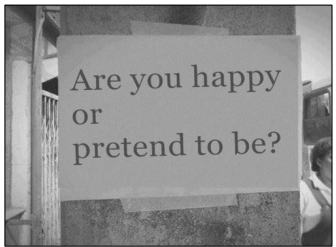
(Available on: https://www.englishexperts.com.br. Accessed in: July 2025.)
Considering vocabulary in context, the word “pretend” is best understood as:

 Conheça nossos planos