Questões de Concurso
Sobre vocabulário | vocabulary em inglês
Foram encontradas 3.149 questões


TEXT 2
Best language learning apps in 2024, tested by our editors
By Wayne Rash, CNN Underscored
Updated 6:31 PM EST, Fri December 29, 2023

IStock
1. If you’re traveling soon to a place where you don’t know the language well (or at all), then you’ll want to download a language learning app to your smartphone before you embark on your journey. These apps can help you whether you’re on your latest family vacation, an unforgettable trip with friends or even a honeymoon.
2. “I always advise clients who book trips with us to use a language learning app if they don’t already know the language where they’re going. I’ve done it myself on my vacations,” says travel agent Liz Harnos, co-owner of Burr Travel, a Northport, New York-based travel agency. “These apps can help you learn enough that you’ll be able to order food, ask for directions and other basic things during your trip.”
3. Even if you have no travel plans in the near future and you just want to learn a new language for your own betterment, then using a language learning app on your smartphone or laptop can be the right choice for you. To find the best one, we tested five candidates over the course of five weeks. On our list were the premium (i.e., paid) versions of Babbel, Busuu Premium Plus, Memrise, Rosetta Stone and Super Duolingo. We tested each of them for easy of setup, design and features.
4. We learned two important things during testing: 1) some of the apps are easier to use than others, and 2) these apps can teach you the basics for up to 38 different languages, depending on the app. When all our testing was done, we found that Rosetta Stone emerged as the winner because of its easy-to-use design and the way it presented its lessons in the most logical manner.
RASH, W.; UNDERSCORED, C. N. N. Best language learning apps in 2023, tested by our editors. Disponível em:https://edition.cnn.com/cnn-underscored/reviews/best-language-learning-apps
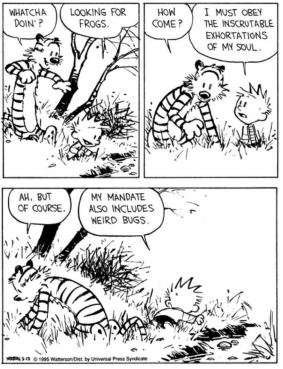
Disponível em: https://www.gocomics.com/calvinandhobbes/19 95/03/13
The expression "Watcha doin'?" is a casual way of asking someone, usually used in informal settings, such as between friends or family. Mark the option that accurately describes it.
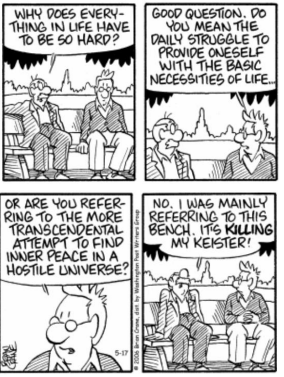
Disponível em: https://www.gocomics.com/pickles/2006/05/17
The word "keister" in the third panel of the comic strip is a slang term for:
In our modern world, there are many factors that place the wellbeing of the planet in jeopardy. While some people have the opinion that environmental problems are just a natural occurrence, others believe that human beings have a huge impaction the environment. Regardless of your viewpoint, take into consideration the following factors that place our environment as well as the planet Earth in danger.
Global warming or climate change is a major contributing factor to environmental damage. Because of
global warming, we have seen an increase in melting
ice caps, a rise in sea levels, and the formation of new
weather patterns. These weather patterns have caused
stronger storms, droughts, and flooding in places that
they formerly did not occur.
Air pollution is primarily caused as a result of excessive
and unregulated emissions of carbon dioxide into the
air. Pollutants mostly emerge ____________the burning_________fossil fuels______ addition __________ chemicals, toxic substances, and improper waste disposal.
Air pollutants are absorbed into the atmosphere, and
they can cause smog, a combination of smoke and
fog, in valleys as well as produce acidic precipitation in
areas far away from the pollution source.
In many areas, people and local governments do not
sustainably use their natural resources. Mining for
natural gases, deforestation, and even improper use of
water resources can have tremendous effects on the
environment. While these strategies often attempt
to boost local economies, their effects can lead to oil
spills, interrupted animal habitats, and droughts.
Ultimately, the effects of the modern world on the
environment can lead to many problems. Human
beings need to consider the repercussions of their
actions, trying to reduce, reuse, and recycle materials
while establishing environmentally sustainable habits.
If measures are not taken to protect the environment,
we can potentially witness the extinction of more
endangered species, worldwide pollution, and a completely uninhabitable planet.
source: lingua.com
Because of global warming, we have seen an increase in melting ice caps, a rise in sea levels, and the formation of new weather patterns.
Analyze the sentences below about the words in bold.
1. Both words are synonyms.
2. Increase and rise refer to numbers, amounts, or levels becoming larger.
3. Both have the same grammatical structures in sentences.
4. Increase is used as an uncountable noun.
Choose the alternative which contains the correct sentences.
In our modern world, there are many factors that place the wellbeing of the planet in jeopardy. While some people have the opinion that environmental problems are just a natural occurrence, others believe that human beings have a huge impaction the environment. Regardless of your viewpoint, take into consideration the following factors that place our environment as well as the planet Earth in danger.
Global warming or climate change is a major contributing factor to environmental damage. Because of
global warming, we have seen an increase in melting
ice caps, a rise in sea levels, and the formation of new
weather patterns. These weather patterns have caused
stronger storms, droughts, and flooding in places that
they formerly did not occur.
Air pollution is primarily caused as a result of excessive
and unregulated emissions of carbon dioxide into the
air. Pollutants mostly emerge ____________the burning_________fossil fuels______ addition __________ chemicals, toxic substances, and improper waste disposal.
Air pollutants are absorbed into the atmosphere, and
they can cause smog, a combination of smoke and
fog, in valleys as well as produce acidic precipitation in
areas far away from the pollution source.
In many areas, people and local governments do not
sustainably use their natural resources. Mining for
natural gases, deforestation, and even improper use of
water resources can have tremendous effects on the
environment. While these strategies often attempt
to boost local economies, their effects can lead to oil
spills, interrupted animal habitats, and droughts.
Ultimately, the effects of the modern world on the
environment can lead to many problems. Human
beings need to consider the repercussions of their
actions, trying to reduce, reuse, and recycle materials
while establishing environmentally sustainable habits.
If measures are not taken to protect the environment,
we can potentially witness the extinction of more
endangered species, worldwide pollution, and a completely uninhabitable planet.
source: lingua.com
Vocabulary
1. Spills
2. Droughts
3. Flood
4. Smog
5. Witness
Definition
( ) A prolonged period of a shortage of water.
( ) A person who sees an event.
( ) To cause unintentionally a liquid to flow over the edge of its container.
( ) An overflowing of a large amount of water over a dry land.
( ) A haze combined with smoke.
Choose the alternative which presents the correct sequence, from top to bottom.
Ethical codes evolve in response to changing conditions, values, and ideas. A professional code of ethics must, therefore, be periodically updated, and also rest upon widely shared values.
Although the operating environment of museums grows more complex each year, the root value for museums, the tie that connects all of us together despite our diversity, is the commitment to serving people, both present and future generations.
Historically, museums have owned and used natural objects, living and non-living, and all manner of human artifacts to advance knowledge and nourish the human spirit. Today, the range of their special interests reflects the scope of human vision. Their missions include collecting and preserving, as well as exhibiting and educating with materials not only owned but also borrowed and fabricated for these ends. Their numbers include both governmental and private museums.
The museum universe in the United States includes both collecting and noncollecting institutions. Although diverse in their missions, they have in common their nonprofit form of organization and a commitment of service to the public. Their collections and/or the objects they borrow or fabricate are the basis for research, exhibits, and programs that invite public participation.
Taken as a whole, museum collections and exhibition materials represent the world's natural and cultural common wealth. As stewards of that wealth, museums are compelled to advance an understanding of all natural forms and of the human experience. It is incumbent on museums to be resources for humankind and in all their activities to foster an informed appreciation of the rich and diverse world we have inherited. It is also incumbent upon them to preserve that inheritance for posterity.
www.aam-us.org/museumresources/ethics/coe.cfm. Acessado em 22/02/2024. Adaptado.
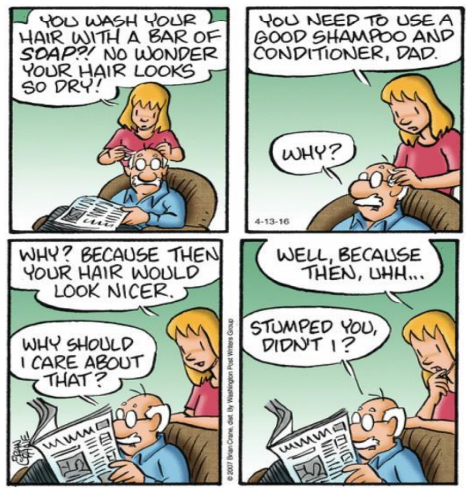
Disponível em: https://www.gocomics.com/pickles/2016/04/13
The word "stumped", in the last panel, could be replaced without a change in meaning by:
I.Gigantic
II.Said
III.He
IV.Jigsaw
V.Quickly
I.Roam.
II.Ongoing
III.Unearth.
IV.Snout.
V.Chisel.
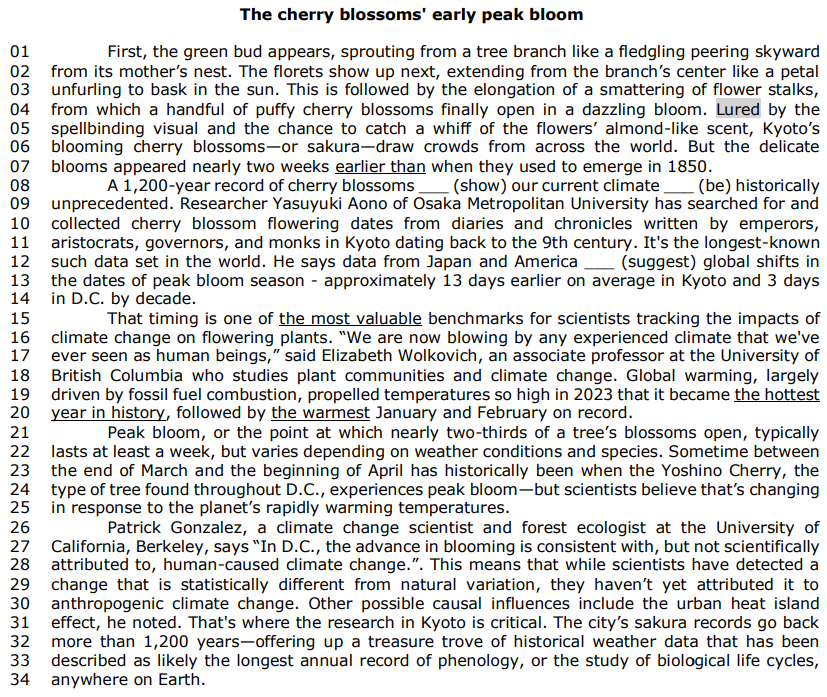
(Available at: www.nationalgeographic.com/environment/article/cherry-blossom-peak-bloom-climate-change - text specially adapted for this test)
 word “Lured” (l. 04) could be replaced by all the alternatives bellow with no significant changes in meaning, EXCEPT for:
 Attention: the question is related to Text 01 below.
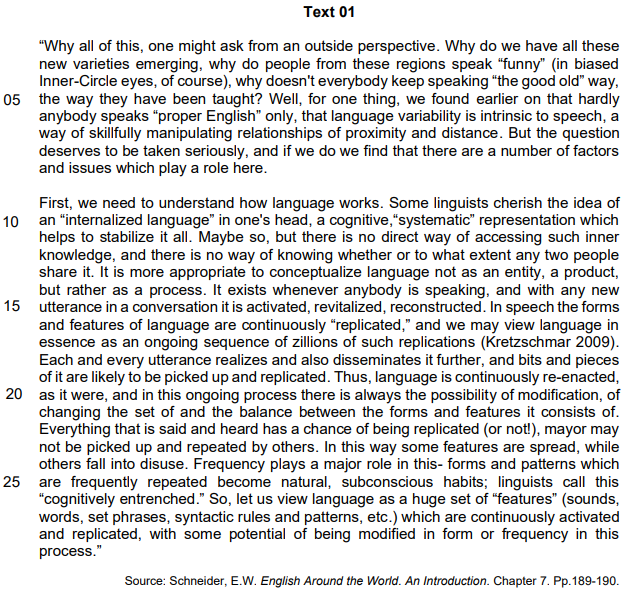
Fill in the blank.
It is _______________ that most passengers of the crashed airliner escaped unhurt.
Which adjective can be used in the sentence so that it presents a coherent and cohesive meaning?

 Conheça nossos planos