Questões de Concurso
Sobre vocabulário | vocabulary em inglês
Foram encontradas 3.121 questões


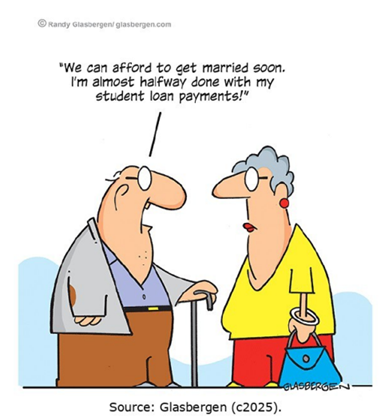
A man says to a woman, "We can afford to get married soon". In the sentence, "afford to" means that the man is
Lexical semantics studies word meaning. Regarding synonyms and antonyms in English, mark T for true statements and F for false ones:
(__) Synonyms are words that have identical meanings in all contexts and can be freely substituted without any change in meaning or nuance (e.g., "big" and "large").
(__) Antonyms are words that express opposite meanings (e.g., "hot" and "cold," "happy" and "sad").
(__) Many words considered synonyms actually have subtle differences in meaning, connotation, or register (formal/informal), which makes lexical choice important for communicative precision.
(__) The word "fast" can be considered both a synonym of "quick" and an antonym of "slow."
After analysis, select the alternative that presents the correct sequence, from top to bottom:
Text 9
Becoming
Back in the ancestral homeland of Michelle Obama, black women were rarely granted the honorific Miss or Mrs., but were addressed by their first name, or simply as "gal" or "auntie" or worse. This so openly demeaned them that many black women, long after they had left the South, refused to answer if called by their first name. A mother and father in 1970s Texas named their newborn "Miss" so that white people would have no choice but to address their daughter by that title. Black women were meant for the field, or the kitchen, or for use as they saw fit. They were, by definition, not ladies. The very idea of a black woman as first lady of the land, well, that would have been unthinkable.
Disponível em: www.nytimes.com. Acesso em: 28 dez. 2019 (adaptado).
Text 6
“Riding a bicycle wil save you money, create less pollution, make you _______ and let you zip past heavy traffic. Will anything persuade auto owners to hop on a two-wheeler? Absolutely yes, says a new report from Washington’s Worldwatch Institute. In “Taking Bikes Seriously,” senior researcher Gary Gardner shows how cities around the world have increased bike ridership by offering a little encouragement. The city of Copenhagen, _________ , makes 2,300 bicycles available for public use; the $3 rental fee is refunded when the bike is returned. In Lima, Peru, lowincome residents ________ buy bicycles through a special small-loan program. During the 1980s Japan helped bikers by boosting the number of bicycle parking spaces at railway stations about fourfold, to 2.4 million. That strategy _________ both money and land; two bikes can fit into a square meter of parking space, while cars require about 30 sq m each. Bike-friendly policies ______ western Germany have lifted the amount of cycling by 50% since the early 1970s.”
(Source: “Back on the Bike, With a Little Help from the City”, PLANET WATCH, TIME, September 28, 1998, page 12.)
Text 5
TV-Turnoff Week

TV-Turnoff Week is an exciting opportunity for children and adults to experience life without television. For seven days, people across the country and around the world turn off their televisions to find that life can be more rewarding and fulfilling when we do more and watch less.
Television cuts into family time, harms our children’s ability to read and succeed in school, and contributes to unhealthy lifestyles and obesity. Over 24 million people have participated in TV-Turnoff Week since 1995, including over six million in 2000 alone. Children and adults, rich and poor, black and white — people from every background and all walks of life — take part through schools, churches or community groups, as families or individuals. What they tell us year after year is that life is more enjoyable and less stressful without television.
TV-Turnoff Week is supported by 70 national organizations including the American Medical Association, the American Academy of Pediatrics and National Education Association, and the President’s Council of Physical Fitness and Sports.
It’s clear that the impact of TV-Turnoff Week lasts much longer than seven days. Joy thousands of parents, pediatricians and other families by celebrating TV-Turnoff Week next year!
Read the passage and answer question.
Palestinians in Gaza Reflect on One Year of Israel’s War With Hamas Oct. 7, 2024
The war has killed tens of thousands and devastated entire cities, leaving many in Gaza without a home and fueling a humanitarian catastrophe.
By Bilal Shbair and Hiba Yazbek Reporting from the Gaza Strip and Jerusalem.
Last October, Fadi Abu Kheir of southern Gaza had big plans. He was going to be engaged to the woman he loved. After they got married, he said, they would move in together, into an apartment that he spent years building.
“Now,” Mr. Abu Kheir, 24, said, “I am clueless about my future. I cannot even think how I can adapt to life postwar.”
It has been a year since the Hamas-led terrorist attacks impelled Israel to launch a retaliatory offensive in Gaza. For Mr. Abu Kheir — and, indeed, for Palestinians across the enclave — every day since, he said, has teemed with “sadness, depression and fury.”
The war has killed over 41,000 people, according to Gazan health officials, and devastated entire neighborhoods and cities, leaving hundreds of thousands without a home and fueling a humanitarian catastrophe.
More than 2 million people lived in the strip before the conflict. No one has been unaffected.
“We were so happy before this war,” said Maisaa al-Naffar, 20, of Khan Younis, breaking into tears as she recalled her first few weeks as a newlywed before the war began. She added: “I am not the person I used to be.”
Nine months pregnant, she is sheltering in a tent in southern Gaza.
“I miss my old life. I miss the days when we used to have fun or laugh at even the smallest things.
I miss my life when we had enough healthy food and snacks,”
Ms. al-Naffar said. “Today, everything has become a hell, full of dust and darkness.”
Throughout the enclave, similar stories abound. For Mr. Abu Kheir, the image from the war that lingers is that of a naked, lifeless woman lying in the street, blown out of a house that had been bombarded, he said. The conflict has killed two of his best friends, and displaced him and his family, he said. It also destroyed the apartment he was building, in the southern Gaza city of Rafah. The war, he said, has “destroyed my dreams.”
Read the passage and answer question.
Palestinians in Gaza Reflect on One Year of Israel’s War With Hamas Oct. 7, 2024
The war has killed tens of thousands and devastated entire cities, leaving many in Gaza without a home and fueling a humanitarian catastrophe.
By Bilal Shbair and Hiba Yazbek Reporting from the Gaza Strip and Jerusalem.
Last October, Fadi Abu Kheir of southern Gaza had big plans. He was going to be engaged to the woman he loved. After they got married, he said, they would move in together, into an apartment that he spent years building.
“Now,” Mr. Abu Kheir, 24, said, “I am clueless about my future. I cannot even think how I can adapt to life postwar.”
It has been a year since the Hamas-led terrorist attacks impelled Israel to launch a retaliatory offensive in Gaza. For Mr. Abu Kheir — and, indeed, for Palestinians across the enclave — every day since, he said, has teemed with “sadness, depression and fury.”
The war has killed over 41,000 people, according to Gazan health officials, and devastated entire neighborhoods and cities, leaving hundreds of thousands without a home and fueling a humanitarian catastrophe.
More than 2 million people lived in the strip before the conflict. No one has been unaffected.
“We were so happy before this war,” said Maisaa al-Naffar, 20, of Khan Younis, breaking into tears as she recalled her first few weeks as a newlywed before the war began. She added: “I am not the person I used to be.”
Nine months pregnant, she is sheltering in a tent in southern Gaza.
“I miss my old life. I miss the days when we used to have fun or laugh at even the smallest things.
I miss my life when we had enough healthy food and snacks,”
Ms. al-Naffar said. “Today, everything has become a hell, full of dust and darkness.”
Throughout the enclave, similar stories abound. For Mr. Abu Kheir, the image from the war that lingers is that of a naked, lifeless woman lying in the street, blown out of a house that had been bombarded, he said. The conflict has killed two of his best friends, and displaced him and his family, he said. It also destroyed the apartment he was building, in the southern Gaza city of Rafah. The war, he said, has “destroyed my dreams.”
Read the following text and answer the question.
What does a sustainable smartphone look like?
In a bid to reduce global electronic waste, Fairphone has created a smartphone that owners can repair themselves. What makes its technology so sustainable?
"This is my phone's camera," says Bas van Abel, holding a small, square component aloft. He has just removed it from his smartphone, using a tiny screwdriver.
"There's eight components in total which can be removed and replaced," he says, as he meticulously disassembles his entire smartphone, placing the camera alongside his phone battery, USB port, screen and loudspeaker.
Van Abel is the co-founder of the Dutch social enterprise Fairphone, which claims to have built "the world's most sustainable smartphone". But with a complex product containing rare metals and components from all over the world, just how sustainable can a smartphone be?
Founded in 2013 in Amsterdam, Fairphone makes Android smartphones which can easily be exchanged, customized and repaired by their owners. By enabling and encouraging people to fix their phones, rather than throwing them away as soon as a component breaks, Fairphone hopes to help reduce electronic waste.
Available at: https://www.bbc.com/future/article/20231121-whatdoes-a-sustainable-smartphone-look-like.
Text 3
If you visit Japan, you might choose to travel around the country by shinkansen train. These high-speed trains connect the major cities of Japan. They are nicknamed “bullet trains” because they go very fast and have pointy noses like a bullet.
Bullet trains are a good way to travel for several reasons other than their speed. They are very punctual, often leaving on time to the second. They are also comfortable. All the seats face forward, and there is plenty of leg room. Most importantly, bullet trains are very safe. In their 35-year history, there have been only a few accidents and no deaths.
The only downside to bullet trains is that they are expensive. A ticket to travel to another city can cost almost as much as an airline ticket would. However, if you fly, you will land at an airport at the edge of a city. Train stations are usually right in the middle of a city. This means that it is often more convenient to take a bullet train instead of flying, because you will arrive exactly where you want to be.
Column 1 Vocabulary
1. Find out
2. Allow
3. Crunch
4. Submit
5. Scary
Column 2 Definition
( ) accept the authority or will of another person.
( ) frightening.
( ) give (someone) permission to do something..
( ) discover a piece of information.
( ) a loud muffled grinding sound made when crushing.
Choose the alternative which presents the correct sequence, from top to bottom.
The aim is to make their products stand out in a busy marketplace.
What do the words aim and stand out mean in this extract?

 Conheça nossos planos