Questões de Concurso
Sobre vocabulário | vocabulary em inglês
Foram encontradas 3.119 questões


Ano: 2023
Banca:
AMEOSC
Órgão:
Prefeitura de Belmonte - SC
Prova:
AMEOSC - 2023 - Prefeitura de Belmonte - SC - Professor de Inglês |
Q4014281
Inglês
Texto associado
I Met My Pen Pal for the First Time in a Country I
Knew Almost Nothing About — and We Fell in Love
(1º§) I'm what you might call a hopeless romantic with
impulsive tendencies. During the height of the pandemic,
I flew to Tbilisi to spend a week with my Russian pen pal,
Anastasia, whom I had known for years, but never met in
person.
(2º§) In a world ravaged by COVID-19, Anastasia kept
me sane. Even from afar, her kind words and charming
smile filled me with joy and affection. Pairing those
emotions with my insatiable wanderlust, I knew I had to
meet her in person. But it was spring 2021, and most of
the world was still shut down. Due to all the restrictions,
finding a country for both an American and a Russian
citizen was virtually impossible.
(3º§) Then, I discovered Georgia, a country I knew
almost nothing about. Provided Anastasia and I received
a negative PCR test result, we could enter without having
to quarantine. We didn't need a visa, either. So, after a
long journey with two layovers and 24 hours in the air, I
met my pen pal in Tbilisi.
(4º§) The Georgian capital was full of surprises. We
strolled along the futuristic Bridge of Peace lit with LEDs.
We climbed the crumbling Narikala Fortress and passed
slanted, Soviet homes. At times modern and at others
medieval, the city's style was strangely addictive.
Anastasia and I walked hand in hand, eager to find all
Tbilisi's secrets.
(5º§) One such secret was the food. From soup
dumplings to nuts dipped in thickened grape juice,
Georgian food was a simple and wholesome pleasure.
Oh, and you haven't lived until you've tried khachapuri, a
soft bread blanketed in cheese, butter, and egg. The
stomach truly is the way to the heart because I was head
over heels.
(6º§) Even so, I say, everything in life is better with a
glass of wine, so I decided to take Anastasia on a day trip
to the Khareba Winery in Kakheti. Together, we tasted
Georgia's traditional varietals and explored the winery's
4.7-mile-long tunnel system. Our wine tasting was as
intimate as it was thirst-quenching.
(7º§) Still a bit tipsy, we headed to Signagi, the City of
Love. One of the locals told me Signagi's presumptuous
title is just for tourism purposes. But the cute, pastel
houses and stunning valley vistas are enough to put
anyone in a romantic mood. As we watched the sun set
over the stone walls of Signagi, love was definitely in the
air.
(8º§) But the pinnacle of our Georgian excursion came
north of Tbilisi, in the mountains of Kazbegi. On a group
trip with Gamarjoba Georgia Tours, we marveled as
majestic, green peaks rose around us. Their rocky faces
were speckled with spring flowers and babbling streams of melted ice. From the slopes of the Gudauri Ski Resort
to the nameless, roadside cliffs, unforgettable views
awaited around every corner.
(9º§) To make the trip even more memorable, the tour
guide got us drunk on homemade chacha, Georgia's
national hard liquor. Then, he decided it was a good idea
to reenact "Dirty Dancing" during a cliffside photo shoot.
After all, nothing brings a couple together like the fear of
falling off a cliff.
(10º§) Thankfully, I did not fall from the mountaintops, but
I did fall for Anastasia. Once we returned to the quaint,
cobbled streets of Tbilisi, I told her I had decided to move
to Russia to be with her. My family questioned me, but
this wasn't another impulsive decision. Georgia's rich
culture and romantic landscapes had set the stage for
our relationship. Tbilisi, it turns out, was the perfect place
for Anastasia and I to start our next adventure.
lssigeeooga7700958832
leisure.com/met-my-pen-pal-for-the-first-time-in-tbilisi-georgia-7095832
What does the word "varietals" mean in the sixth
paragraph of the text?
Ano: 2026
Banca:
NUCEPE
Órgão:
Prefeitura de Teresina - PI
Prova:
NUCEPE - 2026 - Prefeitura de Teresina - PI - Professor de Língua inglesa |
Q4013501
Inglês
Texto associado
Scientists Reveal Simple Trick To Make You Seem More Persuasive
One simple trick can make you seem more persuasive when you're talking to people.
This is the discovery of University of British Columbia (UBC), University of Pennsylvania and University
of Southern California (USC) researchers, who have revealed that while words are important, talking with
your hands could hold more power.
In fact, "purposeful" hand gestures-and one type in particular-can make you appear both more
convincing and competent.
Building on previous research exploring speech patterns and facial expressions, this is the "first" study to
examine hand gestures at scale, according to the team.
Audiences can interpret illustrative gestures as a sign of mastery, explains paper author and information
systems researcher professor Mi Zhou of UBC.
"If a person uses their hands to visually illustrate what they're talking about, the audience perceives that
this person has more knowledge and can make things easier to understand," Zhou said in a statement.
Disponível em: https://www.newsweek.com/hand-gesturesscientists-reveal-simple-trick-more-persuasive-11003419)Acesso em 25/10/2025
A palavra "purposefuľ' no grupo nominal "purposeful handgestures" significa:
Ano: 2026
Banca:
NUCEPE
Órgão:
Prefeitura de Teresina - PI
Prova:
NUCEPE - 2026 - Prefeitura de Teresina - PI - Professor de Língua inglesa |
Q4013495
Inglês
Texto associado
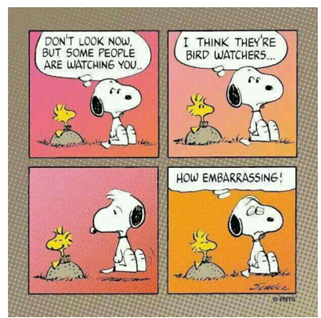
Disponível em: https://br.pinterest.com/pin/517351075939755329/visualsearch/?x=220&y=26&w=203&h=197&cropSource=9&rs=deep_linking Acesso em: 30 de outubro de 2025
A estrutura linguística "How embarassing!" constrói o significado:
Ano: 2026
Banca:
NUCEPE
Órgão:
Prefeitura de Teresina - PI
Prova:
NUCEPE - 2026 - Prefeitura de Teresina - PI - Professor de Língua inglesa |
Q4013490
Inglês
Texto associado
Texto para a questão.
Growing Up With A.I.: A Multimedia Challenge for Teenagers and Educators
Show us - in words or images, audio or video - how this technology is affecting you and the teenagers
you know. Contest dates: Sept. 10-Oct. 22, 2025.
What's it like to think, create, teach and learn at a time when artificial intelligence is transforming our
world?
What do you think its rise will mean for the generation in high school now?
This fall, we invite students and educators to explore these questions, and then show - in words or
images, audio or video - how this technology is affecting you and the teenagers you know.
We know we don't have to explain to anyone in a classroom today just how profoundly generative A.I.
has changed life in and out of school since ChatGPT was released in late 2022. Our goal, instead, is to
learn from you, our core audience of middle and secondary students and teachers.
What is it like to grow up alongside A.I.? How, if at all, have you used it? What about it is surprising,.
interesting or exciting? What is concerning, perplexing, scary - or even boring? What do you wish more
people understood? What can you show or tell from your unique point of view that might add nuance to
the conversation?
We can't wait to see what you'll make. Click on the topic headings below for more resources and details,
and review the full rules here. You might also consider hanging this one-page announcement on your
class bulletin board.
Questions? Post a comment here or write to us at [email protected].
(...)
The Challenge
This contest asks you to address one or both of these focus questions:
• What's it like to think, create, teach and learn at a time when artificial intelligence is transforming our
world?
• What do you think its rise will mean for the generation in high school now?
How you address them is up to you. You can take on any aspect of the topic, big or small, negative or
positive. You can focus on your life in or out of school, and you can work alone or with others.
Disponível em: https://www.nytimes.com/2025/09/05/learning/growing-up-with-ai-a-multimedia-challenge-for-teenagers-andeducators.html?smid=nytcore-android-share. (adaptado) Acesso em: 30 outubro 2025
Na sentença "What's it like to think, create, teach and learn at a time when artificial intelligence
transforming our world?", presente na quarta linha do texto, a palavra "like” exprime
Ano: 2022
Banca:
BRB
Órgão:
Prefeitura de Sapeaçu - BA
Prova:
BRB - 2022 - Prefeitura de Sapeaçu - BA - Professor de Línguas (Inglês) |
Q4009855
Inglês
Texto associado
Embrace what may be the most important green technology
ever. It could save us all
Let’s focus for a moment on technology. Specifically, what might be the
most important environmental technology ever developed: precision
fermentation.
Precision fermentation is a refined form of brewing, a means of
multiplying microbes to create specific products. It has been used for
many years to produce drugs and food additives. But now, in several
labs and a few factories, scientists are developing what could be a new
generation of staple foods.
The developments I find most interesting use no agricultural raw
material.
The microbes they breed feed on hydrogen or methanol –
which can be made with renewable electricity – combined with water,
carbon dioxide and a very small amount of fertilizer. They produce a
flour that contains roughly 60% protein, a much higher concentration
than any major crop can achieve (soy beans contain 37%, chick peas,
20%). When they are bred to produce specific proteins and fats, they
can create much better replacements than plant products for meat, fish,
milk and eggs. And they have the potential to do two astonishing things.
Source (Adapted): https://www.theguardian.com/commentisfree/2022/nov/24/green-technology-precisionfermentation-farming
The word “roughly” can be replaced by:
Ano: 2022
Banca:
Instituto Access
Órgão:
Prefeitura de Ribeirão Preto - SP
Prova:
Instituto Access - 2022 - Prefeitura de Ribeirão Preto - SP - Professor de Educação Básica III - Inglês |
Q4009150
Inglês
Atualmente, utilizar o material extraído da “social media” pode
ser considerado uma das formas mais efetivas para ensinar e
aprender vocabulário da Língua Inglesa e representa o seguinte
recurso:
Ano: 2022
Banca:
AMAUC
Órgão:
Prefeitura de Piratuba - SC
Prova:
AMAUC - 2022 - Prefeitura de Piratuba - SC - Professor Ensino Infantil e Ensino Fundamental I e II - Inglês |
Q4008697
Inglês
Consider the sentences below.
I.___________, I have been living with my parents.
II.I have an ___________ with a___________.
Choose the right option that best completes the sentences:
I.___________, I have been living with my parents.
II.I have an ___________ with a___________.
Choose the right option that best completes the sentences:
Ano: 2022
Banca:
AMAUC
Órgão:
Prefeitura de Piratuba - SC
Prova:
AMAUC - 2022 - Prefeitura de Piratuba - SC - Professor Ensino Infantil e Ensino Fundamental I e II - Inglês |
Q4008694
Inglês
Identify the pairs of words as "Homophones" or "Homonyms".
I.Poor - Pour.
II.Tire - Tire.
III.Two - Too.
Choose the correct alternative.
Ano: 2022
Banca:
AMEOSC
Órgão:
Prefeitura de Iporã - PR
Prova:
AMEOSC - 2022 - Prefeitura de Iporã - PR - Professor de Inglês |
Q4008258
Inglês
Texto associado
(1º§)According to hacking news website GBHackers, two
bugs discovered by researchers could let attackers take
control of people's accounts. WhatsApp has fixed the two
"critical" security threats, which affect both the Android
and iOS versions of the chat app.
(2º§)However, if you've not updated to the latest version
of the app, you are still vulnerable. "Both vulnerabilities
are marked under 'critical' severity ... and were found by
the WhatsApp internal security team," GBHackers wrote.
(3º§)They added that hackers could exploit the flaws to
hack your device using a dodgy video file or when on a
video call. Once they've gained access to your phone,
they could launch malware, steal sensitive data or even
take control of the device.
(4º§)WhatsApp confirmed that it had fixed the bugs in an
alert on its website. It named them CVE-2022-36934 and
CVE-2022-27492.
(5º§)Details on the vulnerabilities are scarce in order to
not give too much information away to crooks before
users have updated. However, WhatsApp said that the
exploitation of CVE-2022-36934 "could result in remote
code execution in an established video call."
CVE-2022-27492, on the other hand, "could have caused
remote code execution when receiving a crafted video
file."
(6º§)To protect yourself, make sure you're using the
latest version of WhatsApp. To update your iPhone go to
the Settings app and then press General.
(7º§)The next step is to select Software Update and your
device should then meet the new requirements. If you
use an Android, open Settings and select About Phone.
(8º§)Then press Check for Updates and if an update is
available, a button will appear which says Update. After
selecting Install Now, Reboot, or Install System Software,
you should be good to go.
https://www.thesun.co.uk/tech/19929691/
Consider the following assertives:
I.The word "reboot" (8º§) could be translated as "reiniciar".
II.The word "update" (6º§) can be an adverb.
III.The word "flaws" (3º§) could be replaced by "glee".
Which one(s) is(are) CORRECT?
I.The word "reboot" (8º§) could be translated as "reiniciar".
II.The word "update" (6º§) can be an adverb.
III.The word "flaws" (3º§) could be replaced by "glee".
Which one(s) is(are) CORRECT?
Ano: 2022
Banca:
LJ Assessoria e Planejamento Administrativo Limita
Órgão:
Prefeitura de Buriticupu - MA
Prova:
LJ Assessoria e Planejamento Administrativo Limita - 2022 - Prefeitura de Buriticupu - MA - Professor Ensino Fundamental - Inglês |
Q4006647
Inglês
Choose the CORRECT answer.
“She is an amazing writer. Her first book _________ in 2005.”
Ano: 2022
Banca:
LJ Assessoria e Planejamento Administrativo Limita
Órgão:
Prefeitura de Buriticupu - MA
Prova:
LJ Assessoria e Planejamento Administrativo Limita - 2022 - Prefeitura de Buriticupu - MA - Professor Ensino Fundamental - Inglês |
Q4006642
Inglês
Which noun does not have the correct
definition? Choose the INCORRECT answer.
Ano: 2022
Banca:
LJ Assessoria e Planejamento Administrativo Limita
Órgão:
Prefeitura de Buriticupu - MA
Prova:
LJ Assessoria e Planejamento Administrativo Limita - 2022 - Prefeitura de Buriticupu - MA - Professor Ensino Fundamental - Inglês |
Q4006641
Inglês
Look at the map below and complete the
sentence with the correct word. Choose the CORRECT
answer.
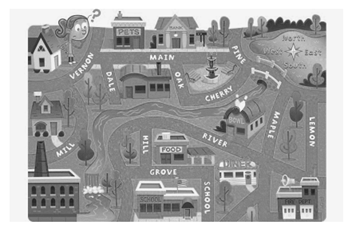
The _________ is on the corner of Maple and River Street.”
The _________ is on the corner of Maple and River Street.”
Ano: 2026
Banca:
FGV
Órgão:
Prefeitura de São José dos Campos - SP
Prova:
FGV - 2026 - Prefeitura de São José dos Campos - SP - Professor II - Inglês |
Q3998590
Inglês
Texto associado
Read Text V and answer the question that follows.
Text V
Structural and pedagogical problems
hinder the use of technology
Three out of four teachers in Brazil show support for the use
of artificial intelligence (AI) as a teaching tool. They also say that
the technology has impacted education both positively, with faster
access to information, and negatively, as students lose their focus.
The data can be found in an unprecedented survey by Semesp
Institute, an organization that represents higher education
providers. The study was carried out between March 18 and 31
with 444 public and private school teachers from kindergarten to
high school located in all regions of Brazil.
In the study, 74.8 percent of respondents partially or totally
agree with the use of artificial intelligence in teaching. Despite this,
just over a third (39.2%) of them said they always use it as a
teaching tool.
Even though educators believe it is important to use AI, they
also report structural and pedagogical problems that prevent or
hinder its employment. Further issues were reported in
connection with its excessive use, especially by pupils. Among
these problems are the lack of internet at school, the lack of
training for teachers and also greater difficulty in holding students’
attention.
“I sense students have become more dependent on research
tools and immediate answers and have a hard time having
resilience and patience and acting as problem solvers,” an
anonymous teacher who took part in the survey said.
Another one said: “Technology has advanced, but sometimes
access to it at school is not satisfactory. Poor internet connection.
The computer lab is a restricted space. No Microsoft Office in the
mobile lab. The use of cell phones is impractical as students have
no internet. Now, even the internet is restricted to teachers.”
Just under half of the teachers (45.7%) declared that both
teachers and students have access to computers and the internet
where they teach. Another seven percent answered there is still
no access to technology in their schools.
Teachers also report that technology has made students lose
their focus. “The school can’t keep up with the use of new technologies at the speed that the students can, which leads to a
mismatch between the lesson taught and the lesson that the
students want. The unbridled use of social media and the high level
of exposure of young people to these networks have undermined
teachers’ contact with students,” one of the teachers stated.
From: https://agenciabrasil.ebc.com.br/en/educacao/noticia/2024-05/three-outfour-teachers-brazil-advocate-ai-teaching-tool
The opposite of “faster access” (1st paragraph) is:
Ano: 2026
Banca:
FGV
Órgão:
Prefeitura de São José dos Campos - SP
Prova:
FGV - 2026 - Prefeitura de São José dos Campos - SP - Professor II - Inglês |
Q3998588
Inglês
Texto associado
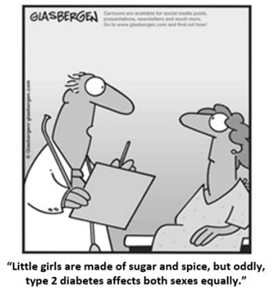
Read Text IV and answer the following question.
Text IV
From: https://www.linkedin.com/posts/randy-glasbergen-a5a67b7_want-to-sharecartoon-of-the-day-go-ahead-activity-7105889187869966336-s6Jl/
The adverb “oddly” means that the physician is expressing
something he finds:
Ano: 2026
Banca:
FGV
Órgão:
Prefeitura de São José dos Campos - SP
Prova:
FGV - 2026 - Prefeitura de São José dos Campos - SP - Professor II - Inglês |
Q3998585
Inglês
Texto associado
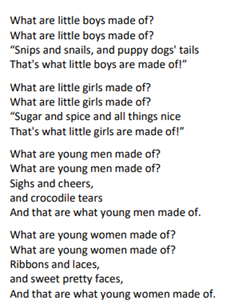
Read Text III and answer the following question.
Text III
Adapted from https://nurseryrhymescollections.com
/lyrics/what-are-little-boys-made-of.html
In this nursery rhyme, the phrase “Ribbons and laces” translates a
notion of:
Ano: 2026
Banca:
FGV
Órgão:
Prefeitura de São José dos Campos - SP
Prova:
FGV - 2026 - Prefeitura de São José dos Campos - SP - Professor II - Inglês |
Q3998583
Inglês
Texto associado
Read Text III and answer the following question.
Text III
Adapted from https://nurseryrhymescollections.com
/lyrics/what-are-little-boys-made-of.html
“Crocodile tears” helps define young men as being:
Ano: 2026
Banca:
FGV
Órgão:
Prefeitura de São José dos Campos - SP
Prova:
FGV - 2026 - Prefeitura de São José dos Campos - SP - Professor II - Inglês |
Q3998580
Inglês
Texto associado
Read Text II and answer the following question.
Text II
They were nearly born on a bus, Estha and Rahel. The car in
which Babà, their father, was taking Ammu, their mother, to
hospital in Shillong to have them, broke down on the winding teaestate road in Assam. They abandoned the car and flagged down a
crowded State Transport bus. With the queer compassion of the
very poor for the comparatively well off, or perhaps only because
they saw how hugely pregnant Ammu was, seated passengers
made room for the couple, and for the rest of the journey Estha
and Rahel’s father had to hold their mother’s stomach (with them
in it) to prevent it from wobbling. That was before they were
divorced and Ammu came back to live in Kerala.
According to Estha, if they’d been born on the bus, they’d have
got free bus rides for the rest of their lives. It wasn’t clear where
he’d got this information from, or how he knew these things, but
for years the twins harbored a faint resentment against their
parents for having diddled them out of a lifetime of free bus rides.
From: https://www.penguinrandomhouse.ca/books/158400/the-god-of-smallthings-by-arundhati-roy/9780735273283/excerpt
The phrase “the comparatively well off” (1st paragraph) refers to
those who are:
Ano: 2026
Banca:
FGV
Órgão:
Prefeitura de São José dos Campos - SP
Prova:
FGV - 2026 - Prefeitura de São José dos Campos - SP - Professor II - Inglês |
Q3998578
Inglês
Texto associado
Read Text II and answer the following question.
Text II
They were nearly born on a bus, Estha and Rahel. The car in
which Babà, their father, was taking Ammu, their mother, to
hospital in Shillong to have them, broke down on the winding teaestate road in Assam. They abandoned the car and flagged down a
crowded State Transport bus. With the queer compassion of the
very poor for the comparatively well off, or perhaps only because
they saw how hugely pregnant Ammu was, seated passengers
made room for the couple, and for the rest of the journey Estha
and Rahel’s father had to hold their mother’s stomach (with them
in it) to prevent it from wobbling. That was before they were
divorced and Ammu came back to live in Kerala.
According to Estha, if they’d been born on the bus, they’d have
got free bus rides for the rest of their lives. It wasn’t clear where
he’d got this information from, or how he knew these things, but
for years the twins harbored a faint resentment against their
parents for having diddled them out of a lifetime of free bus rides.
From: https://www.penguinrandomhouse.ca/books/158400/the-god-of-smallthings-by-arundhati-roy/9780735273283/excerpt
The phrase “winding estate road” (1st paragraph) describes the
road as being:
Ano: 2026
Banca:
FGV
Órgão:
Prefeitura de São José dos Campos - SP
Prova:
FGV - 2026 - Prefeitura de São José dos Campos - SP - Professor II - Inglês |
Q3998577
Inglês
Texto associado
Read Text II and answer the following question.
Text II
They were nearly born on a bus, Estha and Rahel. The car in
which Babà, their father, was taking Ammu, their mother, to
hospital in Shillong to have them, broke down on the winding teaestate road in Assam. They abandoned the car and flagged down a
crowded State Transport bus. With the queer compassion of the
very poor for the comparatively well off, or perhaps only because
they saw how hugely pregnant Ammu was, seated passengers
made room for the couple, and for the rest of the journey Estha
and Rahel’s father had to hold their mother’s stomach (with them
in it) to prevent it from wobbling. That was before they were
divorced and Ammu came back to live in Kerala.
According to Estha, if they’d been born on the bus, they’d have
got free bus rides for the rest of their lives. It wasn’t clear where
he’d got this information from, or how he knew these things, but
for years the twins harbored a faint resentment against their
parents for having diddled them out of a lifetime of free bus rides.
From: https://www.penguinrandomhouse.ca/books/158400/the-god-of-smallthings-by-arundhati-roy/9780735273283/excerpt
The idiom in “seated passengers made room for the couple”
(1st paragraph) means the passengers:
Ano: 2026
Banca:
FGV
Órgão:
Prefeitura de São José dos Campos - SP
Prova:
FGV - 2026 - Prefeitura de São José dos Campos - SP - Professor II - Inglês |
Q3998574
Inglês
Texto associado
Read Text I and answer the question that follows.
Text I
Multiliteracy: the new basic skill for the 21st century classroom
We increasingly engage with texts that draw meaning beyond
written words from other sources. Images, sound, video clips and
gestures (alone and in combination) all play central roles in how
we communicate and interpret content.
This multimedia approach is especially evident in online
platforms and social media, where a single piece of content may
blend written language with videos, graphics, photos and other
visual elements. This change requires us to rethink what we mean
by literacy.
Nearly 30 years ago, a group of scholars, the New London
Group, recognised the need for a broader understanding of
literacy after observing a growing gap between the literacy needs
students faced outside of school and the print-based practices still
dominant in classrooms.
They introduced a concept of multiliteracies which
acknowledges that we now engage with texts that use multiple
modes of communication. We engage with these texts in different
media environments, each with their own practices and strategies.
The concept incorporates the literacy skills needed to acquire,
interpret, produce and evaluate the multimodal and multimedia
texts we encounter today.
For literacy education, this shift means updating classroom
aims, content and activities. The group developed a pedagogical
framework to help schools respond to the growing inequalities and
rapid changes in technology and the textual landscape.
The process starts with examining pupils’ everyday literacy
practices and experiences together. Then these practices are
approached analytically by introducing a metalanguage for
discussing the resources they use to create meaning. Students can
use this metalanguage to critically evaluate their literacy practices
which helps them understand how different modes of
communication work and how to use them effectively.
The pedagogy of multiliteracies also emphasises the design
and production of multimodal texts and collaborative learning in
linguistically and culturally diverse groups, rather than individual
reading activities. […]
Multiliteracies are already included in many European
curricula, and the European framework for key competencies for
lifelong learning defines literacy in a way that aligns with the
concept of multiliteracies. These policy documents and guidelines
provide a foundation for integrating multiliteracies into literacy
education.
Yet, research shows that there is still work to be done to
incorporate teaching multimodal literacy practices into
mainstream literacy education. While many teachers do include
multimodal texts in their classroom activities, tensions between
multimodal and traditional practices still exist.
Studies point out the huge challenges teachers face when they
adapt their teaching to the redefined literacies, and there are
concerns about teachers’ preparedness to teach multiliteracies.
They need support with training and appropriate materials. Teacher educators and policy makers must ensure that teachers
have substantial and concrete support.
Adapted from https://school-education.ec.europa.eu/en/discover/expertviews/multiliteracy-new-basic-skill-21st-century-classroom
The phrasal verb in “Studies point out the huge challenges” (last
paragraph) is similar in meaning to:

 Conheça nossos planos