Questões de Concurso Sobre vocabulário | vocabulary em inglês

Foram encontradas 3.111 questões

Q3929653 Inglês
Text 1A3-II


       The argument for the existence of life in different places in the universe can lead to endless and aimless (but fascinating) speculation. Why assume that aliens so far advanced technologically are still bound by the chains of aging bodies? As we see our own technology advancing, and our minds becoming ever more entangled with digital devices, we can envision a kind of transhuman future whereby our mind’s essence, what we (loosely) identify with our inner self and memories, becomes immaterial, soullike, tethered to reality through information alone. In his novel 2001: A Space Odyssey, Arthur C. Clarke speculated that aliens would have broken away from carbon-based and robotic machine structures so “that the mind would eventually free itself from matter (…) and if there is anything beyond that, its name could only be God.”

       This is where astrotheology begins, as we envision aliens as the techno-version of godlike creatures, with the obvious subtext that one day we are going to get there too. So, not only is their technology magic to us, but their very existence becomes equivalent to a supernatural presence — omniscient, omnipresent, and undetectable by our feeble human senses and machines. Such aliens are indistinguishable from gods inhabiting the heavenly realm, being as elusive as countless deities have been throughout human history. They exist only in that intangible dimension of faith.


Marcelo Gleiser. The dawn of a mindful universe: a manifesto for humanity’s future. HarperOne, San Francisco (CA) (adapted). 
The word “envision”, in “as we envision aliens” (first sentence of the second paragraph of text 1A3-II), has a similar meaning to 
Alternativas
Q3929647 Inglês
Text 1A3-I


       Art and technology have long inspired each other, but recent advancements are driving their fusion like never before. From AI-generated art and immersive experiences to new ownership models, the creative landscape is evolving in ways we could barely imagine a few years ago. This fusion of creativity and innovation isn’t just adding to the world of art. It’s redefining it, making us rethink what art can be and who has the tools to create it. One such innovation is interactive art.

      With interactive art, artists can break down traditional boundaries between the creator and the viewer. Participatory art involves the audience directly, allowing them to influence the outcome of the artwork itself. Artists are using technologies like motion tracking, sensors, and facial recognition to create installations that change based on viewer movement, expression, or even mood.

     This level of interactivity invites viewers to move from passive observation to active participation, making them a part of the artwork’s story. This trend reflects a cultural shift toward collaboration and personalization, where audiences expect to be involved in the creative experience. Participatory art installations are not only transforming gallery experiences but also allowing viewers to experience art as an unfolding story that changes with each interaction. 

Petra Ivanigova. The Future of Art and Technology:
Key Trends Shaping the Creative Landscape. Internet: <https://medium.com> (adapted). 

Choose the option in which is presented a word that could correctly replace “barely” in the second sentence of the first paragraph, without changing the original meaning of text 1A3-I.  
Alternativas
Q3914181 Inglês

Considere o texto a seguir para responder a questão:  


In the sentence “Moravian sugar cake is a pillowy cake-bread hybrid”, the word pillowy most nearly means:
Alternativas
Q3895085 Inglês
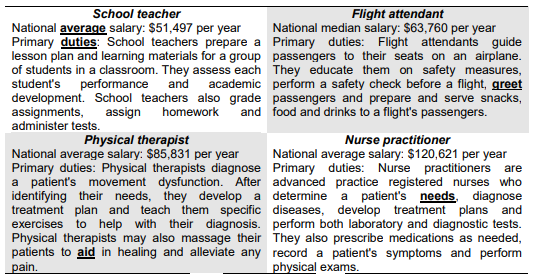
In learning English vocabulary, it is common to find words that resemble Portuguese but have different meanings, known as false cognates. Mark T for true statements and F for false ones regarding the meanings of the English words:

(__) "Library" means library, not bookstore.
(__) "Parents" refers to father and mother, not to relatives in general.
(__) "Pretend" means to intend or plan to do something.
(__) "Actually" means currently or at the present time.

Select the alternative that shows the correct sequence from top to bottom.
Alternativas
Q3891732 Inglês
Relate the concept of hyponymy in English lexical relations and choose the correct alternative.
Alternativas
Q3891726 Inglês
Read the following sentence: "In many modern cities, fast-food restaurants are ubiquitous." 

Choose the option that best explains the meaning of the word ubiquitous as used in this sentence.
Alternativas
Q3891725 Inglês
Read the following sentence: "The researchers decided to conduct a survey to gather data about consumer preferences." 

Choose the option that best explains the meaning of the word conduct as used in this sentence. 
Alternativas
Q3889303 Inglês

Look at the poster below: 


Imagem associada para resolução da questão


(Available on: https://x.com/CrypticArtifact/. Accessed on: October 2025.)


Library Pictures” is a song by the British band Arctic Monkeys, included in their album Suck It and See. As to its contextualized meaning, the concept that fits the word library is: 

Alternativas
Q3848290 Inglês
O texto seguinte servirá de base para responder à questão.


Downstream: Refining and Marketing

While refining is a complex process, the goal is straightforward: to take crude oil, which is virtually unusable in its natural state, and transform it into petroleum products used for a variety of purposes such as heating homes, fueling vehicles and making petrochemical plastics. Wolcott, Marion Post. Barnsdall oil refinery. Kansas, 1941.

texto_11-15.png (438×322)

Wolcott, Marion Post. Barnsdall oil refinery. Kansas, 1941. 


A number of processes are involved in refining depending on the wanted end product. Hydrotreating is used to remove unwanted elements, such as sulphur and nitrogen from hydrocarbons; cracking breaks molecules into smaller fragments to produce gasoline and other lighter hydrocarbons. The gases produced by cracking are used to create other products like synthetic rubber and plastics. When making gasoline, refiners need high octane numbers to prevent engine knocking. Despite knowing the dangers of lead, tetraethyl lead was added to gasoline in the United States in the 1920s in order to increase the octane. Since the U.S. government banned lead in vehicle gasoline in 1996 as part of the U.S. Clean Air Act, refineries use alkylation and reforming to develop high-octane gasoline.


(From Oil and Gas Industry: A Research Guide, Library of Congress https://guides.loc.gov/oil-and-gas-industry/downstream, accessed on February 19th, 2025)
Phrasal verbs are expressions made up of a verb with a preposition or adverb or both, that together act as a completely new verb with a meaning separate from those of the original words.
Identify the appropriate phrasal verb, which covers the same meaning of to increase in (...) tetraethyl lead was added to gasoline in the United States in the 1920s in order to increase the octane
Alternativas
Q3845450 Inglês
O texto seguinte servirá de base para responder à questão.


Downstream: Refining and Marketing

While refining is a complex process, the goal is straightforward: to take crude oil, which is virtually unusable in its natural state, and transform it into petroleum products used for a variety of purposes such as heating homes, fueling vehicles and making petrochemical plastics. Wolcott, Marion Post. Barnsdall oil refinery. Kansas, 1941.

texto_11-15.png (438×322)

Wolcott, Marion Post. Barnsdall oil refinery. Kansas, 1941. 


A number of processes are involved in refining depending on the wanted end product. Hydrotreating is used to remove unwanted elements, such as sulphur and nitrogen from hydrocarbons; cracking breaks molecules into smaller fragments to produce gasoline and other lighter hydrocarbons. The gases produced by cracking are used to create other products like synthetic rubber and plastics. When making gasoline, refiners need high octane numbers to prevent engine knocking. Despite knowing the dangers of lead, tetraethyl lead was added to gasoline in the United States in the 1920s in order to increase the octane. Since the U.S. government banned lead in vehicle gasoline in 1996 as part of the U.S. Clean Air Act, refineries use alkylation and reforming to develop high-octane gasoline.


(From Oil and Gas Industry: A Research Guide, Library of Congress https://guides.loc.gov/oil-and-gas-industry/downstream, accessed on February 19th, 2025)
Phrasal verbs are expressions made up of a verb with a preposition or adverb or both, that together act as a completely new verb with a meaning separate from those of the original words.
Identify the appropriate phrasal verb, which covers the same meaning of to increase in (...) tetraethyl lead was added to gasoline in the United States in the 1920s in order to increase the octane
Alternativas
Q3845338 Inglês
O texto seguinte servirá de base para responder a questão.

Biden administration, in its last days, proposes new protections for Arctic Alaska land

imagem_1.jpg (381×223)

Lakes and connecting streams in the northeastern part of the National Petroleum Reserve in Alaska, June 2014.

Four days before President Joe Biden is set to leave office, his administration recommended that about 3 million more acres in Alaska's western Arctic be protected from development and issued a guideline, effective immediately, requiring additional protections for traditional Native subsistence harvests of fish, caribou and other resources.

The new recommendations and guidance, which apply to the 23-million-acre National Petroleum Reserve in Alaska, run counter to President-elect Donald Trump's expressed plans to expand oil drilling in the Arctic and elsewhere and to overturn Biden administration environmental policies more broadly. 

The recommendations for additional land to be protected as part of what are termed "special areas" and the guidance for elevating the importance of subsistence and tribal consultation could be ignored or scrapped by the incoming Trump administration.

The northeastern part of the reserve is the area considered most likely to hold oil and where development has spread in recent years. There is already production in that area, and the most notable production expected in the future is from ConocoPhillips' Willow project. Willow won Biden administration approval in 2023. Production is expected to start by the end of the decade and peak at 180,000 barrels per day; current production from all North Slope fields amounts to less than 470,000 barrels per day.

Like the existing Teshekpuk special area, which holds important habitat for caribou, fish and migratory birds, the village of Nuiqsut is in the general area of the reserve's northeastern corner, where new oil development has occurred. Nuiqsut is so close that oilfield infrastructure can be seen from the village.

texto_1.jpg (352×229)

Pipelines extend across the landscape outside Nuiqsut, Alaska, May 2019.

"But at the same time, I think we and our partners have also made it abundantly clear that we're going to keep fighting, and keep fighting for protections in the Western Arctic," she said.

(From ROSEN, Yereth. Biden administration, in its last days, proposes new protections for Arctic Alaska land, Alaska Beacon, January 17, 2025. In alaskabeacon.com/2025/01/17/biden-administration-in-its-last-days-pro poses-new-protections-for-arctic-alaska-land/, accessed on February 19th, 2025)
The term likely in the area considered most likely to hold oil (line 12) means:
Alternativas
Q3845267 Inglês
O texto seguinte servirá de base para responder a questão.

Biden administration, in its last days, proposes new protections for Arctic Alaska land

imagem_1.jpg (381×223)

Lakes and connecting streams in the northeastern part of the National Petroleum Reserve in Alaska, June 2014.

Four days before President Joe Biden is set to leave office, his administration recommended that about 3 million more acres in Alaska's western Arctic be protected from development and issued a guideline, effective immediately, requiring additional protections for traditional Native subsistence harvests of fish, caribou and other resources.

The new recommendations and guidance, which apply to the 23-million-acre National Petroleum Reserve in Alaska, run counter to President-elect Donald Trump's expressed plans to expand oil drilling in the Arctic and elsewhere and to overturn Biden administration environmental policies more broadly. 

The recommendations for additional land to be protected as part of what are termed "special areas" and the guidance for elevating the importance of subsistence and tribal consultation could be ignored or scrapped by the incoming Trump administration.

The northeastern part of the reserve is the area considered most likely to hold oil and where development has spread in recent years. There is already production in that area, and the most notable production expected in the future is from ConocoPhillips' Willow project. Willow won Biden administration approval in 2023. Production is expected to start by the end of the decade and peak at 180,000 barrels per day; current production from all North Slope fields amounts to less than 470,000 barrels per day.

Like the existing Teshekpuk special area, which holds important habitat for caribou, fish and migratory birds, the village of Nuiqsut is in the general area of the reserve's northeastern corner, where new oil development has occurred. Nuiqsut is so close that oilfield infrastructure can be seen from the village.

texto_1.jpg (352×229)

Pipelines extend across the landscape outside Nuiqsut, Alaska, May 2019.

"But at the same time, I think we and our partners have also made it abundantly clear that we're going to keep fighting, and keep fighting for protections in the Western Arctic," she said.

(From ROSEN, Yereth. Biden administration, in its last days, proposes new protections for Arctic Alaska land, Alaska Beacon, January 17, 2025. In alaskabeacon.com/2025/01/17/biden-administration-in-its-last-days-pro poses-new-protections-for-arctic-alaska-land/, accessed on February 19th, 2025)


The term likely in the area considered most likely to hold oil (line 12) means:
Alternativas
Q3845091 Inglês
O texto seguinte servirá de base para responder a questão.

Biden administration, in its last days, proposes new protections for Arctic Alaska land

imagem_1.jpg (381×223)

Lakes and connecting streams in the northeastern part of the National Petroleum Reserve in Alaska, June 2014.

Four days before President Joe Biden is set to leave office, his administration recommended that about 3 million more acres in Alaska's western Arctic be protected from development and issued a guideline, effective immediately, requiring additional protections for traditional Native subsistence harvests of fish, caribou and other resources.

The new recommendations and guidance, which apply to the 23-million-acre National Petroleum Reserve in Alaska, run counter to President-elect Donald Trump's expressed plans to expand oil drilling in the Arctic and elsewhere and to overturn Biden administration environmental policies more broadly. 

The recommendations for additional land to be protected as part of what are termed "special areas" and the guidance for elevating the importance of subsistence and tribal consultation could be ignored or scrapped by the incoming Trump administration.

The northeastern part of the reserve is the area considered most likely to hold oil and where development has spread in recent years. There is already production in that area, and the most notable production expected in the future is from ConocoPhillips' Willow project. Willow won Biden administration approval in 2023. Production is expected to start by the end of the decade and peak at 180,000 barrels per day; current production from all North Slope fields amounts to less than 470,000 barrels per day.

Like the existing Teshekpuk special area, which holds important habitat for caribou, fish and migratory birds, the village of Nuiqsut is in the general area of the reserve's northeastern corner, where new oil development has occurred. Nuiqsut is so close that oilfield infrastructure can be seen from the village.

texto_1.jpg (352×229)

Pipelines extend across the landscape outside Nuiqsut, Alaska, May 2019.

"But at the same time, I think we and our partners have also made it abundantly clear that we're going to keep fighting, and keep fighting for protections in the Western Arctic," she said.

(From ROSEN, Yereth. Biden administration, in its last days, proposes new protections for Arctic Alaska land, Alaska Beacon, January 17, 2025. In alaskabeacon.com/2025/01/17/biden-administration-in-its-last-days-pro poses-new-protections-for-arctic-alaska-land/, accessed on February 19th, 2025)


The term likely in the area considered most likely to hold oil (line 12) means:
Alternativas
Q3843726 Inglês
O texto seguinte servirá de base para responder a questão.

Biden administration, in its last days, proposes new protections for Arctic Alaska land

imagem_1.jpg (381×223)

Lakes and connecting streams in the northeastern part of the National Petroleum Reserve in Alaska, June 2014.

Four days before President Joe Biden is set to leave office, his administration recommended that about 3 million more acres in Alaska's western Arctic be protected from development and issued a guideline, effective immediately, requiring additional protections for traditional Native subsistence harvests of fish, caribou and other resources.

The new recommendations and guidance, which apply to the 23-million-acre National Petroleum Reserve in Alaska, run counter to President-elect Donald Trump's expressed plans to expand oil drilling in the Arctic and elsewhere and to overturn Biden administration environmental policies more broadly. 

The recommendations for additional land to be protected as part of what are termed "special areas" and the guidance for elevating the importance of subsistence and tribal consultation could be ignored or scrapped by the incoming Trump administration.

The northeastern part of the reserve is the area considered most likely to hold oil and where development has spread in recent years. There is already production in that area, and the most notable production expected in the future is from ConocoPhillips' Willow project. Willow won Biden administration approval in 2023. Production is expected to start by the end of the decade and peak at 180,000 barrels per day; current production from all North Slope fields amounts to less than 470,000 barrels per day.

Like the existing Teshekpuk special area, which holds important habitat for caribou, fish and migratory birds, the village of Nuiqsut is in the general area of the reserve's northeastern corner, where new oil development has occurred. Nuiqsut is so close that oilfield infrastructure can be seen from the village.

texto_1.jpg (352×229)

Pipelines extend across the landscape outside Nuiqsut, Alaska, May 2019.

"But at the same time, I think we and our partners have also made it abundantly clear that we're going to keep fighting, and keep fighting for protections in the Western Arctic," she said.

(From ROSEN, Yereth. Biden administration, in its last days, proposes new protections for Arctic Alaska land, Alaska Beacon, January 17, 2025. In alaskabeacon.com/2025/01/17/biden-administration-in-its-last-days-pro poses-new-protections-for-arctic-alaska-land/, accessed on February 19th, 2025)
The term likely in the area considered most likely to hold oil (line 12) means:
Alternativas
Q3842922 Inglês

O texto seguinte servirá de base para responder à questão.


Biden administration, in its last days, proposes new protections for Arctic Alaska land


Lakes and connecting streams in the northeastern part of the National Petroleum Reserve in Alaska, June 2014.


Four days before President Joe Biden is set to leave office, his administration recommended that about 3 million more acres in Alaska's western Arctic be protected from development and issued a guideline, effective immediately, requiring additional protections for traditional Native subsistence harvests of fish, caribou and other resources.


The new recommendations and guidance, which apply to the 23-million-acre National Petroleum Reserve in Alaska, run counter to President-elect Donald Trump's expressed plans to expand oil drilling in the Arctic and elsewhere and to overturn Biden administration environmental policies more broadly.


The recommendations for additional land to be protected as part of what are termed "special areas" and the guidance for elevating the importance of subsistence and tribal consultation could be ignored or scrapped by the incoming Trump administration.


The northeastern part of the reserve is the area considered most likely to hold oil and where development has spread in recent years. There is already production in that area, and the most notable production expected in the future is from ConocoPhillips' Willow project. Willow won Biden administration approval in 2023. Production is expected to start by the end of the decade and peak at 180,000 barrels per day; current production from all North Slope fields amounts to less than 470,000 barrels per day.


Like the existing Teshekpuk special area, which holds important habitat for caribou, fish and migratory birds, the village of Nuiqsut is in the general area of the reserve's northeastern corner, where new oil development has occurred. Nuiqsut is so close that oilfield infrastructure can be seen from the village.


Pipelines extend across the landscape outside Nuiqsut, Alaska, May 2019.


"But at the same time, I think we and our partners have also made it abundantly clear that we're going to keep fighting, and keep fighting for protections in the Western Arctic," she said.


(From ROSEN, Yereth. Biden administration, in its last days, proposes new protections for Arctic Alaska land, Alaska Beacon, January 17, 2025. In alaskabeacon.com/2025/01/17/biden-administration-in-its-last-days-pro poses-new-protections-for-arctic-alaska-land/, accessed on February 19th, 2025)


The term likely in the area considered most likely to hold oil (line 12) means: 
Alternativas
Q3842866 Inglês

O texto seguinte servirá de base para responder à questão.


Biden administration, in its last days, proposes new protections for Arctic Alaska land


Lakes and connecting streams in the northeastern part of the National Petroleum Reserve in Alaska, June 2014.


Four days before President Joe Biden is set to leave office, his administration recommended that about 3 million more acres in Alaska's western Arctic be protected from development and issued a guideline, effective immediately, requiring additional protections for traditional Native subsistence harvests of fish, caribou and other resources.


The new recommendations and guidance, which apply to the 23-million-acre National Petroleum Reserve in Alaska, run counter to President-elect Donald Trump's expressed plans to expand oil drilling in the Arctic and elsewhere and to overturn Biden administration environmental policies more broadly.


The recommendations for additional land to be protected as part of what are termed "special areas" and the guidance for elevating the importance of subsistence and tribal consultation could be ignored or scrapped by the incoming Trump administration.


The northeastern part of the reserve is the area considered most likely to hold oil and where development has spread in recent years. There is already production in that area, and the most notable production expected in the future is from ConocoPhillips' Willow project. Willow won Biden administration approval in 2023. Production is expected to start by the end of the decade and peak at 180,000 barrels per day; current production from all North Slope fields amounts to less than 470,000 barrels per day.


Like the existing Teshekpuk special area, which holds important habitat for caribou, fish and migratory birds, the village of Nuiqsut is in the general area of the reserve's northeastern corner, where new oil development has occurred. Nuiqsut is so close that oilfield infrastructure can be seen from the village.


Pipelines extend across the landscape outside Nuiqsut, Alaska, May 2019.


"But at the same time, I think we and our partners have also made it abundantly clear that we're going to keep fighting, and keep fighting for protections in the Western Arctic," she said.


(From ROSEN, Yereth. Biden administration, in its last days, proposes new protections for Arctic Alaska land, Alaska Beacon, January 17, 2025. In alaskabeacon.com/2025/01/17/biden-administration-in-its-last-days-pro poses-new-protections-for-arctic-alaska-land/, accessed on February 19th, 2025)


Pipelines extend across the landscape outside Nuiqsut, Alaska, May 2019.


"But at the same time, I think we and our partners have also made it abundantly clear that we're going to keep fighting, and keep fighting for protections in the Western Arctic," she said.


(From ROSEN, Yereth. Biden administration, in its last days, proposes new protections for Arctic Alaska land, Alaska Beacon, January 17, 2025. In alaskabeacon.com/2025/01/17/biden-administration-in-its-last-days-pro poses-new-protections-for-arctic-alaska-land/, accessed on February 19th, 2025)

The term likely in the area considered most likely to hold oil (line 12) means: 
Alternativas
Q3842683 Inglês

O texto seguinte servirá de base para responder à questão.


Downstream: Refining and Marketing


While refining is a complex process, the goal is straightforward: to take crude oil, which is virtually unusable in its natural state, and transform it into petroleum products used for a variety of purposes such as heating homes, fueling vehicles and making petrochemical plastics. 


Wolcott, Marion Post. Barnsdall oil refinery. Kansas, 1941.


A number of processes are involved in refining depending on the wanted end product. Hydrotreating is used to remove unwanted elements, such as sulphur and nitrogen from hydrocarbons; cracking breaks molecules into smaller fragments to produce gasoline and other lighter hydrocarbons. The gases produced by cracking are used to create other products like synthetic rubber and plastics. When making gasoline, refiners need high octane numbers to prevent engine knocking. Despite knowing the dangers of lead, tetraethyl lead was added to gasoline in the United States in the 1920s in order to increase the octane. Since the U.S. government banned lead in vehicle gasoline in 1996 as part of the U.S. Clean Air Act, refineries use alkylation and reforming to develop high-octane gasoline.


(From Oil and Gas Industry: A Research Guide, Library of Congress https://guides.loc.gov/oil-and-gas-industry/downstream, accessed on February 19th, 2025)

Phrasal verbs are expressions made up of a verb with a preposition or adverb or both, that together act as a completely new verb with a meaning separate from those of the original words.
Identify the appropriate phrasal verb, which covers the same meaning of to increase in (...) tetraethyl lead was added to gasoline in the United States in the 1920s in order to increase the octane:
Alternativas
Q3841943 Inglês

O texto seguinte servirá de base para responder à questão.


Downstream: Refining and Marketing


While refining is a complex process, the goal is straightforward: to take crude oil, which is virtually unusable in its natural state, and transform it into petroleum products used for a variety of purposes such as heating homes, fueling vehicles and making petrochemical plastics.


Wolcott, Marion Post. Barnsdall oil refinery. Kansas, 1941.


A number of processes are involved in refining depending on the wanted end product. Hydrotreating is used to remove unwanted elements, such as sulphur and nitrogen from hydrocarbons; cracking breaks molecules into smaller fragments to produce gasoline and other lighter hydrocarbons. The gases produced by cracking are used to create other products like synthetic rubber and plastics. When making gasoline, refiners need high octane numbers to prevent engine knocking. Despite knowing the dangers of lead, tetraethyl lead was added to gasoline in the United States in the 1920s in order to increase the octane. Since the U.S. government banned lead in vehicle gasoline in 1996 as part of the U.S. Clean Air Act, refineries use alkylation and reforming to develop high-octane gasoline.


(From Oil and Gas Industry: A Research Guide, Library of Congress https://guides.loc.gov/oil-and-gas-industry/downstream, accessed on February 19th, 2025)


Phrasal verbs are expressions made up of a verb with a preposition or adverb or both, that together act as a completely new verb with a meaning separate from those of the original words.
Identify the appropriate phrasal verb, which covers the same meaning of to increase in (...) tetraethyl lead was added to gasoline in the United States in the 1920s in order to increase the octane:
Alternativas
Q3841842 Inglês

O texto seguinte servirá de base para responder à questão.


Biden administration, in its last days, proposes new protections for Arctic Alaska land


Lakes and connecting streams in the northeastern part of the National Petroleum Reserve in Alaska, June 2014.


Four days before President Joe Biden is set to leave office, his administration recommended that about 3 million more acres in Alaska's western Arctic be protected from development and issued a guideline, effective immediately, requiring additional protections for traditional Native subsistence harvests of fish, caribou and other resources.


The new recommendations and guidance, which apply to the 23-million-acre National Petroleum Reserve in Alaska, run counter to President-elect Donald Trump's expressed plans to expand oil drilling in the Arctic and elsewhere and to overturn Biden administration environmental policies more broadly.


The recommendations for additional land to be protected as part of what are termed "special areas" and the guidance for elevating the importance of subsistence and tribal consultation could be ignored or scrapped by the incoming Trump administration.


The northeastern part of the reserve is the area considered most likely to hold oil and where development has spread in recent years. There is already production in that area, and the most notable production expected in the future is from ConocoPhillips' Willow project. Willow won Biden administration approval in 2023. Production is expected to start by the end of the decade and peak at 180,000 barrels per day; current production from all North Slope fields amounts to less than 470,000 barrels per day.


Like the existing Teshekpuk special area, which holds important habitat for caribou, fish and migratory birds, the village of Nuiqsut is in the general area of the reserve's northeastern corner, where new oil development has occurred. Nuiqsut is so close that oilfield infrastructure can be seen from the village.


Pipelines extend across the landscape outside Nuiqsut, Alaska, May 2019.


"But at the same time, I think we and our partners have also made it abundantly clear that we're going to keep fighting, and keep fighting for protections in the Western Arctic," she said.


(From ROSEN, Yereth. Biden administration, in its last days, proposes new protections for Arctic Alaska land, Alaska Beacon, January 17, 2025. In alaskabeacon.com/2025/01/17/biden-administration-in-its-last-days-pro poses-new-protections-for-arctic-alaska-land/, accessed on February 19th, 2025)


The term likely in the area considered most likely to hold oil (line 12) means: 
Alternativas
Q3841417 Inglês

O texto seguinte servirá de base para responder à questão.


Biden administration, in its last days, proposes new protections for Arctic Alaska land


Lakes and connecting streams in the northeastern part of the National Petroleum Reserve in Alaska, June 2014.


Four days before President Joe Biden is set to leave office, his administration recommended that about 3 million more acres in Alaska's western Arctic be protected from development and issued a guideline, effective immediately, requiring additional protections for traditional Native subsistence harvests of fish, caribou and other resources.


The new recommendations and guidance, which apply to the 23-million-acre National Petroleum Reserve in Alaska, run counter to President-elect Donald Trump's expressed plans to expand oil drilling in the Arctic and elsewhere and to overturn Biden administration environmental policies more broadly.


The recommendations for additional land to be protected as part of what are termed "special areas" and the guidance for elevating the importance of subsistence and tribal consultation could be ignored or scrapped by the incoming Trump administration.


The northeastern part of the reserve is the area considered most likely to hold oil and where development has spread in recent years. There is already production in that area, and the most notable production expected in the future is from ConocoPhillips' Willow project. Willow won Biden administration approval in 2023. Production is expected to start by the end of the decade and peak at 180,000 barrels per day; current production from all North Slope fields amounts to less than 470,000 barrels per day.


Like the existing Teshekpuk special area, which holds important habitat for caribou, fish and migratory birds, the village of Nuiqsut is in the general area of the reserve's northeastern corner, where new oil development has occurred. Nuiqsut is so close that oilfield infrastructure can be seen from the village.


Pipelines extend across the landscape outside Nuiqsut, Alaska, May 2019.


"But at the same time, I think we and our partners have also made it abundantly clear that we're going to keep fighting, and keep fighting for protections in the Western Arctic," she said.


(From ROSEN, Yereth. Biden administration, in its last days, proposes new protections for Arctic Alaska land, Alaska Beacon, January 17, 2025. In alaskabeacon.com/2025/01/17/biden-administration-in-its-last-days-pro poses-new-protections-for-arctic-alaska-land/, accessed on February 19th, 2025)


The term likely in the area considered most likely to hold oil (line 12) means: 
Alternativas
Respostas
221: A
222: A
223: B
224: C
225: C
226: D
227: D
228: B
229: A
230: D
231: A
232: B
233: D
234: D
235: C
236: B
237: A
238: B
239: A
240: C