Questões de Concurso Sobre inglês
Foram encontradas 26.001 questões


Ano: 2024
Banca:
Instituto UniFil
Órgão:
Prefeitura de Guapirama - PR
Prova:
Instituto UniFil - 2024 - Prefeitura de Guapirama - PR - Professor Ensino Fundamental II - Inglês |
Q4328789
Inglês
A clause is a part of a sentence. A relative clause tells
us which person or thing (or what kind of person or
thing) the speaker means. We use who in a relative
clause when we are talking about
Ano: 2024
Banca:
Instituto UniFil
Órgão:
Prefeitura de Guapirama - PR
Prova:
Instituto UniFil - 2024 - Prefeitura de Guapirama - PR - Professor Ensino Fundamental II - Inglês |
Q4328788
Inglês
Complete the dialog using much or many and then
mark the alternative that presents the correct
sequence.
A: Annie, are you going to the market today? B: Yep! Would you like something?
A: Please, I need some ingredients to bake a cake this weekend. B: Ok, just tell me what they are.
A: All right! I need flour, but no so ____. And _____ eggs. B: How about milk? How ____ milk do you need? A: No milk this time, thanks for a while.
A: Annie, are you going to the market today? B: Yep! Would you like something?
A: Please, I need some ingredients to bake a cake this weekend. B: Ok, just tell me what they are.
A: All right! I need flour, but no so ____. And _____ eggs. B: How about milk? How ____ milk do you need? A: No milk this time, thanks for a while.
Ano: 2024
Banca:
Instituto UniFil
Órgão:
Prefeitura de Guapirama - PR
Prova:
Instituto UniFil - 2024 - Prefeitura de Guapirama - PR - Professor Ensino Fundamental II - Inglês |
Q4328787
Inglês
Mark the alternative that contains an uncountable
noun.
Ano: 2024
Banca:
Instituto UniFil
Órgão:
Prefeitura de Guapirama - PR
Prova:
Instituto UniFil - 2024 - Prefeitura de Guapirama - PR - Professor Ensino Fundamental II - Inglês |
Q4328786
Inglês
Choose the correct alternative to fill in the gaps.
1. I get very _______ doing my job.
2. This rainy day makes me _______.
3. I’m not ________ in politics.
1. I get very _______ doing my job.
2. This rainy day makes me _______.
3. I’m not ________ in politics.
Ano: 2024
Banca:
Instituto UniFil
Órgão:
Prefeitura de Guapirama - PR
Prova:
Instituto UniFil - 2024 - Prefeitura de Guapirama - PR - Professor Ensino Fundamental II - Inglês |
Q4328784
Inglês
Assinale a alternativa que apresenta um exemplo de
atividade que pode levar a uma aprendizagem
significativa da Língua Inglesa.
Ano: 2024
Banca:
Instituto UniFil
Órgão:
Prefeitura de Guapirama - PR
Prova:
Instituto UniFil - 2024 - Prefeitura de Guapirama - PR - Professor Ensino Fundamental II - Inglês |
Q4328781
Inglês
O ensino da Língua Inglesa nos anos iniciais da
escolaridade desenvolve o gosto pela língua, entre
crianças, ao proporcionar experiência inovadora de
comunicação em contexto relevante e significativo de
ensino. Enquanto modelo praticante das habilidades
de falar, ouvir, ler e escrever em Inglês em todas as
aulas, o professor exerce papel de
Ano: 2024
Banca:
Máxima
Órgão:
Prefeitura de Santo Antônio do Grama - MG
Prova:
Máxima - 2024 - Prefeitura de Santo Antônio do Grama - MG - Professor de Inglês |
Q4208664
Inglês
A sentença “The best student won the prize” na voz passiva é
Ano: 2024
Banca:
Máxima
Órgão:
Prefeitura de Santo Antônio do Grama - MG
Prova:
Máxima - 2024 - Prefeitura de Santo Antônio do Grama - MG - Professor de Inglês |
Q4208663
Inglês
Observe a conversa entre um diretor de uma escola americana que veio
visitar outra escola no Brasil e complete o diálogo com as palavras certas.
M: Good morning Mrs. Forks! I’m very pleased to have you here. F: “Good morning Mrs. Miranda! Thanks for having me here at school. M: Let me show you _____________ the school. F: Sure, but first I___________ like to know more ______________ the school. M: Absolutely. What do you have in _____________________?
Escolha a opção CORRETA.
M: Good morning Mrs. Forks! I’m very pleased to have you here. F: “Good morning Mrs. Miranda! Thanks for having me here at school. M: Let me show you _____________ the school. F: Sure, but first I___________ like to know more ______________ the school. M: Absolutely. What do you have in _____________________?
Escolha a opção CORRETA.
Ano: 2024
Banca:
Máxima
Órgão:
Prefeitura de Santo Antônio do Grama - MG
Prova:
Máxima - 2024 - Prefeitura de Santo Antônio do Grama - MG - Professor de Inglês |
Q4208662
Inglês
Leia e analise as sentenças abaixo
“Don’t give up your Dreams.” e “It doesn’t seem possible, but you can do it.”
1) Imperative form and presente tense respectively. 2) Both in the imperative form. 3) Both in presente tense. 4) Both in the imperative negative.
Marque a opção CORRETA:
“Don’t give up your Dreams.” e “It doesn’t seem possible, but you can do it.”
1) Imperative form and presente tense respectively. 2) Both in the imperative form. 3) Both in presente tense. 4) Both in the imperative negative.
Marque a opção CORRETA:
Ano: 2024
Banca:
Máxima
Órgão:
Prefeitura de Santo Antônio do Grama - MG
Prova:
Máxima - 2024 - Prefeitura de Santo Antônio do Grama - MG - Professor de Inglês |
Q4208661
Inglês
Texto associado
Leia o texto e responda a questão
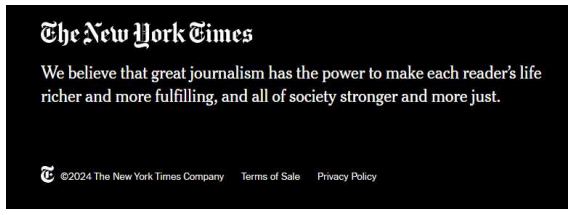
As palavras “richer – more fulfilling – stronger – more just' estão:
Ano: 2024
Banca:
Máxima
Órgão:
Prefeitura de Santo Antônio do Grama - MG
Prova:
Máxima - 2024 - Prefeitura de Santo Antônio do Grama - MG - Professor de Inglês |
Q4208660
Inglês
Texto associado
Leia o texto e responda a questão
"Qual é a proposta do anúncio feito pelo jornal americano The New York
Times?
Ano: 2024
Banca:
Máxima
Órgão:
Prefeitura de Santo Antônio do Grama - MG
Prova:
Máxima - 2024 - Prefeitura de Santo Antônio do Grama - MG - Professor de Inglês |
Q4208659
Inglês
Texto associado
Leia o texto a seguir.
For decades, it seemed that the purpose of our education system was to
encourage competition. Schools would award prizes to the most talented
student and proudly display their names on bulletin boards. Nowadays, in
many institutions, the key word has become "inclusion": no one should be left
behind. Resources are channeled into helping the east capable; everyone's
work (good or bad) is on the walls; and prize tables are heavily loaded with
awards to make sure everyone is awarded a prize for something. Which
approach is right?
Attempts to make education more inclusive are frequently criticized. Many
point out that once students leave the protective environment of the
classroom, they will face the challenges of the working world: what use will
false reassurance be then? The purpose of school must be to reveal to
people their limitations, so that they can find a vocation that suits them.
In the past, allowing the talented to rise to the top through competition would
certainly have been important. In most factories, it was useful to separate the
potential managers from the unskilled workforce, and companies relied on
finding talented individuals to win business before their competitors did. An
ethos of competition also helped countries to compete effectively with other
nations as they scrambled for territory, raced to accumulate armaments or
even traveled into space ahead of rivals.
But in the 21st century, are we really preparing young people for a world of
competition? The academic James F. Moore argues that the days when
businesses competed with each other are ending. Moore believes we should
talk of "business ecosystems" nowadays. International corporations operate
in global networks of suppliers and partners. Sometimes; even rival
corporations work together. For example: companies often have to
collaborate to define common industry standards.
What's more, hierarchies are disappearing within organizations. Modern
companies have a wider range of business functions (public relations, IT,
research and development), and so skills. Knowledge and decision-making
are spread throughout the organization. In a modern marketing department
alone, there are teams for collecting and analyzing a wealth of customer data,
designing brands, advertising, etc. Each individual contributes vital skills and
must receive equal training. Low-skilled work, by comparison, is increasingly
being performed by automated labor; that is, robots.
But it isn't just in businesses that cooperation is becoming the norm. In the
past, individuals, colleges, governments, and companies didn't have to
collaborate. Now', 'collective impact" is becoming the gold standard. For
example, an anti-obesity project called "Shape Up Somerville" managed to
significantly bring down the average BMI (body mass index) in the town in
just three years, by involving schools, colleges, local businesses, charities,
government, and local citizens in a program of collective action. Led by
academics, and funded by four agencies. The work involved designing
school lunch menus, improving walkways, introducing gym membership
packages, and running campaigns amongst the public.
Competition can still be useful. It's stimulating and can help us learn about
ourselves. But it should not become a dominant feature of education
systems. Those who do not receive investment will find it increasingly hard to
fit into the modern world. It really is learning to take part that counts.
Fonte: (Texto retirado do livro Accelerate 2 p. 56.)
"A palavra que melhor substitui o modal em destaque na frase “The
purpose of school must be to reveal to people their limitations, so that they
can find a vocation that suits them” é:
Ano: 2024
Banca:
Máxima
Órgão:
Prefeitura de Santo Antônio do Grama - MG
Prova:
Máxima - 2024 - Prefeitura de Santo Antônio do Grama - MG - Professor de Inglês |
Q4208658
Inglês
Texto associado
Leia o texto a seguir.
For decades, it seemed that the purpose of our education system was to
encourage competition. Schools would award prizes to the most talented
student and proudly display their names on bulletin boards. Nowadays, in
many institutions, the key word has become "inclusion": no one should be left
behind. Resources are channeled into helping the east capable; everyone's
work (good or bad) is on the walls; and prize tables are heavily loaded with
awards to make sure everyone is awarded a prize for something. Which
approach is right?
Attempts to make education more inclusive are frequently criticized. Many
point out that once students leave the protective environment of the
classroom, they will face the challenges of the working world: what use will
false reassurance be then? The purpose of school must be to reveal to
people their limitations, so that they can find a vocation that suits them.
In the past, allowing the talented to rise to the top through competition would
certainly have been important. In most factories, it was useful to separate the
potential managers from the unskilled workforce, and companies relied on
finding talented individuals to win business before their competitors did. An
ethos of competition also helped countries to compete effectively with other
nations as they scrambled for territory, raced to accumulate armaments or
even traveled into space ahead of rivals.
But in the 21st century, are we really preparing young people for a world of
competition? The academic James F. Moore argues that the days when
businesses competed with each other are ending. Moore believes we should
talk of "business ecosystems" nowadays. International corporations operate
in global networks of suppliers and partners. Sometimes; even rival
corporations work together. For example: companies often have to
collaborate to define common industry standards.
What's more, hierarchies are disappearing within organizations. Modern
companies have a wider range of business functions (public relations, IT,
research and development), and so skills. Knowledge and decision-making
are spread throughout the organization. In a modern marketing department
alone, there are teams for collecting and analyzing a wealth of customer data,
designing brands, advertising, etc. Each individual contributes vital skills and
must receive equal training. Low-skilled work, by comparison, is increasingly
being performed by automated labor; that is, robots.
But it isn't just in businesses that cooperation is becoming the norm. In the
past, individuals, colleges, governments, and companies didn't have to
collaborate. Now', 'collective impact" is becoming the gold standard. For
example, an anti-obesity project called "Shape Up Somerville" managed to
significantly bring down the average BMI (body mass index) in the town in
just three years, by involving schools, colleges, local businesses, charities,
government, and local citizens in a program of collective action. Led by
academics, and funded by four agencies. The work involved designing
school lunch menus, improving walkways, introducing gym membership
packages, and running campaigns amongst the public.
Competition can still be useful. It's stimulating and can help us learn about
ourselves. But it should not become a dominant feature of education
systems. Those who do not receive investment will find it increasingly hard to
fit into the modern world. It really is learning to take part that counts.
Fonte: (Texto retirado do livro Accelerate 2 p. 56.)
Dentre as palavras presentes no texto analisado, aquela que NÃO é
cognato é:
Ano: 2024
Banca:
Máxima
Órgão:
Prefeitura de Santo Antônio do Grama - MG
Prova:
Máxima - 2024 - Prefeitura de Santo Antônio do Grama - MG - Professor de Inglês |
Q4208657
Inglês
Texto associado
Leia o texto a seguir.
For decades, it seemed that the purpose of our education system was to
encourage competition. Schools would award prizes to the most talented
student and proudly display their names on bulletin boards. Nowadays, in
many institutions, the key word has become "inclusion": no one should be left
behind. Resources are channeled into helping the east capable; everyone's
work (good or bad) is on the walls; and prize tables are heavily loaded with
awards to make sure everyone is awarded a prize for something. Which
approach is right?
Attempts to make education more inclusive are frequently criticized. Many
point out that once students leave the protective environment of the
classroom, they will face the challenges of the working world: what use will
false reassurance be then? The purpose of school must be to reveal to
people their limitations, so that they can find a vocation that suits them.
In the past, allowing the talented to rise to the top through competition would
certainly have been important. In most factories, it was useful to separate the
potential managers from the unskilled workforce, and companies relied on
finding talented individuals to win business before their competitors did. An
ethos of competition also helped countries to compete effectively with other
nations as they scrambled for territory, raced to accumulate armaments or
even traveled into space ahead of rivals.
But in the 21st century, are we really preparing young people for a world of
competition? The academic James F. Moore argues that the days when
businesses competed with each other are ending. Moore believes we should
talk of "business ecosystems" nowadays. International corporations operate
in global networks of suppliers and partners. Sometimes; even rival
corporations work together. For example: companies often have to
collaborate to define common industry standards.
What's more, hierarchies are disappearing within organizations. Modern
companies have a wider range of business functions (public relations, IT,
research and development), and so skills. Knowledge and decision-making
are spread throughout the organization. In a modern marketing department
alone, there are teams for collecting and analyzing a wealth of customer data,
designing brands, advertising, etc. Each individual contributes vital skills and
must receive equal training. Low-skilled work, by comparison, is increasingly
being performed by automated labor; that is, robots.
But it isn't just in businesses that cooperation is becoming the norm. In the
past, individuals, colleges, governments, and companies didn't have to
collaborate. Now', 'collective impact" is becoming the gold standard. For
example, an anti-obesity project called "Shape Up Somerville" managed to
significantly bring down the average BMI (body mass index) in the town in
just three years, by involving schools, colleges, local businesses, charities,
government, and local citizens in a program of collective action. Led by
academics, and funded by four agencies. The work involved designing
school lunch menus, improving walkways, introducing gym membership
packages, and running campaigns amongst the public.
Competition can still be useful. It's stimulating and can help us learn about
ourselves. But it should not become a dominant feature of education
systems. Those who do not receive investment will find it increasingly hard to
fit into the modern world. It really is learning to take part that counts.
Fonte: (Texto retirado do livro Accelerate 2 p. 56.)
A palavra "argues" pode ser substituída por diferentes termos sem perder
o sentido, EXCETO por:
"The academic James F. Moore argues that the days when businesses competed with each other are ending."
"The academic James F. Moore argues that the days when businesses competed with each other are ending."
Ano: 2024
Banca:
Máxima
Órgão:
Prefeitura de Santo Antônio do Grama - MG
Prova:
Máxima - 2024 - Prefeitura de Santo Antônio do Grama - MG - Professor de Inglês |
Q4208656
Inglês
Texto associado
Leia o texto a seguir.
For decades, it seemed that the purpose of our education system was to
encourage competition. Schools would award prizes to the most talented
student and proudly display their names on bulletin boards. Nowadays, in
many institutions, the key word has become "inclusion": no one should be left
behind. Resources are channeled into helping the east capable; everyone's
work (good or bad) is on the walls; and prize tables are heavily loaded with
awards to make sure everyone is awarded a prize for something. Which
approach is right?
Attempts to make education more inclusive are frequently criticized. Many
point out that once students leave the protective environment of the
classroom, they will face the challenges of the working world: what use will
false reassurance be then? The purpose of school must be to reveal to
people their limitations, so that they can find a vocation that suits them.
In the past, allowing the talented to rise to the top through competition would
certainly have been important. In most factories, it was useful to separate the
potential managers from the unskilled workforce, and companies relied on
finding talented individuals to win business before their competitors did. An
ethos of competition also helped countries to compete effectively with other
nations as they scrambled for territory, raced to accumulate armaments or
even traveled into space ahead of rivals.
But in the 21st century, are we really preparing young people for a world of
competition? The academic James F. Moore argues that the days when
businesses competed with each other are ending. Moore believes we should
talk of "business ecosystems" nowadays. International corporations operate
in global networks of suppliers and partners. Sometimes; even rival
corporations work together. For example: companies often have to
collaborate to define common industry standards.
What's more, hierarchies are disappearing within organizations. Modern
companies have a wider range of business functions (public relations, IT,
research and development), and so skills. Knowledge and decision-making
are spread throughout the organization. In a modern marketing department
alone, there are teams for collecting and analyzing a wealth of customer data,
designing brands, advertising, etc. Each individual contributes vital skills and
must receive equal training. Low-skilled work, by comparison, is increasingly
being performed by automated labor; that is, robots.
But it isn't just in businesses that cooperation is becoming the norm. In the
past, individuals, colleges, governments, and companies didn't have to
collaborate. Now', 'collective impact" is becoming the gold standard. For
example, an anti-obesity project called "Shape Up Somerville" managed to
significantly bring down the average BMI (body mass index) in the town in
just three years, by involving schools, colleges, local businesses, charities,
government, and local citizens in a program of collective action. Led by
academics, and funded by four agencies. The work involved designing
school lunch menus, improving walkways, introducing gym membership
packages, and running campaigns amongst the public.
Competition can still be useful. It's stimulating and can help us learn about
ourselves. But it should not become a dominant feature of education
systems. Those who do not receive investment will find it increasingly hard to
fit into the modern world. It really is learning to take part that counts.
Fonte: (Texto retirado do livro Accelerate 2 p. 56.)
Em “Attempts to make education more inclusive are frequently criticized',
a palavra 'frequently' refere-se a um:
Ano: 2024
Banca:
Máxima
Órgão:
Prefeitura de Santo Antônio do Grama - MG
Prova:
Máxima - 2024 - Prefeitura de Santo Antônio do Grama - MG - Professor de Inglês |
Q4208655
Inglês
Texto associado
Leia o texto a seguir.
For decades, it seemed that the purpose of our education system was to
encourage competition. Schools would award prizes to the most talented
student and proudly display their names on bulletin boards. Nowadays, in
many institutions, the key word has become "inclusion": no one should be left
behind. Resources are channeled into helping the east capable; everyone's
work (good or bad) is on the walls; and prize tables are heavily loaded with
awards to make sure everyone is awarded a prize for something. Which
approach is right?
Attempts to make education more inclusive are frequently criticized. Many
point out that once students leave the protective environment of the
classroom, they will face the challenges of the working world: what use will
false reassurance be then? The purpose of school must be to reveal to
people their limitations, so that they can find a vocation that suits them.
In the past, allowing the talented to rise to the top through competition would
certainly have been important. In most factories, it was useful to separate the
potential managers from the unskilled workforce, and companies relied on
finding talented individuals to win business before their competitors did. An
ethos of competition also helped countries to compete effectively with other
nations as they scrambled for territory, raced to accumulate armaments or
even traveled into space ahead of rivals.
But in the 21st century, are we really preparing young people for a world of
competition? The academic James F. Moore argues that the days when
businesses competed with each other are ending. Moore believes we should
talk of "business ecosystems" nowadays. International corporations operate
in global networks of suppliers and partners. Sometimes; even rival
corporations work together. For example: companies often have to
collaborate to define common industry standards.
What's more, hierarchies are disappearing within organizations. Modern
companies have a wider range of business functions (public relations, IT,
research and development), and so skills. Knowledge and decision-making
are spread throughout the organization. In a modern marketing department
alone, there are teams for collecting and analyzing a wealth of customer data,
designing brands, advertising, etc. Each individual contributes vital skills and
must receive equal training. Low-skilled work, by comparison, is increasingly
being performed by automated labor; that is, robots.
But it isn't just in businesses that cooperation is becoming the norm. In the
past, individuals, colleges, governments, and companies didn't have to
collaborate. Now', 'collective impact" is becoming the gold standard. For
example, an anti-obesity project called "Shape Up Somerville" managed to
significantly bring down the average BMI (body mass index) in the town in
just three years, by involving schools, colleges, local businesses, charities,
government, and local citizens in a program of collective action. Led by
academics, and funded by four agencies. The work involved designing
school lunch menus, improving walkways, introducing gym membership
packages, and running campaigns amongst the public.
Competition can still be useful. It's stimulating and can help us learn about
ourselves. But it should not become a dominant feature of education
systems. Those who do not receive investment will find it increasingly hard to
fit into the modern world. It really is learning to take part that counts.
Fonte: (Texto retirado do livro Accelerate 2 p. 56.)
Após a leitura do texto, analise as assertivas abaixo.
I. Ao longo do tempo, as instituições de ensino sempre priorizaram a "inclusão".
II. As escolas modernas procuram assegurar que todos os alunos recebam prêmios.
III. As tentativas de tornar a educação mais inclusiva não são alvo de críticas.
I. Ao longo do tempo, as instituições de ensino sempre priorizaram a "inclusão".
II. As escolas modernas procuram assegurar que todos os alunos recebam prêmios.
III. As tentativas de tornar a educação mais inclusiva não são alvo de críticas.
Q4197170
Inglês
Texto associado
Leia o texto para responder à questão.
Rising sea levels could severely disrupt crude oil
shipments and erode energy security in import-dependent
countries like China, South Korea and Japan, with many of the
world’s biggest terminals vulnerable to flooding, researchers
said on Tuesday.
Melting ice and swelling seas caused by rising
temperatures could “unleash unstoppable multi-metre sea
level rise which will not only sink key oil ports and disrupt
global oil trade but also swamp coastal refineries and
petrochemical facilities”, the China Water Risk (CWR) think
tank warned in a report.
A 2021 report by the Intergovernmental Panel on Climate
Change estimated that on current trends, average sea levels
could rise by more than a metre by the end of the century,
adding that a two-metre rise could not be ruled out.
(www.reuters.com/business/energy/. Adaptado)
No trecho do terceiro parágrafo – … a two-metre rise
could not be ruled out… – a expressão em negrito pode
ser substituída, sem alteração de sentido, por
Q4197169
Inglês
Texto associado
Leia o texto para responder à questão.
Rising sea levels could severely disrupt crude oil
shipments and erode energy security in import-dependent
countries like China, South Korea and Japan, with many of the
world’s biggest terminals vulnerable to flooding, researchers
said on Tuesday.
Melting ice and swelling seas caused by rising
temperatures could “unleash unstoppable multi-metre sea
level rise which will not only sink key oil ports and disrupt
global oil trade but also swamp coastal refineries and
petrochemical facilities”, the China Water Risk (CWR) think
tank warned in a report.
A 2021 report by the Intergovernmental Panel on Climate
Change estimated that on current trends, average sea levels
could rise by more than a metre by the end of the century,
adding that a two-metre rise could not be ruled out.
(www.reuters.com/business/energy/. Adaptado)
No trecho do segundo parágrafo – … which will not only
sink key oil ports and disrupt global oil trade but also
swamp coastal refineries… – as expressões em negrito
indicam
Q4197168
Inglês
Texto associado
Leia o texto para responder à questão.
Rising sea levels could severely disrupt crude oil
shipments and erode energy security in import-dependent
countries like China, South Korea and Japan, with many of the
world’s biggest terminals vulnerable to flooding, researchers
said on Tuesday.
Melting ice and swelling seas caused by rising
temperatures could “unleash unstoppable multi-metre sea
level rise which will not only sink key oil ports and disrupt
global oil trade but also swamp coastal refineries and
petrochemical facilities”, the China Water Risk (CWR) think
tank warned in a report.
A 2021 report by the Intergovernmental Panel on Climate
Change estimated that on current trends, average sea levels
could rise by more than a metre by the end of the century,
adding that a two-metre rise could not be ruled out.
(www.reuters.com/business/energy/. Adaptado)
The text mainly intends to
Q4197167
Inglês
Texto associado
Leia o texto para responder à questão
What are human rights?
Human rights are rights we have simply because we exist
as human beings – they are not granted by any state. These
universal rights are inherent to us all, regardless of nationality,
sex, national or ethnic origin, color, religion, language, or any
other status. They range from the most fundamental – the
right to life – to those that make life worth living, such as the
rights to food, education, work, health, and liberty.
(www.ohchr.org/en/what-are-human-rights. Adaptado)
No trecho do texto – … such as the rights to food,
education, work, health, and liberty. – a expressão destacada em negrito introduz uma

 Conheça nossos planos