Questões de Concurso Sobre inglês
Foram encontradas 25.999 questões


Ano: 2026
Banca:
UECE-CEV
Órgão:
Prefeitura de Crato - CE
Prova:
UECE-CEV - 2026 - Prefeitura de Crato - CE - Professor de Inglês |
Q3857873
Inglês
Texto associado
The Adventures of Sherlock Holmes, Arthur Conan Doyle.
A Scandal in Bohemia (Part I)
I had seen little of Holmes lately. My marriage had drifted
us away from each other. My own complete happiness, and the
home-centred interests which rise up around the man who first
finds himself master of his own establishment, were sufficient to
absorb all my attention, while Holmes, who loathed every form
of society with his whole Bohemian soul, Blank I in our lodgings
in Baker Street, buried among his old books, and alternating from
week to week between cocaine and ambition, the drowsiness of
the drug, and the fierce energy of his own keen nature. He was
still, as ever, deeply attracted by the study of crime, and occupied
his immense faculties and extraordinary powers of observation
in following out those clues, and clearing up those mysteries
which had been abandoned as hopeless by the official police.
From time to time I Blank II some vague account of his doings:
of his summons to Odessa in the case of the Trepoff murder, of
his clearing up of the singular tragedy of the Atkinson brothers
at Trincomalee, and finally of the mission which he had accomplished so delicately and successfully for the reigning family of
Holland. Beyond these signs of his activity, however, which I
merely shared with all the readers of the daily press, I knew little
of my former friend and companion.
One night – it was on the twentieth of March, 1888 – I was
returning from a journey to a patient (for I had now returned
to civil practice), when my way led me through Baker Street.
As I Blank III the well-remembered door, which must always
be associated in my mind with my wooing, and with the dark
incidents of the Study in Scarlet, I was seized with a keen desire
to see Holmes again, and to know how he was employing his
extraordinary powers. His rooms were brilliantly lit, and, even
as I looked up, I saw his tall, spare figure pass twice in a dark
silhouette against the blind. He was pacing the room swiftly,
eagerly, with his head sunk upon his chest and his hands clasped
behind him. To me, who knew his every mood and habit, his
attitude and manner told their own story. He was at work again.
He had risen out of his drug-created dreams and was hot upon
the scent of some new problem. I rang the bell and was shown
up to the chamber which had formerly been in part my own.
His manner was not effusive. It seldom was; but he was glad,
I think, to see me. With hardly a word spoken, but with a kindly eye, he waved me to an armchair, threw across his case of
cigars, and indicated a spirit case and a gasogene in the corner.
Then he stood before the fire and looked me over in his singular
introspective fashion.
From: https://sherlock-holm.es/stories/pdf/a4/1-sided/advs.pdf. Accessed on 12/15/2025.
As in “He was pacing the room swiftly,
eagerly...”, the adverbs of manner are correctly used
in:
Ano: 2026
Banca:
UECE-CEV
Órgão:
Prefeitura de Crato - CE
Prova:
UECE-CEV - 2026 - Prefeitura de Crato - CE - Professor de Inglês |
Q3857872
Inglês
Texto associado
The Adventures of Sherlock Holmes, Arthur Conan Doyle.
A Scandal in Bohemia (Part I)
I had seen little of Holmes lately. My marriage had drifted
us away from each other. My own complete happiness, and the
home-centred interests which rise up around the man who first
finds himself master of his own establishment, were sufficient to
absorb all my attention, while Holmes, who loathed every form
of society with his whole Bohemian soul, Blank I in our lodgings
in Baker Street, buried among his old books, and alternating from
week to week between cocaine and ambition, the drowsiness of
the drug, and the fierce energy of his own keen nature. He was
still, as ever, deeply attracted by the study of crime, and occupied
his immense faculties and extraordinary powers of observation
in following out those clues, and clearing up those mysteries
which had been abandoned as hopeless by the official police.
From time to time I Blank II some vague account of his doings:
of his summons to Odessa in the case of the Trepoff murder, of
his clearing up of the singular tragedy of the Atkinson brothers
at Trincomalee, and finally of the mission which he had accomplished so delicately and successfully for the reigning family of
Holland. Beyond these signs of his activity, however, which I
merely shared with all the readers of the daily press, I knew little
of my former friend and companion.
One night – it was on the twentieth of March, 1888 – I was
returning from a journey to a patient (for I had now returned
to civil practice), when my way led me through Baker Street.
As I Blank III the well-remembered door, which must always
be associated in my mind with my wooing, and with the dark
incidents of the Study in Scarlet, I was seized with a keen desire
to see Holmes again, and to know how he was employing his
extraordinary powers. His rooms were brilliantly lit, and, even
as I looked up, I saw his tall, spare figure pass twice in a dark
silhouette against the blind. He was pacing the room swiftly,
eagerly, with his head sunk upon his chest and his hands clasped
behind him. To me, who knew his every mood and habit, his
attitude and manner told their own story. He was at work again.
He had risen out of his drug-created dreams and was hot upon
the scent of some new problem. I rang the bell and was shown
up to the chamber which had formerly been in part my own.
His manner was not effusive. It seldom was; but he was glad,
I think, to see me. With hardly a word spoken, but with a kindly eye, he waved me to an armchair, threw across his case of
cigars, and indicated a spirit case and a gasogene in the corner.
Then he stood before the fire and looked me over in his singular
introspective fashion.
From: https://sherlock-holm.es/stories/pdf/a4/1-sided/advs.pdf. Accessed on 12/15/2025.
The best synonym for “keen” is:
Ano: 2026
Banca:
UECE-CEV
Órgão:
Prefeitura de Crato - CE
Prova:
UECE-CEV - 2026 - Prefeitura de Crato - CE - Professor de Inglês |
Q3857871
Inglês
Texto associado
The Adventures of Sherlock Holmes, Arthur Conan Doyle.
A Scandal in Bohemia (Part I)
I had seen little of Holmes lately. My marriage had drifted
us away from each other. My own complete happiness, and the
home-centred interests which rise up around the man who first
finds himself master of his own establishment, were sufficient to
absorb all my attention, while Holmes, who loathed every form
of society with his whole Bohemian soul, Blank I in our lodgings
in Baker Street, buried among his old books, and alternating from
week to week between cocaine and ambition, the drowsiness of
the drug, and the fierce energy of his own keen nature. He was
still, as ever, deeply attracted by the study of crime, and occupied
his immense faculties and extraordinary powers of observation
in following out those clues, and clearing up those mysteries
which had been abandoned as hopeless by the official police.
From time to time I Blank II some vague account of his doings:
of his summons to Odessa in the case of the Trepoff murder, of
his clearing up of the singular tragedy of the Atkinson brothers
at Trincomalee, and finally of the mission which he had accomplished so delicately and successfully for the reigning family of
Holland. Beyond these signs of his activity, however, which I
merely shared with all the readers of the daily press, I knew little
of my former friend and companion.
One night – it was on the twentieth of March, 1888 – I was
returning from a journey to a patient (for I had now returned
to civil practice), when my way led me through Baker Street.
As I Blank III the well-remembered door, which must always
be associated in my mind with my wooing, and with the dark
incidents of the Study in Scarlet, I was seized with a keen desire
to see Holmes again, and to know how he was employing his
extraordinary powers. His rooms were brilliantly lit, and, even
as I looked up, I saw his tall, spare figure pass twice in a dark
silhouette against the blind. He was pacing the room swiftly,
eagerly, with his head sunk upon his chest and his hands clasped
behind him. To me, who knew his every mood and habit, his
attitude and manner told their own story. He was at work again.
He had risen out of his drug-created dreams and was hot upon
the scent of some new problem. I rang the bell and was shown
up to the chamber which had formerly been in part my own.
His manner was not effusive. It seldom was; but he was glad,
I think, to see me. With hardly a word spoken, but with a kindly eye, he waved me to an armchair, threw across his case of
cigars, and indicated a spirit case and a gasogene in the corner.
Then he stood before the fire and looked me over in his singular
introspective fashion.
From: https://sherlock-holm.es/stories/pdf/a4/1-sided/advs.pdf. Accessed on 12/15/2025.
The verbs that correctly fill in Blanks
I, II and III are, respectively:
Ano: 2026
Banca:
UECE-CEV
Órgão:
Prefeitura de Crato - CE
Prova:
UECE-CEV - 2026 - Prefeitura de Crato - CE - Professor de Inglês |
Q3857870
Inglês
Texto associado
The Adventures of Sherlock Holmes, Arthur Conan Doyle.
A Scandal in Bohemia (Part I)
I had seen little of Holmes lately. My marriage had drifted
us away from each other. My own complete happiness, and the
home-centred interests which rise up around the man who first
finds himself master of his own establishment, were sufficient to
absorb all my attention, while Holmes, who loathed every form
of society with his whole Bohemian soul, Blank I in our lodgings
in Baker Street, buried among his old books, and alternating from
week to week between cocaine and ambition, the drowsiness of
the drug, and the fierce energy of his own keen nature. He was
still, as ever, deeply attracted by the study of crime, and occupied
his immense faculties and extraordinary powers of observation
in following out those clues, and clearing up those mysteries
which had been abandoned as hopeless by the official police.
From time to time I Blank II some vague account of his doings:
of his summons to Odessa in the case of the Trepoff murder, of
his clearing up of the singular tragedy of the Atkinson brothers
at Trincomalee, and finally of the mission which he had accomplished so delicately and successfully for the reigning family of
Holland. Beyond these signs of his activity, however, which I
merely shared with all the readers of the daily press, I knew little
of my former friend and companion.
One night – it was on the twentieth of March, 1888 – I was
returning from a journey to a patient (for I had now returned
to civil practice), when my way led me through Baker Street.
As I Blank III the well-remembered door, which must always
be associated in my mind with my wooing, and with the dark
incidents of the Study in Scarlet, I was seized with a keen desire
to see Holmes again, and to know how he was employing his
extraordinary powers. His rooms were brilliantly lit, and, even
as I looked up, I saw his tall, spare figure pass twice in a dark
silhouette against the blind. He was pacing the room swiftly,
eagerly, with his head sunk upon his chest and his hands clasped
behind him. To me, who knew his every mood and habit, his
attitude and manner told their own story. He was at work again.
He had risen out of his drug-created dreams and was hot upon
the scent of some new problem. I rang the bell and was shown
up to the chamber which had formerly been in part my own.
His manner was not effusive. It seldom was; but he was glad,
I think, to see me. With hardly a word spoken, but with a kindly eye, he waved me to an armchair, threw across his case of
cigars, and indicated a spirit case and a gasogene in the corner.
Then he stood before the fire and looked me over in his singular
introspective fashion.
From: https://sherlock-holm.es/stories/pdf/a4/1-sided/advs.pdf. Accessed on 12/15/2025.
As in “Baker”, the suffix -er forms
nouns from verbs in:
Ano: 2026
Banca:
UECE-CEV
Órgão:
Prefeitura de Crato - CE
Prova:
UECE-CEV - 2026 - Prefeitura de Crato - CE - Professor de Inglês |
Q3857869
Inglês
Texto associado
The Adventures of Sherlock Holmes, Arthur Conan Doyle.
A Scandal in Bohemia (Part I)
I had seen little of Holmes lately. My marriage had drifted
us away from each other. My own complete happiness, and the
home-centred interests which rise up around the man who first
finds himself master of his own establishment, were sufficient to
absorb all my attention, while Holmes, who loathed every form
of society with his whole Bohemian soul, Blank I in our lodgings
in Baker Street, buried among his old books, and alternating from
week to week between cocaine and ambition, the drowsiness of
the drug, and the fierce energy of his own keen nature. He was
still, as ever, deeply attracted by the study of crime, and occupied
his immense faculties and extraordinary powers of observation
in following out those clues, and clearing up those mysteries
which had been abandoned as hopeless by the official police.
From time to time I Blank II some vague account of his doings:
of his summons to Odessa in the case of the Trepoff murder, of
his clearing up of the singular tragedy of the Atkinson brothers
at Trincomalee, and finally of the mission which he had accomplished so delicately and successfully for the reigning family of
Holland. Beyond these signs of his activity, however, which I
merely shared with all the readers of the daily press, I knew little
of my former friend and companion.
One night – it was on the twentieth of March, 1888 – I was
returning from a journey to a patient (for I had now returned
to civil practice), when my way led me through Baker Street.
As I Blank III the well-remembered door, which must always
be associated in my mind with my wooing, and with the dark
incidents of the Study in Scarlet, I was seized with a keen desire
to see Holmes again, and to know how he was employing his
extraordinary powers. His rooms were brilliantly lit, and, even
as I looked up, I saw his tall, spare figure pass twice in a dark
silhouette against the blind. He was pacing the room swiftly,
eagerly, with his head sunk upon his chest and his hands clasped
behind him. To me, who knew his every mood and habit, his
attitude and manner told their own story. He was at work again.
He had risen out of his drug-created dreams and was hot upon
the scent of some new problem. I rang the bell and was shown
up to the chamber which had formerly been in part my own.
His manner was not effusive. It seldom was; but he was glad,
I think, to see me. With hardly a word spoken, but with a kindly eye, he waved me to an armchair, threw across his case of
cigars, and indicated a spirit case and a gasogene in the corner.
Then he stood before the fire and looked me over in his singular
introspective fashion.
From: https://sherlock-holm.es/stories/pdf/a4/1-sided/advs.pdf. Accessed on 12/15/2025.
“Drowsiness” and “hopeless” were
formed by the process of:
Ano: 2026
Banca:
AMAUC
Órgão:
Prefeitura de Irani - SC
Prova:
AMAUC - 2026 - Prefeitura de Irani - SC - Professor de Inglês - Habilitado |
Q3850673
Inglês
Diferentes métodos de ensino marcaram a história da
glotodidática. O 'Task-Based Learning' (TBL (Task-Based
Learning) - Aprendizagem Baseada em Tarefas) é uma
abordagem contemporânea relevante. Analise as
assertivas sobre o ciclo do TBL.
I.A etapa de 'Pre-task' serve para introduzir o tópico e preparar os alunos com vocabulário essencial, sem necessariamente ensinar a gramática explicitamente neste momento.
II.Durante a etapa de 'Task Cycle' (Ciclo da Tarefa), os alunos realizam a tarefa comunicativa em pares ou grupos, com foco na fluência e no significado, enquanto o professor monitora.
III.A etapa final, 'Language Focus' (Foco na Linguagem), é o momento de analisar e praticar aspectos linguísticos específicos que surgiram durante a execução da tarefa.
Assinale a alternativa que apresenta somente as proposições CORRETAS:
I.A etapa de 'Pre-task' serve para introduzir o tópico e preparar os alunos com vocabulário essencial, sem necessariamente ensinar a gramática explicitamente neste momento.
II.Durante a etapa de 'Task Cycle' (Ciclo da Tarefa), os alunos realizam a tarefa comunicativa em pares ou grupos, com foco na fluência e no significado, enquanto o professor monitora.
III.A etapa final, 'Language Focus' (Foco na Linguagem), é o momento de analisar e praticar aspectos linguísticos específicos que surgiram durante a execução da tarefa.
Assinale a alternativa que apresenta somente as proposições CORRETAS:
Ano: 2026
Banca:
AMAUC
Órgão:
Prefeitura de Irani - SC
Prova:
AMAUC - 2026 - Prefeitura de Irani - SC - Professor de Inglês - Habilitado |
Q3850672
Inglês
O domínio das estruturas condicionais (Conditionals) é
essencial para expressar hipóteses, consequências e
situações imaginárias. Sobre o uso e a estrutura das
condicionais em inglês, analise as afirmativas a seguir.
I.A 'Zero Conditional', utilizada para verdades universais e fatos científicos, estrutura-se geralmente com 'If + Present Simple, ... Present Simple'.
II.A 'Second Conditional' é usada para situações hipotéticas ou pouco prováveis no presente/futuro e segue a estrutura 'If + Past Simple, ... would + infinitive'.
III.A 'Third Conditional' expressa arrependimentos ou situações passadas que não ocorreram e utiliza a estrutura 'If + Past Perfect, ... would have + Past Participle'.
Assinale a alternativa que apresenta somente as proposições CORRETAS:
I.A 'Zero Conditional', utilizada para verdades universais e fatos científicos, estrutura-se geralmente com 'If + Present Simple, ... Present Simple'.
II.A 'Second Conditional' é usada para situações hipotéticas ou pouco prováveis no presente/futuro e segue a estrutura 'If + Past Simple, ... would + infinitive'.
III.A 'Third Conditional' expressa arrependimentos ou situações passadas que não ocorreram e utiliza a estrutura 'If + Past Perfect, ... would have + Past Participle'.
Assinale a alternativa que apresenta somente as proposições CORRETAS:
Ano: 2026
Banca:
AMAUC
Órgão:
Prefeitura de Irani - SC
Prova:
AMAUC - 2026 - Prefeitura de Irani - SC - Professor de Inglês - Habilitado |
Q3850671
Inglês
A Abordagem Comunicativa (Communicative Language
Teaching - CLT) transformou o ensino de línguas ao
priorizar a função da linguagem sobre a forma. Acerca
dos princípios da CLT, marque V, para as afirmativas
verdadeiras, e F, para as falsas.
(__)O foco principal é a competência comunicativa, ou seja, a capacidade de usar a língua de forma apropriada em diferentes contextos sociais, e não apenas o domínio gramatical.
(__)Erros são vistos como parte natural do processo de aprendizagem e não devem ser corrigidos imediatamente se isso interromper o fluxo comunicativo significativo.
(__)A língua materna dos alunos é estritamente proibida em sala de aula, devendo o professor punir qualquer uso de português para garantir a imersão total desde o primeiro dia.
(__)As atividades de sala de aula devem priorizar a repetição mecânica (drills) e a memorização de diálogos descontextualizados para garantir a precisão estrutural.
Após análise, assinale a alternativa que apresenta a sequência correta dos itens acima, de cima para baixo:
(__)O foco principal é a competência comunicativa, ou seja, a capacidade de usar a língua de forma apropriada em diferentes contextos sociais, e não apenas o domínio gramatical.
(__)Erros são vistos como parte natural do processo de aprendizagem e não devem ser corrigidos imediatamente se isso interromper o fluxo comunicativo significativo.
(__)A língua materna dos alunos é estritamente proibida em sala de aula, devendo o professor punir qualquer uso de português para garantir a imersão total desde o primeiro dia.
(__)As atividades de sala de aula devem priorizar a repetição mecânica (drills) e a memorização de diálogos descontextualizados para garantir a precisão estrutural.
Após análise, assinale a alternativa que apresenta a sequência correta dos itens acima, de cima para baixo:
Ano: 2026
Banca:
AMAUC
Órgão:
Prefeitura de Irani - SC
Prova:
AMAUC - 2026 - Prefeitura de Irani - SC - Professor de Inglês - Habilitado |
Q3850670
Inglês
A Base Nacional Comum Curricular (BNCC) redefine o
papel da Língua Inglesa no currículo, afastando-se da
visão de língua estrangeira pertencente a nações
específicas e adotando uma perspectiva mais
abrangente e inclusiva. Nesse contexto, a BNCC
concebe o inglês como uma Língua Franca. Assinale a
alternativa que descreve corretamente essa concepção.
Ano: 2026
Banca:
AMAUC
Órgão:
Prefeitura de Irani - SC
Prova:
AMAUC - 2026 - Prefeitura de Irani - SC - Professor de Inglês - Habilitado |
Q3850668
Inglês
Os verbos modais (Modal Verbs) carregam matizes de
significado como habilidade, permissão, obrigação e
dedução. Analise a frase: 'Look at the wet streets. It must
have rained last night.' Assinale a alternativa que explica
corretamente o uso da estrutura destacada.
Ano: 2026
Banca:
AMAUC
Órgão:
Prefeitura de Irani - SC
Prova:
AMAUC - 2026 - Prefeitura de Irani - SC - Professor de Inglês - Habilitado |
Q3850667
Inglês
A BNCC para a Língua Inglesa no Ensino Fundamental
organiza os objetivos de aprendizagem em eixos que
integram práticas de linguagem e dimensões do
conhecimento. Sobre esses eixos, marque V, para as
afirmativas verdadeiras, e F, para as falsas.
(__)O eixo da 'Oralidade' envolve as práticas de compreensão e produção oral, incluindo a negociação de sentidos em interações presenciais ou digitais.
(__)O eixo da 'Dimensão Intercultural' visa desenvolver a compreensão de que as culturas, especialmente as de língua inglesa, são superiores e devem servir de modelo para a cultura brasileira.
(__)O eixo 'Conhecimentos Linguísticos' foca na reflexão sobre o sistema da língua (gramática, léxico, fonologia) sempre a serviço das práticas comunicativas, e não como fim em si mesmo.
(__)A BNCC excluiu o eixo da 'Escrita' do currículo de Inglês, transferindo essa responsabilidade inteiramente para as aulas de Língua Portuguesa.
Após análise, assinale a alternativa que apresenta a sequência correta dos itens acima, de cima para baixo:
(__)O eixo da 'Oralidade' envolve as práticas de compreensão e produção oral, incluindo a negociação de sentidos em interações presenciais ou digitais.
(__)O eixo da 'Dimensão Intercultural' visa desenvolver a compreensão de que as culturas, especialmente as de língua inglesa, são superiores e devem servir de modelo para a cultura brasileira.
(__)O eixo 'Conhecimentos Linguísticos' foca na reflexão sobre o sistema da língua (gramática, léxico, fonologia) sempre a serviço das práticas comunicativas, e não como fim em si mesmo.
(__)A BNCC excluiu o eixo da 'Escrita' do currículo de Inglês, transferindo essa responsabilidade inteiramente para as aulas de Língua Portuguesa.
Após análise, assinale a alternativa que apresenta a sequência correta dos itens acima, de cima para baixo:
Ano: 2026
Banca:
AMAUC
Órgão:
Prefeitura de Irani - SC
Prova:
AMAUC - 2026 - Prefeitura de Irani - SC - Professor de Inglês - Habilitado |
Q3850666
Inglês
A polissemia é uma característica marcante da língua
inglesa, onde uma única palavra pode assumir múltiplos
significados dependendo do contexto. Analise o uso da
palavra 'DATE' nas sentenças a seguir.
I.'They went on a romantic date last night.' (Contexto socialrelacionamento)
II.'Please, write the date of birth on the form.' (Contexto de registro temporal)
III.'I love eating date cake; it is very sweet.' (Contexto botânicoculinário - fruto da tamareira)
Assinale a alternativa que apresenta somente as proposições onde a palavra está utilizada e interpretada CORRETAMENTE quanto à sua polissemia:
I.'They went on a romantic date last night.' (Contexto socialrelacionamento)
II.'Please, write the date of birth on the form.' (Contexto de registro temporal)
III.'I love eating date cake; it is very sweet.' (Contexto botânicoculinário - fruto da tamareira)
Assinale a alternativa que apresenta somente as proposições onde a palavra está utilizada e interpretada CORRETAMENTE quanto à sua polissemia:
Ano: 2026
Banca:
AMAUC
Órgão:
Prefeitura de Irani - SC
Prova:
AMAUC - 2026 - Prefeitura de Irani - SC - Professor de Inglês - Habilitado |
Q3850665
Inglês
O desenvolvimento das quatro habilidades (Listening,
Speaking, Reading and Writing) deve ocorrer de forma
integrada para promover a fluência real. Sobre o ensino
da habilidade de compreensão auditiva (Listening),
marque V, para as afirmativas verdadeiras, e F, para as
falsas.
(__)O processamento 'Bottom-up' envolve a decodificação dos sons, palavras e estruturas gramaticais para construir o significado do texto a partir das menores unidades.
(__)O processamento 'Top-down' utiliza o conhecimento prévio do aluno, o contexto e as expectativas para compreender a mensagem global, sem depender apenas da decodificação linear.
(__)Atividades de 'Listening' devem sempre ser realizadas sem nenhuma preparação prévia (pre-listening), para testar a capacidade real do aluno de lidar com o choque linguístico.
(__)O uso de materiais autênticos (podcasts, notícias, músicas) é desencorajado para iniciantes, devendo-se usar apenas áudios artificiais criados para livros didáticos até o nível avançado.
Após análise, assinale a alternativa que apresenta a sequência correta dos itens acima, de cima para baixo:
(__)O processamento 'Bottom-up' envolve a decodificação dos sons, palavras e estruturas gramaticais para construir o significado do texto a partir das menores unidades.
(__)O processamento 'Top-down' utiliza o conhecimento prévio do aluno, o contexto e as expectativas para compreender a mensagem global, sem depender apenas da decodificação linear.
(__)Atividades de 'Listening' devem sempre ser realizadas sem nenhuma preparação prévia (pre-listening), para testar a capacidade real do aluno de lidar com o choque linguístico.
(__)O uso de materiais autênticos (podcasts, notícias, músicas) é desencorajado para iniciantes, devendo-se usar apenas áudios artificiais criados para livros didáticos até o nível avançado.
Após análise, assinale a alternativa que apresenta a sequência correta dos itens acima, de cima para baixo:
Ano: 2026
Banca:
AMAUC
Órgão:
Prefeitura de Irani - SC
Prova:
AMAUC - 2026 - Prefeitura de Irani - SC - Professor de Inglês - Habilitado |
Q3850663
Inglês
A leitura em língua inglesa exige o domínio de diferentes
estratégias cognitivas para processar textos de forma
eficiente, variando conforme o objetivo do leitor, seja
para captar a ideia geral ou buscar informações
específicas. Acerca das estratégias de leitura conhecidas
como Skimming e Scanning, marque V, para as
afirmativas verdadeiras, e F, para as falsas.
(__)Skimming é uma estratégia de leitura rápida que visa obter a essência ou a ideia principal do texto (gist), sem se deter em detalhes minuciosos.
(__)Scanning consiste em correr os olhos pelo texto para localizar informações específicas, como datas, nomes ou números, ignorando as partes não relevantes para a busca.
(__)A inferência lexical é uma técnica que depende exclusivamente do uso de dicionários, sendo impossível deduzir o significado de palavras desconhecidas apenas pelo contexto.
(__)O Skimming exige uma leitura linear e detalhada de cada palavra do texto, garantindo que nenhuma informação gramatical seja perdida durante o processo.
Após análise, assinale a alternativa que apresenta a sequência correta dos itens acima, de cima para baixo:
(__)Skimming é uma estratégia de leitura rápida que visa obter a essência ou a ideia principal do texto (gist), sem se deter em detalhes minuciosos.
(__)Scanning consiste em correr os olhos pelo texto para localizar informações específicas, como datas, nomes ou números, ignorando as partes não relevantes para a busca.
(__)A inferência lexical é uma técnica que depende exclusivamente do uso de dicionários, sendo impossível deduzir o significado de palavras desconhecidas apenas pelo contexto.
(__)O Skimming exige uma leitura linear e detalhada de cada palavra do texto, garantindo que nenhuma informação gramatical seja perdida durante o processo.
Após análise, assinale a alternativa que apresenta a sequência correta dos itens acima, de cima para baixo:
Ano: 2026
Banca:
AMAUC
Órgão:
Prefeitura de Irani - SC
Prova:
AMAUC - 2026 - Prefeitura de Irani - SC - Professor de Inglês - Habilitado |
Q3850662
Inglês
A pronúncia correta é vital para a comunicação,
especialmente no que tange aos 'Minimal Pairs' (Pares
Mínimos), onde a troca de um único fonema altera
completamente o significado da palavra. Assinale a
alternativa que apresenta um exemplo correto de par
mínimo baseado na distinção entre vogais longas e
curtas.
Ano: 2026
Banca:
Avança SP
Órgão:
Prefeitura de Potim - SP
Prova:
Avança SP - 2026 - Prefeitura de Potim - SP - Professor de Educação Básica II - Inglês - Edital nº 1 |
Q3849873
Inglês
In English, changing the stressed word can alter the implied meaning of a sentence. Choose the option
that expresses the idea that ‘she’ told another person, not the speaker.
Ano: 2026
Banca:
Avança SP
Órgão:
Prefeitura de Potim - SP
Prova:
Avança SP - 2026 - Prefeitura de Potim - SP - Professor de Educação Básica II - Inglês - Edital nº 1 |
Q3849872
Inglês
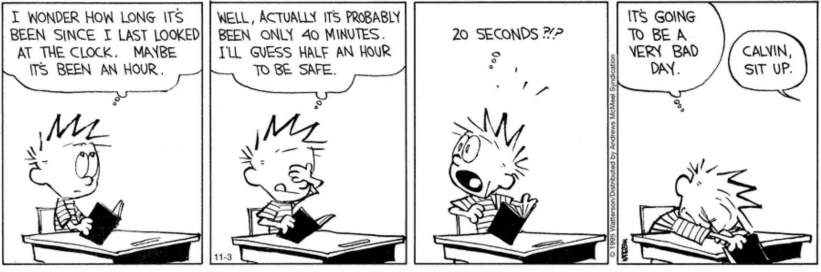
Watterson, B. (2025, November 3). Calvin and Hobbes. Retrieved from https://www.gocomics.com/calvinandhobbes/2025/11/03
With regard to the expression “half an hour,” how many minutes does this duration represent?
Ano: 2026
Banca:
Avança SP
Órgão:
Prefeitura de Potim - SP
Prova:
Avança SP - 2026 - Prefeitura de Potim - SP - Professor de Educação Básica II - Inglês - Edital nº 1 |
Q3849871
Inglês
Read the questions and answers below. Choose the alternative that shows the correct associations.
Questions
1 - How was your weekend?
2 - Can you lend me your pen?
3 - When are you leaving for the airport?
4 - Have you finished your homework?
Answers
a. Yes, here you are.
b. Not yet, I’ll do it later.
c. It was great, thanks!
d. In about an hour.
Ano: 2026
Banca:
Avança SP
Órgão:
Prefeitura de Potim - SP
Prova:
Avança SP - 2026 - Prefeitura de Potim - SP - Professor de Educação Básica II - Inglês - Edital nº 1 |
Q3849870
Inglês
Read the sentences below and choose the alternative that correctly completes them, respectively.
1 - Would you mind ______ the window?
2 - Would you mind ______ a little quieter?
3 - Would you mind ______ me with this exercise?
1 - Would you mind ______ the window?
2 - Would you mind ______ a little quieter?
3 - Would you mind ______ me with this exercise?
Ano: 2026
Banca:
Avança SP
Órgão:
Prefeitura de Potim - SP
Prova:
Avança SP - 2026 - Prefeitura de Potim - SP - Professor de Educação Básica II - Inglês - Edital nº 1 |
Q3849869
Inglês
Choose the alternative that correctly completes
the sentences, respectively.
1 - Can you meet me for lunch tomorrow?
Sorry, I work ________ Fridays.
2 - Which shoes do you like?
I prefer the red ones. They’re ________ the white ones.
3 - How ________ do you go to the gym?
Twice a week.
1 - Can you meet me for lunch tomorrow?
Sorry, I work ________ Fridays.
2 - Which shoes do you like?
I prefer the red ones. They’re ________ the white ones.
3 - How ________ do you go to the gym?
Twice a week.

 Conheça nossos planos