Questões de Concurso
Sobre interpretação de texto | reading comprehension em inglês
Foram encontradas 12.689 questões


Kanhgág ag ga tỹ Nonoai
Fóg ag tóg Nonoai ki kanhgág ag ga vyn kãn ja nĩ vẽ, kỹ kanhgág ag tóg jag vẽnh mãn mũ, ẽmã ũ mĩ kanhgág ũ ag mré, ag tỹ to jykrén jé, ag tỹ hẽren kỹ fóg ag pan jé. Kỹ prỹg tỹ 1978 kã ag tóg ag tỹ nén to jykrén ja ẽn han mũ ser, kỹ ag tóg ser fóg ag pétãn mũ, ag pan mũ. Prỹg tag kã pã’i mág tỹ cacique vỹ tỹ Nelson Sỹgre ja nĩ. Tag kar, prỹg tỹ 1992 kã pã’i mág tỹ José Oreste do Nascimento, ag tỹ ũ to Zé Lopes que mũ ẽn tóg kanhgág ag vẽnhmãn mãn mũ, ag tỹ nãn mág kunũj jé gé, Parque Florestal ti, estado nigã. To vãmén kar ag tóg ũ tỹ guarda tỹ fóg ag tỹ kanhgág tỹ vẽnyn mũj fã ag pétãn mũ, kar ag tóg nãn mág kuju tá ag vãre nĩm mũ, kanhgág si ag vẽnh kej rã. Tá nỹtĩ ki ag tóg fóg tỹ pã’i tỹ ag mỹ to vãnh pẽ han ẽn tomẽg mũ. (Ação Saberes Indigenas na escola UFRGS, 2022, adaptado)
Texto tỹ ne kãmén nẽ?
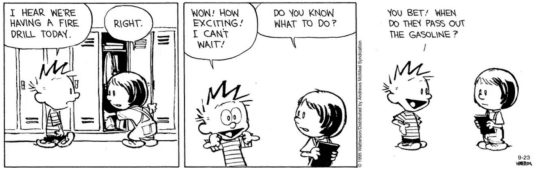
Available at: https://www.gocomics.com/calvinandhobbes/2025/09/23
In the comic strip, Calvin misunderstands the meaning of "fire drill." What is the humorous effect of his interpretation?
Which intervention strategy best aligns with Critical and Decolonial Perspectives to resolve the conflict and promote Epistemic Justice in the classroom?
“With the promulgation of the bill 746/2016, converted into law in 2017, that reforms education in Brazil, English was made the only mandatory foreign language in schools, thus threatening the teaching/learning of other foreign languages such as Spanish, French, and Italian. […] Yet, the educational reforms and internationalization agendas are far from reaching consensus among linguists and higher education stakeholders when it comes to the use, teaching and learning of languages for internationalization purposes.”
Considering the need for a critical and sustainable internationalization agenda, which of the following is the most critical implication of making English the sole mandatory foreign language?
For question, consider the following text.
South Korea’s President Yoon Suk Yeol _____1 investigated _____ 2 to declare martial law. Prosecutors accuse him _____3 insurrection.
Former Defense Minister Kim Yong-hyun, who resigned, is barred from _____4 the country.
Yoon’s impeachment is being debated. While his party, the People Power Party (PPP), opposes it, some members voted _____5 his martial law order. Party leader Han Dong-hun called Yoon’s actions unconstitutional but warned that impeachment could create chaos. If impeached, the Prime Minister would lead _____ 6 elections in 60 days.
Amid the controversy, Yoon accepted Defense Minister Kim’s resignation and nominated Choi Byung-hyuk as his replacement. Several _____ 7 ministers plan to resign. Yoon’s martial law lasted only hours after lawmakers in an emergency vote repealed it, even blocking troops from entering parliament.
Source: <https://www.newsinlevels.com/products/southkorea-political-crisis-level-3/>
For question, consider the following text.
South Korea’s President Yoon Suk Yeol _____1 investigated _____ 2 to declare martial law. Prosecutors accuse him _____3 insurrection.
Former Defense Minister Kim Yong-hyun, who resigned, is barred from _____4 the country.
Yoon’s impeachment is being debated. While his party, the People Power Party (PPP), opposes it, some members voted _____5 his martial law order. Party leader Han Dong-hun called Yoon’s actions unconstitutional but warned that impeachment could create chaos. If impeached, the Prime Minister would lead _____ 6 elections in 60 days.
Amid the controversy, Yoon accepted Defense Minister Kim’s resignation and nominated Choi Byung-hyuk as his replacement. Several _____ 7 ministers plan to resign. Yoon’s martial law lasted only hours after lawmakers in an emergency vote repealed it, even blocking troops from entering parliament.
Source: <https://www.newsinlevels.com/products/southkorea-political-crisis-level-3/>
For question, consider the following text.
South Korea’s President Yoon Suk Yeol _____1 investigated _____ 2 to declare martial law. Prosecutors accuse him _____3 insurrection.
Former Defense Minister Kim Yong-hyun, who resigned, is barred from _____4 the country.
Yoon’s impeachment is being debated. While his party, the People Power Party (PPP), opposes it, some members voted _____5 his martial law order. Party leader Han Dong-hun called Yoon’s actions unconstitutional but warned that impeachment could create chaos. If impeached, the Prime Minister would lead _____ 6 elections in 60 days.
Amid the controversy, Yoon accepted Defense Minister Kim’s resignation and nominated Choi Byung-hyuk as his replacement. Several _____ 7 ministers plan to resign. Yoon’s martial law lasted only hours after lawmakers in an emergency vote repealed it, even blocking troops from entering parliament.
Source: <https://www.newsinlevels.com/products/southkorea-political-crisis-level-3/>
For question, consider the following text.
South Korea’s President Yoon Suk Yeol _____1 investigated _____ 2 to declare martial law. Prosecutors accuse him _____3 insurrection.
Former Defense Minister Kim Yong-hyun, who resigned, is barred from _____4 the country.
Yoon’s impeachment is being debated. While his party, the People Power Party (PPP), opposes it, some members voted _____5 his martial law order. Party leader Han Dong-hun called Yoon’s actions unconstitutional but warned that impeachment could create chaos. If impeached, the Prime Minister would lead _____ 6 elections in 60 days.
Amid the controversy, Yoon accepted Defense Minister Kim’s resignation and nominated Choi Byung-hyuk as his replacement. Several _____ 7 ministers plan to resign. Yoon’s martial law lasted only hours after lawmakers in an emergency vote repealed it, even blocking troops from entering parliament.
Source: <https://www.newsinlevels.com/products/southkorea-political-crisis-level-3/>
For question, consider the following text.
South Korea’s President Yoon Suk Yeol _____1 investigated _____ 2 to declare martial law. Prosecutors accuse him _____3 insurrection.
Former Defense Minister Kim Yong-hyun, who resigned, is barred from _____4 the country.
Yoon’s impeachment is being debated. While his party, the People Power Party (PPP), opposes it, some members voted _____5 his martial law order. Party leader Han Dong-hun called Yoon’s actions unconstitutional but warned that impeachment could create chaos. If impeached, the Prime Minister would lead _____ 6 elections in 60 days.
Amid the controversy, Yoon accepted Defense Minister Kim’s resignation and nominated Choi Byung-hyuk as his replacement. Several _____ 7 ministers plan to resign. Yoon’s martial law lasted only hours after lawmakers in an emergency vote repealed it, even blocking troops from entering parliament.
Source: <https://www.newsinlevels.com/products/southkorea-political-crisis-level-3/>
For question, consider the following text.
South Korea’s President Yoon Suk Yeol _____1 investigated _____ 2 to declare martial law. Prosecutors accuse him _____3 insurrection.
Former Defense Minister Kim Yong-hyun, who resigned, is barred from _____4 the country.
Yoon’s impeachment is being debated. While his party, the People Power Party (PPP), opposes it, some members voted _____5 his martial law order. Party leader Han Dong-hun called Yoon’s actions unconstitutional but warned that impeachment could create chaos. If impeached, the Prime Minister would lead _____ 6 elections in 60 days.
Amid the controversy, Yoon accepted Defense Minister Kim’s resignation and nominated Choi Byung-hyuk as his replacement. Several _____ 7 ministers plan to resign. Yoon’s martial law lasted only hours after lawmakers in an emergency vote repealed it, even blocking troops from entering parliament.
Source: <https://www.newsinlevels.com/products/southkorea-political-crisis-level-3/>
For question, consider the following text.
South Korea’s President Yoon Suk Yeol _____1 investigated _____ 2 to declare martial law. Prosecutors accuse him _____3 insurrection.
Former Defense Minister Kim Yong-hyun, who resigned, is barred from _____4 the country.
Yoon’s impeachment is being debated. While his party, the People Power Party (PPP), opposes it, some members voted _____5 his martial law order. Party leader Han Dong-hun called Yoon’s actions unconstitutional but warned that impeachment could create chaos. If impeached, the Prime Minister would lead _____ 6 elections in 60 days.
Amid the controversy, Yoon accepted Defense Minister Kim’s resignation and nominated Choi Byung-hyuk as his replacement. Several _____ 7 ministers plan to resign. Yoon’s martial law lasted only hours after lawmakers in an emergency vote repealed it, even blocking troops from entering parliament.
Source: <https://www.newsinlevels.com/products/southkorea-political-crisis-level-3/>
Text II
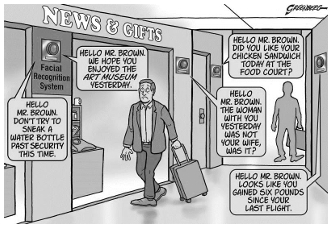
From: https://www.cartoonmovement.com/cartoon/facial-recognition-0
Text I
Understanding bias in facial recognition technologies
Over the past couple of years, the growing debate around automated facial recognition has reached a boiling point. As developers have continued to swiftly expand the scope of these kinds of technologies into an almost unbounded range of applications, an increasingly strident chorus of critical voices has sounded concerns about the injurious effects of the proliferation of such systems on impacted individuals and communities. Critics argue that the irresponsible design and use of facial detection and recognition technologies (FDRTs) threaten to violate civil liberties, infringe on basic human rights and further entrench structural racism and systemic marginalisation. In addition, they argue that the gradual creep of face surveillance infrastructures into every domain of lived experience may eventually eradicate the modern democratic forms of life that have long provided cherished means to individual flourishing, social solidarity and human self-creation.
Defenders, by contrast, emphasise the gains in public safety, security and efficiency that digitally streamlined capacities for facial identification, identity verification and trait characterisation may bring. These proponents point to potential real-world benefits like the added security of facial recognition enhanced border control, the increased efficacy of missing children or criminal suspect searches that are driven by the application of brute force facial analysis to largescale databases and the many added conveniences of facial verification in the business of everyday life.
Whatever side of the debate on which one lands, it would appear that FDRTs are here to stay.
Adapted from: understanding_bias_in_facial_recognition_technology.pdf
Text I
Understanding bias in facial recognition technologies
Over the past couple of years, the growing debate around automated facial recognition has reached a boiling point. As developers have continued to swiftly expand the scope of these kinds of technologies into an almost unbounded range of applications, an increasingly strident chorus of critical voices has sounded concerns about the injurious effects of the proliferation of such systems on impacted individuals and communities. Critics argue that the irresponsible design and use of facial detection and recognition technologies (FDRTs) threaten to violate civil liberties, infringe on basic human rights and further entrench structural racism and systemic marginalisation. In addition, they argue that the gradual creep of face surveillance infrastructures into every domain of lived experience may eventually eradicate the modern democratic forms of life that have long provided cherished means to individual flourishing, social solidarity and human self-creation.
Defenders, by contrast, emphasise the gains in public safety, security and efficiency that digitally streamlined capacities for facial identification, identity verification and trait characterisation may bring. These proponents point to potential real-world benefits like the added security of facial recognition enhanced border control, the increased efficacy of missing children or criminal suspect searches that are driven by the application of brute force facial analysis to largescale databases and the many added conveniences of facial verification in the business of everyday life.
Whatever side of the debate on which one lands, it would appear that FDRTs are here to stay.
Adapted from: understanding_bias_in_facial_recognition_technology.pdf
Text I
Understanding bias in facial recognition technologies
Over the past couple of years, the growing debate around automated facial recognition has reached a boiling point. As developers have continued to swiftly expand the scope of these kinds of technologies into an almost unbounded range of applications, an increasingly strident chorus of critical voices has sounded concerns about the injurious effects of the proliferation of such systems on impacted individuals and communities. Critics argue that the irresponsible design and use of facial detection and recognition technologies (FDRTs) threaten to violate civil liberties, infringe on basic human rights and further entrench structural racism and systemic marginalisation. In addition, they argue that the gradual creep of face surveillance infrastructures into every domain of lived experience may eventually eradicate the modern democratic forms of life that have long provided cherished means to individual flourishing, social solidarity and human self-creation.
Defenders, by contrast, emphasise the gains in public safety, security and efficiency that digitally streamlined capacities for facial identification, identity verification and trait characterisation may bring. These proponents point to potential real-world benefits like the added security of facial recognition enhanced border control, the increased efficacy of missing children or criminal suspect searches that are driven by the application of brute force facial analysis to largescale databases and the many added conveniences of facial verification in the business of everyday life.
Whatever side of the debate on which one lands, it would appear that FDRTs are here to stay.
Adapted from: understanding_bias_in_facial_recognition_technology.pdf
"The past is consumed in the present and the present is living only because it brings forth the future."
This statement reflects a central feature of Modernist narrative technique by illustrating:

 Conheça nossos planos